
Trionfo di Flora e Zefiro
Jacopo Amigoni (Venezia, 1682 - Madrid, 1752) cerchia
Jacopo Amigoni
(Venice, 1682 – Madrid, 1752)
circle
The Triumph of Flora and Zephyr
(also known as Allegory of Spring)
Oil on canvas
101 x 76 cm.
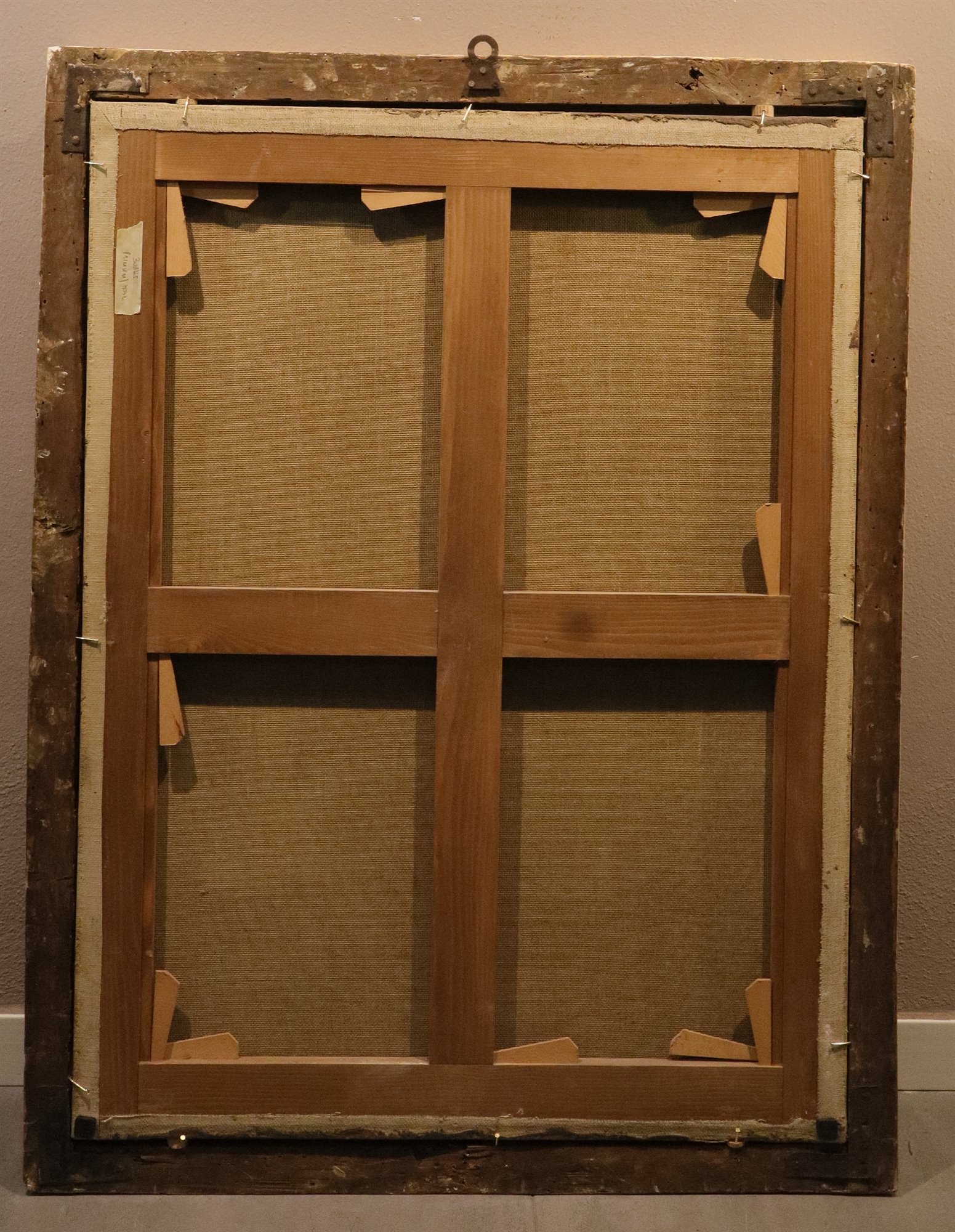
Framed: 112 x 85 cm.
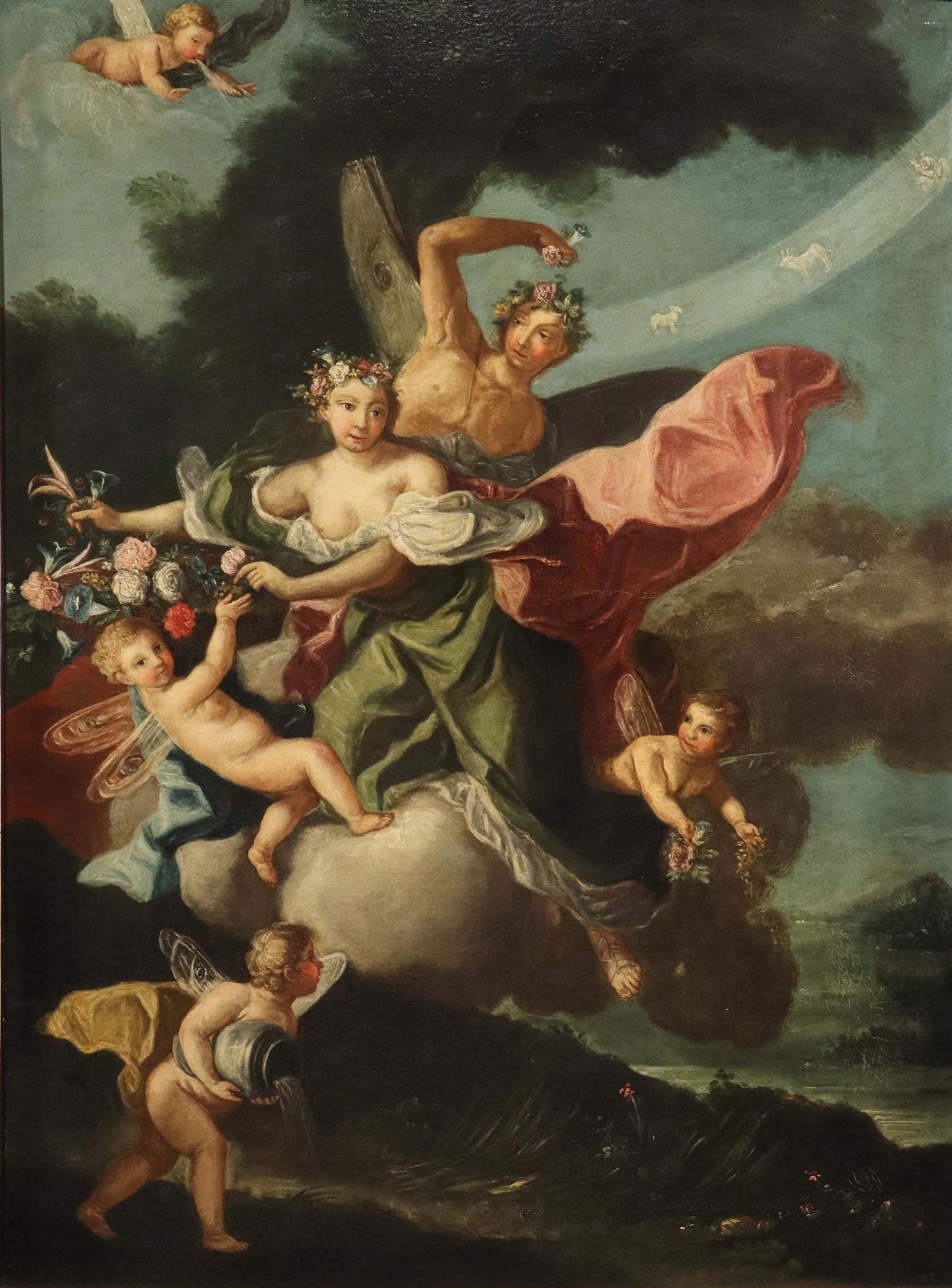
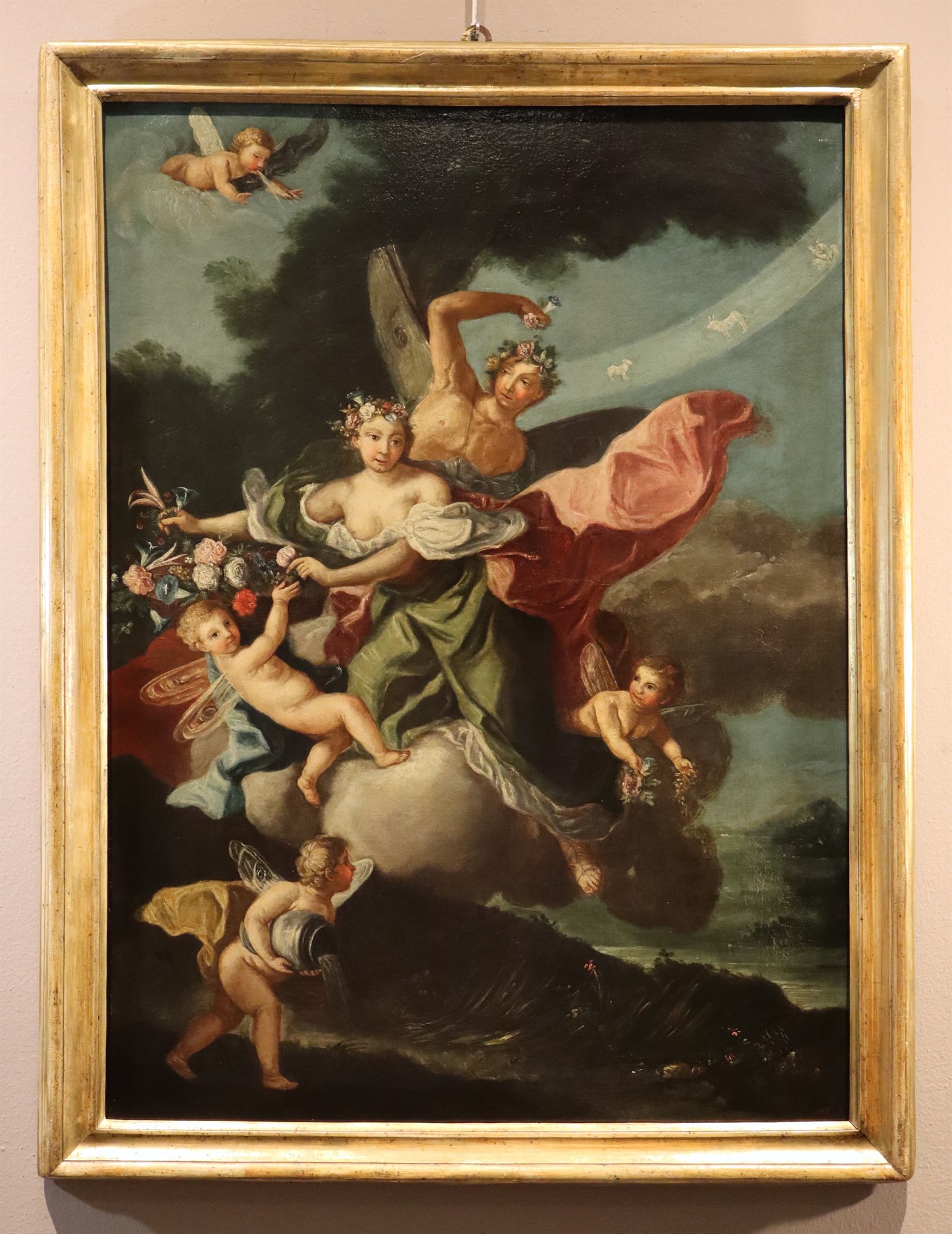
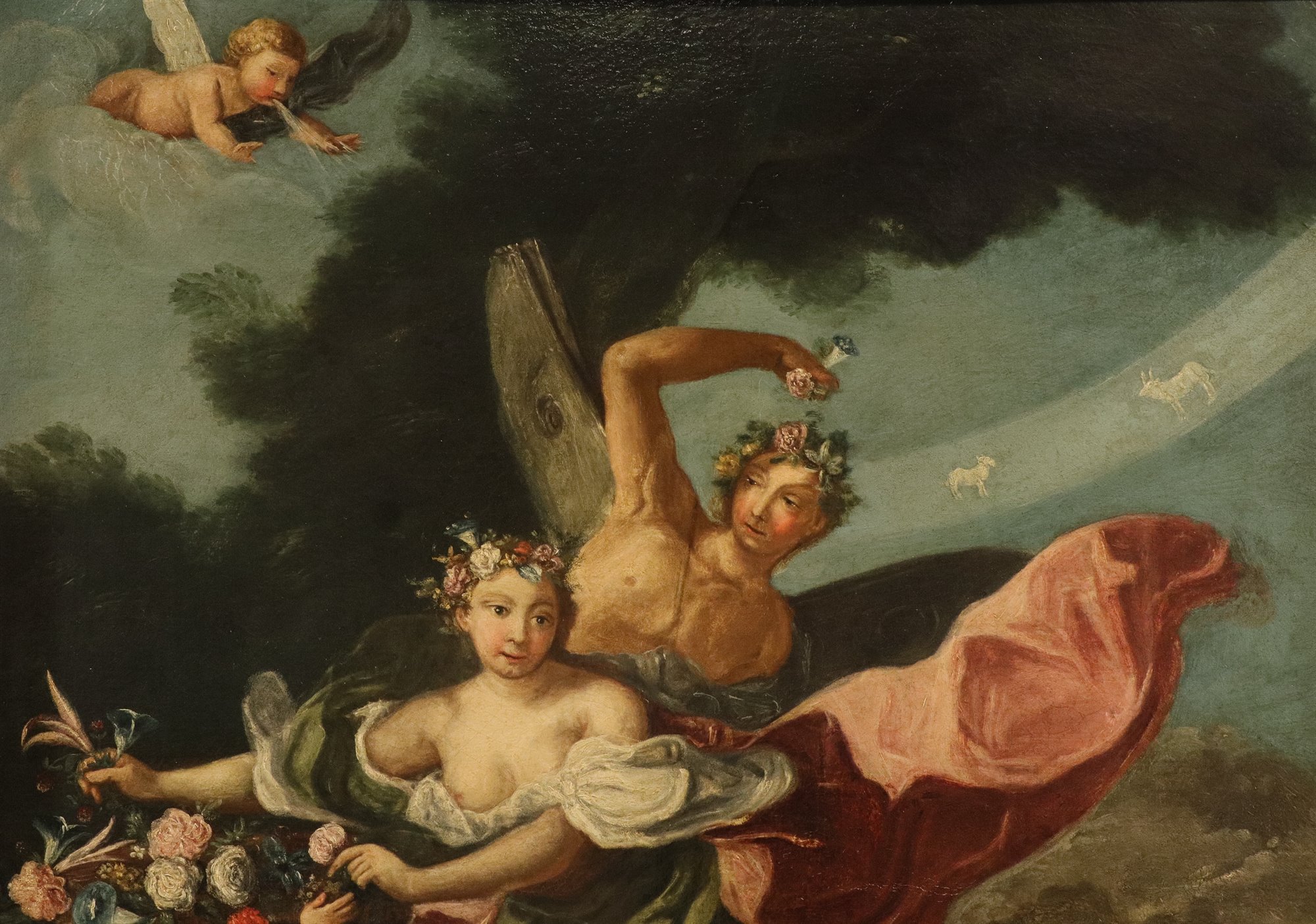
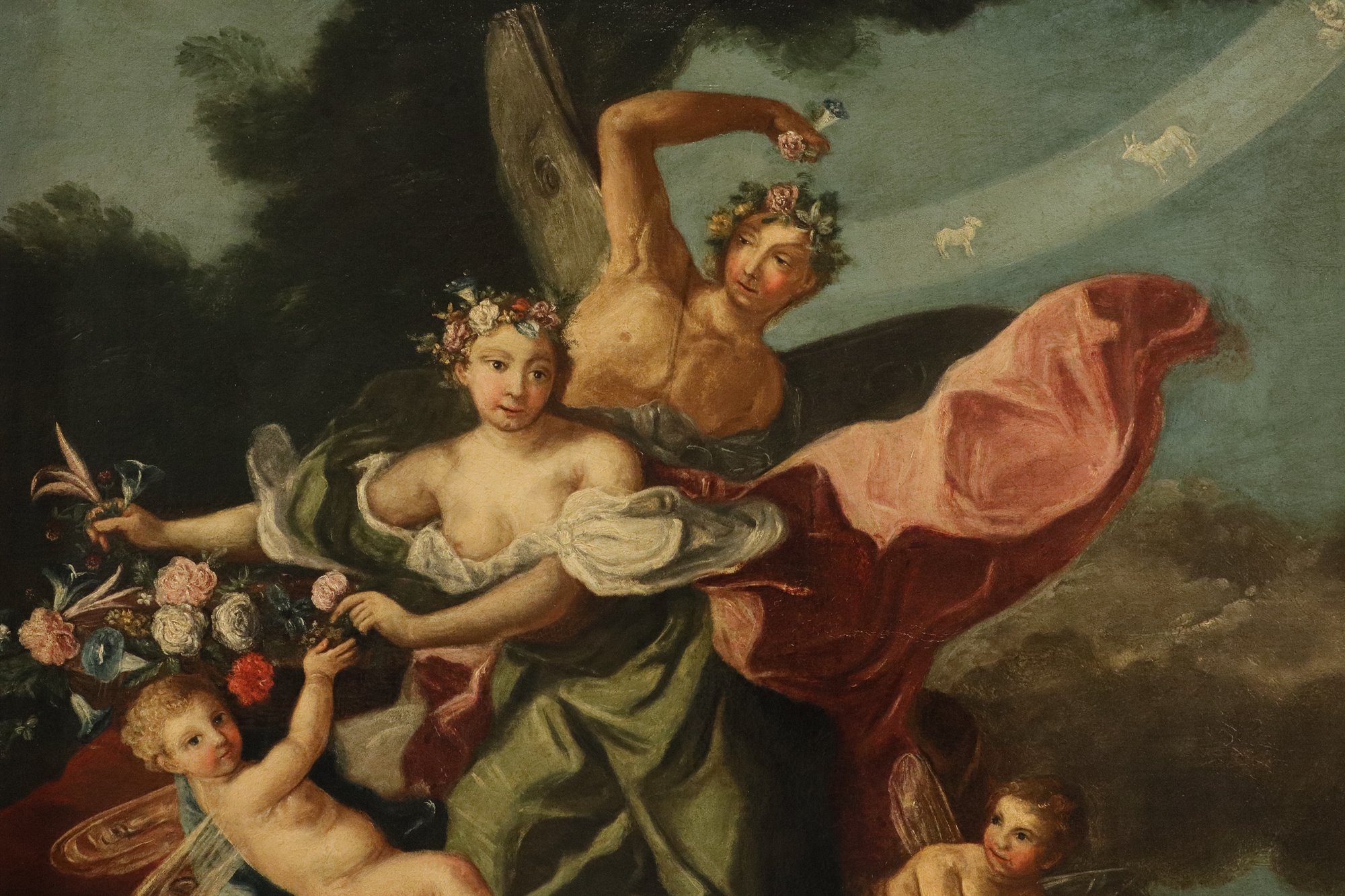
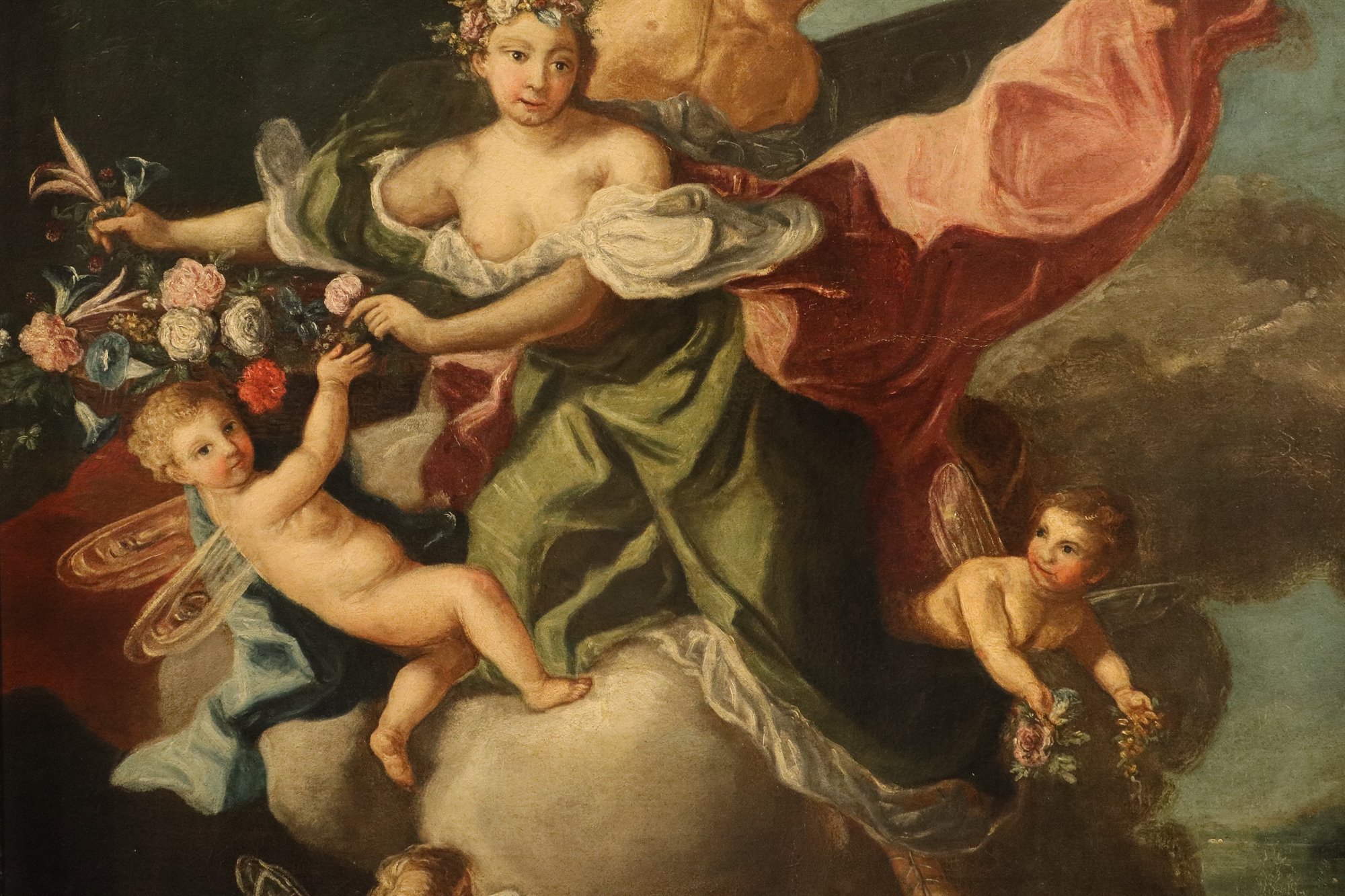
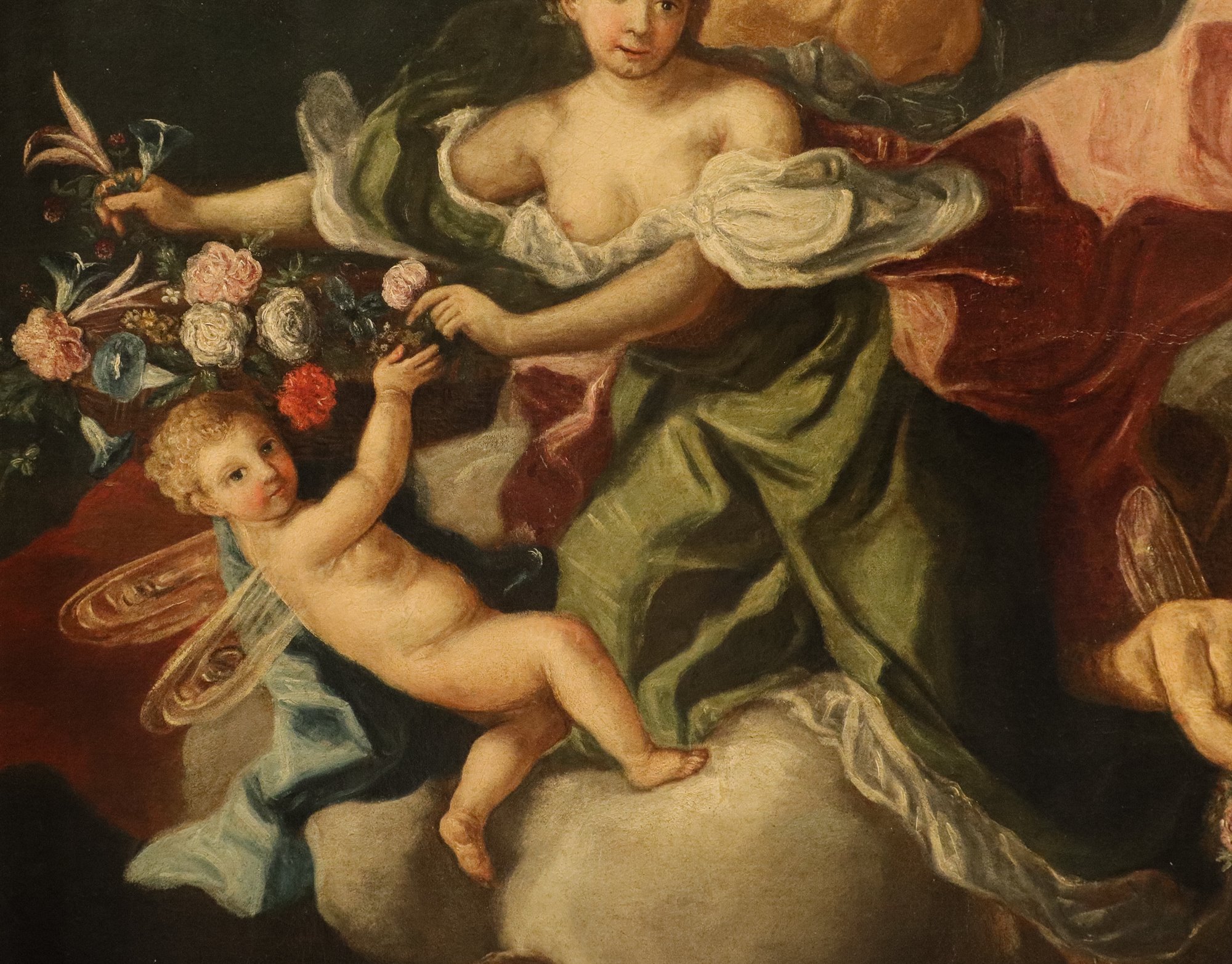
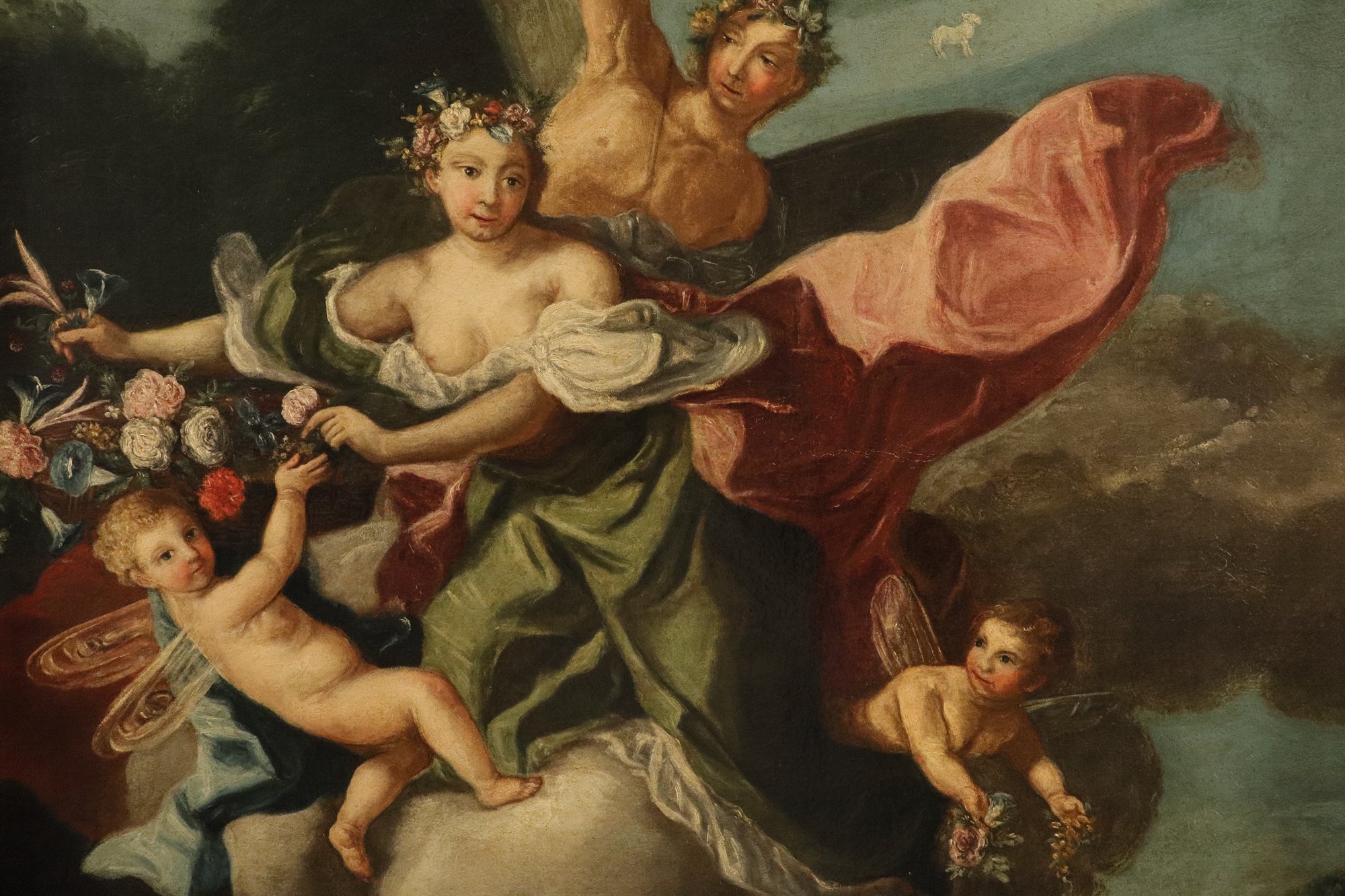
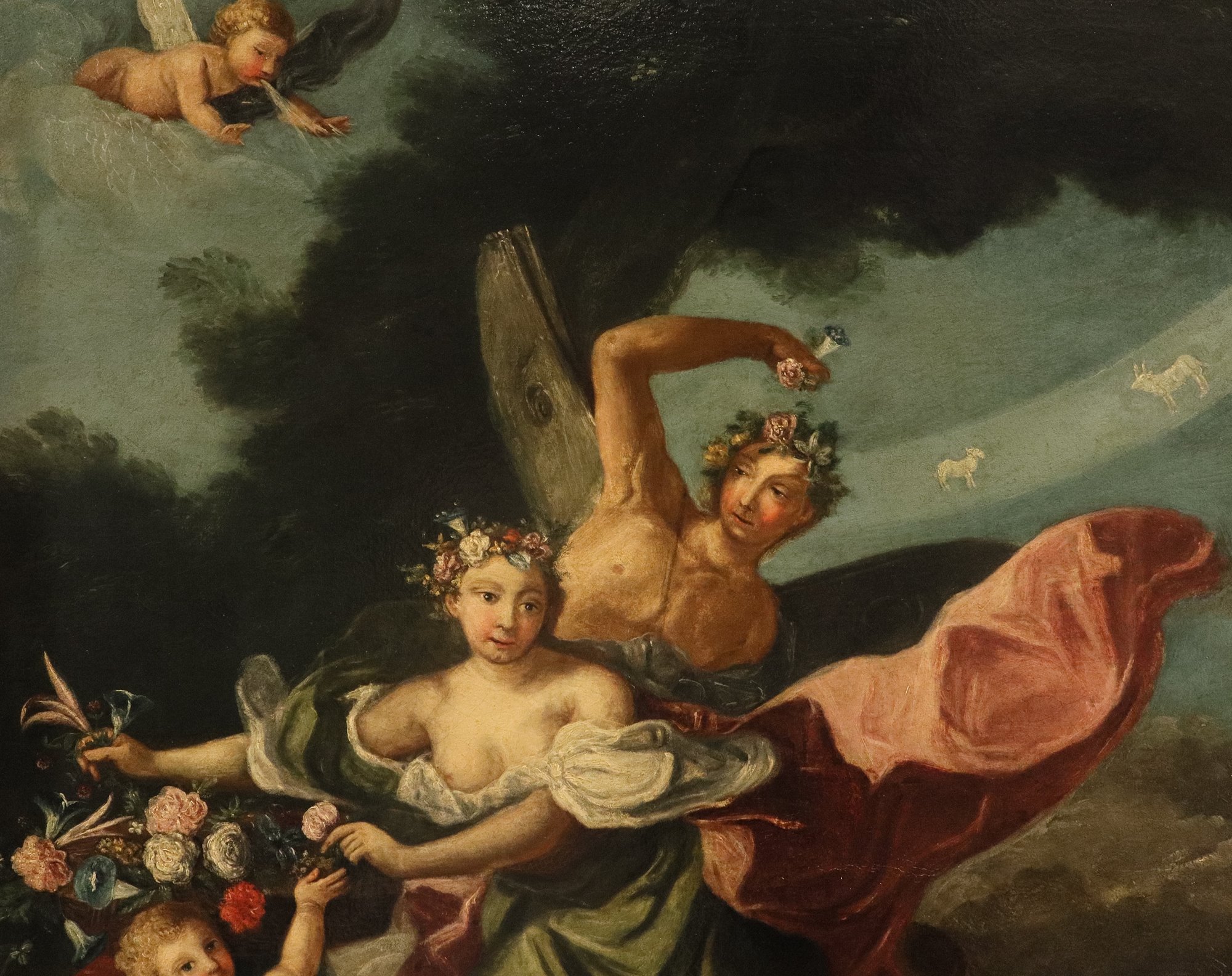
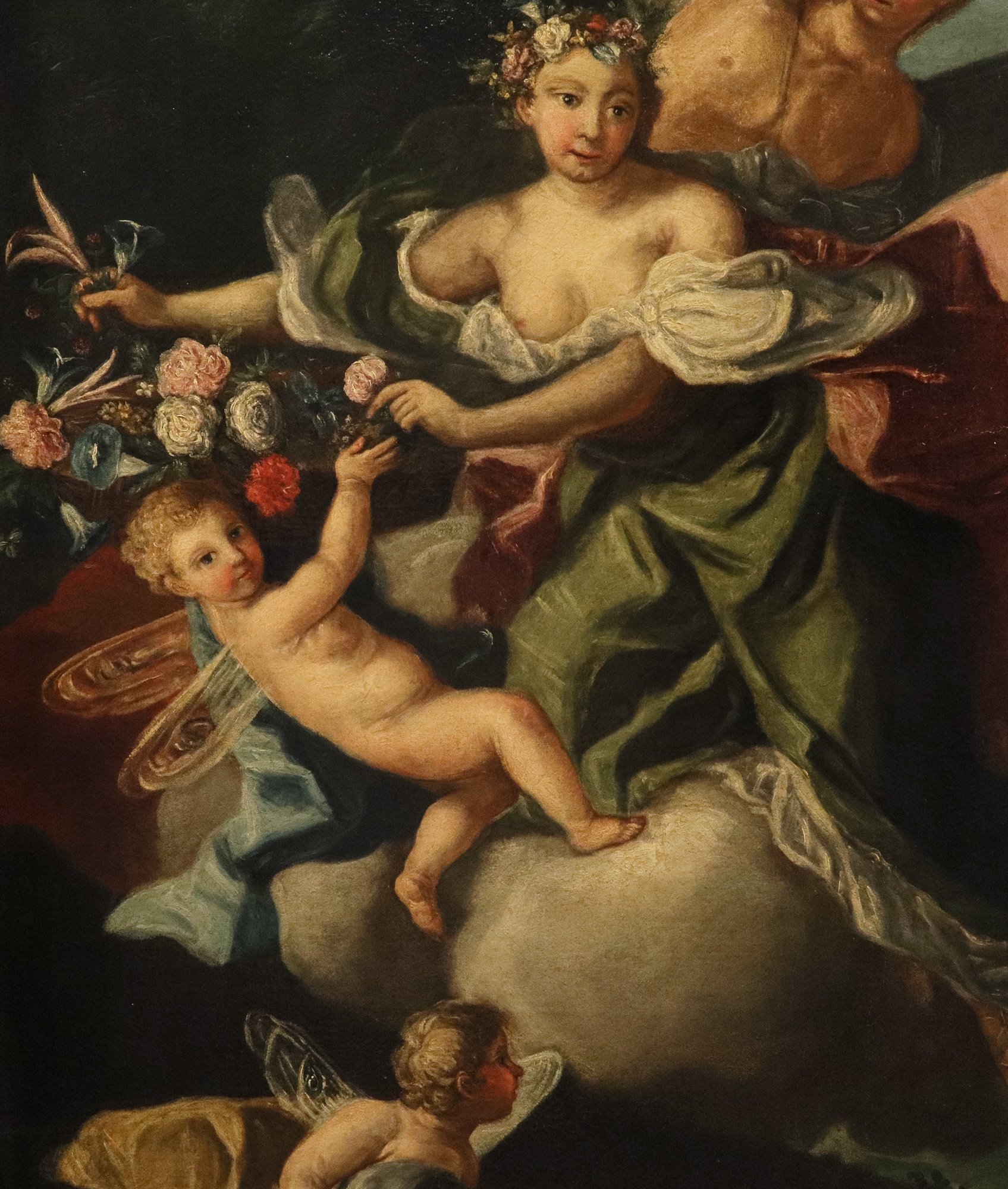
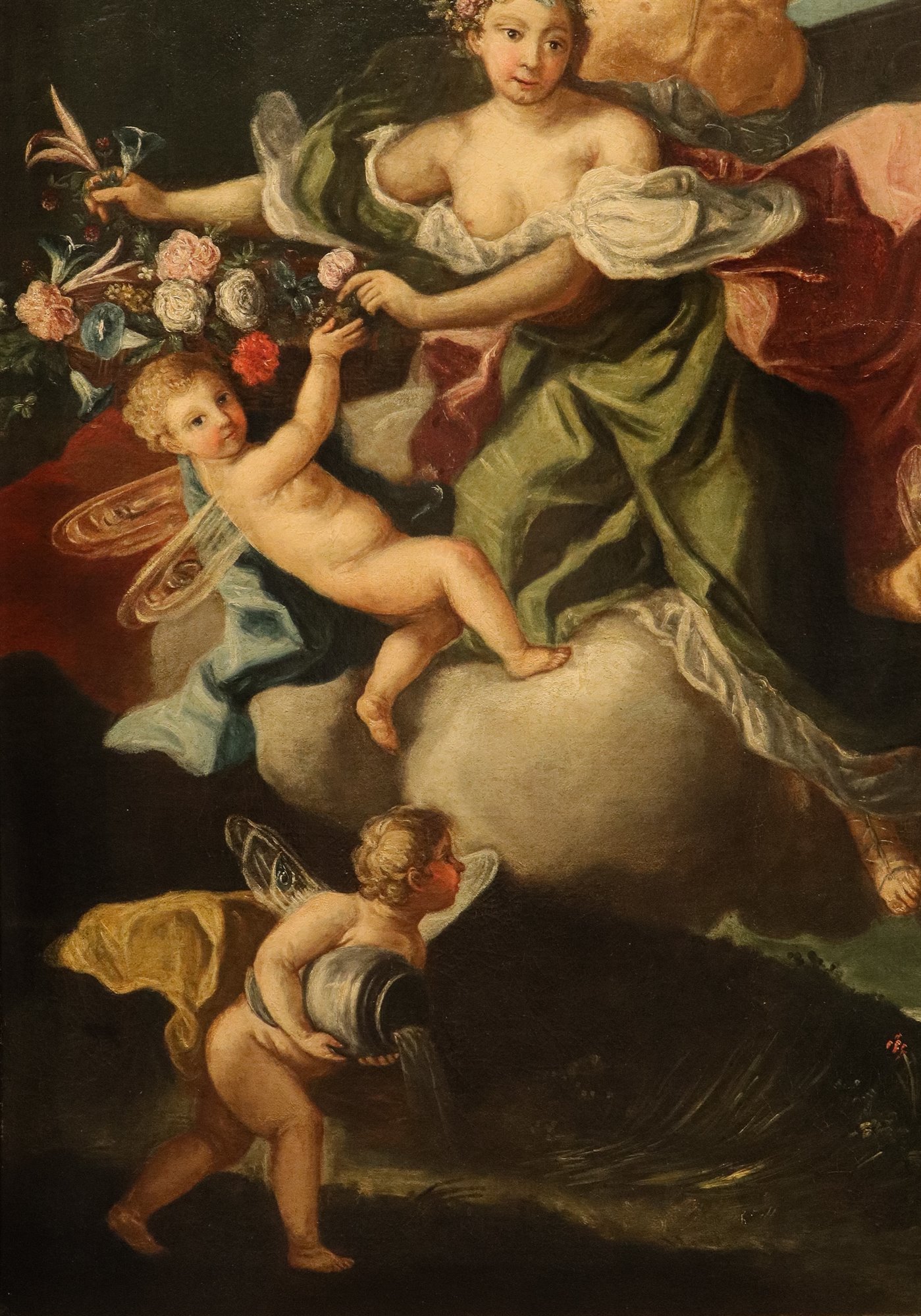
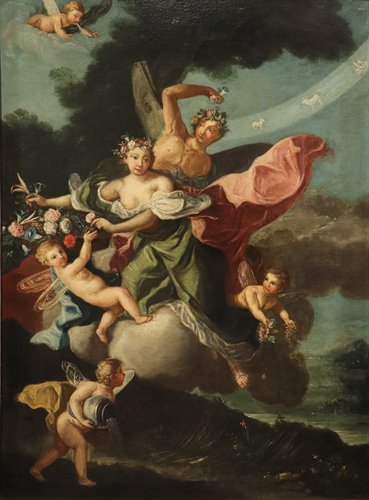
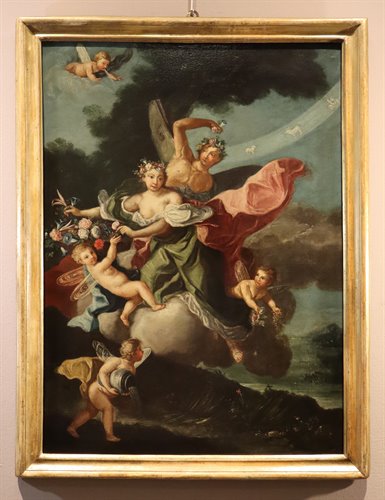
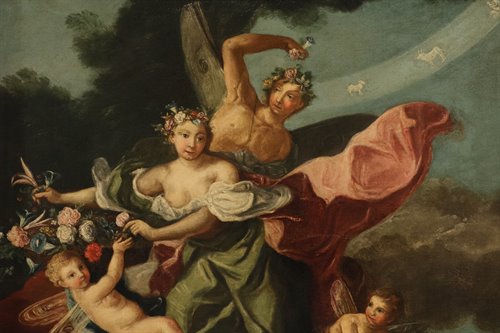
This splendid painting, with its strong late Baroque and Rococo style, depicts a mythological allegory of Spring, personified by the goddess Flora, crowned with flowers and seated majestically on a soft cloud whilst clutching floral garlands, and by her husband, the god Zephyr (the personification of the western spring wind).
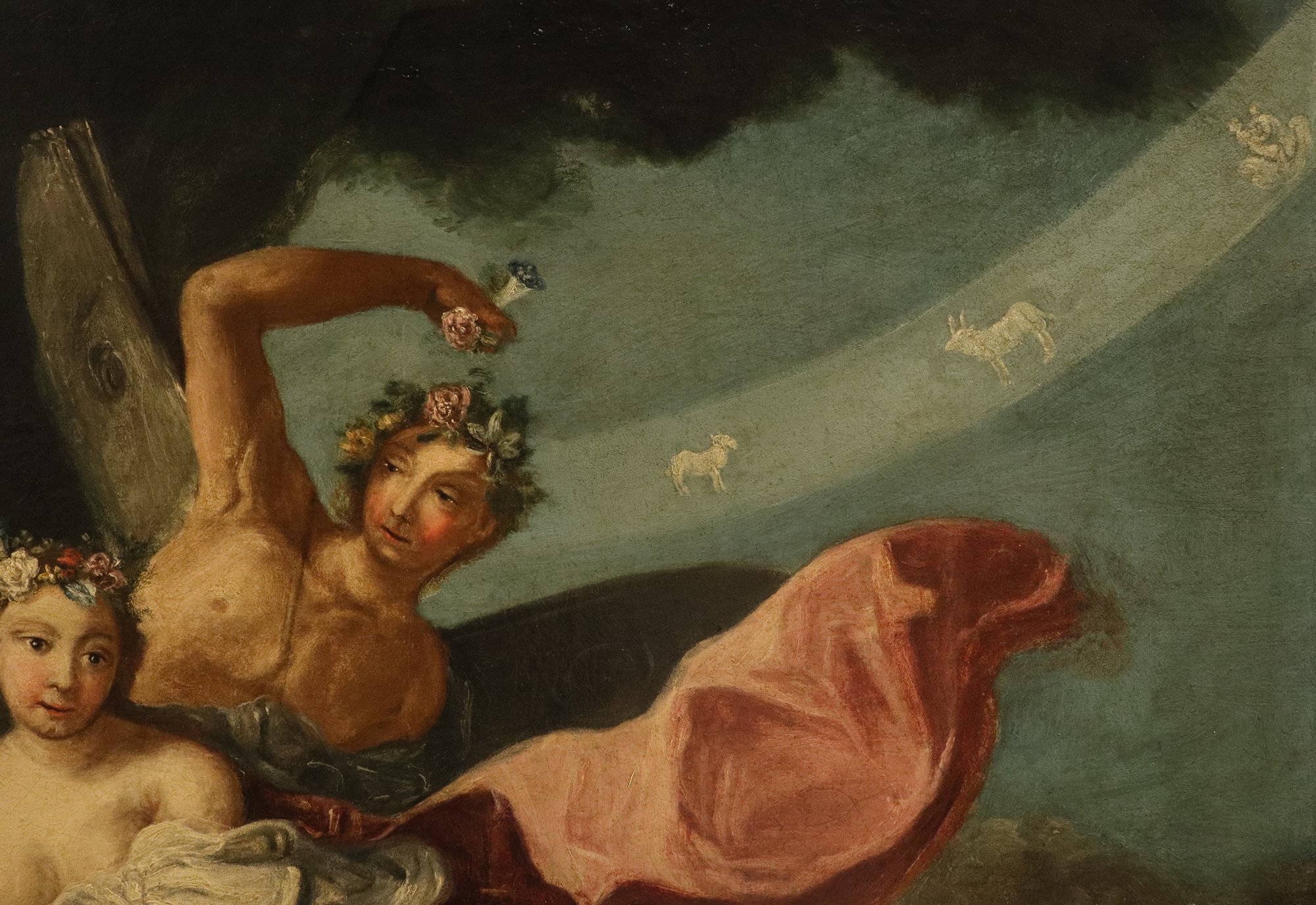
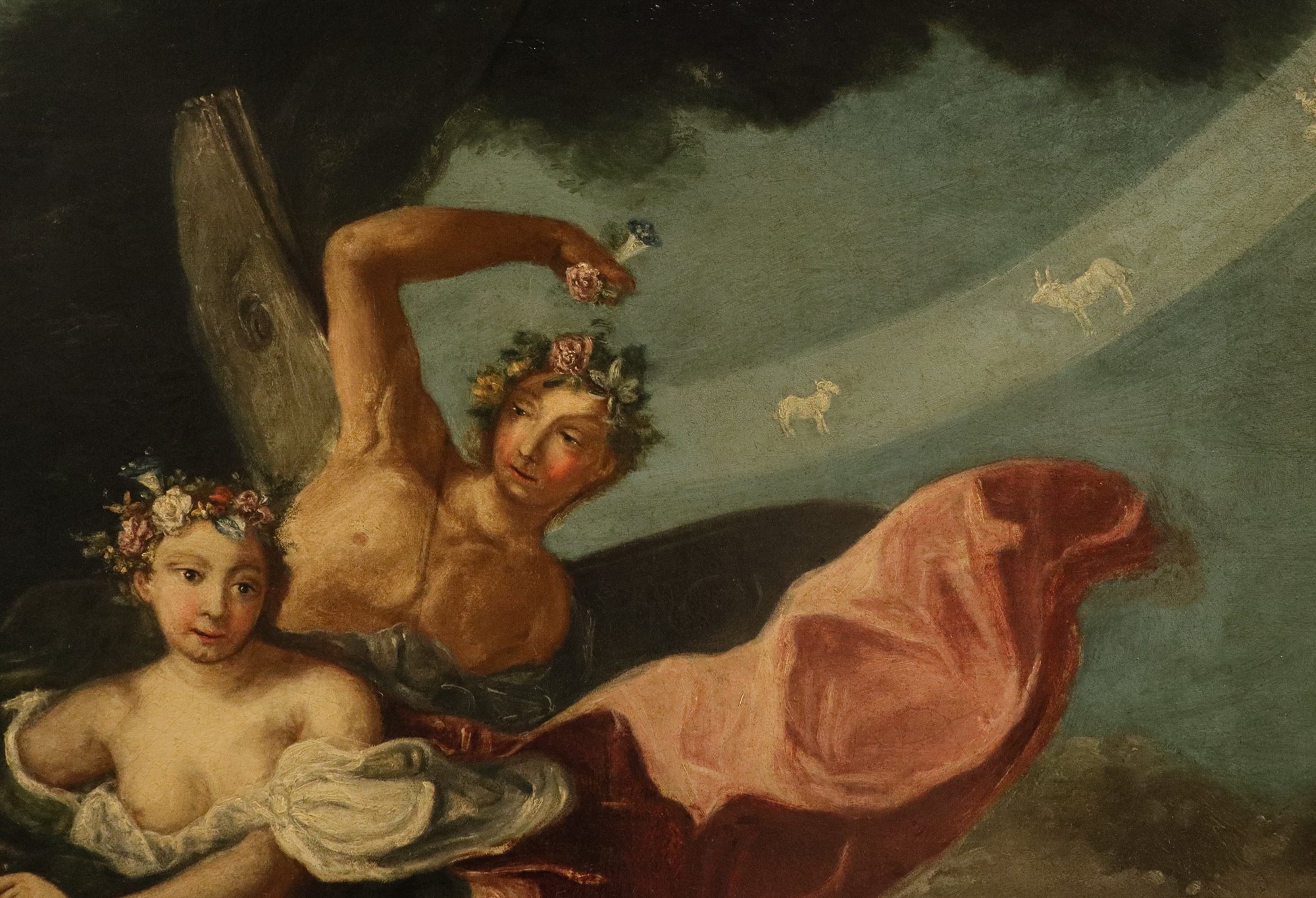
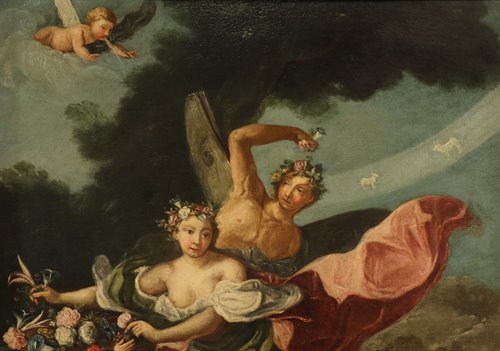
In his poem *Fasti*, Ovid recounts the abduction of the nymph Chloris by Zephyr, and her subsequent transformation into the goddess of spring, Flora. The scene depicted in our painting is the episode that follows: the wedding of the two protagonists. Flora has crowned Zephyr with flowers, and he draws her into his clouds, so that the warm westerly wind embraces spring, to the great joy of nature.
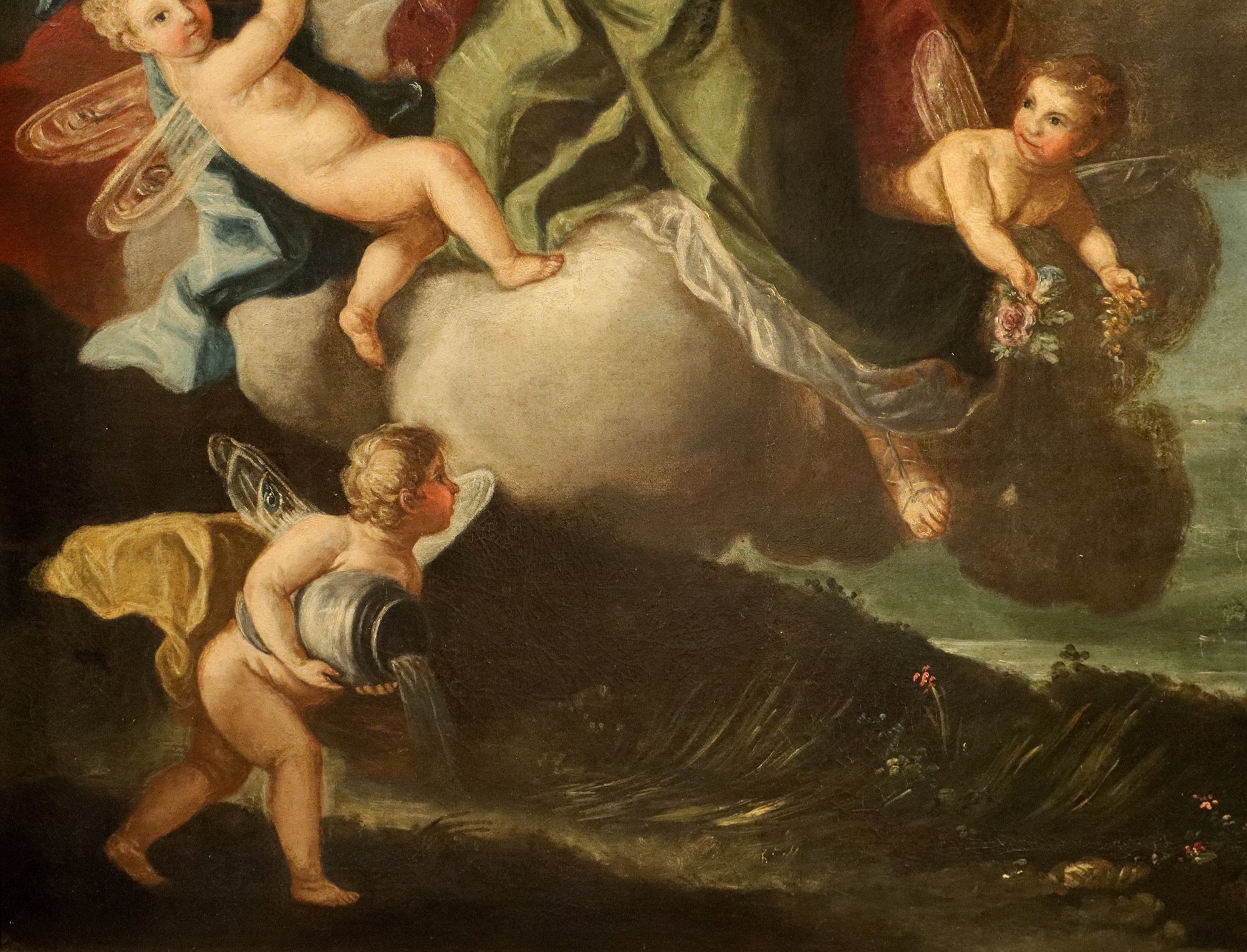
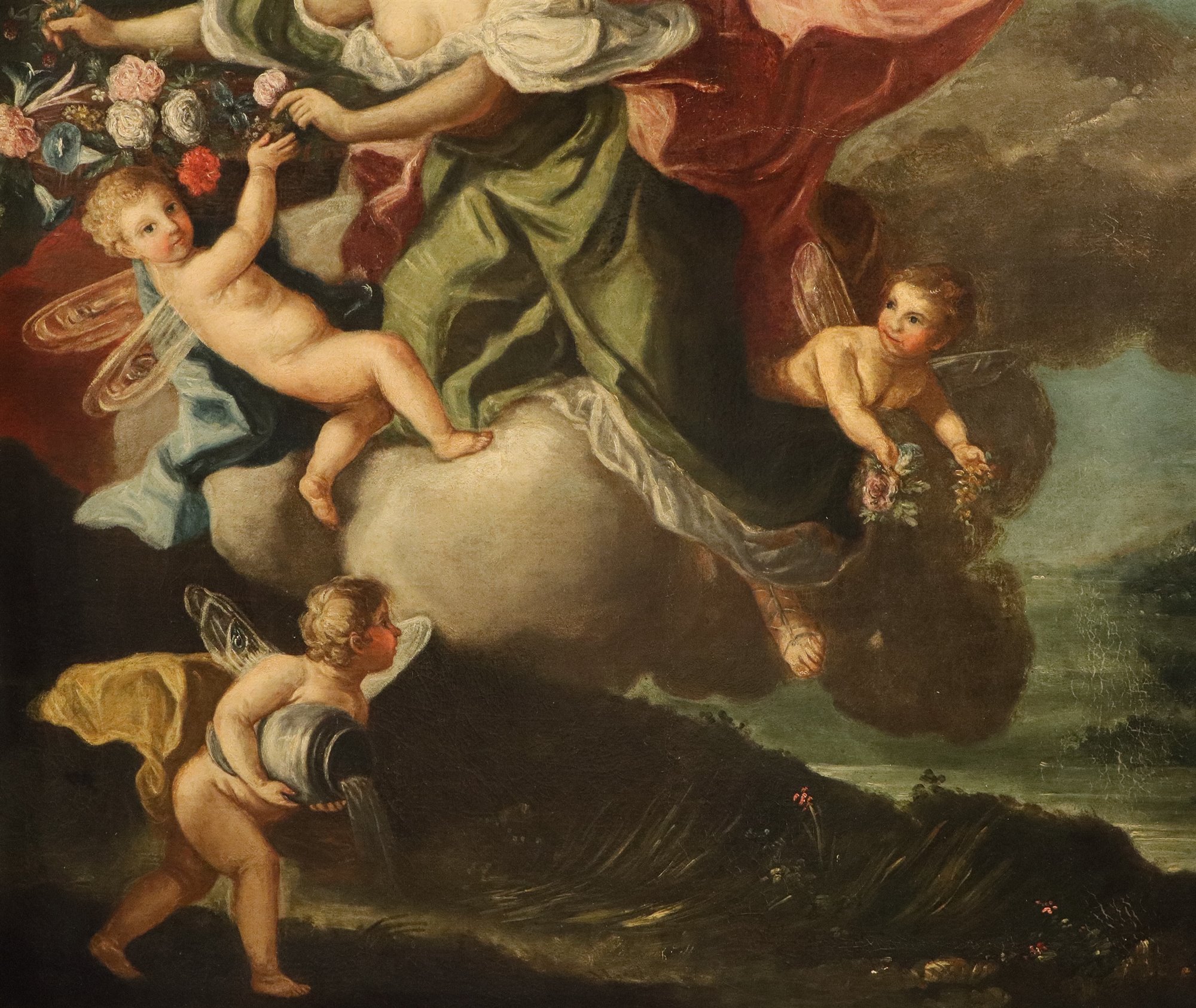
Several winged cherubs hover around the celestial couple: one of them helps to support the lavish basket brimming with flowers, a symbol of prosperity, whilst below, another holds an amphora, pouring out water, symbolising the spring rains necessary for flowering and the lifeblood that flows once more upon the earth.
The work contains a rich layering of mythological and astrological symbols linked to the rebirth of nature.
The most fascinating and illuminating iconographic element is the luminous band cutting diagonally across the sky on the right, on which several zodiac signs appear; the three constellations governing the spring months are clearly distinguishable: Aries (March–April), Taurus (April–May) and Gemini (May–June).
The vivid yet pastel-toned colour scheme, the lightness of the clouds, the grace of the faces, the delicate sensuality and the flowing drapery in iridescent colours (the bright pink of the cloak billowing in the wind and the green of the robe) perfectly reflect the characteristic ‘pursuit of grace and lightness’ that distinguished the work of the 18th-century Venetian school.
In particular, the work, characterised by an Arcadian and festive atmosphere, is comparable to the mythological works of the painter Jacopo Amigoni (Venice, 1682 – Madrid, 1752), one of the leading international exponents of the Venetian Rococo, faithfully reflecting its stylistic and compositional characteristics.
In his mythological scenes, the dramatic and solemn tones of the Baroque give way to pastoral fables featuring supple figures, fair complexions and a fluid, light brushwork. His mythological works represent one of the pinnacles of Venetian and European Rococo, renowned for the grace of their forms, the luminosity of their colours and their delicate, sensual Arcadian atmospheres.
Amigoni was one of the most successful painters of the 18th century, capable of exporting this decorative style — even renamed the ‘Amigoni style’ in Germany — to the major courts of Europe, including Bavaria, England and Spain.
ADDITIONAL INFORMATION:
The work comes complete with an attractive frame and is accompanied by a certificate of authenticity and a descriptive iconographic sheet.
We arrange and organise the transport of purchased works, both within Italy and abroad, using professional and insured carriers.
It is also possible to view the painting at our gallery in Riva del Garda; we would be delighted to welcome you and show you our collection of artworks.
Please feel free to contact us, with no obligation, for any further information.
Follow us on: