
Santa Cecilia suona l’organo con tre angeli
Cristoforo Roncalli (Pomarance, 1552 - Roma, 1626) Bottega di
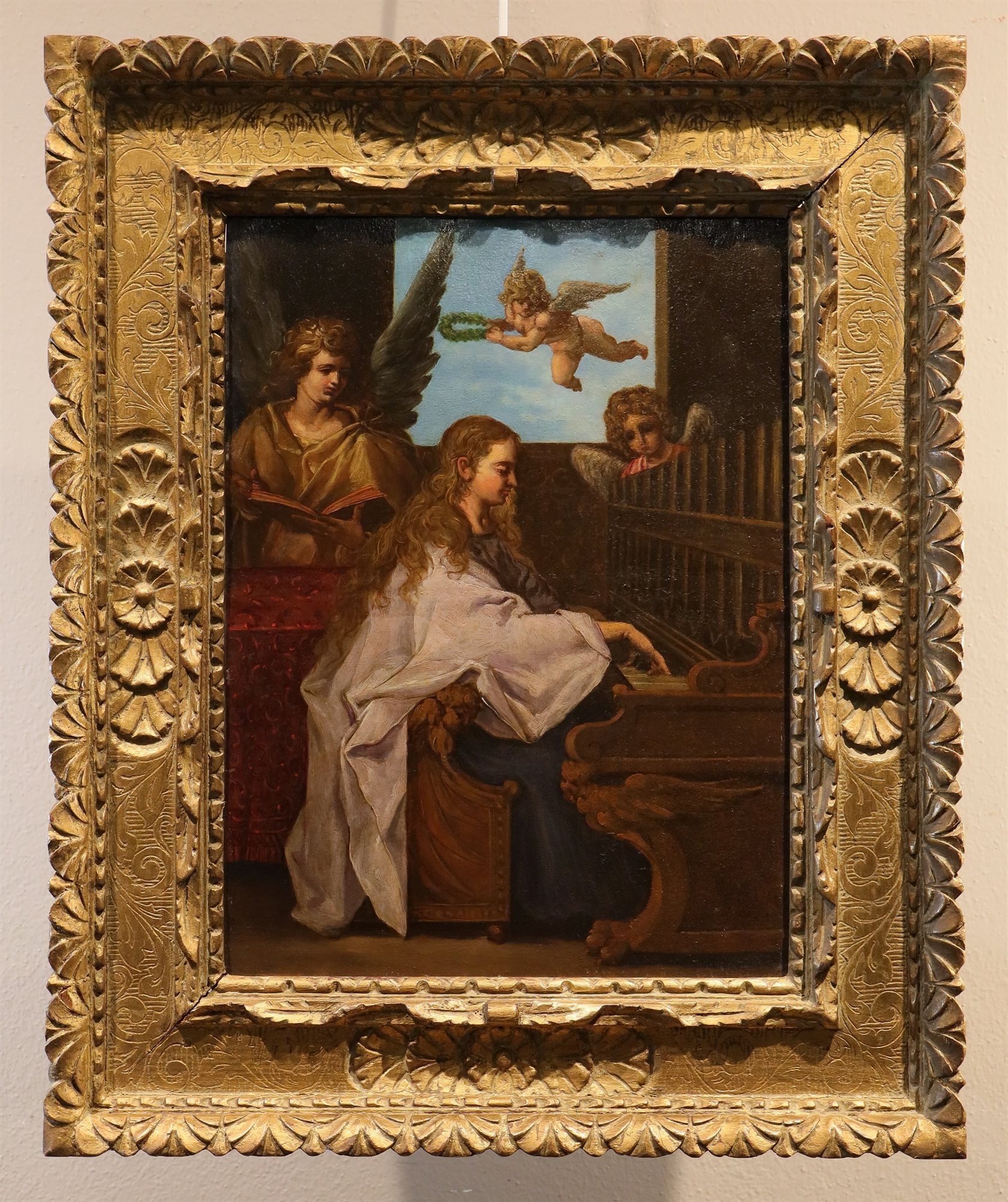
Cristoforo Roncalli, known as ‘il Pomarancio’ (Pomarance, 1552 – Rome, 1626), from the workshop of
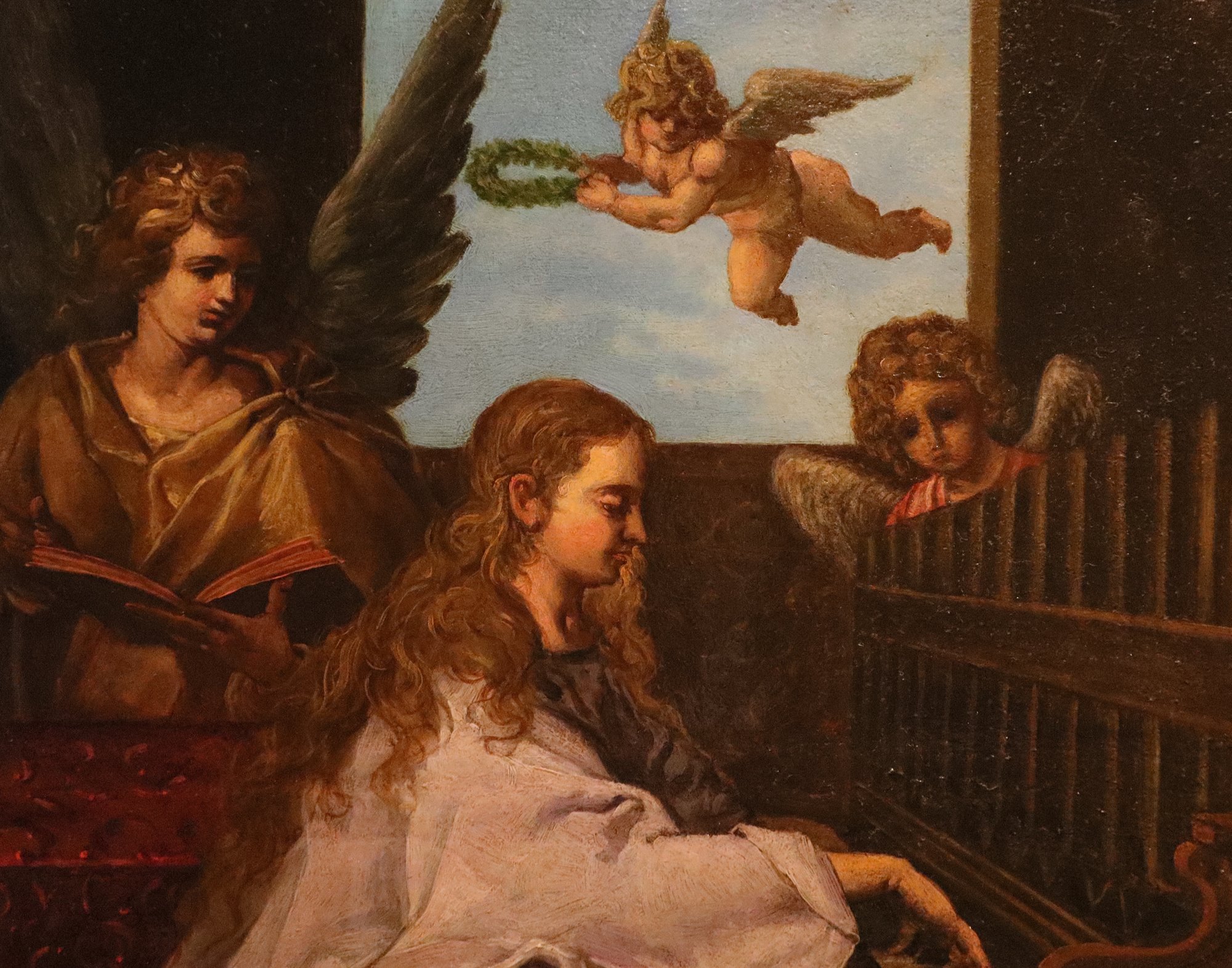
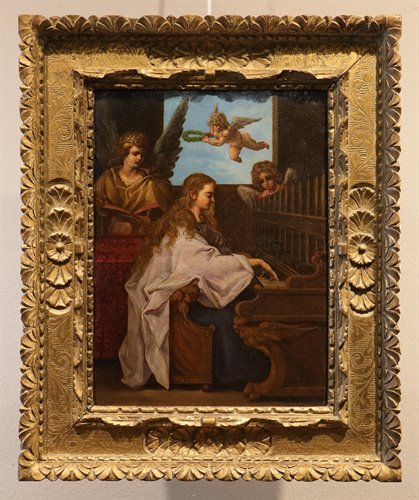
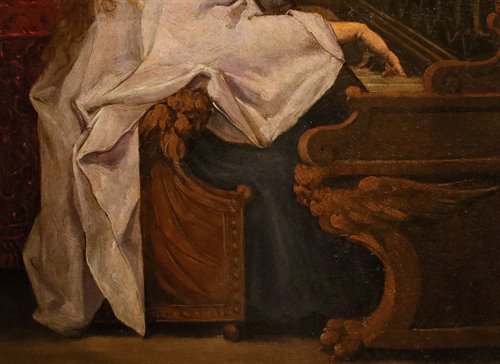
Saint Cecilia playing the organ with three angels
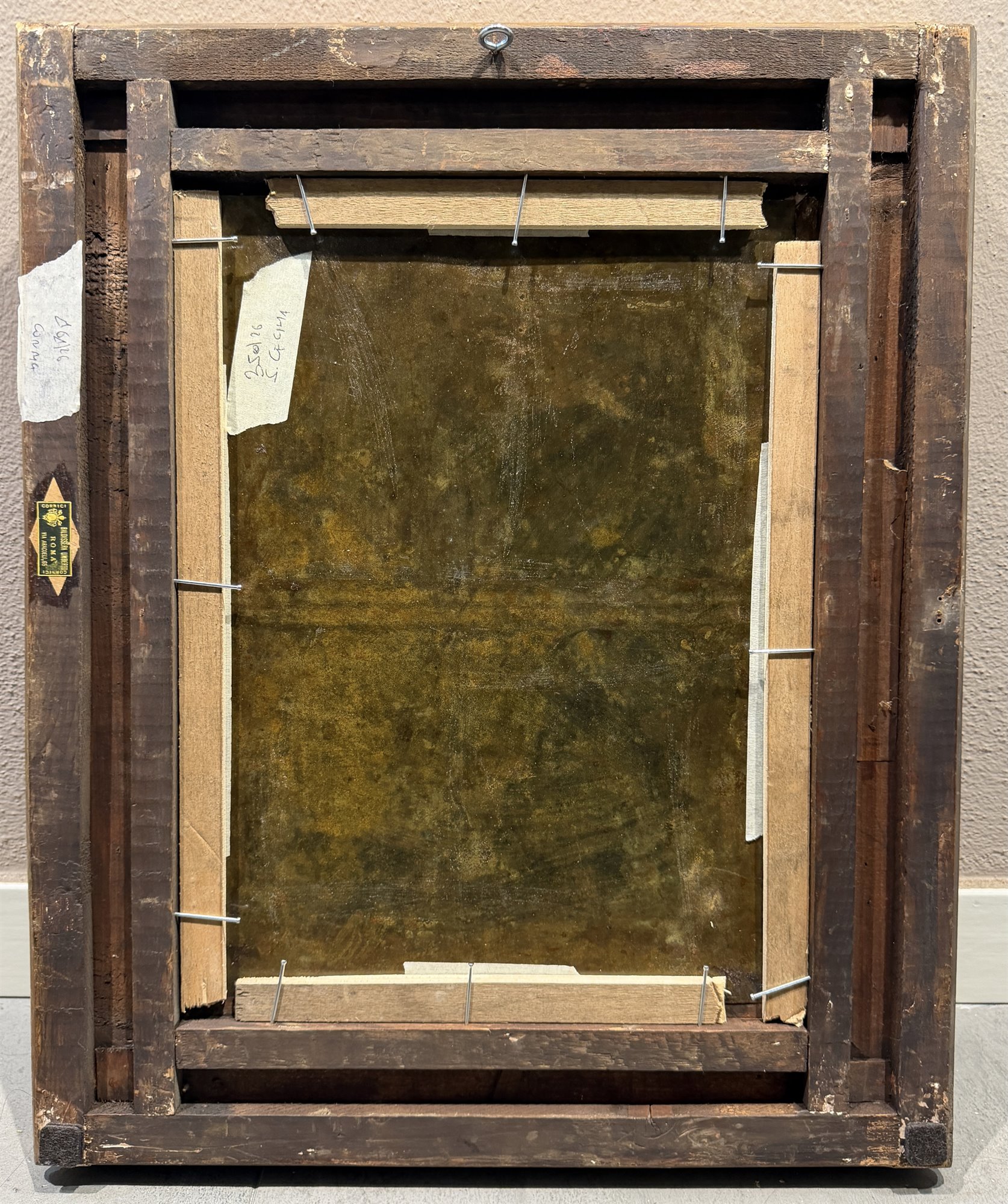
Oil on copper
41 x 31 cm.
In frame: 56 x 46 cm.
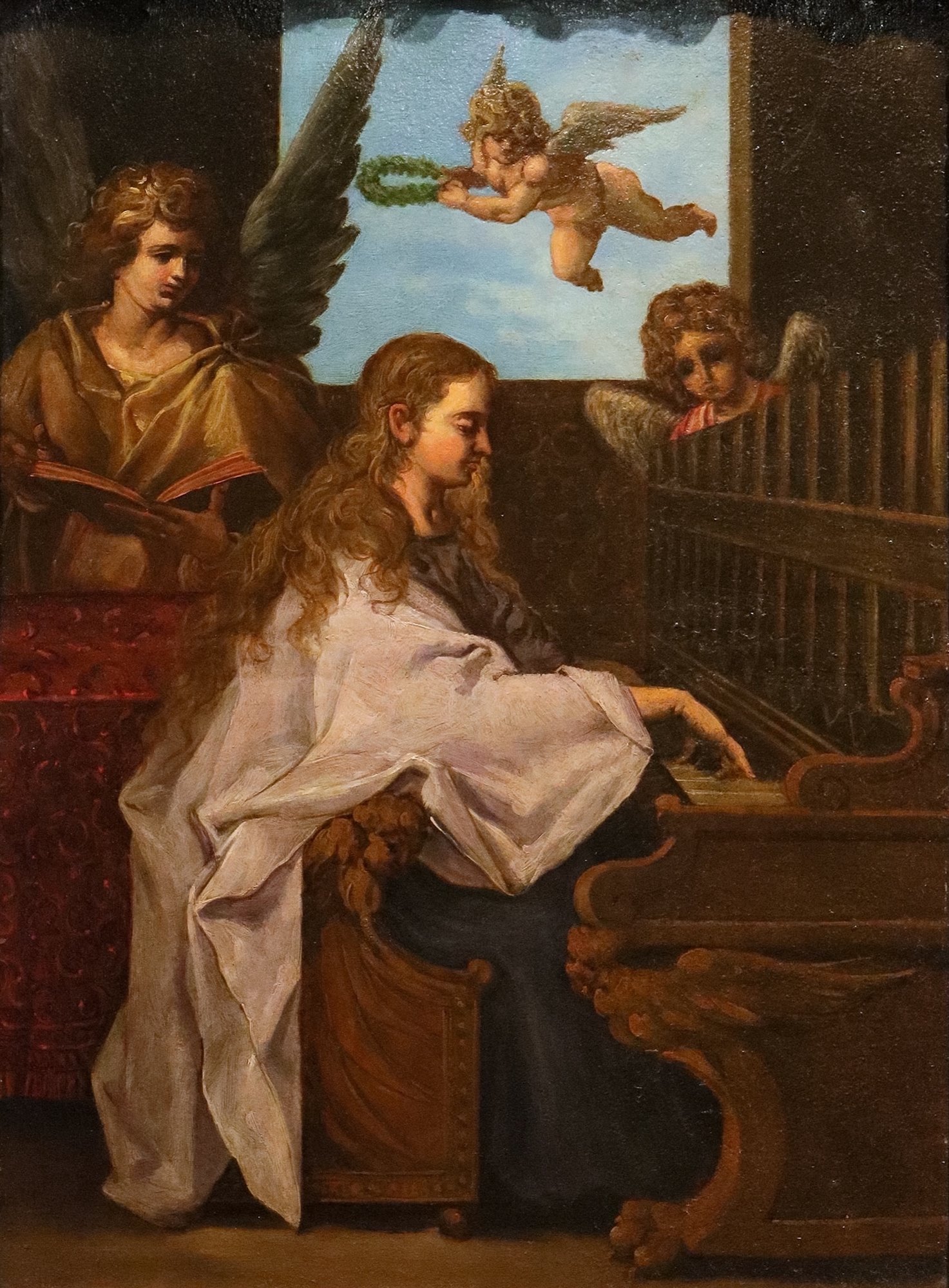
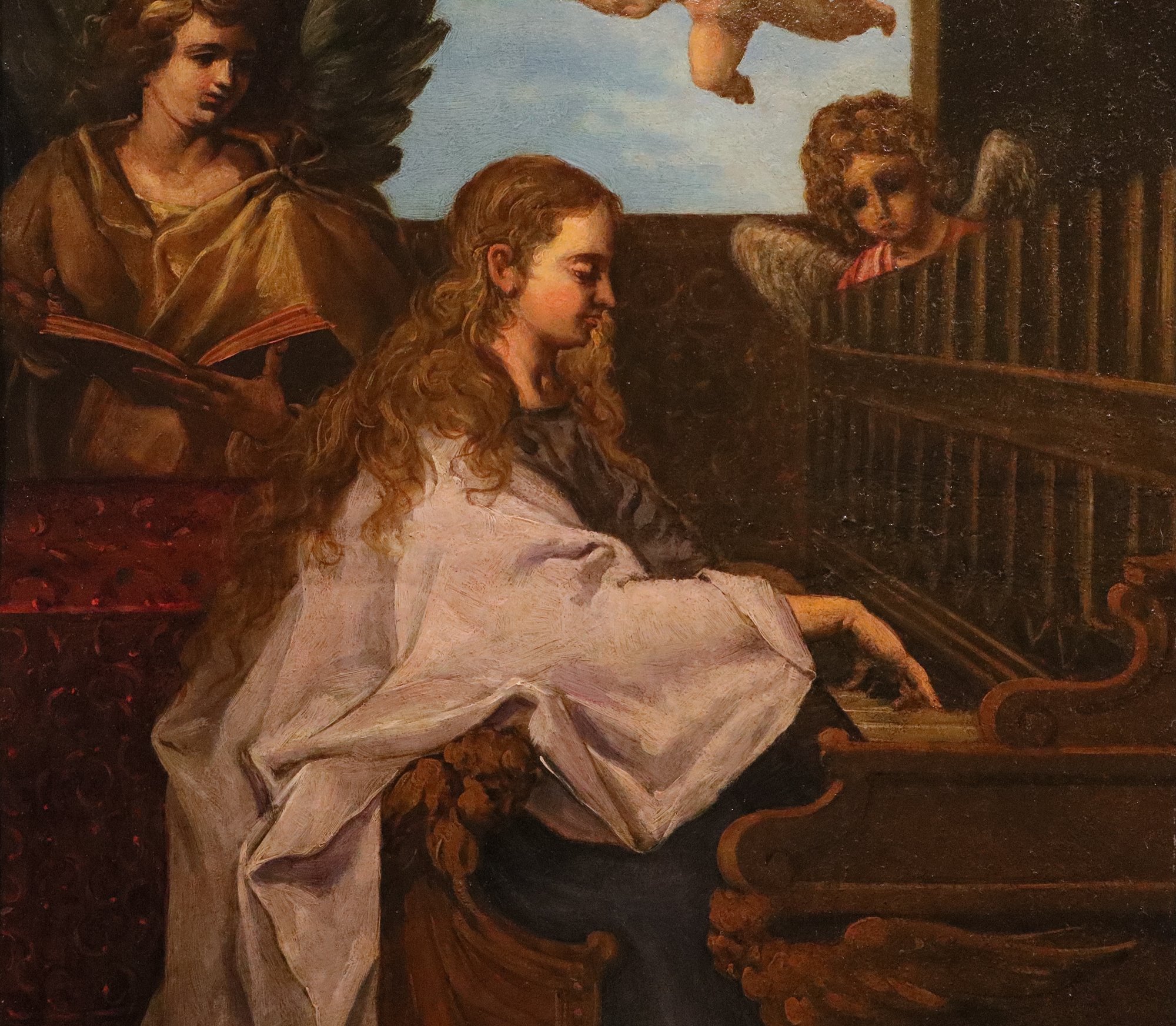
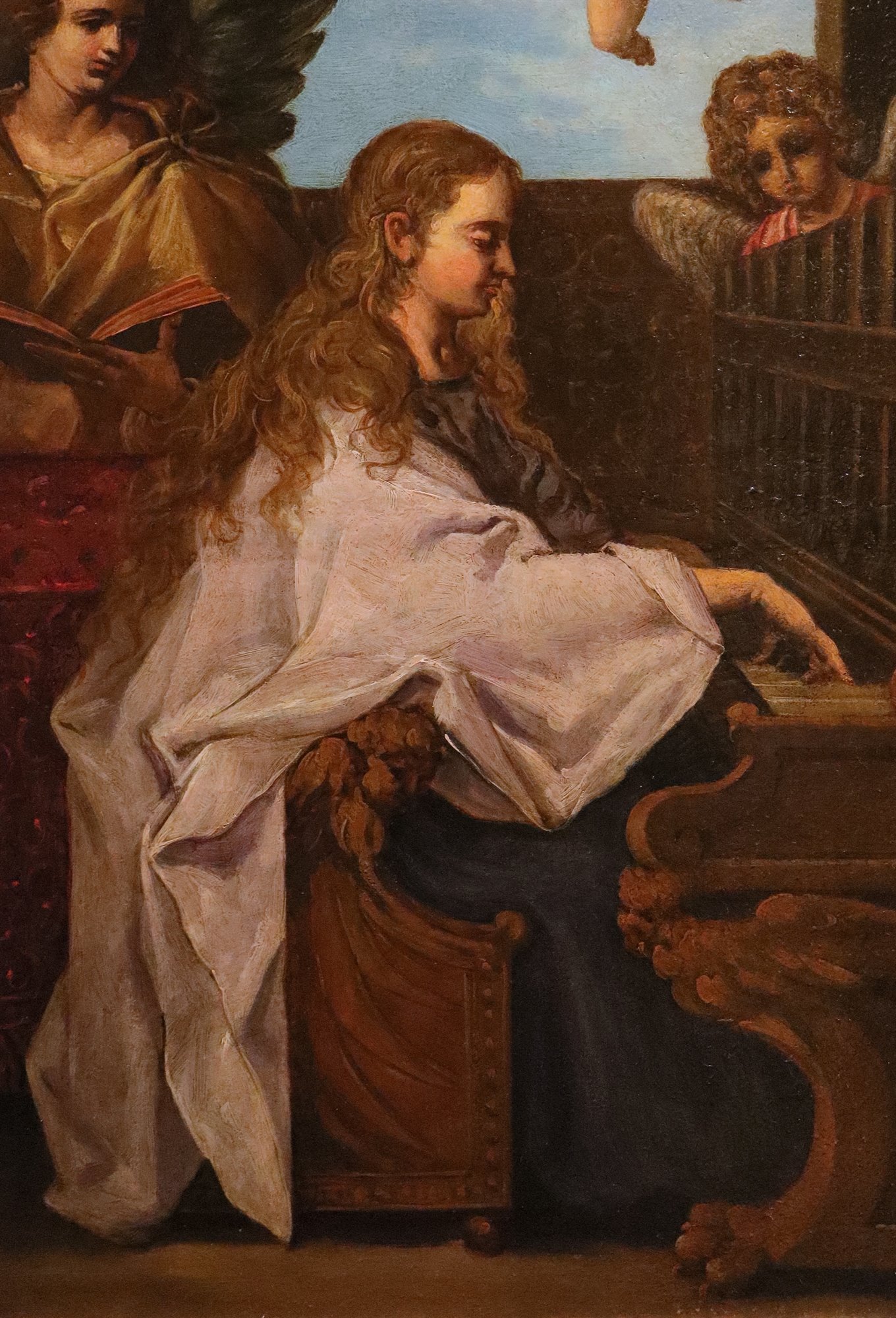
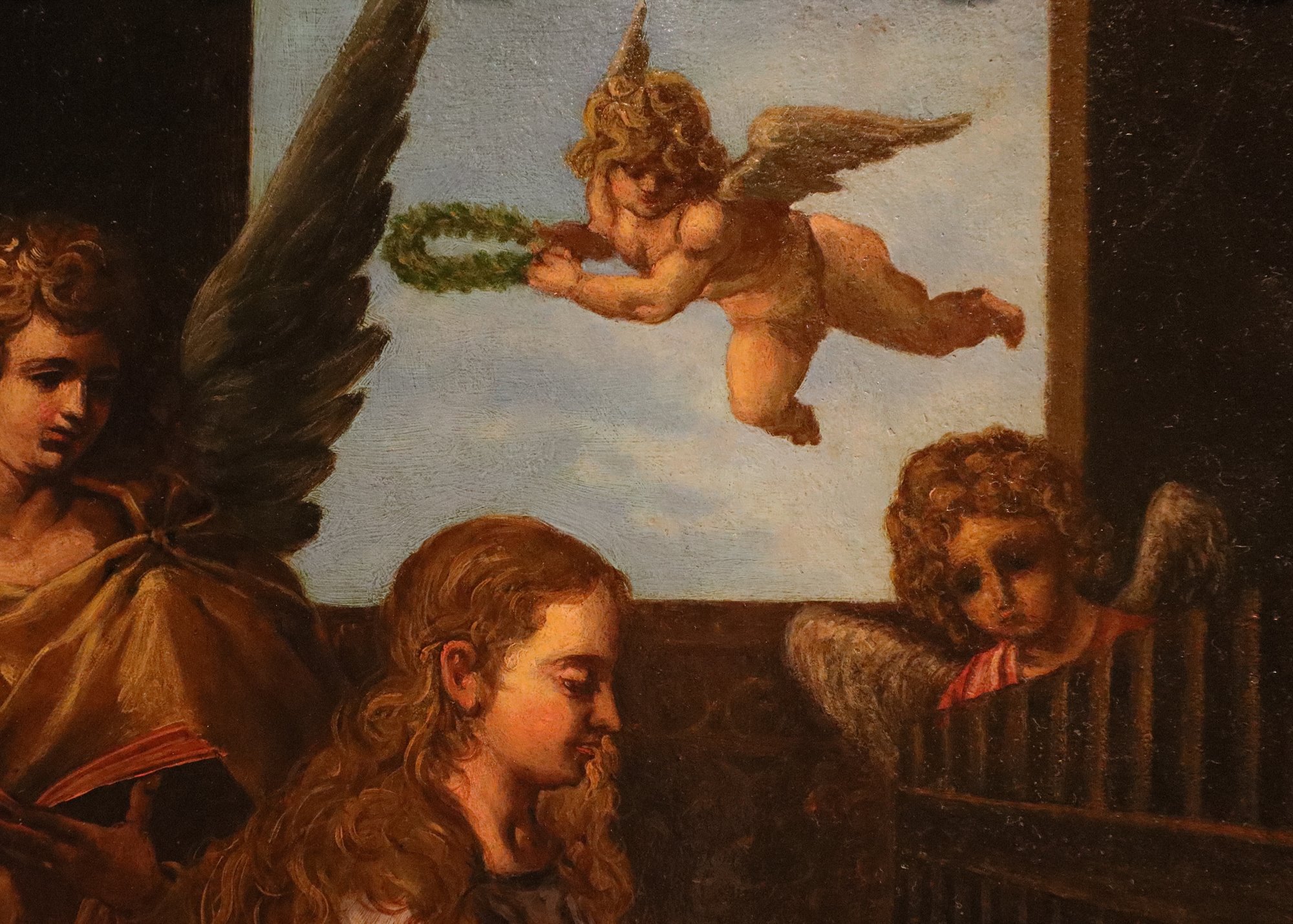
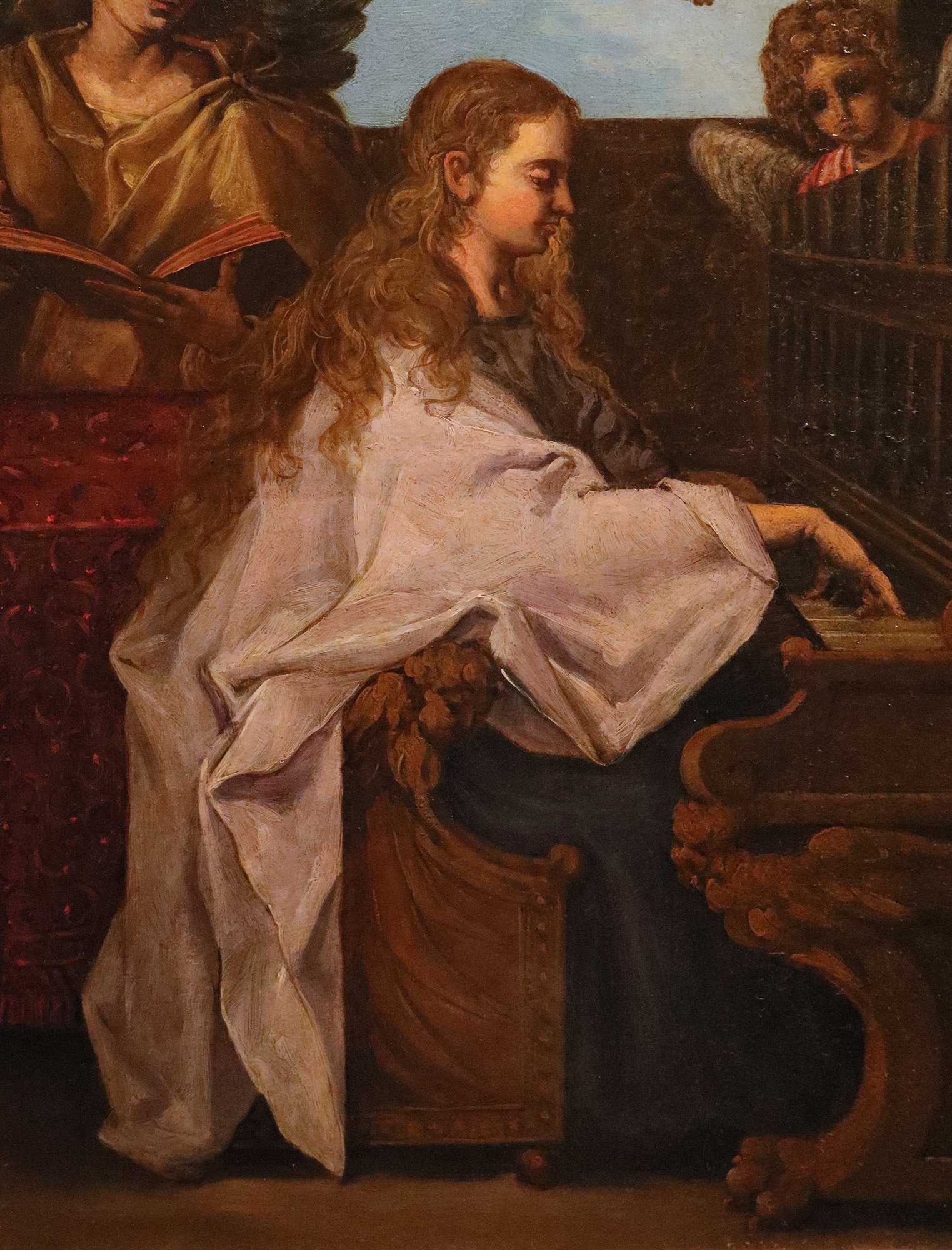
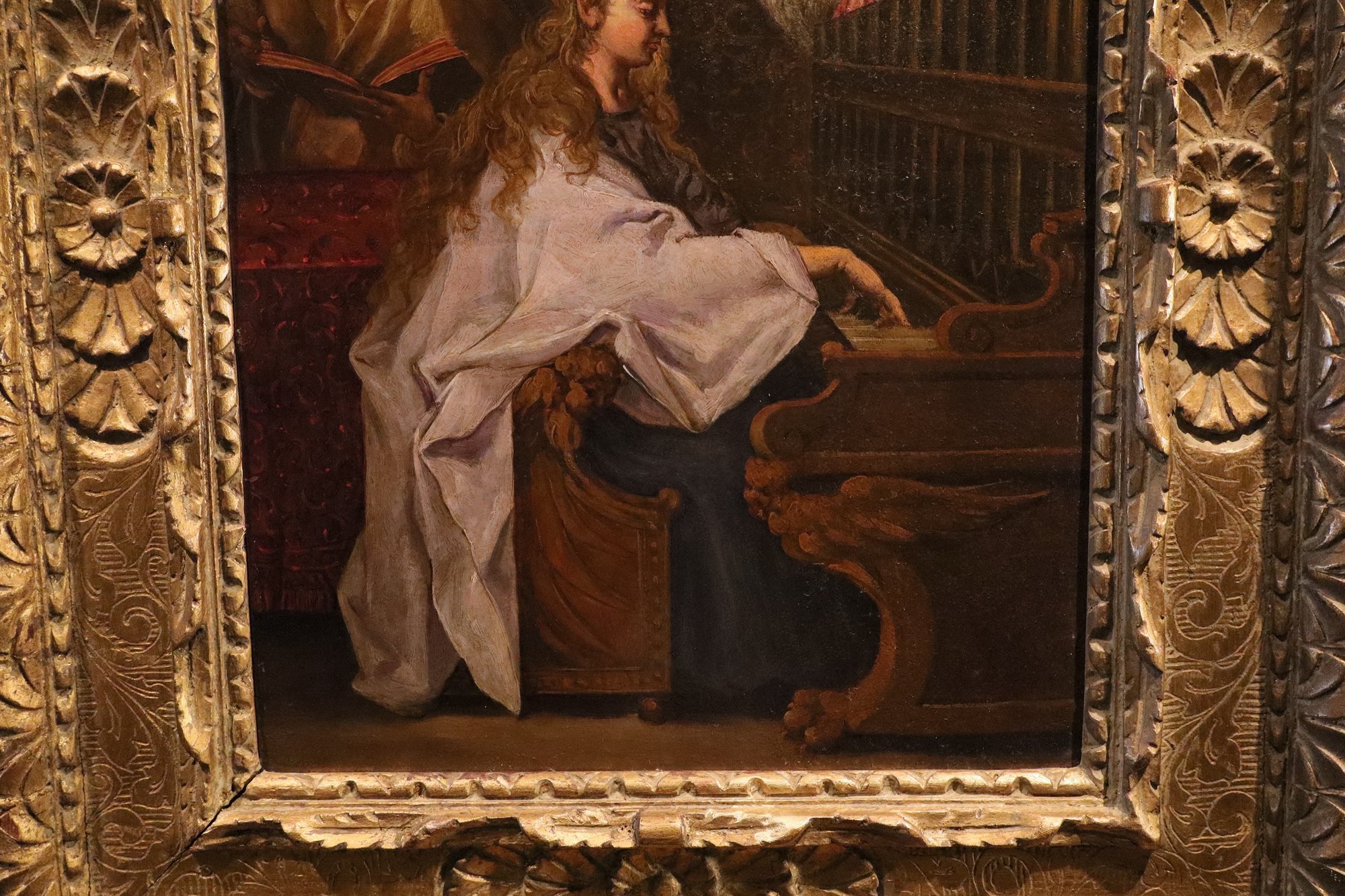
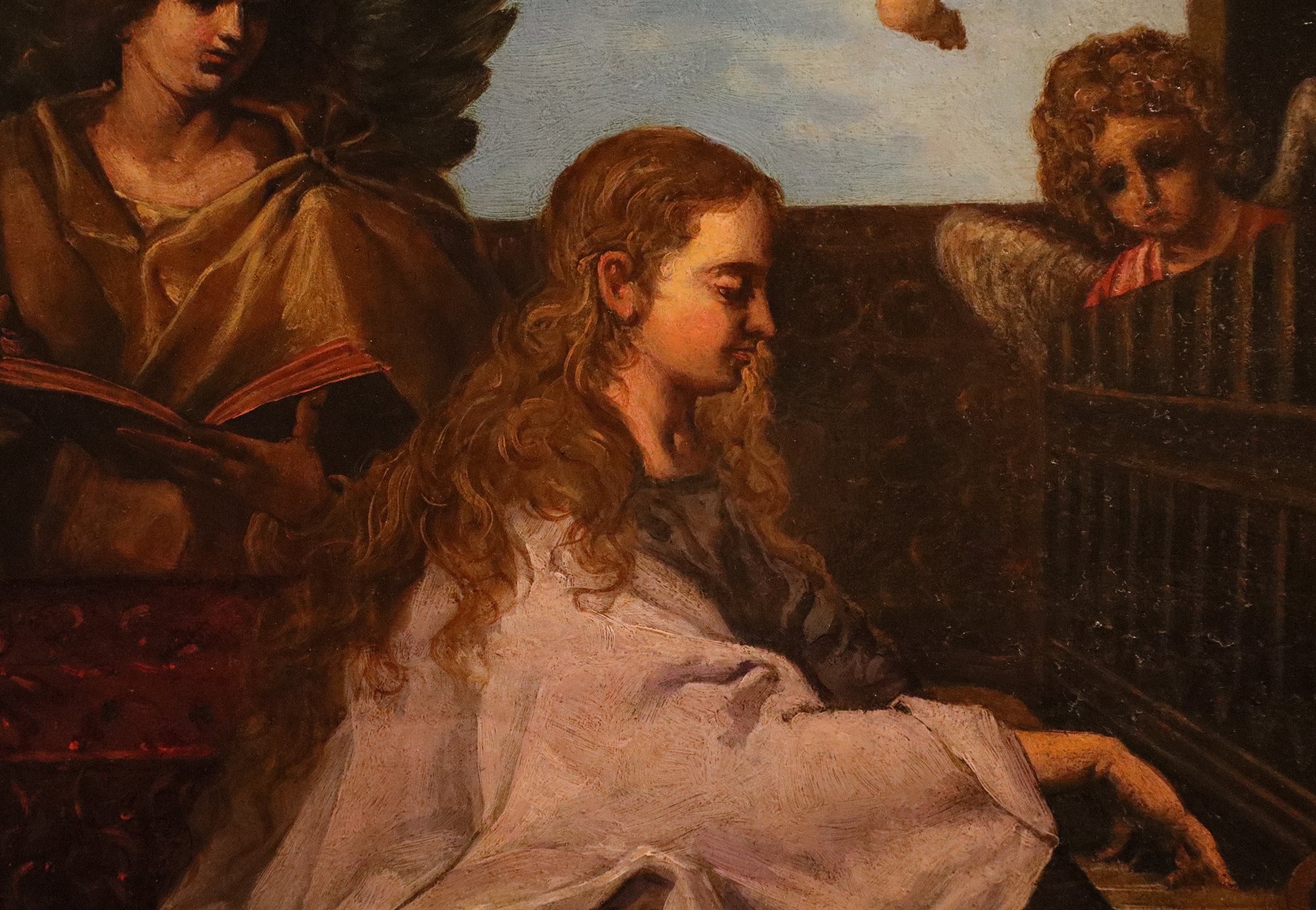
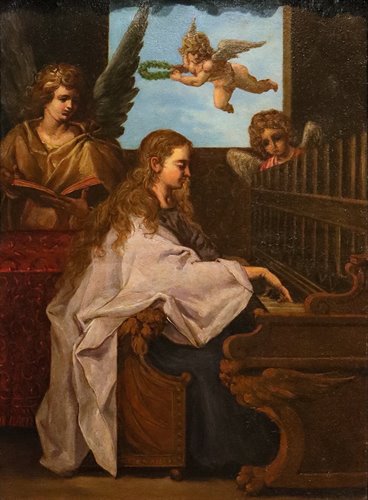
At the centre of the composition is Saint Cecilia, patron saint of music, seated in profile with long, wavy hair and finely draped robes, intent as she presses the keys of an organ. Before her stand three beautiful angelic figures: the largest, behind her, holds a book of musical scores; another floats in the air, holding a crown (a symbol of divine glory) in her hands; whilst a third angel peeks out from behind the organ, entranced by the heavenly melody.
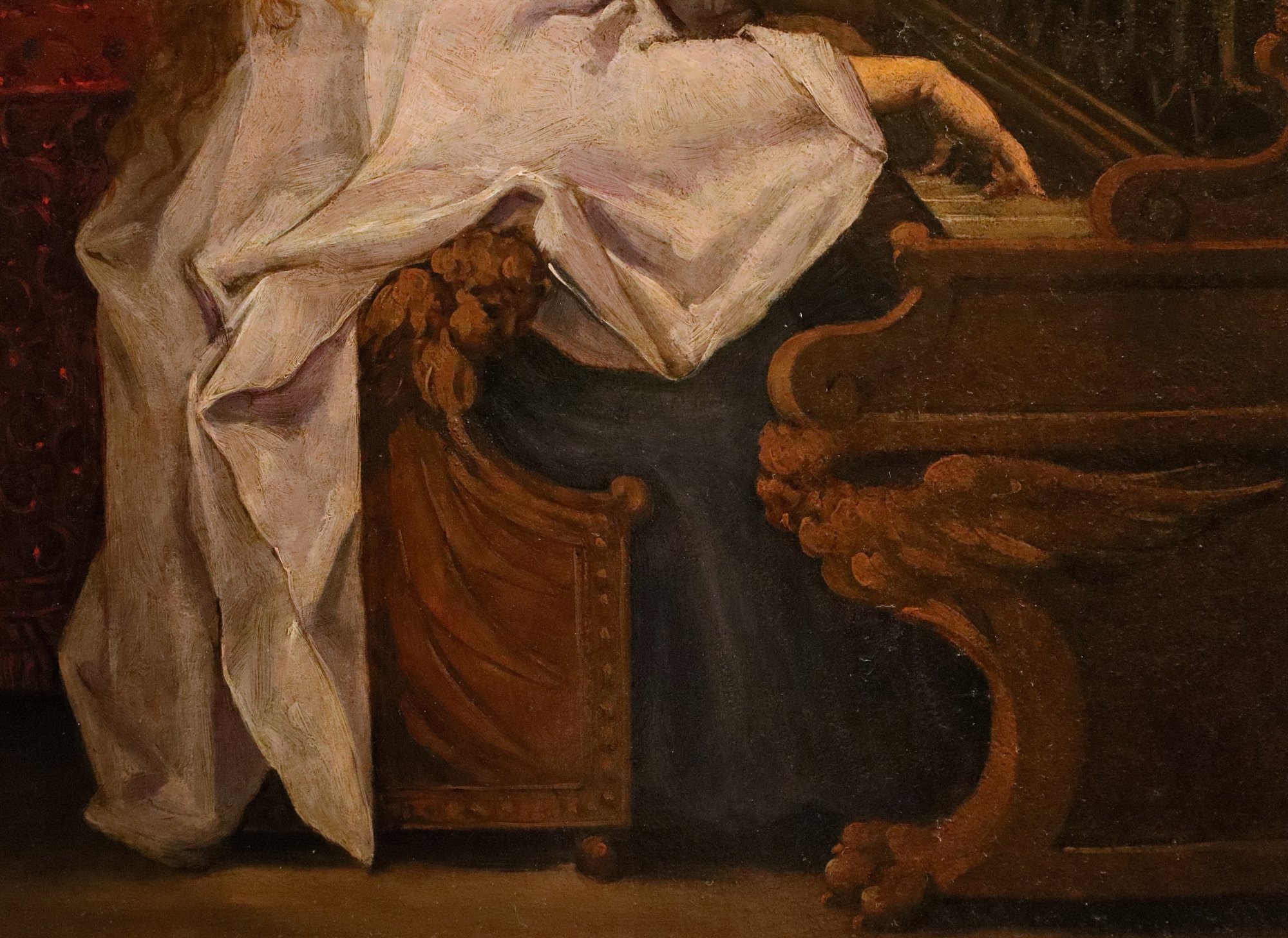
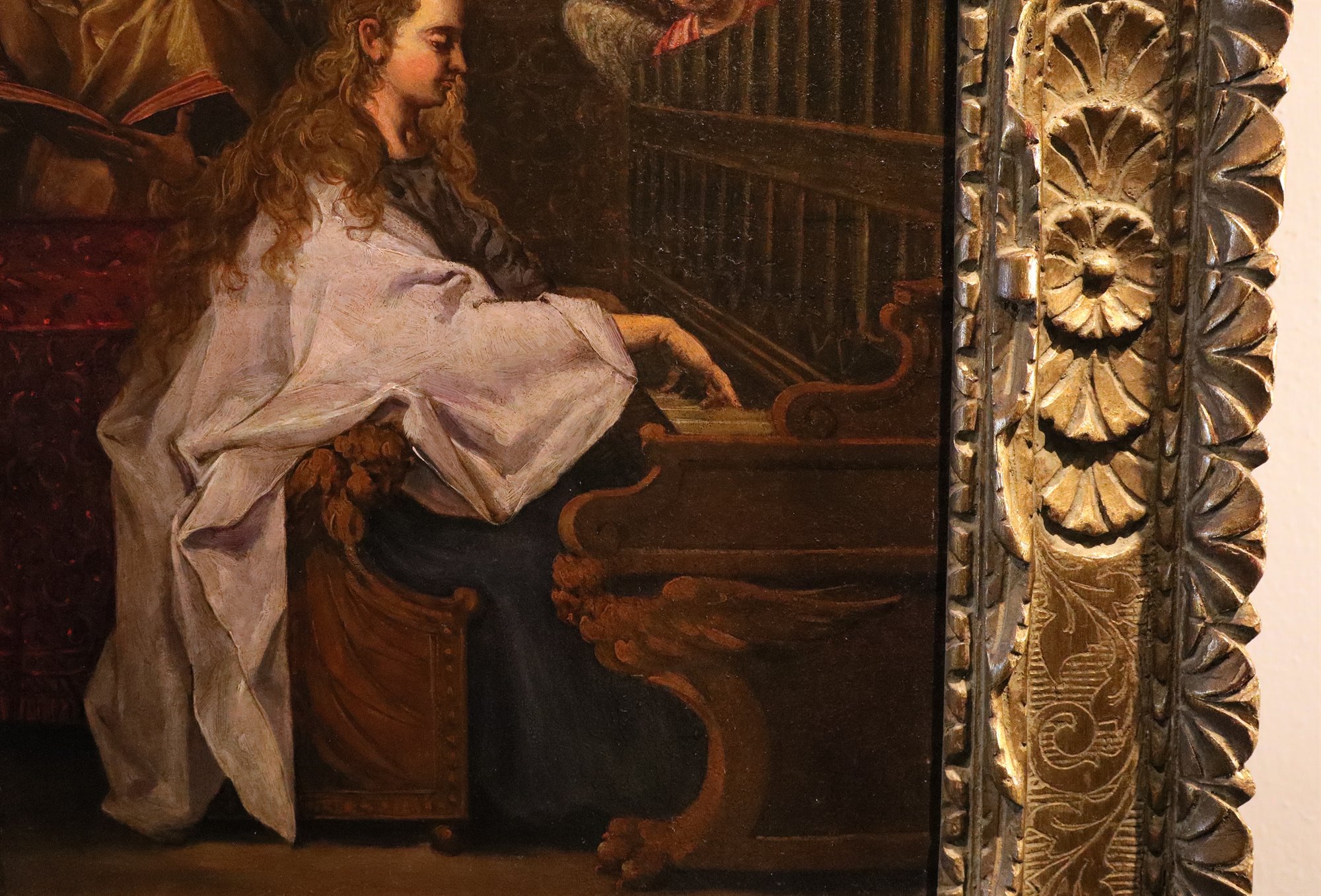
Worthy of mention are the decorative details and furnishings, such as the organ, which features a richly carved wooden structure with a lower support carved in the shape of a winged creature with lion-like paws, as well as the stool on which the Saint sits, adorned with a carved angel’s head on the armrest and punched geometric motifs.
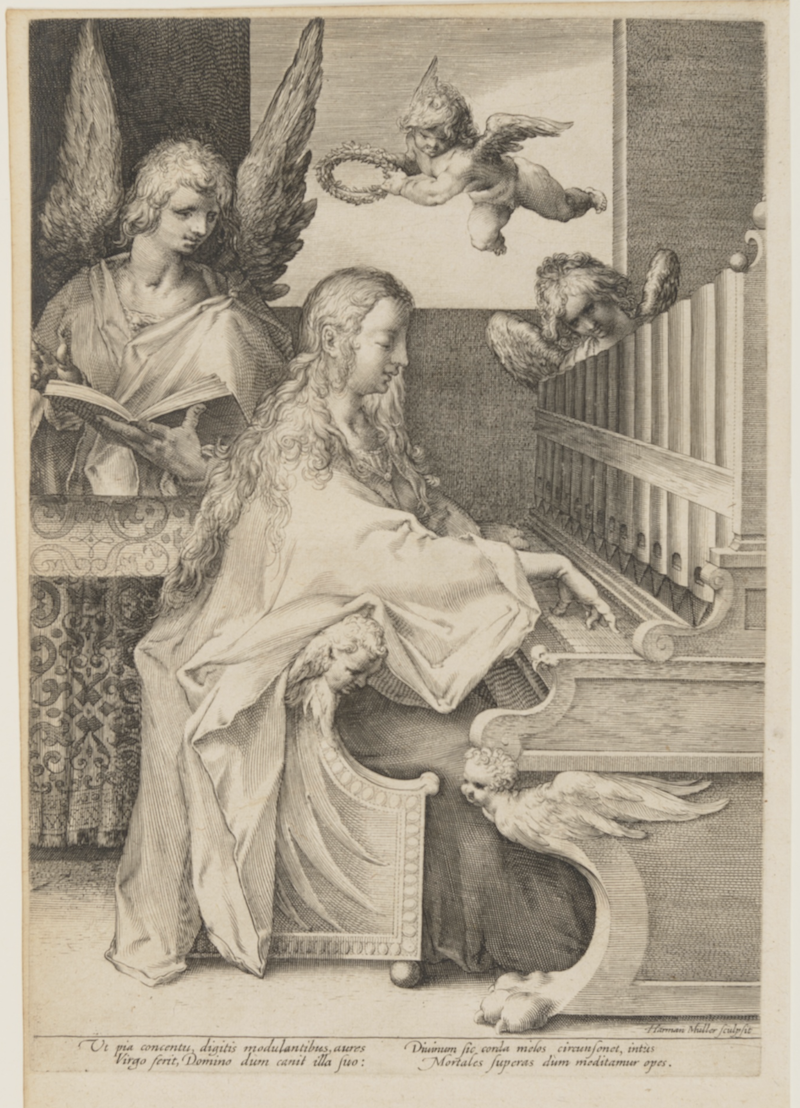
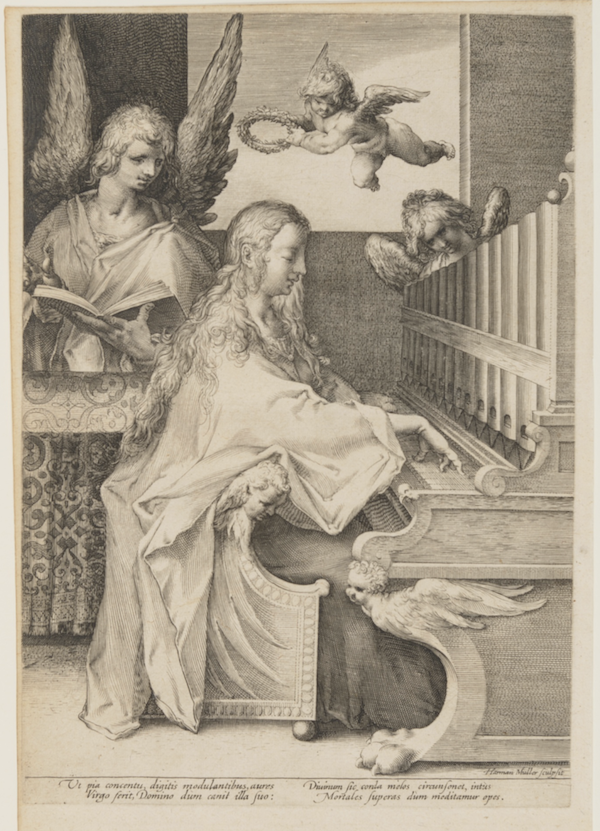
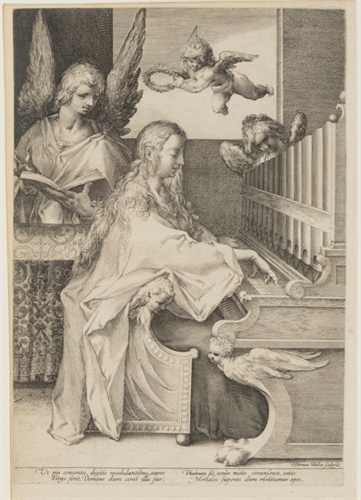
The painting, executed on a copper panel, is based on a work by the famous Mannerist engraver Herman Jansz. Muller (1571–1628) between 1590 and 1594 (Fig. 1 – Art Institute of Chicago https://www.artic.edu/artworks/268335/st-cecilia-playing-the-organ-with-two-angels).
It became common practice for many painters between the 16th and 17th centuries to use Flemish prints and engravings as iconographic models (the so-called ‘exempla’).
Returning to our Saint Cecilia, the style in which the drawing has been transferred onto copper allows us to attribute its execution to an artist of the late Italian Mannerist period; in particular, we can attribute its authorship to the workshop of Cristoforo Roncalli, known as ‘il Pomarancio’, a highly successful painter who was inclined to draw inspiration from this repertoire originating in Northern Europe.
In those years, in fact, prints by the most celebrated Flemish engravers were circulating in Roman workshops, offering extraordinarily innovative compositional arrangements. And Roncalli, working in Rome at the turn of the 16th and 17th centuries, was a contemporary of Jan Müller’s journey to Italy (which took place around 1592) and of the widespread circulation of his prints.
In light of these considerations, and returning our attention to our painting, the connection to Roncalli appears entirely relevant and perfectly consistent with his artistic style, which blends the late-Mannerist Tuscan figurative tradition with a profound sense of draughtsmanship.
From a chromatic perspective, too, we are perfectly in line with the master’s style; influenced by emerging naturalism and his proximity to Caravaggio, he began to employ strong contrasts of light and shadow, endowing the Flemish composition with an entirely new chromatic and luminous drama.
[1] Saint Cecilia, Herman Jansz. Muller (1571–1628), Art Institute of Chicago
ADDITIONAL INFORMATION:
The work is sold complete with an attractive gilded frame and is accompanied by a certificate of authenticity and a descriptive iconographic sheet.
We arrange and organise the transport of purchased works, both within Italy and abroad, using professional, insured carriers.
It is also possible to view the painting at our gallery in Riva del Garda, by appointment, where we will be delighted to welcome you and show you the works that interest you.
Please feel free to contact us, with no obligation, for any further information.
Follow us on: