
San Giorgio e il Drago
Scuola toscana (XVII - XVIII secolo)
Tuscan School
17th–18th centuries
St George and the Dragon
Oil on canvas
66 x 50 cm
Framed: 92 x 76 cm
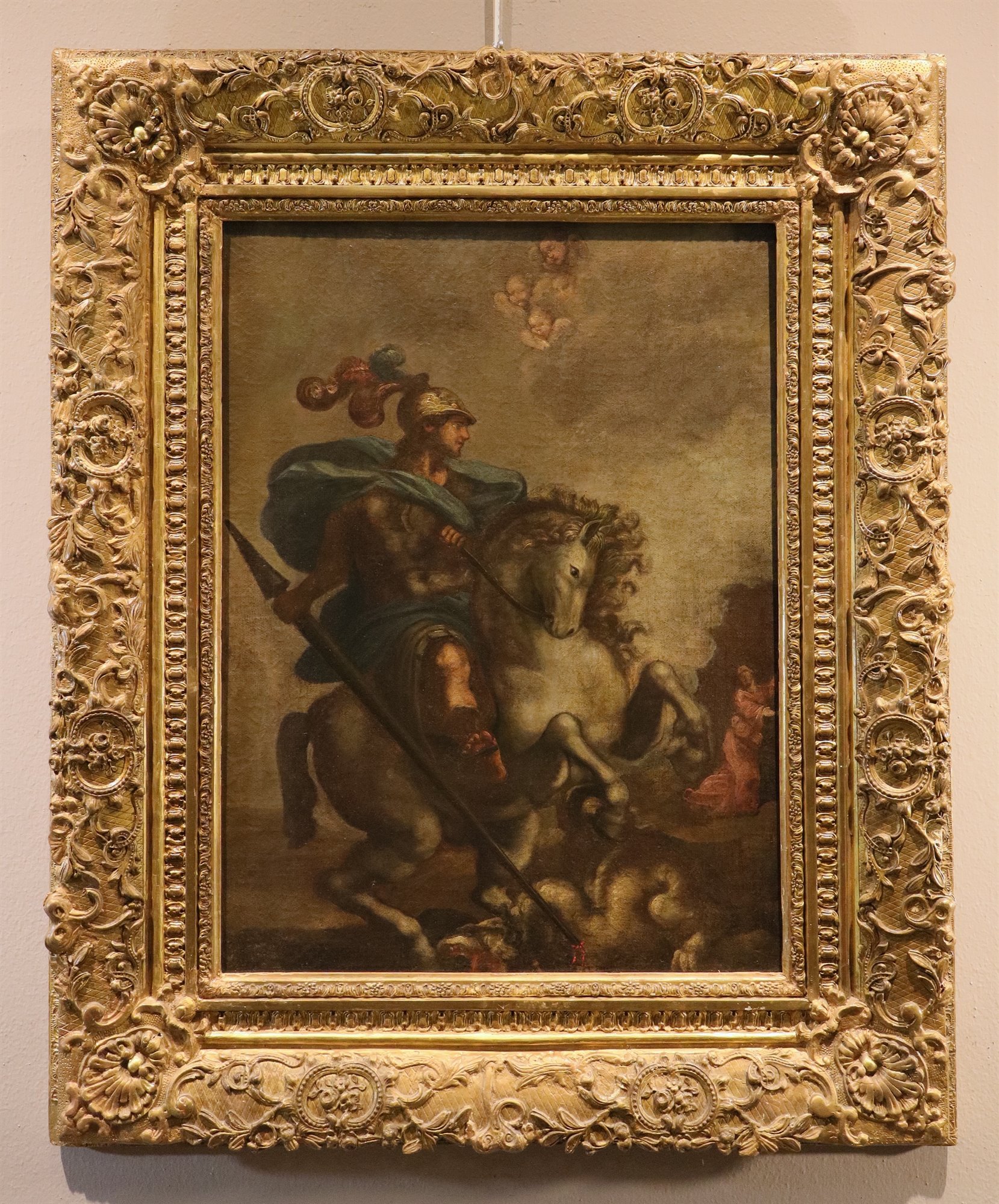
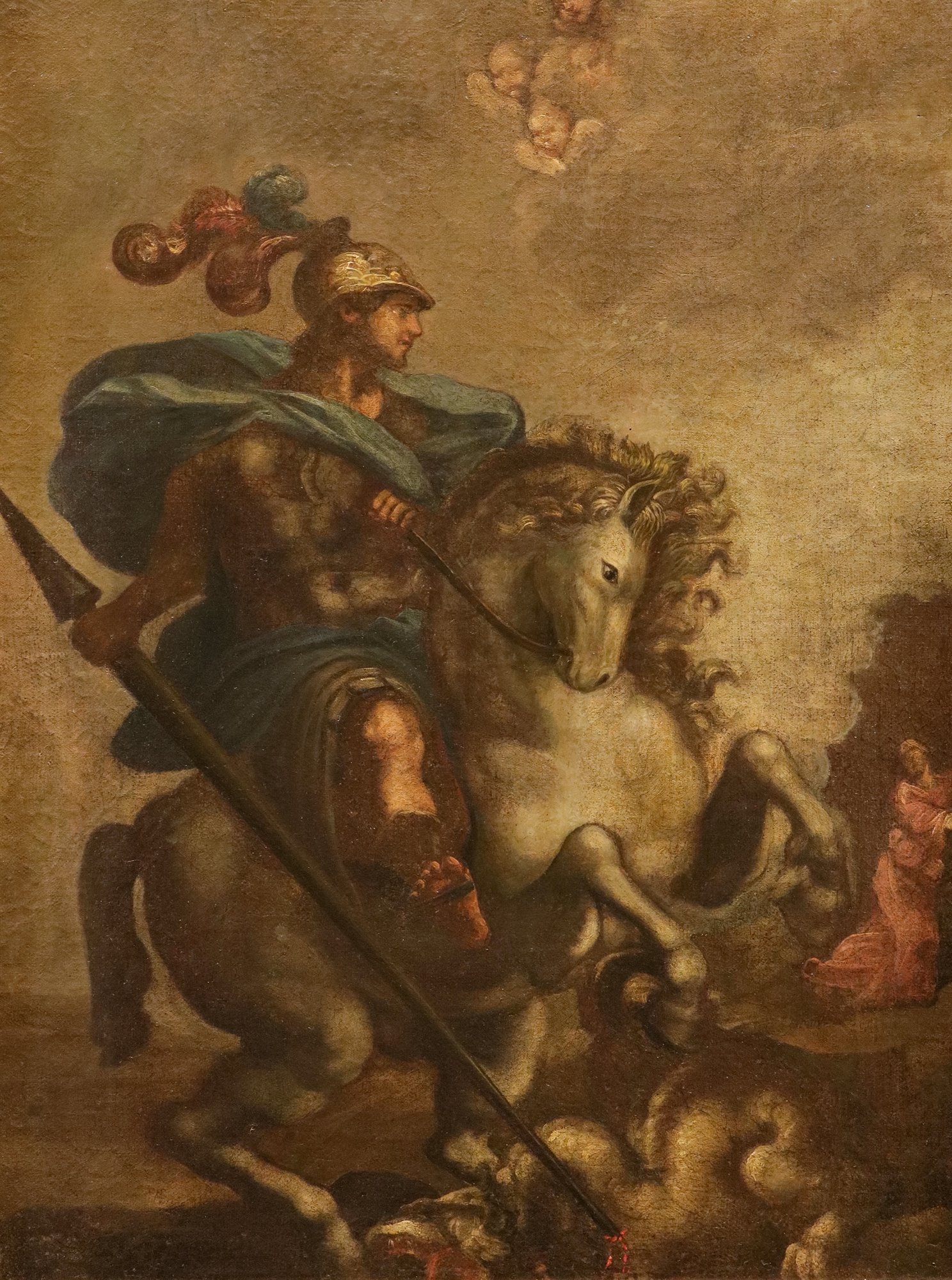
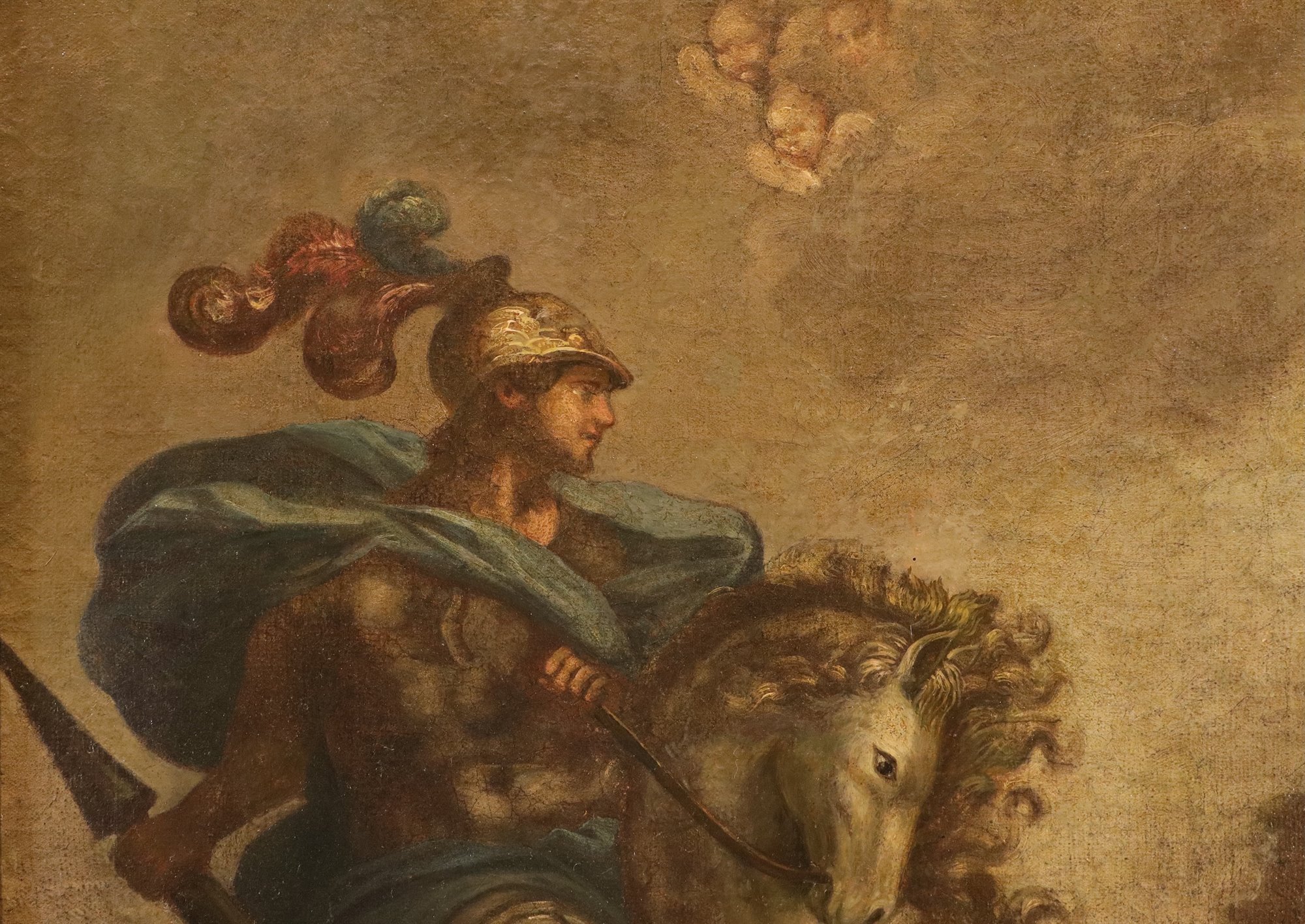
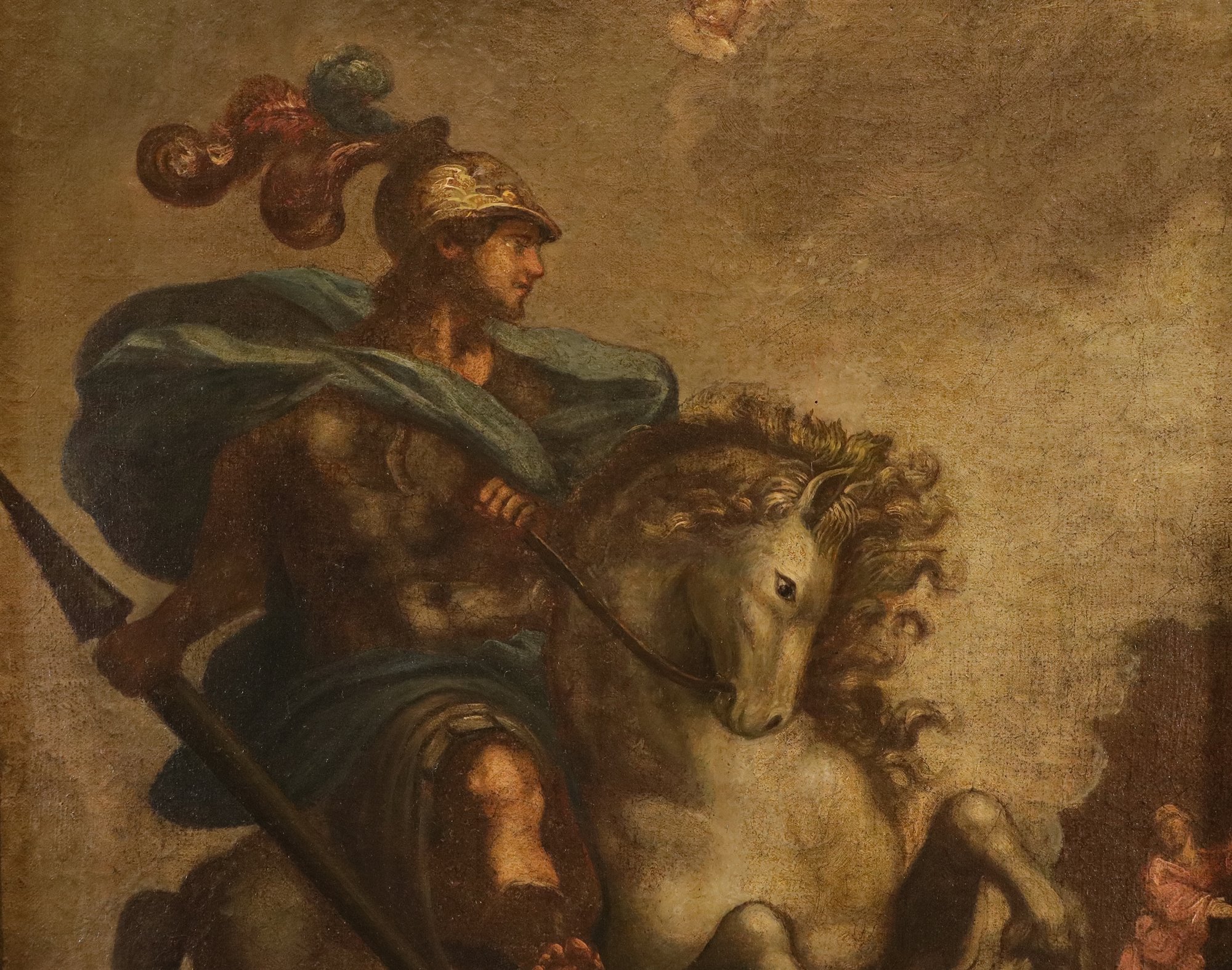
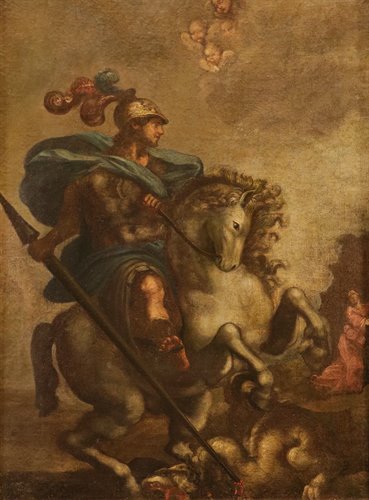
The fascinating painting we present here depicts the victory of St George, a noble knight of the Christian faith, over the dragon. His marvellous adventure, steeped in symbolic meaning in the struggle between Good and Evil, has always been a favourite theme in art.
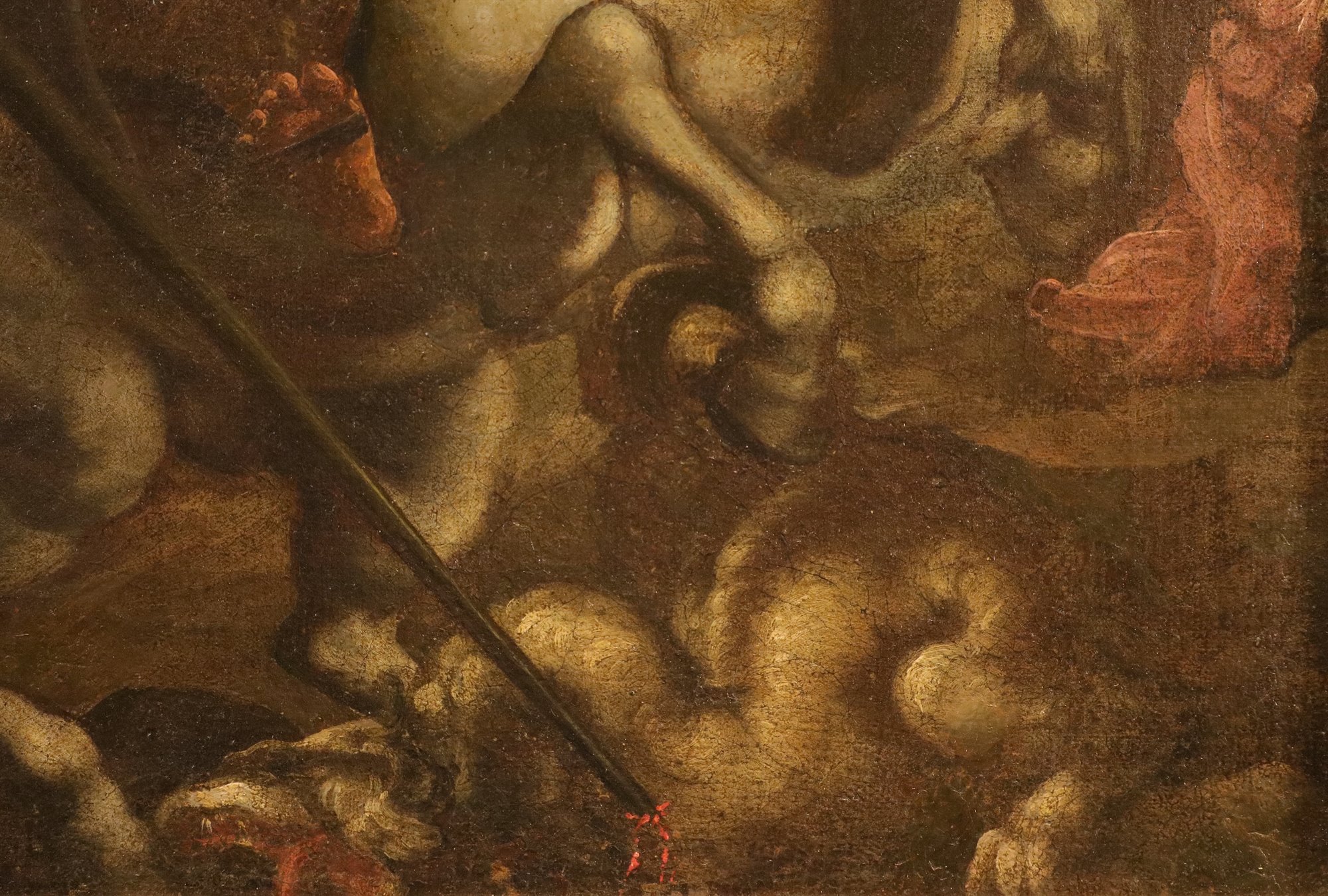
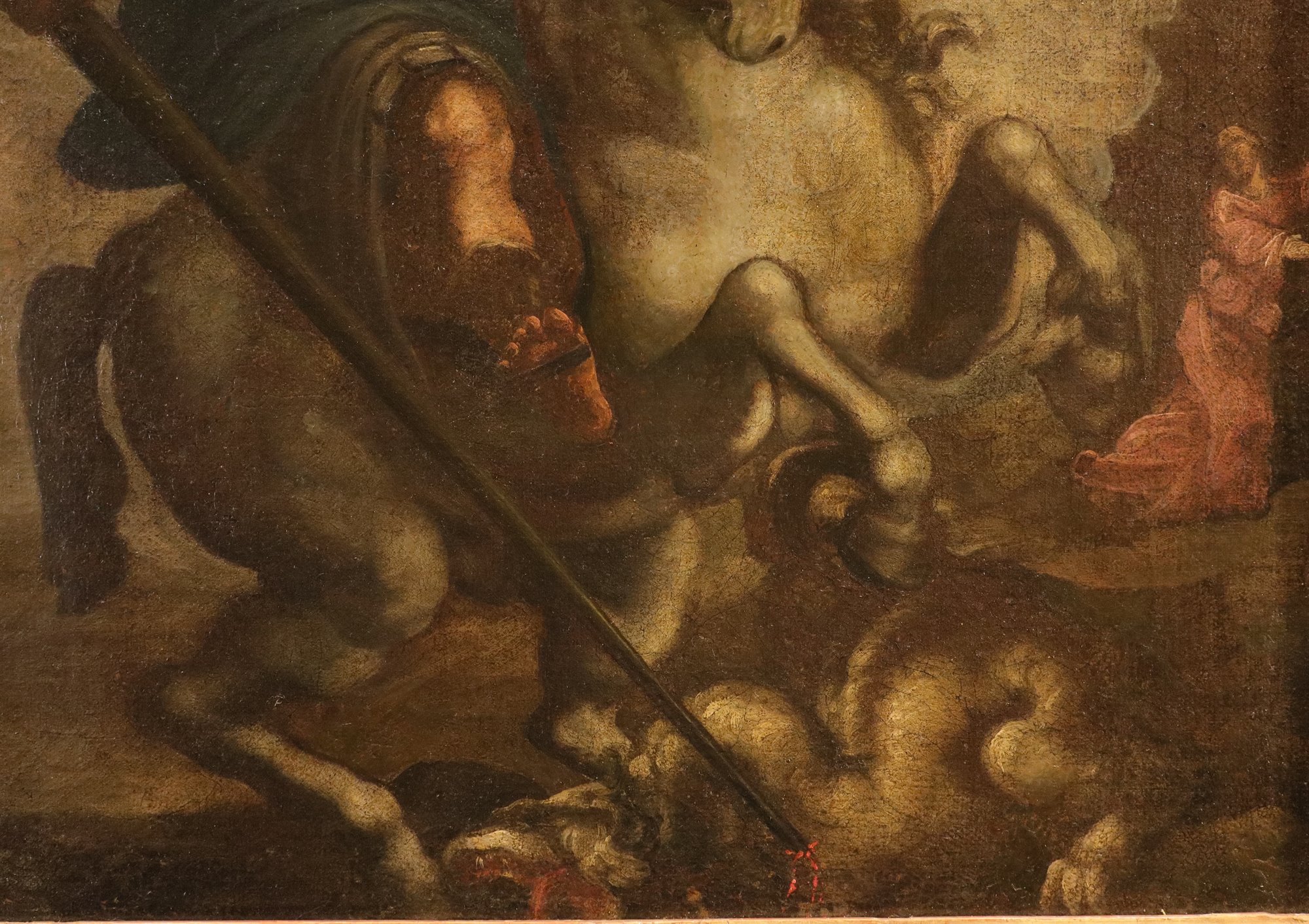
“One day he arrived in the kingdom of Silene, ravaged by the presence of a terrible dragon, whose destructive power could only be curbed by human sacrifices. It was none other than the ‘soldier of Christ’ who slew the dangerous beast and rescued the sovereign’s daughter from the monster’s jaws” (from the *Golden Legend*, Jacopo da Varazze)
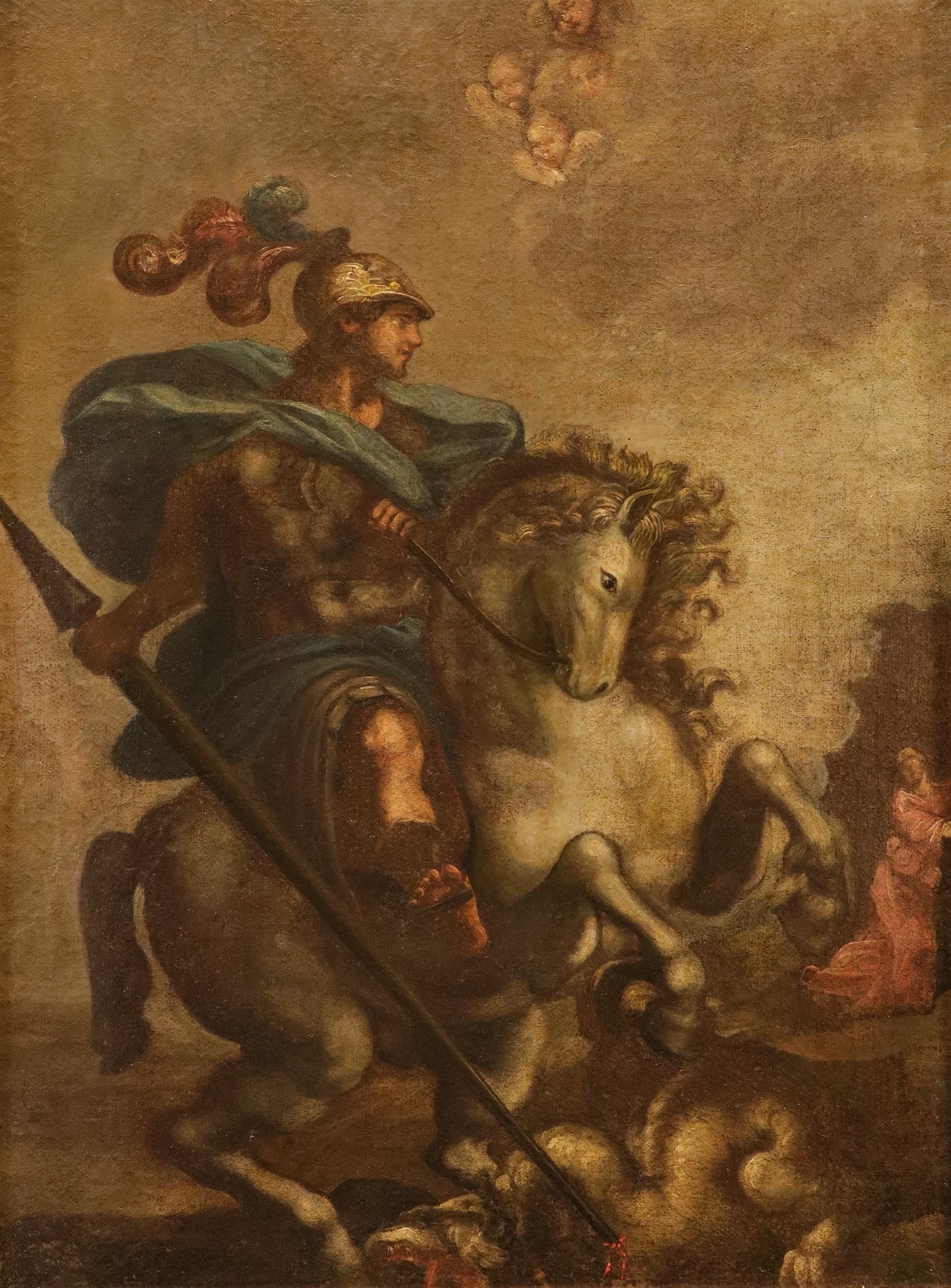
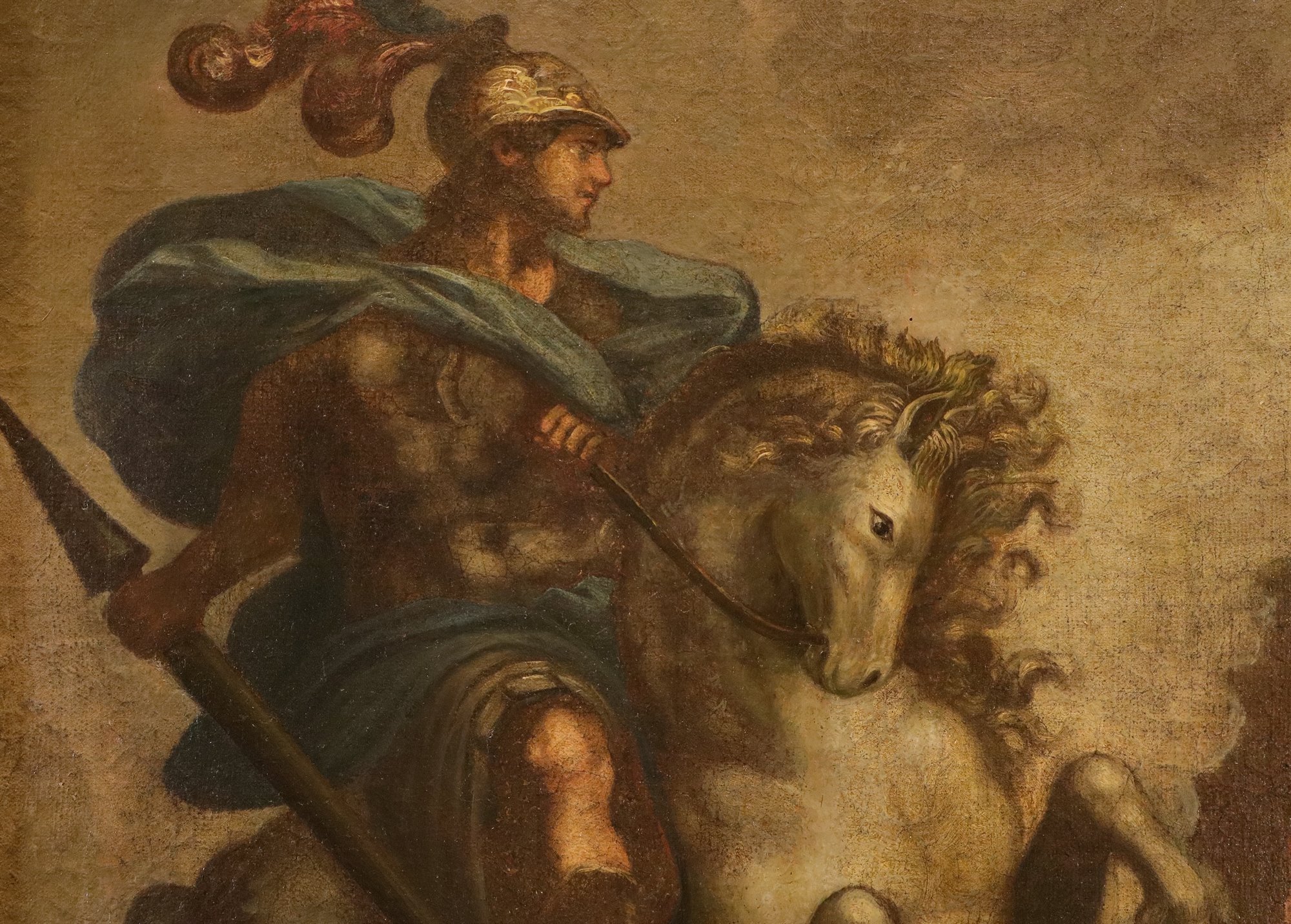
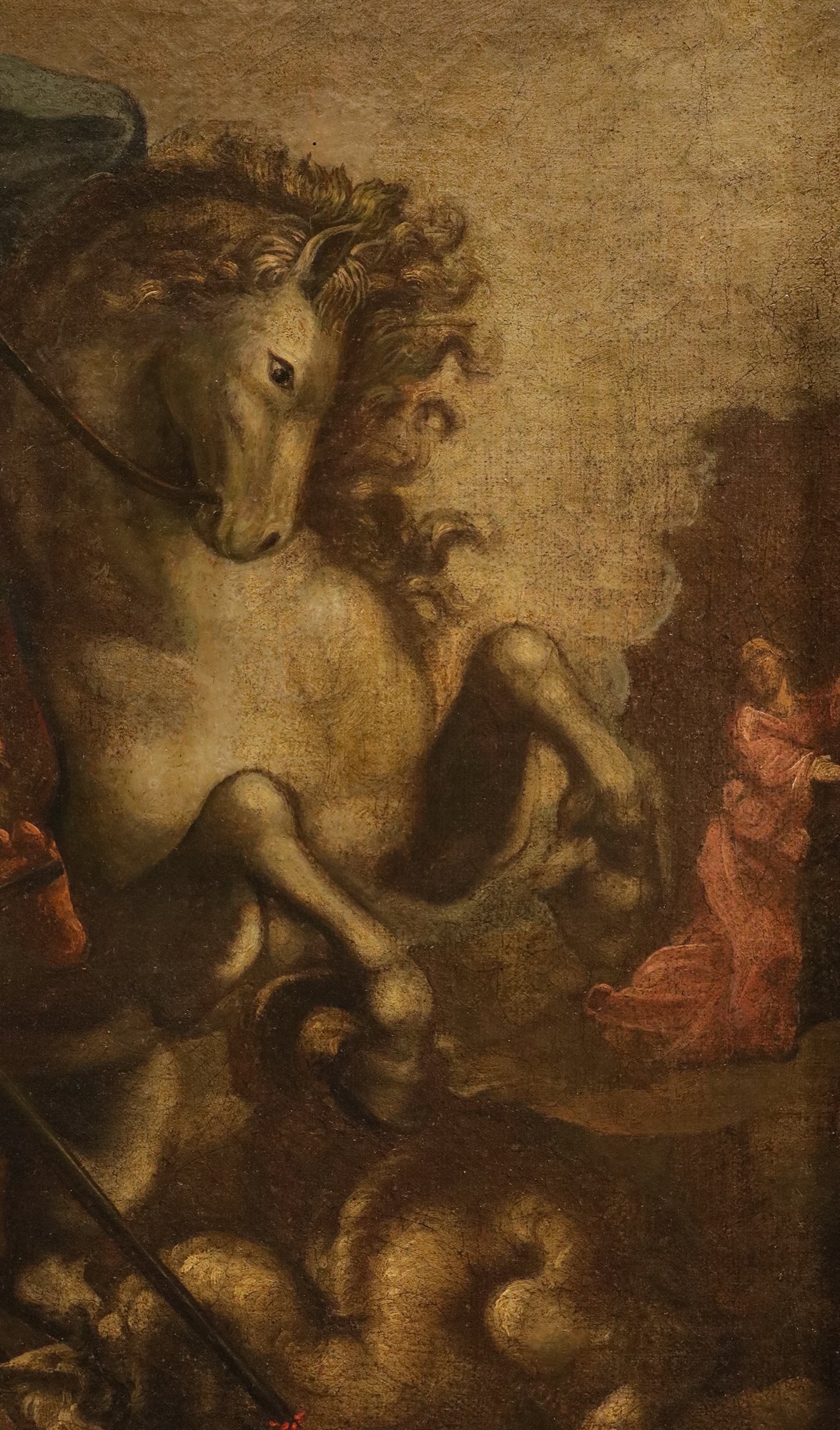
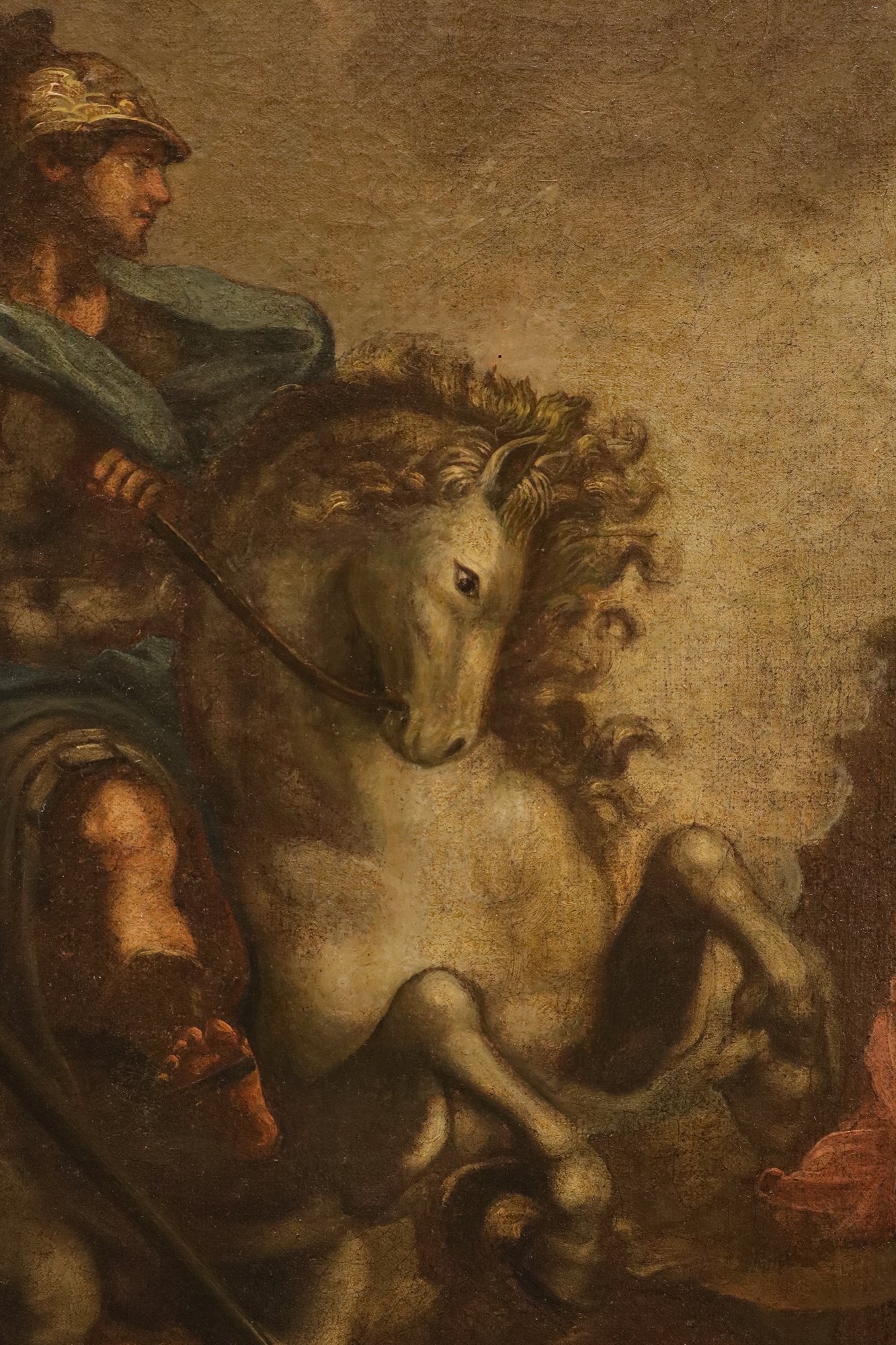
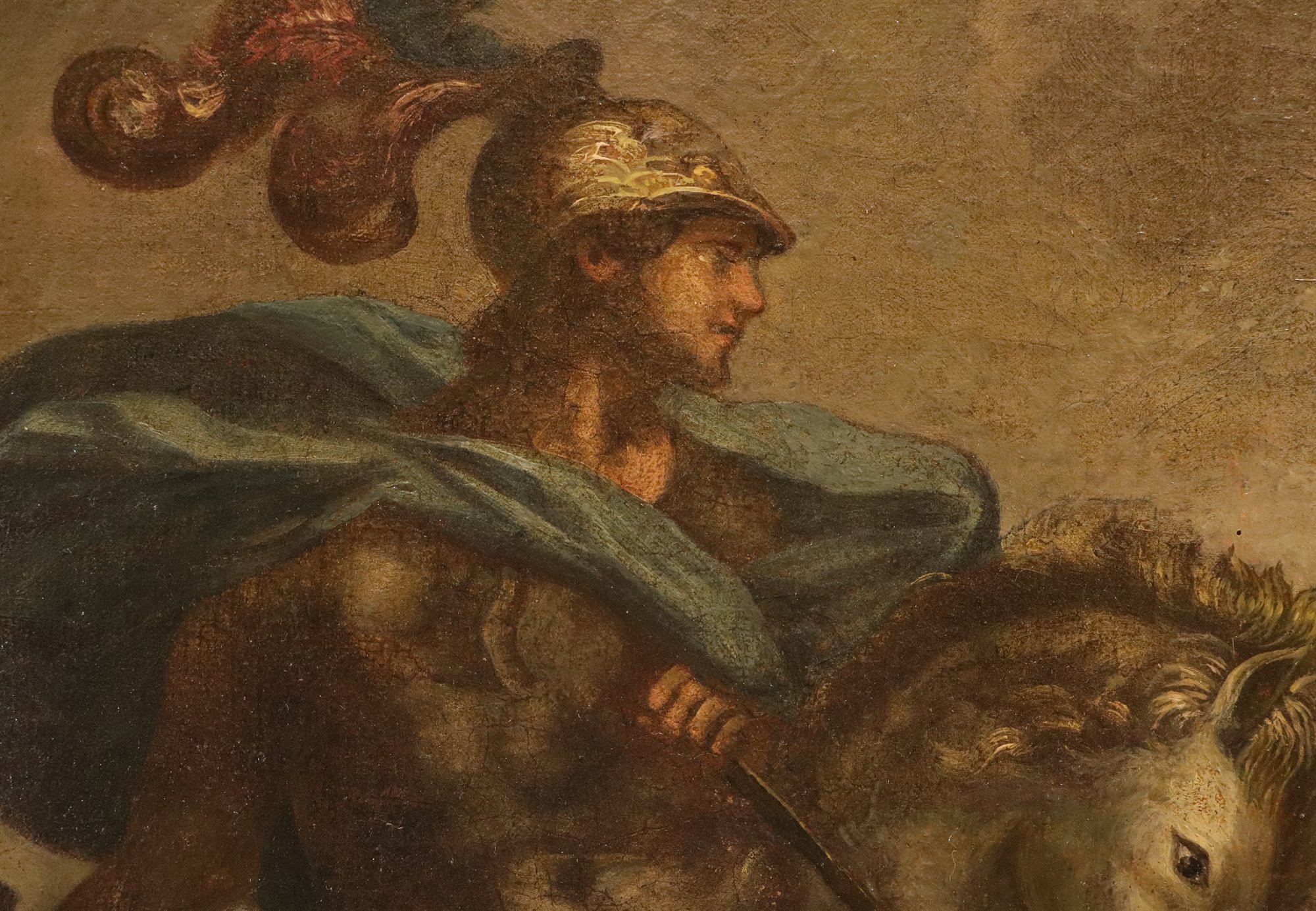
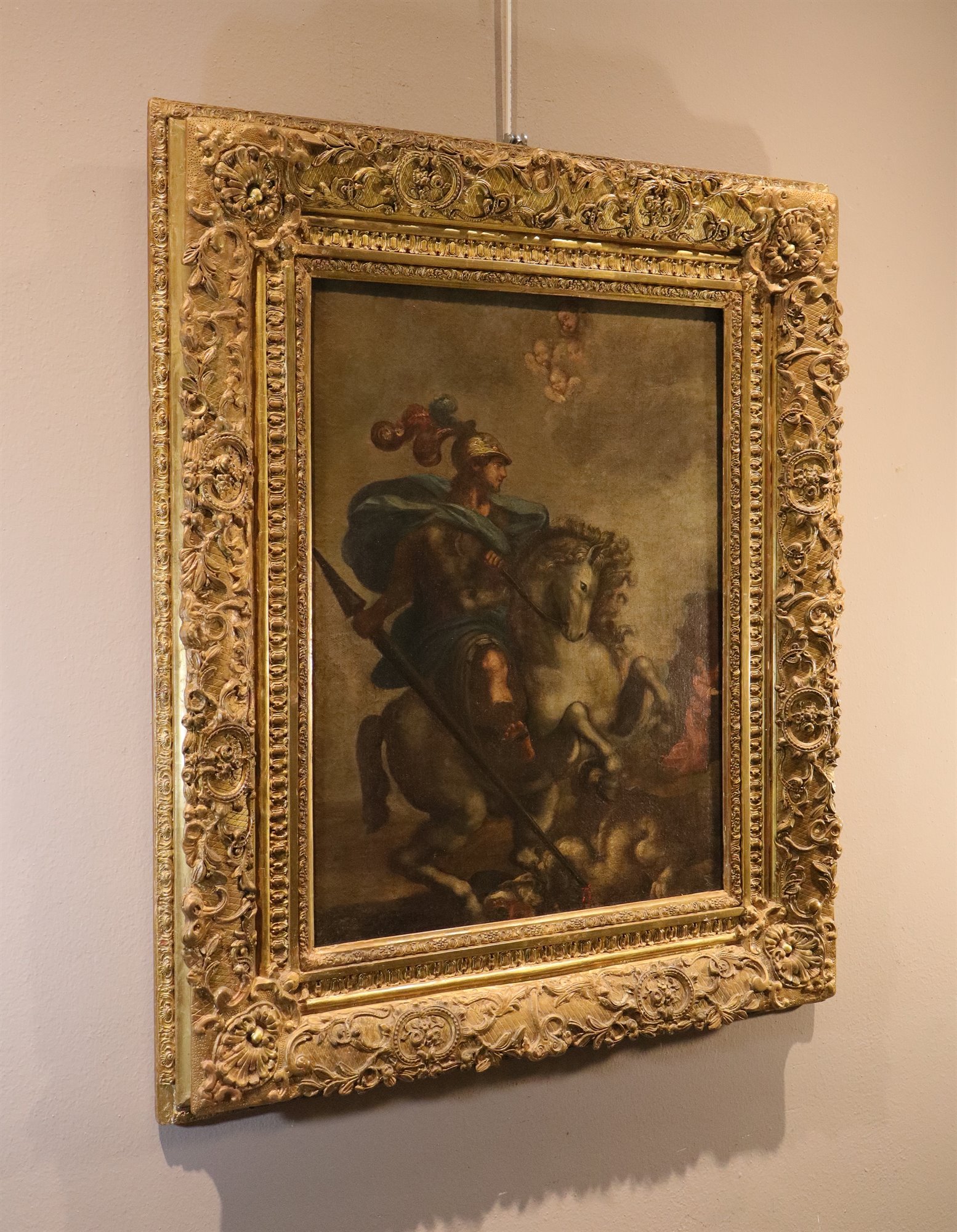
In our painting, Saint George—both saint and knight—is depicted at the moment of his triumph over the dragon, as he pierces it with his lance: he is portrayed according to traditional iconography, on horseback, clad in gleaming armour and a plumed helmet, with his blue cloak billowing in the wind. In the background, standing to one side, is the princess, overcome with terror, praying for her salvation.
The attribution of the work is situated within the sophisticated landscape of Tuscan painting, specifically between the late 17th and early 18th centuries, a period in which local workshops were reinterpreting the great Renaissance tradition through a theatrical, dynamic and chiaroscuro lens.
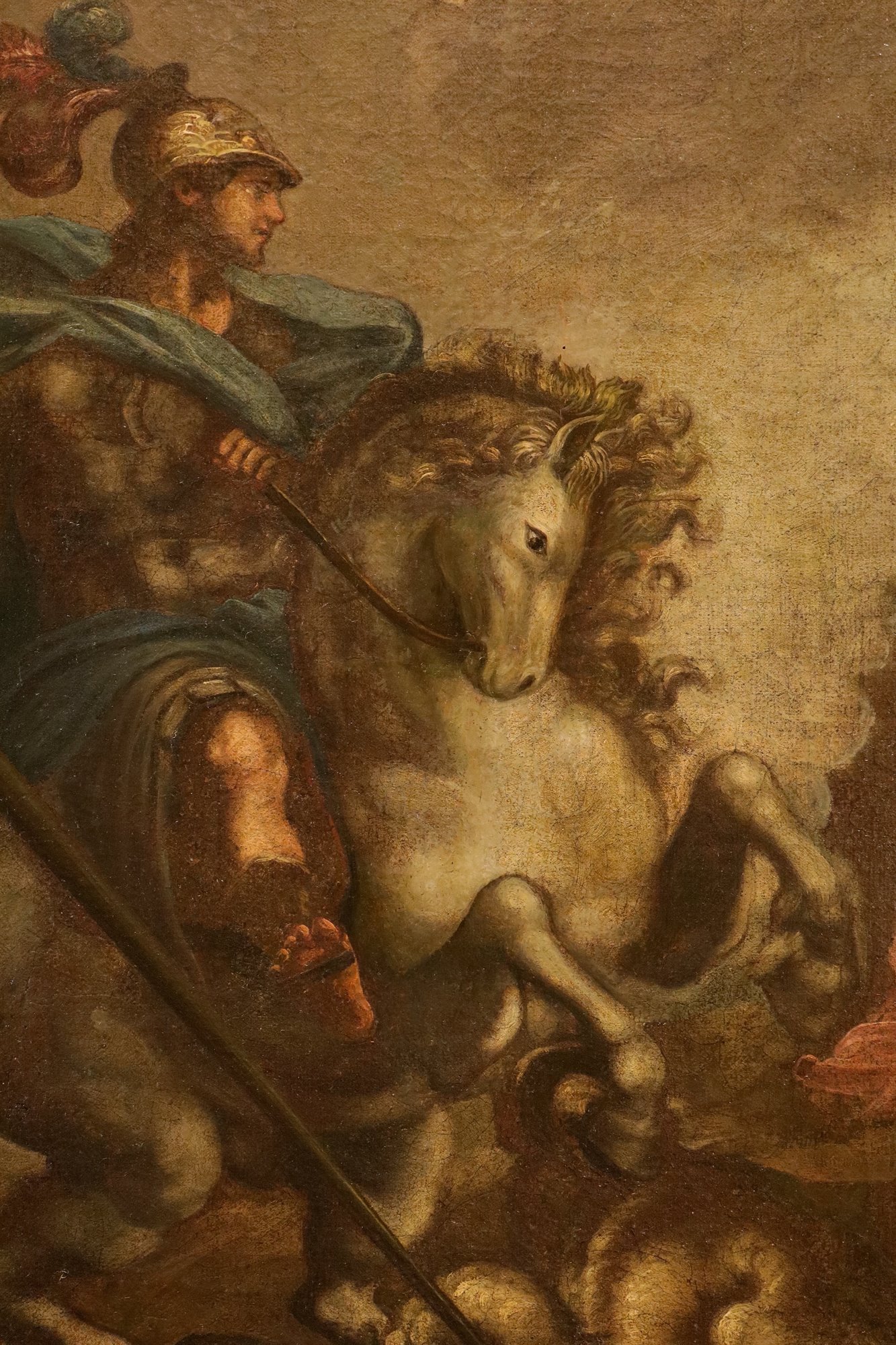
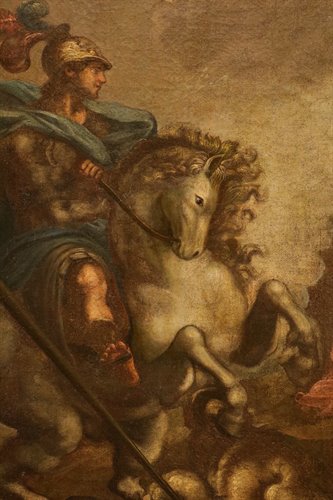
The artistic style reveals that our painter, presumably active in Florence, was trained in and drew upon the models of Leonardo da Vinci, particularly in the vibrant anatomical rendering of the horse.
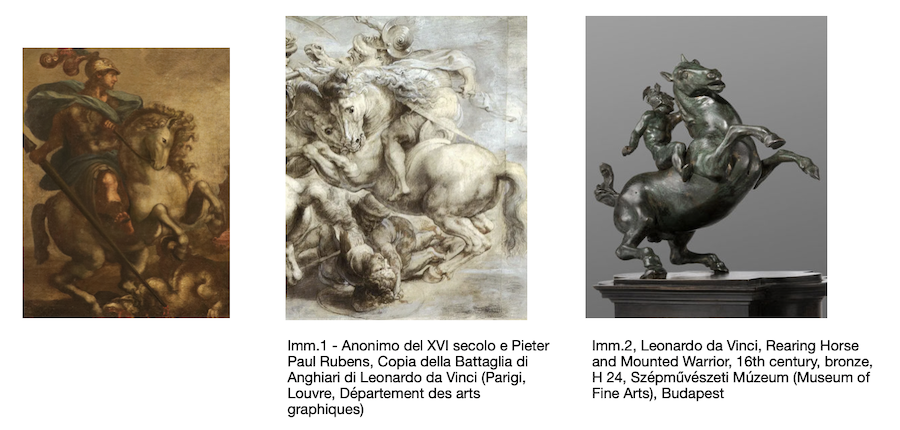
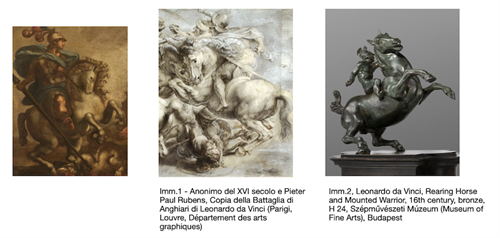
A large number of Leonardo’s preparatory drawings and studies of horses in battle have come down to us; these indeed represent the pinnacle of his exploration of the dynamics of movement, the fury of war and animal anatomy: many of these were produced as preparatory work for the Battle of Anghiari, the famous fresco commissioned from him in 1503 for the Palazzo Vecchio in Florence, which was subsequently lost (fig. 1 – detail).
The steed is, in fact, the true focal point of the painting, displaying powerful, taut musculature, with its front legs bent and suspended mid-air, and a thick mane blowing in the wind that accentuates the sense of movement.
Leonardo also explored this theme in his sculpture; one need only compare the ‘Knight on a Rearing Steed’ (Fig. 2 – early 16th century; bronze, Budapest, Szépmuveszéti Múzeum) to notice the identical pose of both the horse and the knight, confirming that the artist behind the canvas on display here drew inspiration from the creator of these works.
ADDITIONAL INFORMATION:
The work comes with an attractive frame and is accompanied by a certificate of authenticity and a guarantee.
We arrange and organise the transport of purchased works, both within Italy and abroad, using professional and insured carriers.
You can also view the painting at our gallery in Riva del Garda; we would be delighted to welcome you and show you our collection of works.
Please feel free to contact us, with no obligation, for any further information.
Follow us on: