
Ritratto di nobildonna
Alonso Sanchez Coello (Valencia, 1531 – Madrid, 1588) Bottega di
Alonso Sánchez Coello
(Valencia, 1531 – Madrid, 1588)
(Valencia, 1531 – Madrid, 1588)
Workshop of
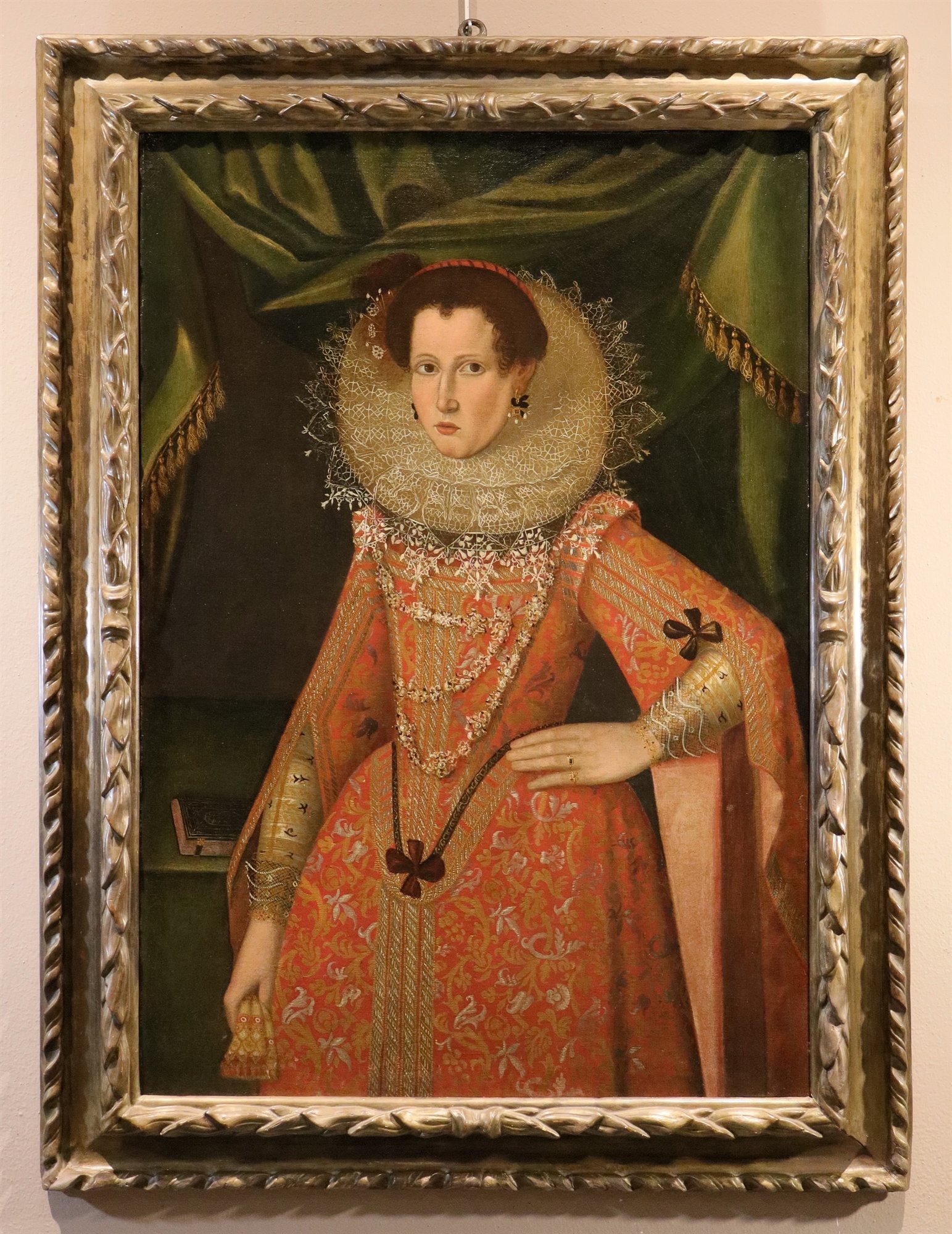
Portrait of a noblewoman
Oil on canvas
100 x 70 cm.
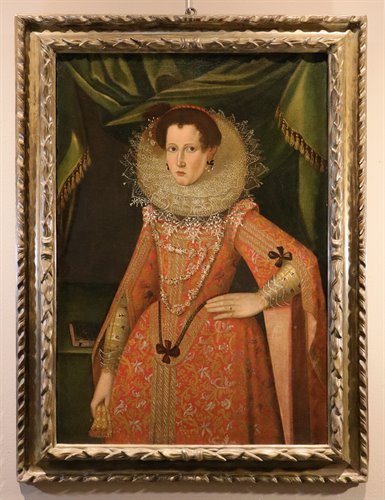
In an antique frame: 120 x 92 cm.
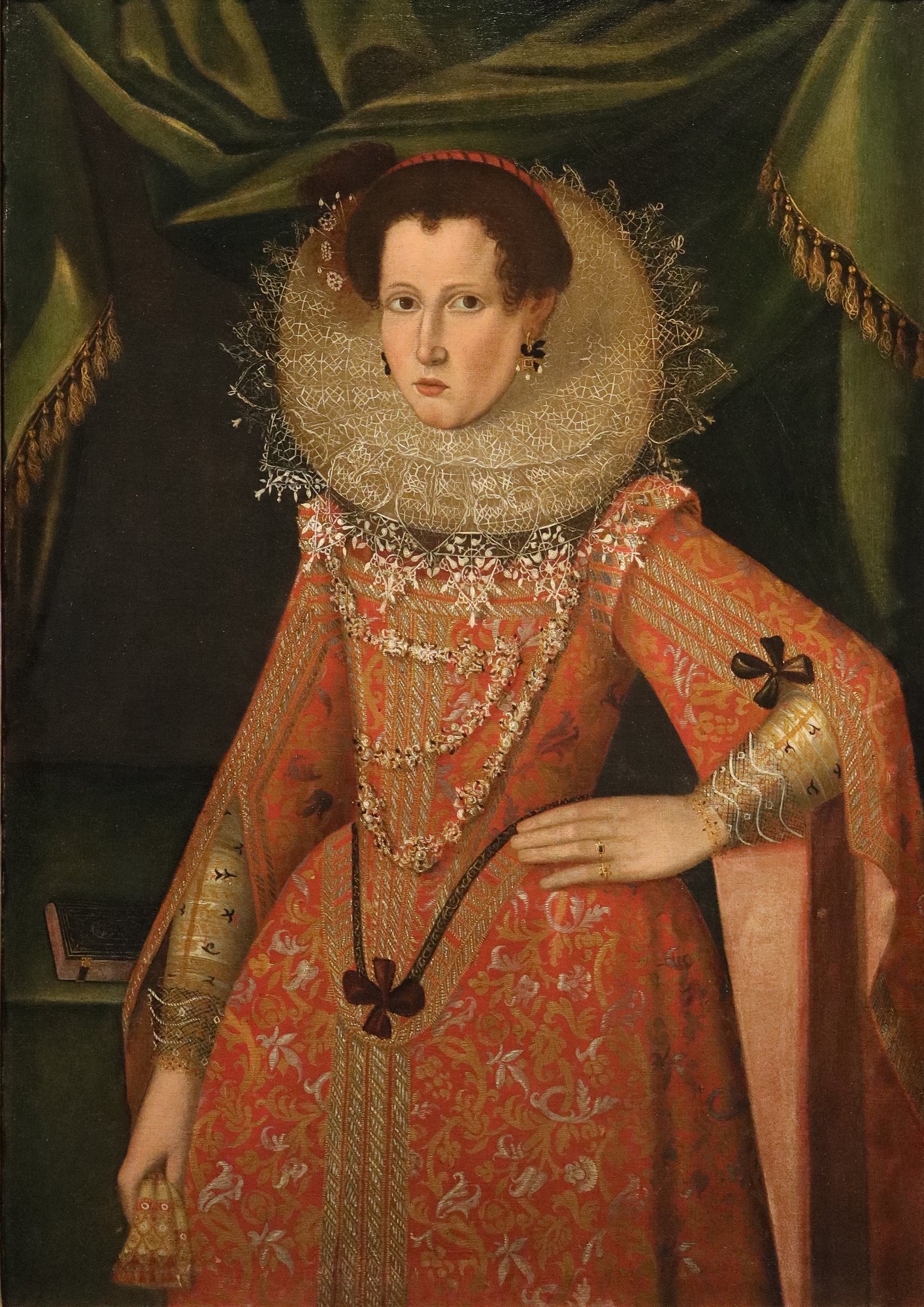
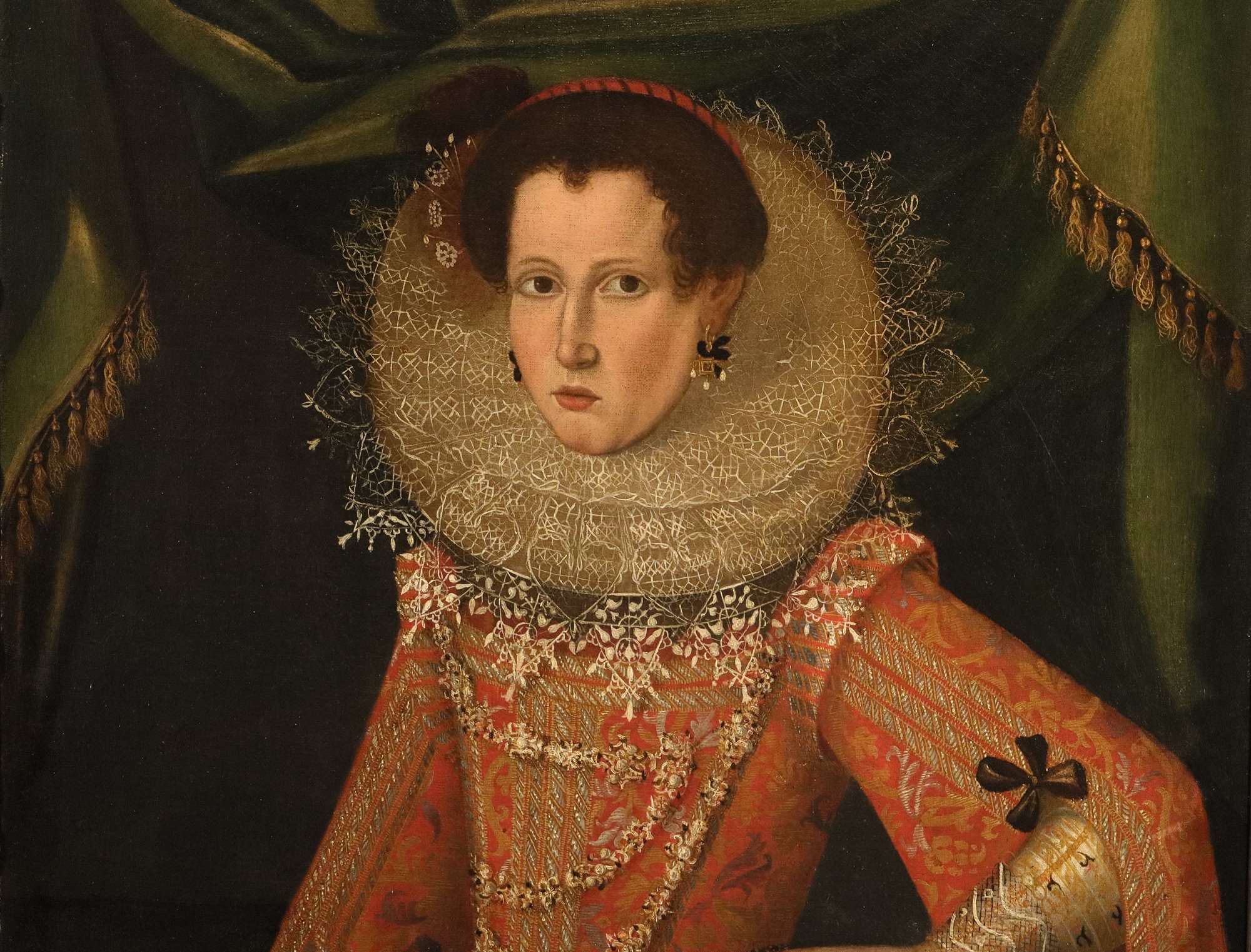
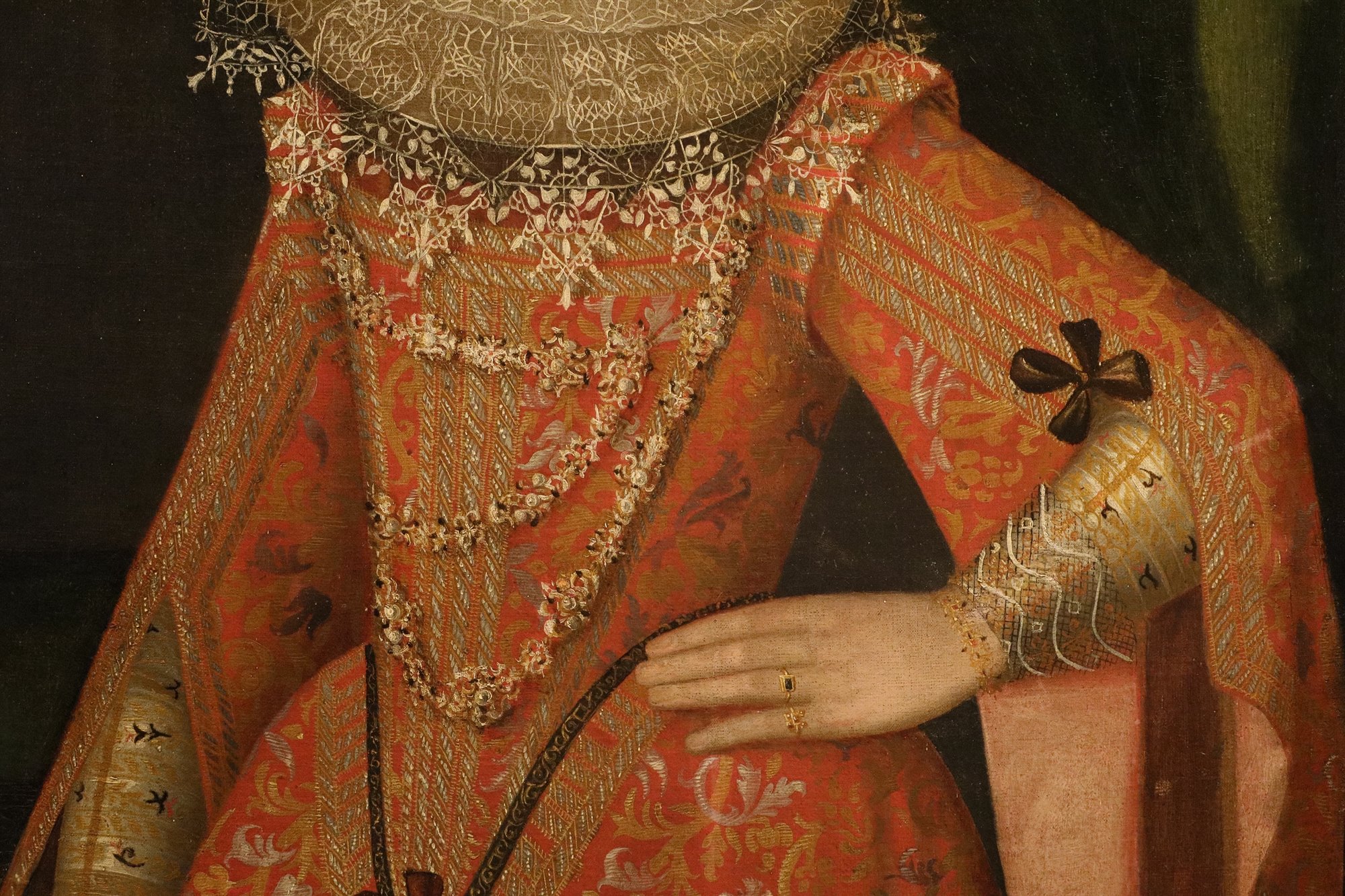
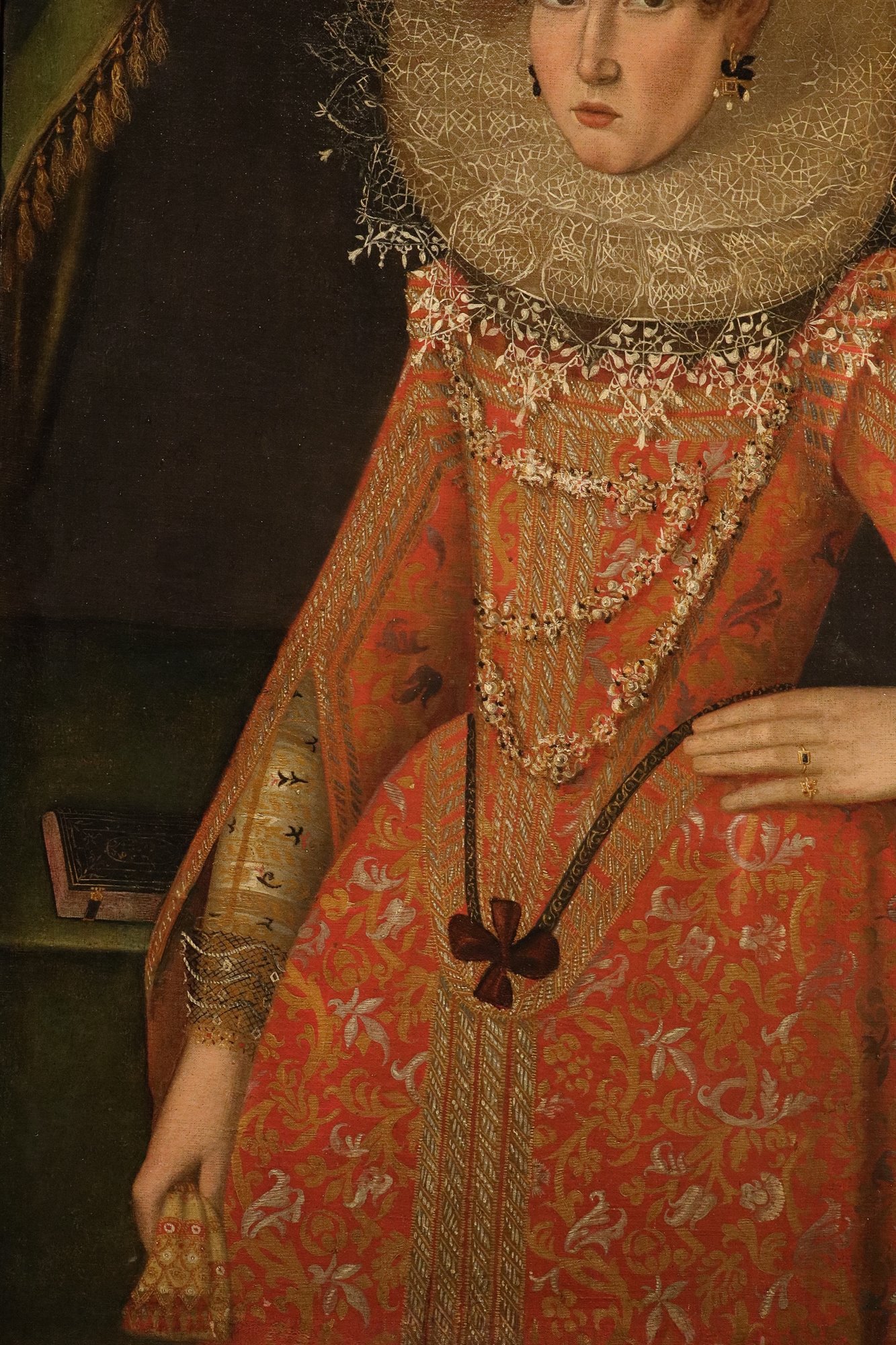
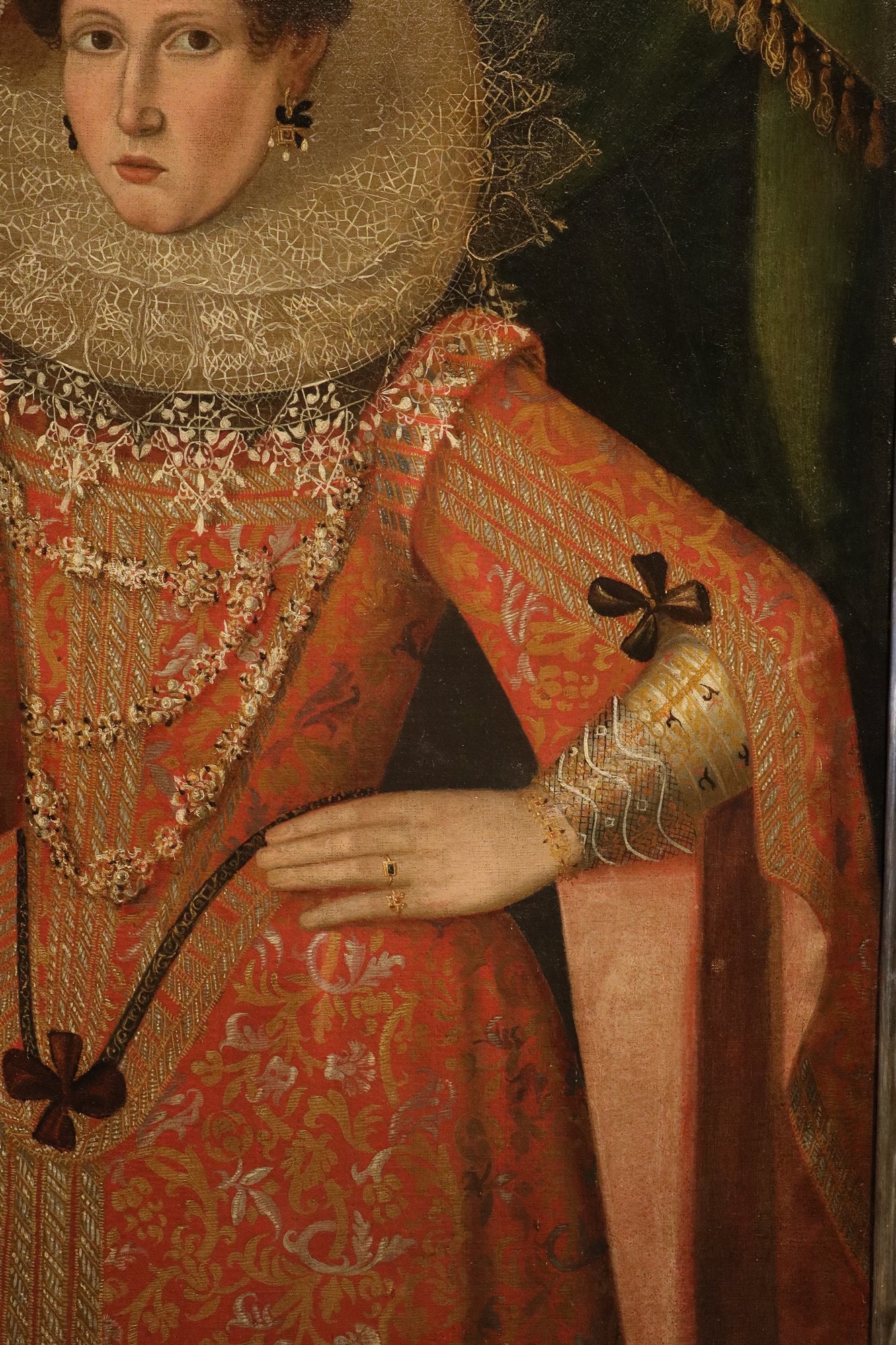
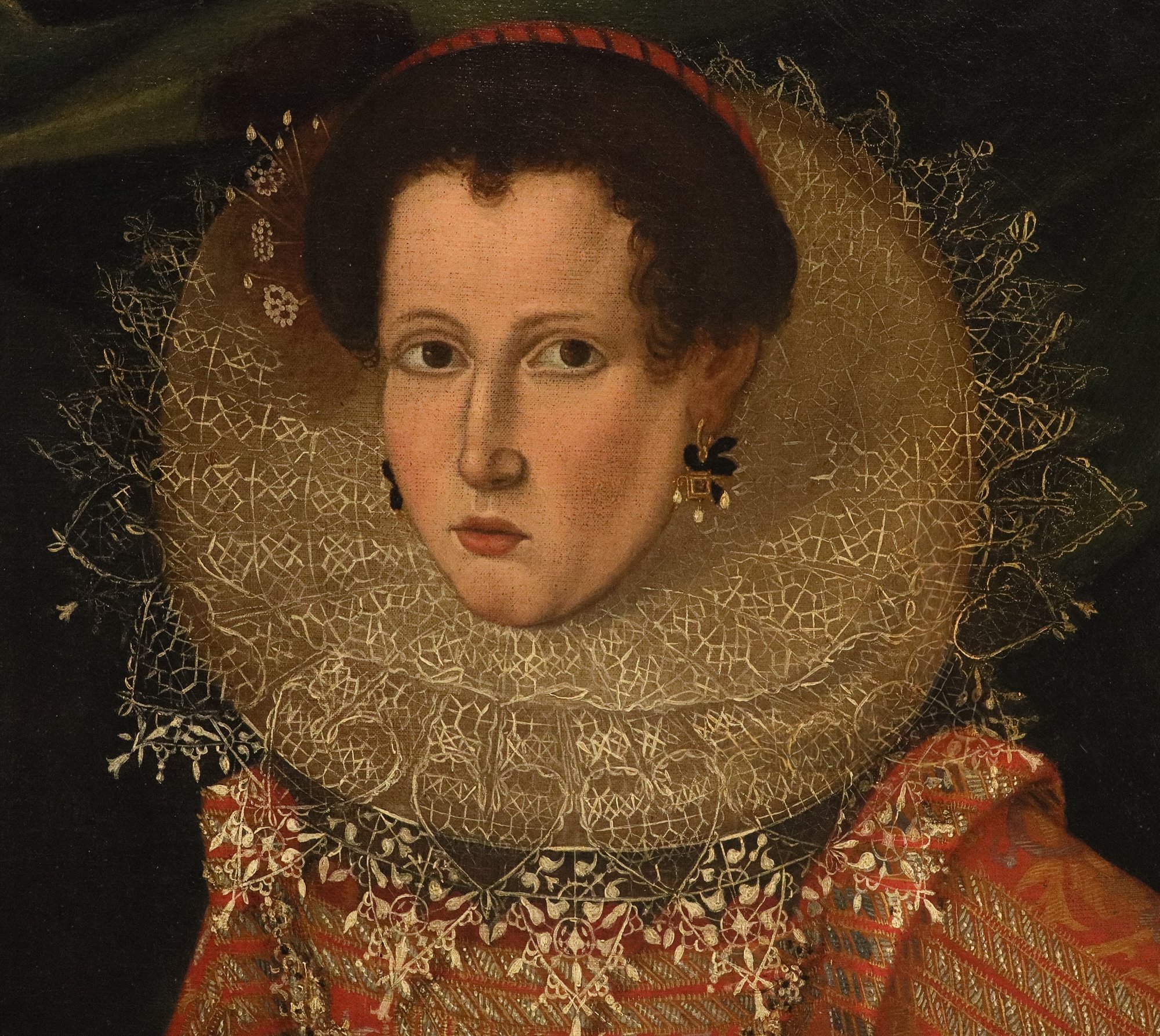
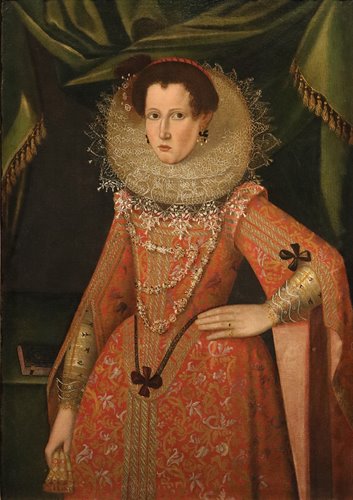
This portrait, rich in charm and of the highest quality, depicts a young woman of noble birth immortalised in her sumptuous ceremonial gown; it is a typical example of court portraiture in accordance with the strict stylistic and decorative protocols of the Spanish Counter-Reformation of the late sixteenth century.
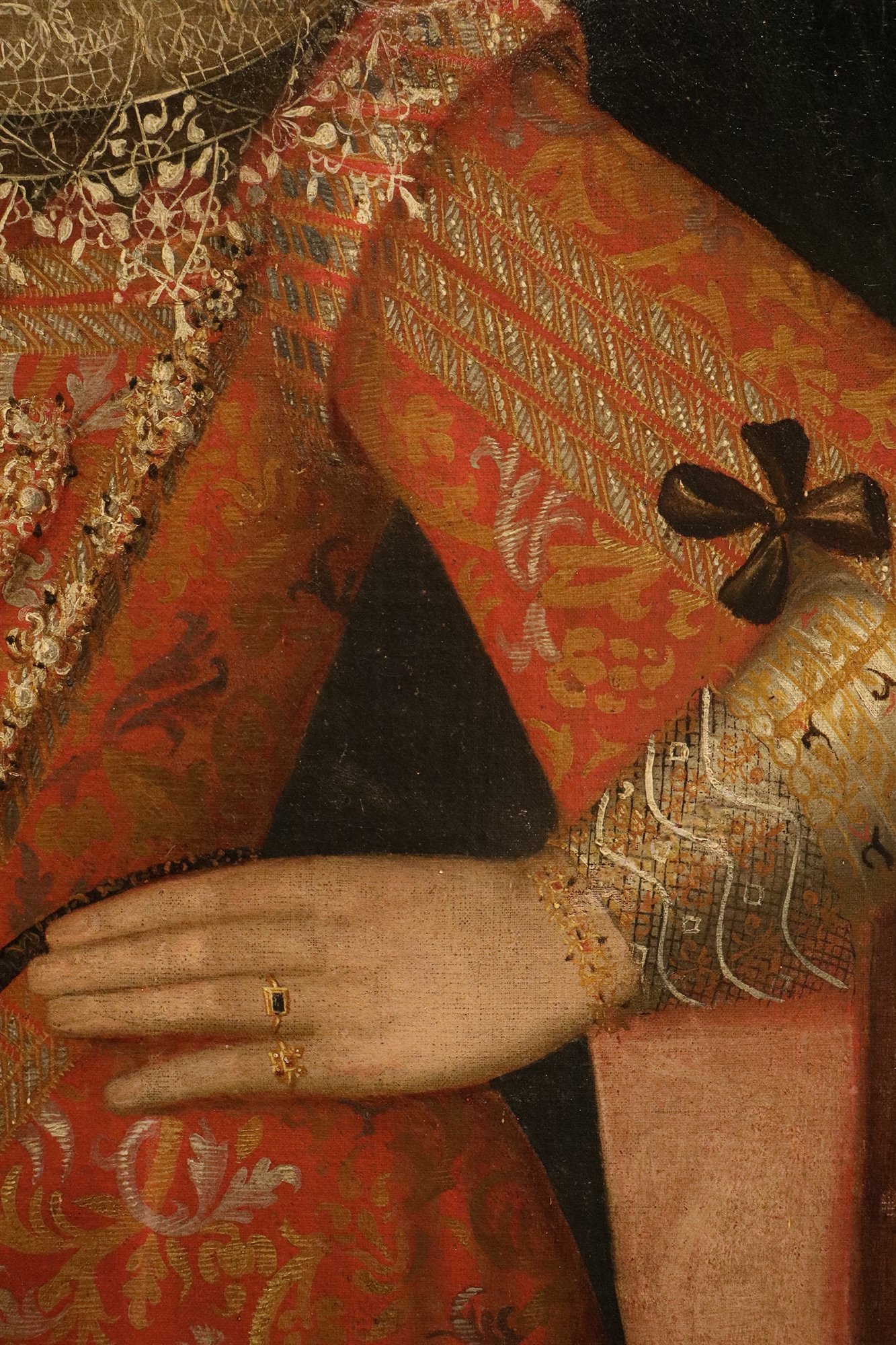
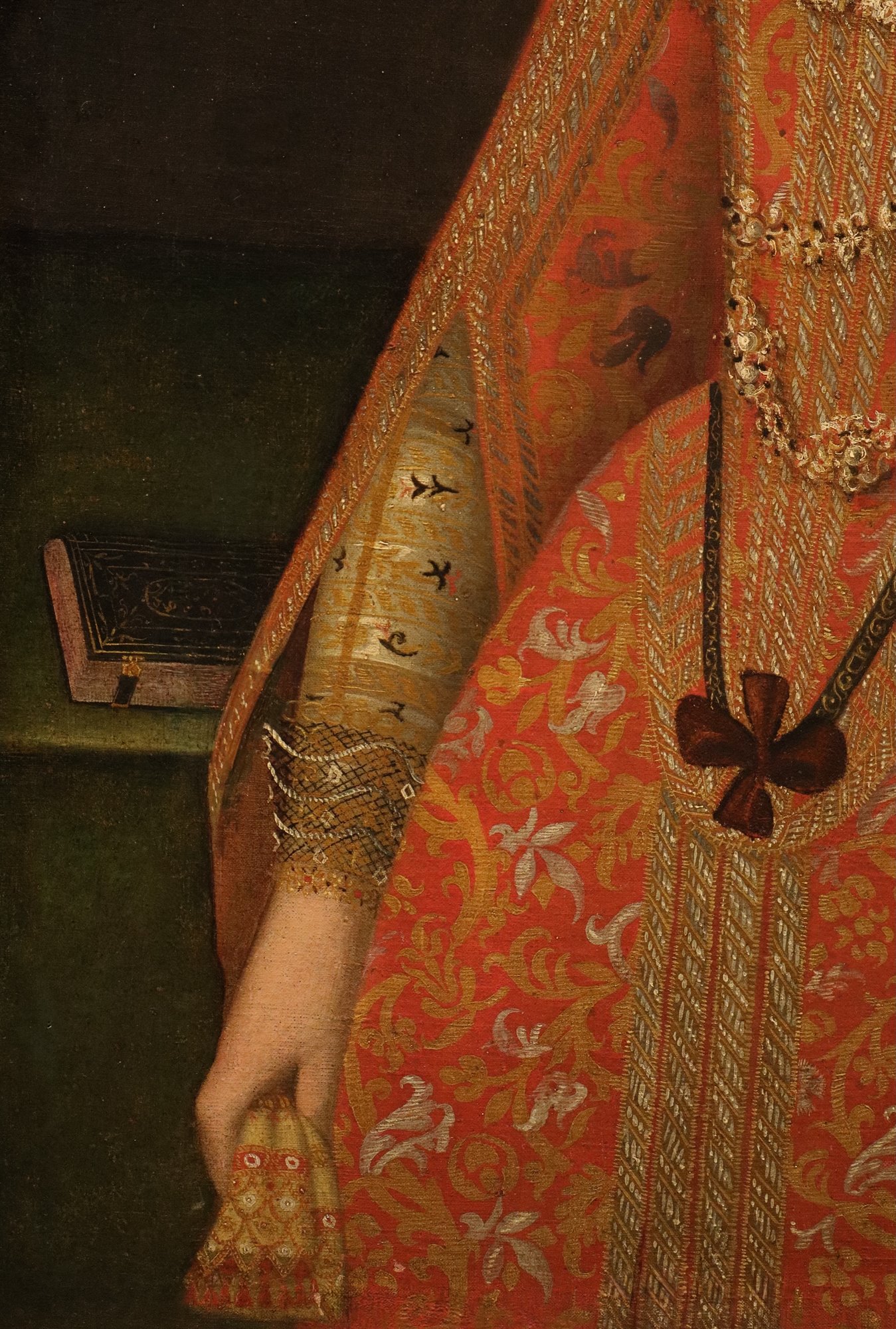
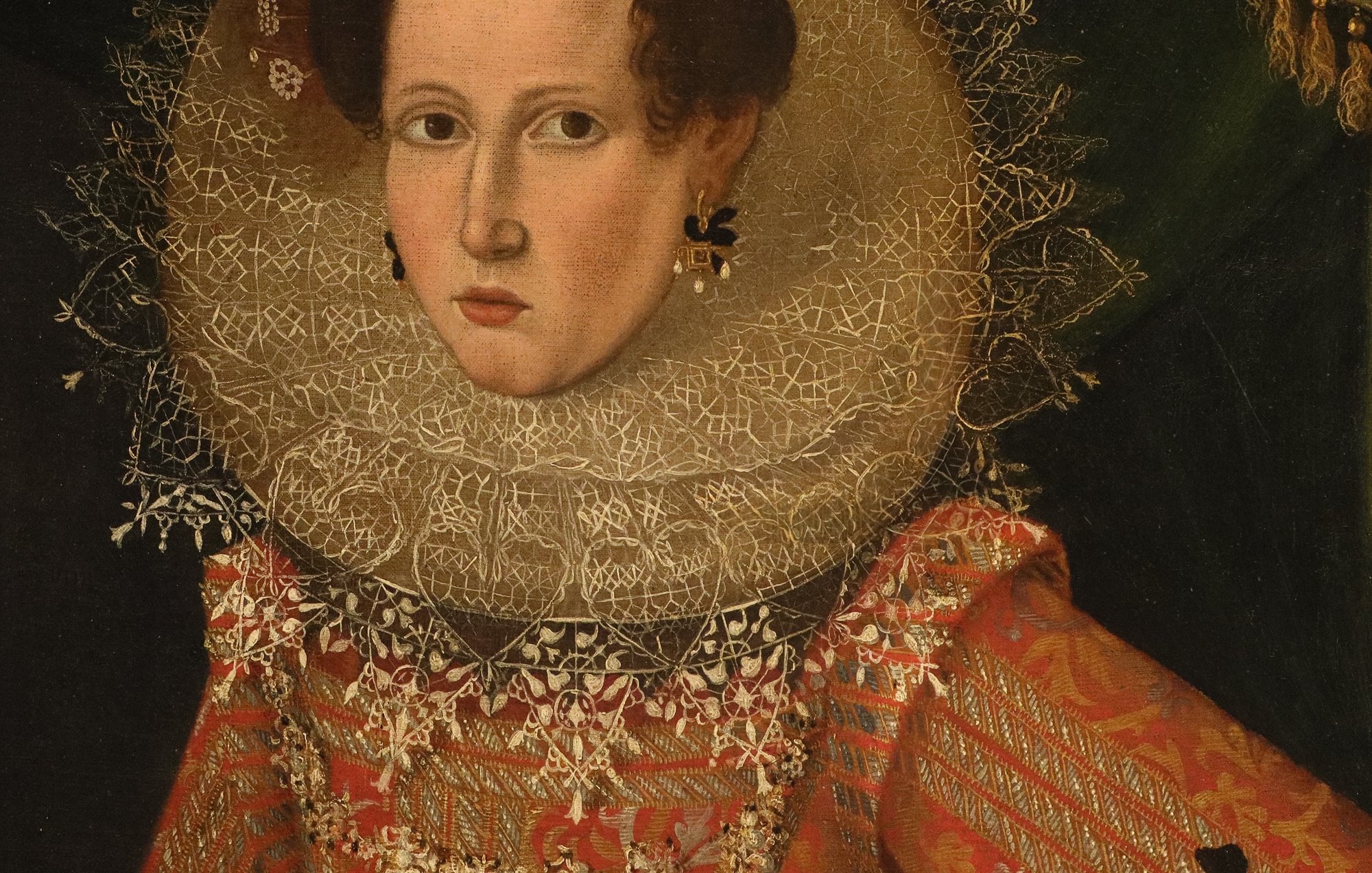
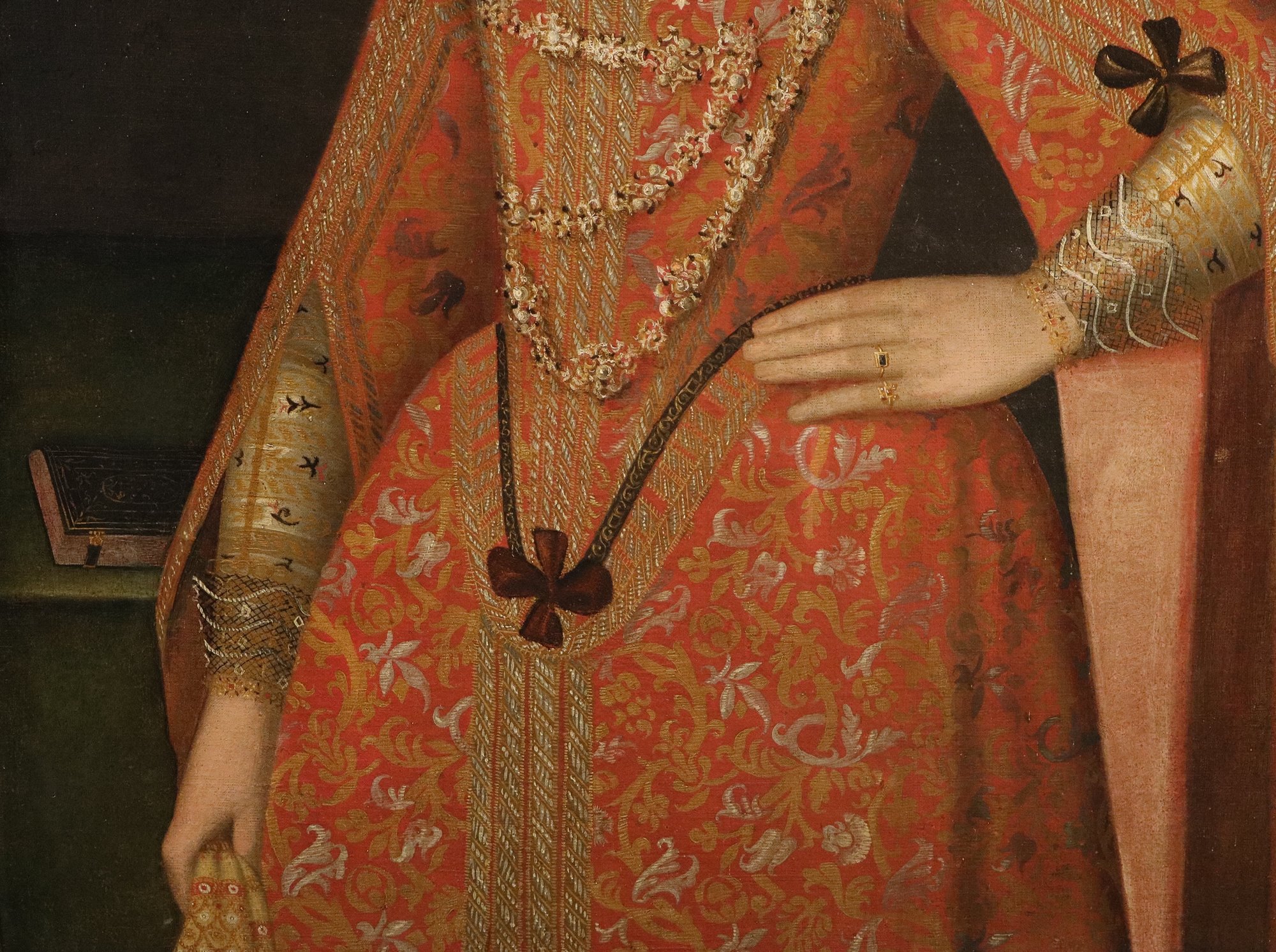
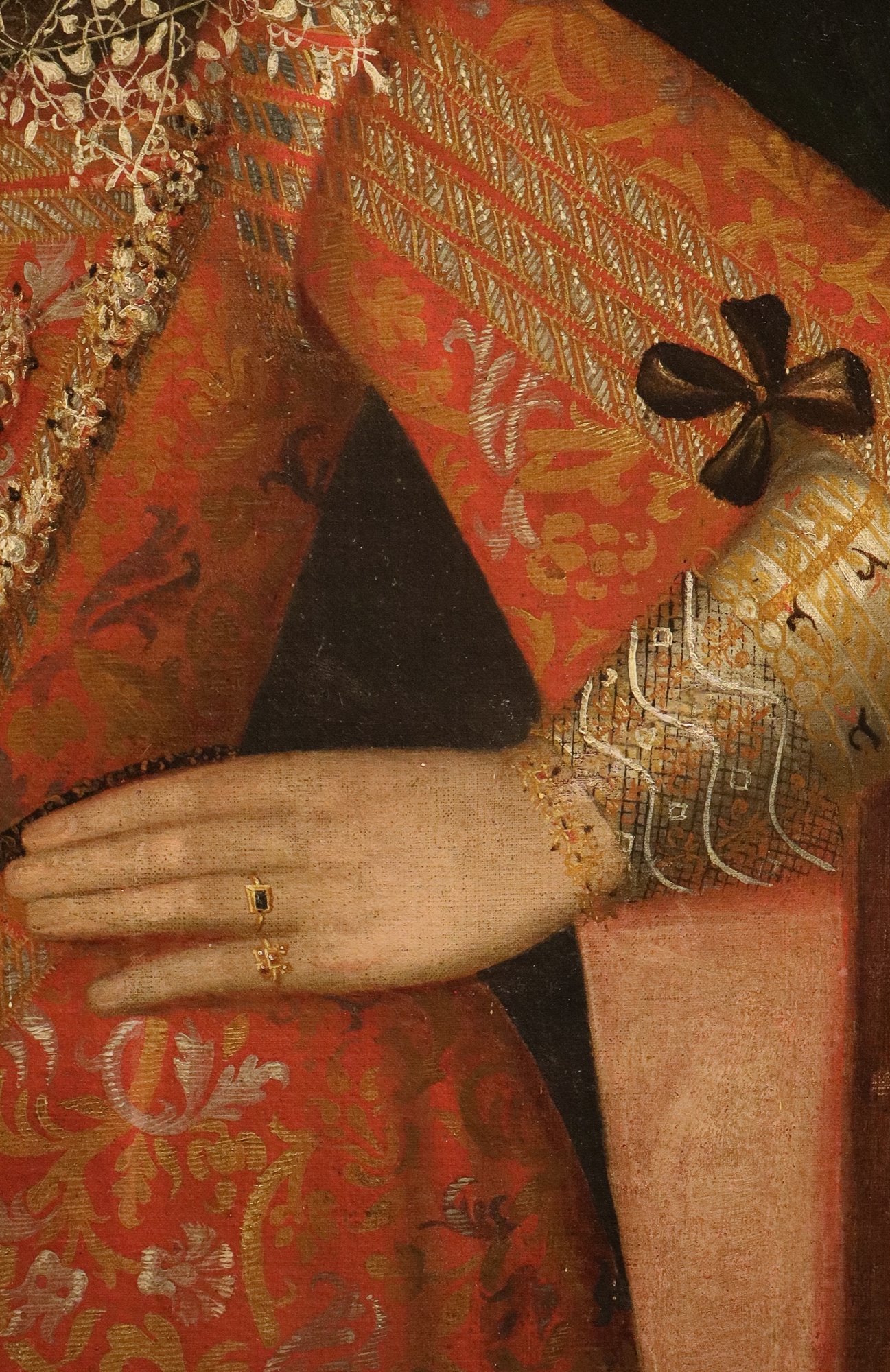
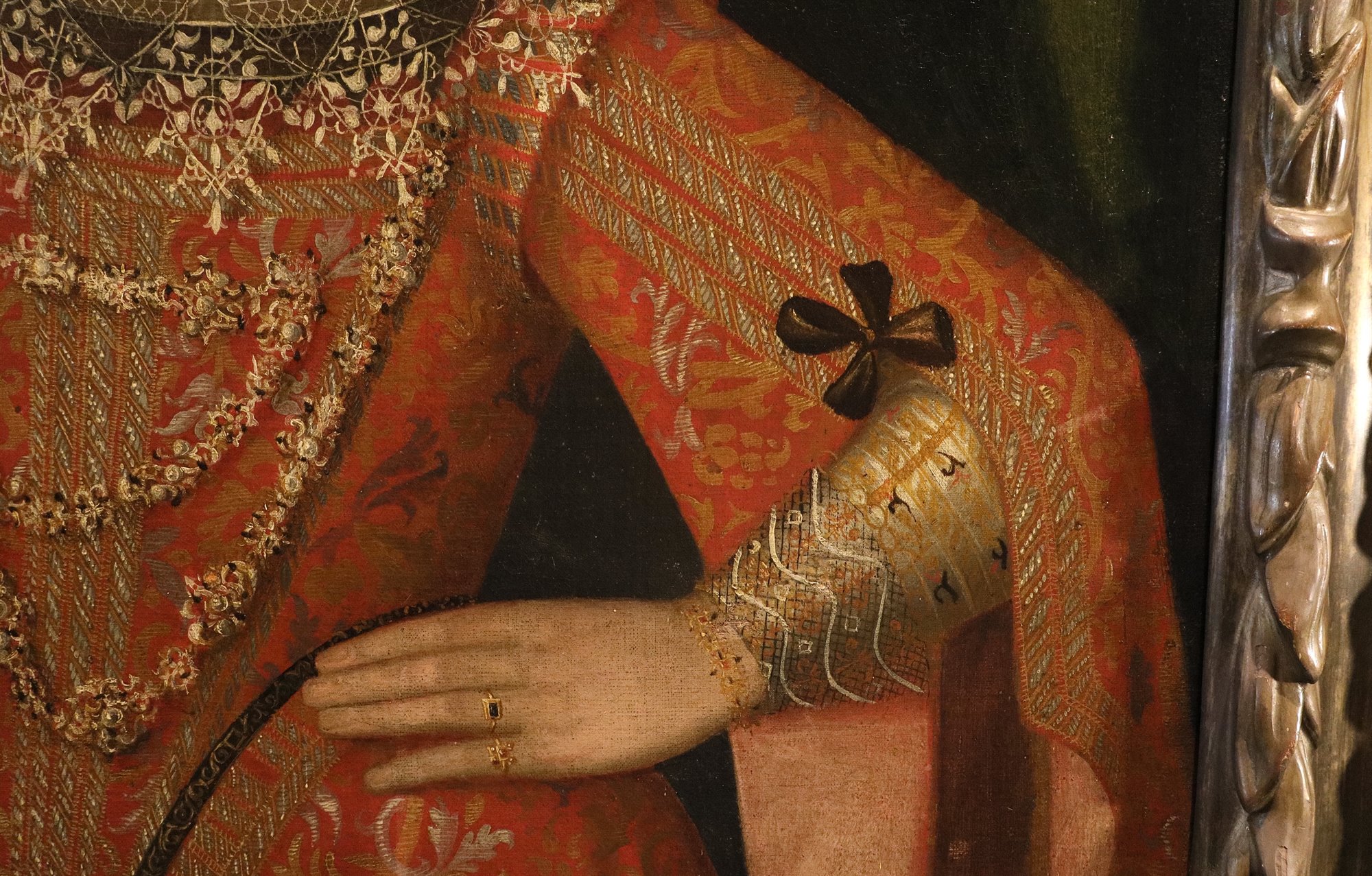
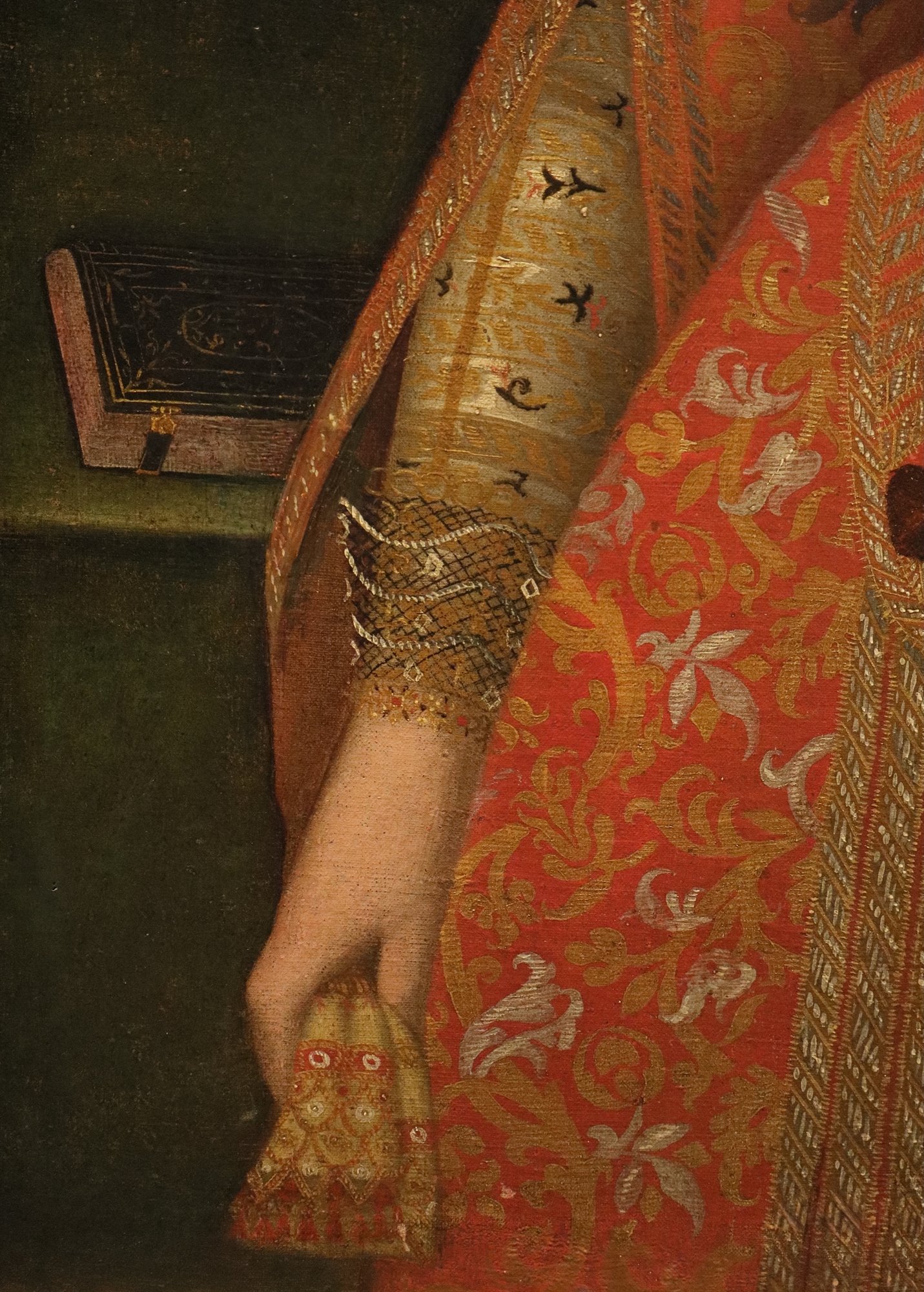
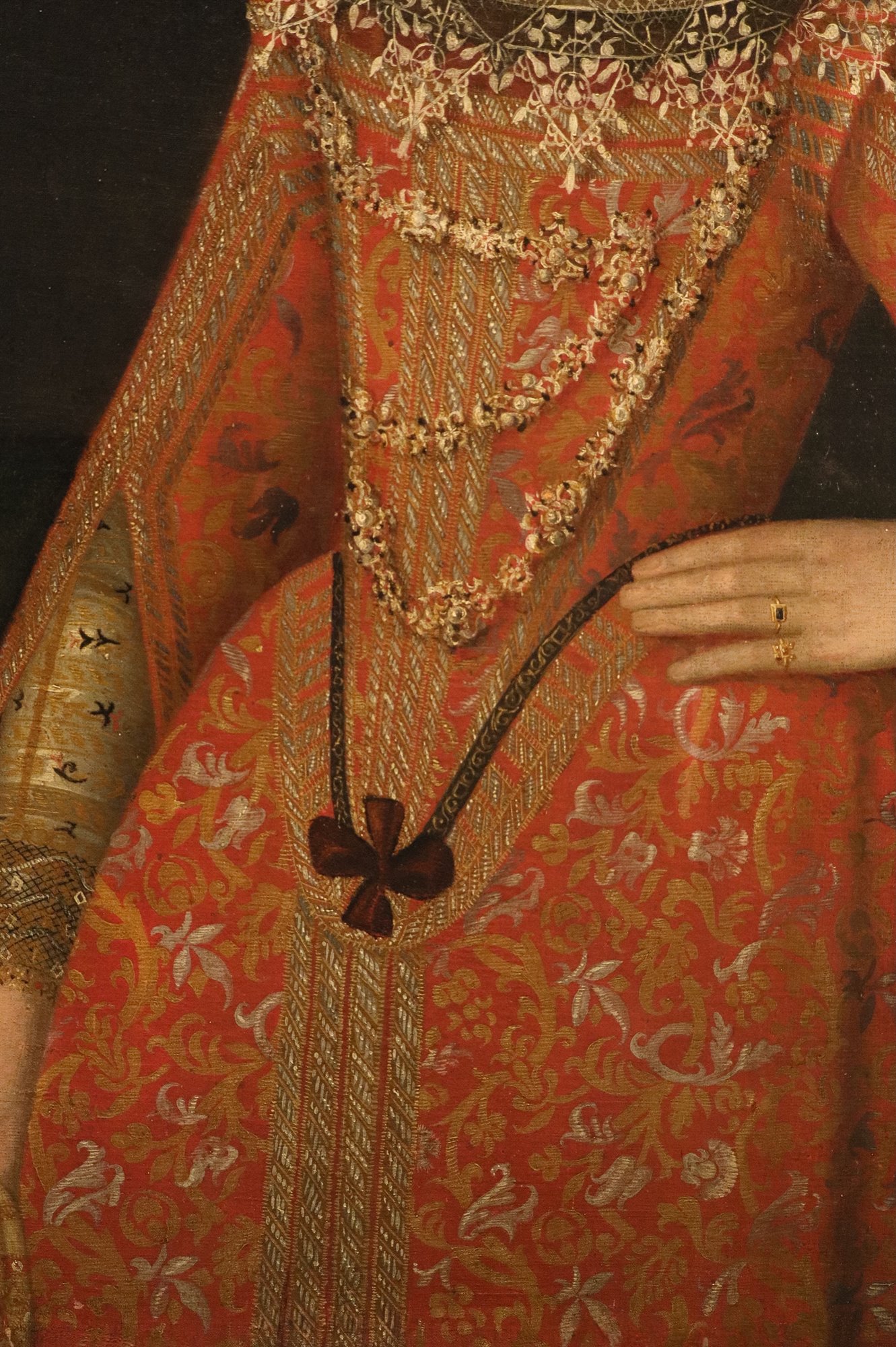
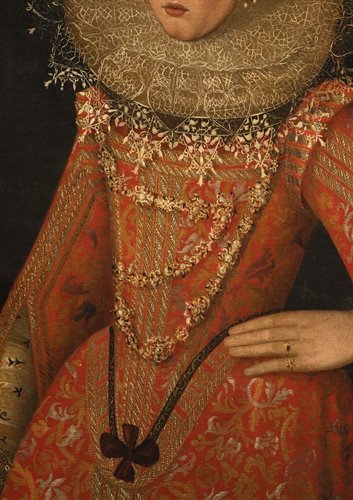
She is depicted in half-length, with an austere and solemn expression, exuding a strong regal dignity that reflects the strict etiquette of the Habsburg court in Spain, and in a formal pose, with her left hand resting firmly on her hip to convey authority, and her right hand lowered, clutching a handkerchief finely embroidered in gold – a typical accessory of prestige from that era.
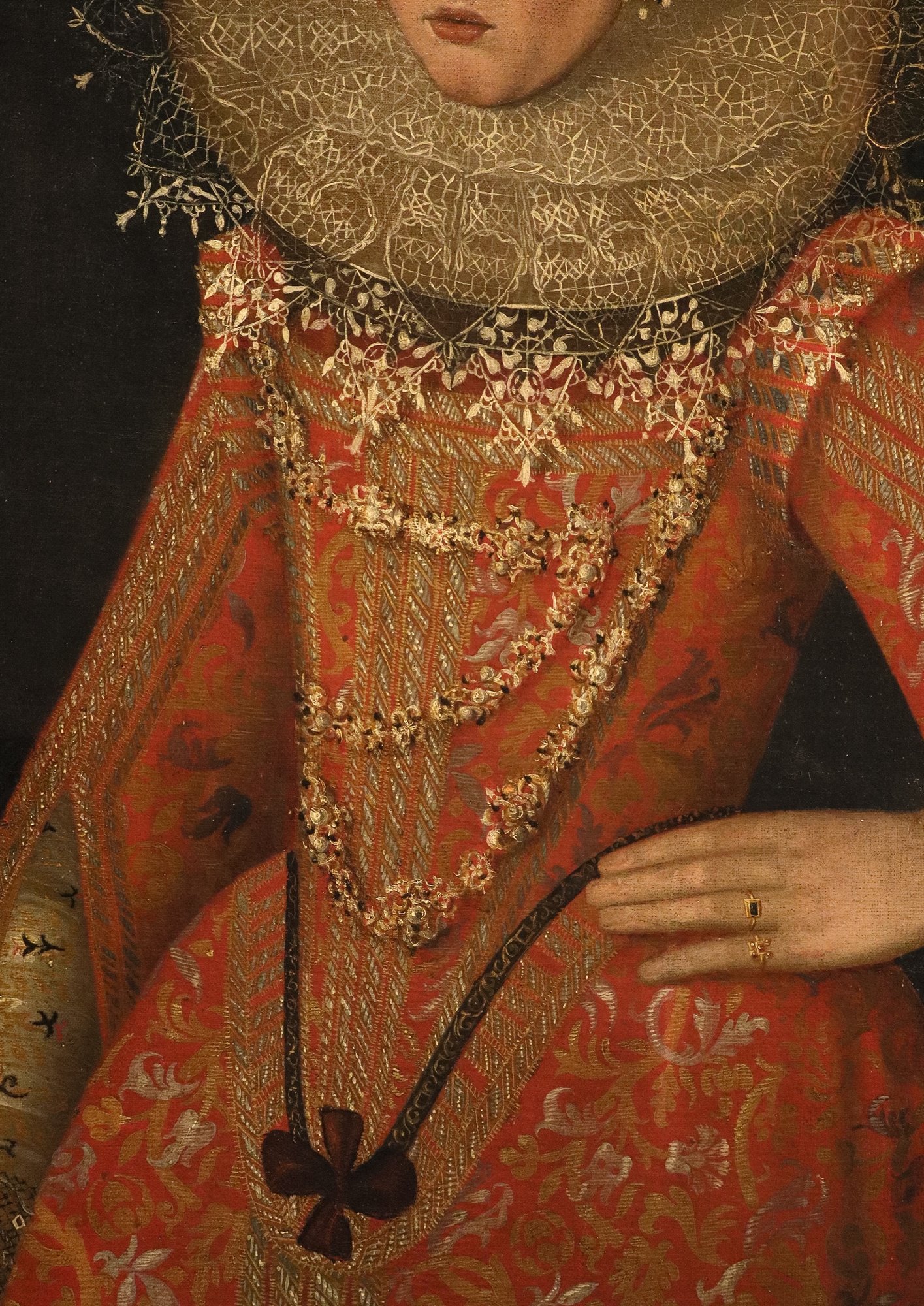
Her attire undoubtedly plays a central role in the work due to the opulence with which it is depicted; it is a sumptuous gown in shades of orange, made of damask fabric featuring stylised floral and plant motifs in silver and gold thread. The monumental ruff framing her face, made of the finest white honeycomb lace, is particularly striking; this was a typical feature of the fashion of the high aristocracy of the time.
The jewellery and accessories also emphasise the wealth of the aristocratic patron, from the intricate network of intertwined golden chains, embellished with pearls, above the stiff bodice, to the striking dark drop earrings that stand out against the white lace.
The subject is set within a sober interior, partially obscured by a heavy dark-green curtain with gold fringes at the top and on the left – a theatrical device designed to lend depth and make the woman’s figure stand out. To the left, in the background, a small table can be glimpsed, upon which rests a small book, a symbol of the young woman’s erudition, devotion or high social status.
Chronologically, we can date this painting to between the second half of the sixteenth century and the early seventeenth century; the formal style and the composition of the figure suggest it is the work of a Spanish painter, strongly influenced by the models of Alonso Sánchez Coello (1531–1588) and his workshop.
As we can see from this painting, a hallmark of his work is the perfect fusion of analytical Flemish precision and the formal composure of the Italian Renaissance tradition – characteristics that made him the foremost exponent of Spanish court portraiture during the reign of Philip II.
He spent time both in the Low Countries, where he was a pupil of the painter Antonio Moro, and in Venice, where he studied the portraiture style of the master Titian under his personal guidance, copying numerous paintings by him.
As a favourite painter of the Spanish court, the growing success of his artistic output was effectively underpinned by his prolific workshop, making him one of the most sought-after artists amongst the powerful figures of the Italian and European courts, who vied for his works.
In light of these considerations, although it is difficult to attribute the painting to a specific artist, we are inclined to identify the hand of Juan Pantoja de La Cruz (Valladolid, 1553 – Madrid, 1608), one of the most important painters of the Spanish Renaissance, a direct pupil of Coello who inherited his workshop upon his death in 1588 and was formally appointed Pintor de Cámara (court painter) in 1596.
His works, many of which are held at the Prado Museum in Madrid, are characterised by a austere aesthetic deeply rooted in the tenets of the Counter-Reformation, codifying the official image of the Spanish Habsburg monarchy during a period of utmost formal rigour.
FURTHER INFORMATION:
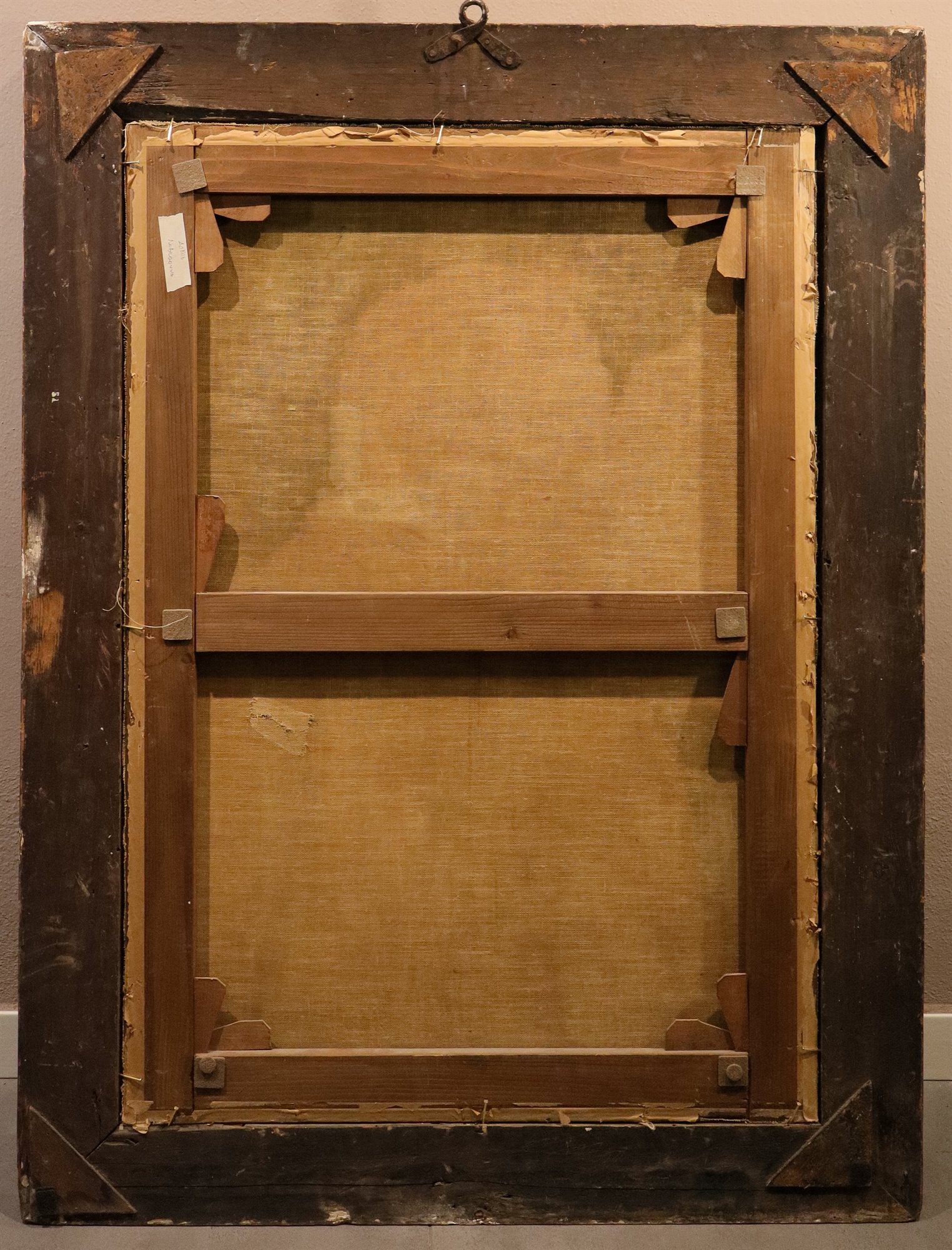
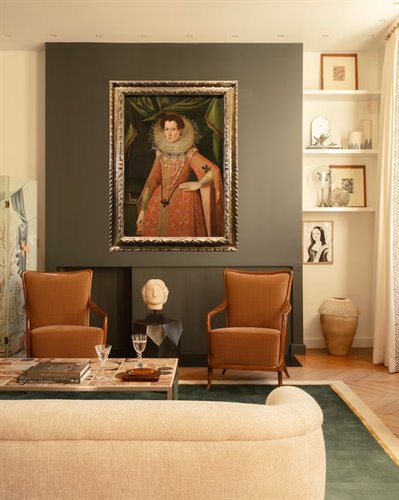
The painting is complete with an attractive gilded frame and comes with a certificate of authenticity and a descriptive iconographic sheet.
We arrange and organise the transport of purchased works, both within Italy and abroad, using professional, insured carriers.
Should you wish to view this or other works in person, we would be delighted to welcome you to our new gallery in Riva del Garda, at Viale Giuseppe Canella 18. We look forward to seeing you!
Please contact us for any further information or to arrange a visit; we’ll be happy to assist you.
Follow us on: