
Ritratto di gentiluomo
Anton Raphael Mengs (Aussig, 1728 - Roma, 1779) Bottega
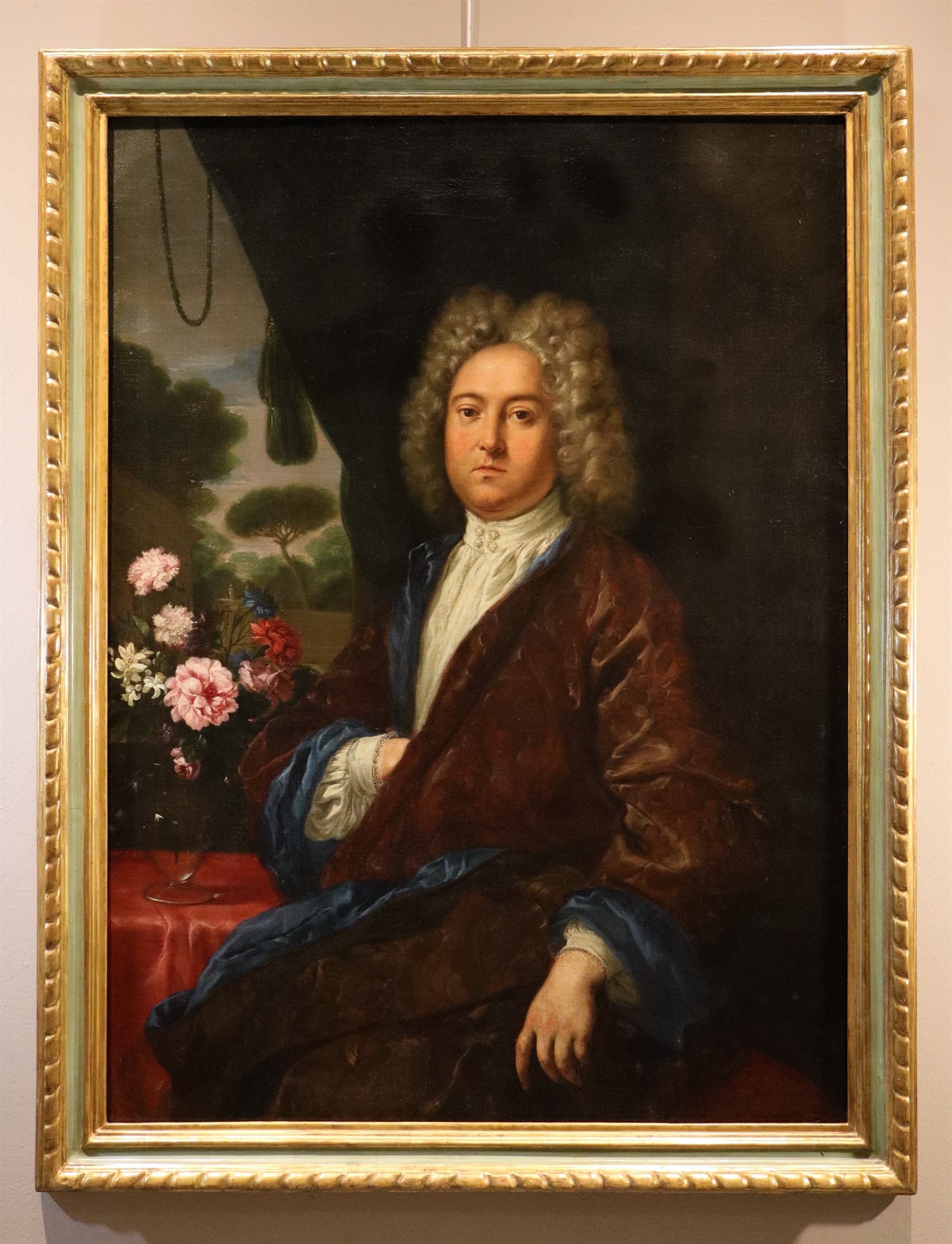
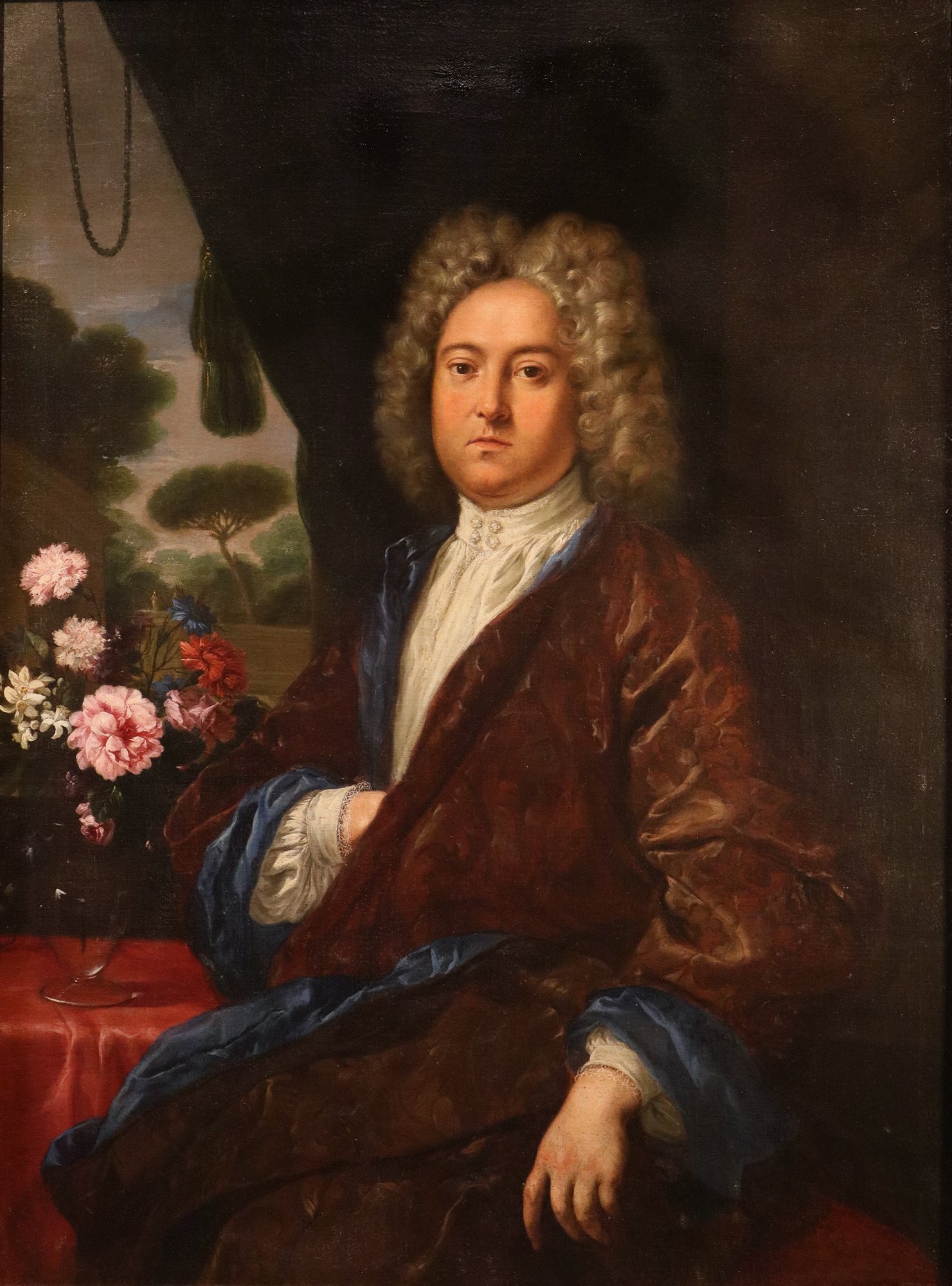
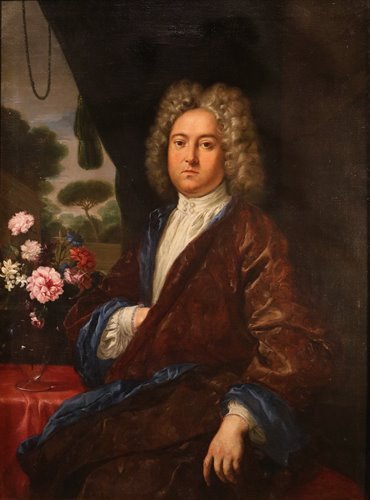
Anton Raphael Mengs (Aussig, 1728 – Rome, 1779)
Workshop
Portrait of a Gentleman
Oil on canvas
135 x 99 cm.
Framed: 148 x 113 cm.
Provenance: Arcadia Auction Rome, Palazzo Celsi, 29 March 2023 (attributed to a French painter active in Rome in the 18th century)
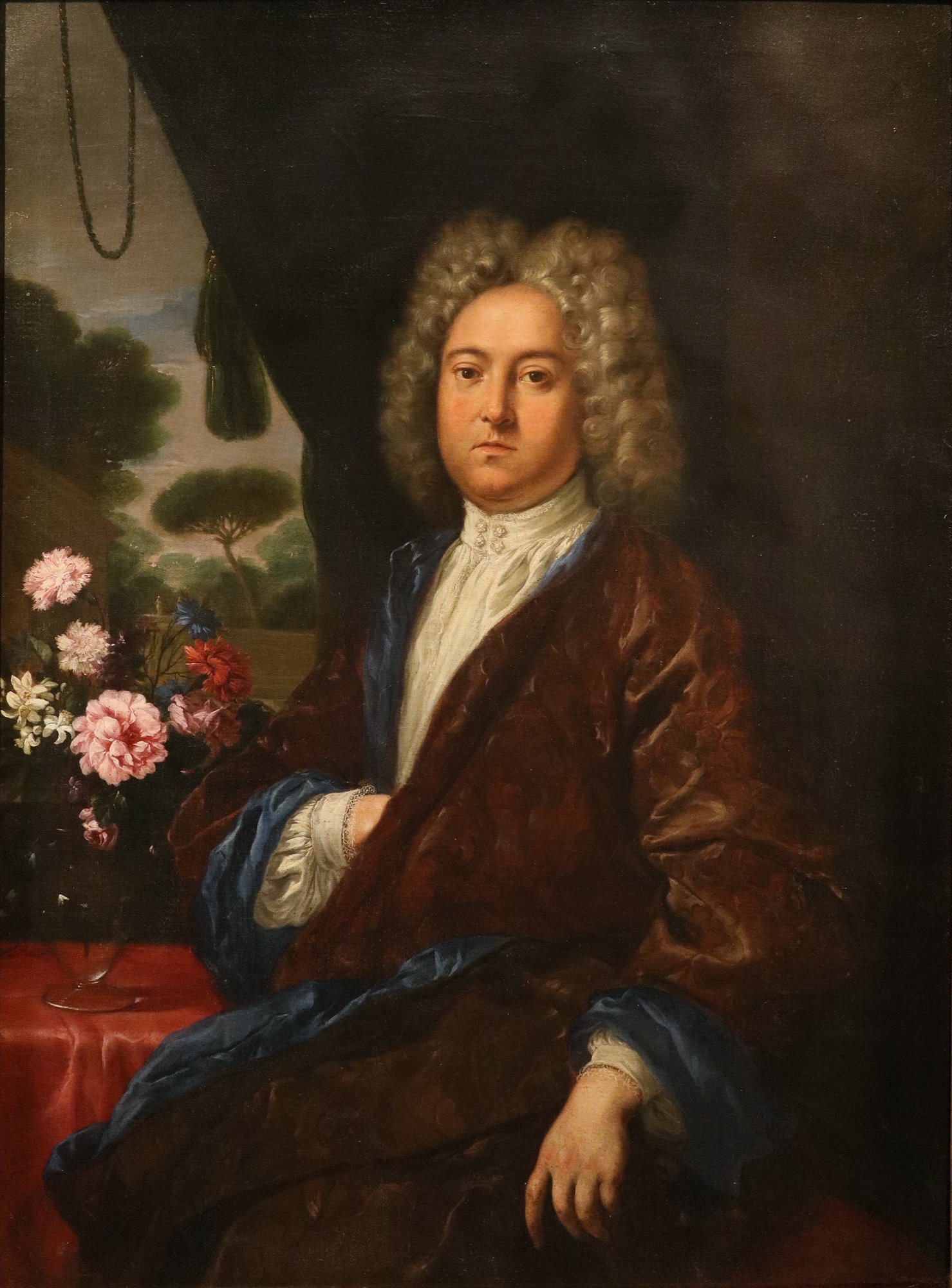
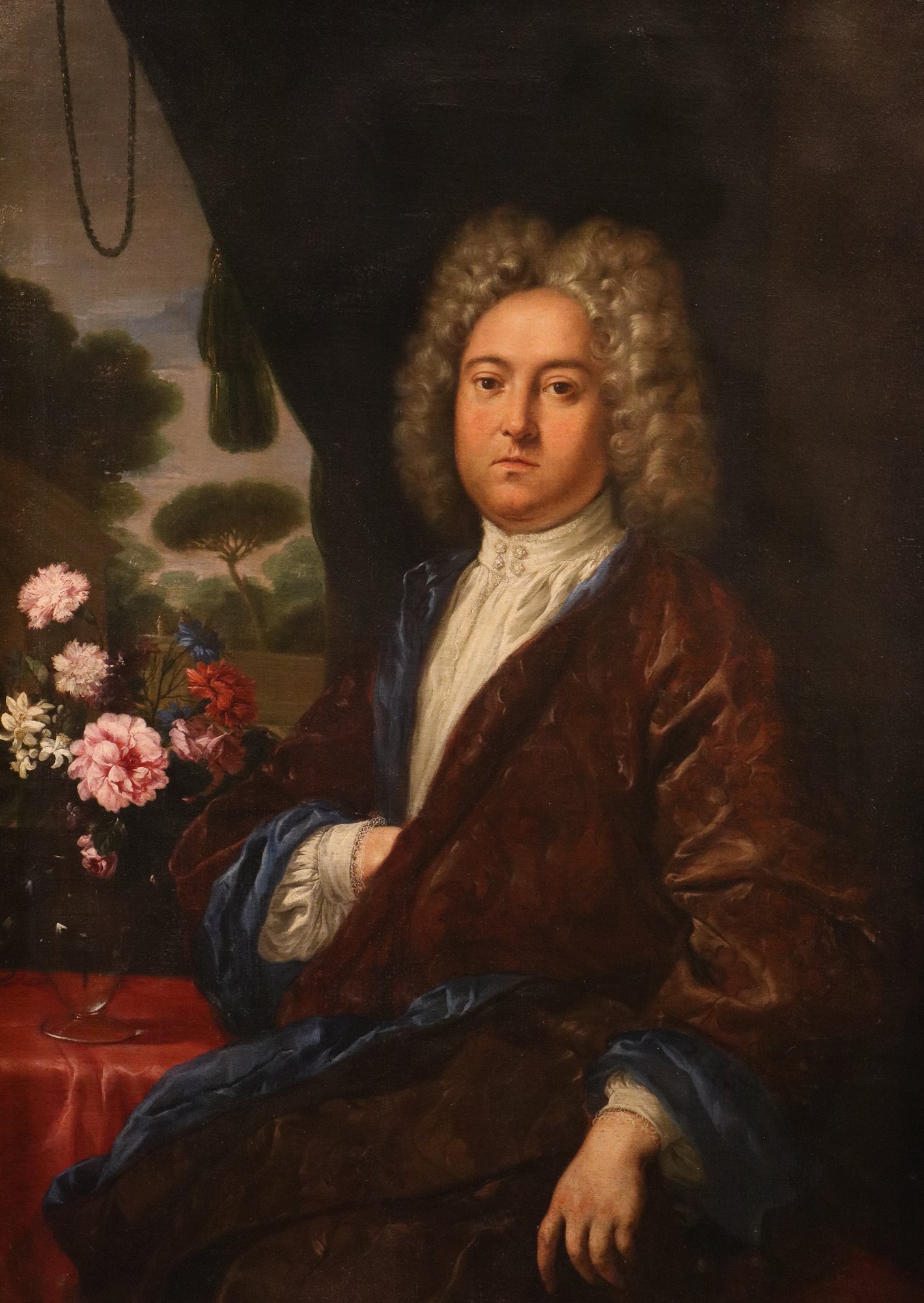
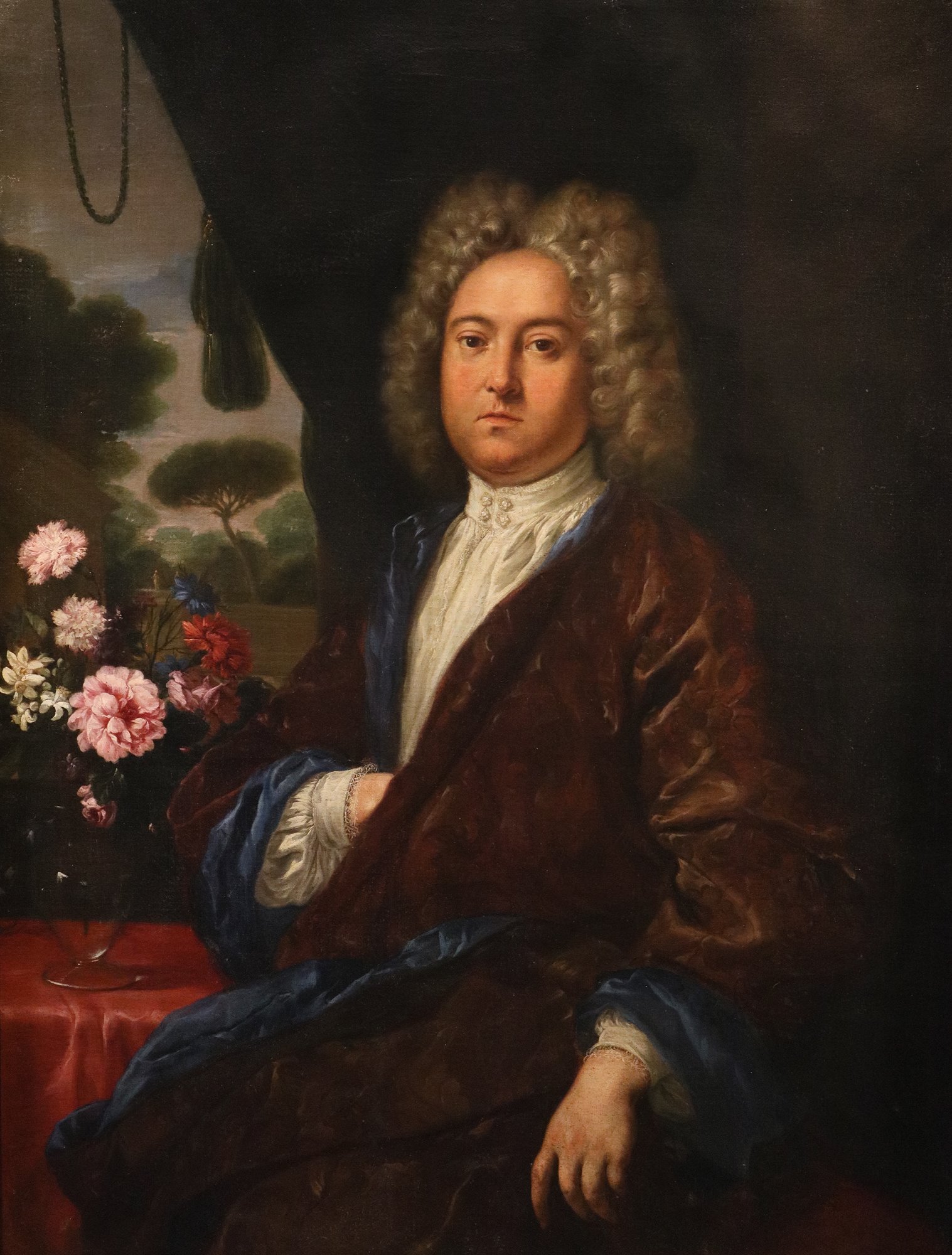
The portrait of a gentleman presented here can be attributed to a painter of the Roman school active in the 18th century, specifically from the circle of Anton Raphael Mengs (Aussig, 1728 – Rome, 1779).
Portrait painting in the 18th century experienced a golden age, transforming from a celebratory genre for the elite into a means of social affirmation for the emerging bourgeoisie, and Rome, an essential stop on the Grand Tour, became the cosmopolitan centre where international artists immortalised nobles, intellectuals and travellers.
In this context, Mengs was a leading figure in the Neoclassical movement, bringing a new quest for truth and formal rigour to portraiture.
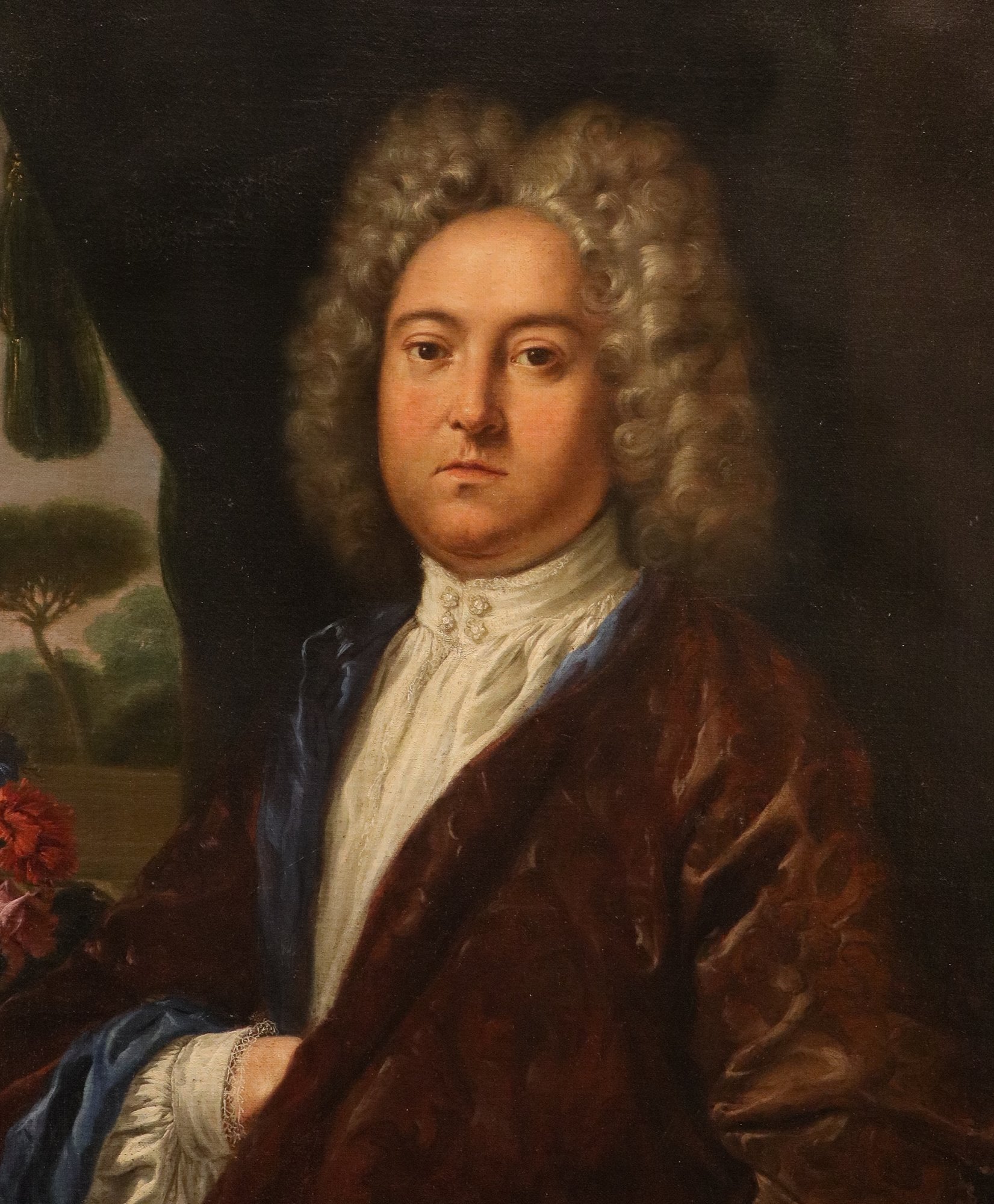
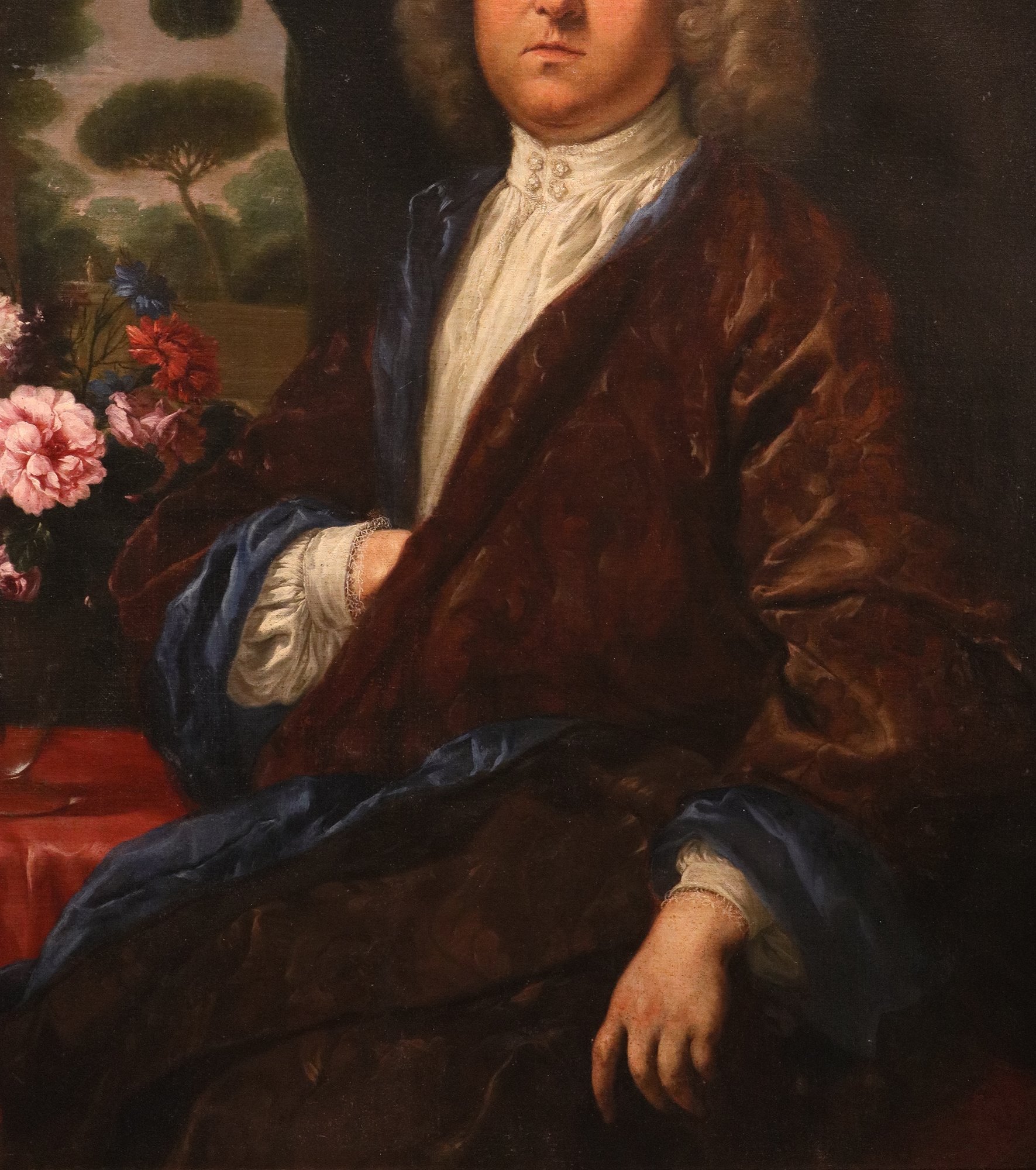
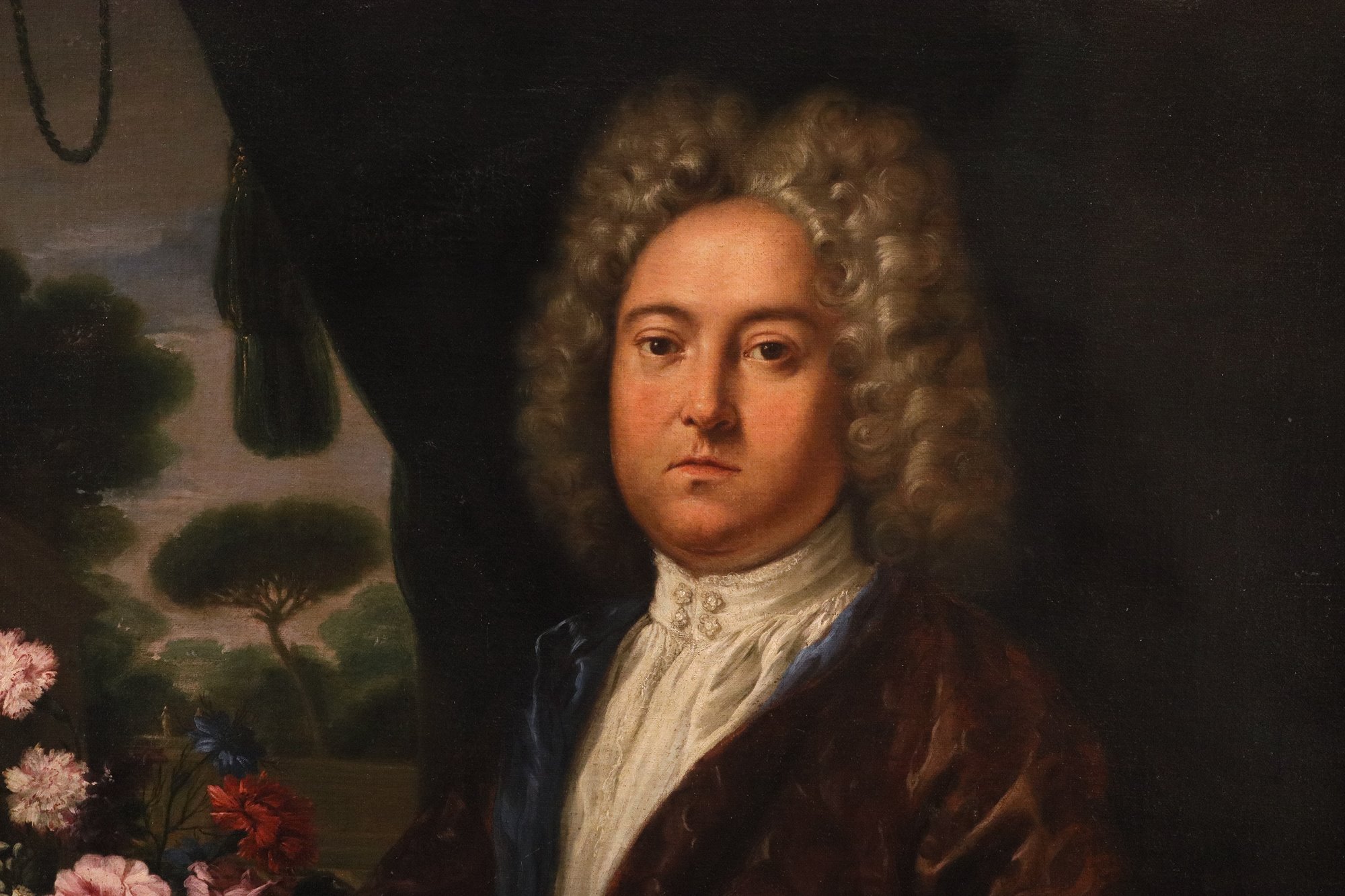
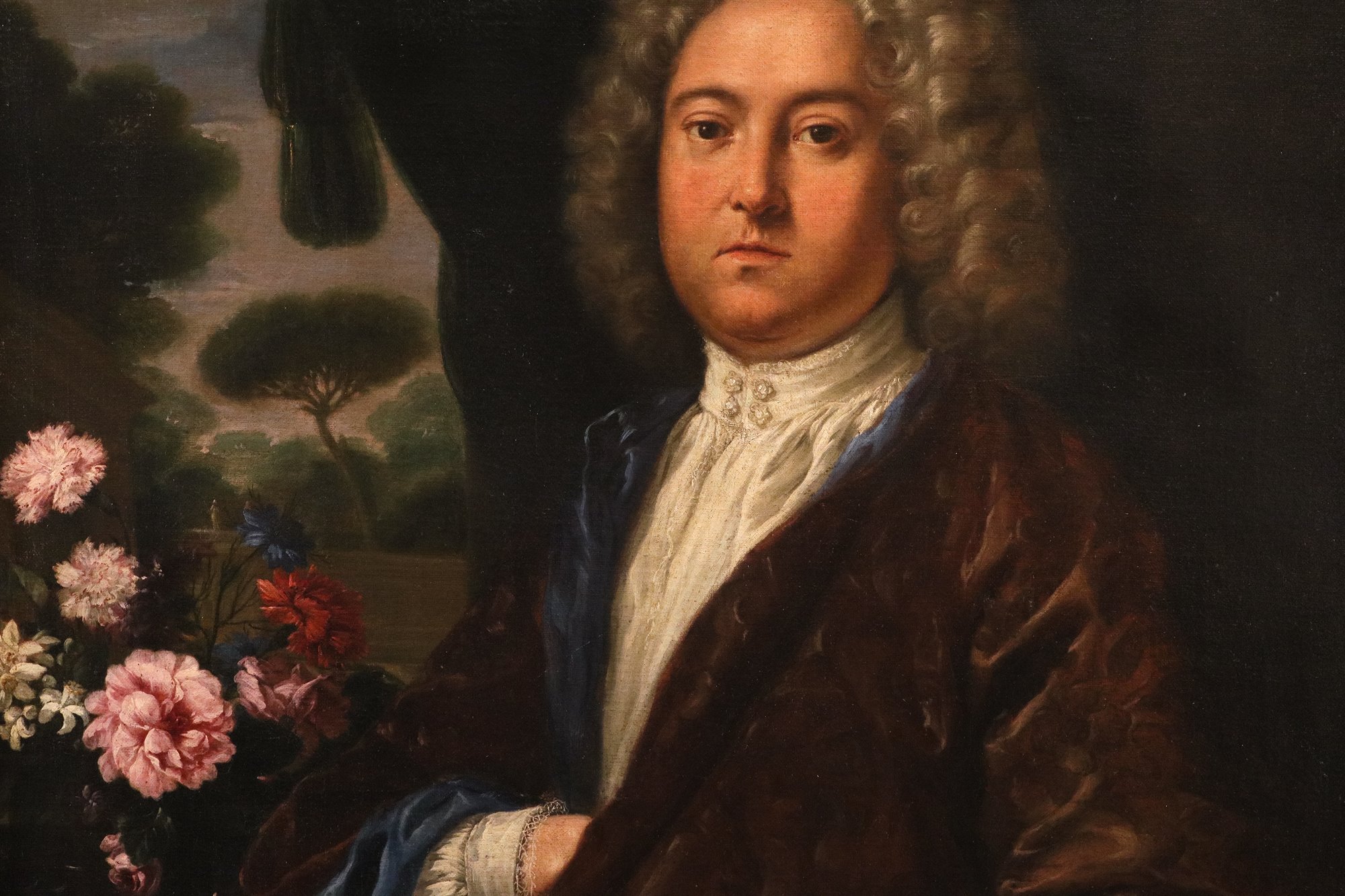
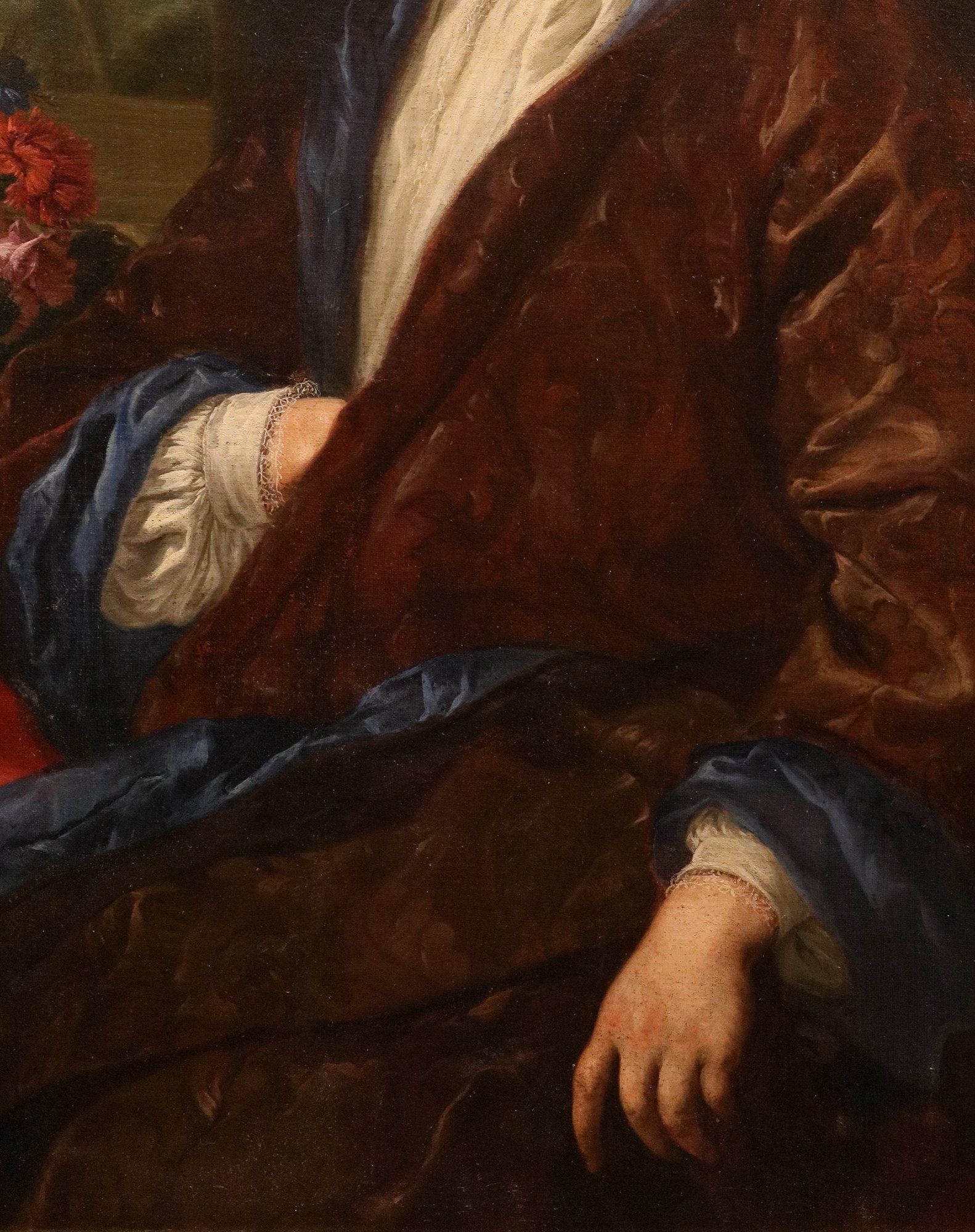
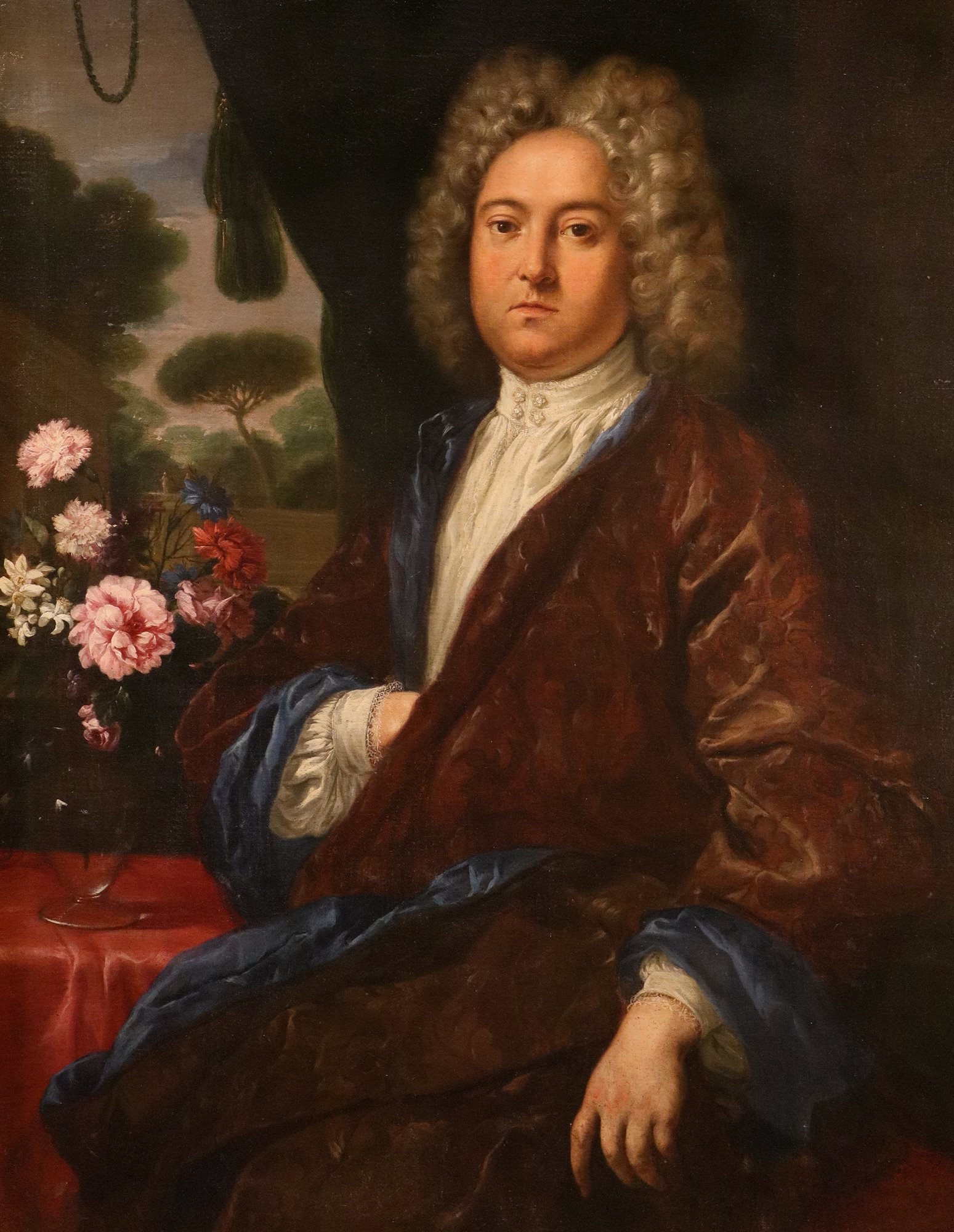
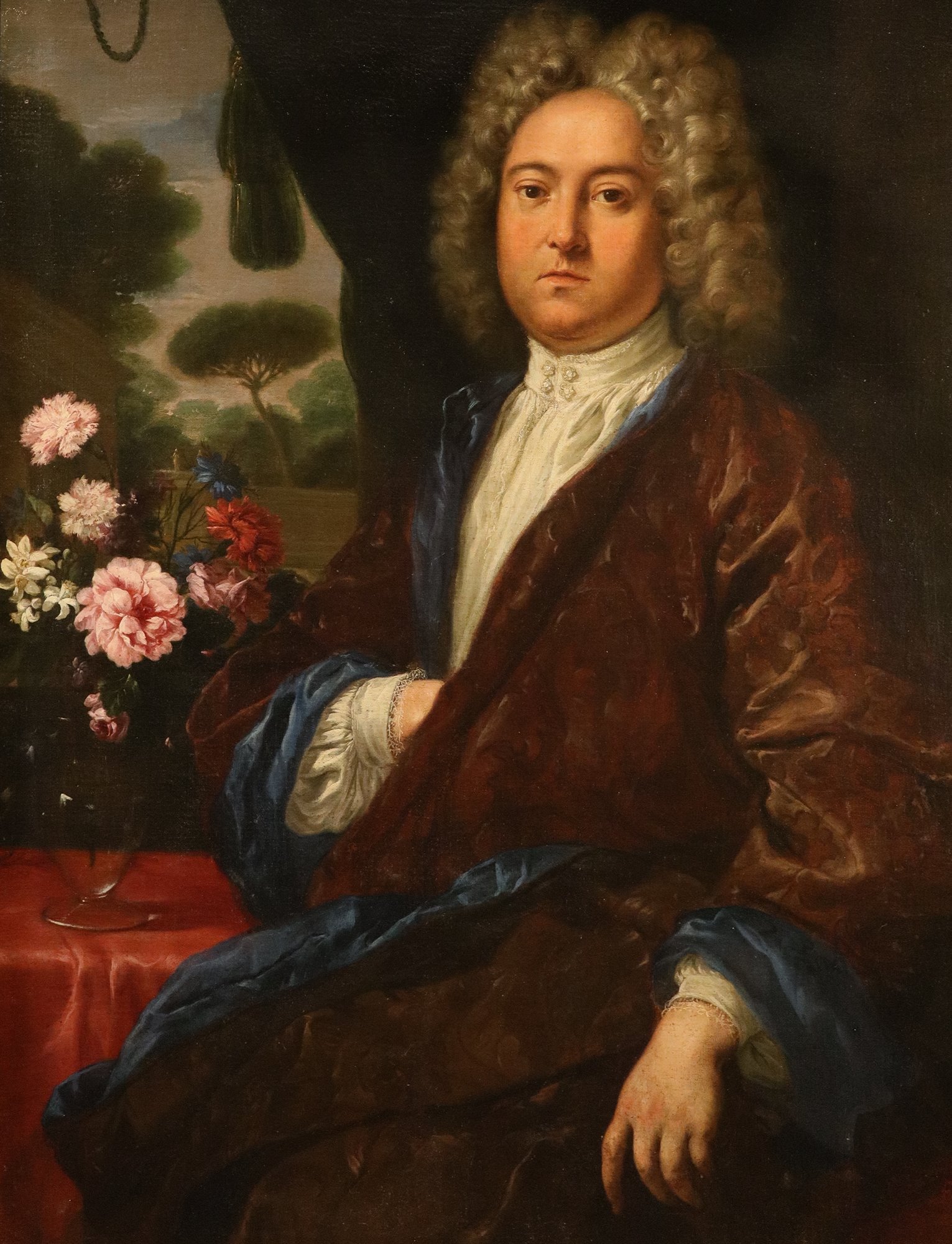
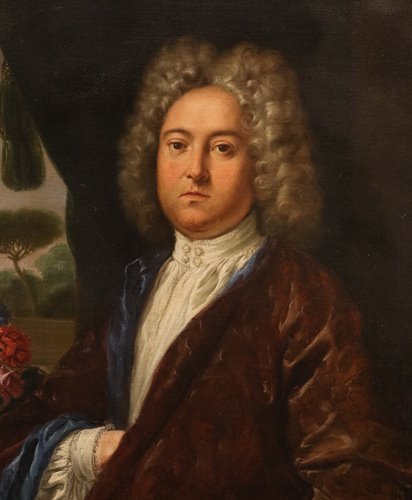
The sitter is a young nobleman portrayed seated on a red cushion; he wears a voluminous curly grey wig, a hallmark of social status at the time, and wears a dressing gown (often identified as a ‘banyan’) in brown damask velvet with blue lapels, over a loose-fitting white shirt, which lends the work a more intimate and less solemn character.
He faces the viewer with a composed expression and a penetrating, introspective gaze.
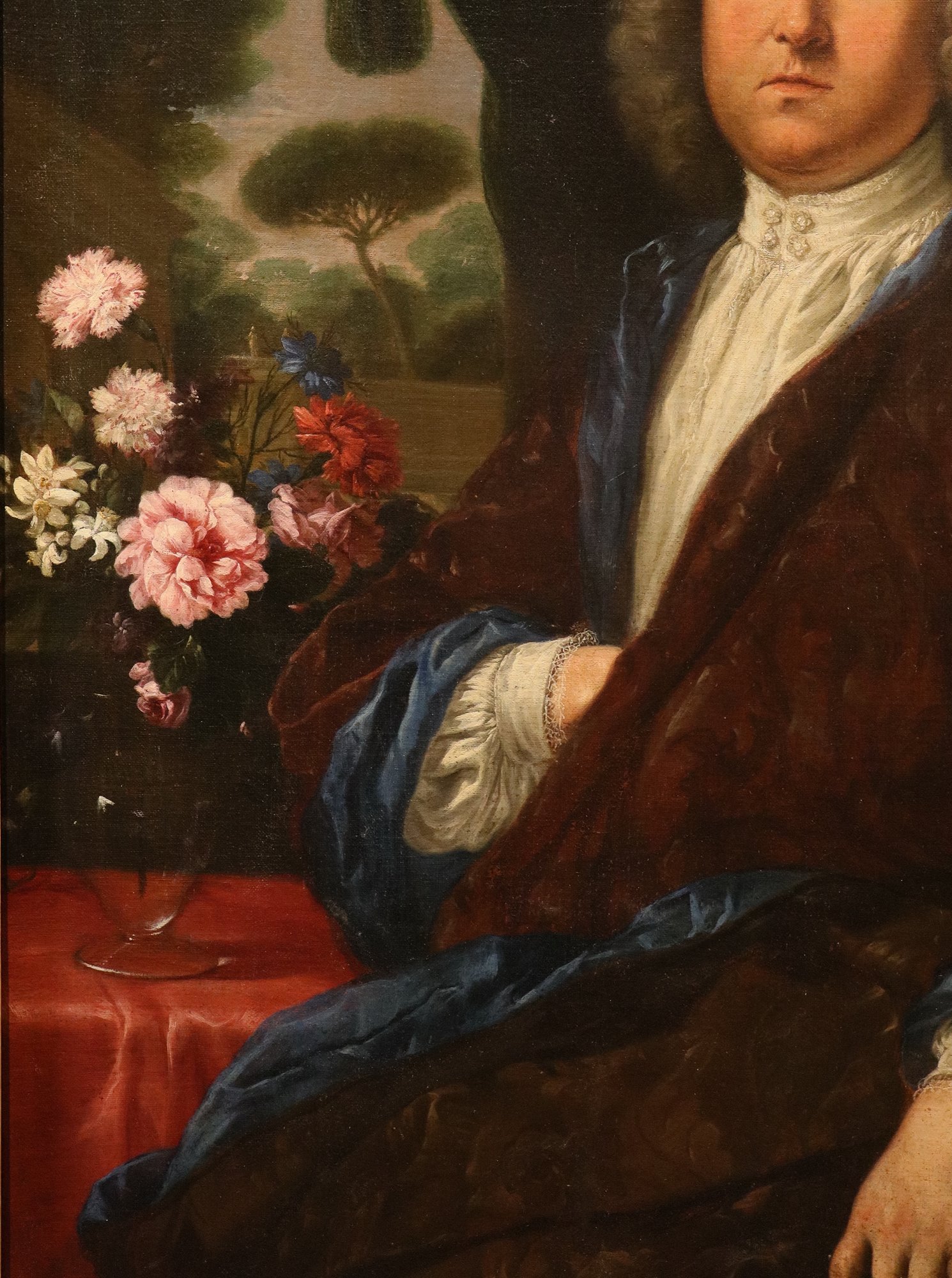
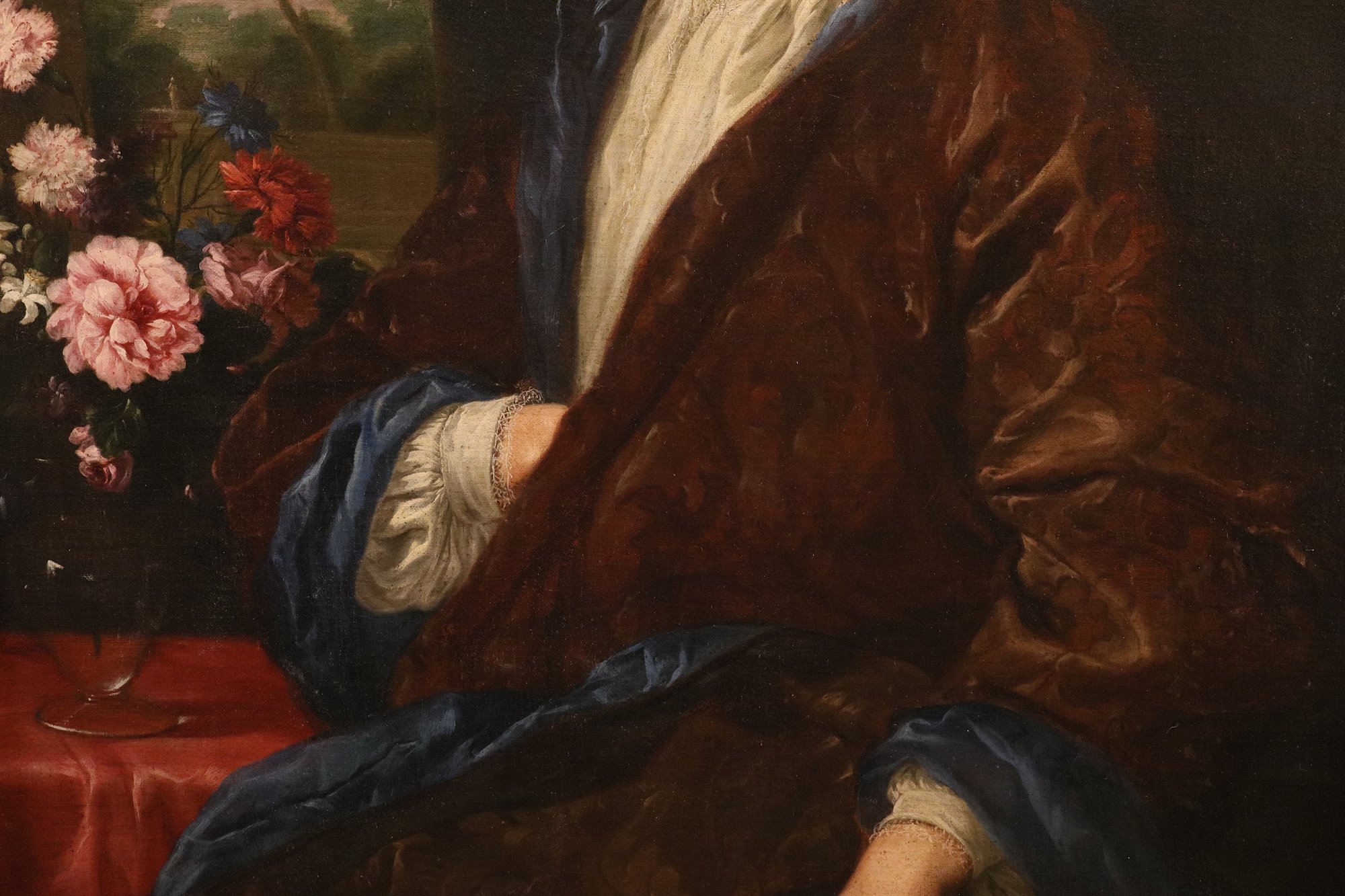
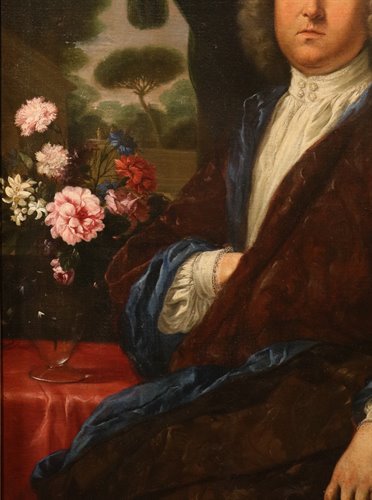
The pose of the male portrait with one hand inside his coat, a pictorial convention of the 18th and 19th centuries, was a sign of a composed posture but above all indicated authority, control and calm, inspired by the manuals of behaviour of the time such as ‘masculine boldness tempered by modesty’.
It was, in fact, a way of expressing self-control and, consequently, control over others, typical of the oratory of that era. Although it is thought that this pose was invented by Napoleon (the leader was often depicted with his hand hidden in his waistcoat), in reality it was a common convention used in many portraits of men from good families even before that time.
Continuing our analysis of the painting, the vase of flowers (peonies and other wildflowers) on the table, covered with a red tablecloth and overlooking a Mediterranean garden from which architectural features can be glimpsed, are common decorative elements used to emphasise the elegance of the setting and the subject’s status.
The work fully reflects the eighteenth-century taste for the new vision of Neoclassical art, which also embraced portraiture, with the abandonment of the excessive and redundant Baroque aesthetic in favour of a return to the principles of balance and composure:
with these principles, Mengs soon became famous and sought-after, rivalling the older Pompeo Batoni (1708–1787) for the role of the capital’s leading painter.
He moved to Rome in 1741 and quickly became an extraordinary portraitist, the highest-paid and most sought-after in Italy and the European courts of the late 18th century, a point of reference for wealthy Grand Tour travellers who wished to visit his studio in Via Sistina to commission their own portrait.
The characteristics listed above would confirm the connection with Mengs’s style, allowing us to attribute the work to an artist from his close circle or to one of his many prominent pupils, whom he had both in Italy and in Spain, where he worked for the respective courts.
It is difficult to identify a name with certainty, although in Rome Anton von Maron (Vienna, 1733 – Rome, 1808) was one of his most promising pupils, maintaining a style close to that of his master.
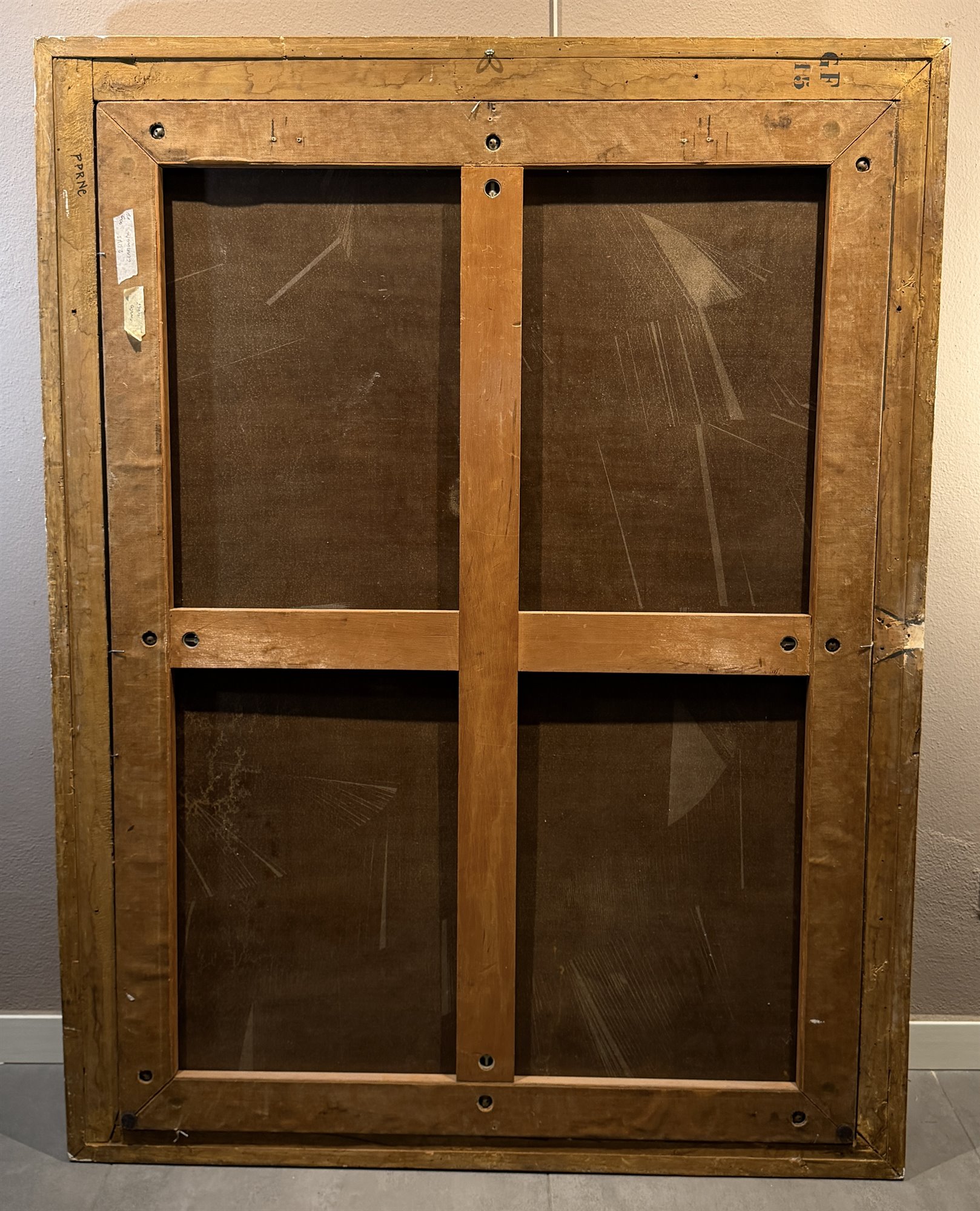
Good condition, complete with an antique frame.
ADDITIONAL INFORMATION:
The work is sold complete with a certificate of authenticity and a descriptive iconographic sheet.
We arrange and organise the transport of purchased works, both within Italy and abroad, using professional and insured carriers.
It is also possible to view the painting at our gallery in Riva del Garda; we would be delighted to welcome you to show you our collection of works.
Please feel free to contact us for any further information.
Follow us on: