
Perseo libera Andromeda
Theodoor van Thulden (Bois-Le-Duc, 1606 - 1669)
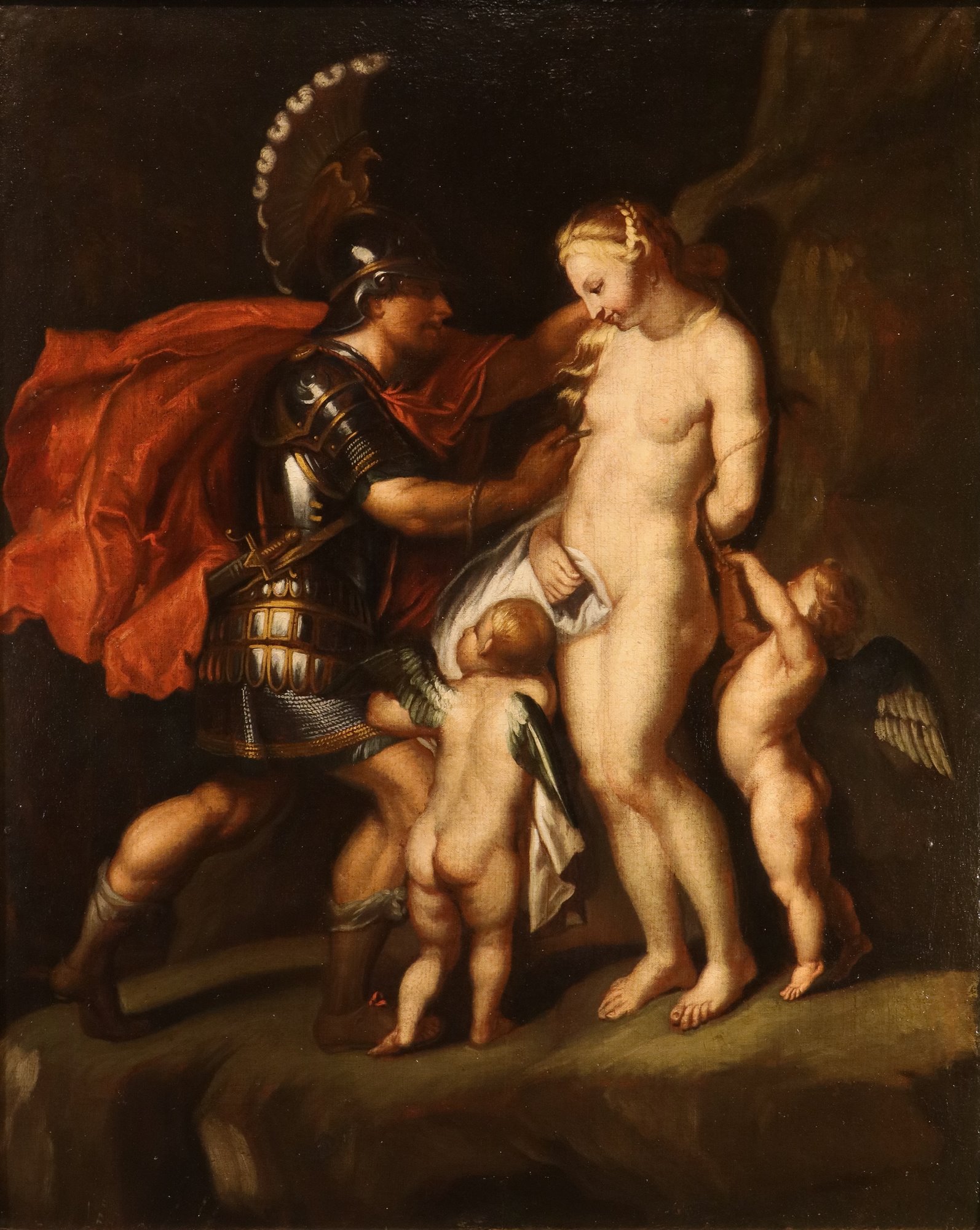
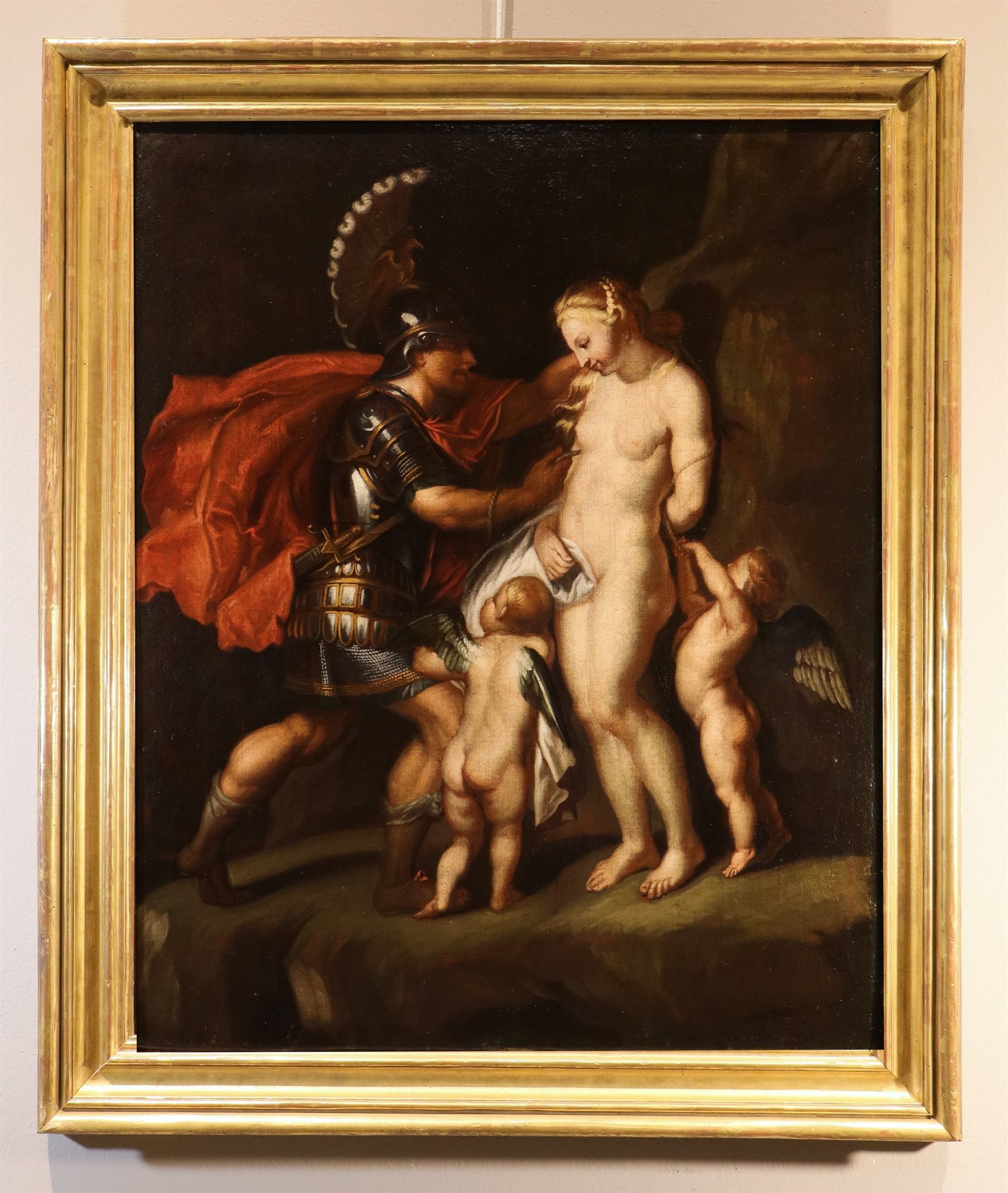
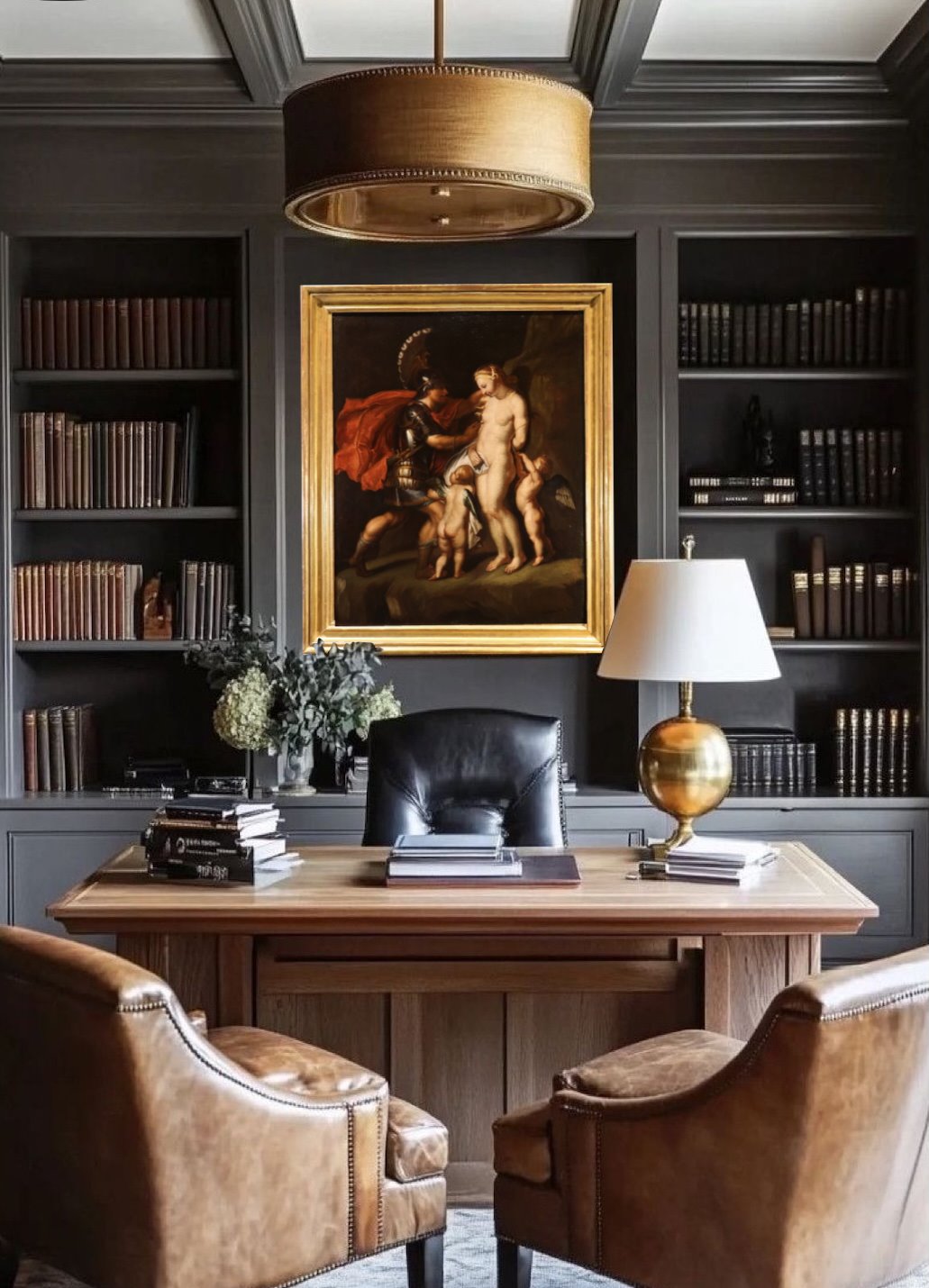
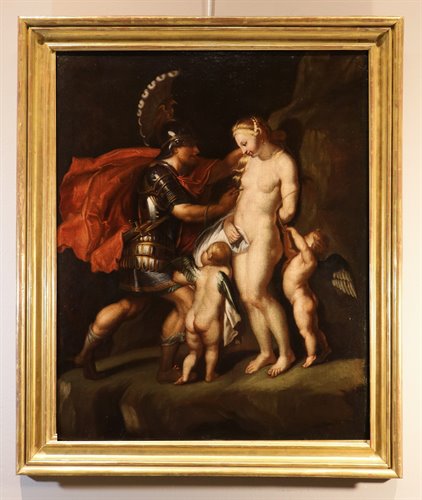
A follower of Peter Paul Rubens (Siegen 1577 – Antwerp 1640)
Attributed to Theodoor van Thulden (Bois-Le-Duc, 1606 – 1669)
Perseus Frees Andromeda
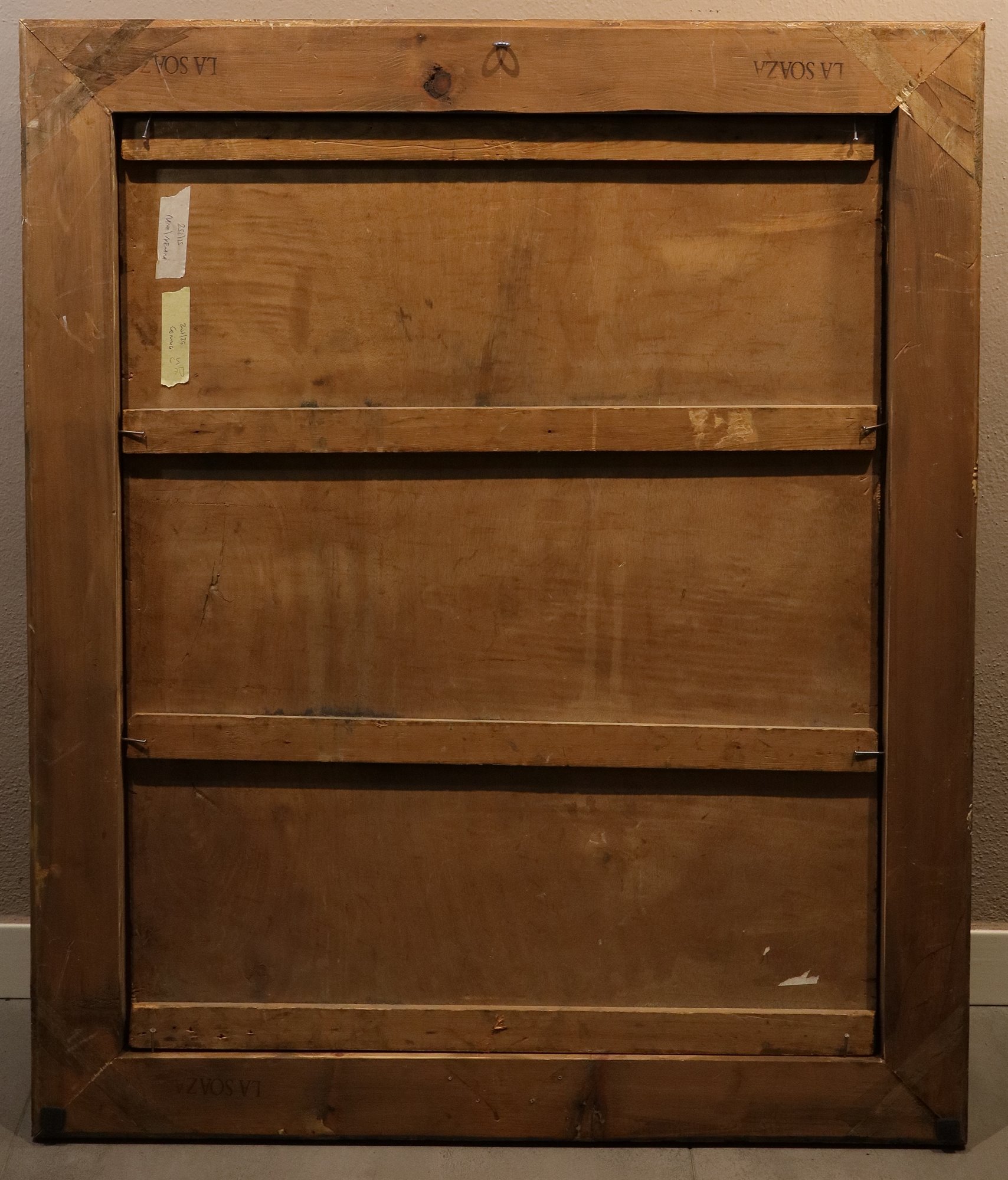
oil on canvas, mounted on panel
82 x 67 cm.
with frame 98 x 83 cm.
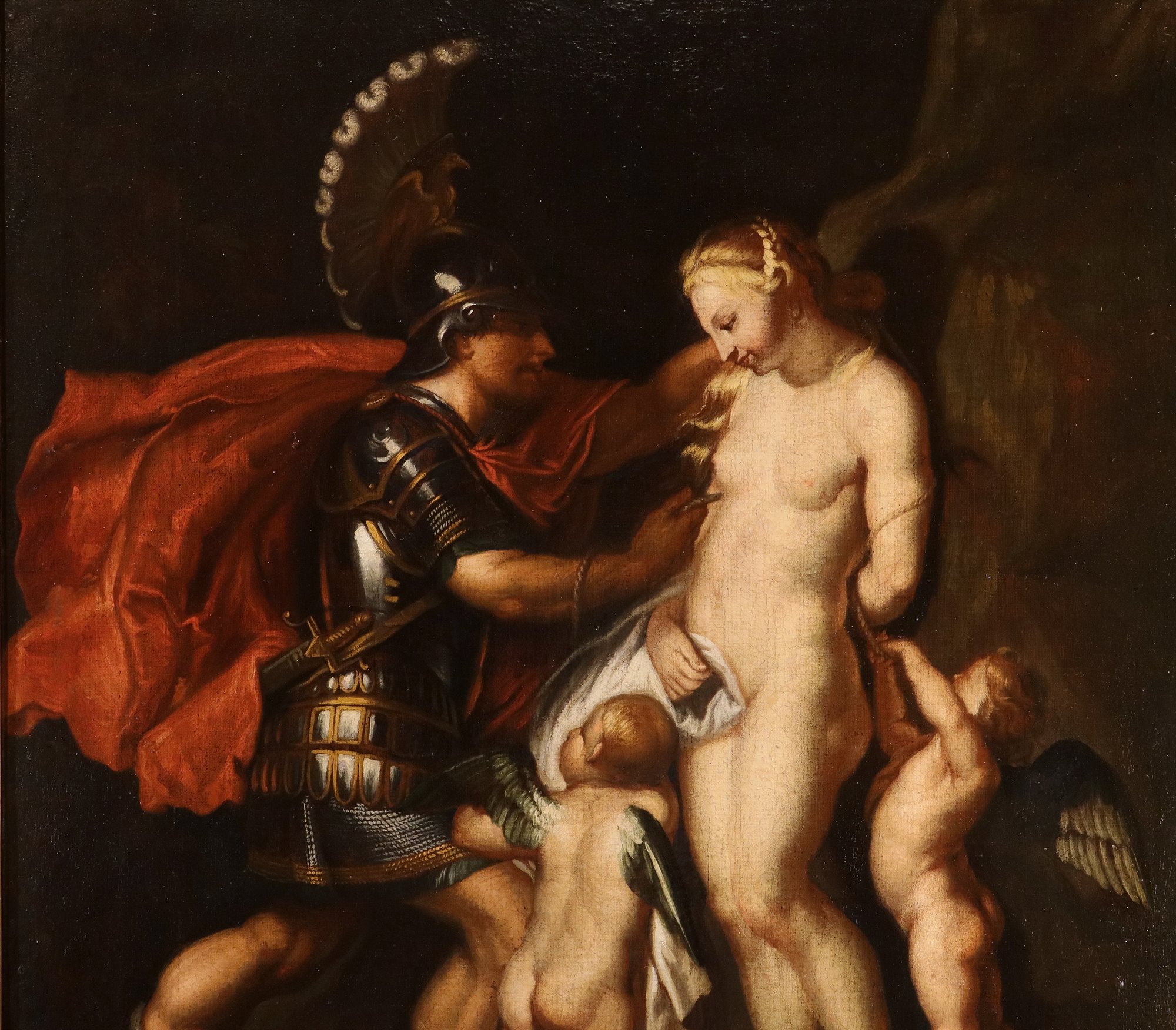
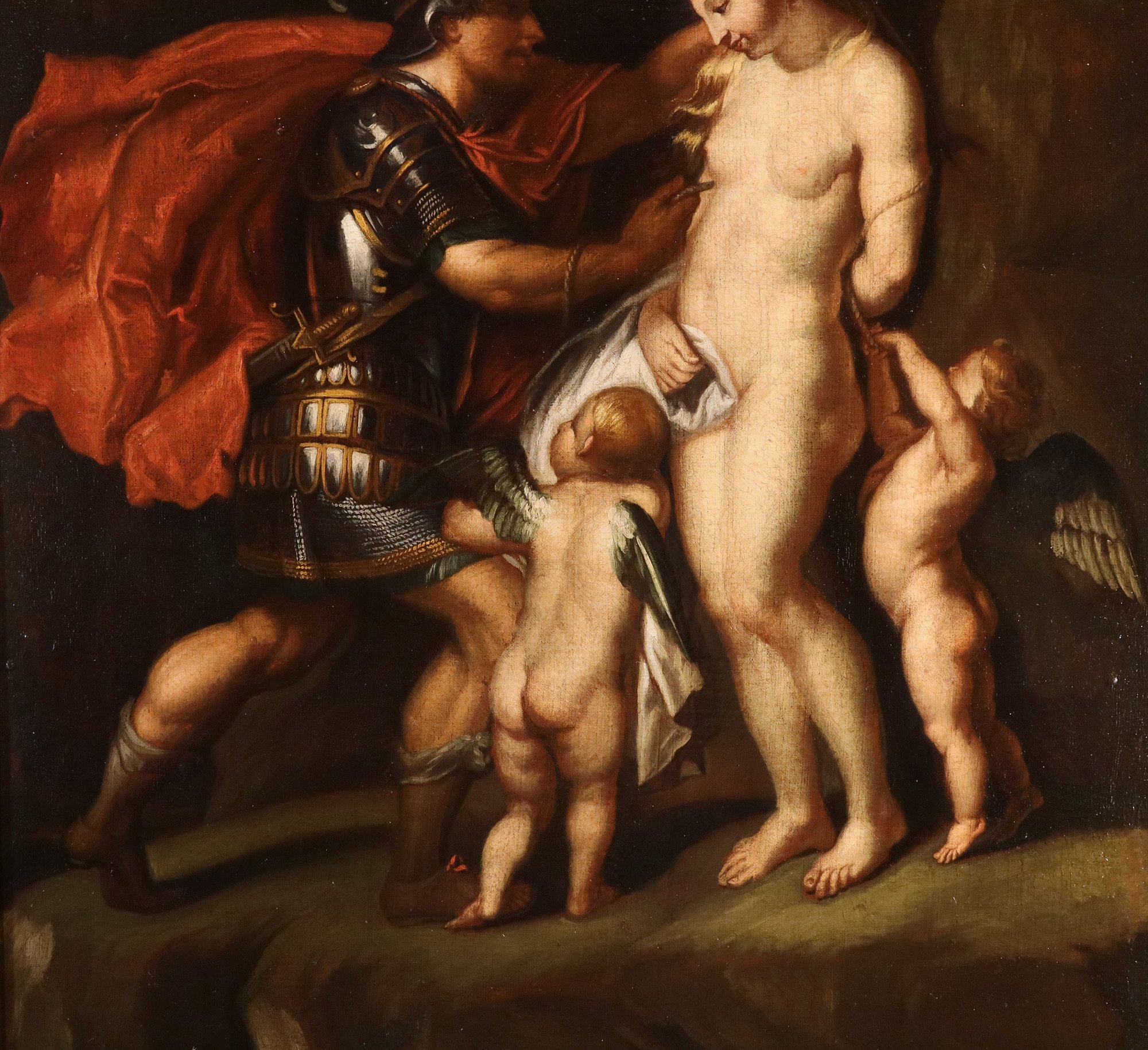
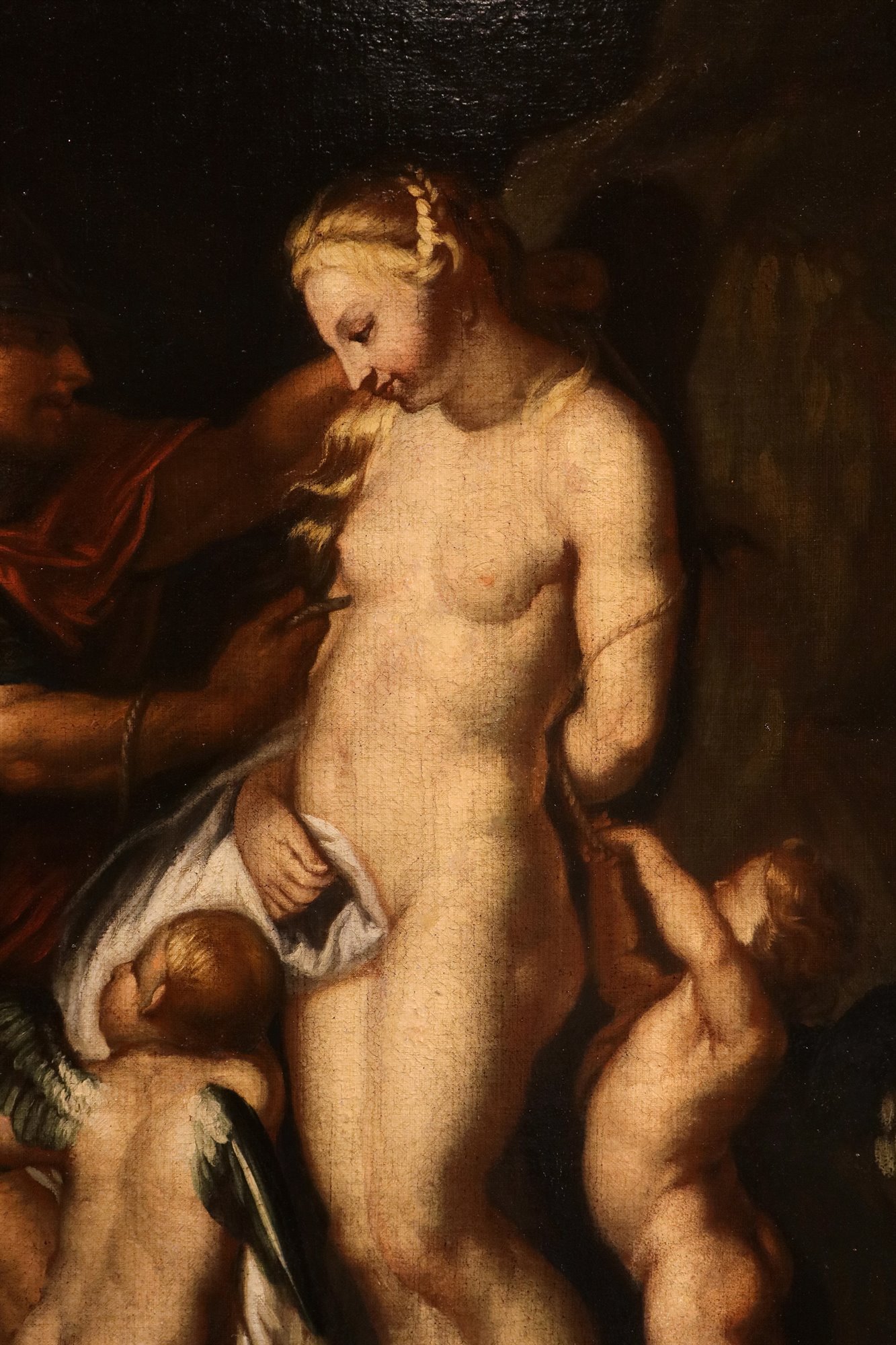
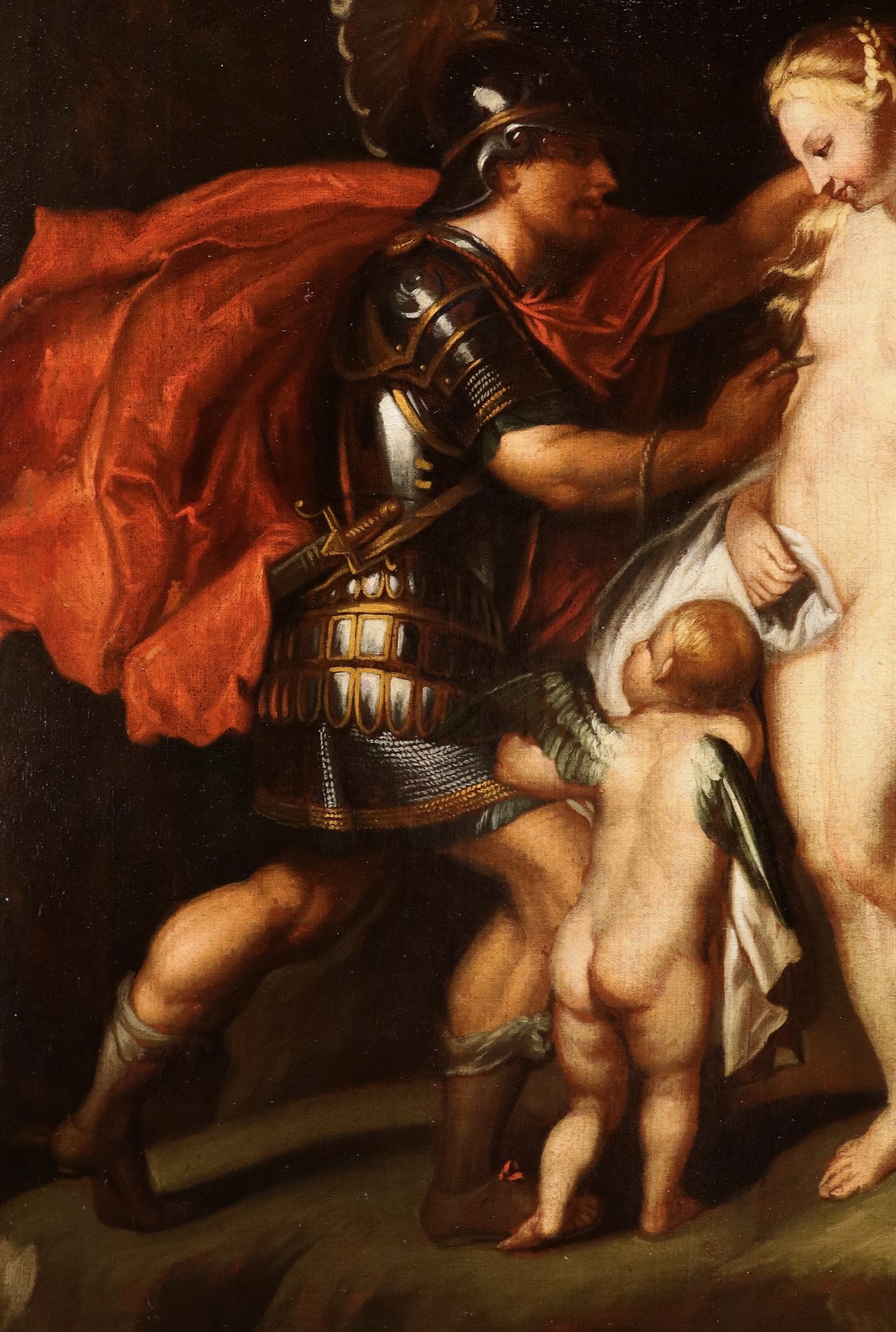
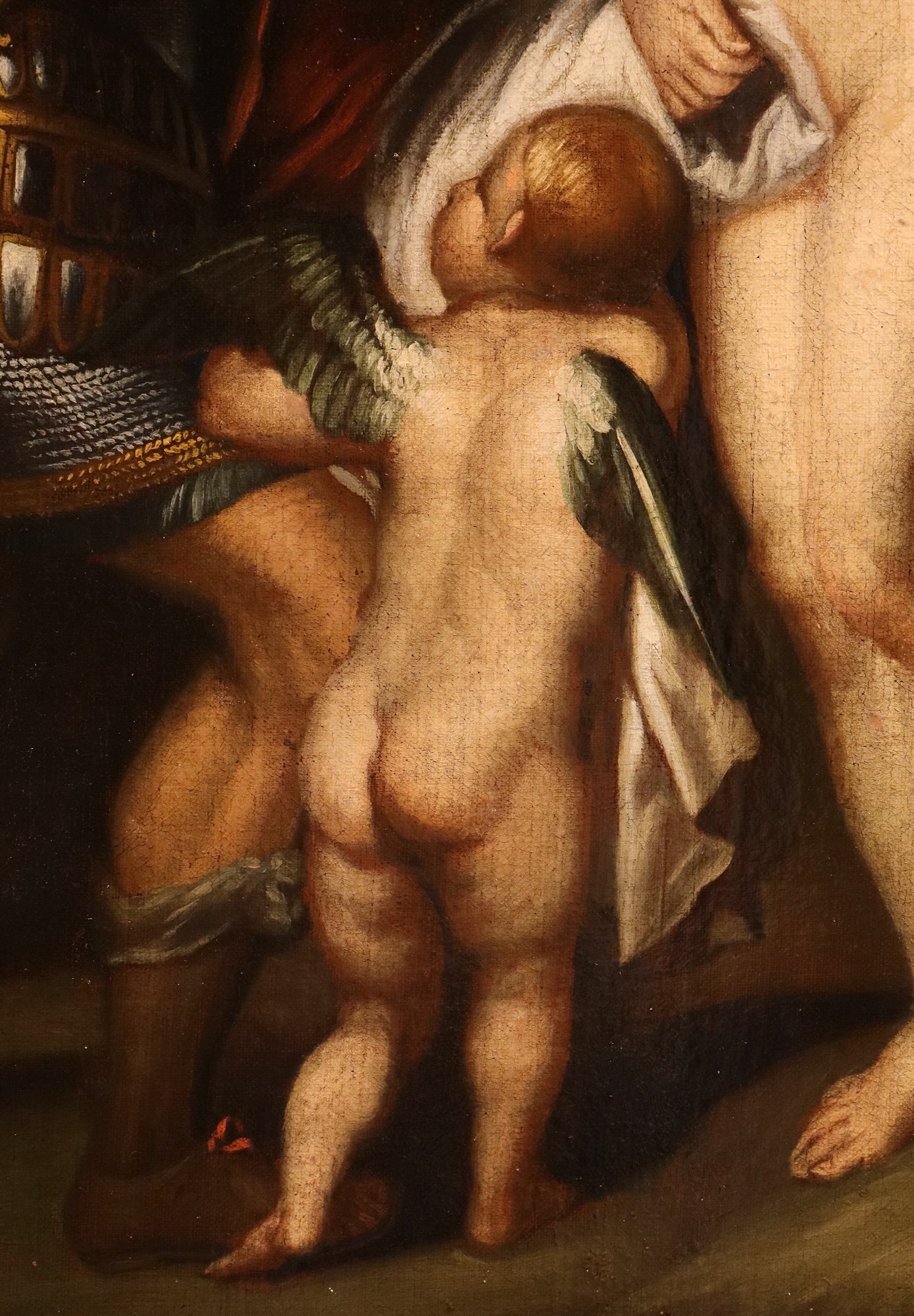
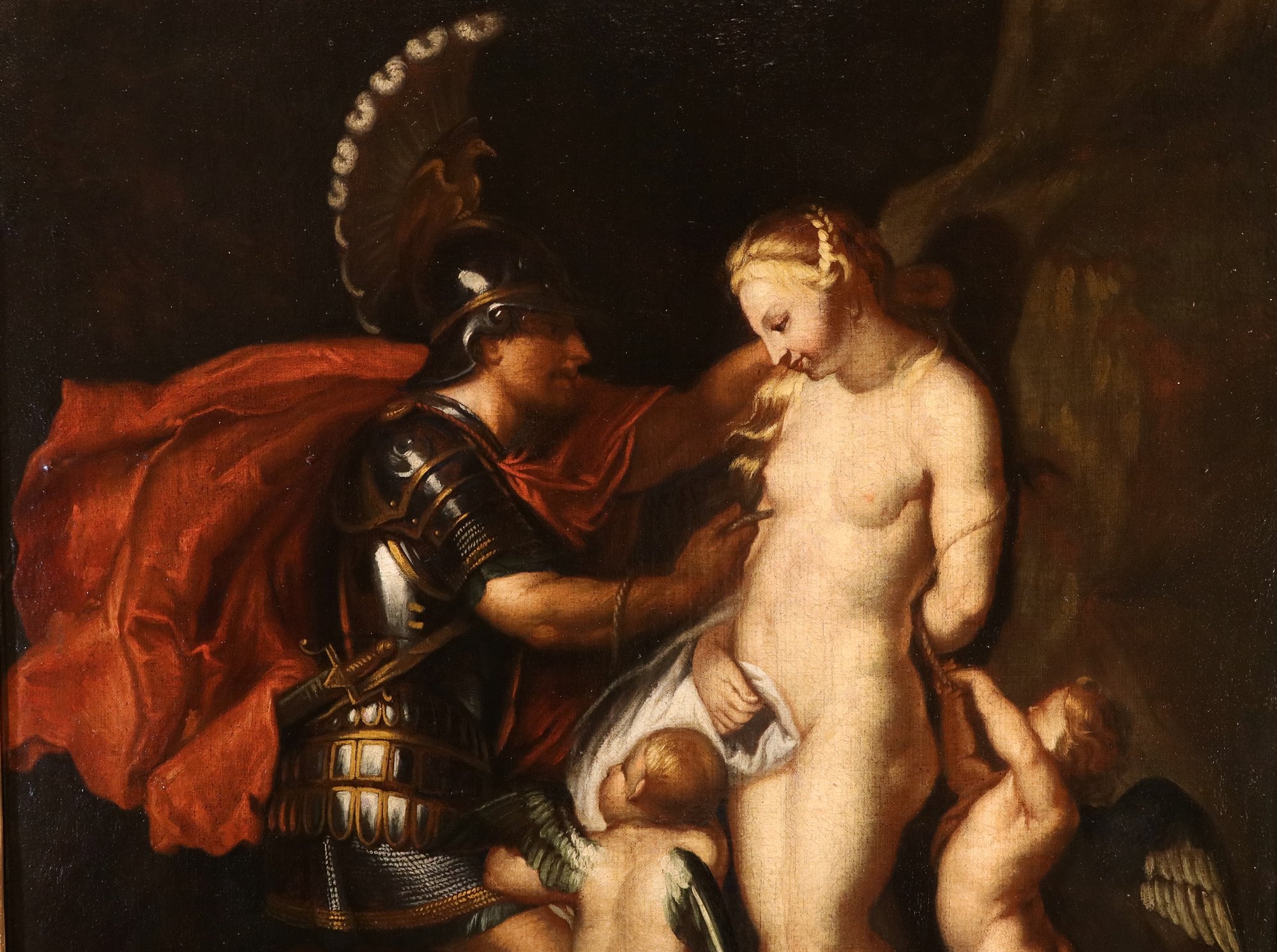
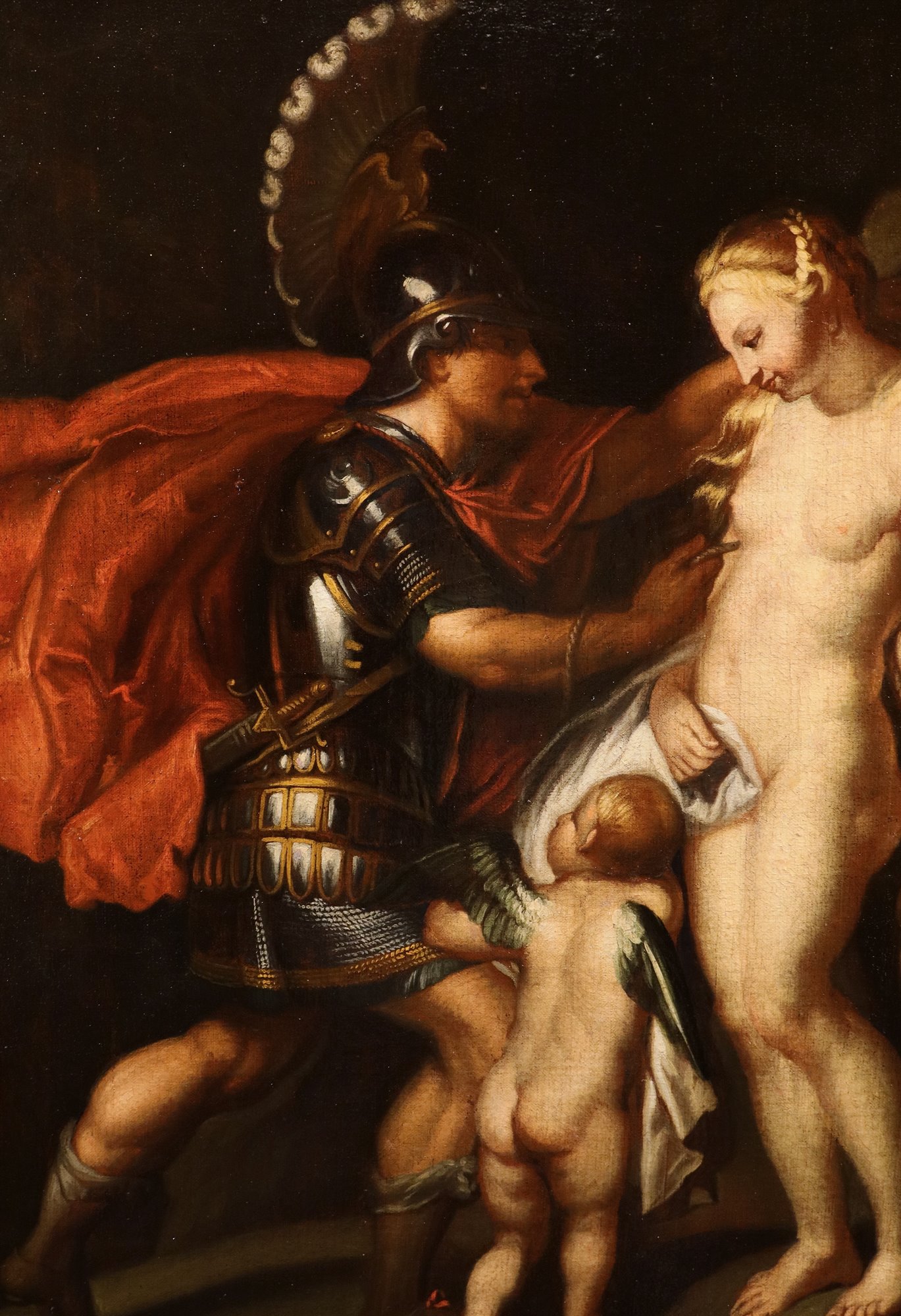
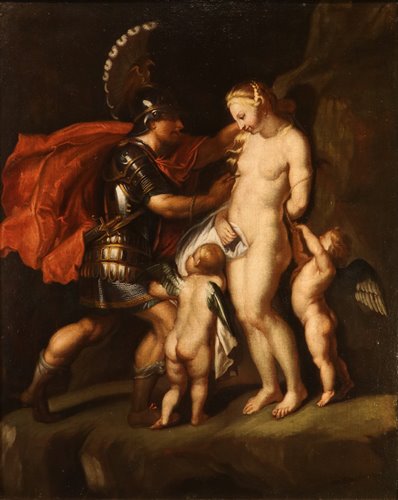
The subject of the painting, derived from Ovid’s Metamorphoses (Book IV, lines 663–752), is inspired by the myth of Princess Andromeda, daughter of King Cepheus of Ethiopia and Queen Cassiopeia, depicted here as she is freed by the Greek hero Perseus after he defeated the sea monster that held her captive.
This cruel punishment had been imposed on her by Poseidon, god of the seas, to atone for the arrogance of her mother Cassiopeia, who had dared to compare herself and her daughter to the Nereids in beauty. When Perseus returned home on his winged horse Pegasus after his victory over the fearsome Medusa, he saw the princess chained to a rock on the shore and, overwhelmed by her beauty, decided to save her.
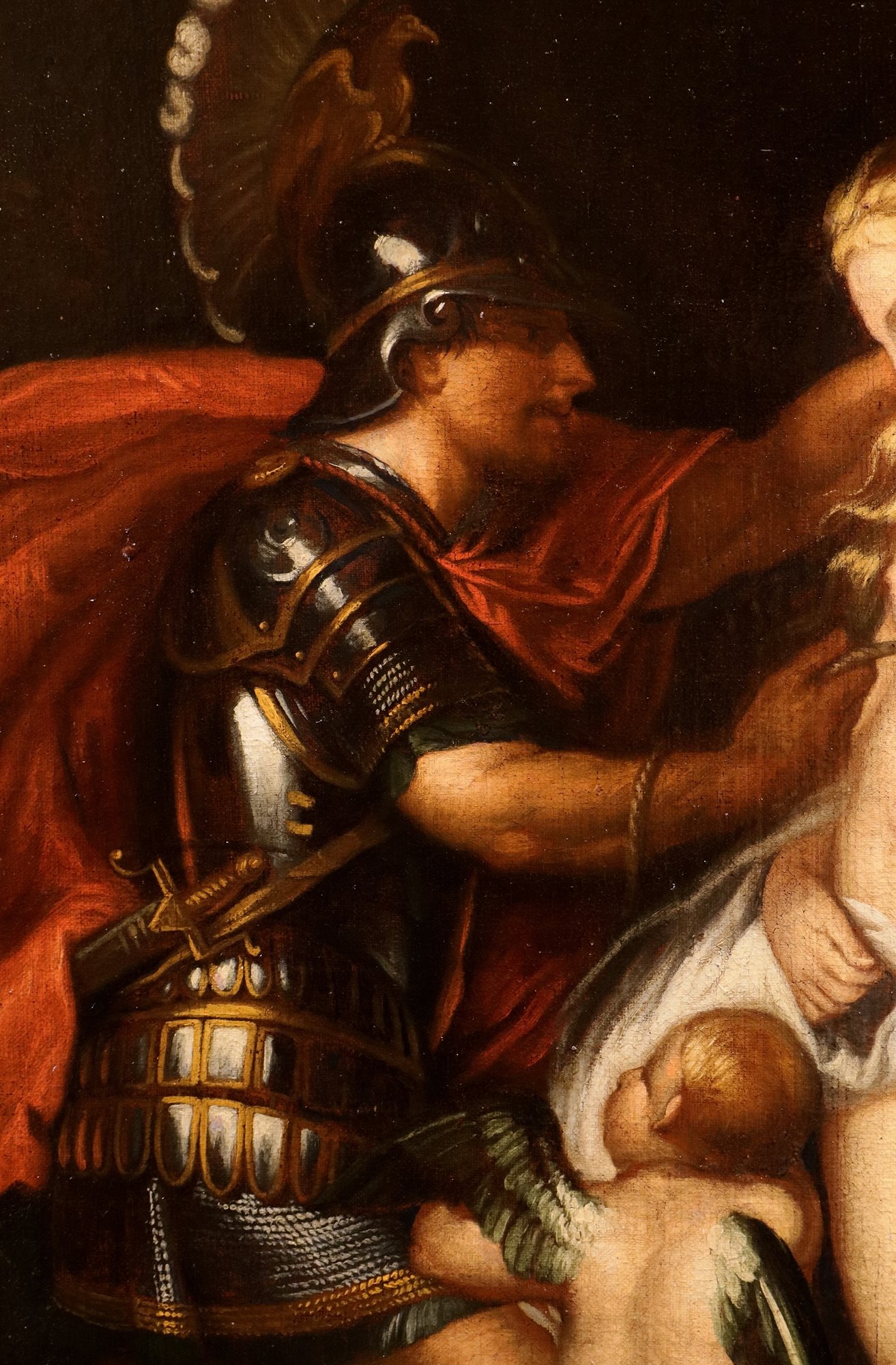
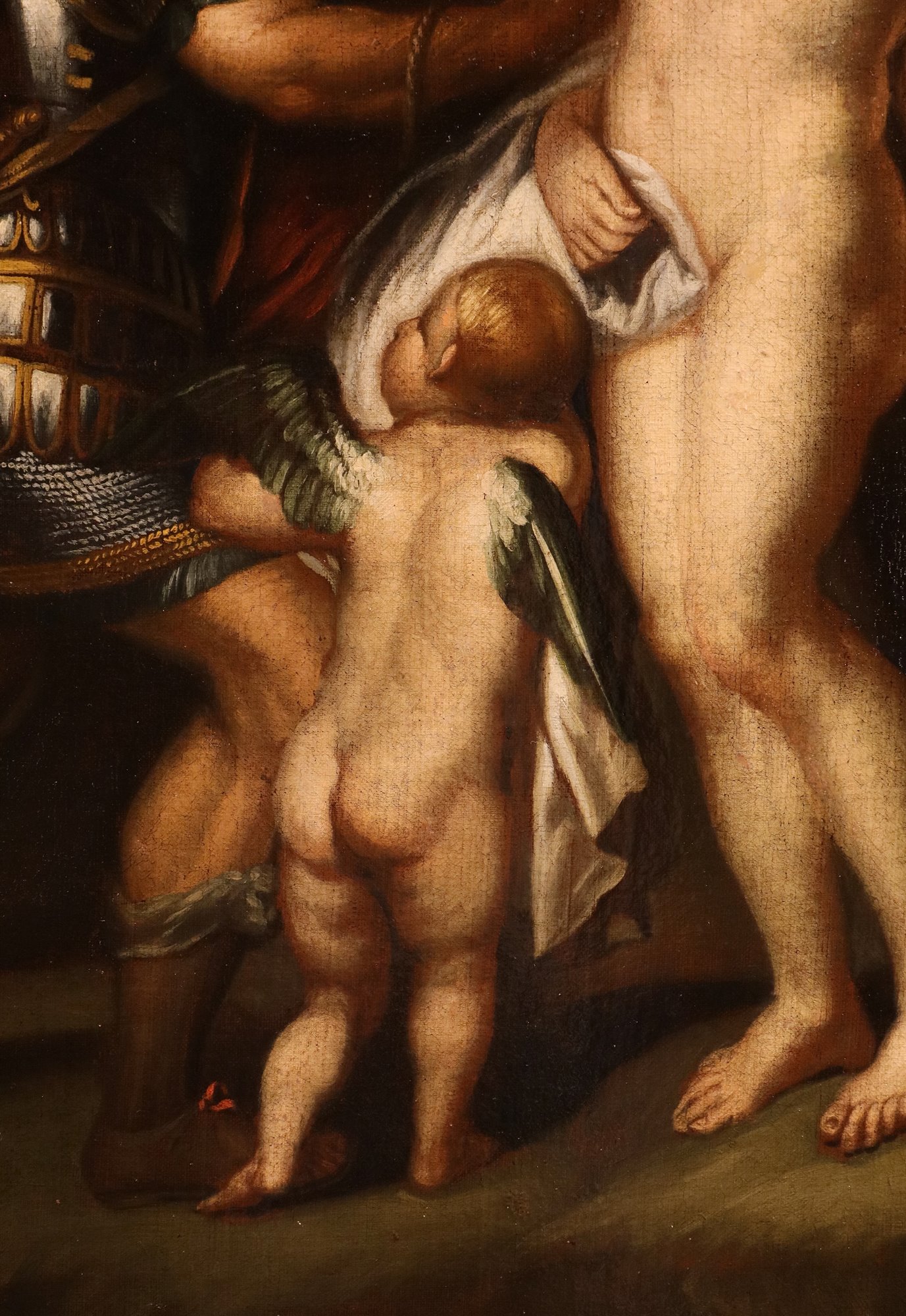
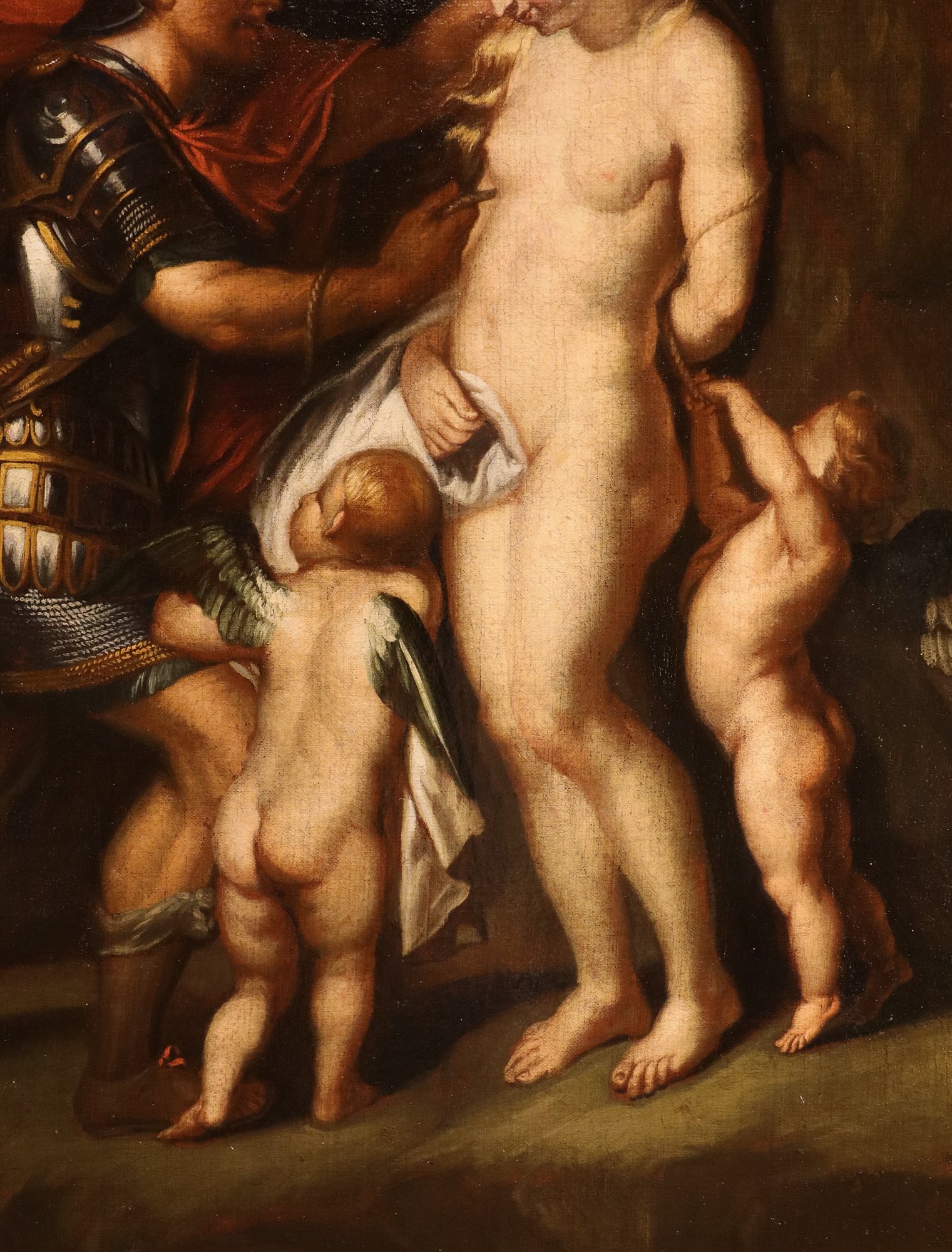
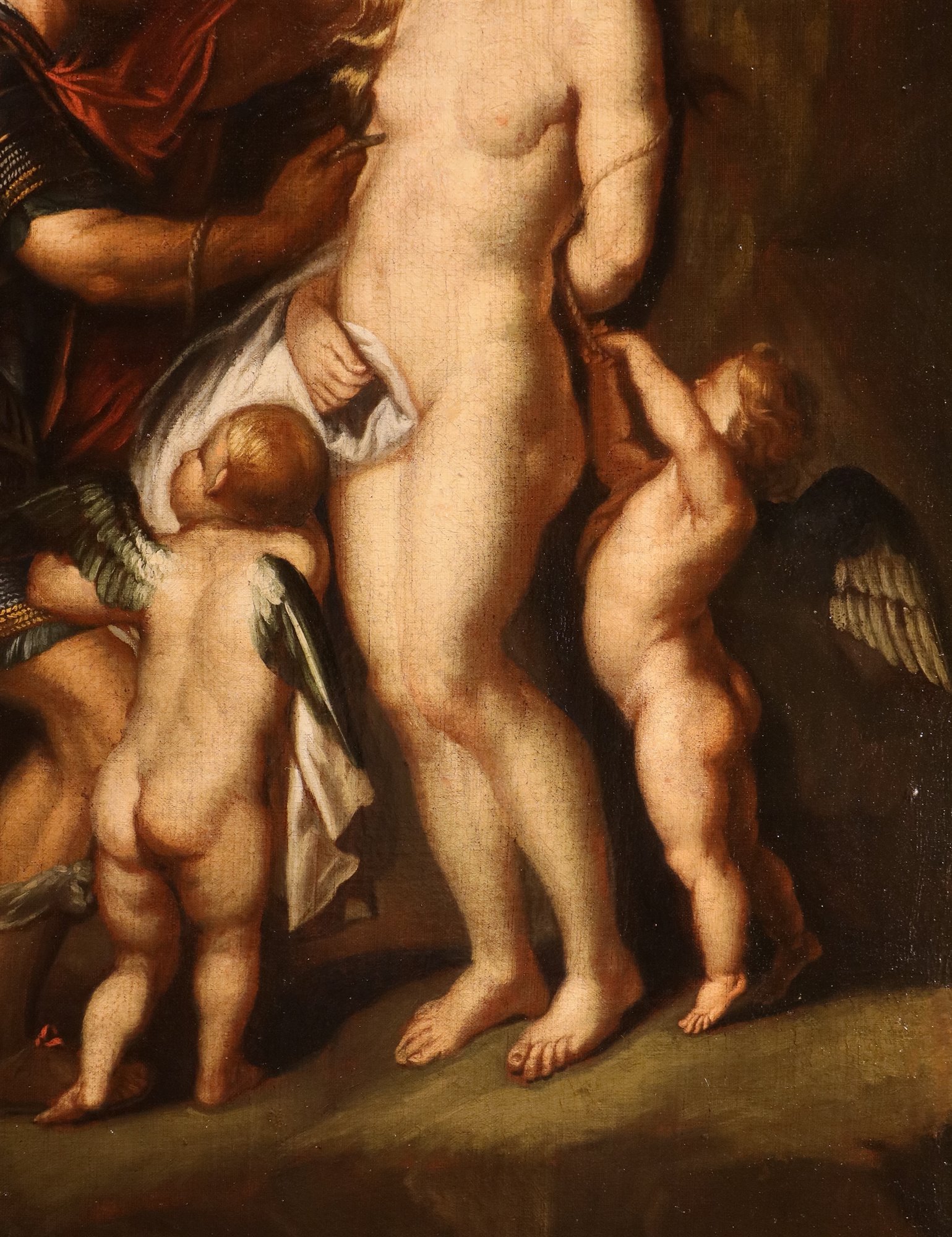
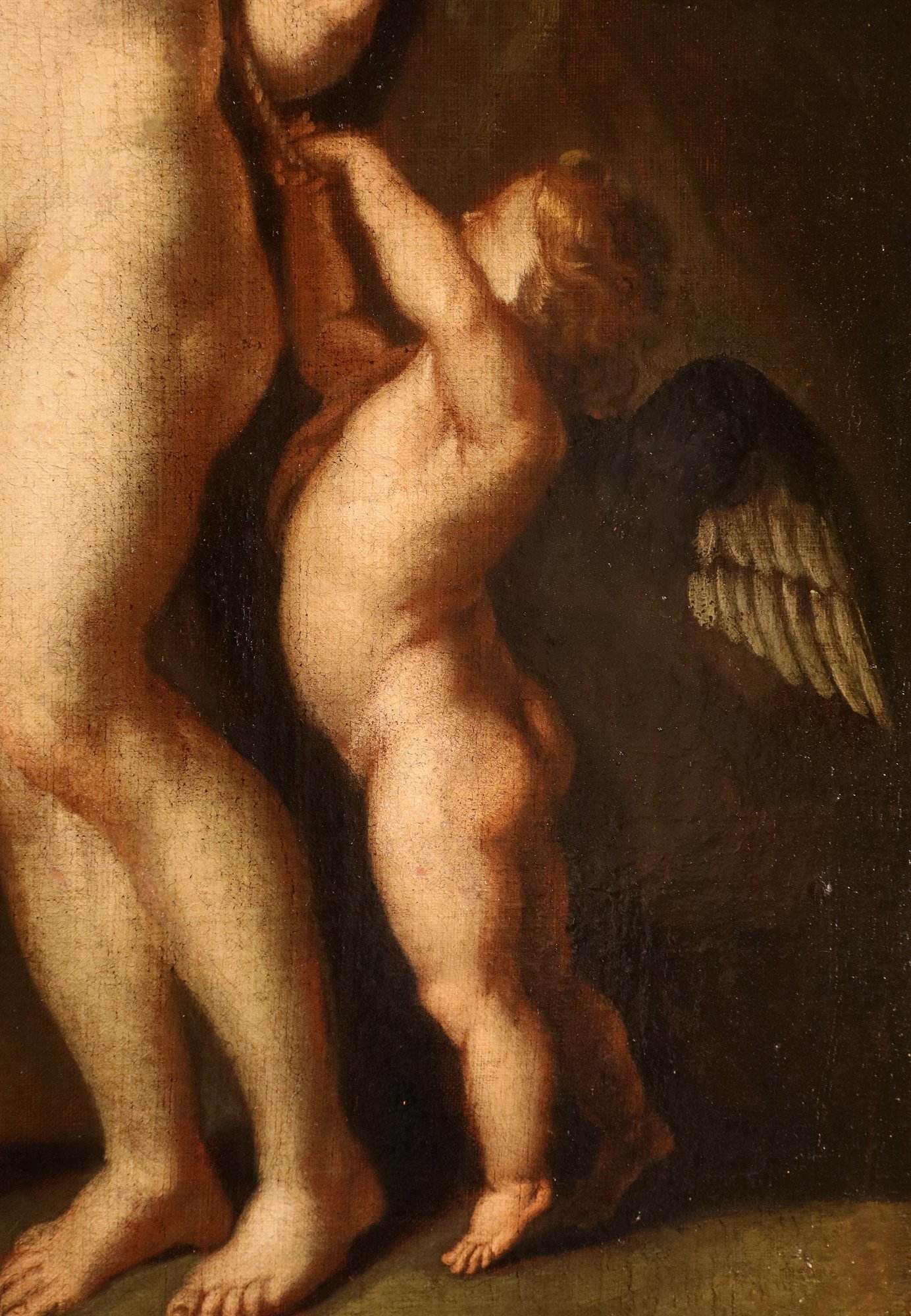
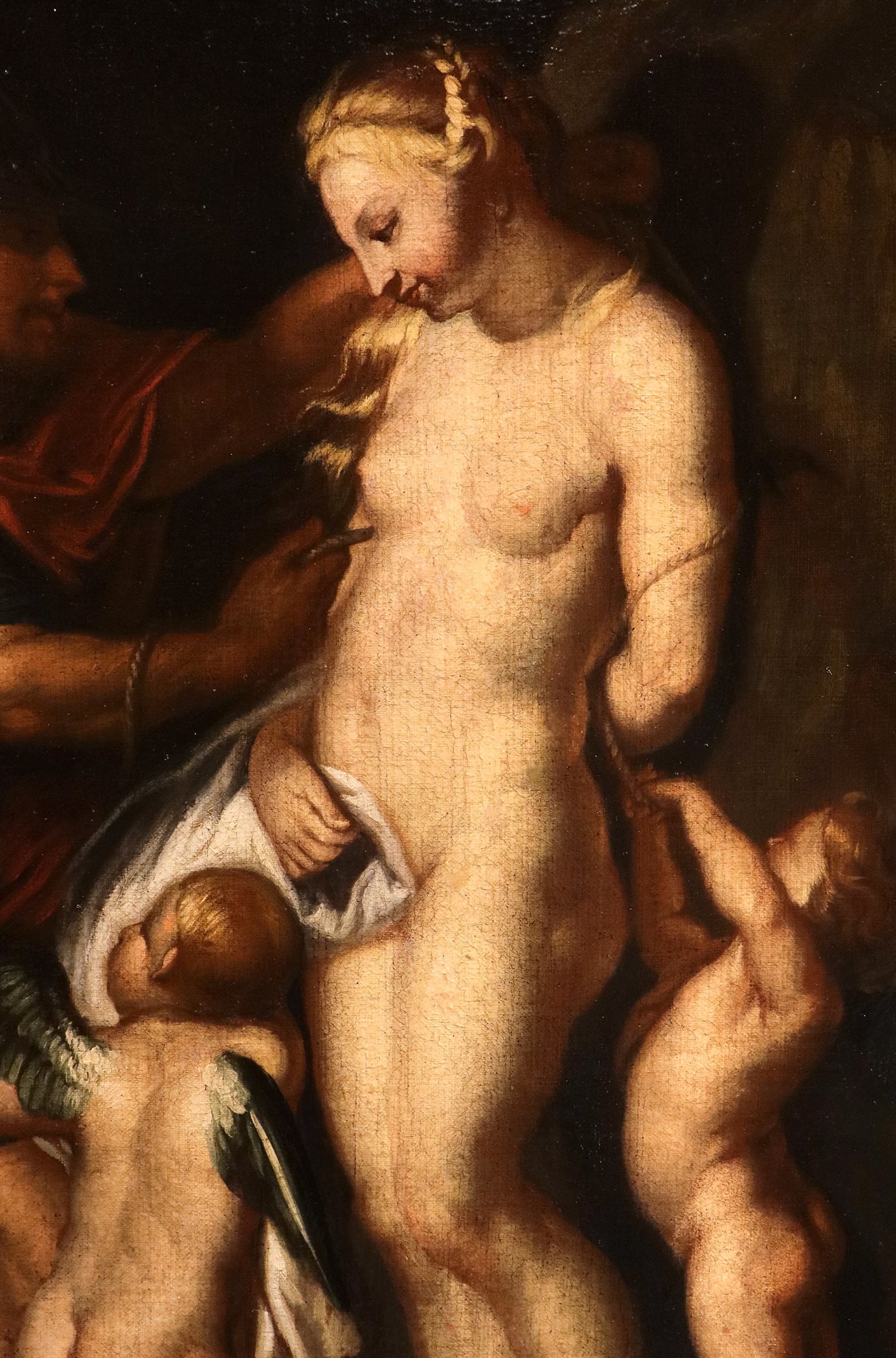
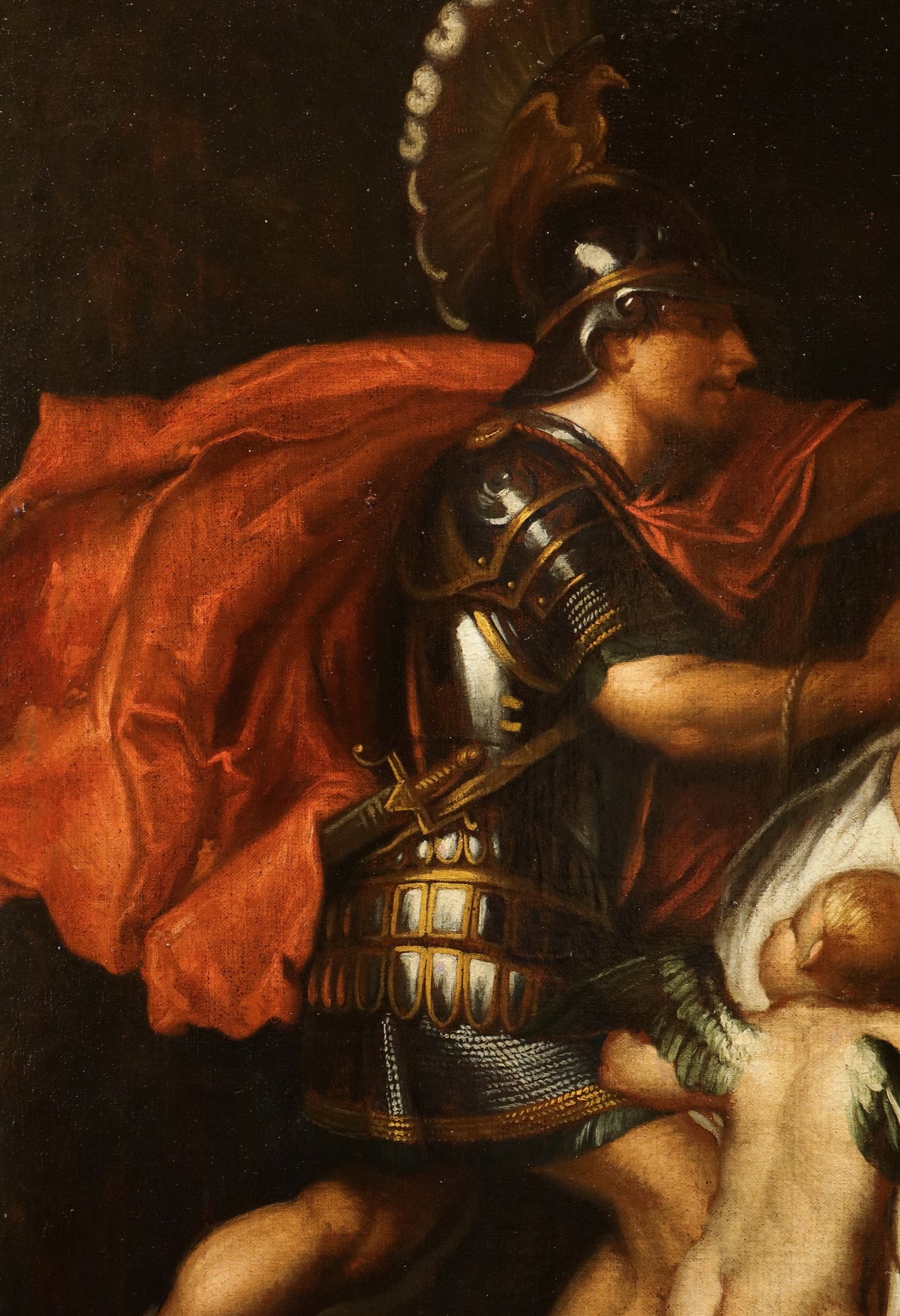
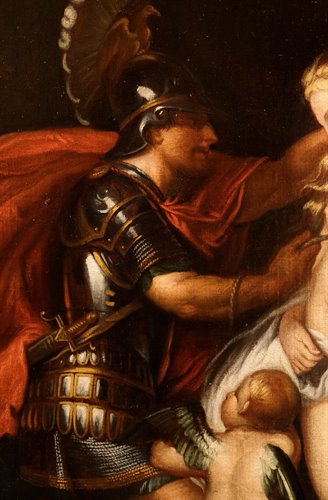
The hero, clad in gleaming armor and wearing the red cloak of the victor and a crested helmet, is flanked by two small cherubs, one of whom helps him break the chains binding Andromeda to the rock, emphasizing the theme of love triumphing over danger.
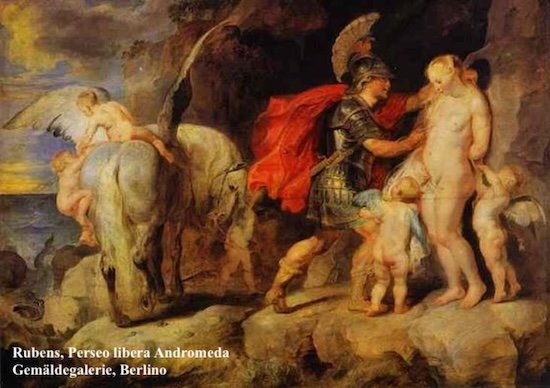
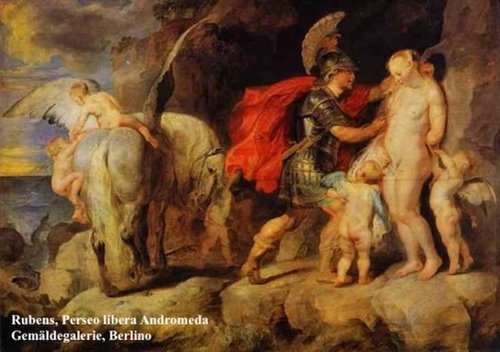
This is a reduced version derived from the famous ‘Perseus Frees Andromeda’ painted by Peter Paul Rubens around 1620, and now housed in the Gemäldegalerie in Berlin, from which the main scene on the right has been extracted.
Peter Paul Rubens, Perseus Frees Andromeda
c. 1622
Oil on oak panel, 100 x 139 cm, Gemäldegalerie, Berlin

Rubens, who often used sophisticated references to antiquity to emphasize the message of his paintings, modeled the figure of Andromeda and the cherub at her side, intent on untying her chains, after the statue of the Happy Venus (Rome, Vatican Collections, https://ancientrome.ru/art/artworken/img.htm?id=1369 ), which he saw during his stay in Rome.
As indicated in the verses of Ovid’s poem, when Perseus, flying overhead, sees Andromeda bound to the rock, her beauty is such that it initially leaves him petrified, mistaking her for a statue, and this may be the reason for this cultured reference.
“…nisi quod levis aura capillos / moverat et trepido manabant lumina fletu, / marmoreum ratus esset opus” (vv. 672-675)
(…if a light breeze had not stirred her hair and her eyes had not shed warm tears, he would have taken her for a work of marble)
The success of Rubens’s work led to its widespread dissemination and a substantial series of copies produced by his workshop (in Vienna at the Liechtenstein Gallery, in Potsdam at the Sanssouci Gallery, the Museum of Arles, and the Museum of Lisbon).
It is our opinion that the authorship of the finely executed painting presented here should be attributed to a Flemish artist active around the second half of the 17th century among Rubens’s followers, who was able to rework the master’s masterpiece with great skill.
If we examine the characteristics of the painting, the work in question can be attributed to the hand of Theodor van Thulden (Bois-Le-Duc, 1606–1669), one of Peter Paul Rubens’s closest collaborators and pupils, known in particular for his work as an engraver and copyist, who helped spread the Flemish master’s style. Among the countless works he reinterpreted from the master, adapting them to his own sensibility, we can mention “Alexander the Great with Roxane” (https://rkd.nl/images/119824 ), ‘The Martyrdom of Saint Lawrence’ (https://rkd.nl/images/256558 ), ‘Cimon and Pero’ (https://rkd.nl/images/274549 ), or ‘The Bath of Diana’ (https://rkd.nl/images/342069 ).
Van Thulden was not merely a passive “copyist,” but a key interpreter of Rubens’s designs, with a style of his own that tended toward greater classicism in his mature years, while faithfully following the dynamism and power of Rubensian Baroque.
Visible surface restorations present.
With a gilded frame, not contemporary.
ADDITIONAL INFORMATION:
The work is sold accompanied by a certificate of authenticity and a descriptive iconographic sheet.
We handle and arrange the transport of purchased works, both within Italy and abroad, through professional and insured carriers.
It is also possible to view the painting at our gallery in Riva del Garda; we would be delighted to welcome you to view our collection of works.
Please contact us, with no obligation, for any additional information.
Follow us on: