
Nettuno sulle onde dell'oceano
Bottega di Giovanni Francesco Barbieri, Il Guercino (Cento, 1591 - Bologna, 1666)
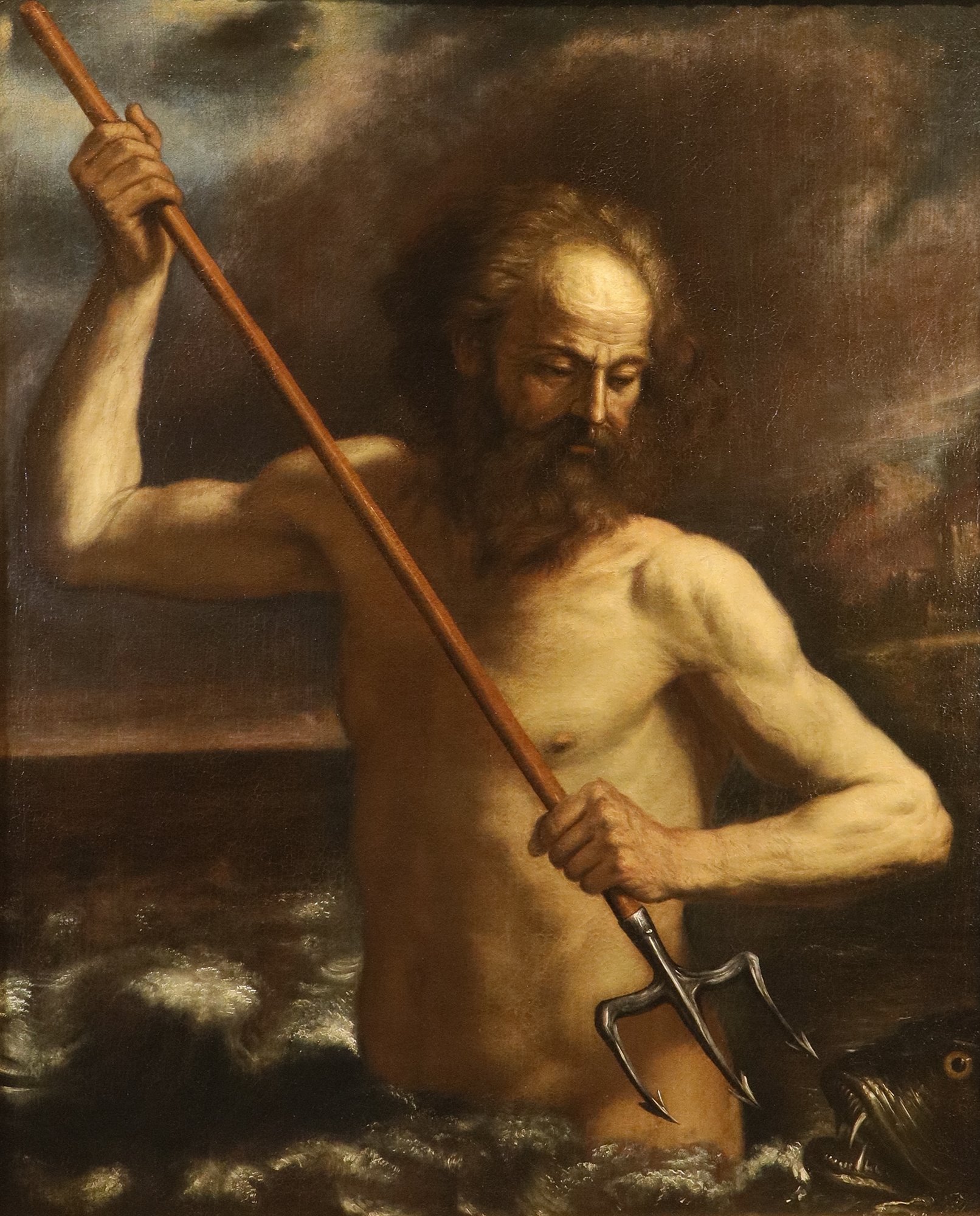
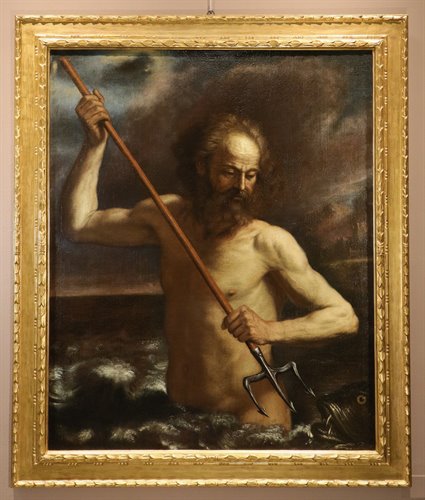
Neptune on the Waves of the Ocean
Workshop of Giovanni Francesco Barbieri, known as Il Guercino (Cento, 1591 – Bologna, 1666)
Attributed to Ercole Gennari (Cento, 1597 – Bologna, 1658)
Oil on canvas
138 x 112 cm.
Framed 160 x 135 cm.
The work is accompanied by a critical study by Prof. Emilio Negro (Bologna, 2026)
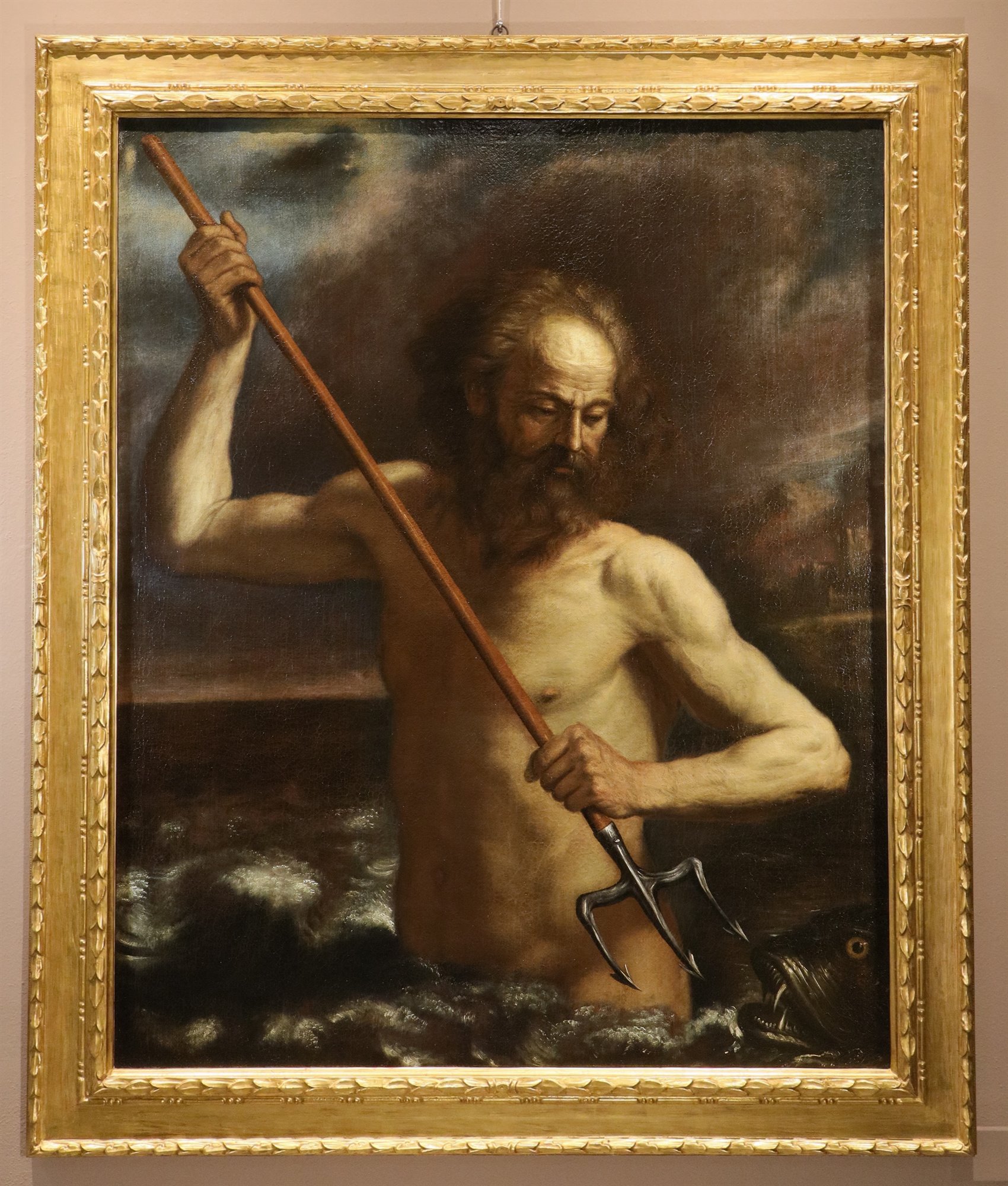
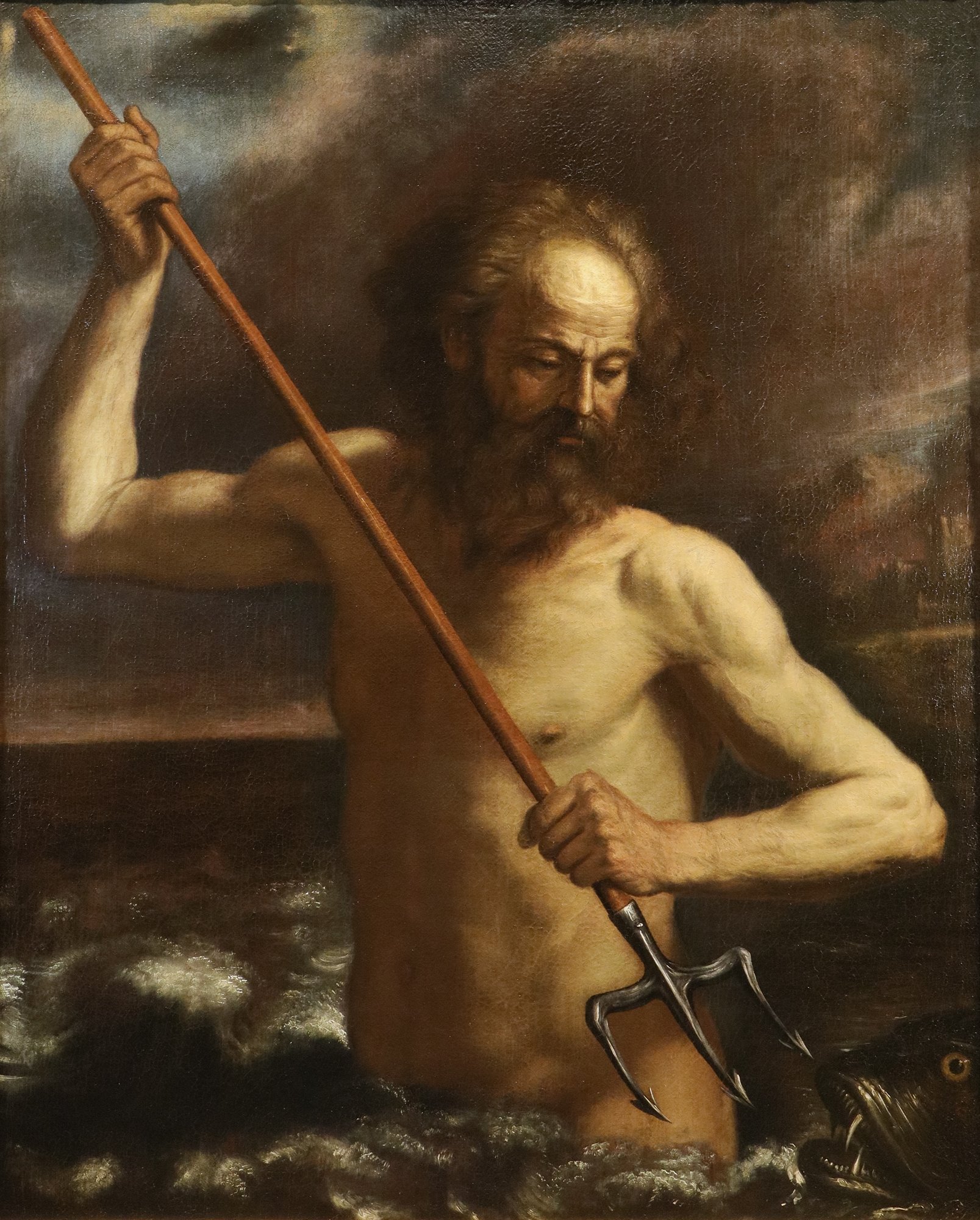
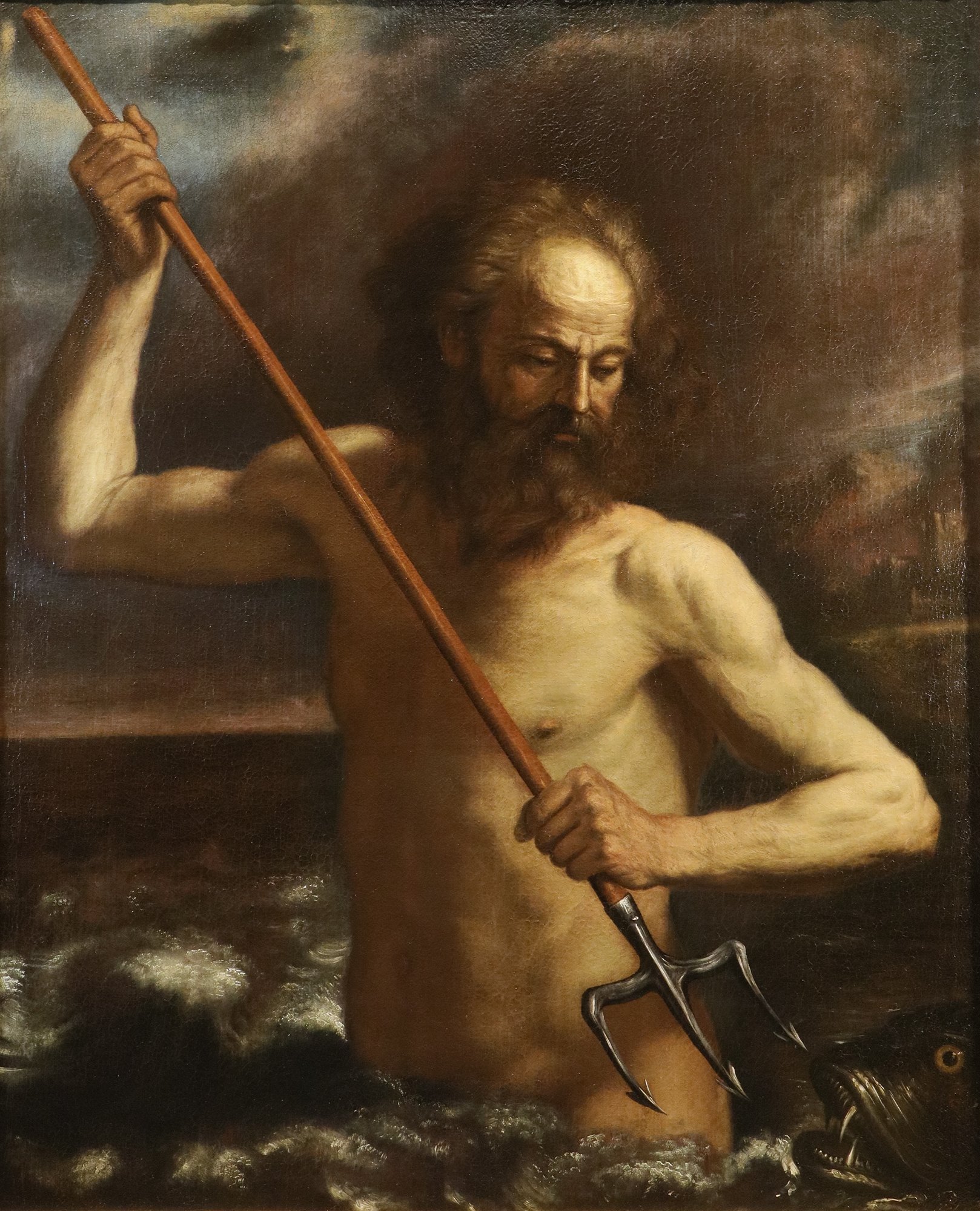
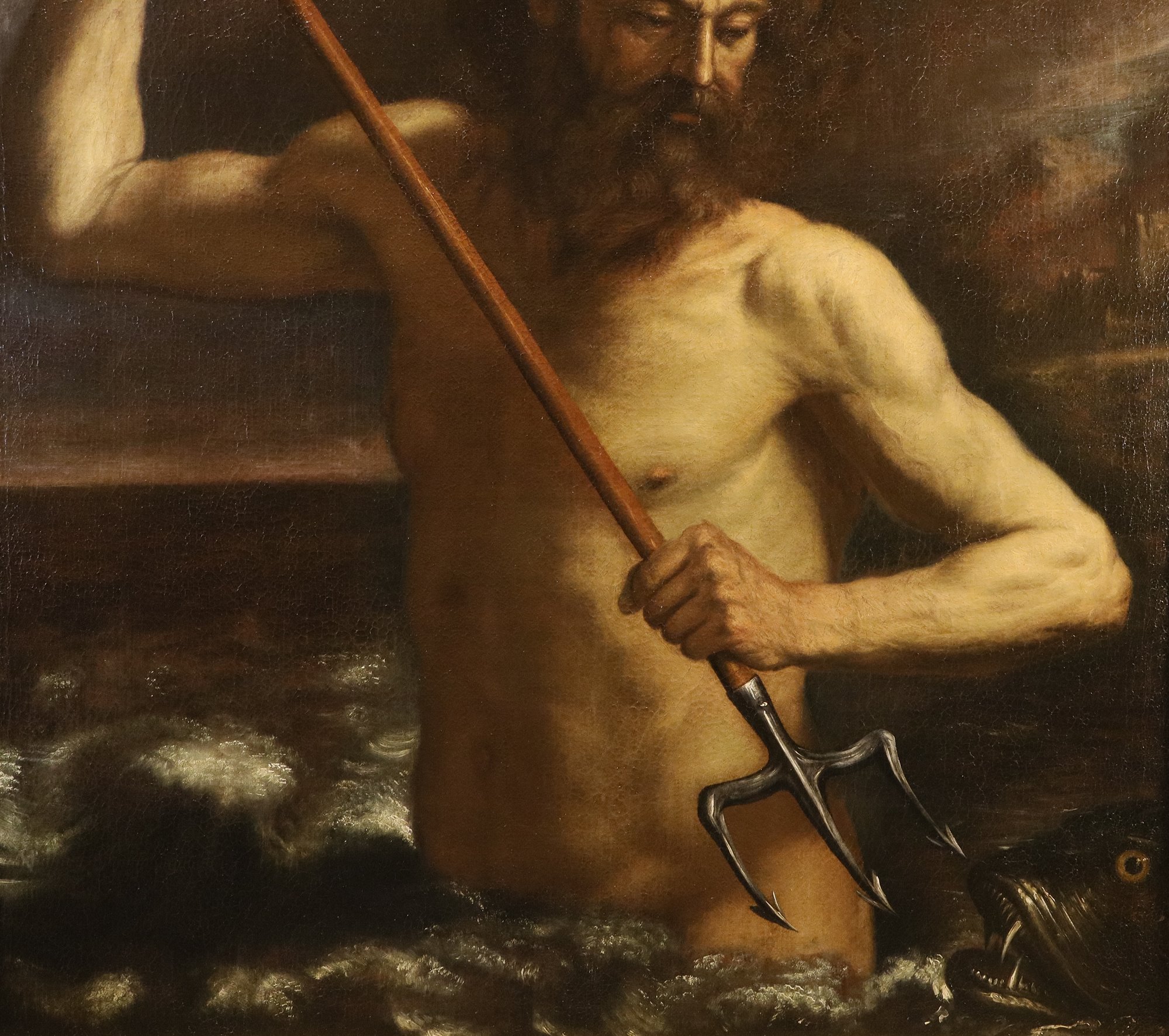
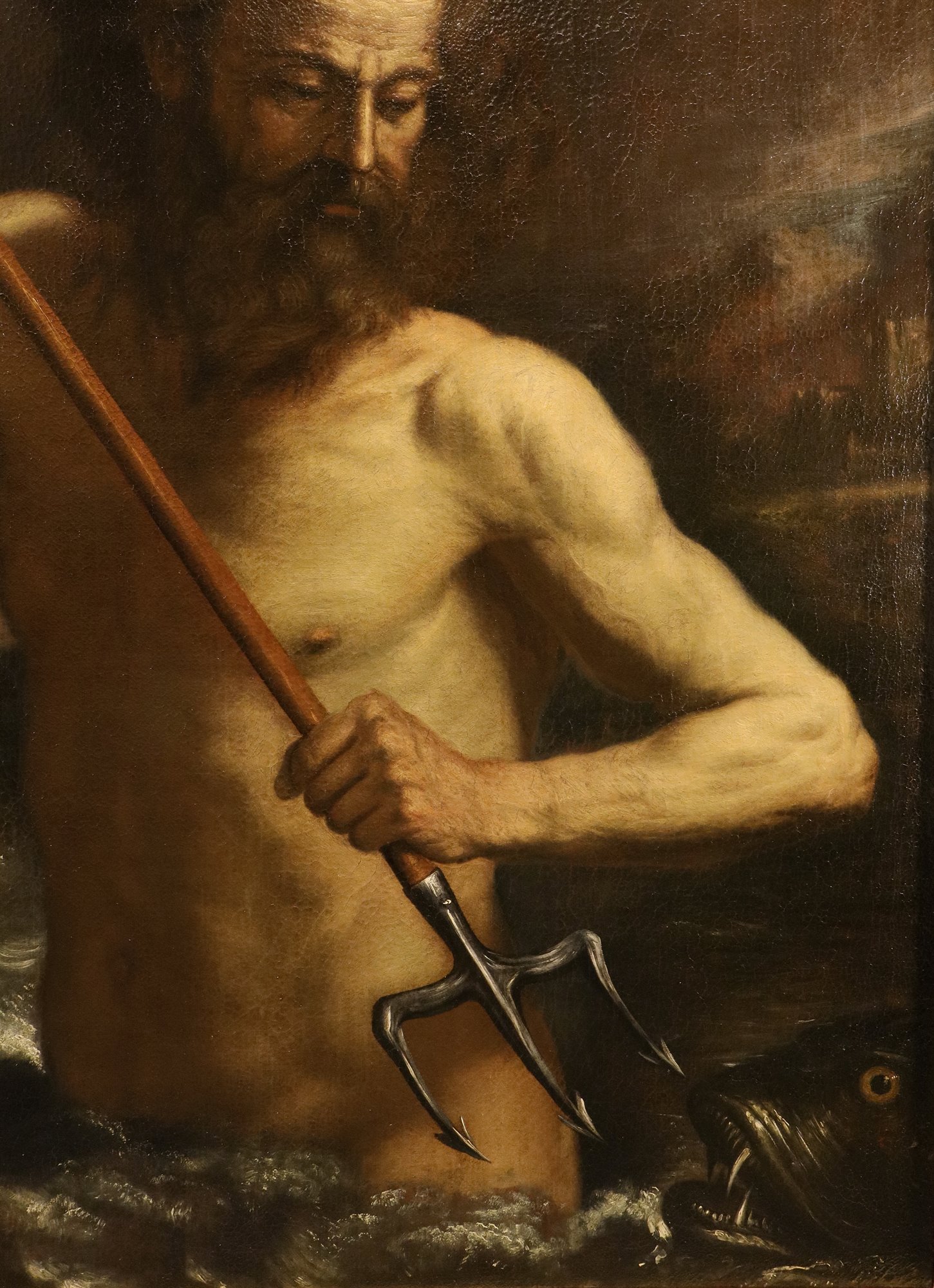
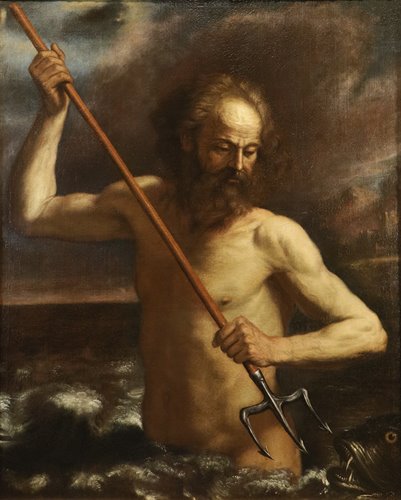
The mighty mythological figure, the great god of the seas Poseidon (the equivalent of Neptune in the Roman pantheon), stands as a life-size statue, portrayed in three-quarter profile amidst the waves of a coastal scene, which we glimpse on the right with a castle perched on the shore.
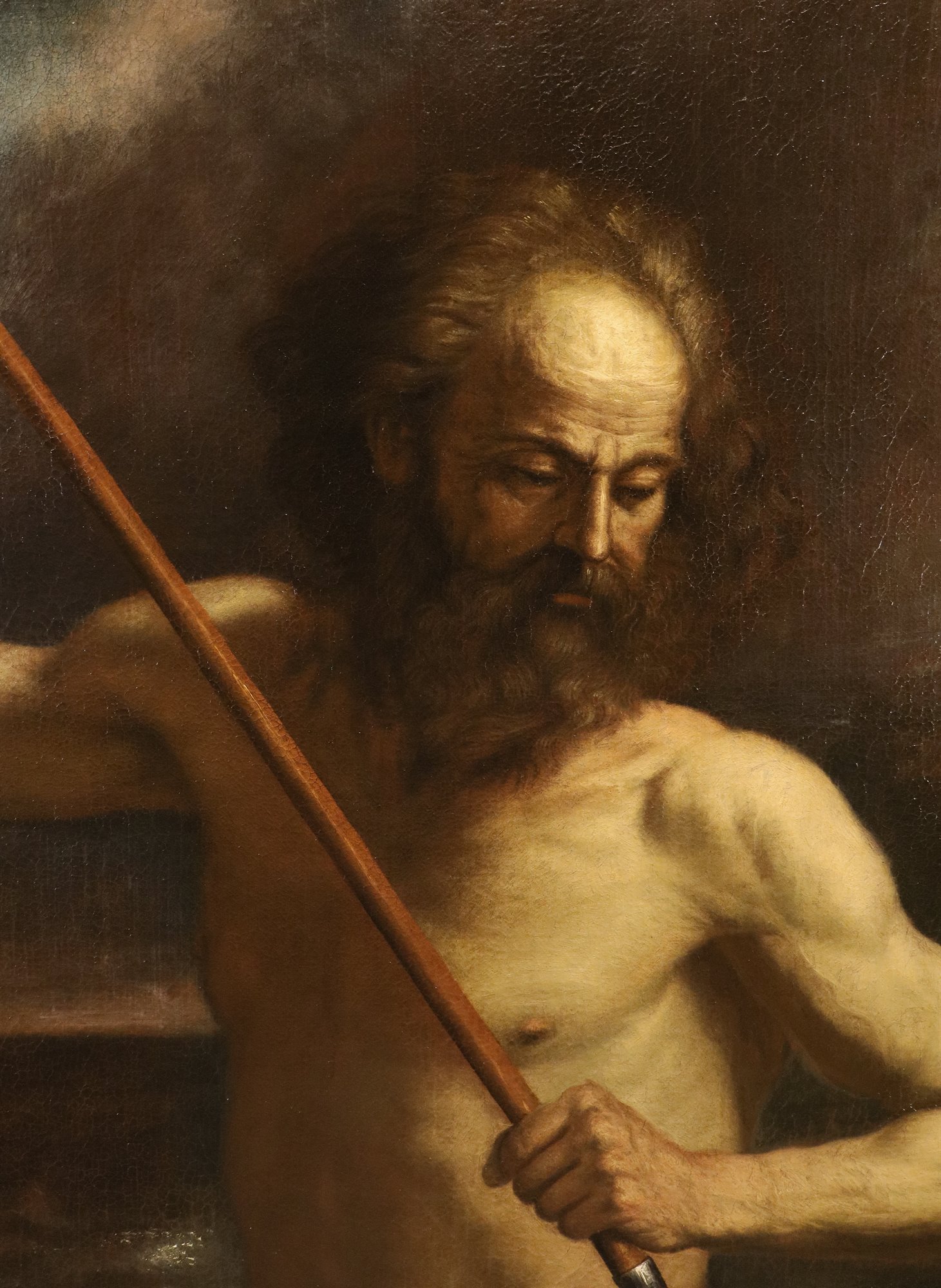
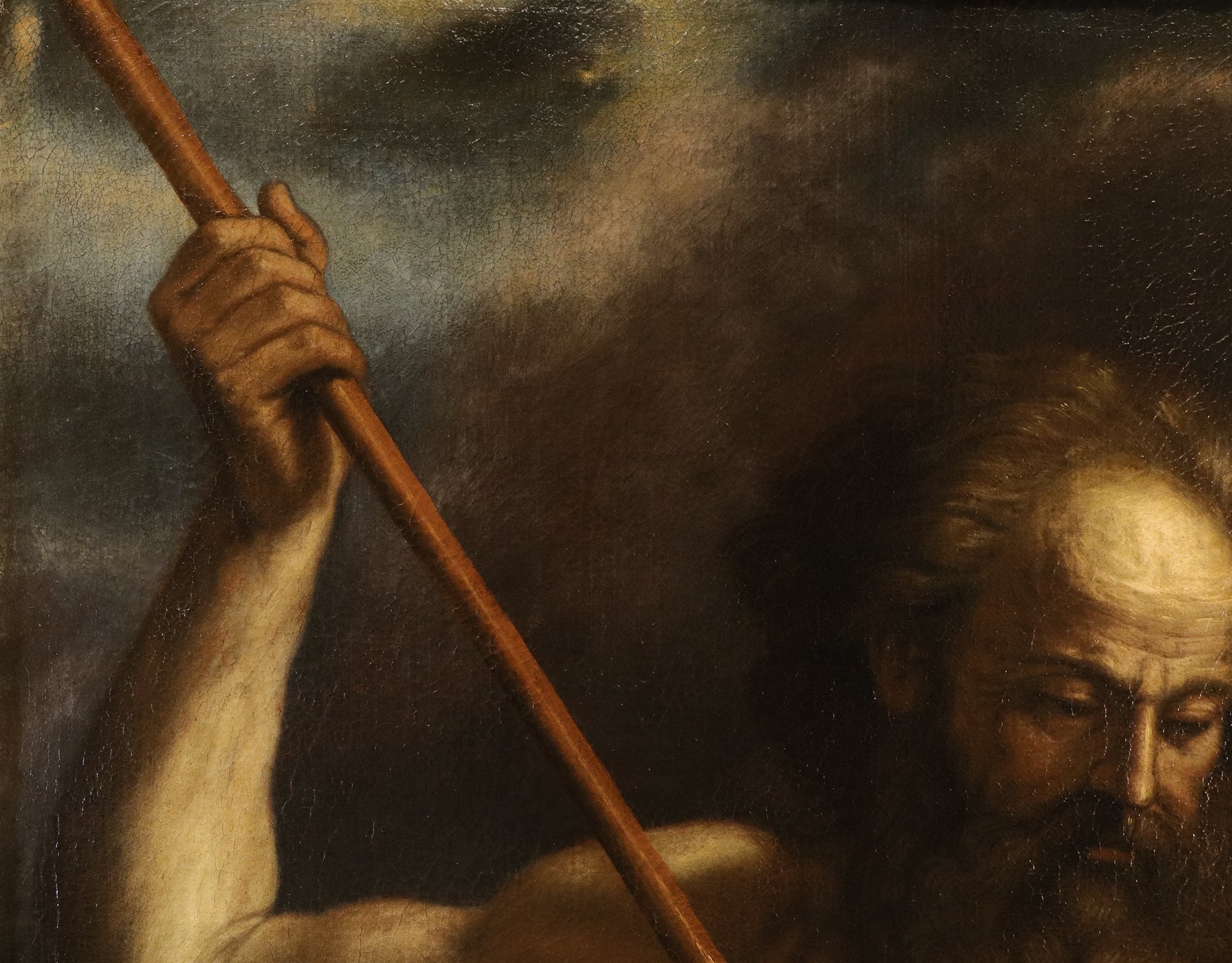
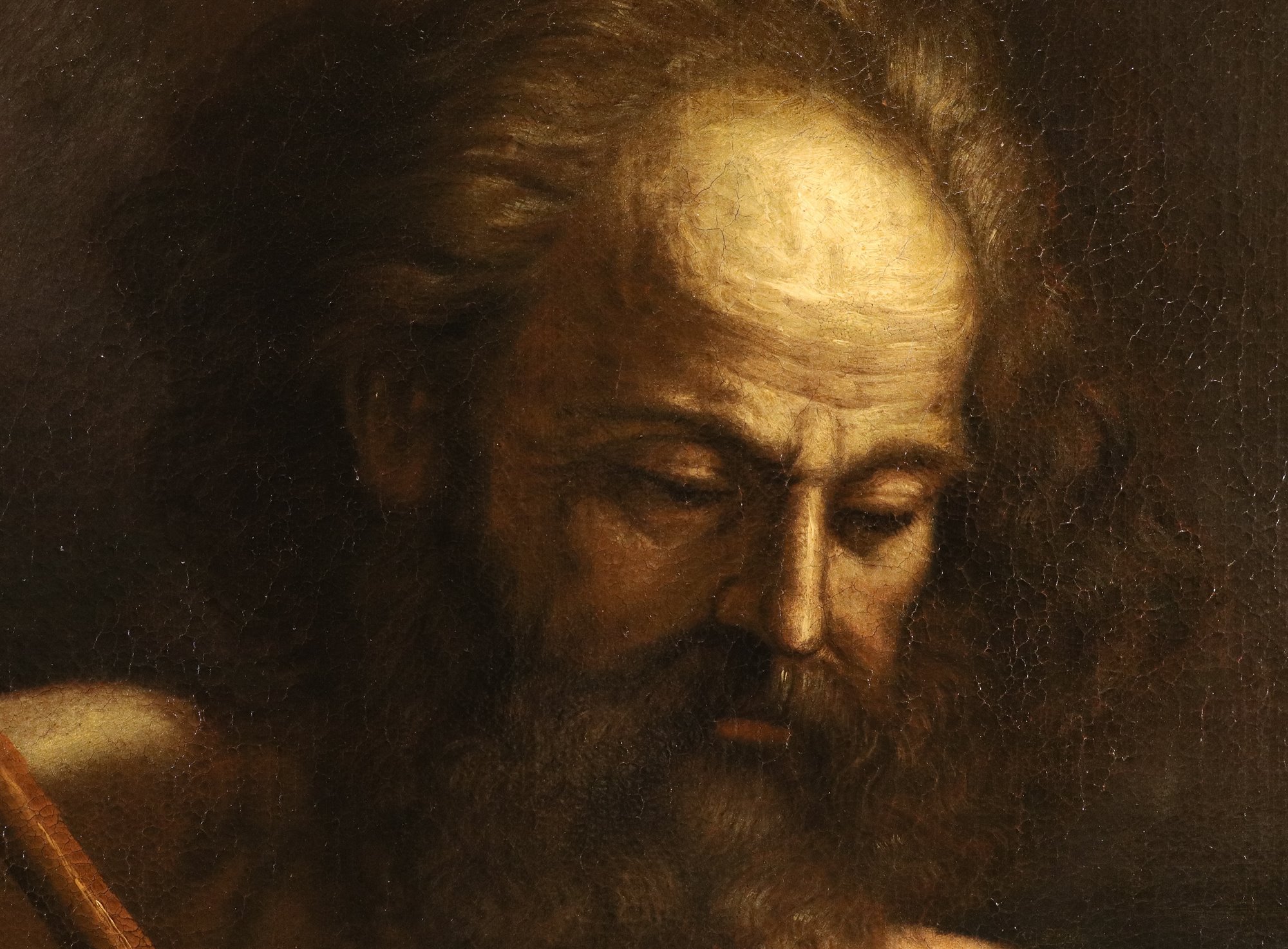
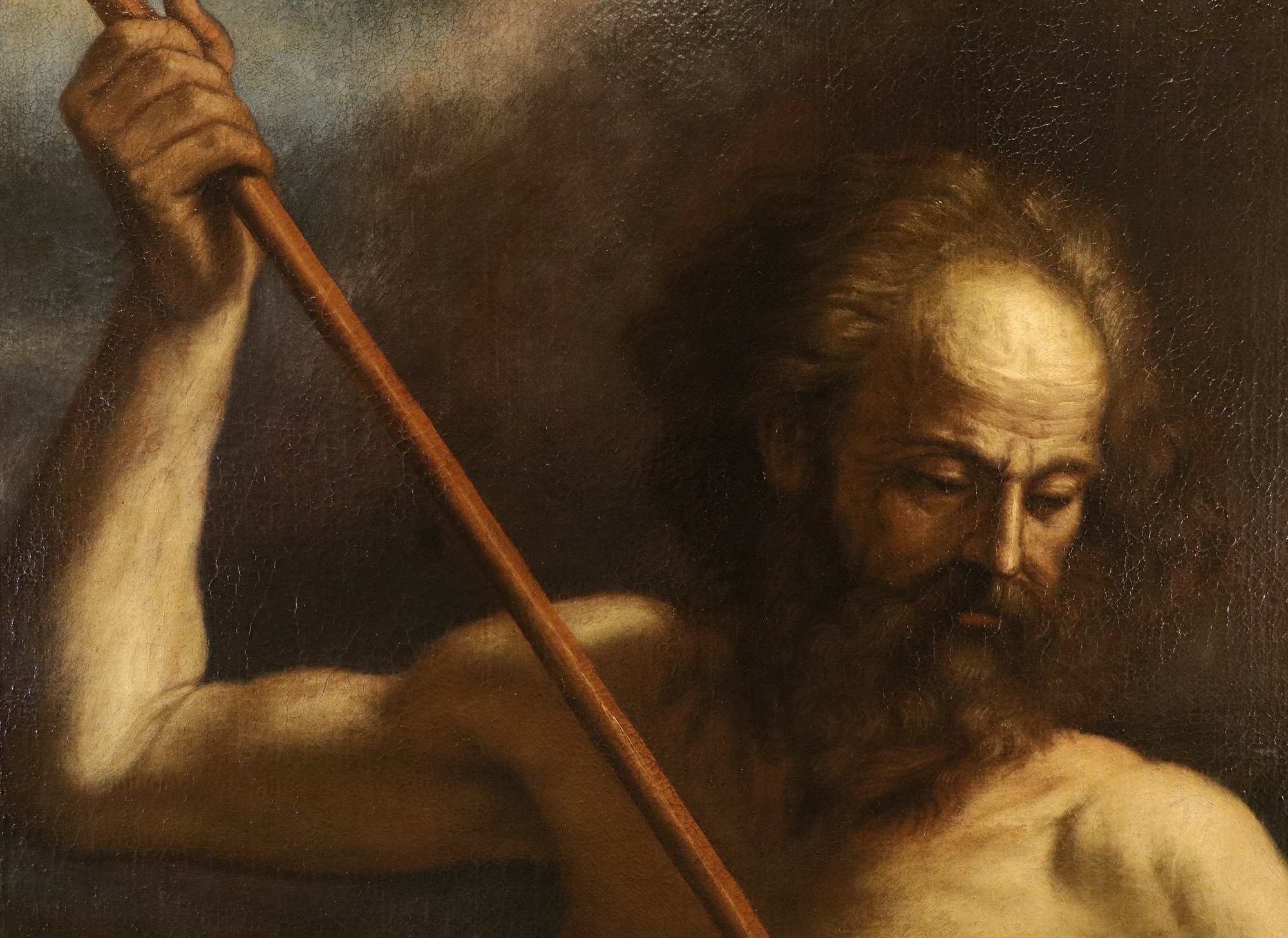
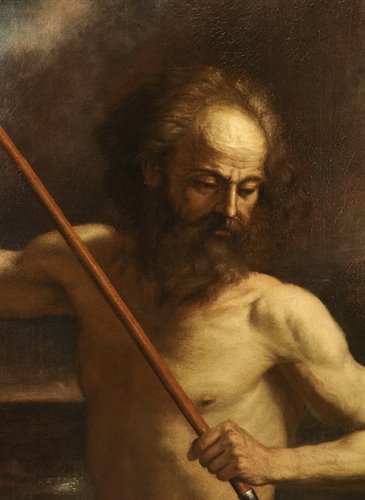
Whilst the upper part of the body twists to the left, the head turns its gaze in the opposite direction, downwards, towards a sea creature emerging from the waters, attempting to strike it with the trident. On the left-hand side of the image, the surface of the sea stretches towards the horizon with a band of clouds, dimly lit by an evening sky, almost night-like. Her face is framed by flowing, slightly wavy hair, with a high forehead and wrinkles furrowing her brow.
The theme is drawn from Virgil’s Aeneid (1, 124–143), the moment when Neptune emerges from the waters in a rage because Aeolus, at Juno’s instigation, has unleashed a storm to destroy Aeneas’s fleet. The god, angered by Juno’s intrusion into his domain, addresses the winds and begins a threat which he abruptly cuts short: “Quos ego...” (Whom I [shall punish]…), the sentence remains suspended because Neptune decides it is more urgent to calm the waters before proceeding with punishment.
The painting was likely intended to decorate the walls of the ‘studiolo’ of a cultured scholar devoted to art and philosophical meditation.
The work depicts the moment when divine authority intervenes to quell the chaos of the elements and restore peace and order, to the extent that the subject of Neptune calming the waters became an allegory for sovereigns and popes who restored order after the chaos of war.
Alternatively, the subject can be interpreted allegorically, as a hymn to the dominion of Reason (Ratio): Neptune represents reason, which intervenes to tame unbridled passions (the winds and the storm) and, thanks to his wise self-control, pauses to prioritise constructive action (calming the sea) rather than immediate vengeance.
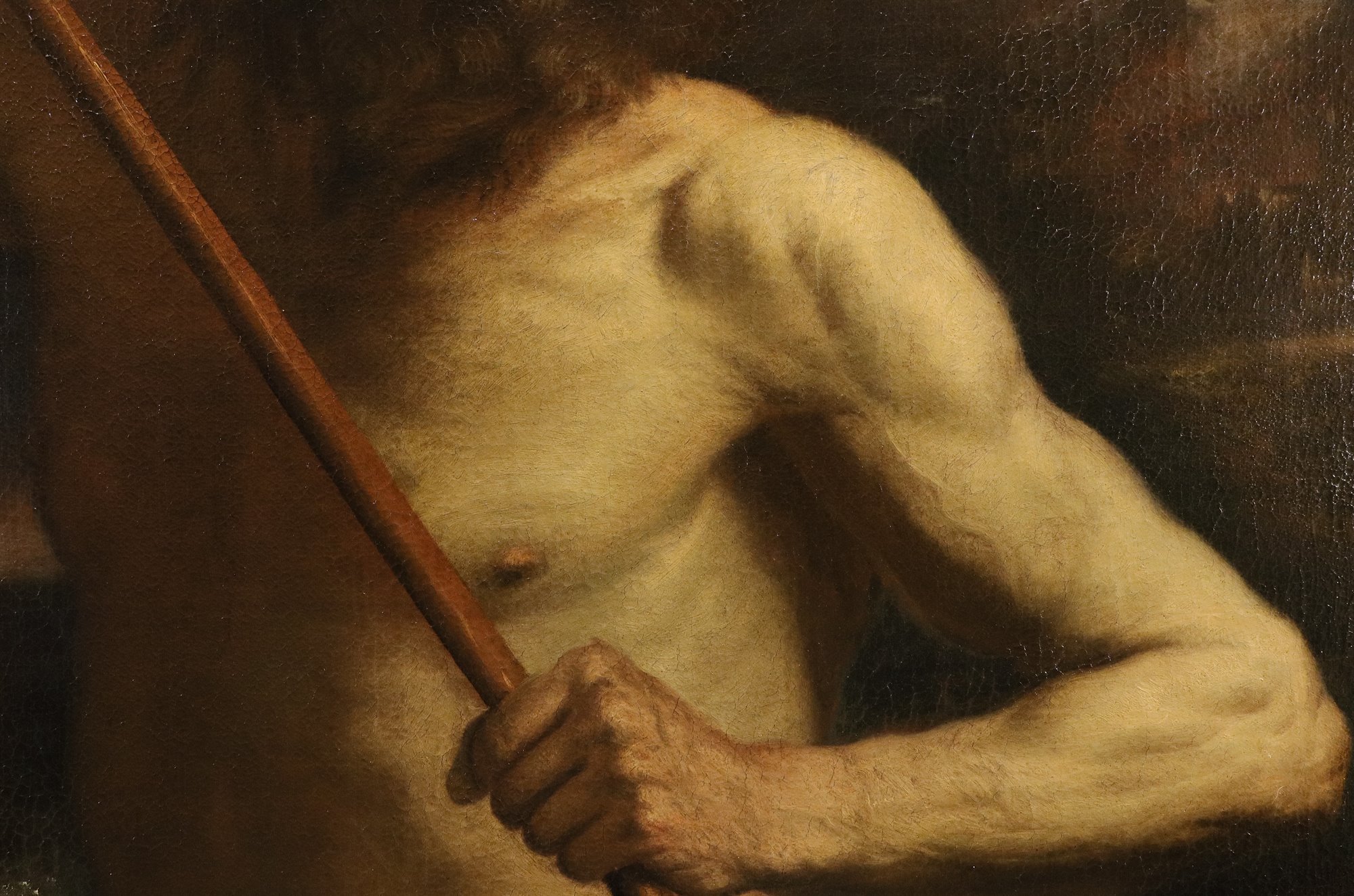
The stylistic features of this interesting composition reflect the expressive qualities of the vibrant artistic milieu of Bologna in the first half of the 17th century: the work is characterised by a strong chiaroscuro that shapes the god’s anatomy, outlined by a palette dominated by earthy and warm tones, through a sort of ‘divine light’, soft yet sharp in the definition of the contours, creating a dramatic and exuberant atmosphere.
The distinctive treatment of the rich, full-bodied paint and the balanced simplicity of the colours point decisively to the naturalism of Giovanni Francesco Barbieri, known as Guercino, to whose immediate circle our canvas belongs, deriving in particular from one of his pictorial inventions, perhaps definitively lost.
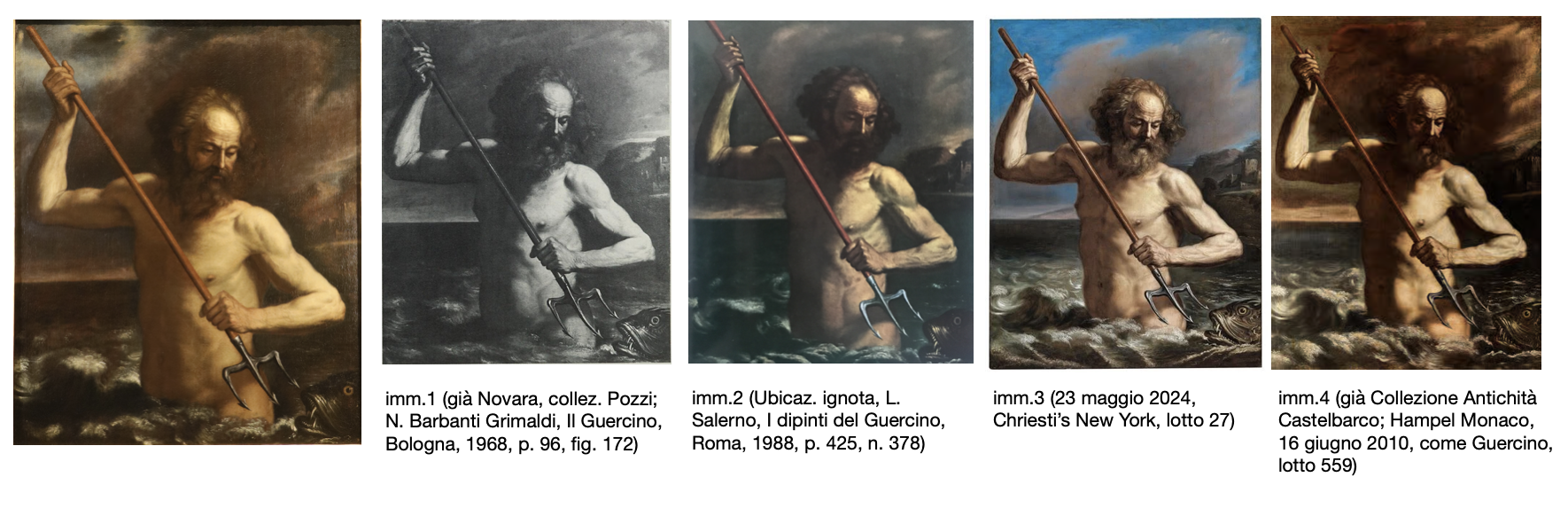
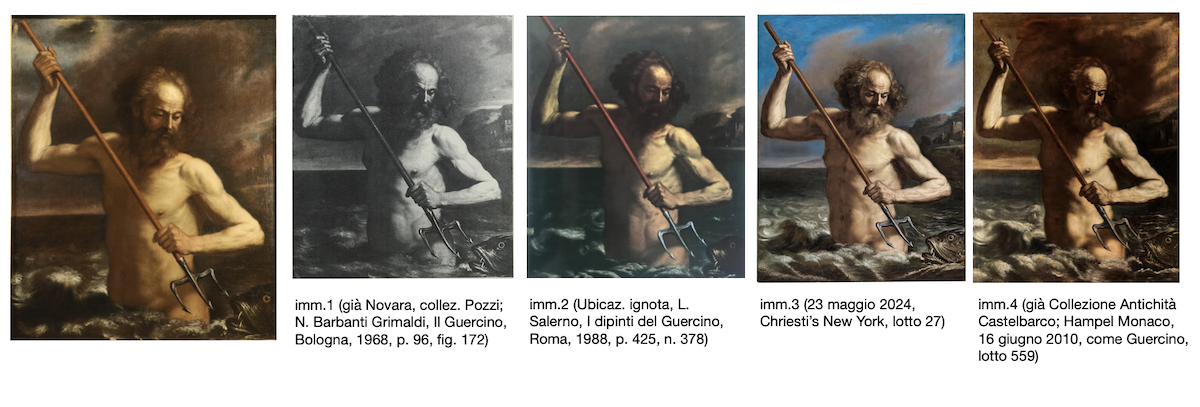
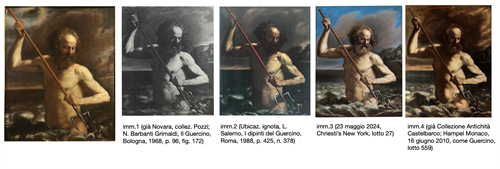
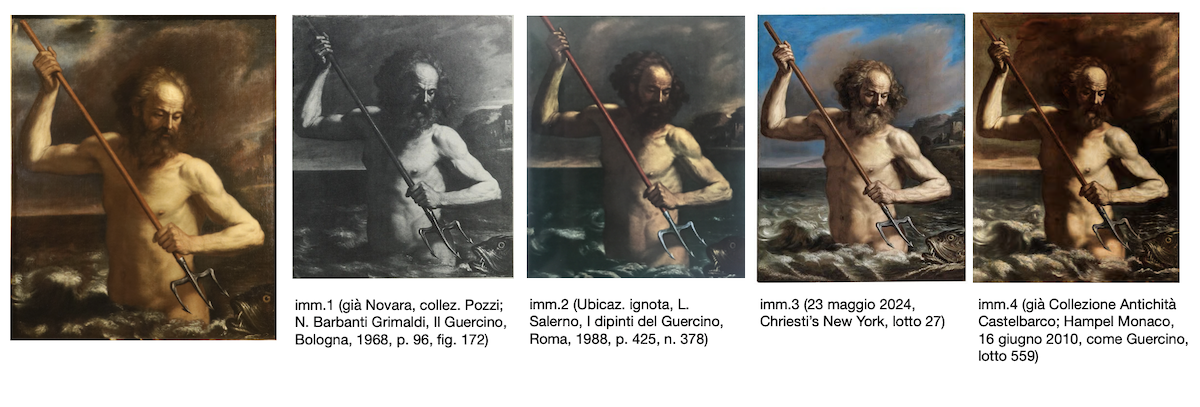
In fact, other versions of this painting are known: one, of unremarkable quality, was in the past erroneously attributed to Guercino himself (fig. 1 – formerly Novara, Pozzi Collection; Nefta Barbanti Grimaldi, Il Guercino, Bologna, 1968, p. 96, fig. 172), the other of unknown location and of fair quality, appropriately published among Barbieri’s ‘works of the workshop’ by Luigi Salerno (fig. 2 – L. Salerno, I dipinti del Guercino, Rome, 1988, p. 425, no. 378, https://commons.wikimedia.org/wiki/File:Guercino_-_Salerno,_378.jpg ).
There are also other versions of interesting workmanship that have appeared on the antiques market: among these we may mention the Neptune attributed to Guercino, which some critics believe was produced in collaboration with Benedetto Gennari (fig. 3 – 23 May 2024, Chriesti’s New York, lot 27)
or the Neptune, attributed to the workshop, formerly in the Castelbarco Antiquities Collection (fig. 3 – Hampel, Munich, 16 June 2010, attributed to Guercino, lot 559)
Looking more closely at the painting’s authorship, the pictorial quality and stylistic characteristics, closely linked to the culture of the master from Cento, suggest that we should recognise the characteristics of Ercole Gennari (Cento, 1597–Bologna, 1658), Guercino’s brother-in-law, pupil and close collaborator, who moved with him to Bologna when, following the death of his great rival Guido Reni, Guercino’s workshop was relocated to the Emilian capital.
It is well known that Ercole devoted himself, as in the present case, to producing copies and variations on his famous brother-in-law’s compositions, always respecting their compositional structures and technique; this practice enabled him to produce paintings with the typical Guercino characteristics, which are as sought-after today as they were in the past.
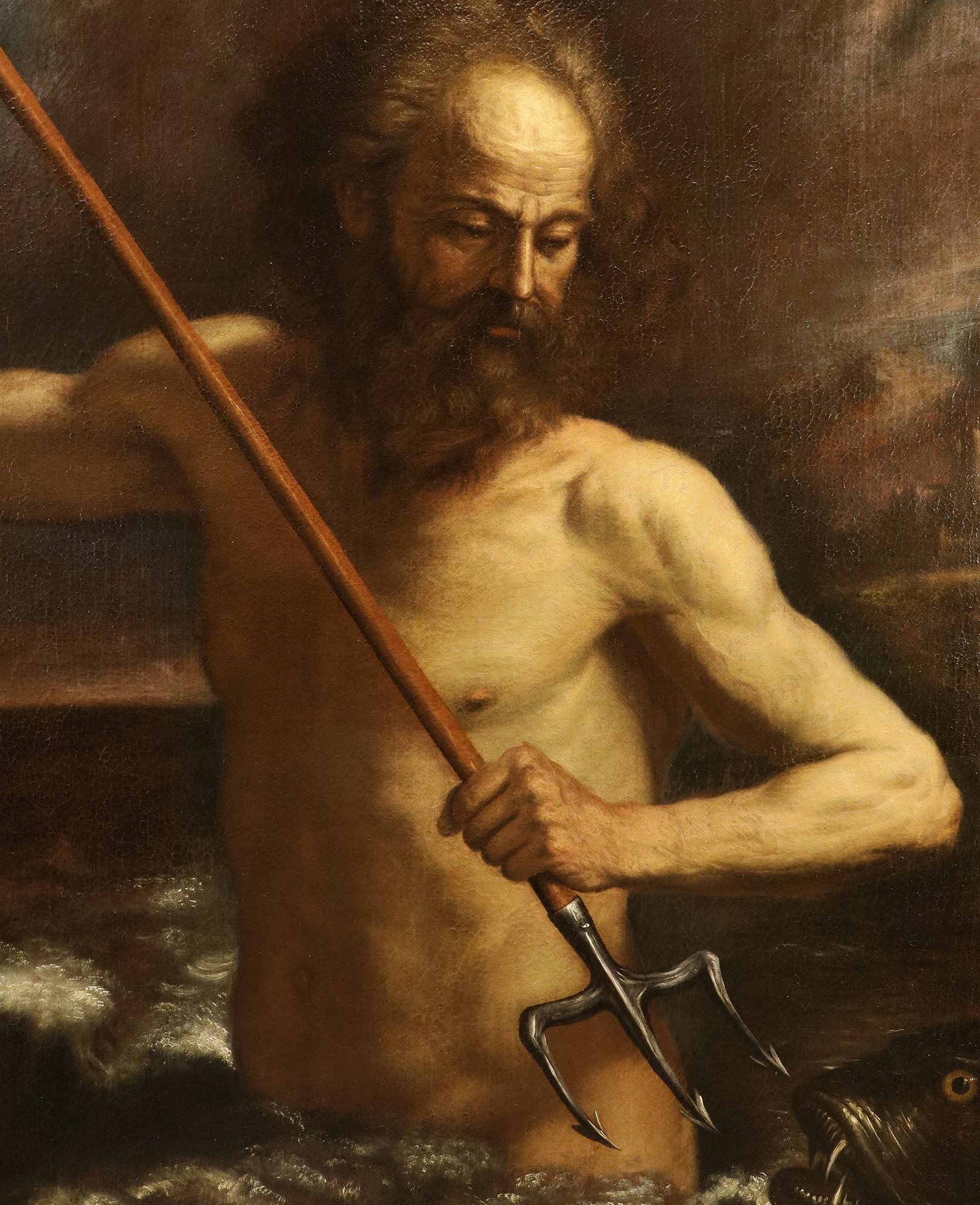
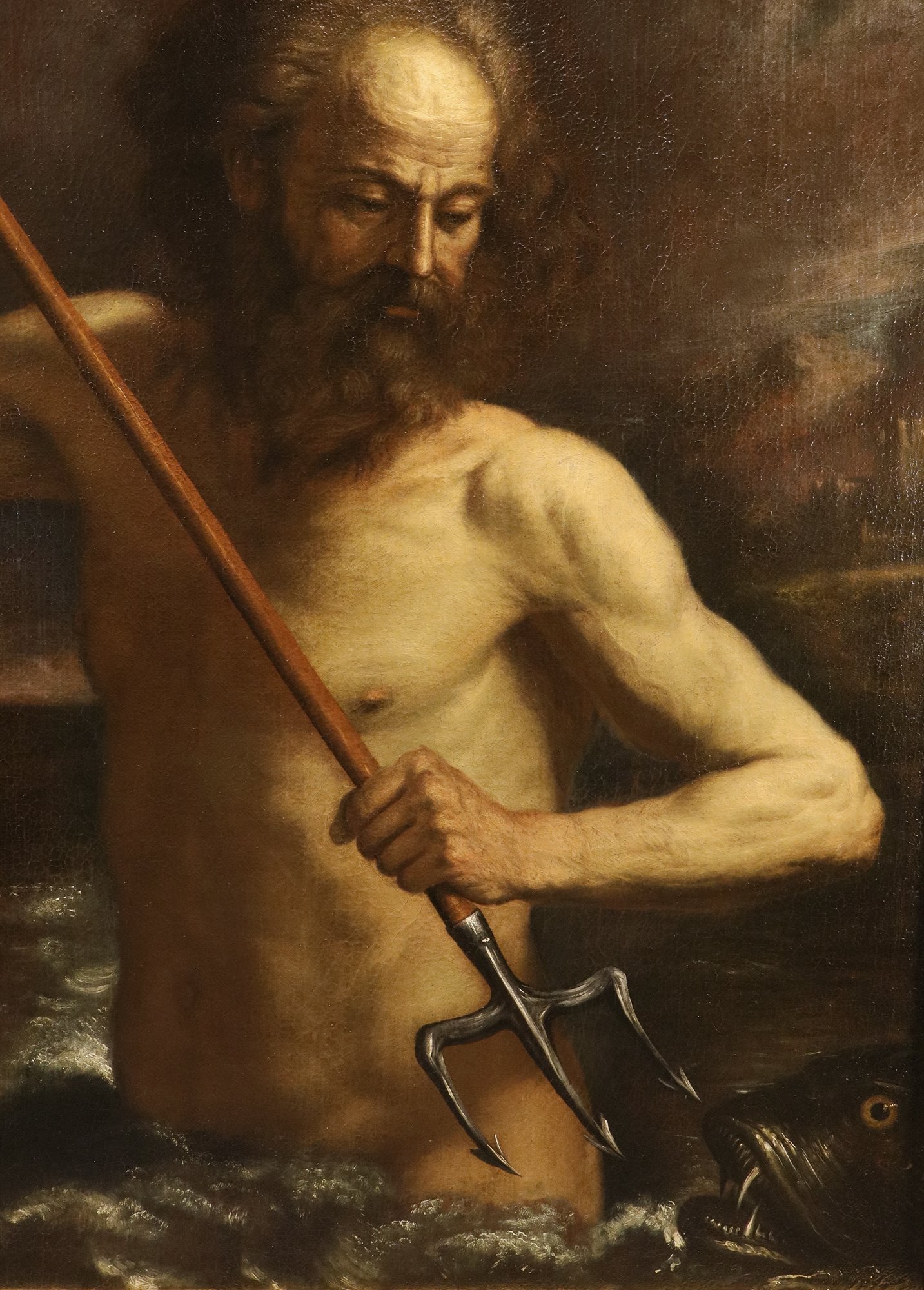
Guercino’s influence is evident in the softness of the figure’s contours and in the arrangement of the light, which falls from above and outlines the figure through an intense play of chiaroscuro, where the muscle groups, tendons and veins of the forearms appear prominent, whilst the left side of the body remains in shadow.
Furthermore, the conception of the figure, with the muscular Neptune set against a stormy sea and an almost fiery sky, is typical of Guercino’s works.
A reflection of the painter’s creative imagination can be seen in the threatening clouds that cast the entire scene into semi-darkness, the elegantly splashed waves, and the theatricality of the figure’s graceful movement, whilst his trident cuts the pictorial space diagonally into two triangles.
ADDITIONAL INFORMATION:
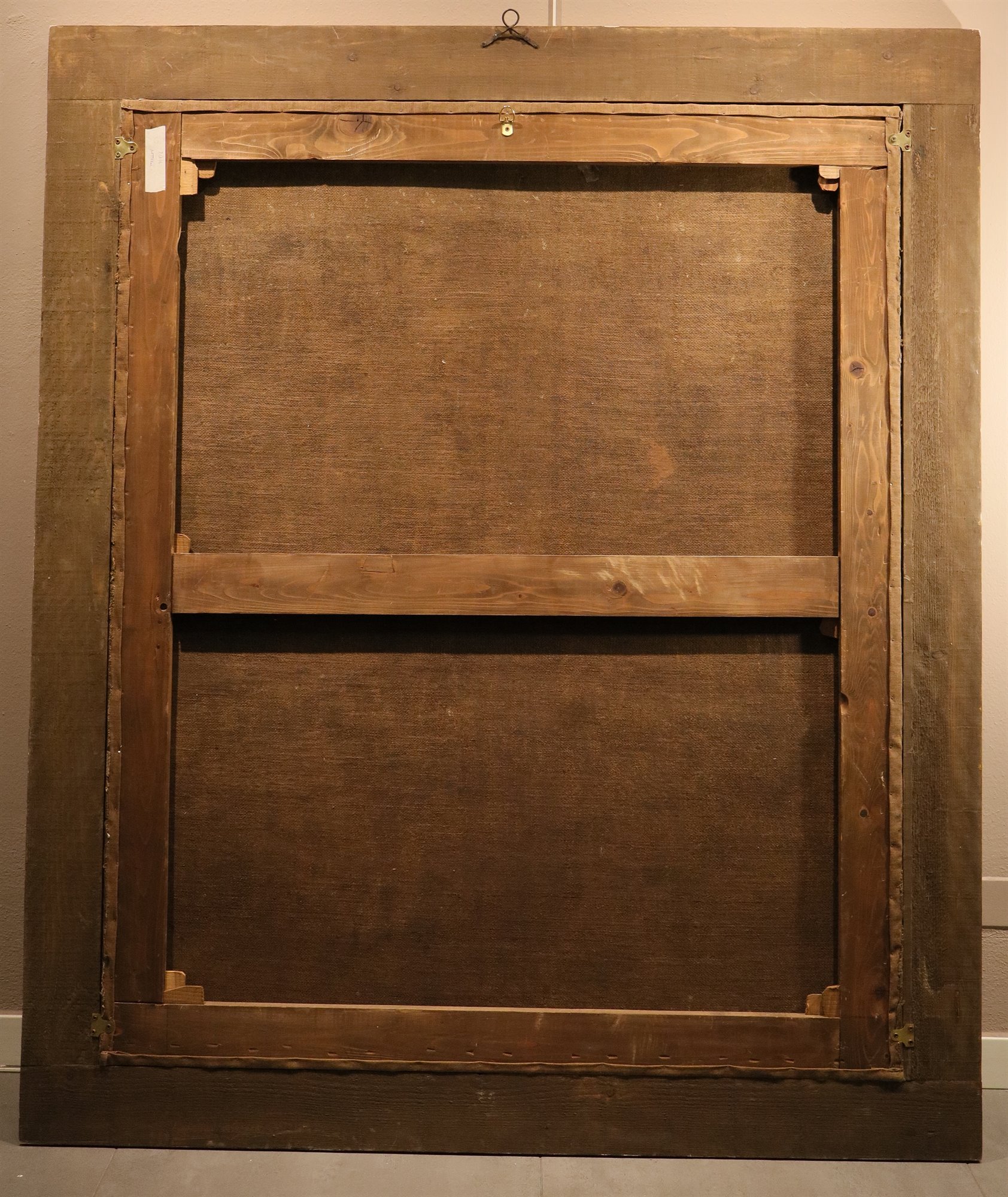
The work is sold complete with a gilded wooden frame and is accompanied by a certificate of authenticity and a descriptive iconographic sheet.
We arrange and organise the transport of purchased works, both within Italy and abroad, using professional and insured carriers. It is also possible to view the painting at our gallery in Riva del Garda; we would be delighted to welcome you to show you our collection of works.
Please feel free to contact us for any further information.
Follow us on: