
Natura morta con frutta
Michele Pace, detto Michelangelo del Campidoglio (Roma, 1625 - 1669) Cerchia di
Michele Pace, known as Michelangelo del Campidoglio
(Rome, 1625 – 1669)
Circle of
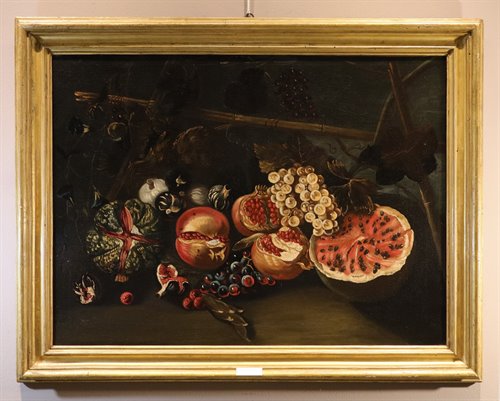
Still Life with Fruit
Roman school, second half of the 17th century
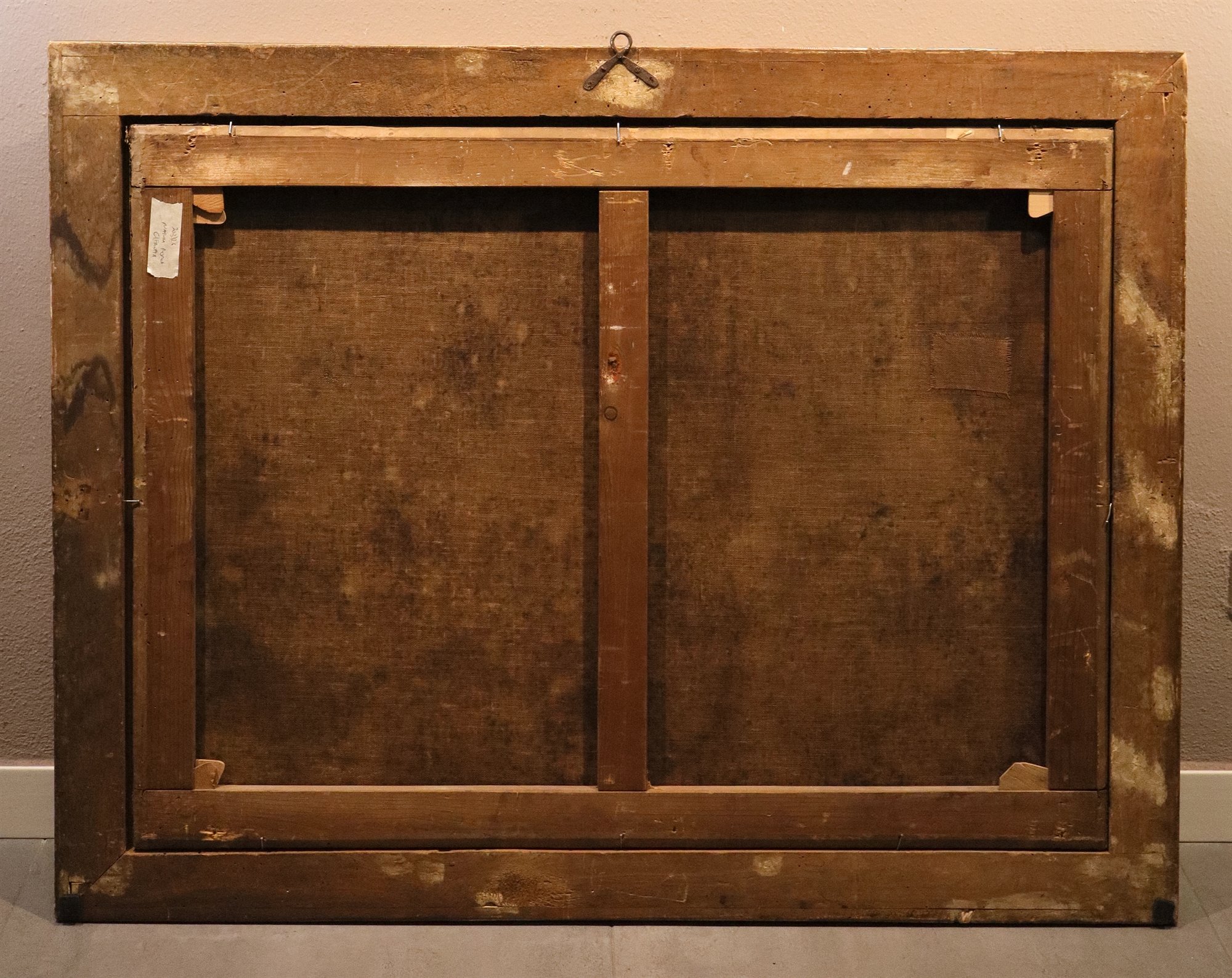
oil on canvas
72 x 96 cm.
In frame 87 x 112 cm.
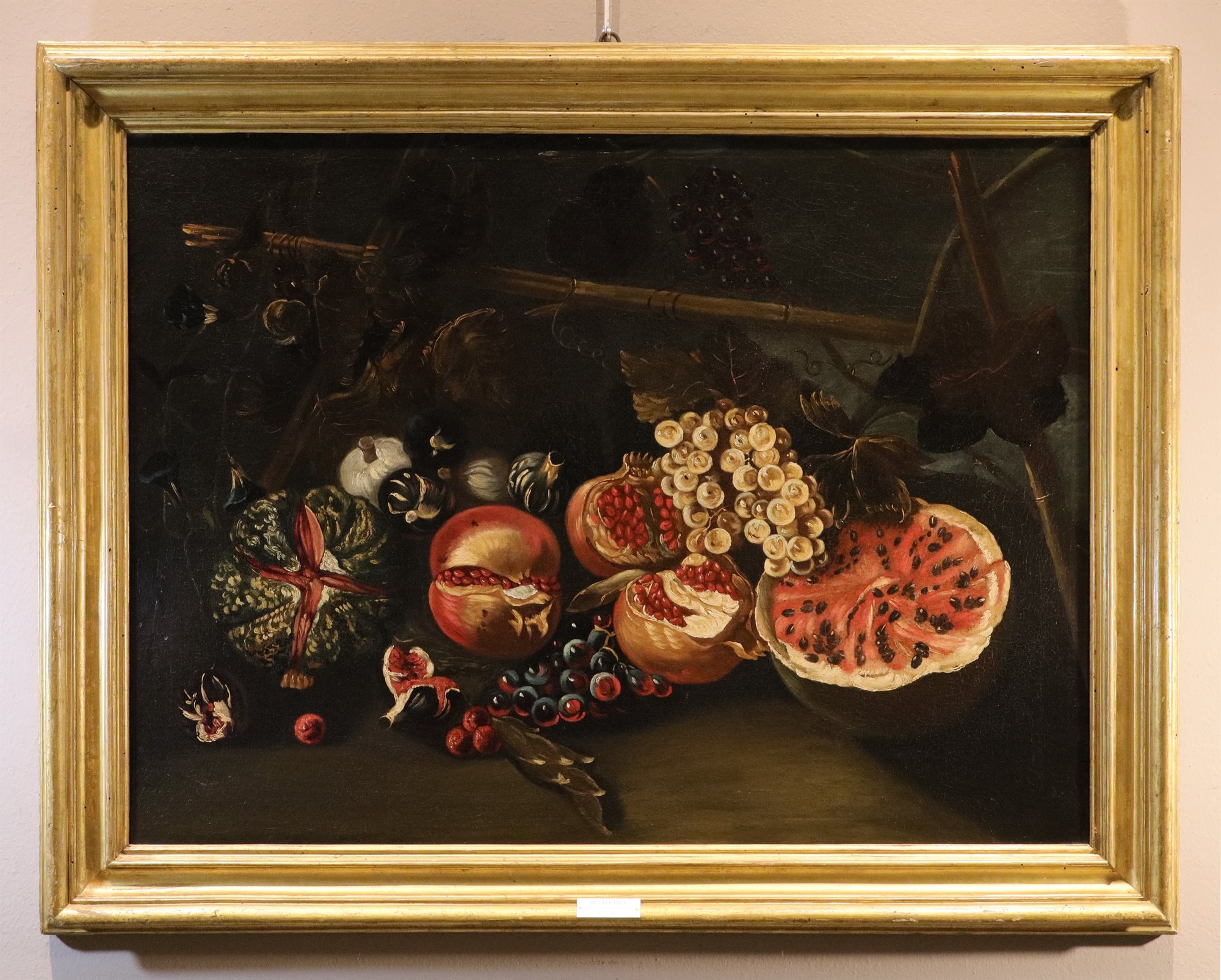
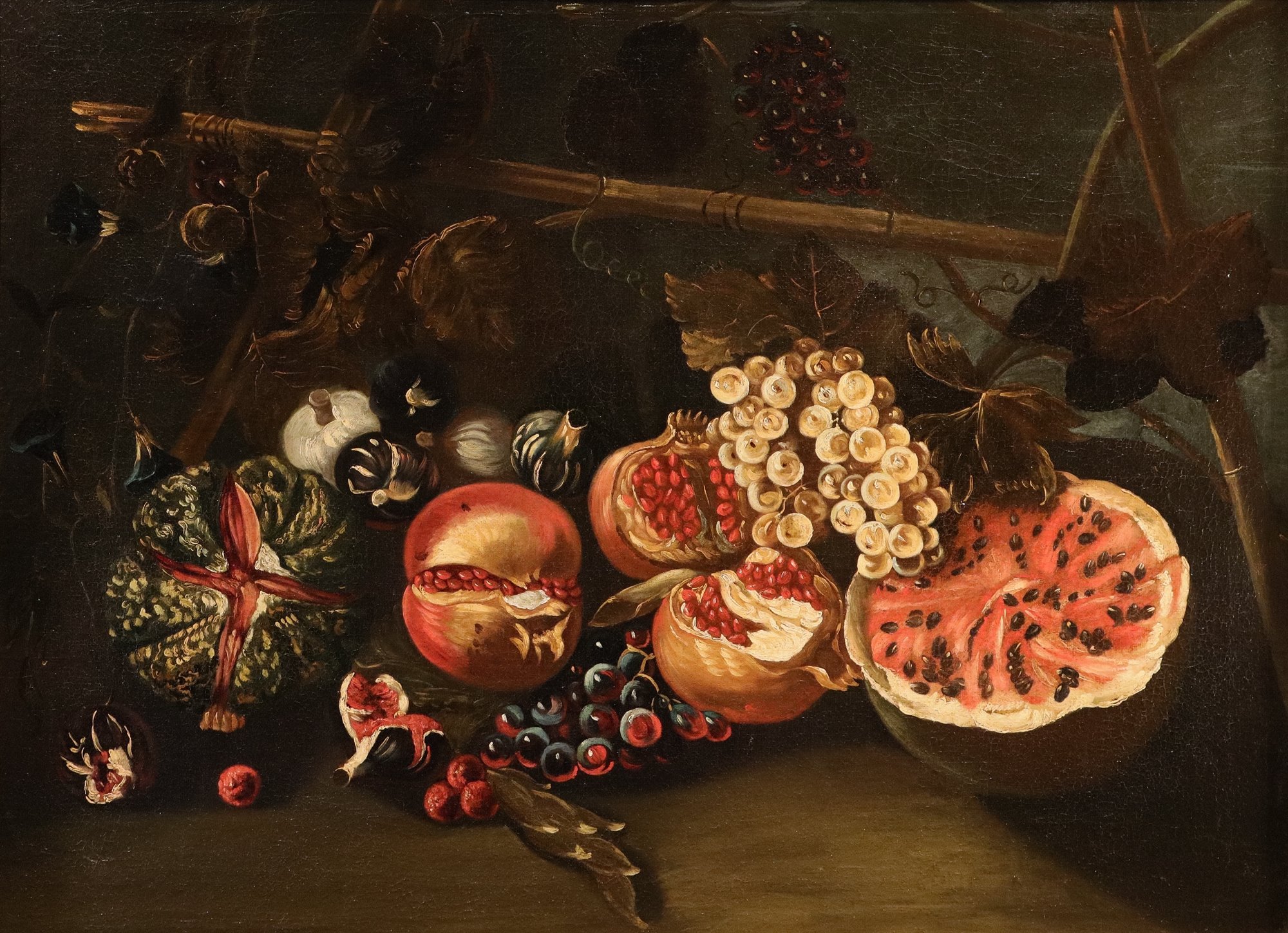
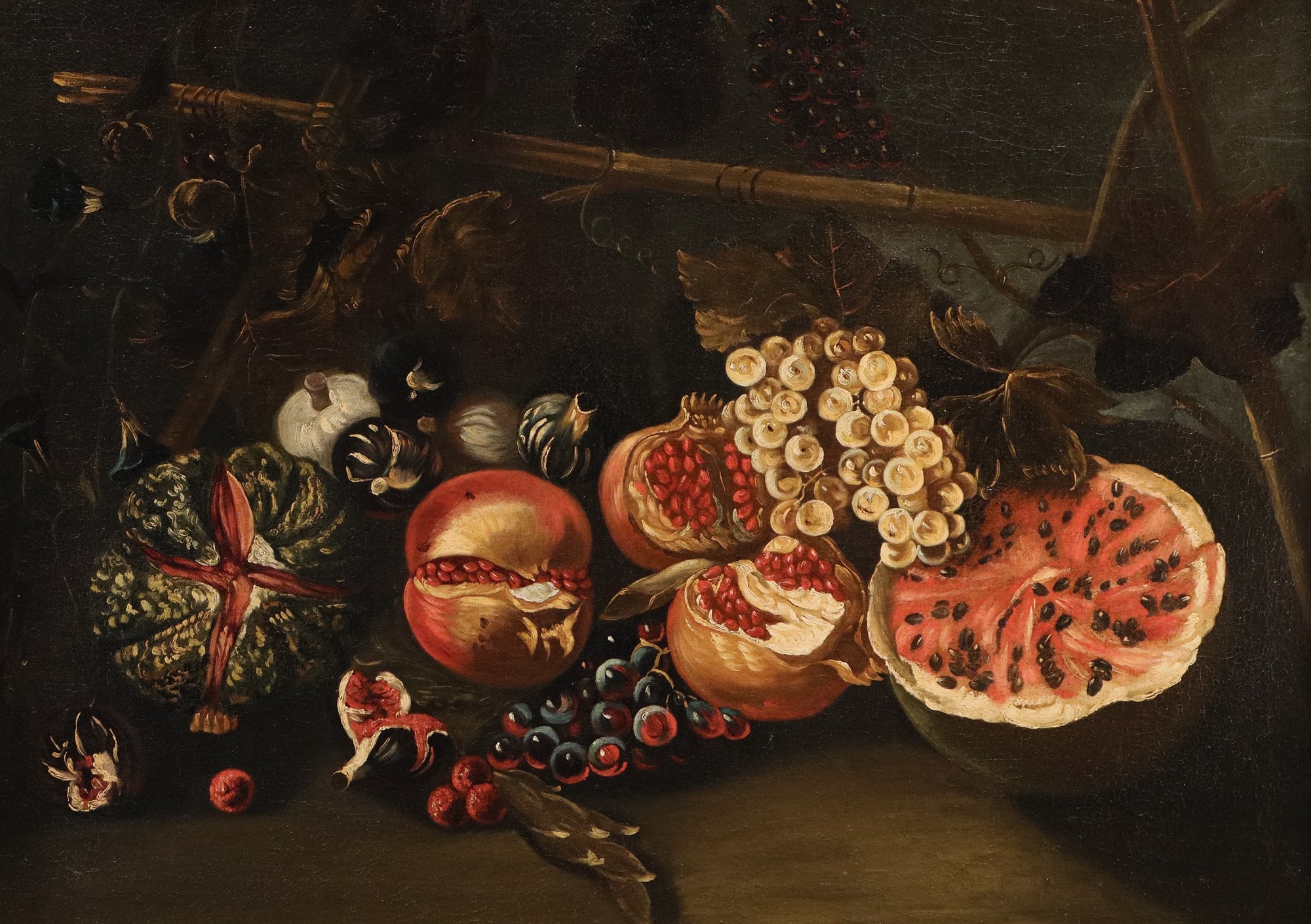
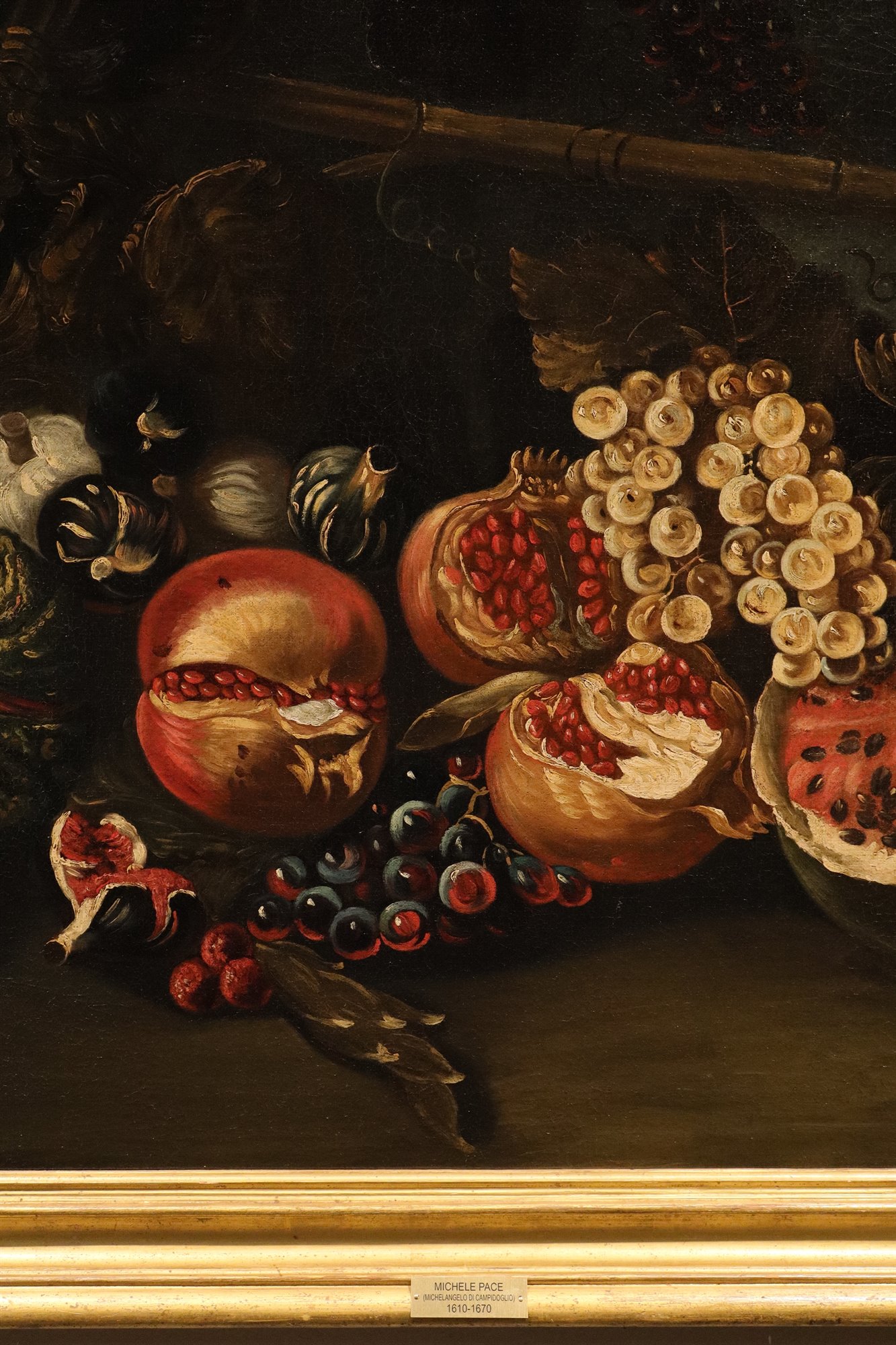
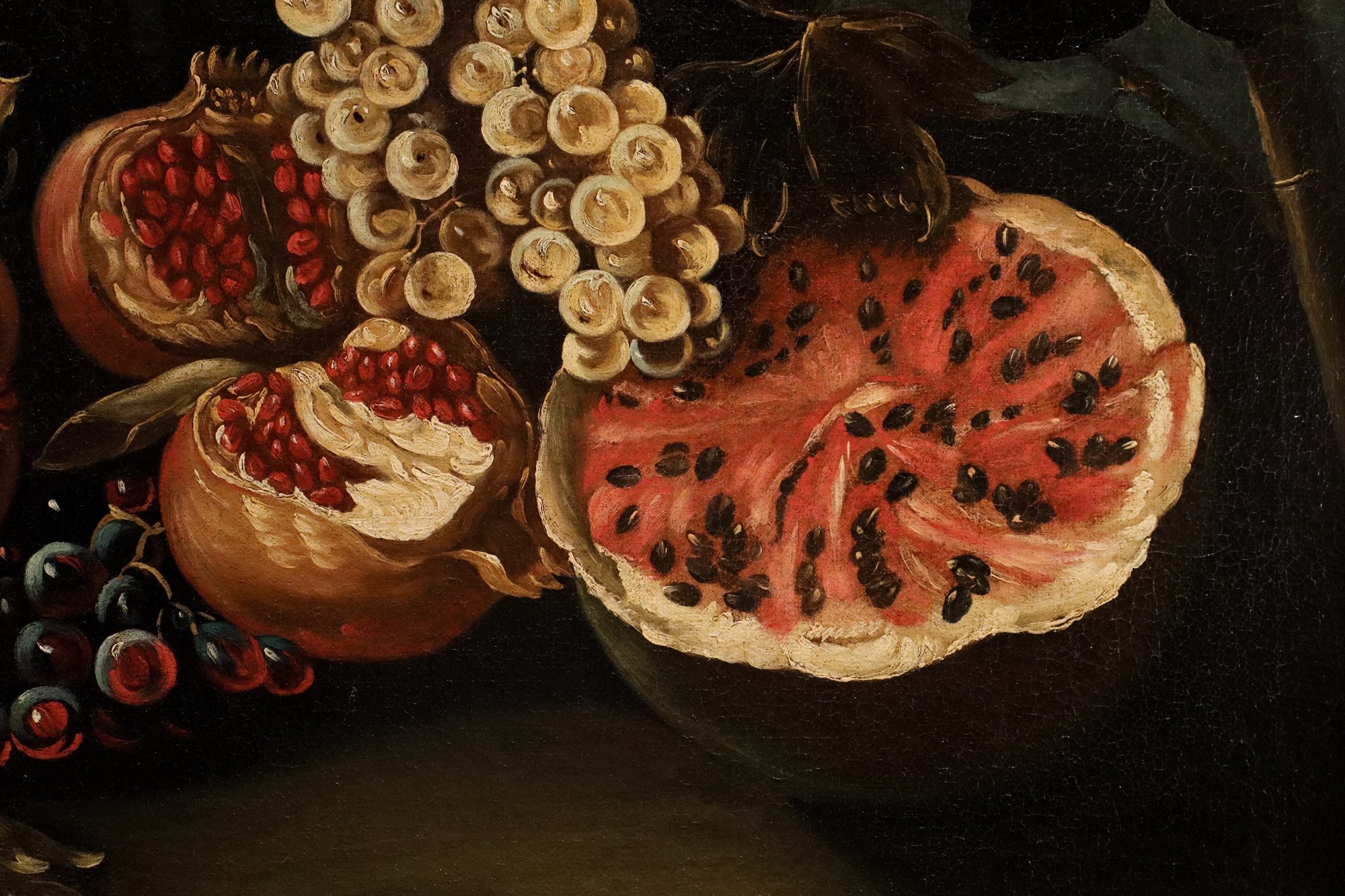
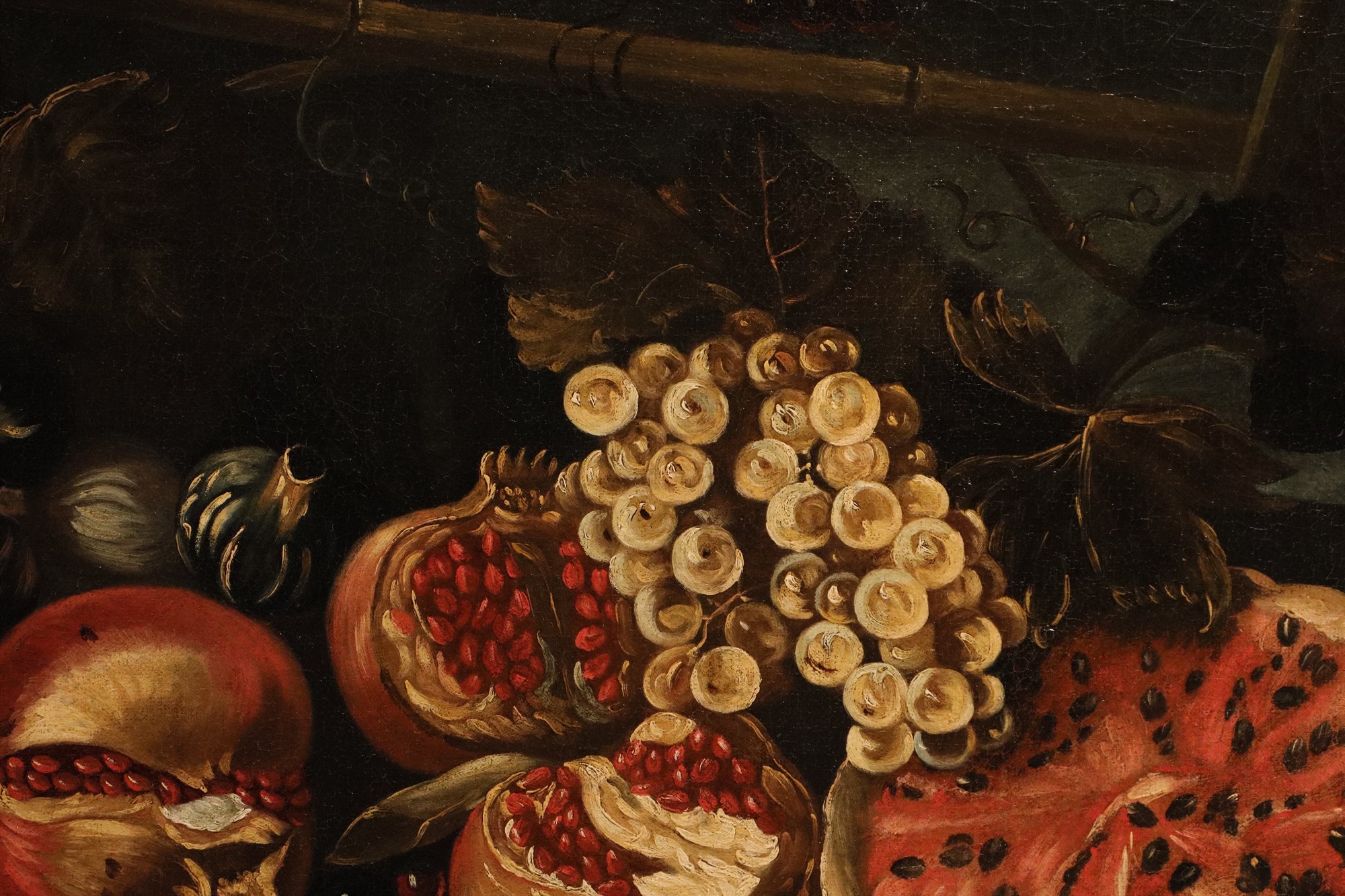
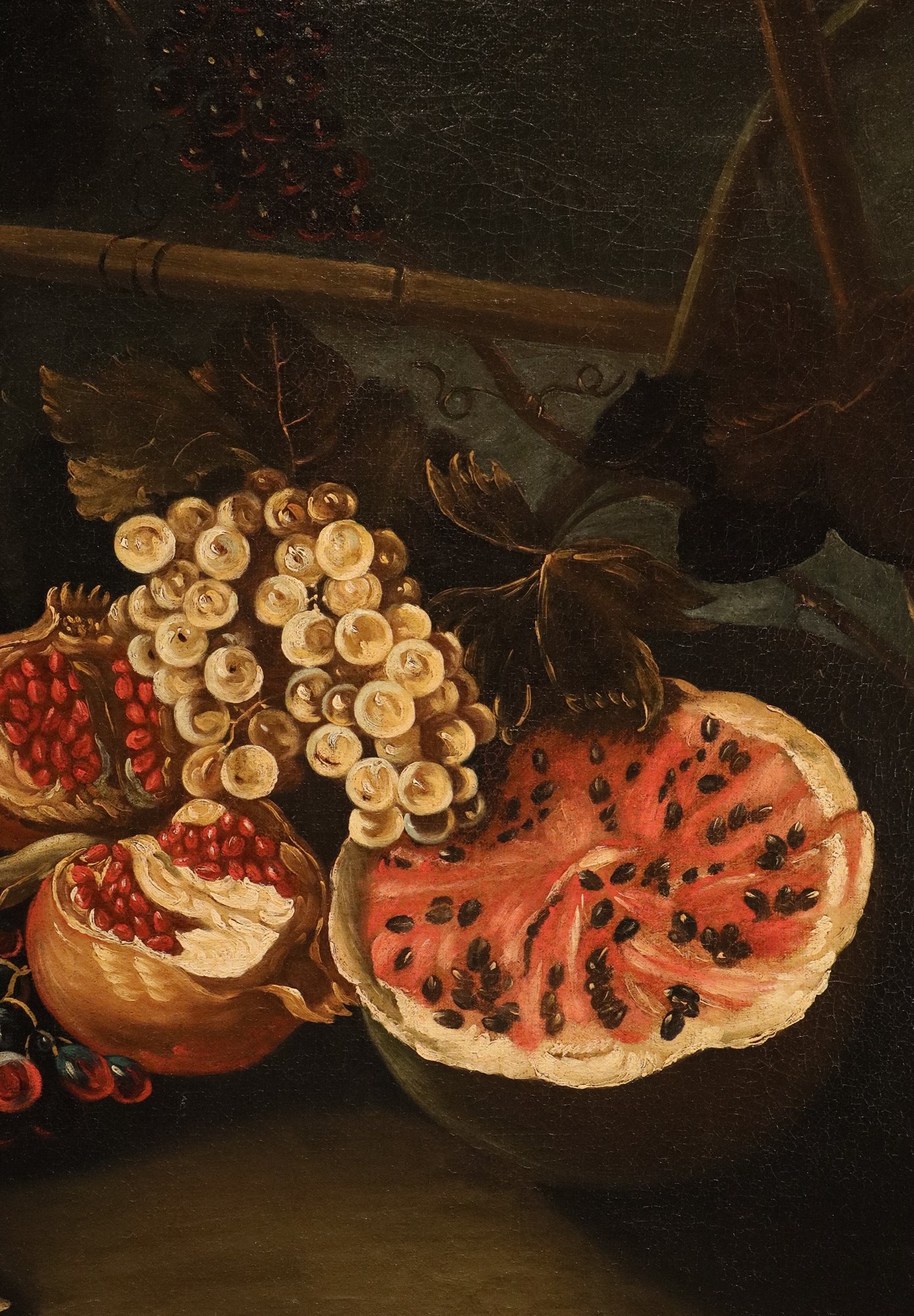
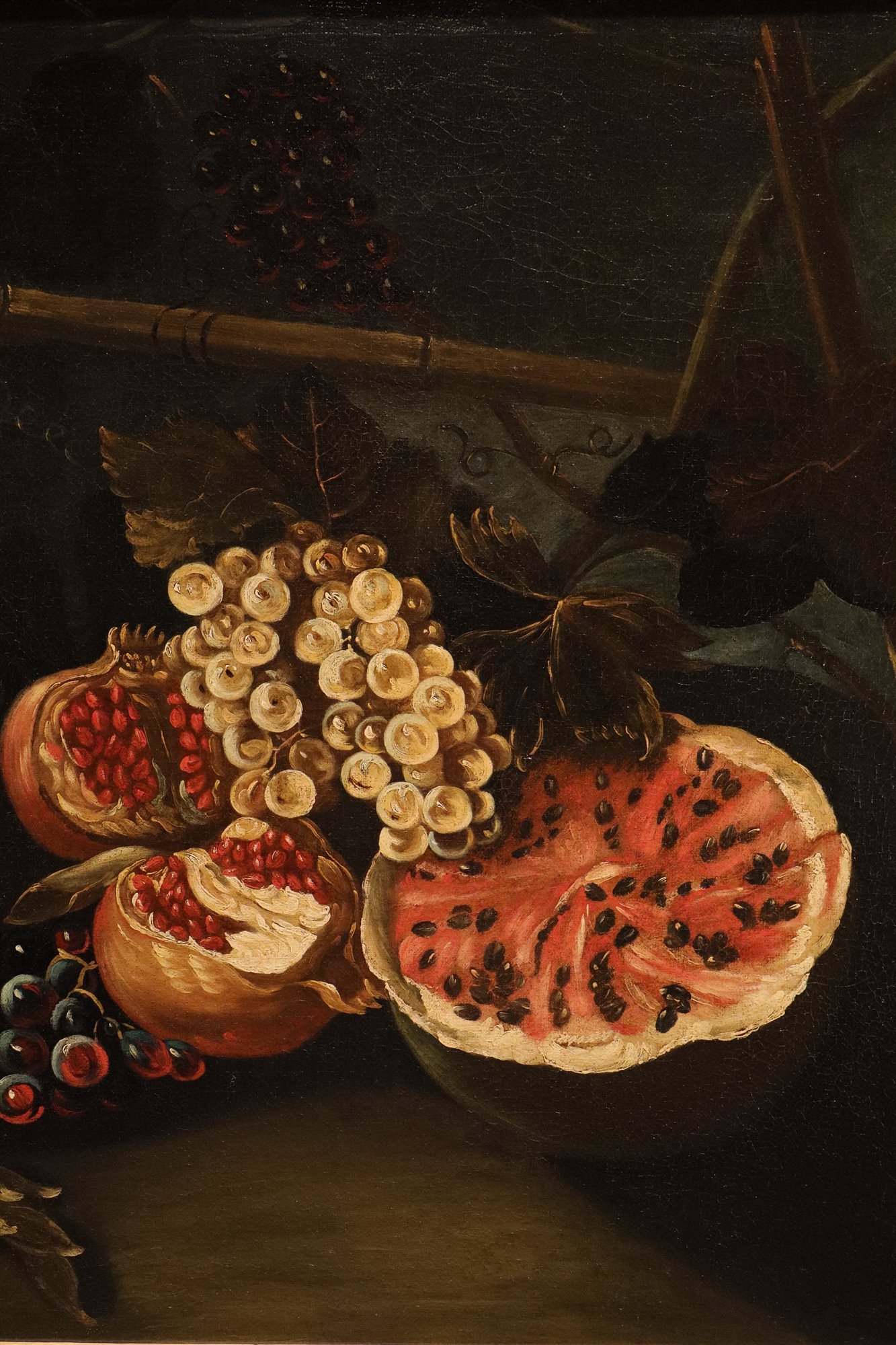
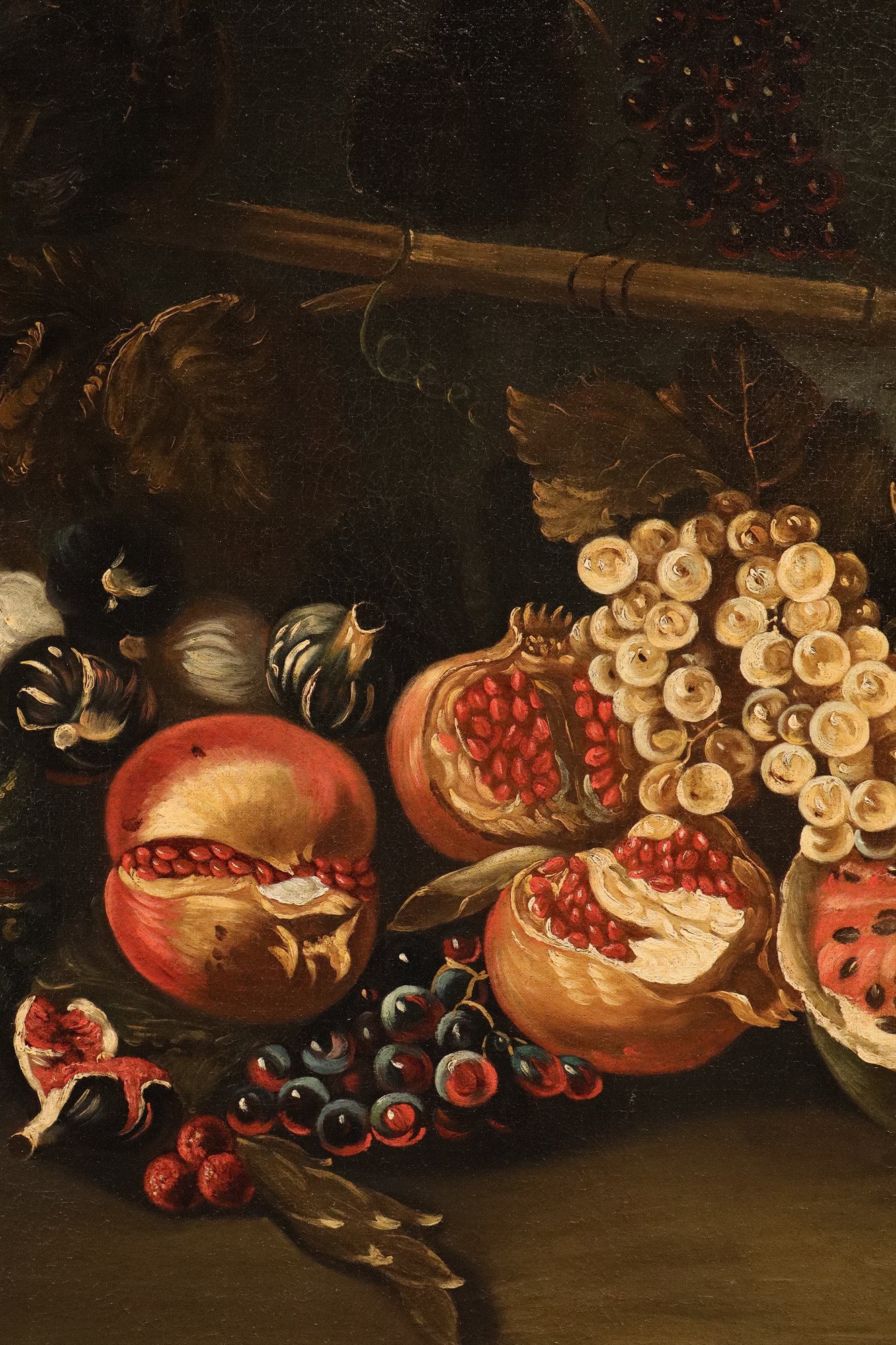
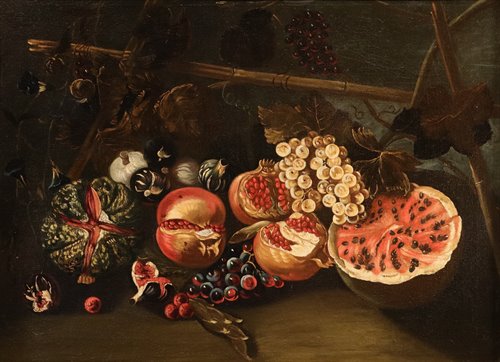
This splendid composition, emblematic of Roman Baroque still life from the height of the 17th century, showcases a rich variety of autumn fruits, harvested at the peak of their ripeness.
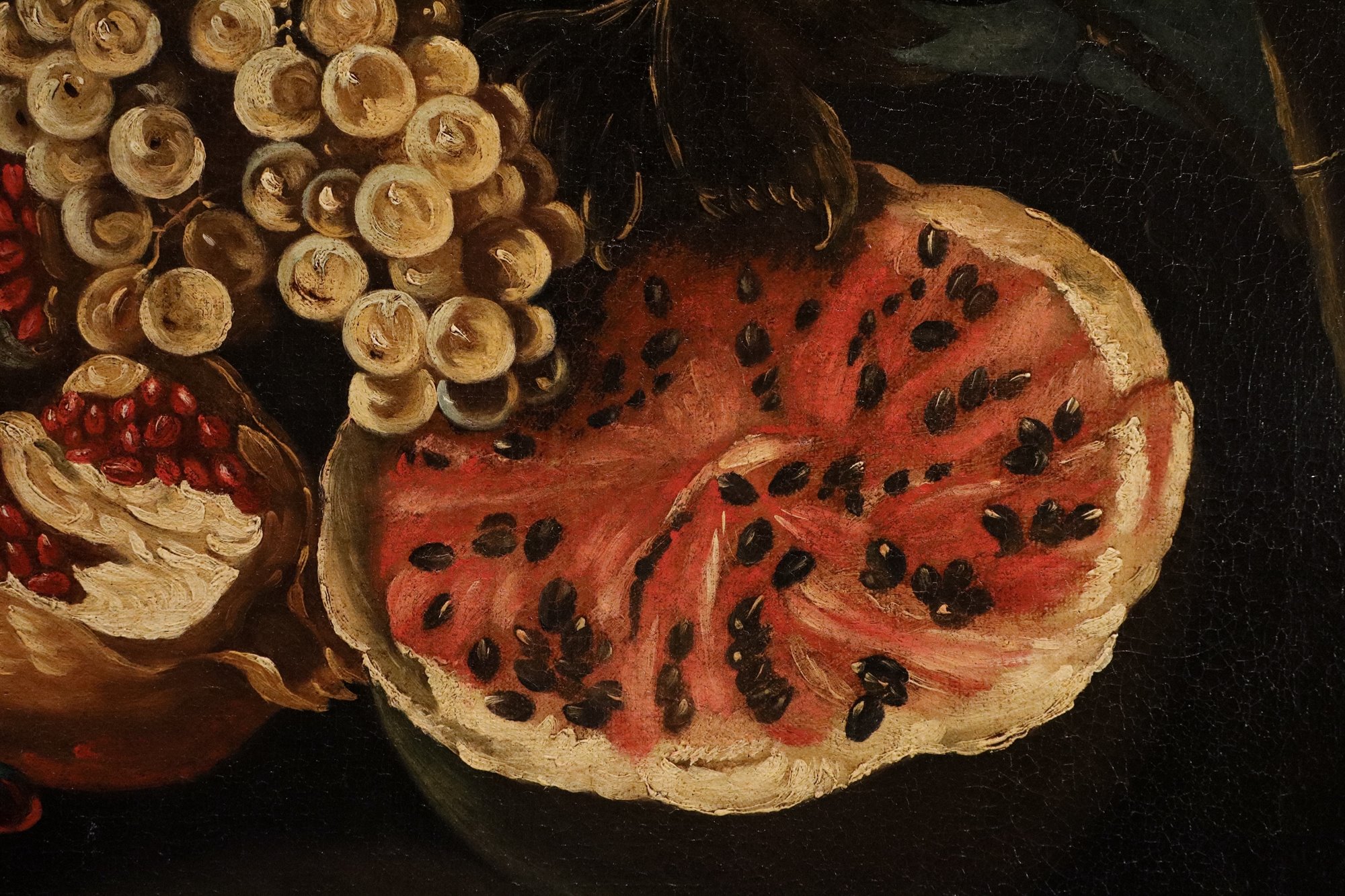
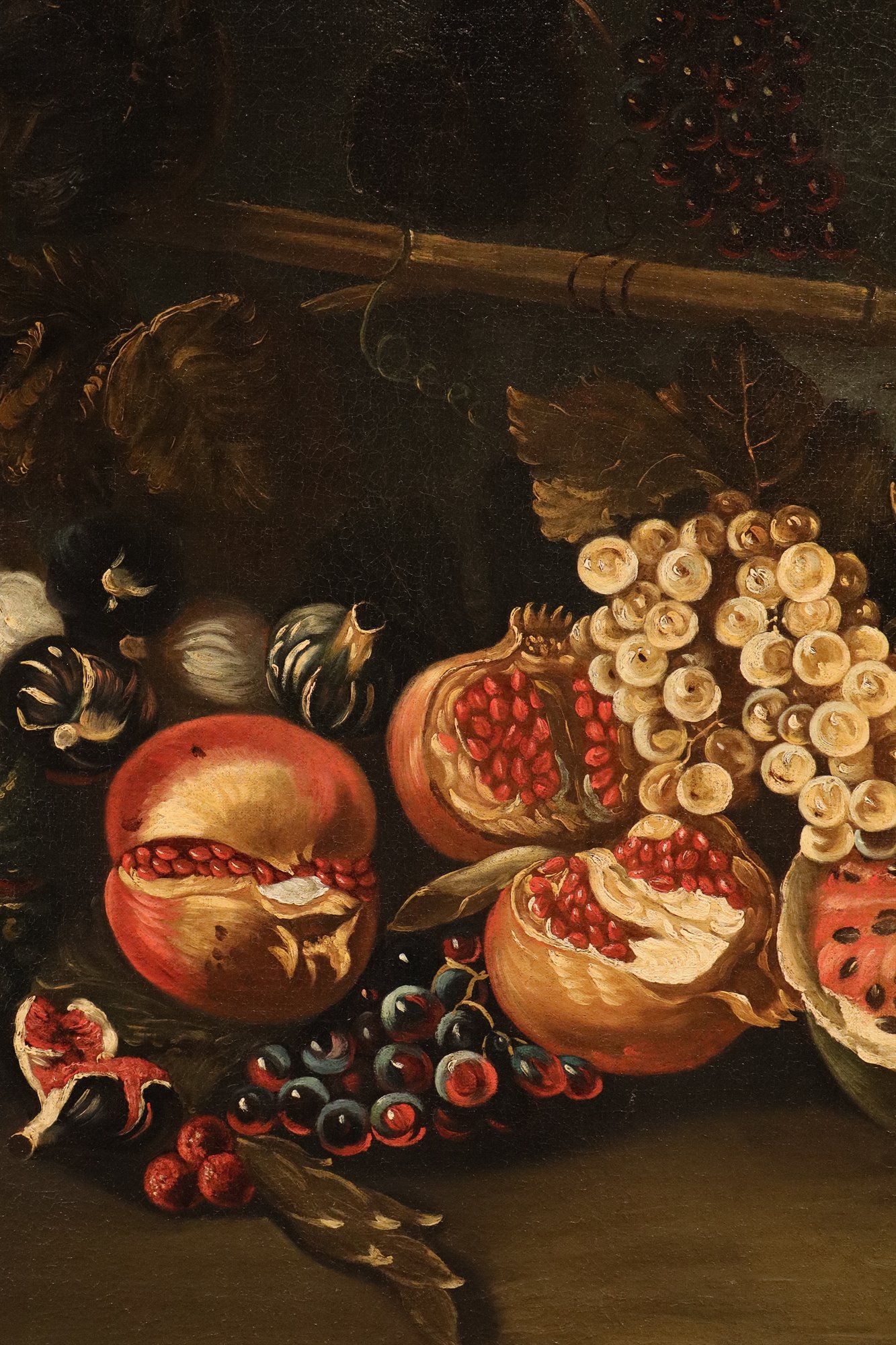
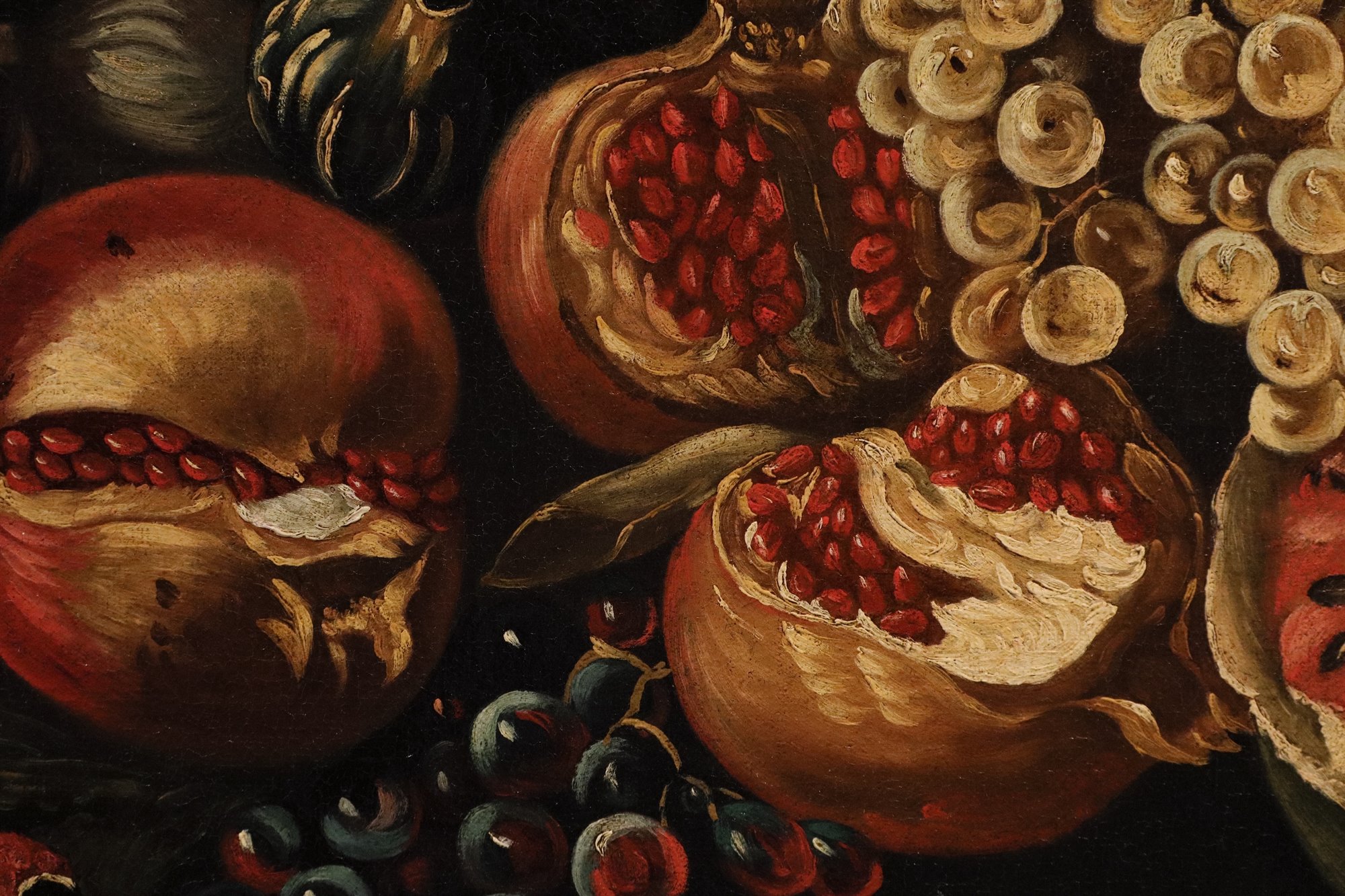
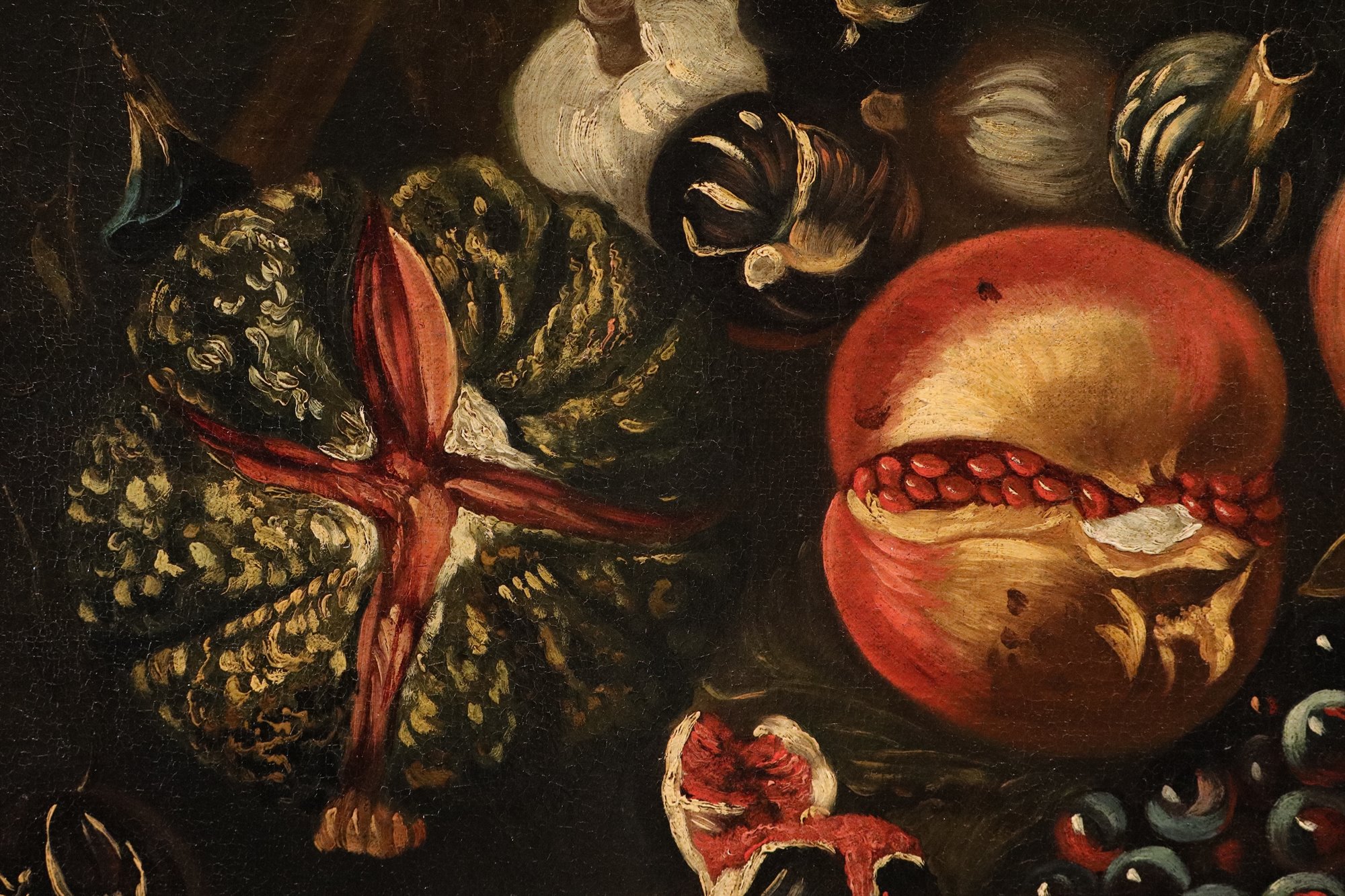
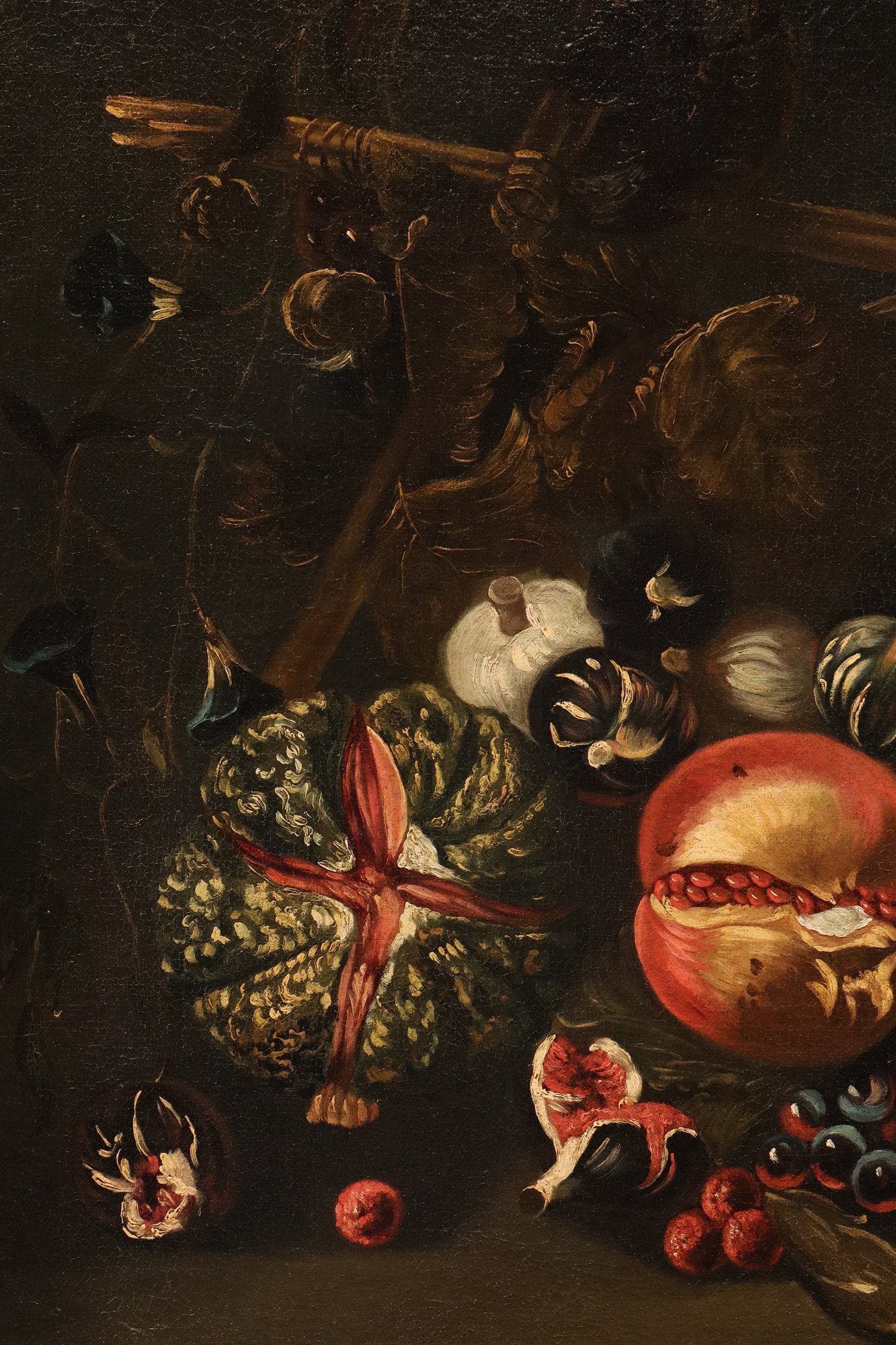
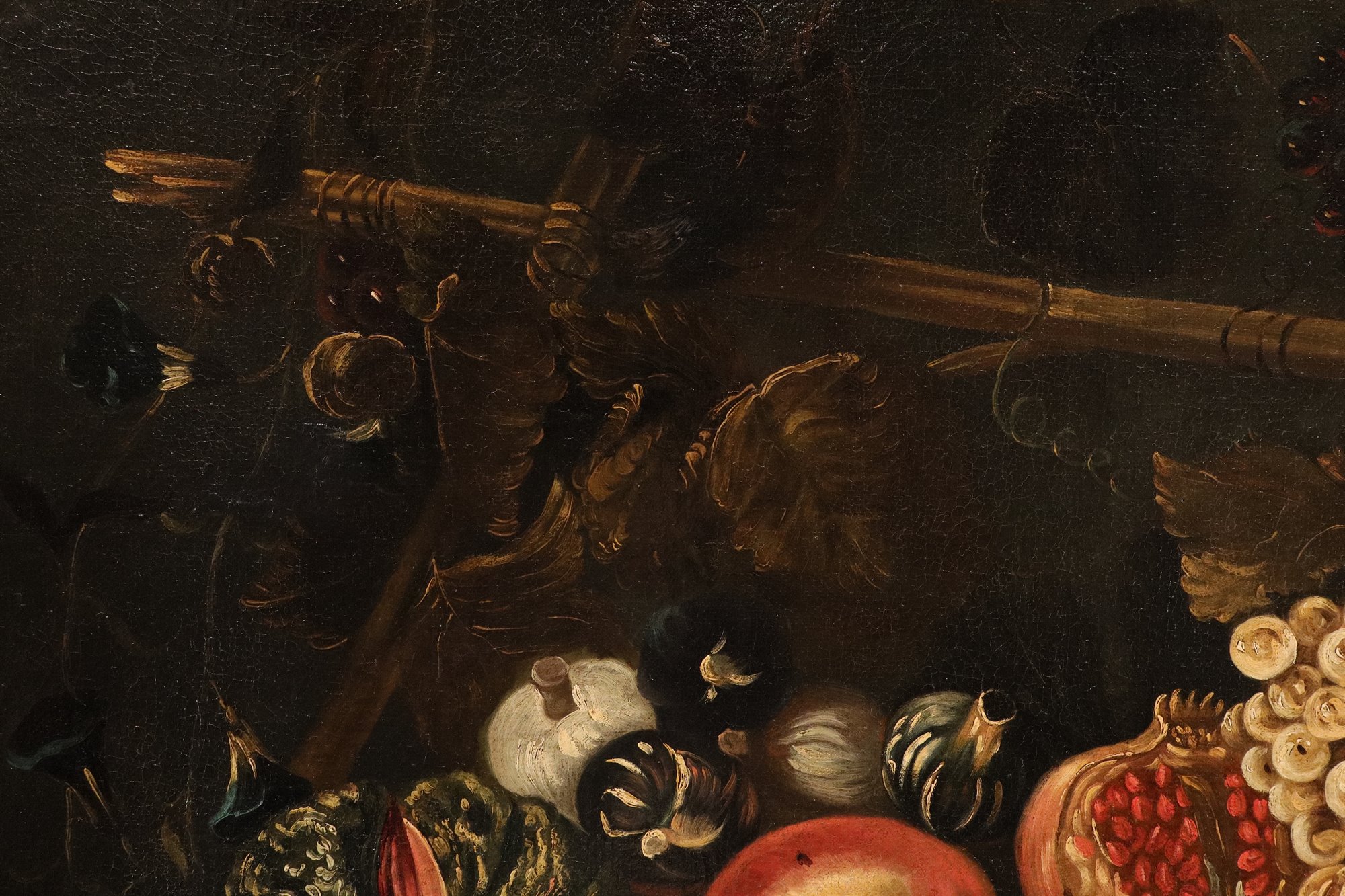
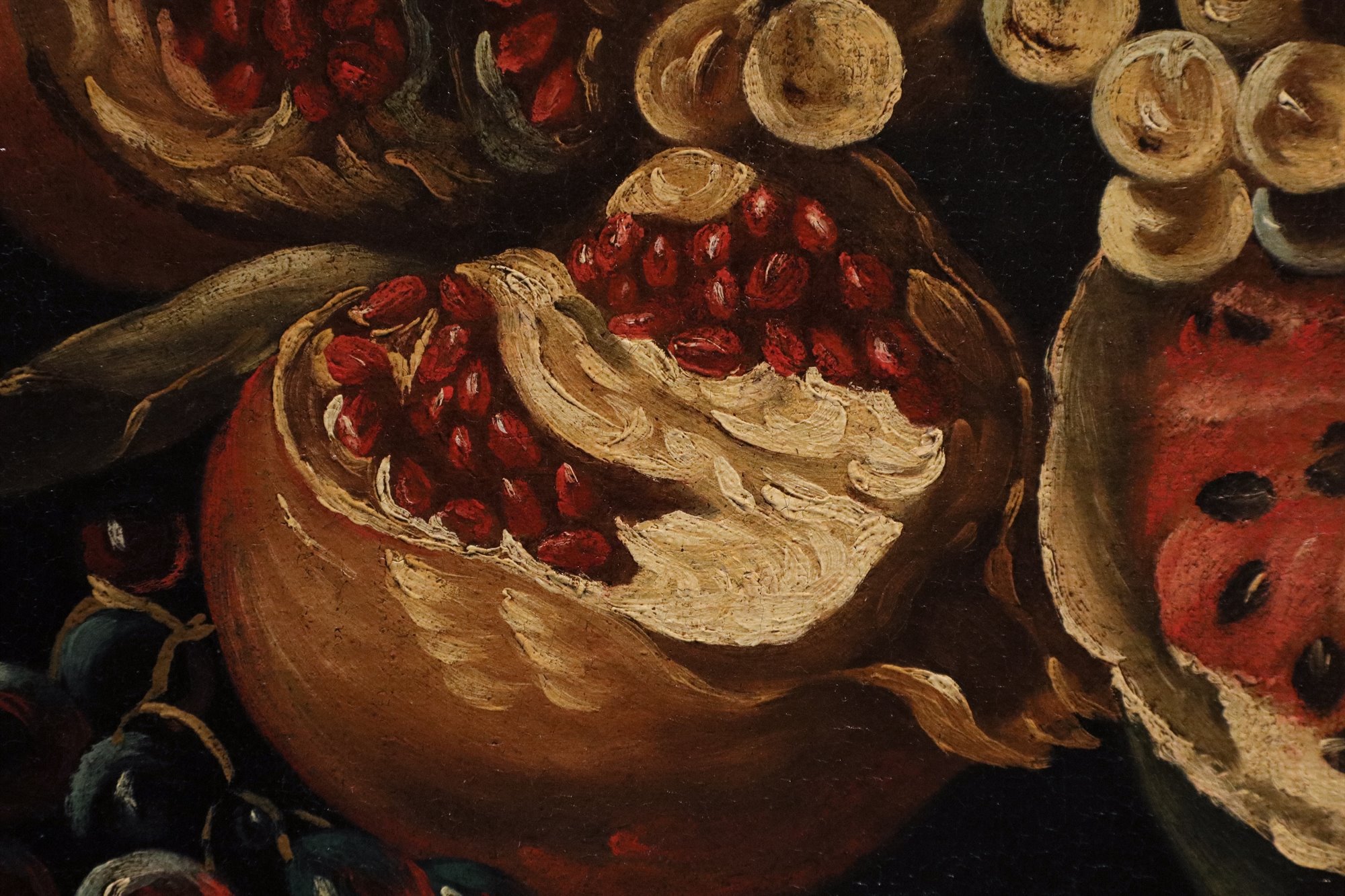
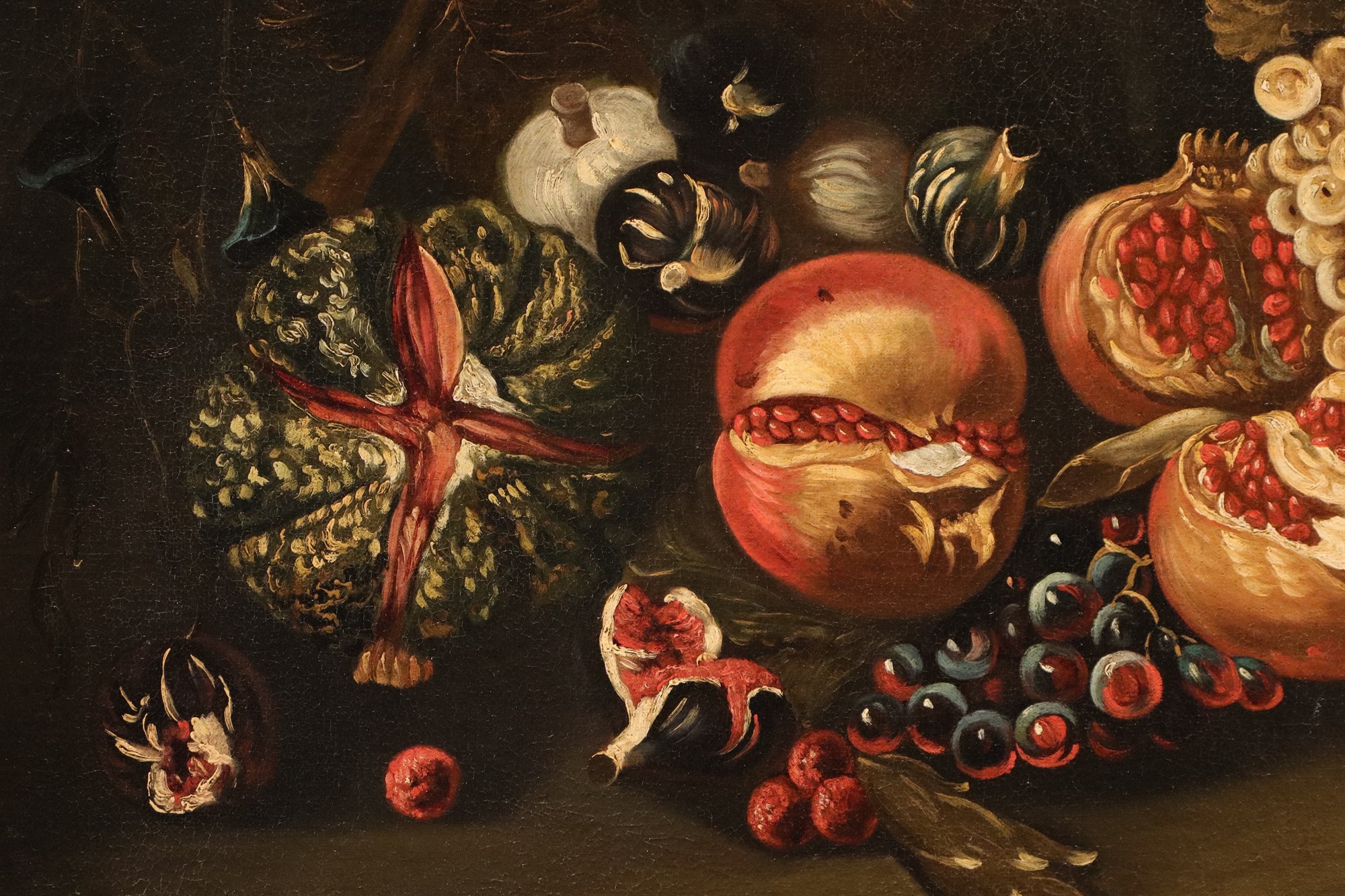
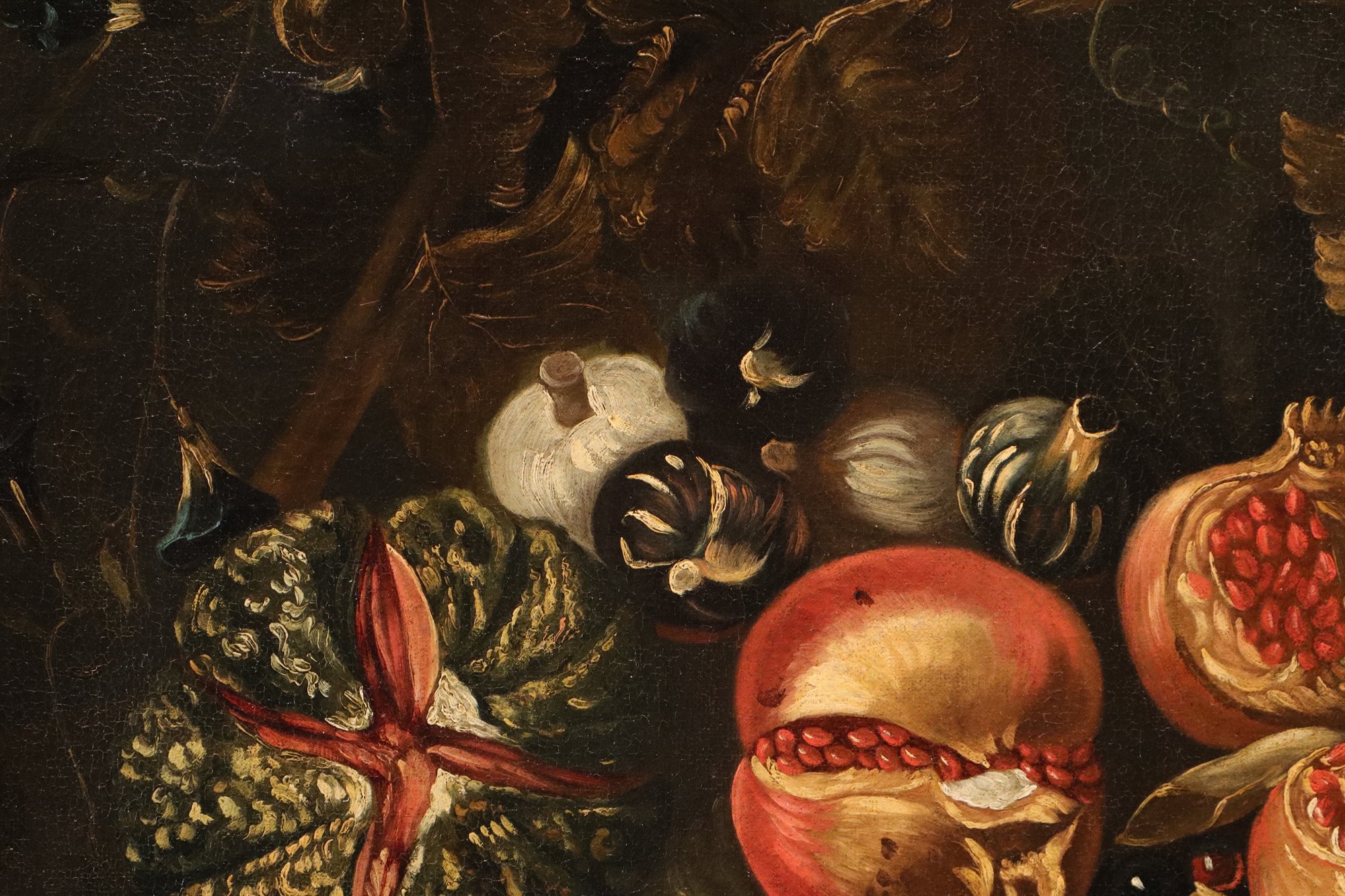
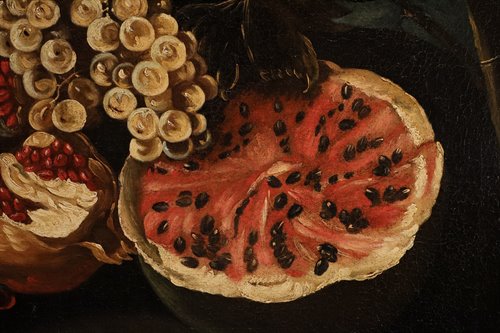
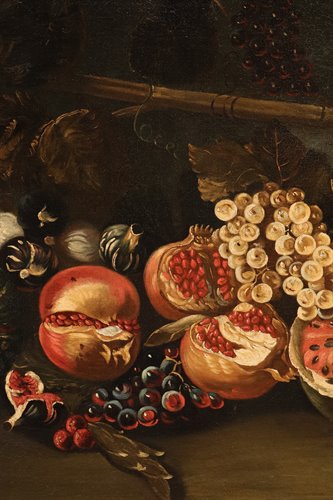
On the right stands out a halved watermelon, revealing its red flesh and numerous dark seeds, alongside pomegranates, which display their red, glossy seeds inside. Next to them is a dense, compact bunch of white grapes and, just below, small black grapes. On the left are ripe figs with their velvety skins split open, garlic and other small berries, followed by a characteristic ribbed pumpkin adorned with dark streaks.
The scene is completed by vine branches, topped by a bamboo stalk that runs diagonally across the composition, included to lend a sense of perspective and depth to the scene, whilst also evoking the rural setting and the act of harvesting in the open air.
The work is characterised by a marked Caravaggesque use of light, with the completely dark background allowing the oblique light to bring out the volumes, the varied textures of the skins and the vibrant colours of the fruit, lending the whole a strong sense of realism and three-dimensionality.
In particular, the characteristics of the work—which, in terms of style and composition, can be unhesitatingly attributed to the Roman school—lead us to identify Michele Pace (Rome, 1625–1669), a Roman painter known as Michelangelo del Campidoglio, as the primary candidate, particularly due to the scenic composition, the exuberant brushwork and the manner in which the texture of the various types of fruit is rendered.
The absence of signed works by del Campidoglio makes it difficult to place his paintings in chronological order: born in Rome, he spent most of his working life there, apart from a few brief stays in Naples, where he came into contact with the works of Abraham Brueghel (1631–1690), from whom he drew obvious pictorial motifs.
However, the influence of other masters of the still-life genre active in Rome during the same period is evident and explains the difficulties of attribution that scholars often face. In this instance, the painting also reveals clear stylistic affinities with certain works by two other specialists: the better-known Bartolomeo Castelli the Younger (Rome 1696–1738) and Michelangelo Cerquozzi (Rome 1602–1660).
In seventeenth-century Rome, the attribution of still lifes was in fact complicated by a dense network of collaborations, exchanges between workshops and stylistic affinities amongst the artists just mentioned.
In this specific case, the distinctive feature of this work – and of the Campidoglio’s stylistic signature – is the depiction of fruit at the peak of its plump, ripe state, such as the half watermelon on the right and the pomegranates in the centre, which are split open from the inside.
This choice is not merely aesthetic (allowing the painter to showcase the juicy flesh and the intricate texture of the black seeds and kernels), but also carries a strong allegorical meaning linked to the concept of Vanitas: the fleeting beauty of nature captured a moment before its inevitable decline.
ADDITIONAL INFORMATION:
The artwork is complete with an attractive gilded wooden frame and comes with a certificate of authenticity and guarantee.
We arrange and organise the transport of purchased artworks, both within Italy and abroad, using professional and insured carriers. It is also possible to view the painting at our gallery in Riva del Garda; we would be delighted to welcome you to show you our collection of artworks.
Please feel free to contact us, with no obligation, for any further information.
Follow us on: