
Natura morta con carte da gioco, cagnolino, dolciumi, tessuti ed oggetti preziosi
Francesco Noletti, detto il Maltese (Malta, 1611 – Roma, 1654)
Francesco Noletti, known as ‘il Maltese’
(Malta, 1611 – Rome, 1654) workshop of
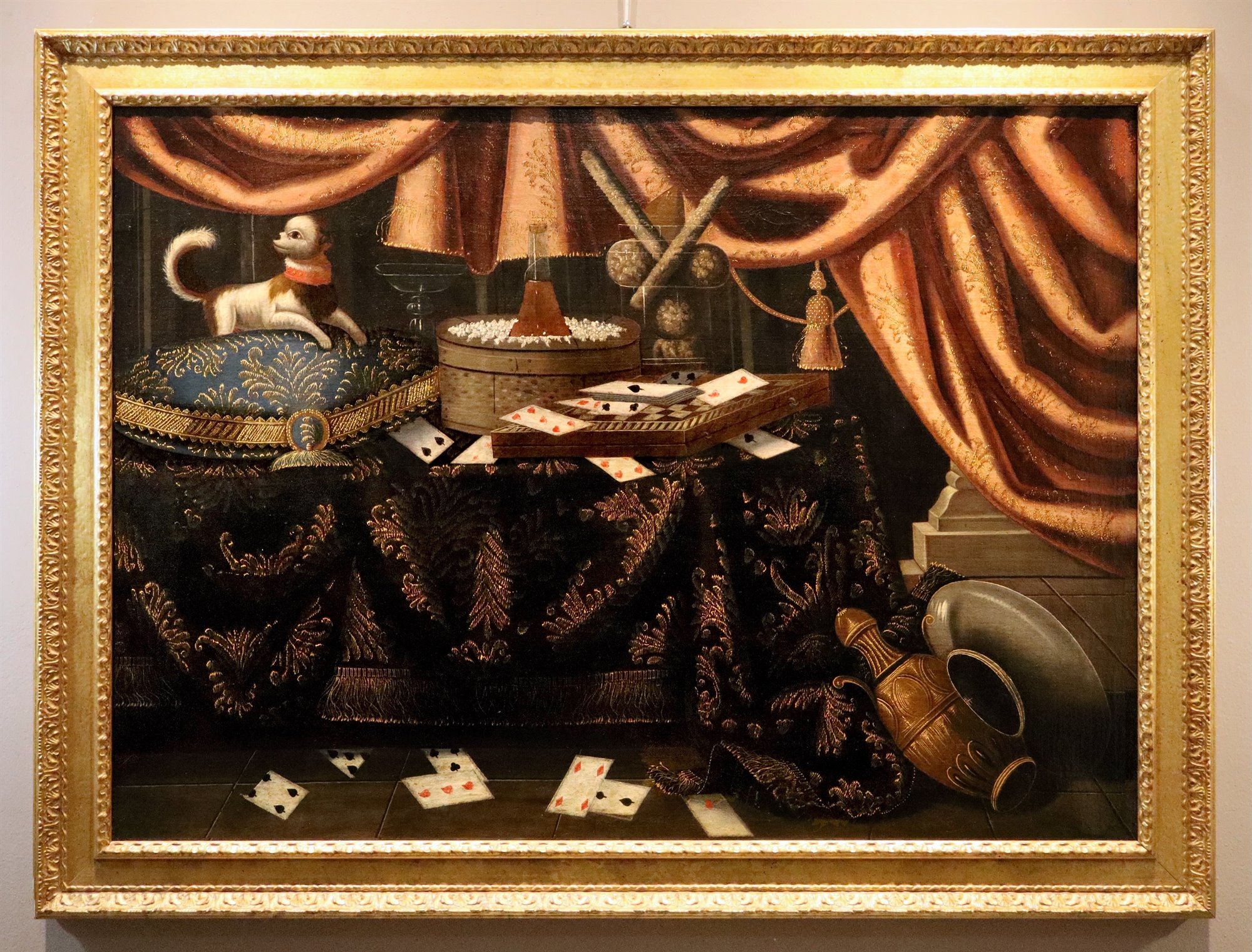
Still Life with Playing Cards, a Small Dog, Sweets, Fabrics and Precious Objects
Oil on canvas
98 x 136 cm.
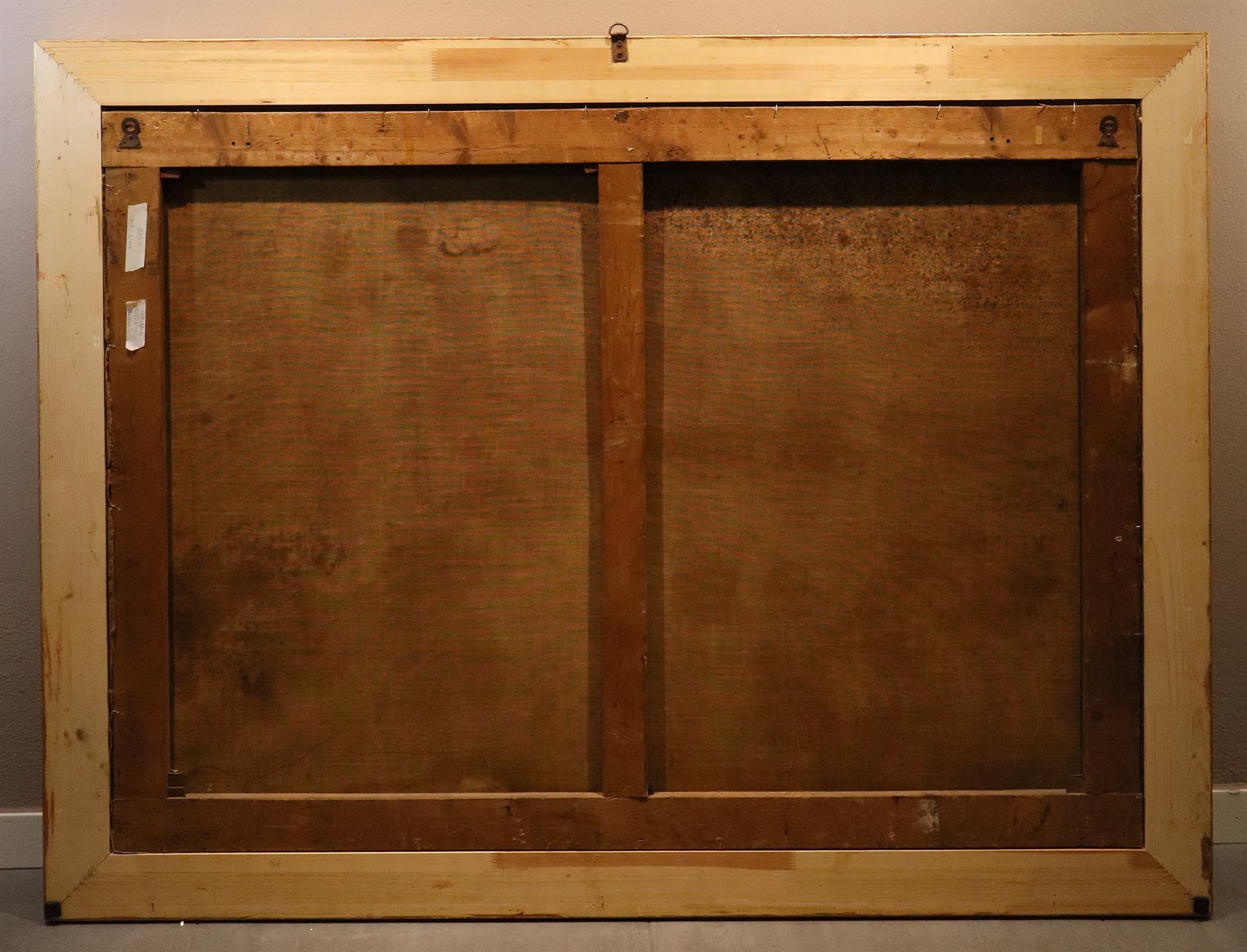
Framed 116 x 154 cm.
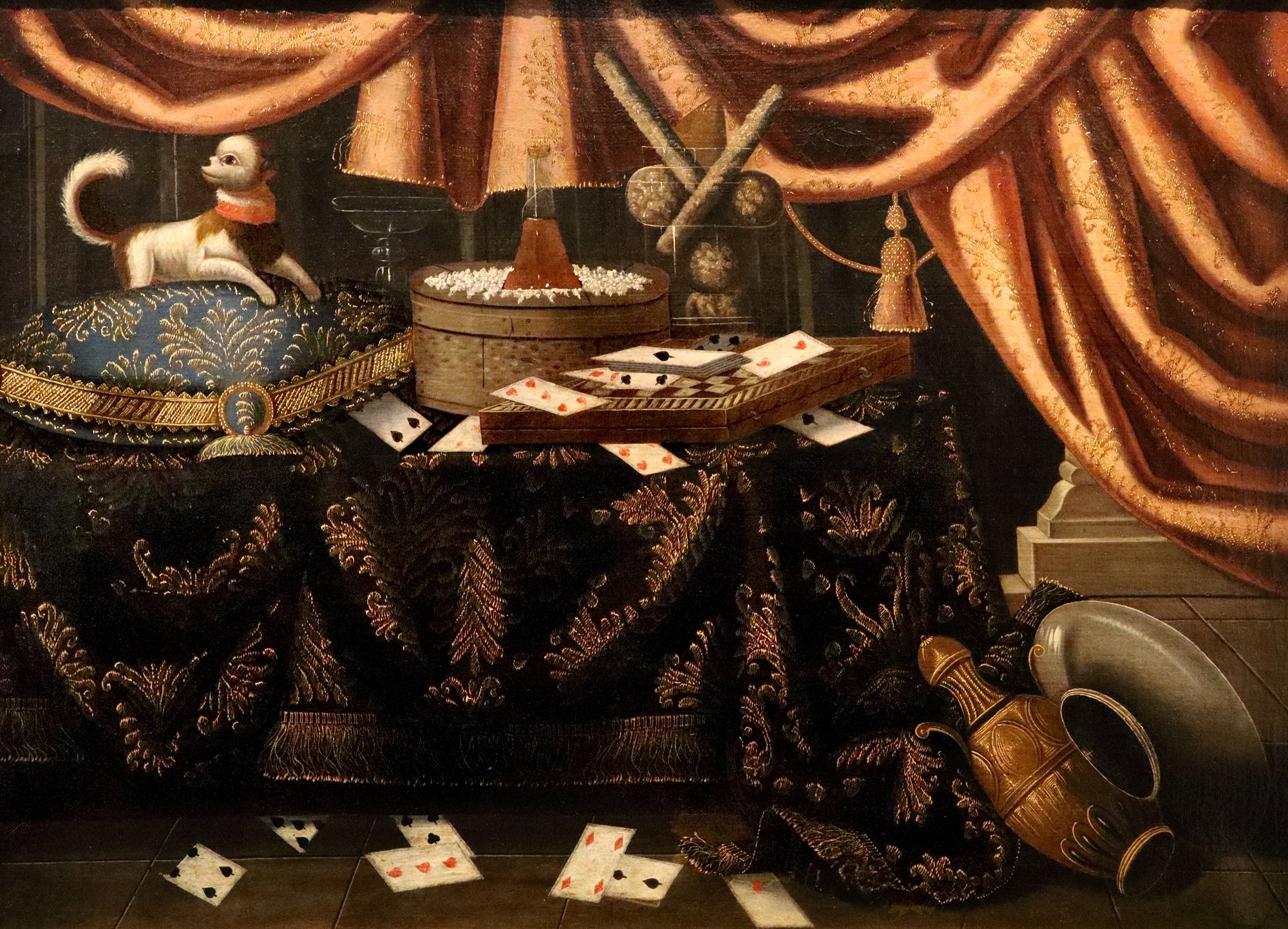
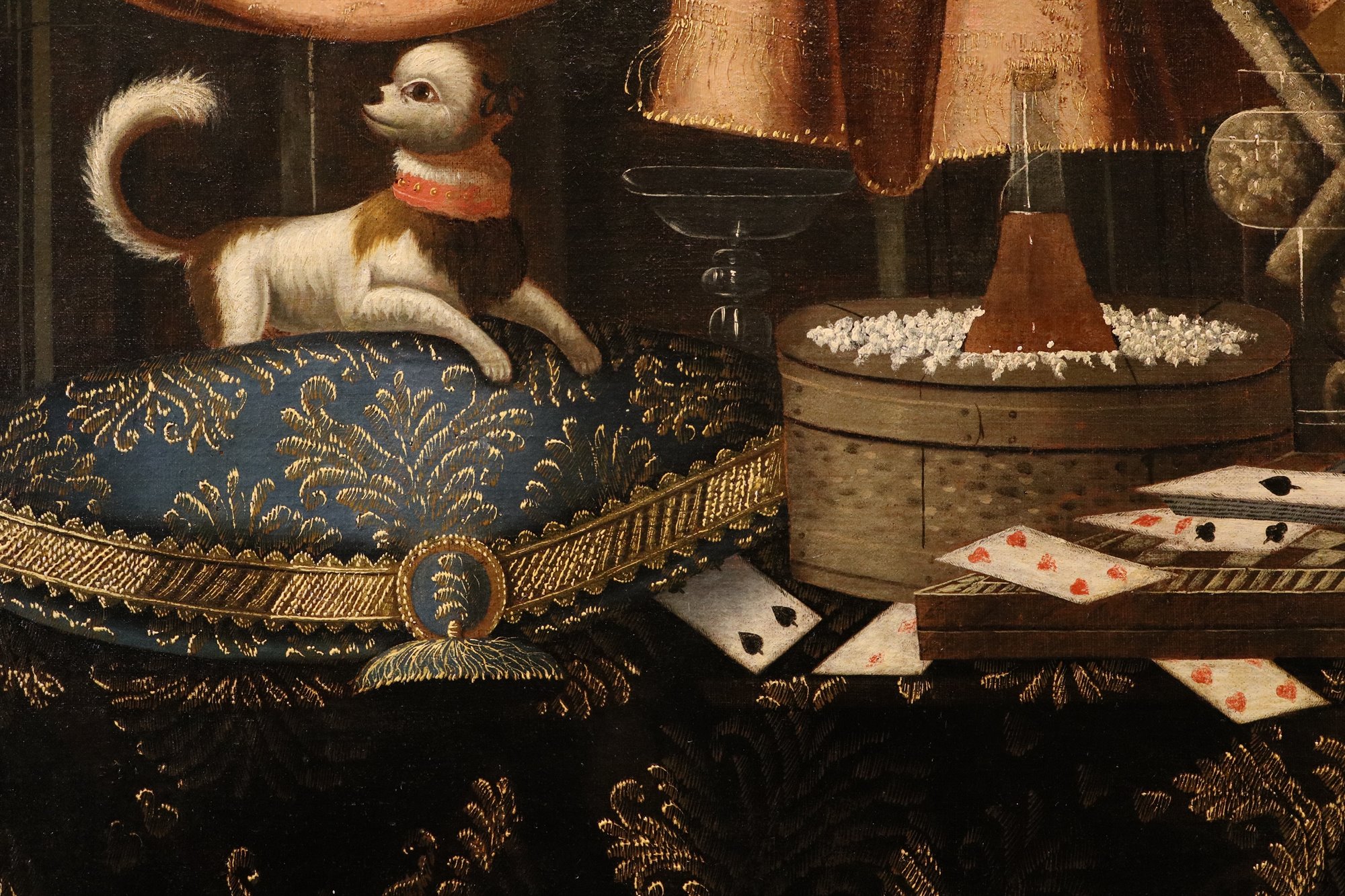
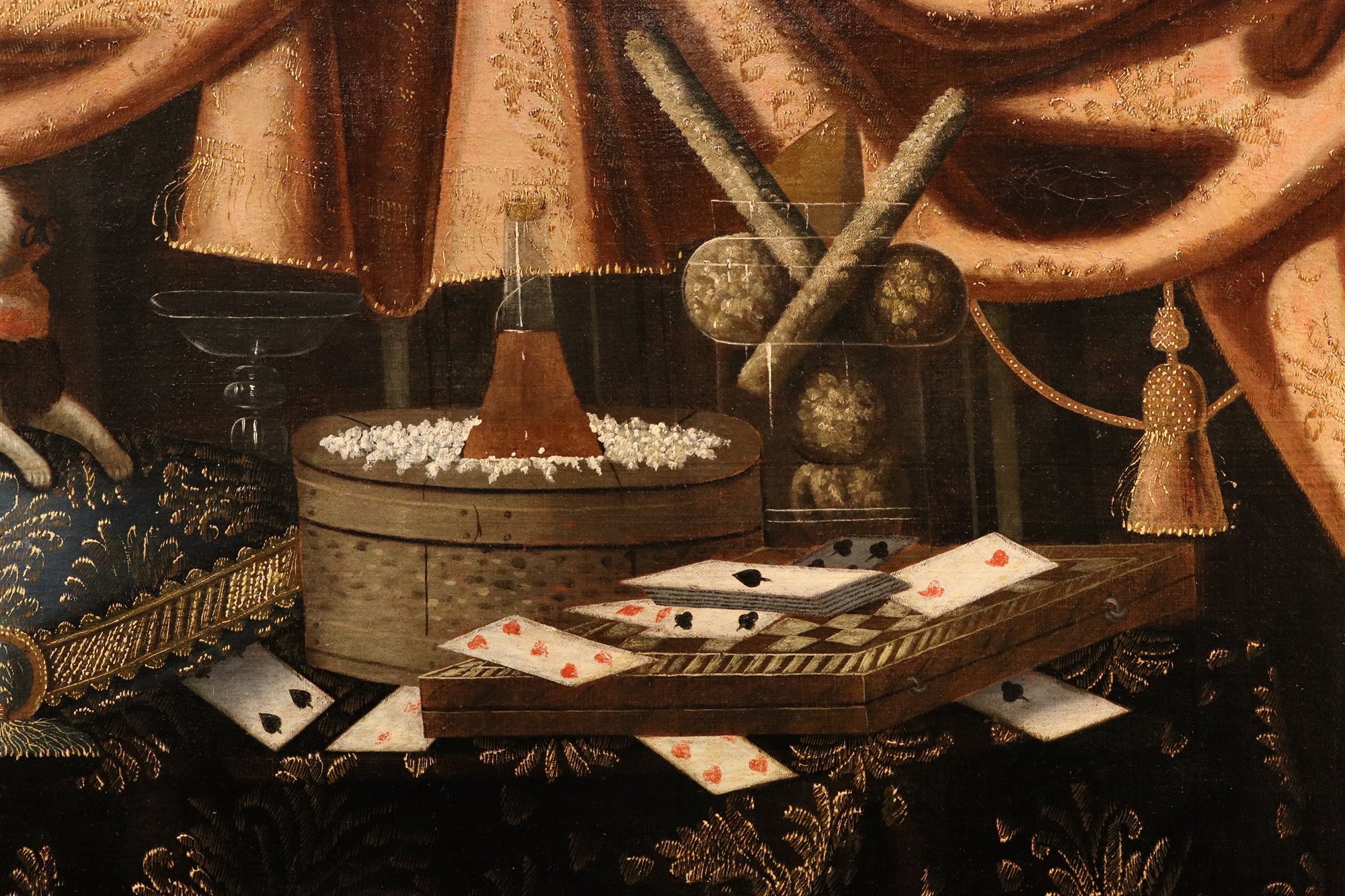
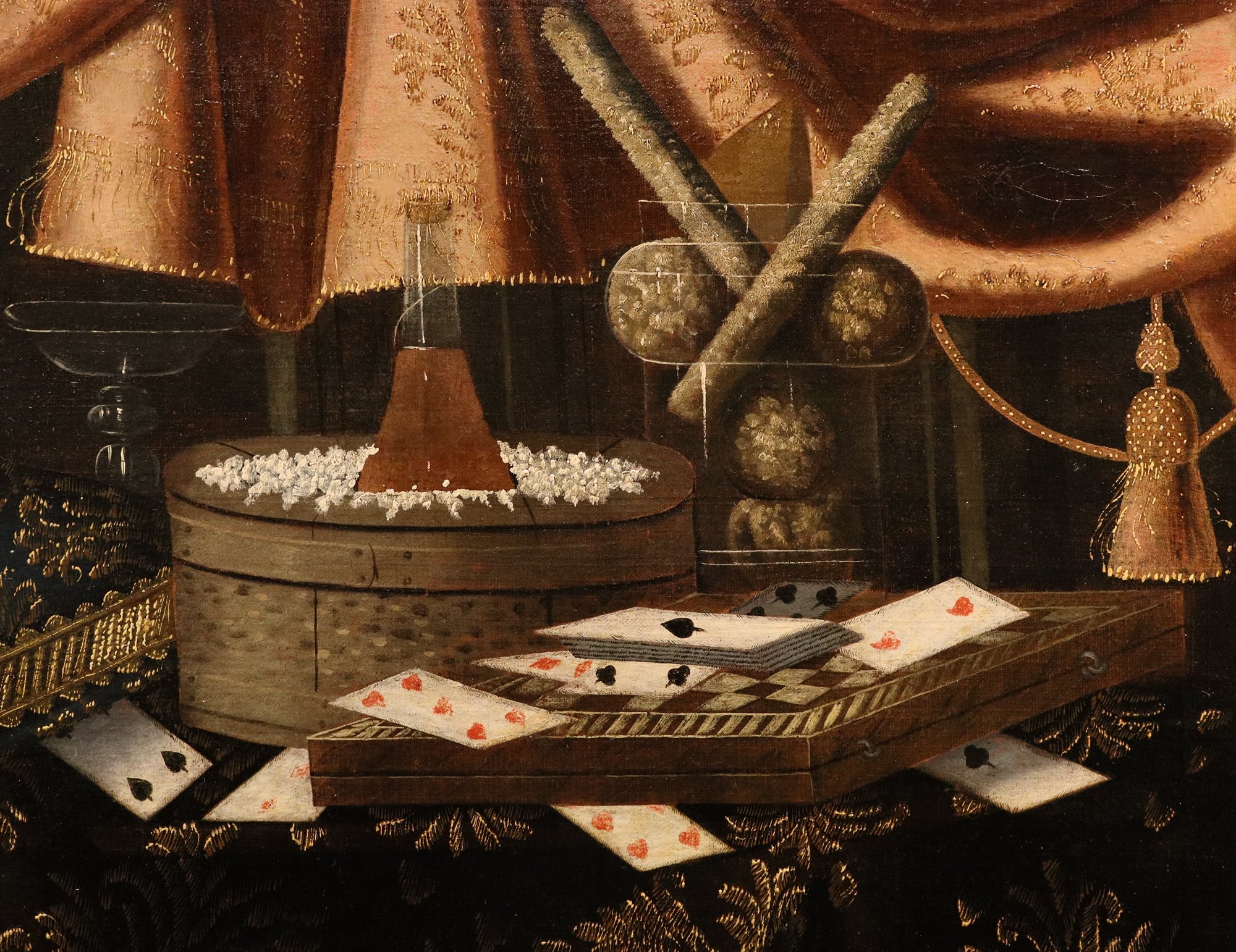
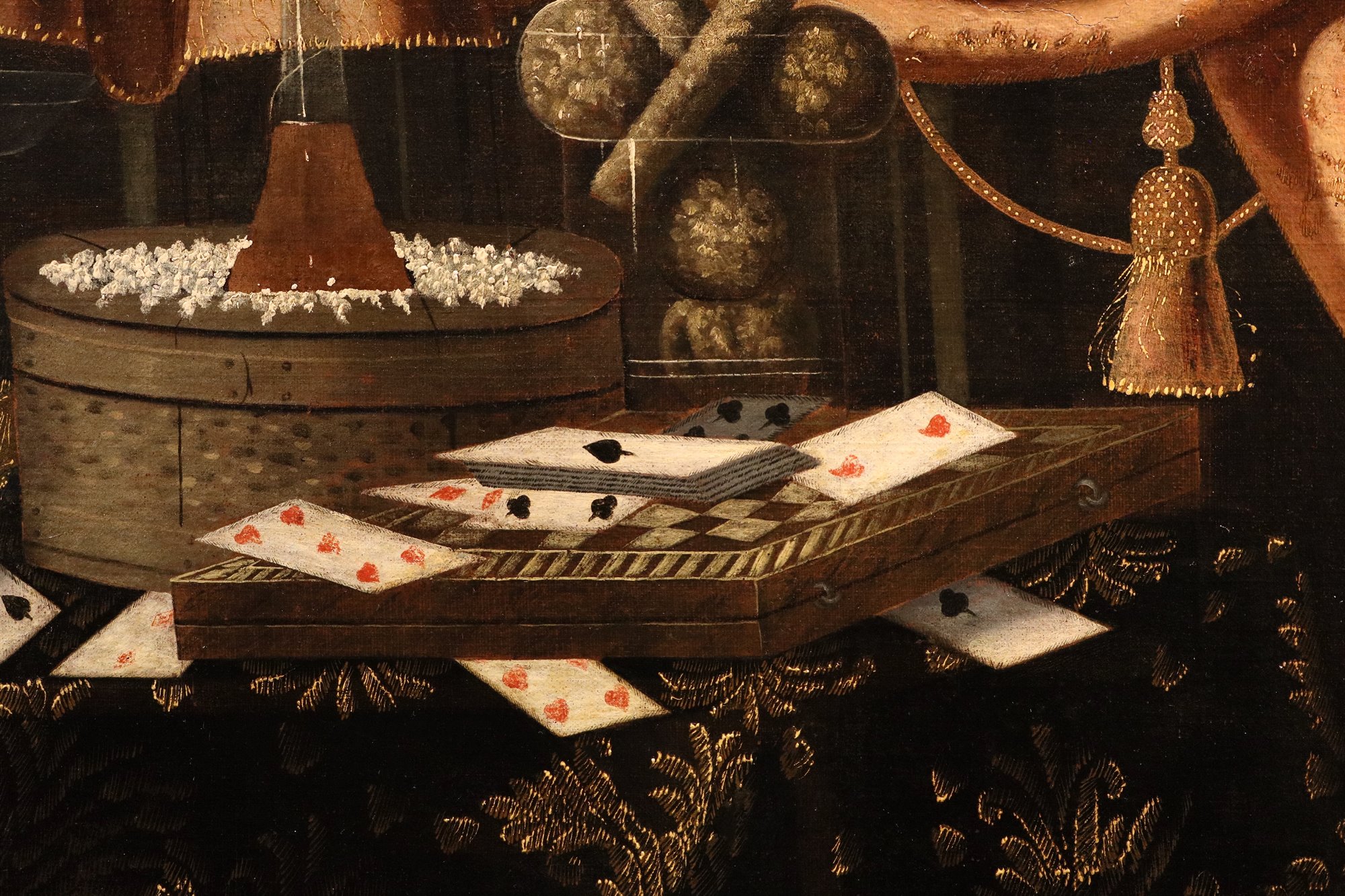
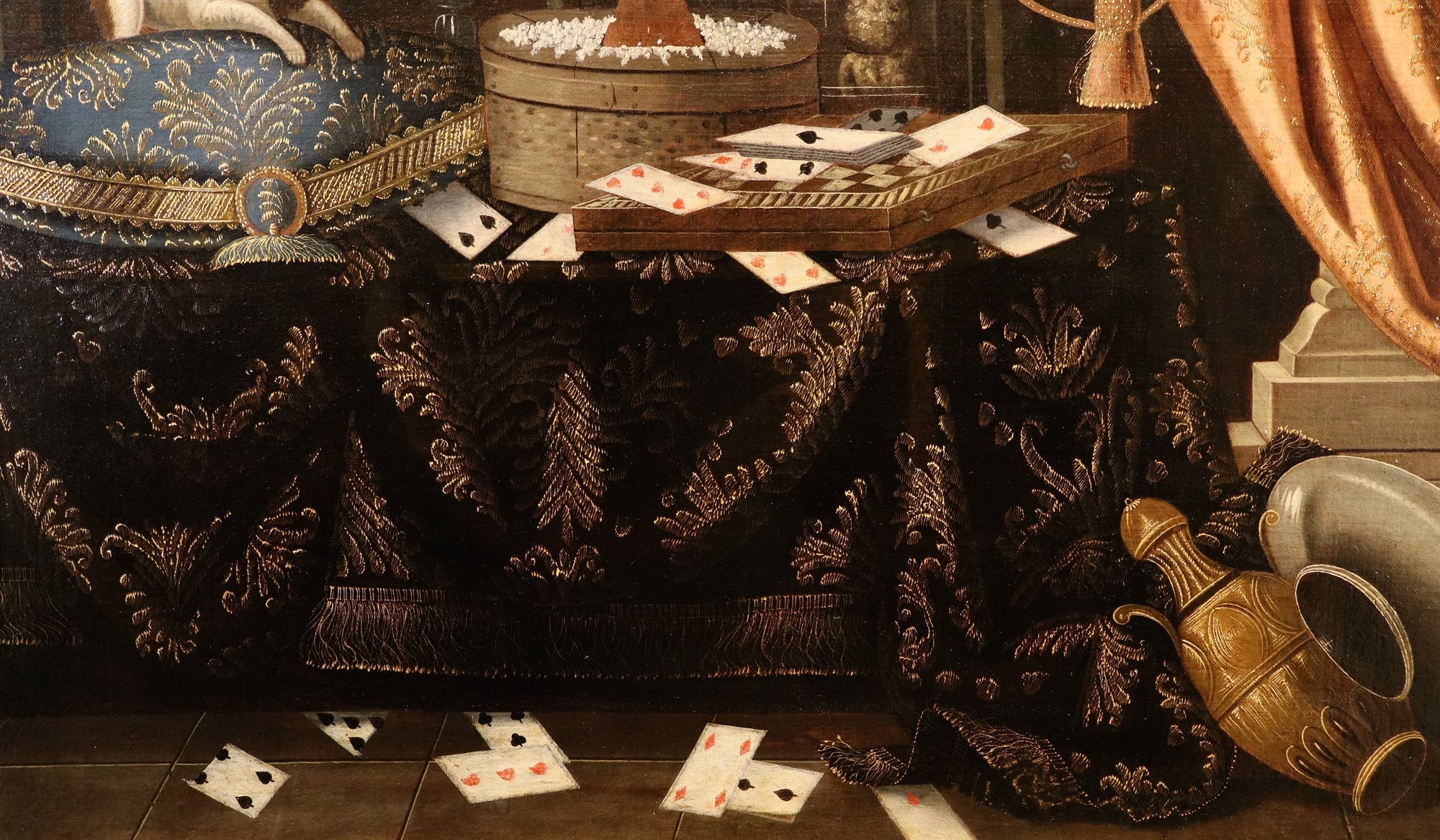
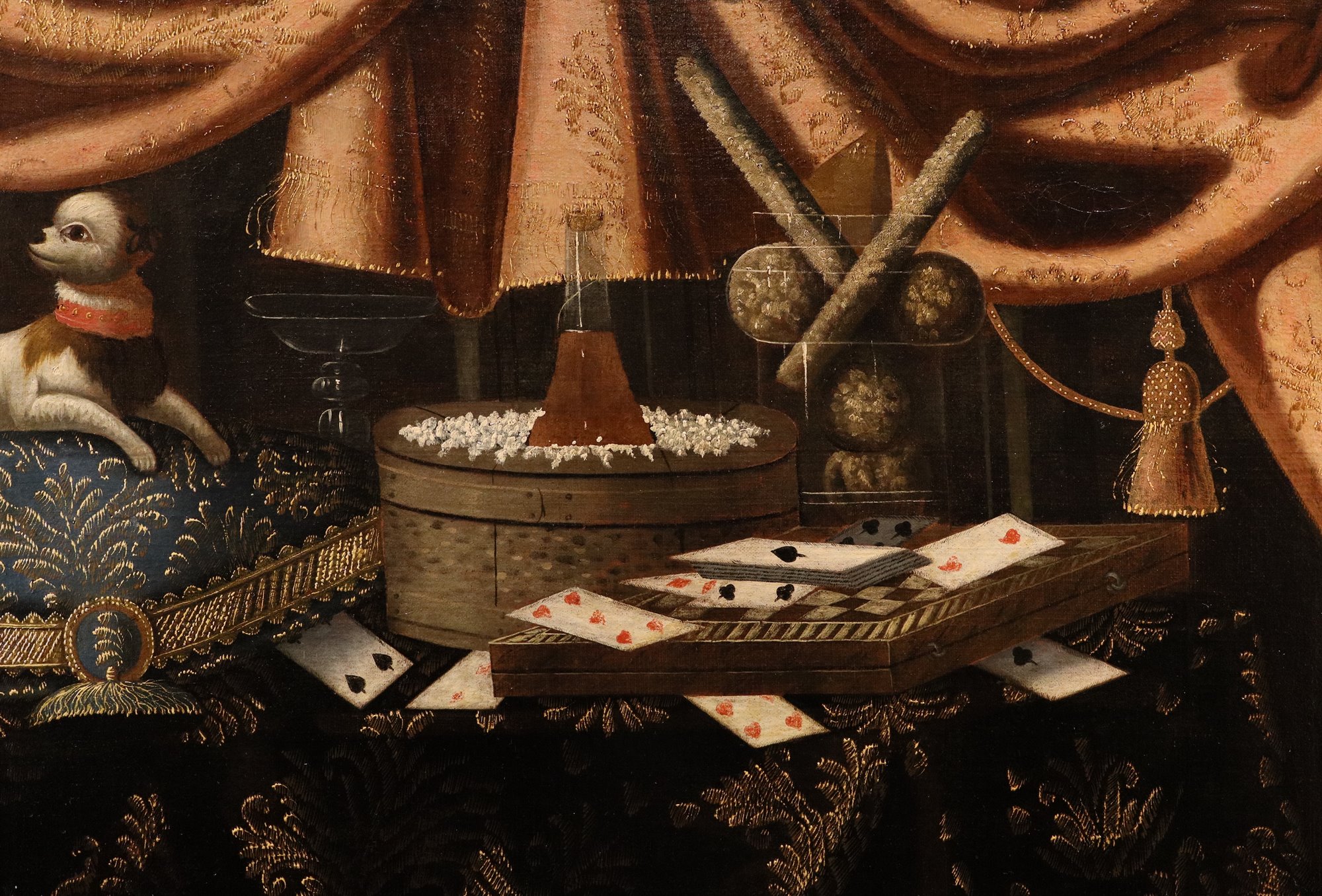
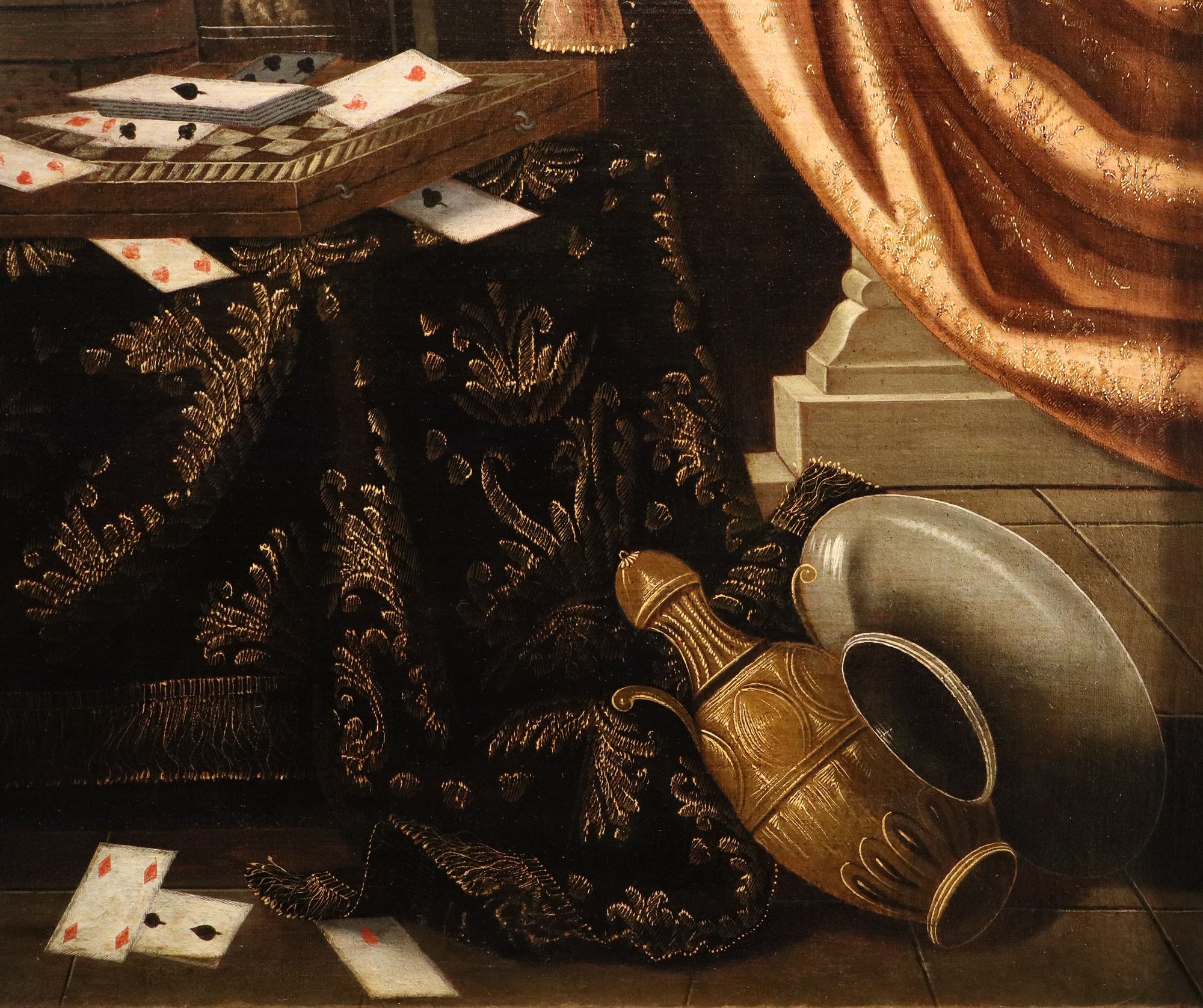
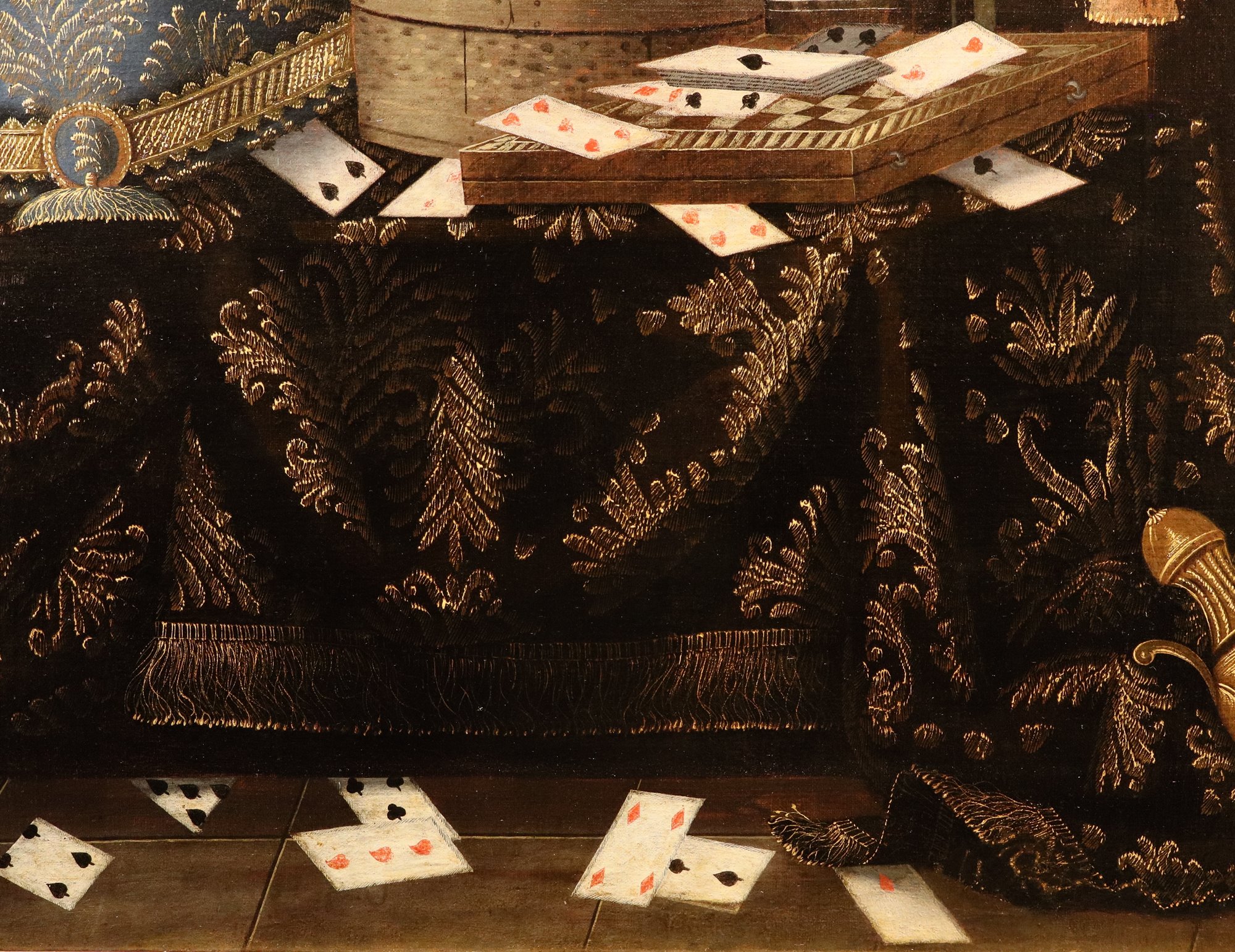
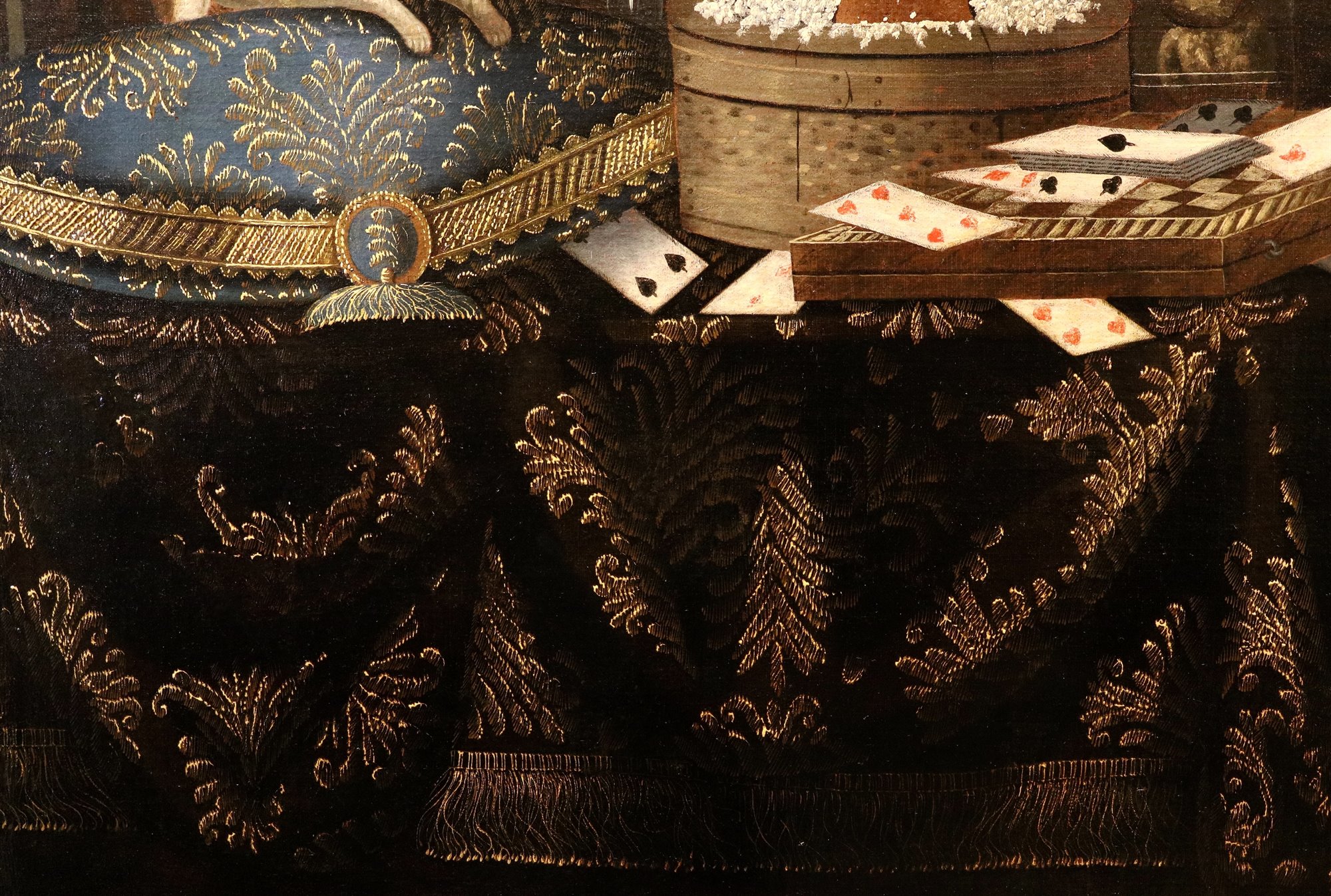
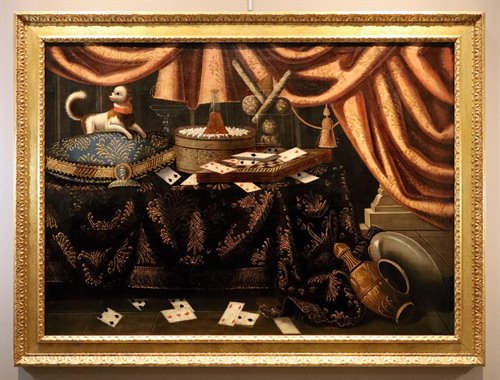
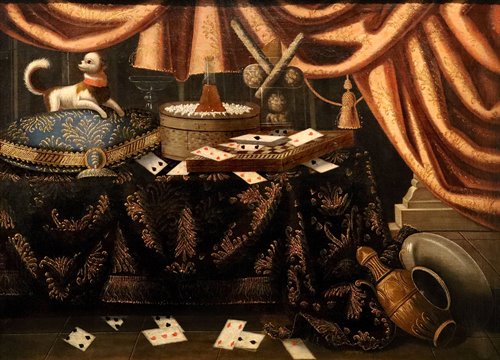
The scene depicts a sumptuous Baroque composition featuring a table entirely draped in a dark fabric richly embroidered with gilded floral motifs, upon which rests an opulent display of objects, including playing cards, a small dog, sweets, and finally precious objects scattered across the floor.
The painting shown is a work from the workshop of the Baroque painter Francesco Fieravino, known as ‘il Maltese’ (Malta, 1611 – Rome, 1654),
who was mainly active in Rome, where he was extremely prolific and enjoyed extraordinary success amongst collectors of the time, thanks to his outstanding creativity and the invention of unique still-life compositions.
His presence and the fame he attained are evidenced by the numerous works recently attributed to him, now held in the most important public and private Roman collections of the period, such as those of the Albani, Barberini, Chigi and Colonna families.
Adhering above all to Baroque compositional ideals, the artist produced an exceptional body of paintings united by a very rigorous compositional scheme, characterised by an exuberant and opulent style, the specific details of which are clearly recognisable in the painting presented here.
The chaotic and seemingly random arrangement of the objects follows a precise and profound iconographic programme: each element is a moral symbol designed to remind the viewer of the transience of earthly life (Memento mori) and the futility of material pleasures in the face of the inevitability of death.
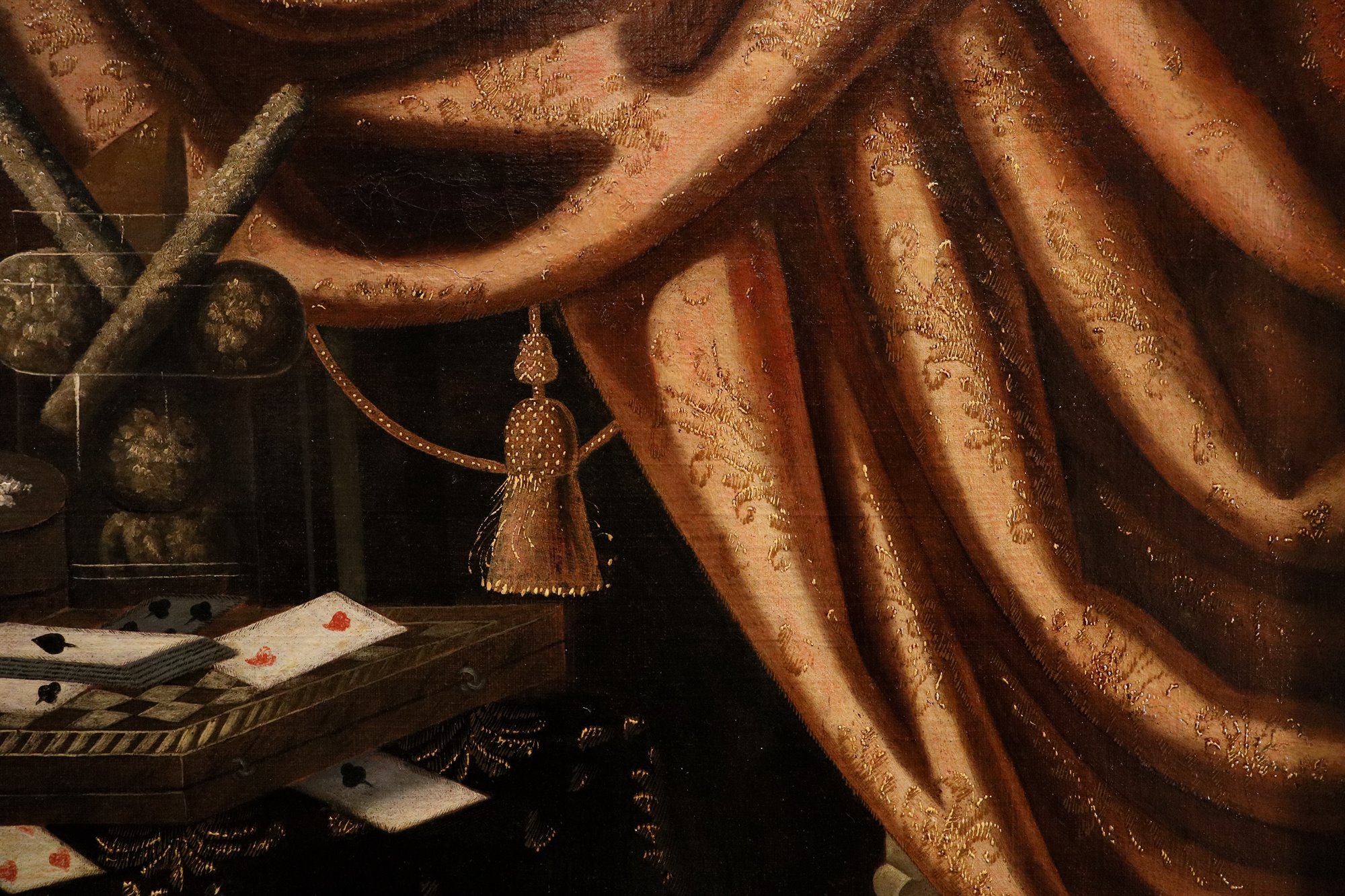
Thus, the cards scattered across the table and on the floor, together with the backgammon board featuring a chessboard, symbolise the worldly pleasures of gambling and, by extension, blind fate: their being shown strewn on the floor emphasises how earthly fortune, wealth and material success are unstable and destined to crumble in the face of the one inevitable certainty: death.
Chance, inherent in the game, represents the precariousness of human fortune, tied to chance and unpredictability, just like life itself. Gambling was regarded as a fleeting pastime that distracted man from his spiritual duties, fully embodying the ‘vanity’ of earthly passions.
Even the rich, dark fabric embroidered in gold upon which the objects rest, and the gilded curtain that opens like a theatre curtain, have allegorical significance: they represent the theatre of life. The wealth on display is merely a temporary spectacle, a fleeting stage that death will, sooner or later, bring to a close.
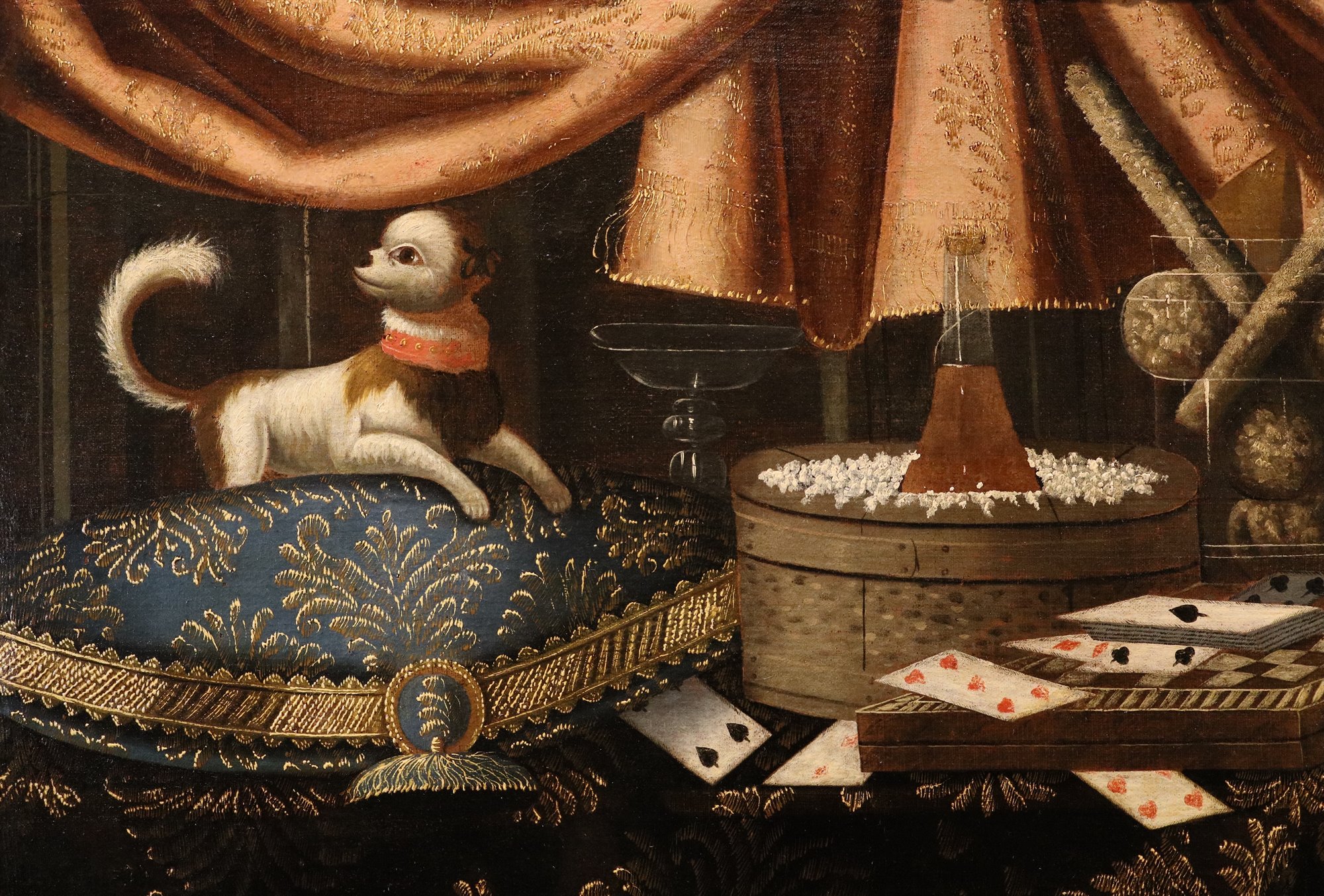
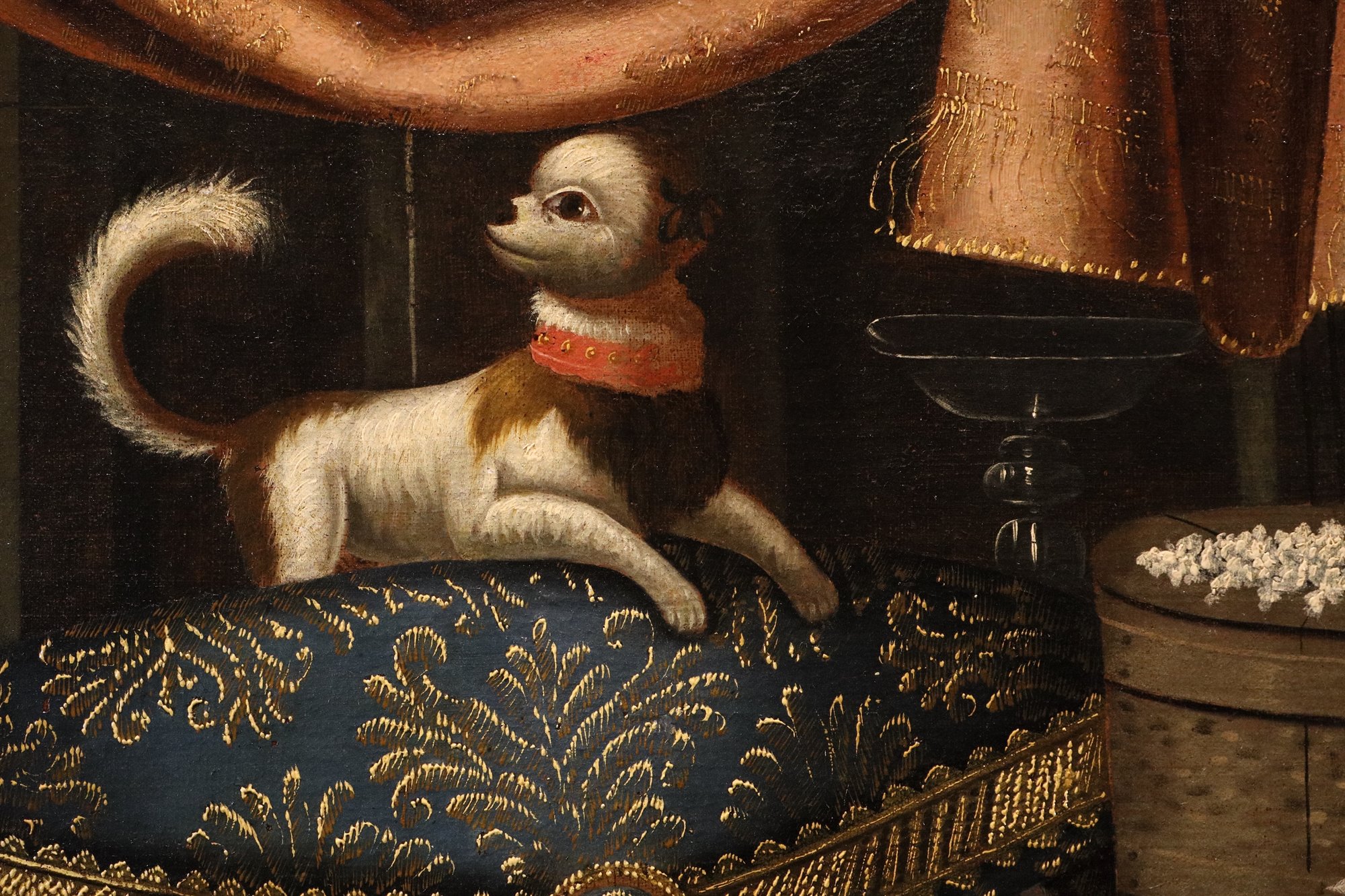
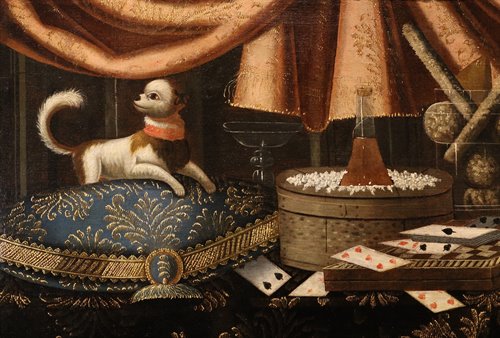
Then there is the little dog which, in Baroque still lifes, is often depicted amidst a setting of wealth and takes on a dual allegorical significance. Traditionally, the dog is a symbol of spiritual and moral fidelity, and its presence serves as a warning to the viewer to remain vigilant and faithful to God, without allowing oneself to be corrupted by the surrounding material temptations.
The fact that the little dog rests on a sumptuous embroidered velvet cushion emphasises the comfort and luxury of seventeenth-century aristocratic life – a material prosperity destined, however, to fade away.
Finally, the sweets – with their sugary biscuits featuring the typical ‘spongy’ texture characteristic of the painter’s style – and the flask of wine represent the pleasures of the palate; they take on a specific allegorical meaning linked to the concept of Vanitas, urging us not to be deceived by the fleeting sweetness of earthly pleasures, whilst highlighting their intrinsic fragility and transience. Just like music or the beauty of cut flowers, the sweetness of food is a fleeting joy that vanishes as soon as it is consumed.
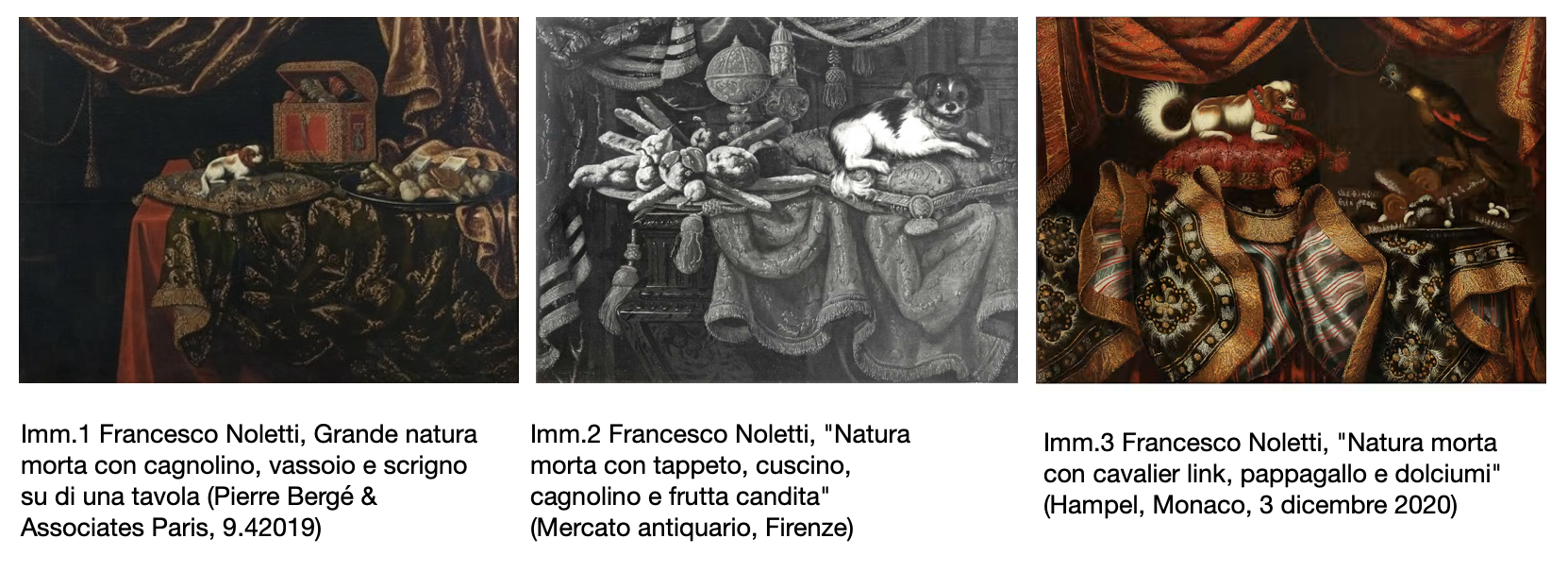
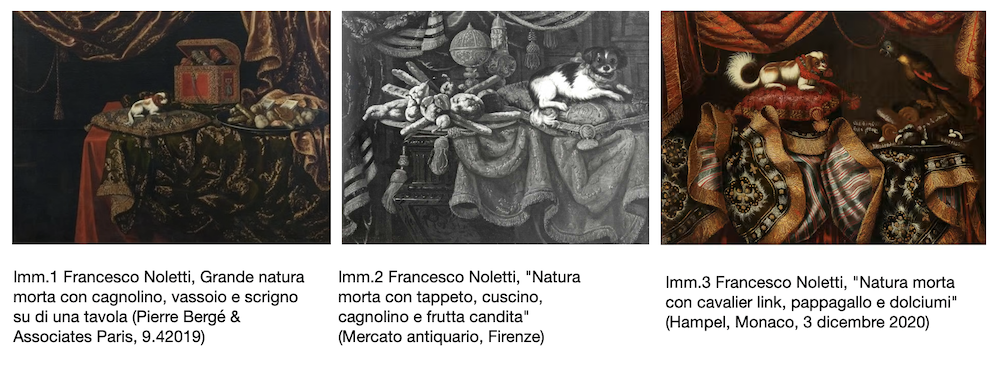
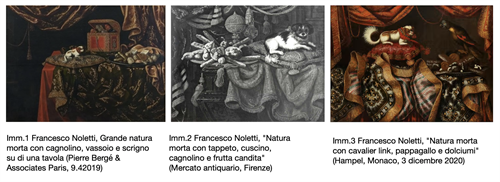
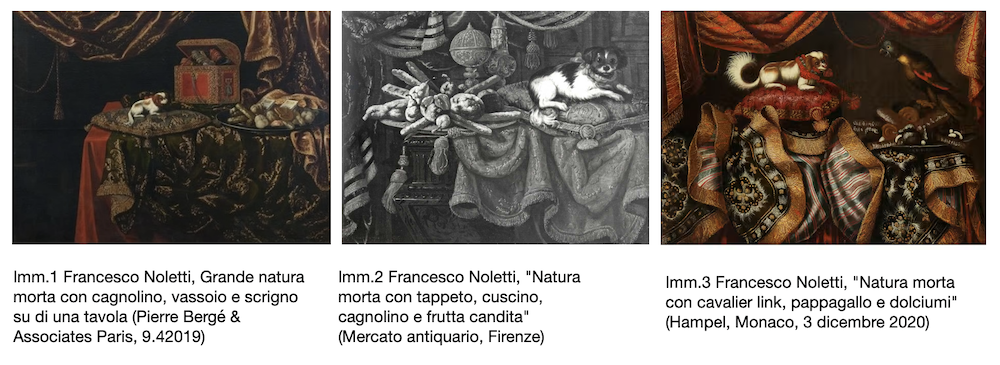
To confirm the attribution proposed here, one need only compare our captivating still life with other similar works by Noletti, including:
fig. 1 – F. Noletti, ‘Large still life with a small dog, a tray and a casket on a table covered with an embroidered rug’ (Pierre Bergé & Associates Paris, 9.42019), https://www.pba-auctions.com/lot/97138/10050993
Fig. 2 – F. Noletti, “Still Life with Rug, Cushion, Little Dog and Candied Fruit” (Antiques Market, Florence) https://catalogo.fondazionezeri.unibo.it/scheda/opera/88075/
Fig. 3 - F. Noletti, “Still Life with Cavalier Link, Parrot and Sweets” (Hampel, Munich, 3 December 2020)
FURTHER INFORMATION:
The painting is sold complete with an attractive gilded frame and comes with a certificate of authenticity and a descriptive iconographic sheet.
We arrange and organise the transport of purchased works, both within Italy and abroad, using professional, insured carriers.
Should you wish to view this or other works in person, we would be delighted to welcome you to our new gallery in Riva del Garda, at Viale Giuseppe Canella 18. We look forward to seeing you!
Please contact us for any further information or to arrange a visit; we’ll be happy to assist you.
Follow us on: