
La Sacra Famiglia con San Giovannino
Tiziano Vecellio (Pieve di Cadore, 1490 - Venezia, 1576) Bottega di
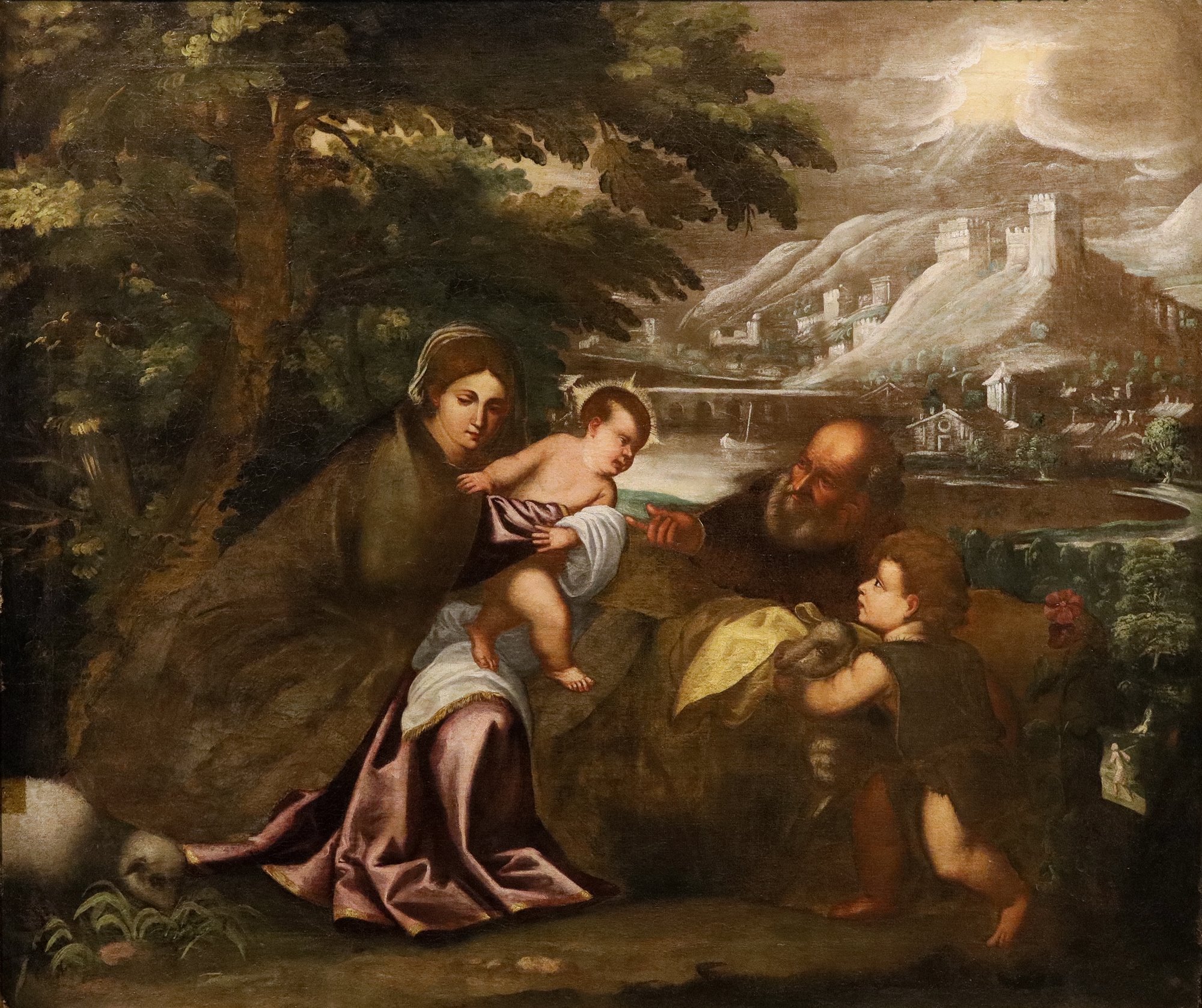
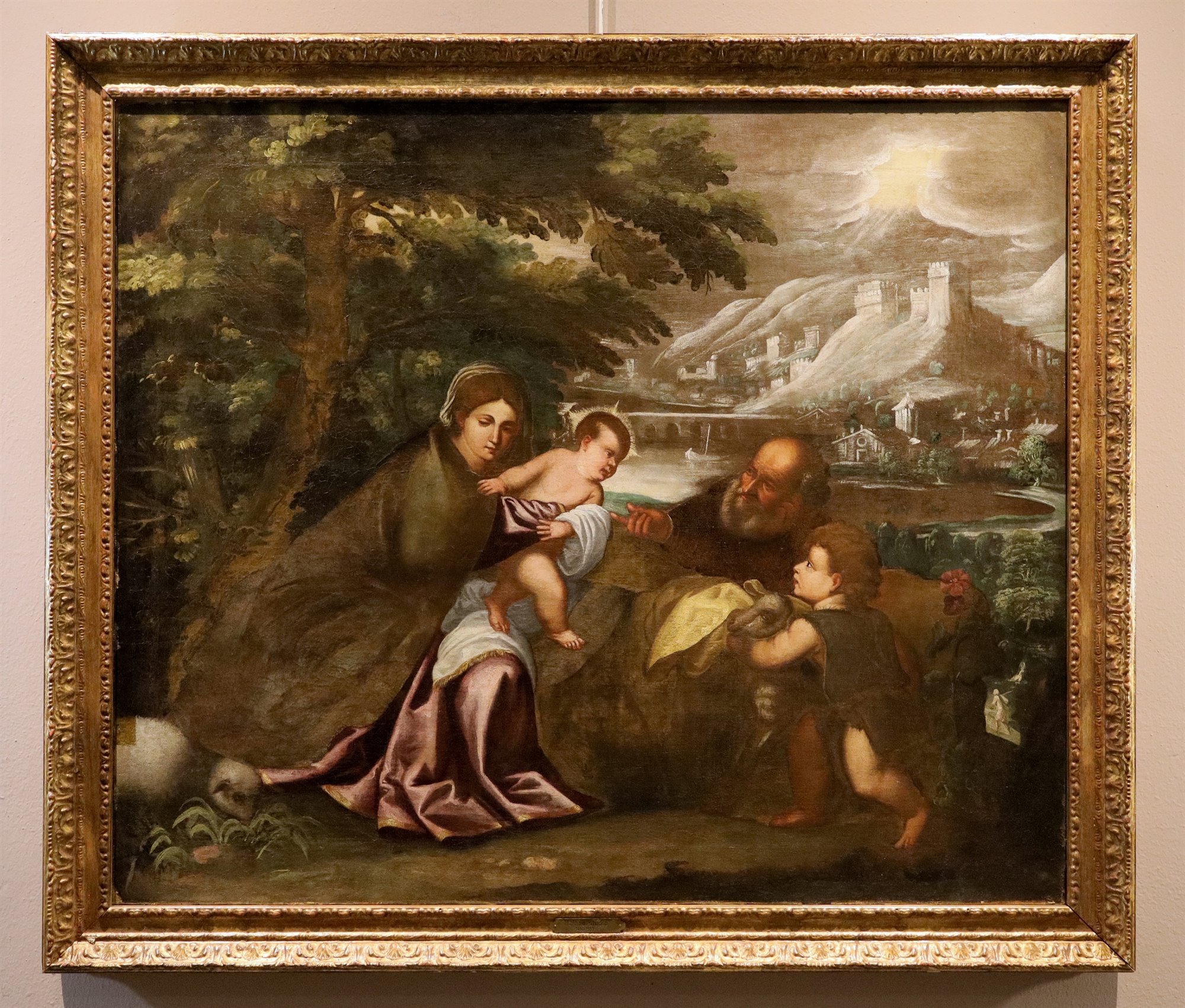
Tiziano Vecellio (Pieve di Cadore, 1490 – Venice, 1576)
Workshop of
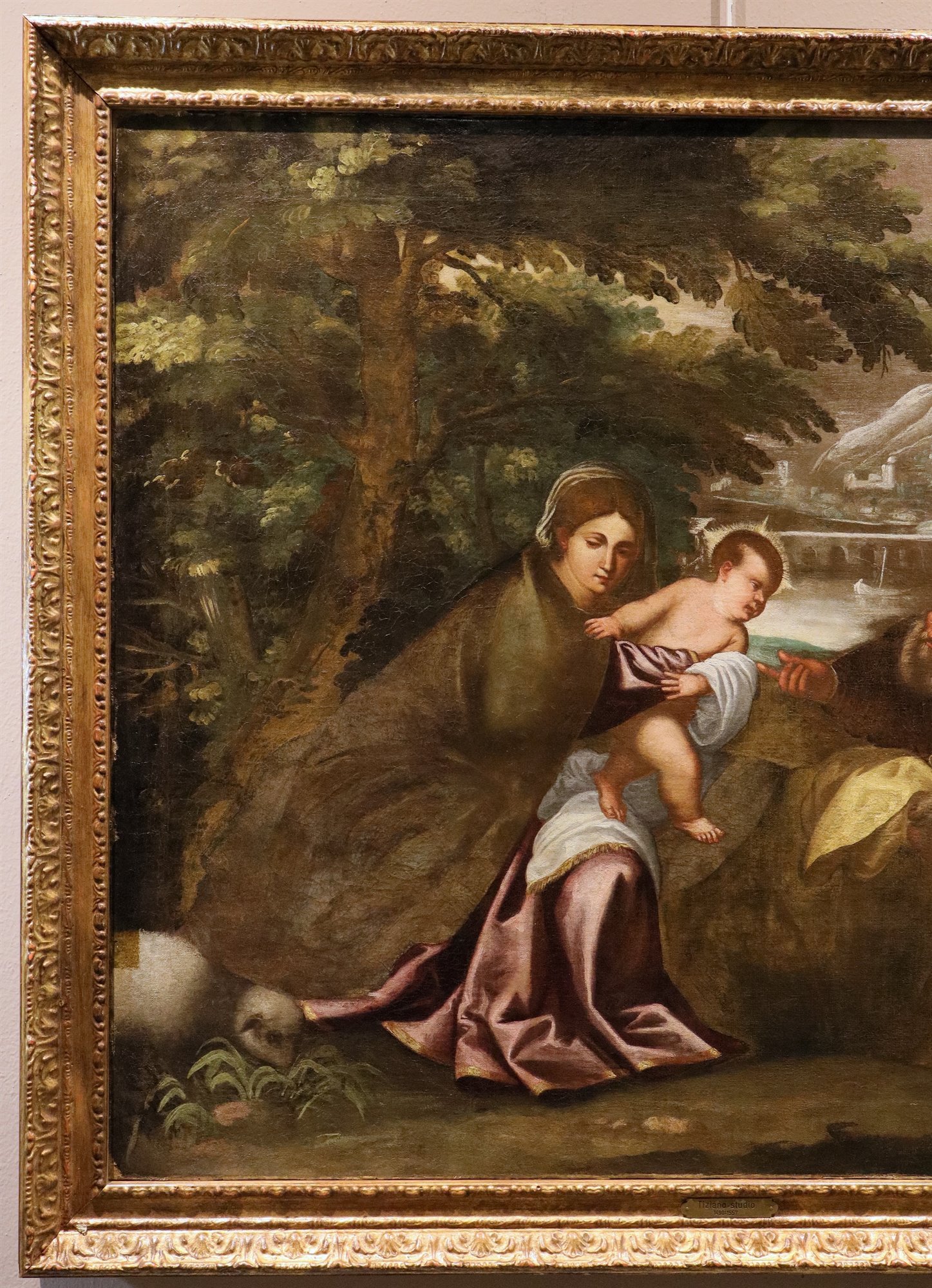
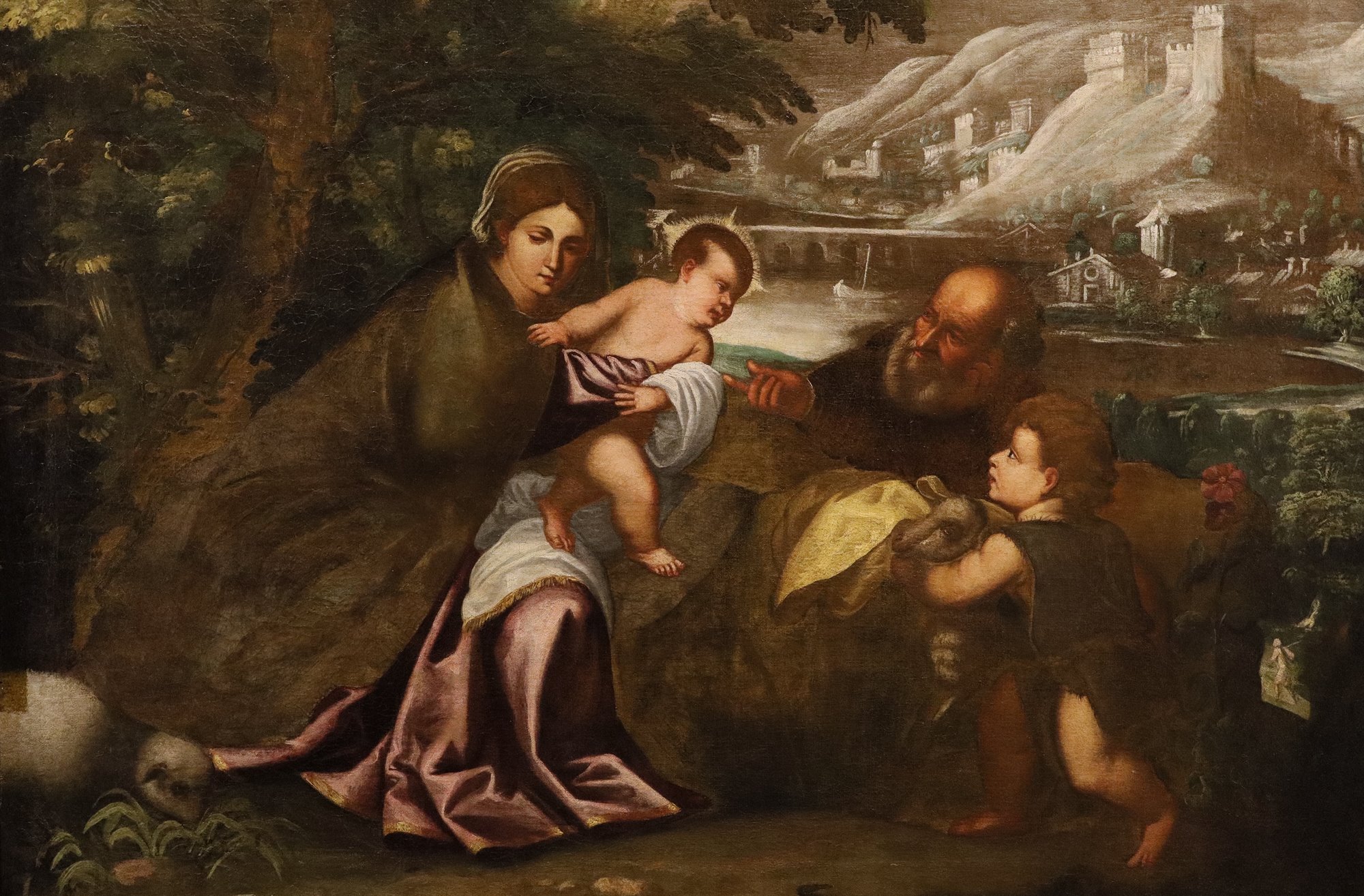
The Holy Family with the Infant Saint John
84 x 98 cm.
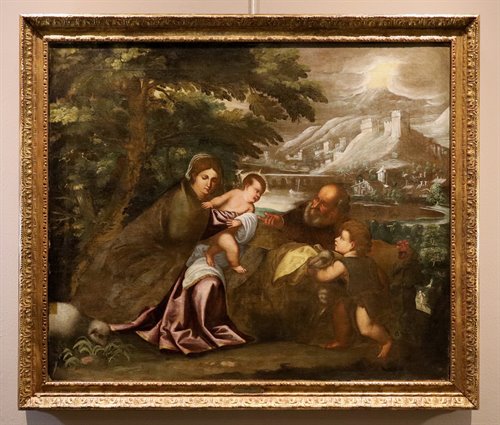
In a gilded frame: 96 x 110 cm.
Reference bibliography:
G. Tagliaferro, B. Aikema, M. Mancini and A.J. Martin, ‘Le Botteghe di Tiziano’, Milan 2009
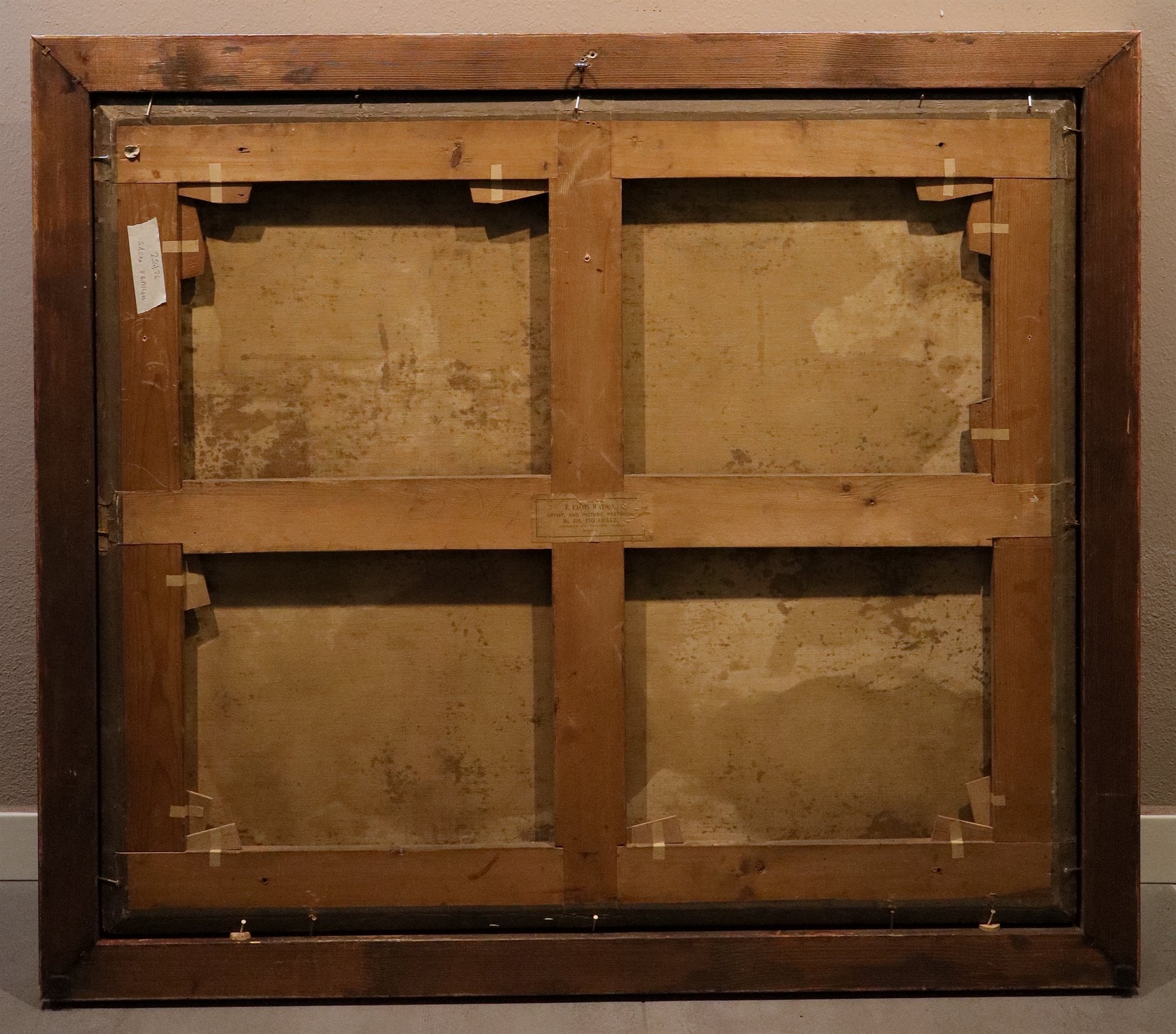
In excellent condition, with minor imperfections around the edges of the canvas
ARTWORK DESCRIPTION:
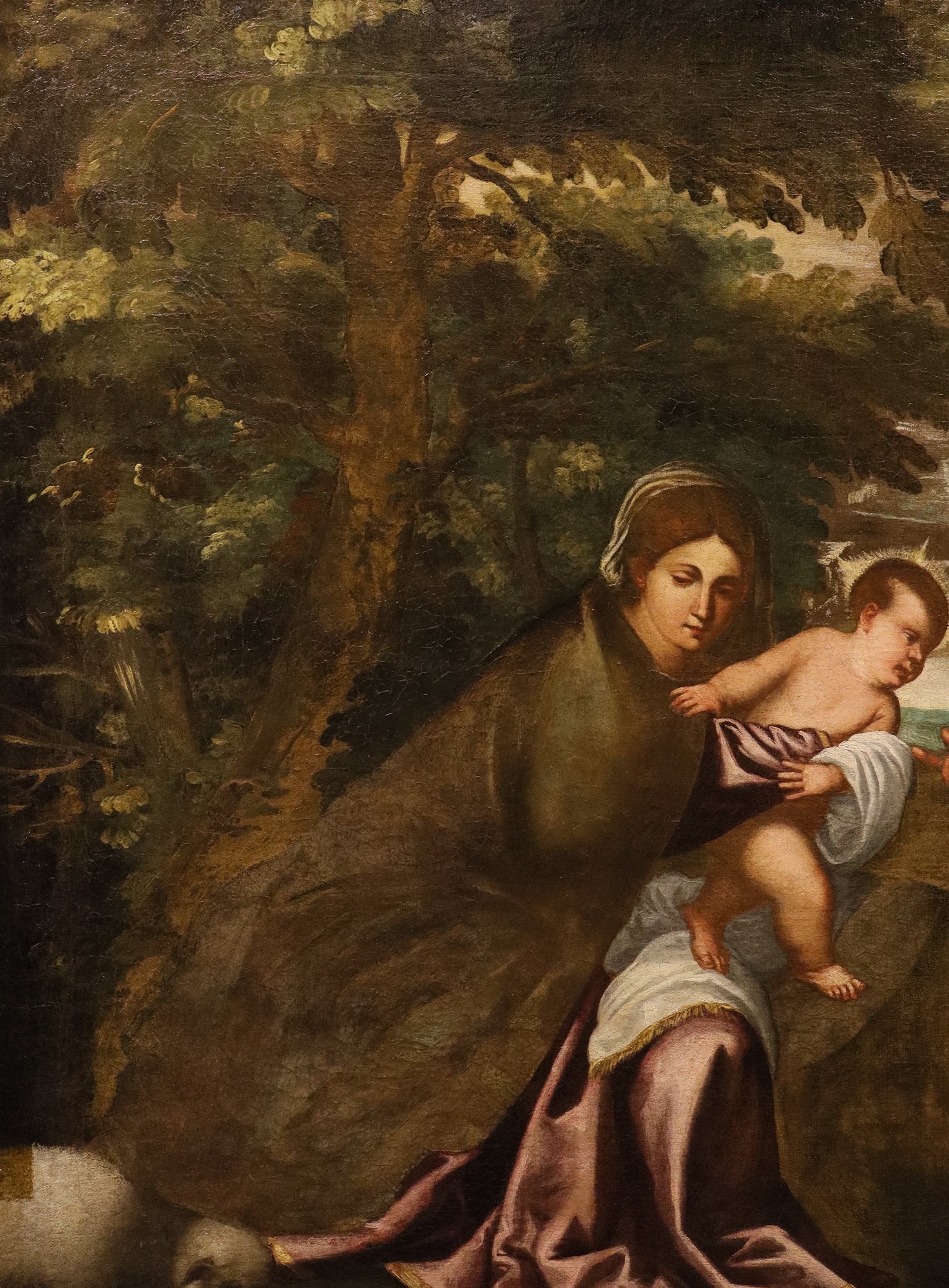
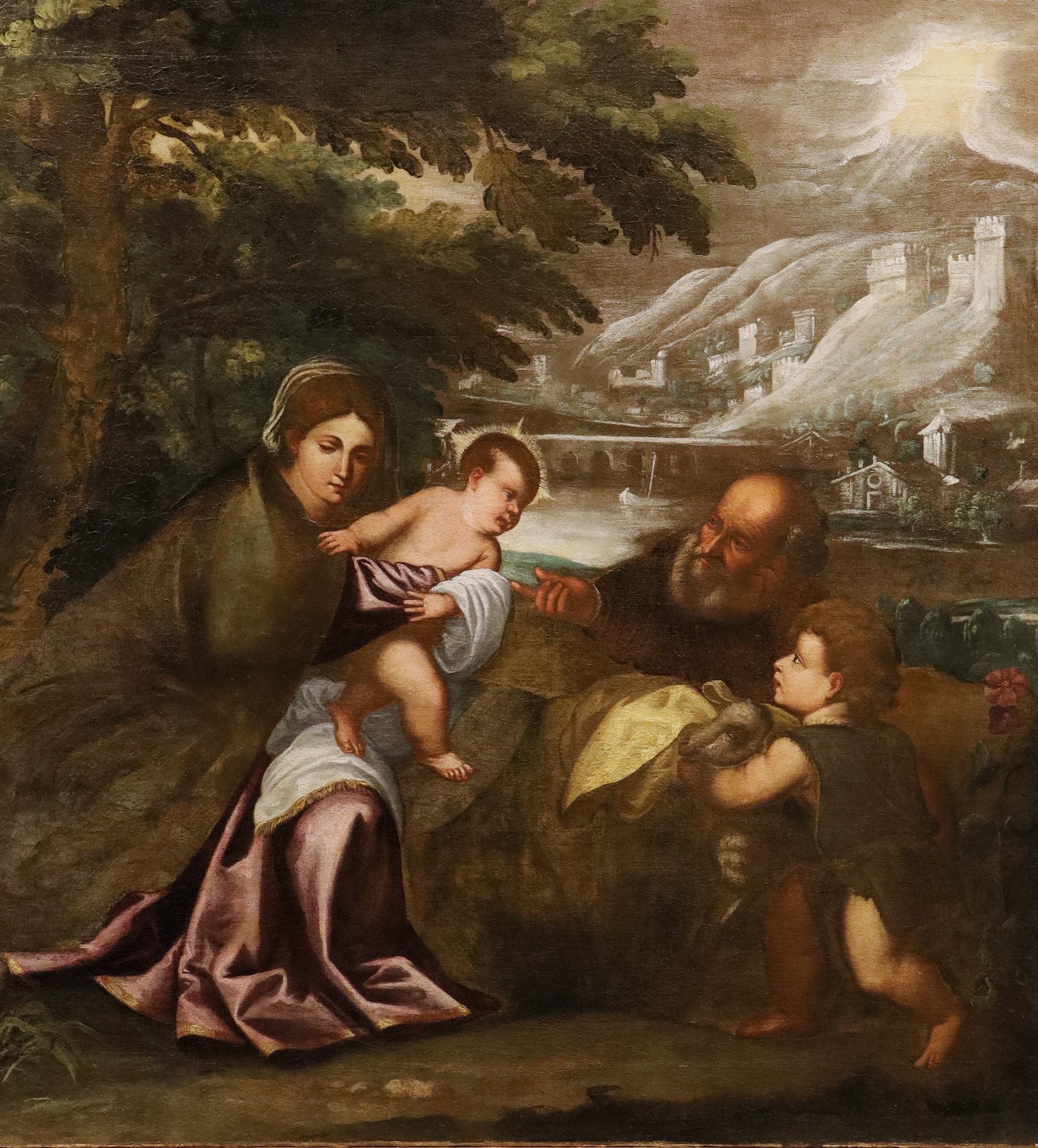
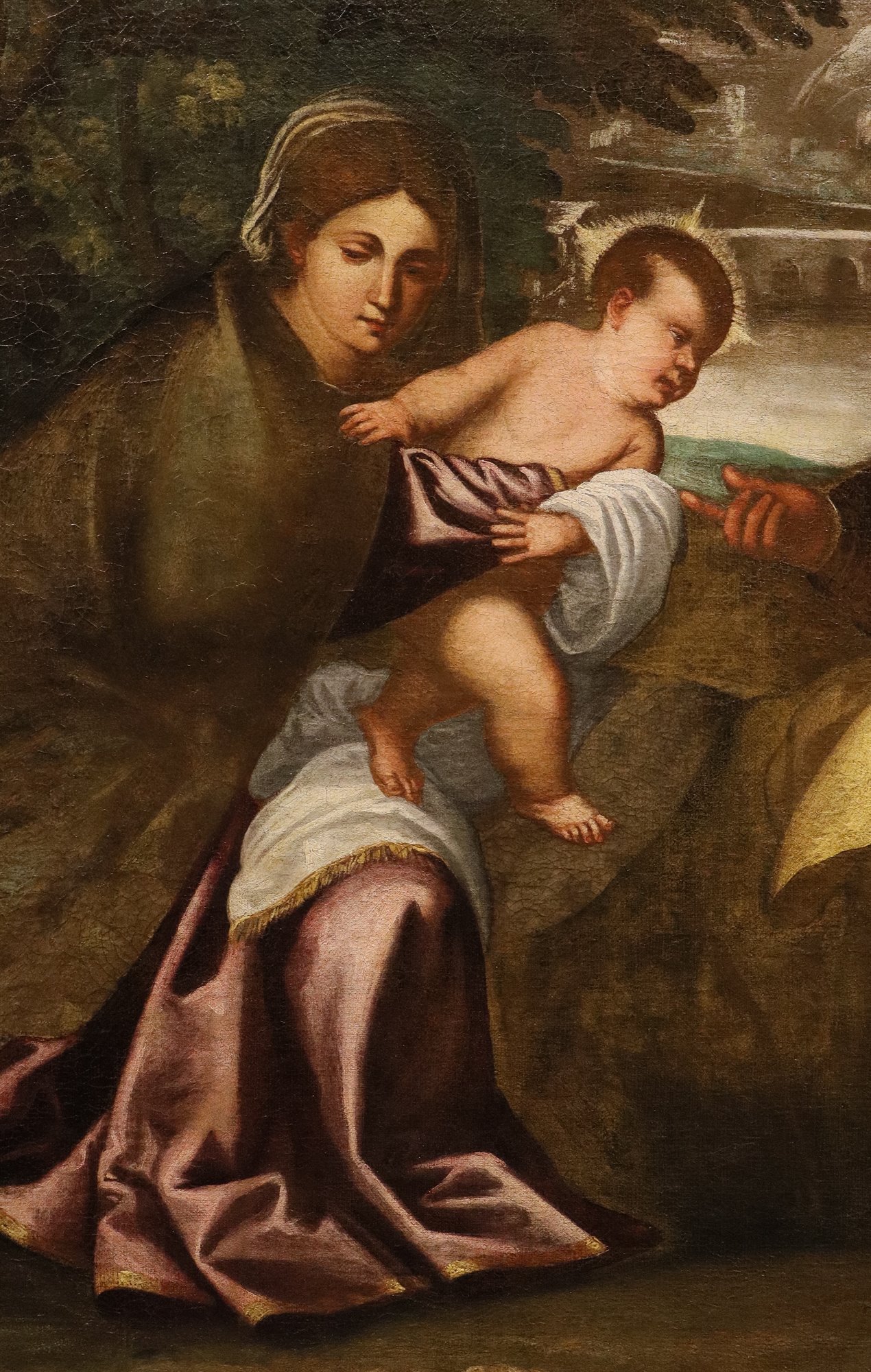
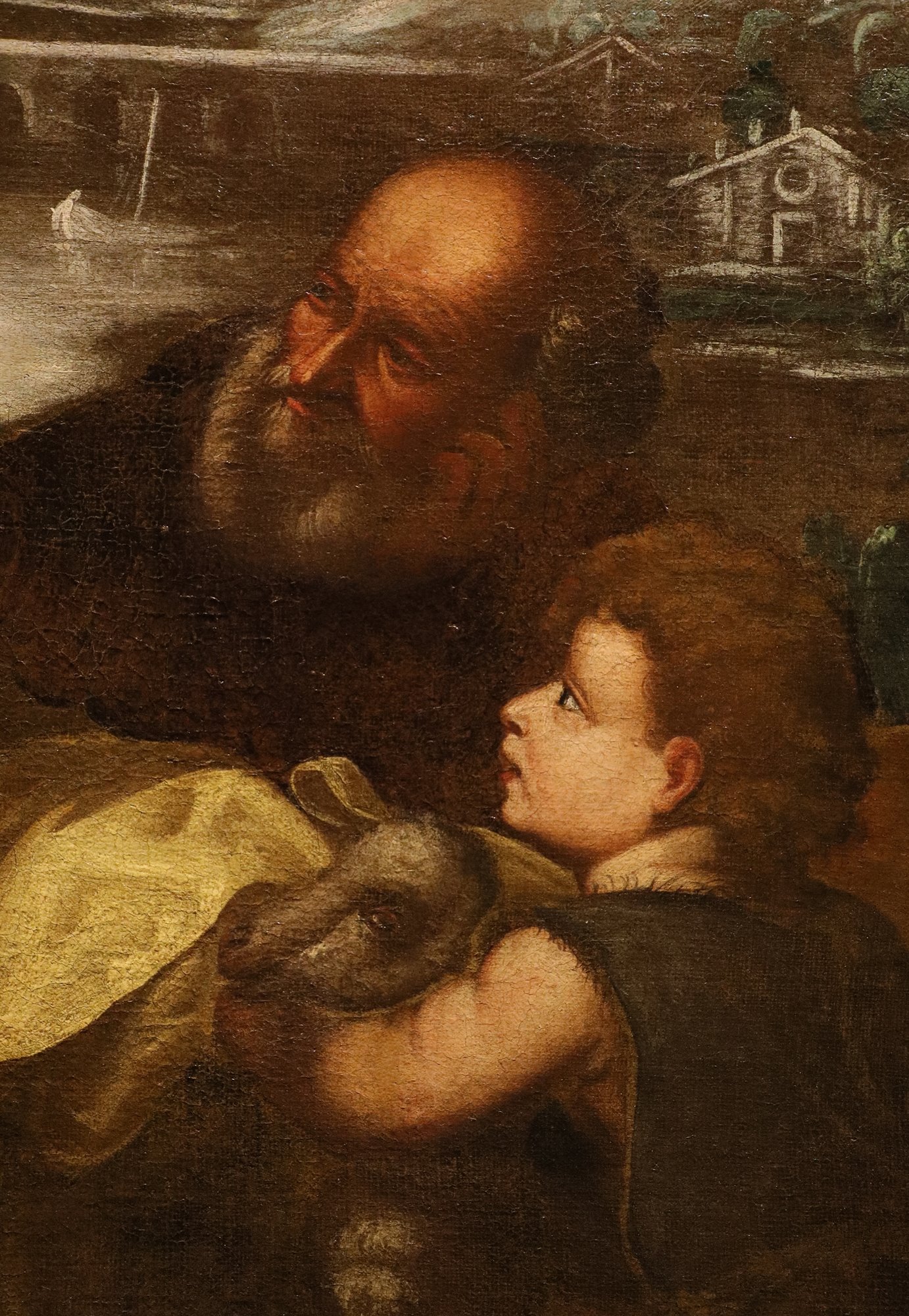
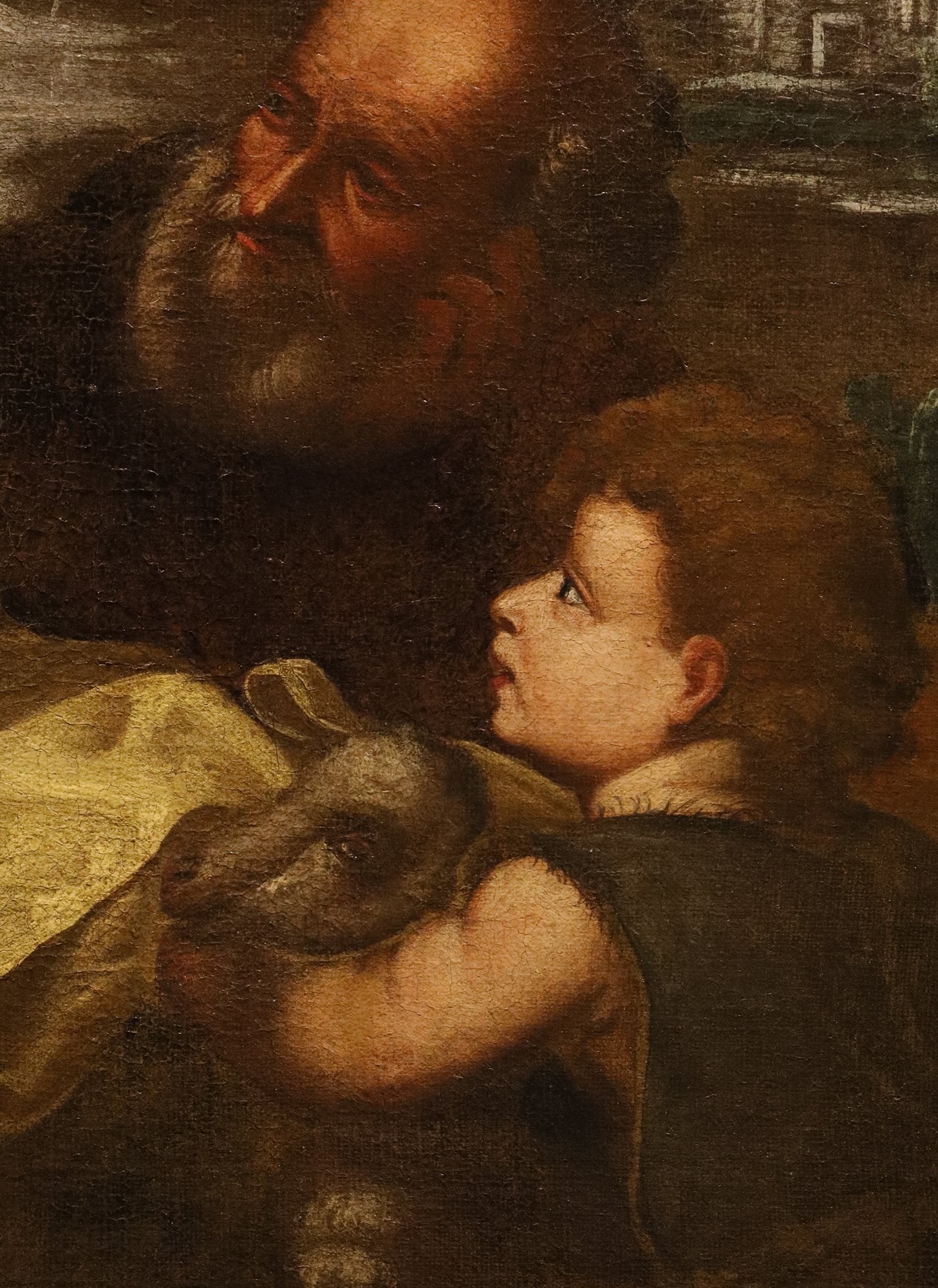
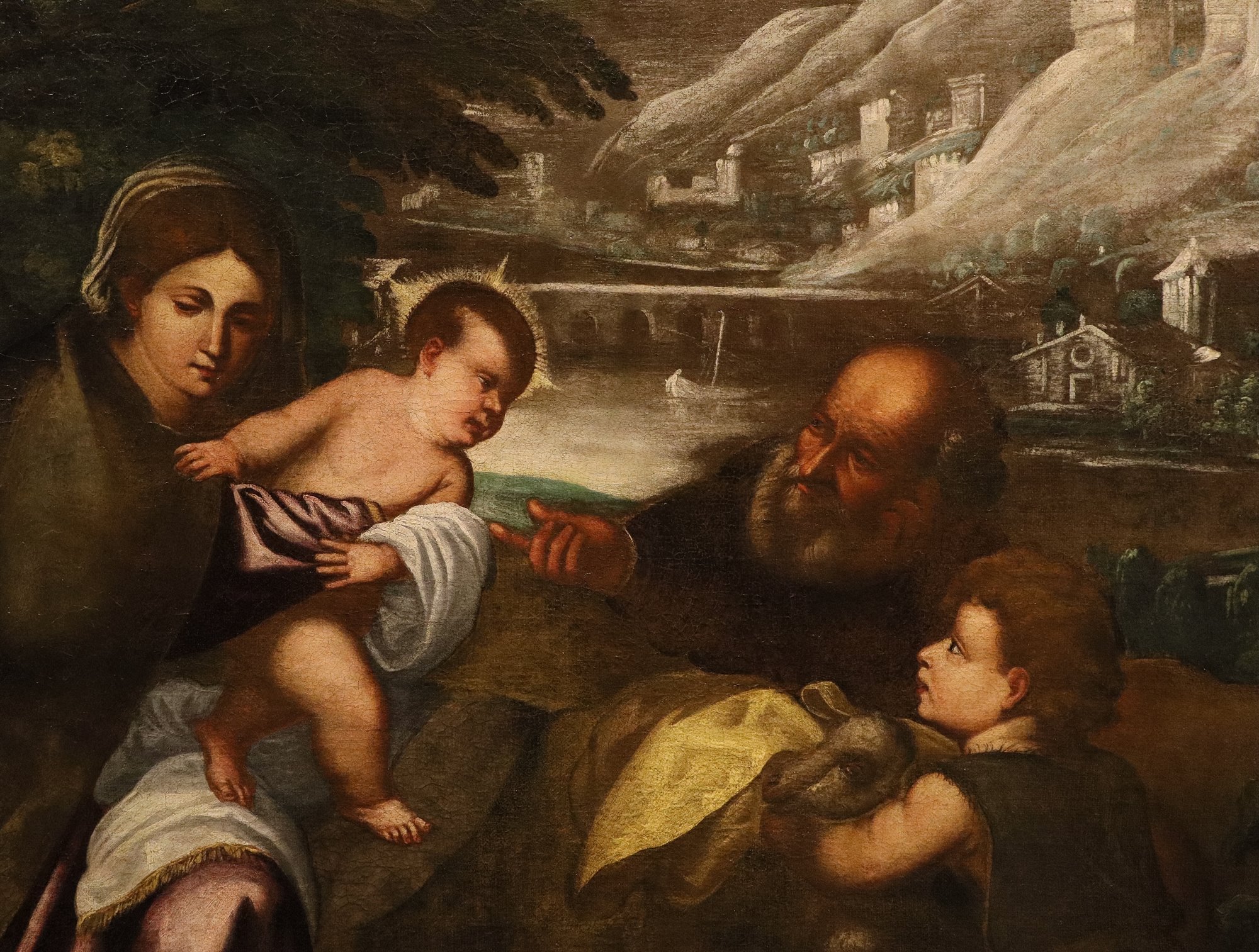
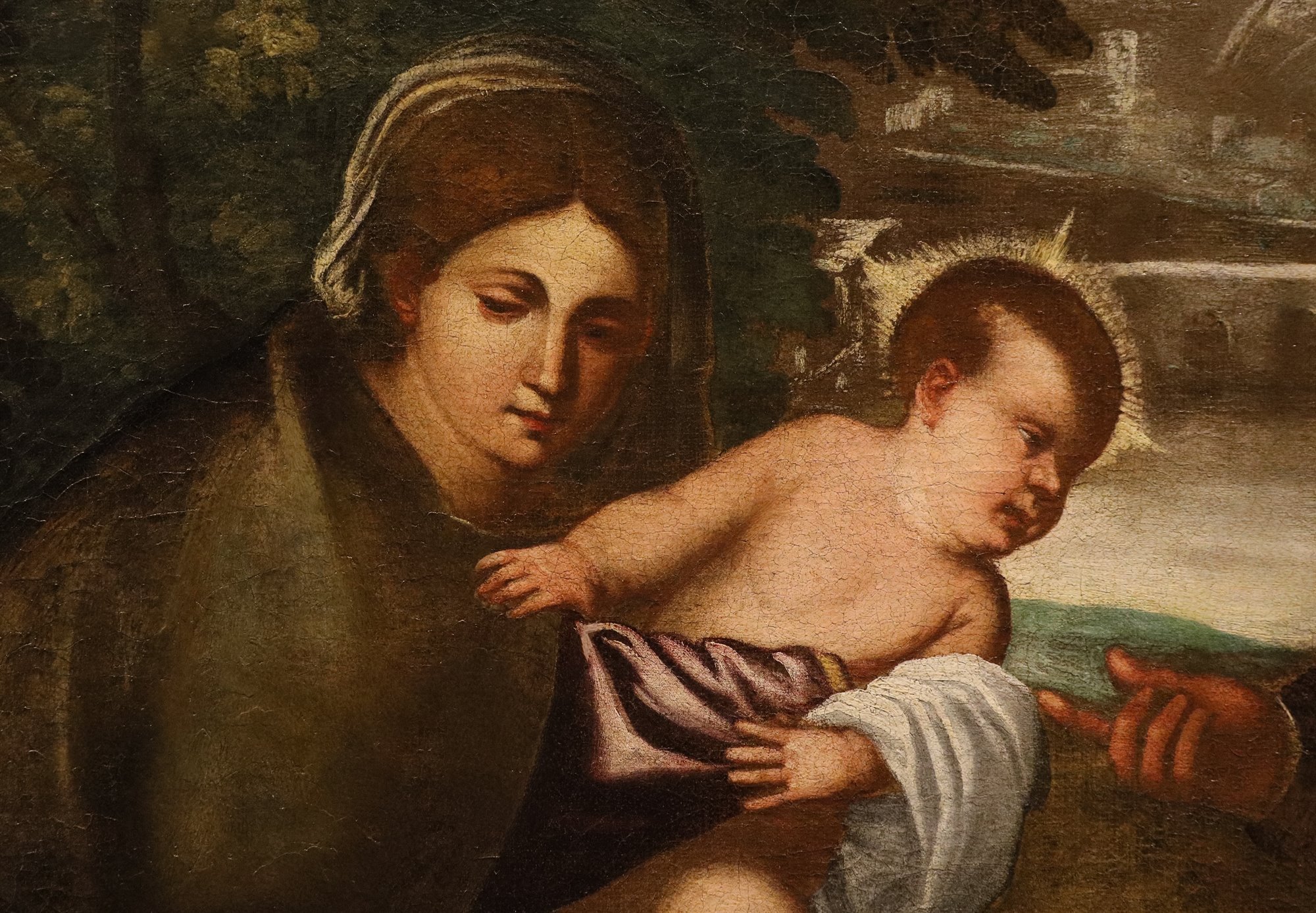
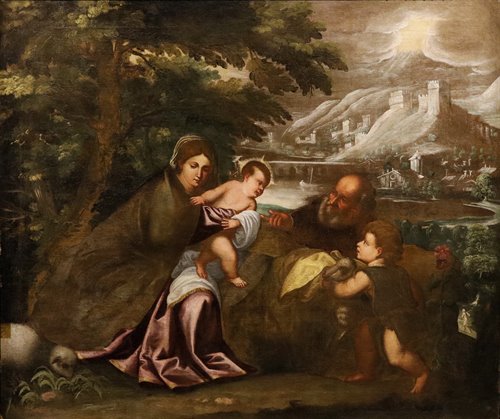
This splendid painting, which forms part of the great tradition of Venetian Renaissance painting, depicts the Holy Family with the Young Saint John captured in a moment of profound intimacy and spirituality.
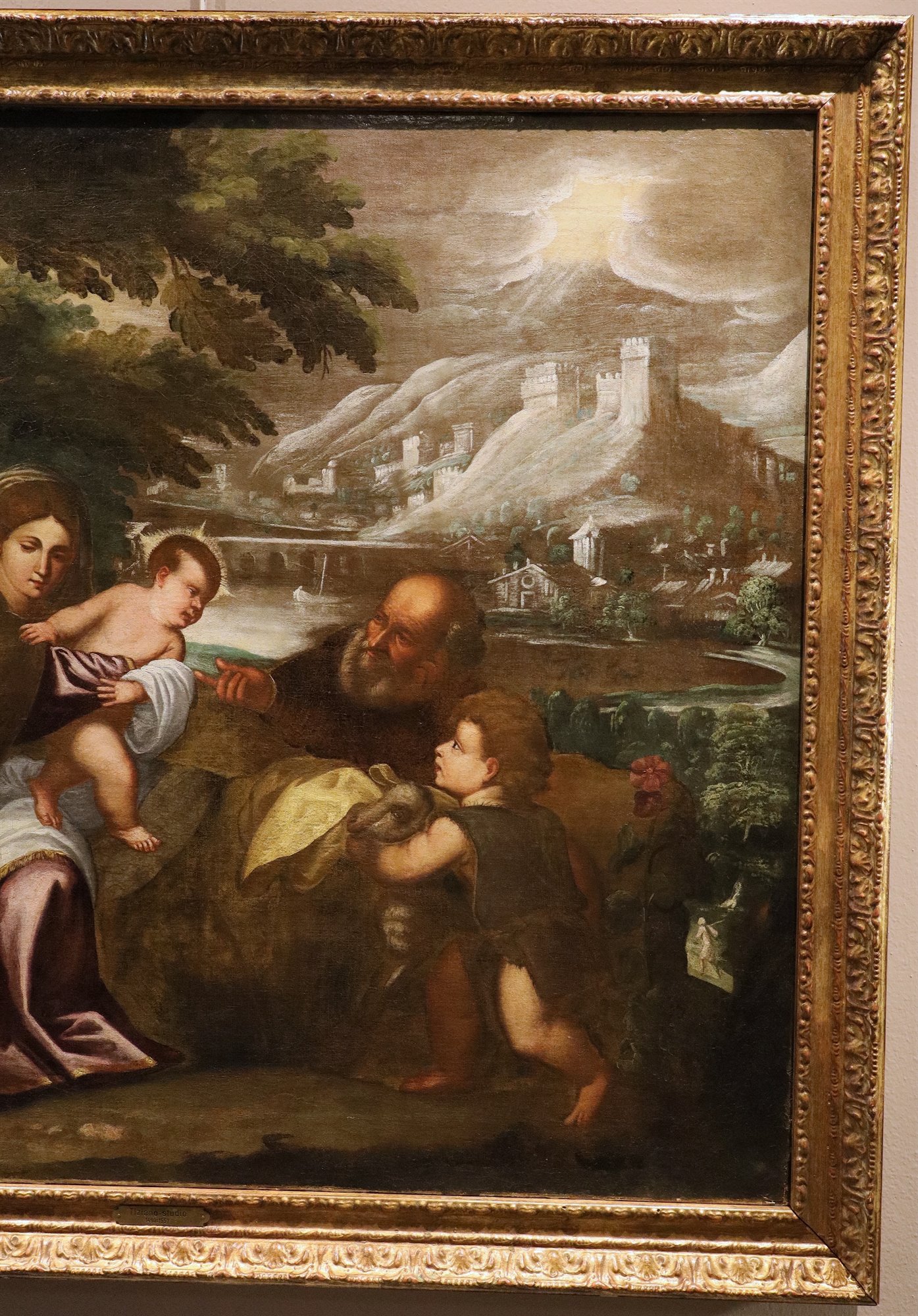
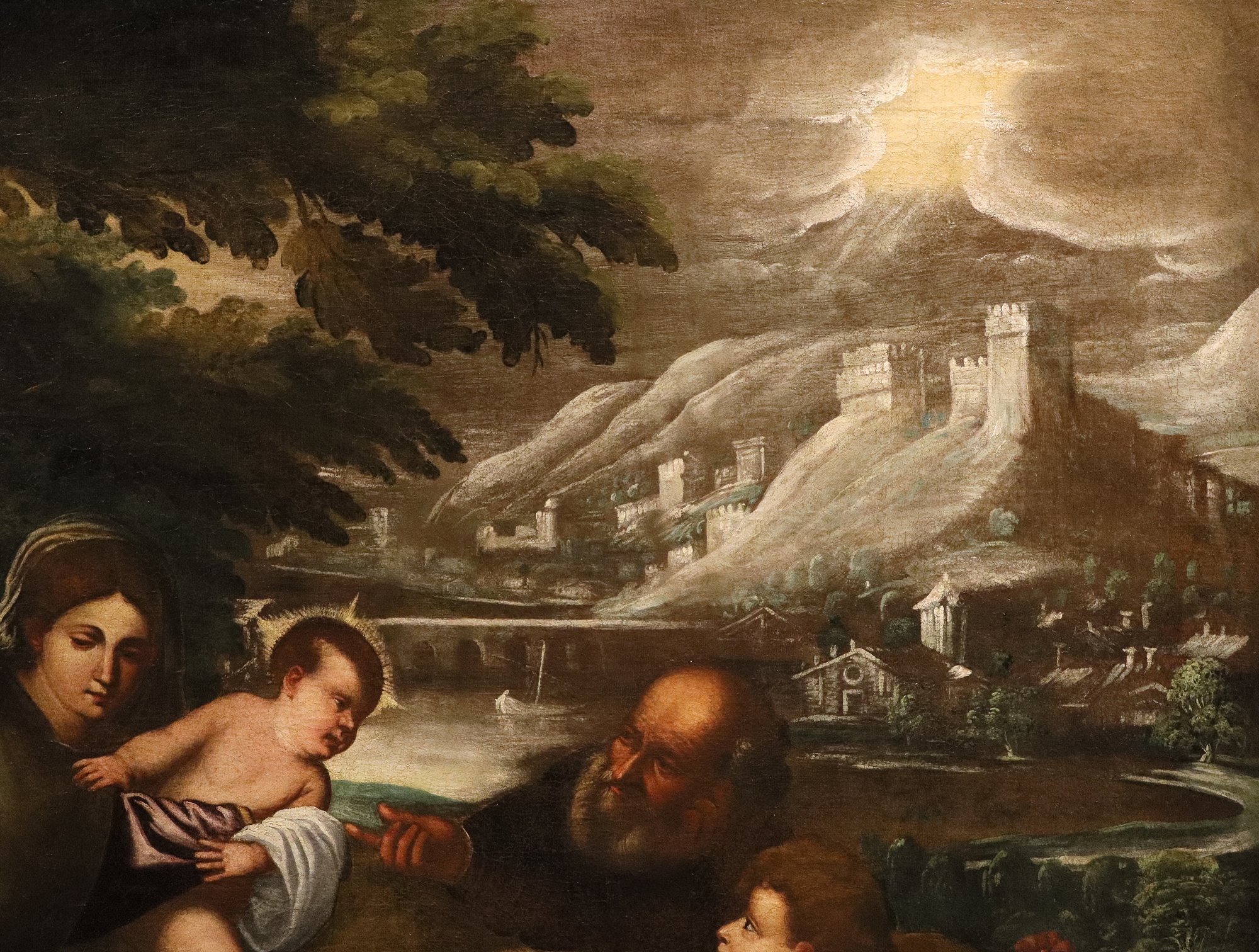
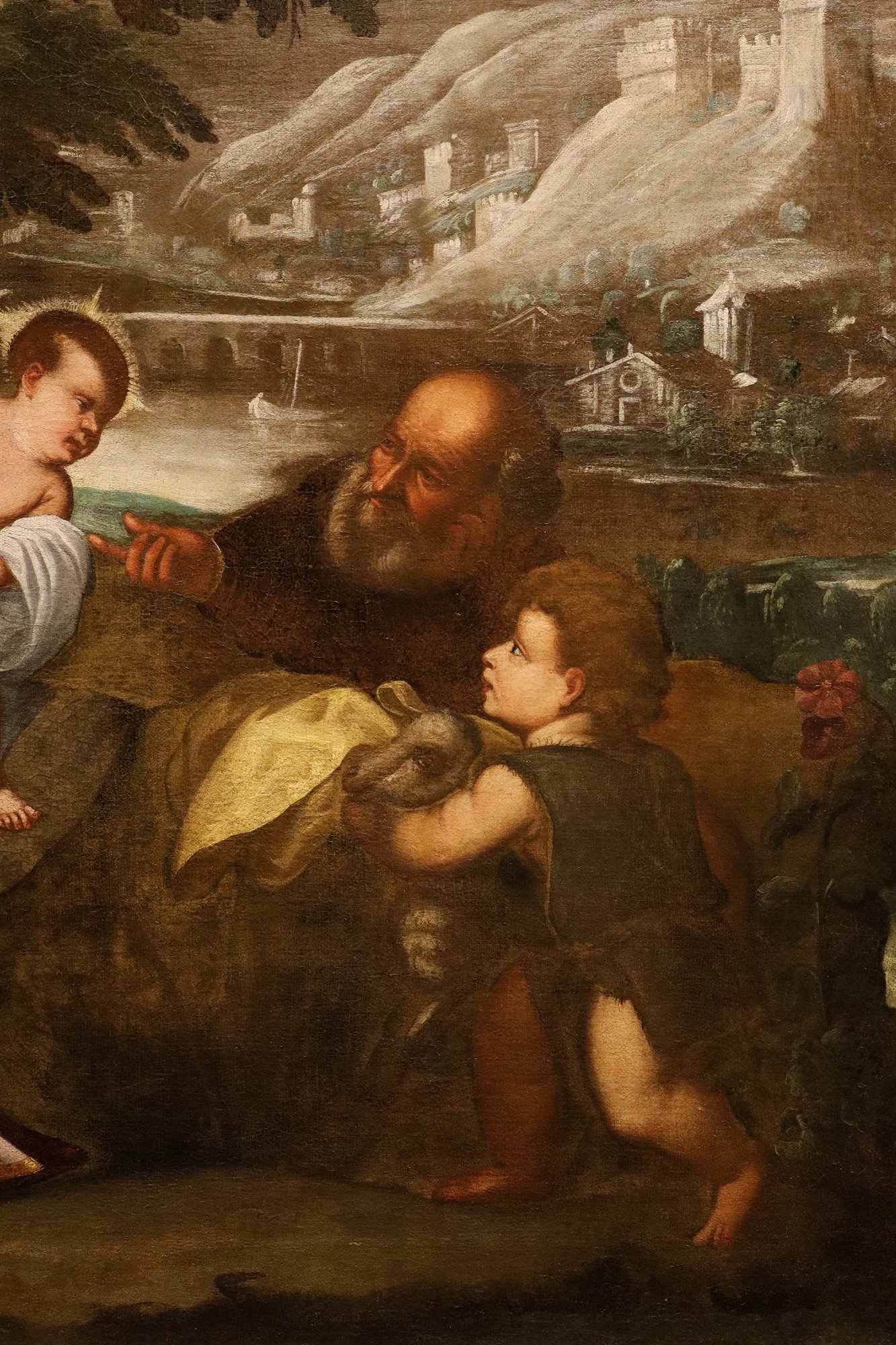
The work captivates with its pastoral, twilight atmosphere, where the sacredness of the event blends harmoniously with the surrounding nature, in an evocative landscape vibrant with light, in a typically Venetian style, dominated on the right by a fortified village and a castle perched on a hilltop.
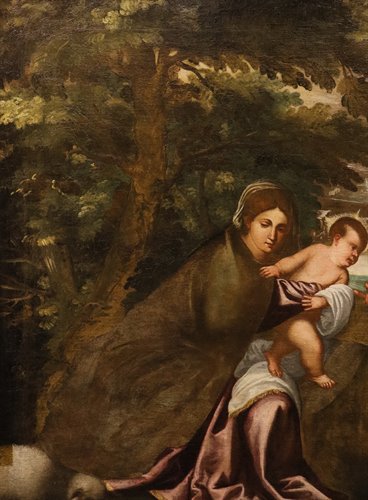
The arrangement of the figures is both beautiful and deeply symbolic; they appear to move along a gentle diagonal line that guides the viewer’s gaze from left to right – specifically from the shadowed area in which the Virgin is immersed, alluding to humanity before the coming of the Messiah, towards the light towards which Jesus reaches out, alluding instead to the illumination that marks God’s definitive victory over evil.
The divine light is so intense that it pierces the dense clouds, illuminating the scene and creating a dynamic chiaroscuro contrast with the twilight of the woodland on the left.
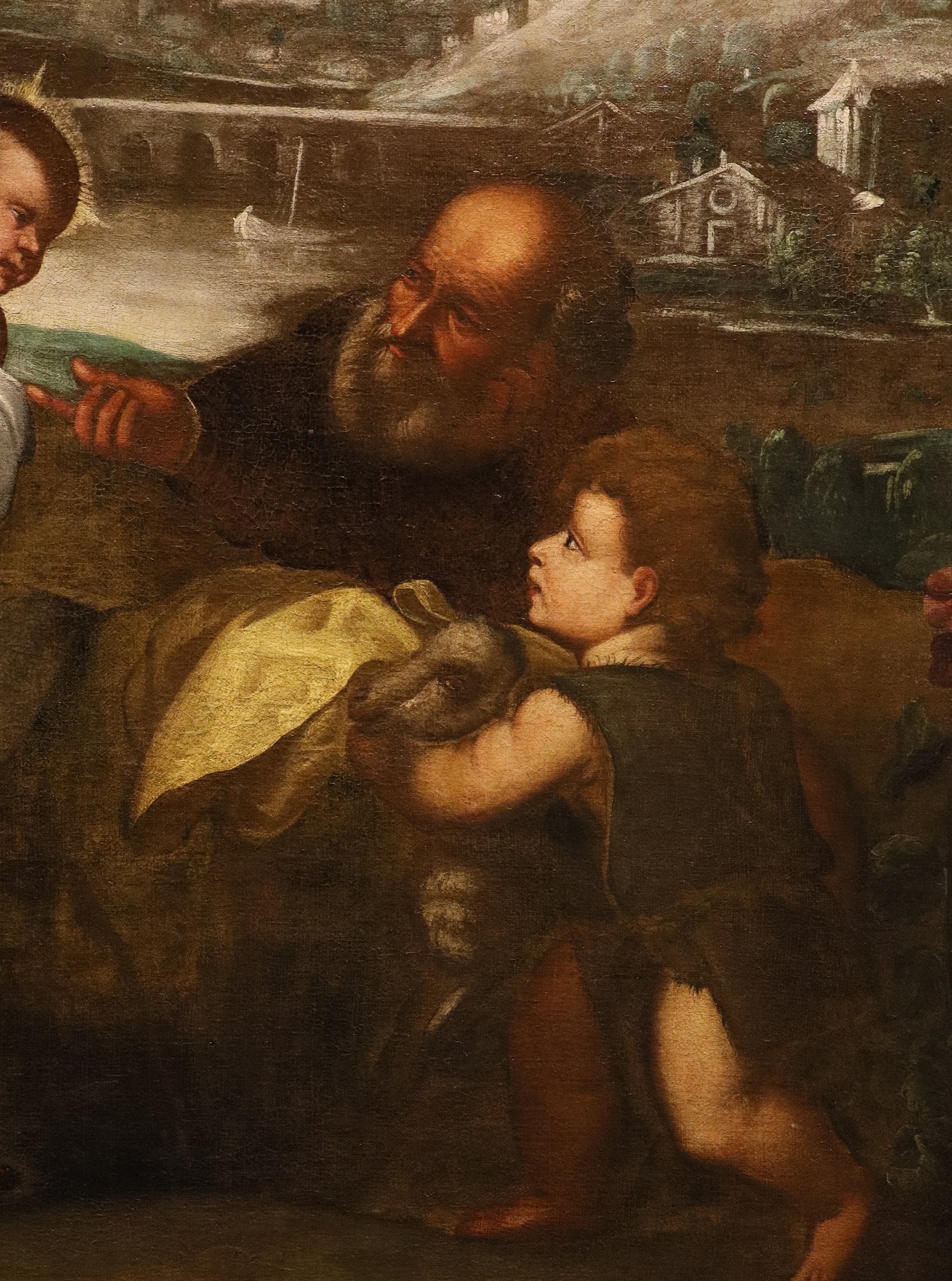
The infant Jesus, held by his mother, represents the true focal point of the composition and creates a strong visual and gestural connection with the other figures: Saint Joseph, who observes him with wise and serene contemplation, and the young John the Baptist, who approaches him, offering him a lamb, a symbol of his future sacrifice.
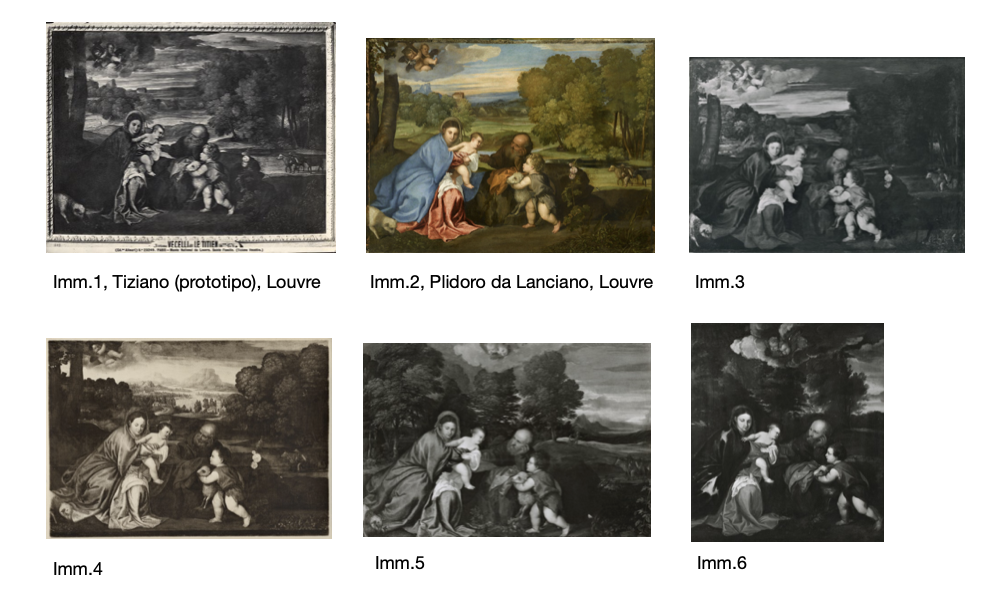
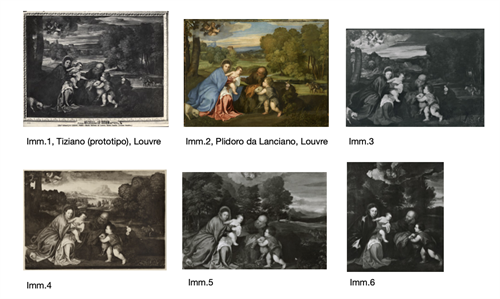
The painting draws, with some variations, on a famous prototype by Titian housed at the Musée du Louvre in Paris (Fig. 1 – Source: Federico Zeri Foundation Online Archive, https://catalogo.fondazionezeri.unibo.it/scheda/fotografia/135325/).
Our work fits easily into the series of replicas produced by Titian’s workshop, and the artist should therefore be sought amongst the pupils or collaborators within the master’s inner circle (the so-called School of Titian).
It should be borne in mind that it was customary for the artist’s workshop to produce similar works based on the same studies, introducing minor or major variations according to the requests of individual patrons: the methodical repetition of prototypes followed very precise criteria, and once the initial prototype (the ‘creative spark’) had been created, it was established practice to reuse the same compositional concept.
Specifically, in the case of this composition—which enjoyed considerable success even at the time—we can find numerous examples of it, replicated and reworked with the utmost skill by his school.
It therefore remains philologically difficult to attribute the work to a specific artist, even within the prolific Titian workshop, which continued into the 17th century thanks to his nephew Marco Vecellio (Venice, c. 1570 – c. 1650). For more than half a century, a host of painters, varying in origin, ability and training, gravitated around Titian. The workshop included painters such as Francesco and Orazio Vecellio, Paris Bordon, Girolamo Dente, Polidoro da Lanciano, Jan van Calcar, Valerio Zuccate, Emanuel Amberge and many others. In addition to the names just mentioned, who were considered his most loyal followers, many other assistants, pupils and occasional collaborators came and went for short periods. Among the many foreigners were the Dutchmen von Calcar and Sustris, the Bavarians Hans Mielich and Christoph Schwarz, and El Greco himself.
The Louvre Museum itself holds a second version of this prototype, which is identical to the one just mentioned in terms of the tenderness of the emotions; for centuries it was attributed to Titian himself, but was later reattributed to Polidoro da Lanciano, one of his most faithful pupils (Fig. 2 – Louvre Museum, https://collections.louvre.fr/ark:/53355/cl010060755 )
Furthermore, the Zeri Photo Library’s online catalogue contains eight versions, most of which are attributed to anonymous Venetian artists active between the 16th and 17th centuries, whilst others are attributed to artists from the workshop; among these, we may mention, by way of example:
Fig. 3 – The Holy Family with the Infant Saint John, 16th-century Venetian Anonymous (possibly Francesco Vecellio)
Fig. 4 – The Holy Family with the Infant Saint John, 16th-century Venetian Anonymous, Galleria Estense
Fig. 5 – Holy Family with the Infant St John, 16th-century Venetian artist (possibly Tiziano Vecellio), Frederick Mont & Newhouse Galleries, New York
Image 5 – Holy Family with the Infant Saint John, 16th-century Venetian Artist, O. Klein, New York
ADDITIONAL INFORMATION:
The painting is set in a lovely gilded frame and comes with a certificate of authenticity and a descriptive iconographic sheet.
We arrange and organise the transport of your purchased artwork, both within Italy and abroad, using professional and insured carriers.
Should you wish to view this or other works in person, we would be delighted to welcome you to our new gallery in Riva del Garda, at Viale Giuseppe Canella 18. We look forward to seeing you!
Please contact us for any enquiries or to arrange a visit; we’ll be happy to assist you.
Follow us on: