
L'Angelo custode
Alonso Cano (Granada, 1601 – Granada, 1667)
Alonso Cano
(Granada, 1601 – Granada, 1667)
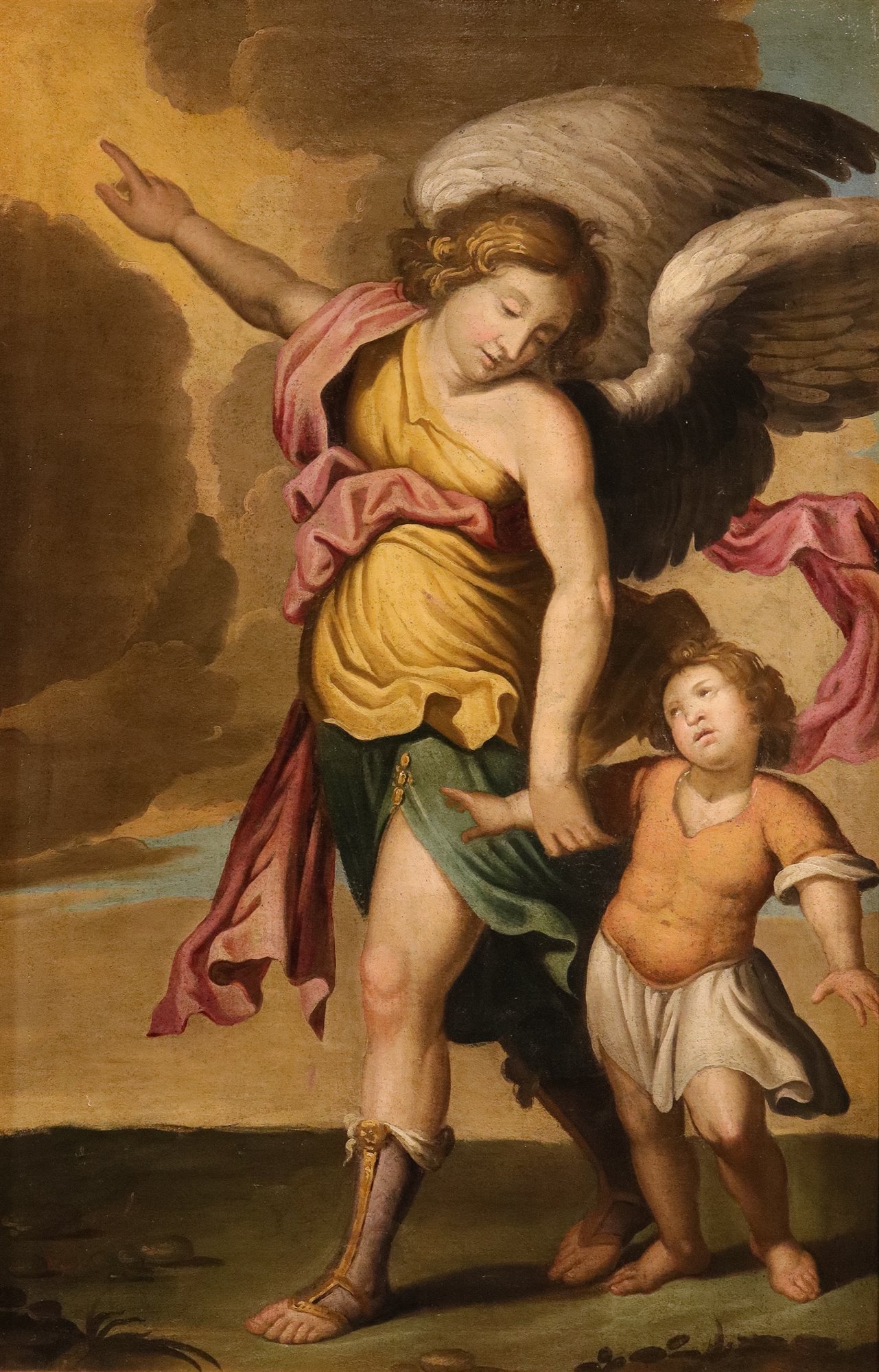
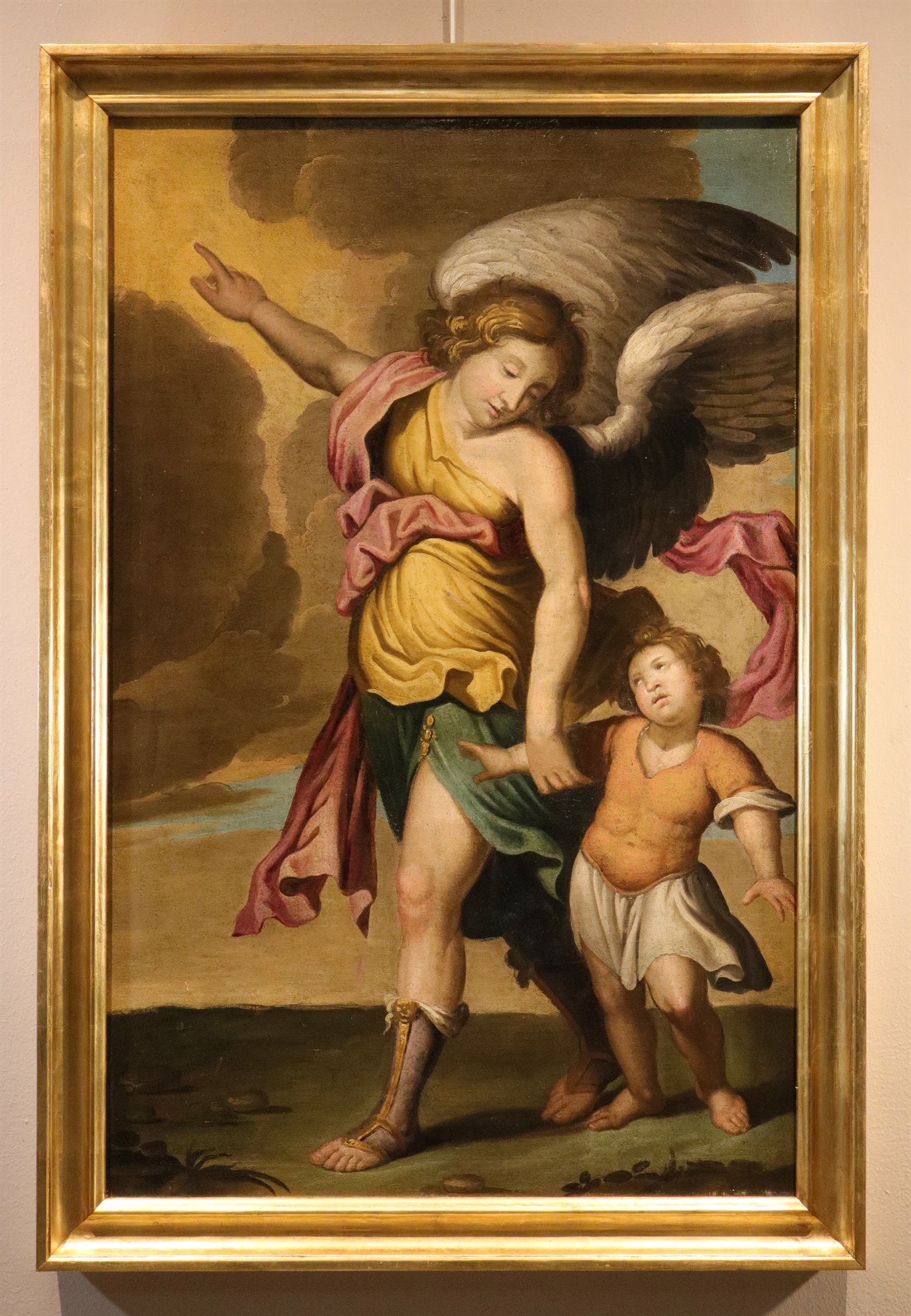
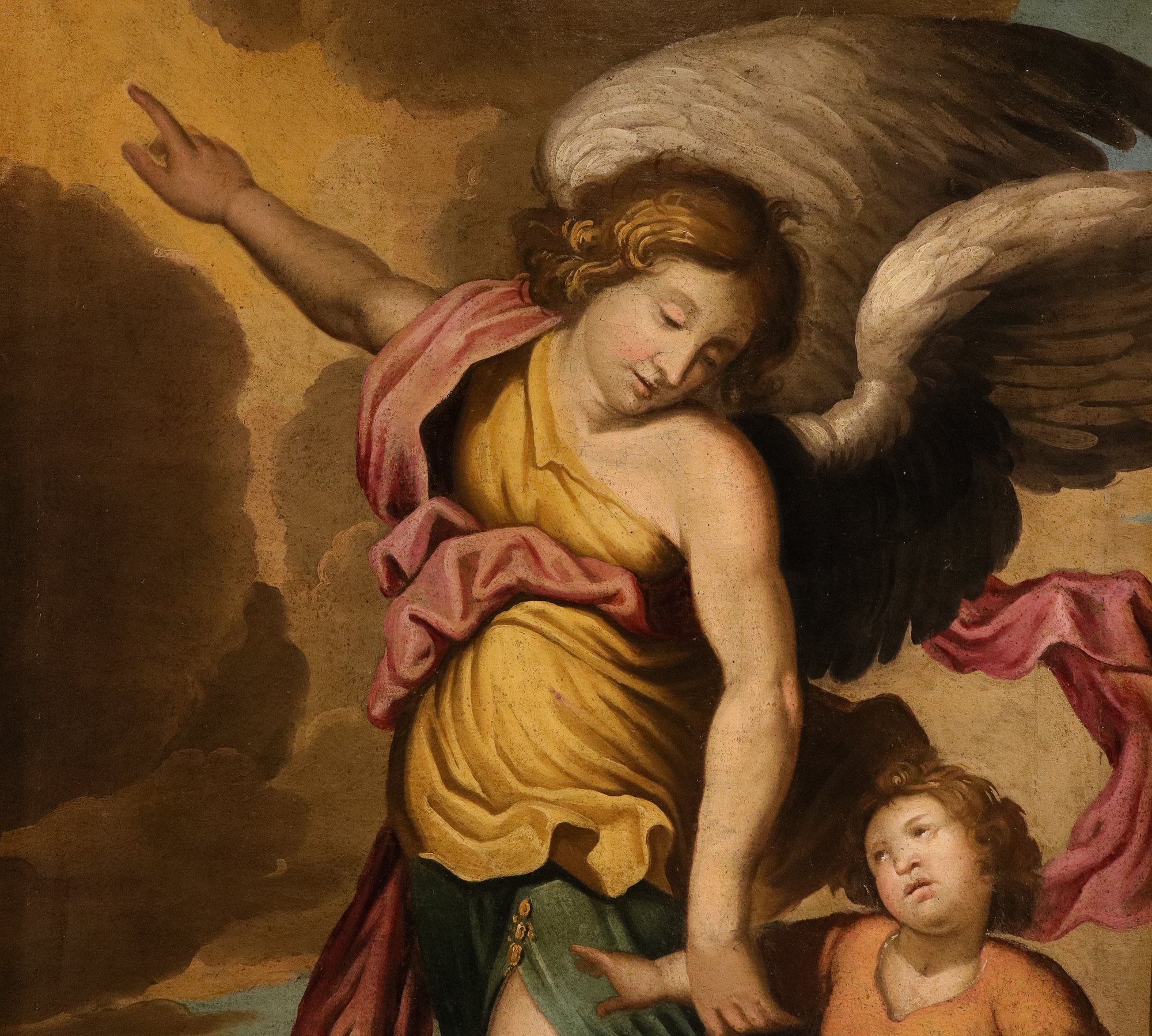
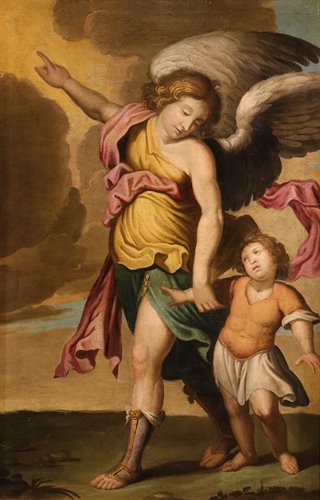
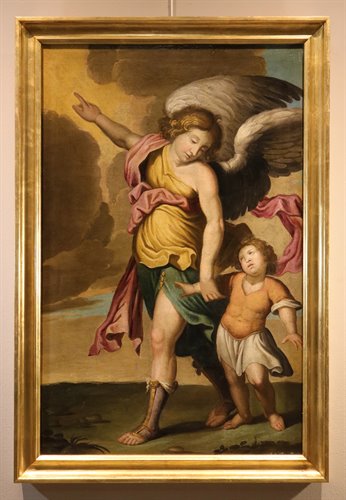
The Guardian Angel
(The Archangel Raphael Showing the Way to Tobias)
Oil on canvas
114 x 73 cm. - Framed 127 x 86 cm.
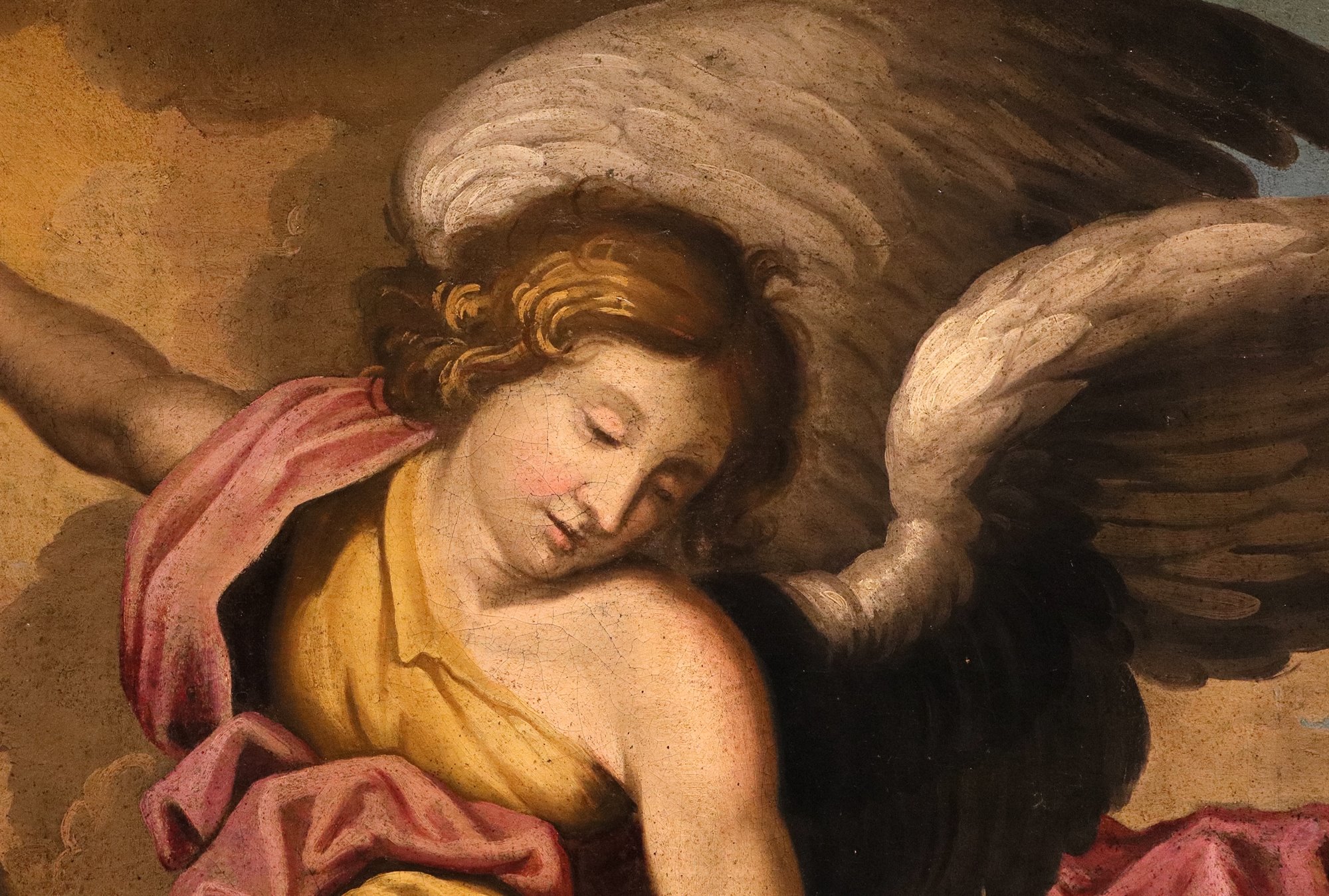
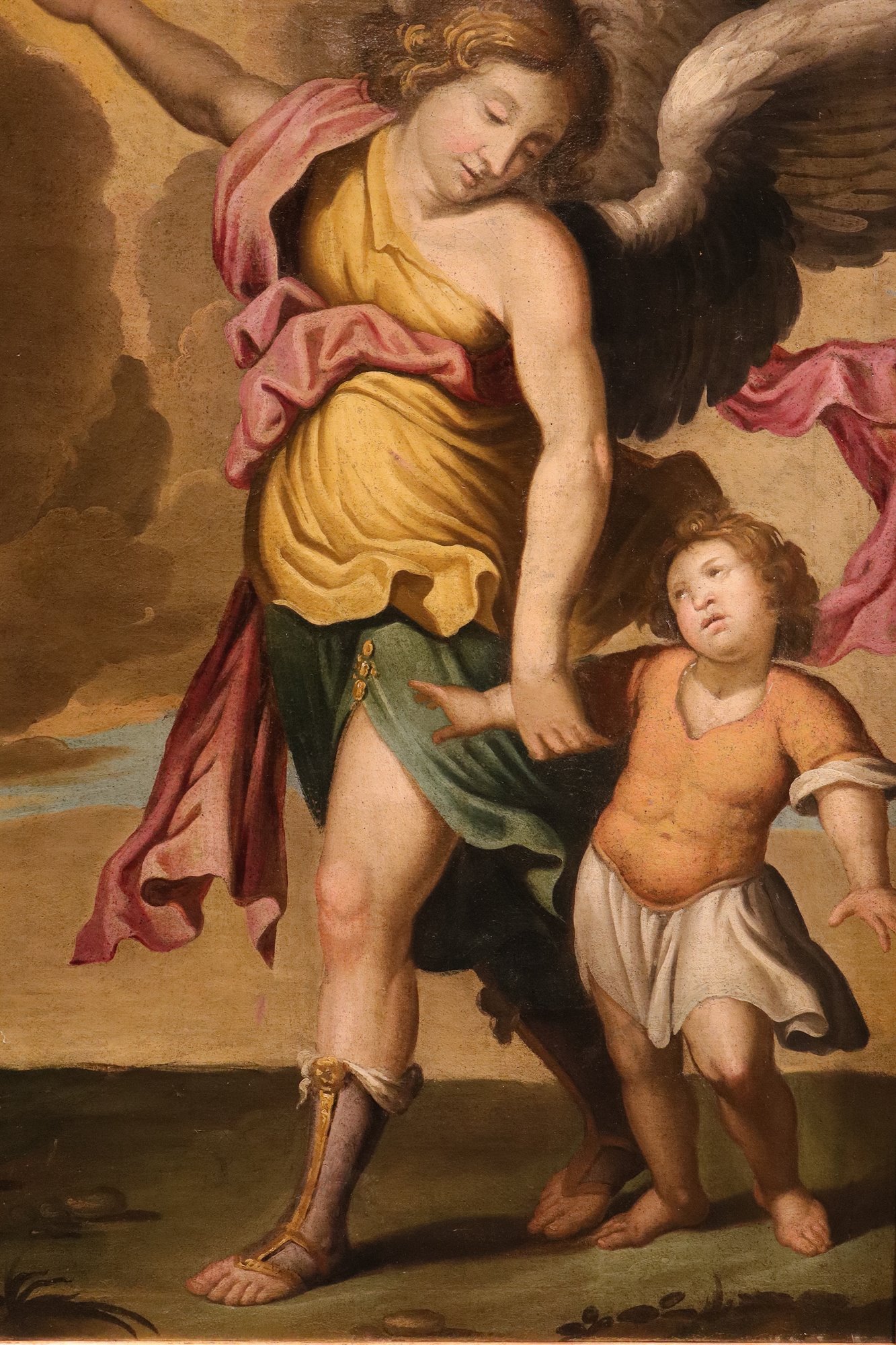
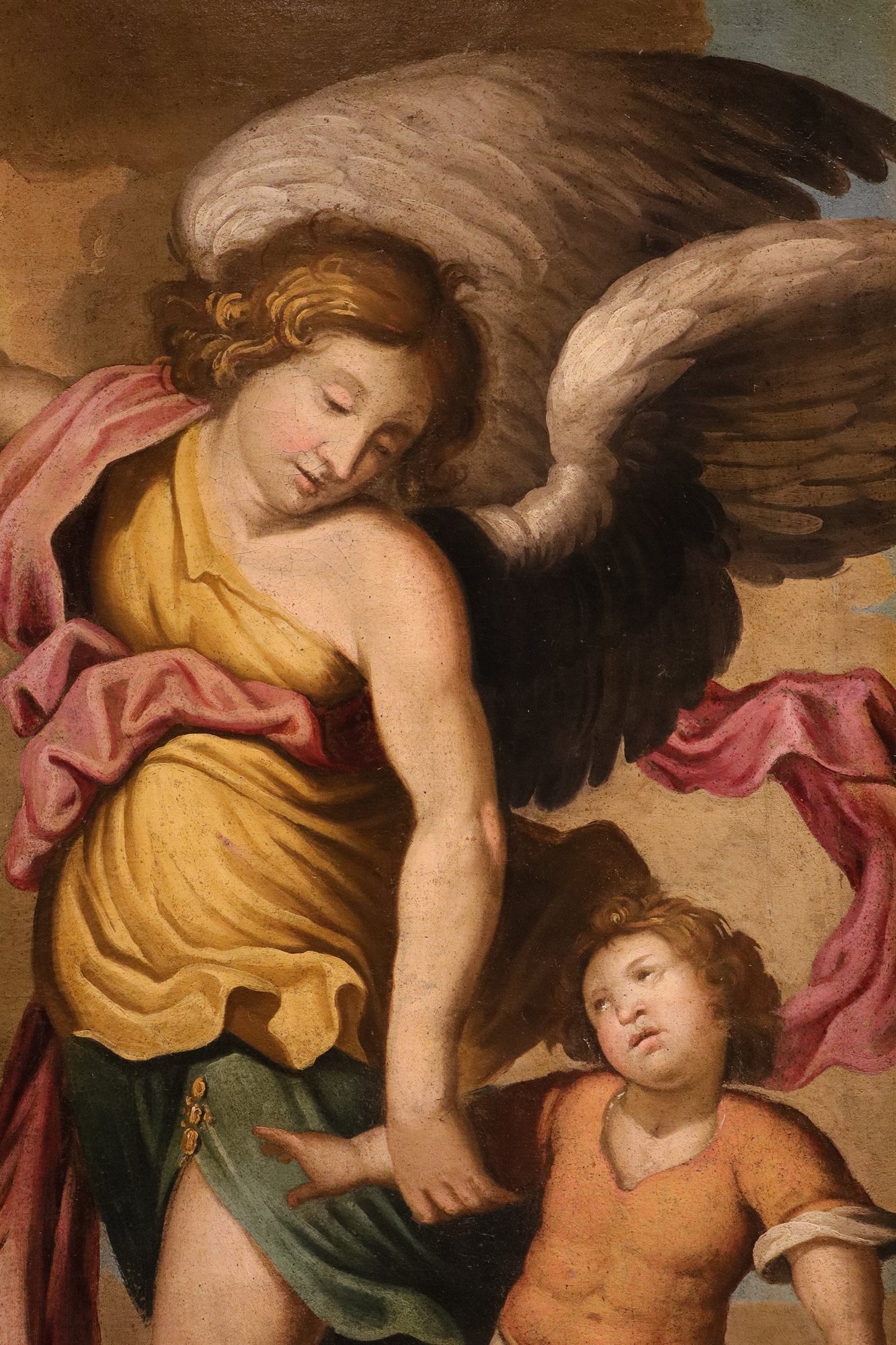
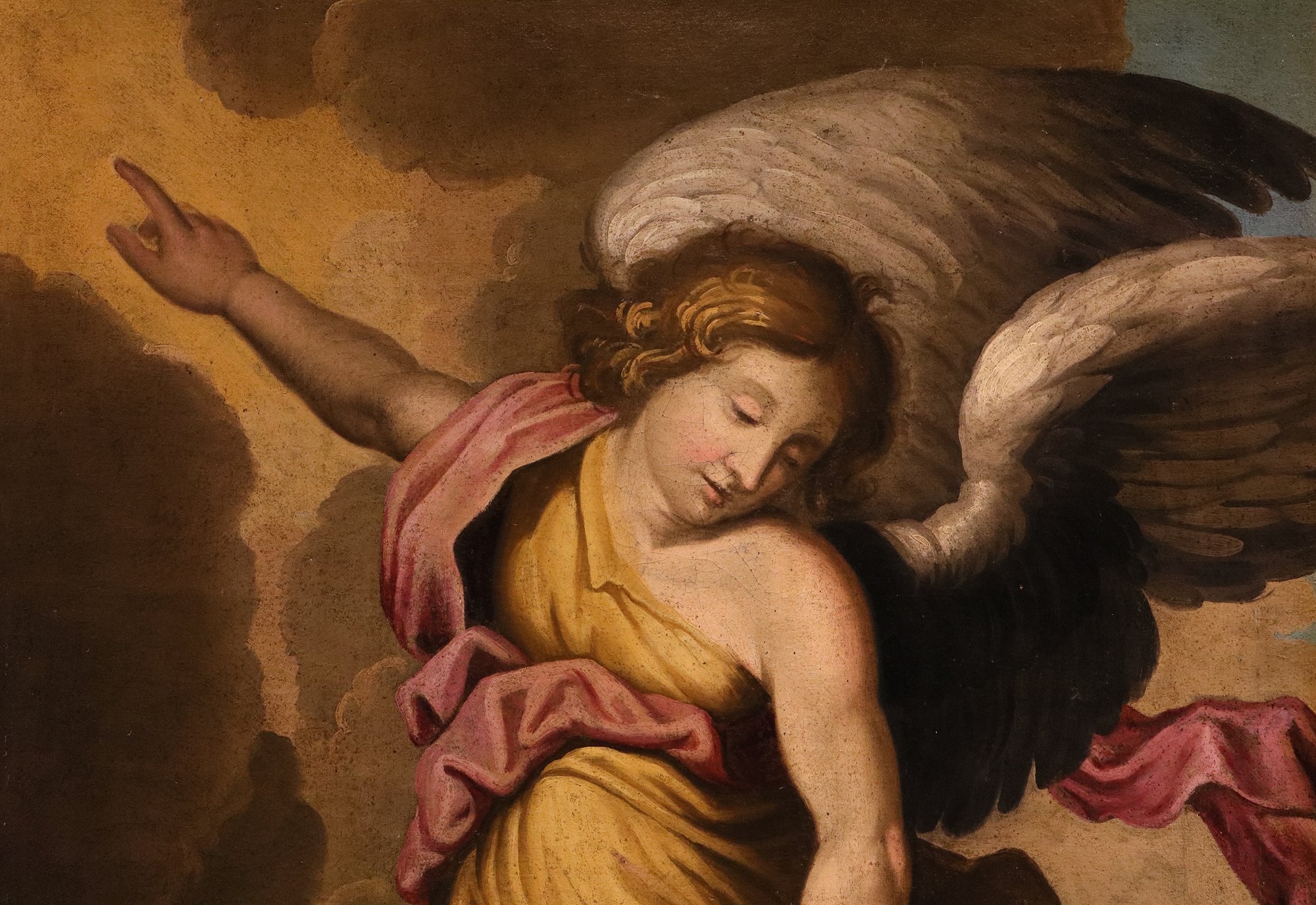
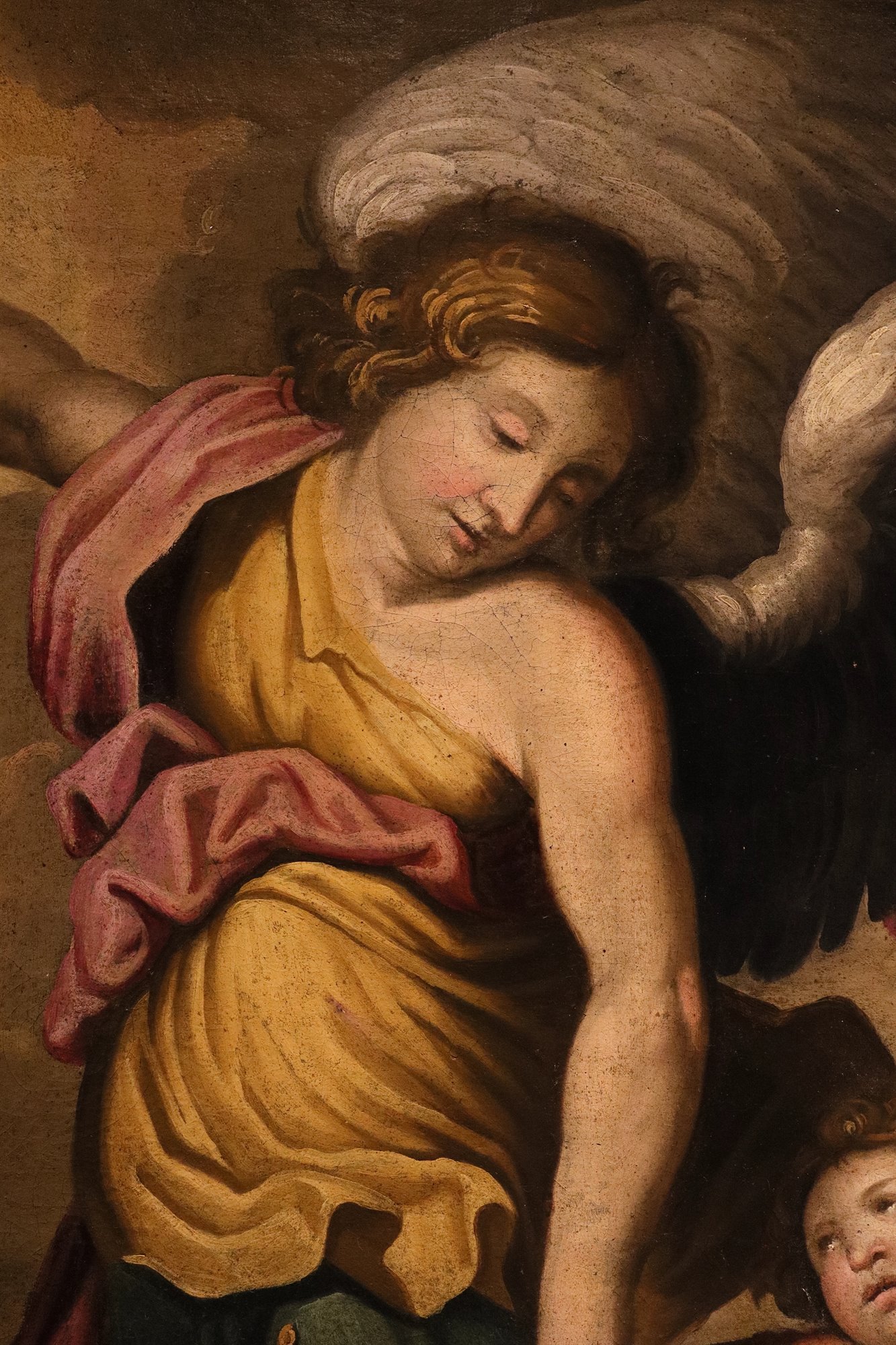
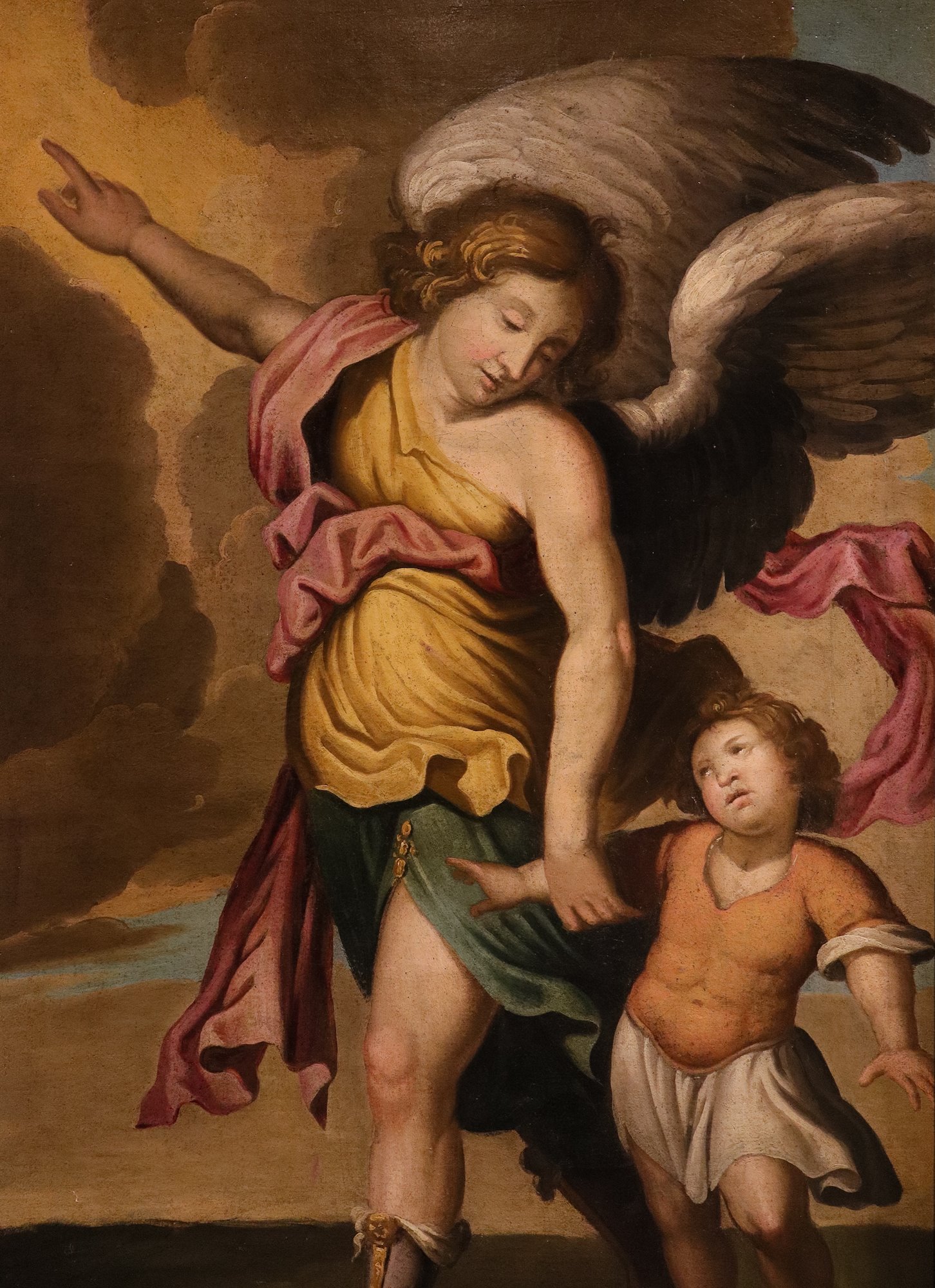
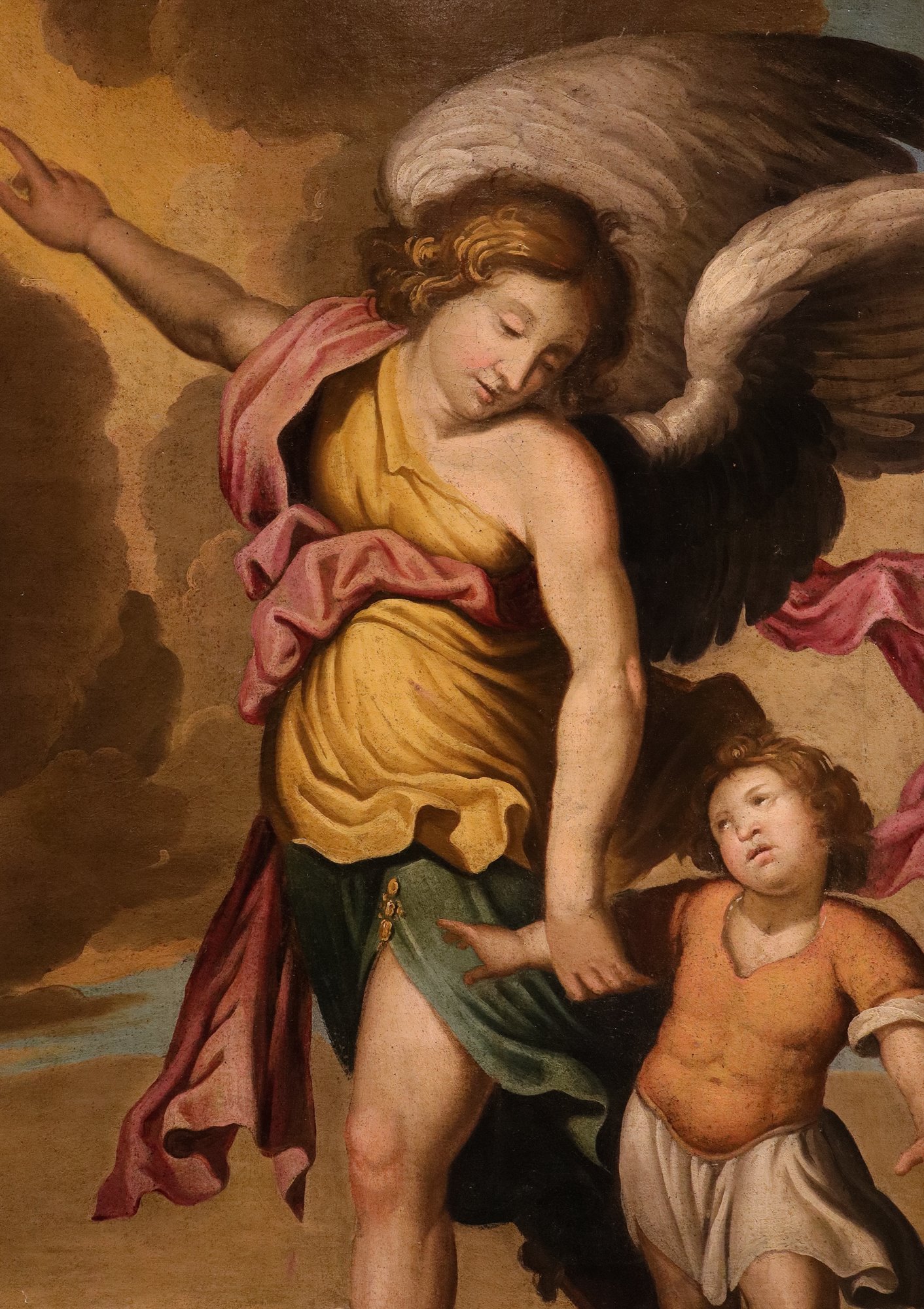
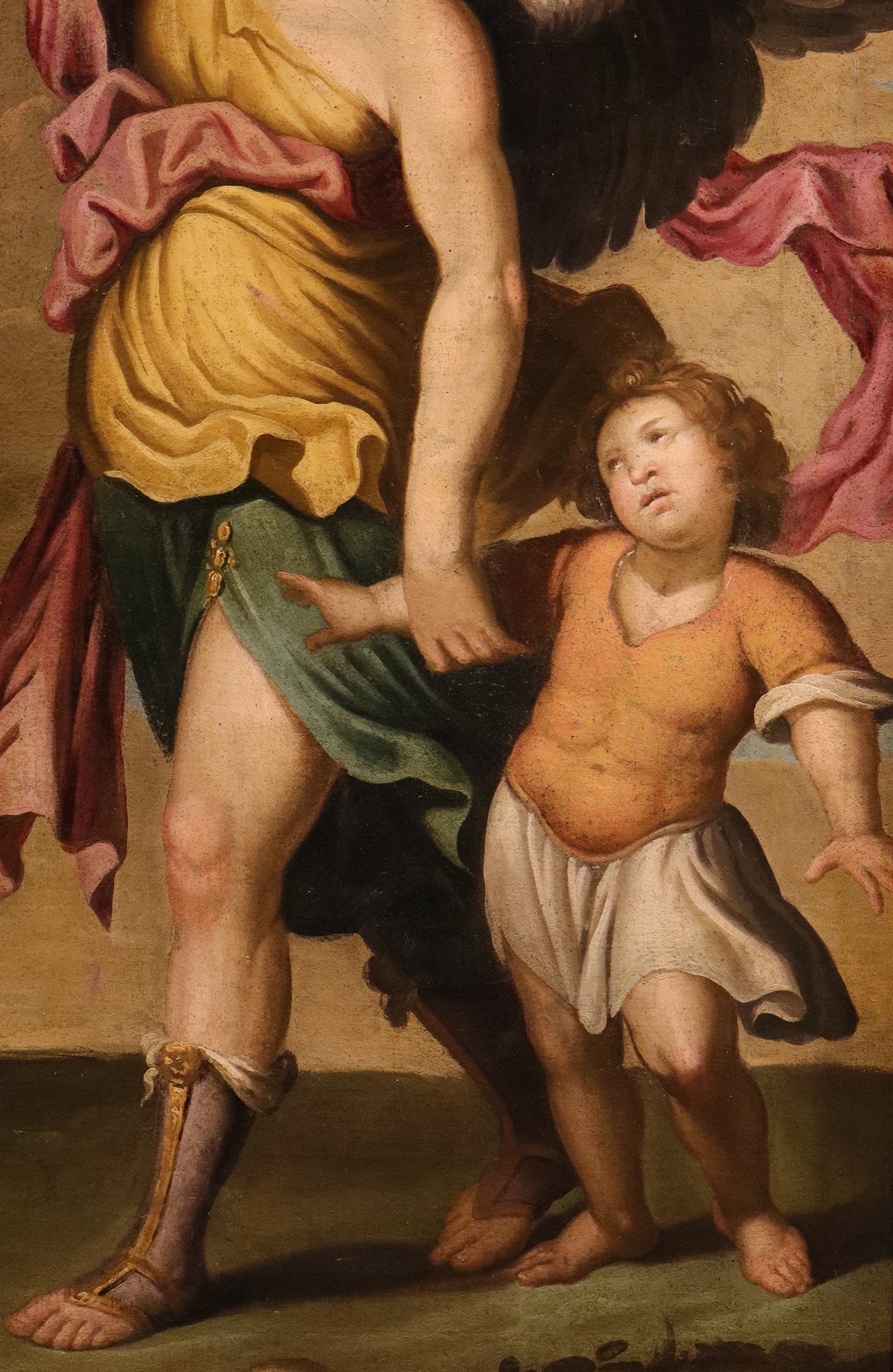
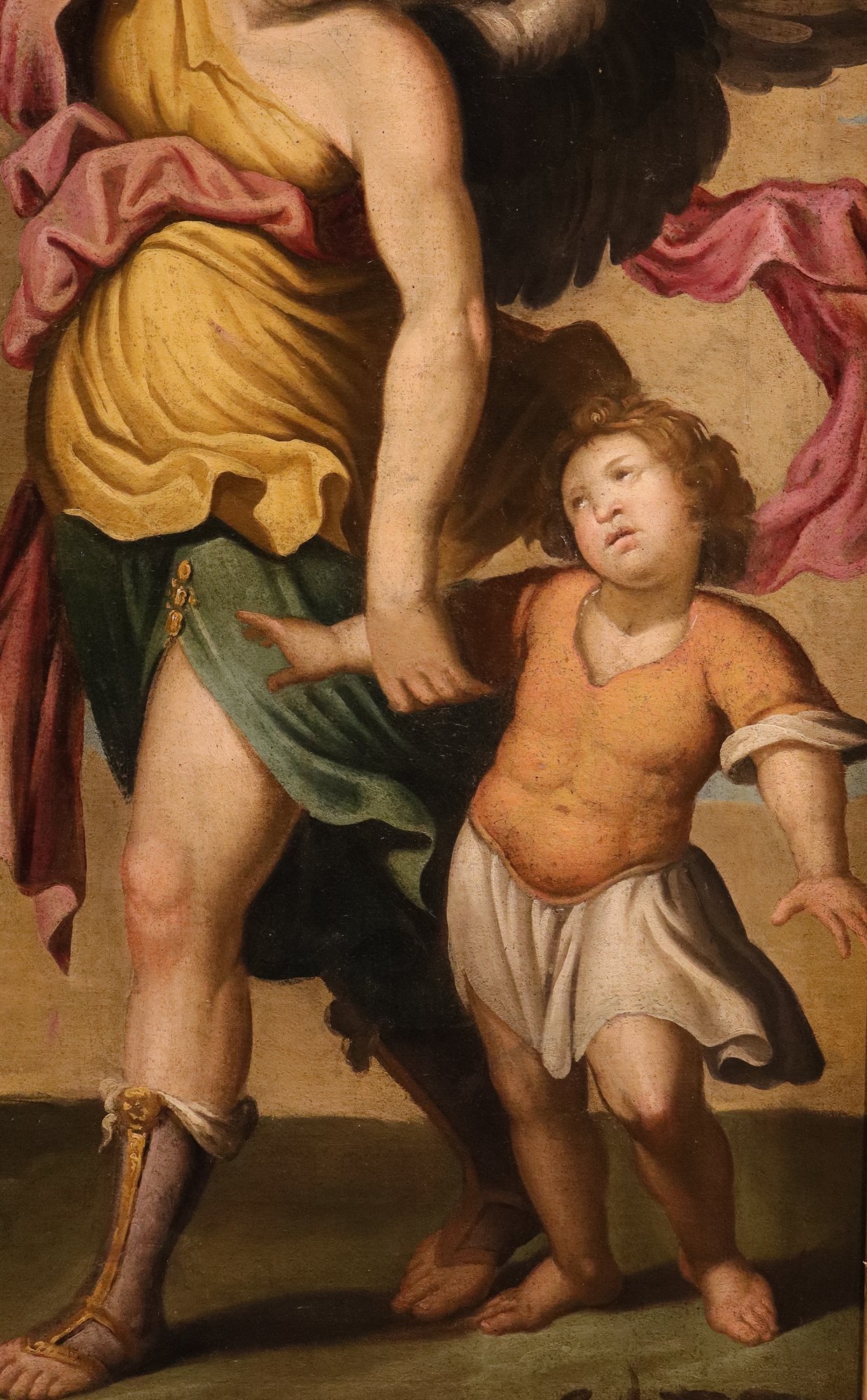
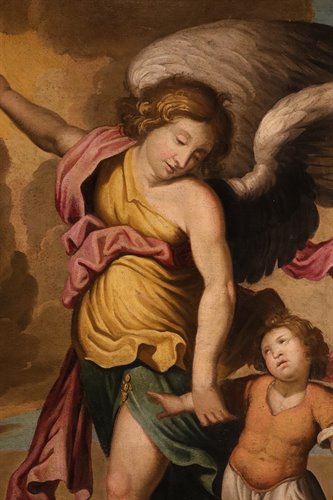
The central figure of our painting is the Archangel Raphael, depicted whilst protecting a young boy [1]: the meaning of this iconography, which became particularly widespread between the 16th and 17th centuries, has taken on a broader significance over time, eventually becoming the emblem of the guardian angel whose task is to protect every human being.
[1] In the ‘Book of Tobit’, the angel Raphael was invoked by Tobit, a righteous and poor man, to accompany his son Tobit on a journey; Raphael showed Tobit the safest route and saved him on more than one occasion, without ever revealing himself as an angel, except at the end of the story.
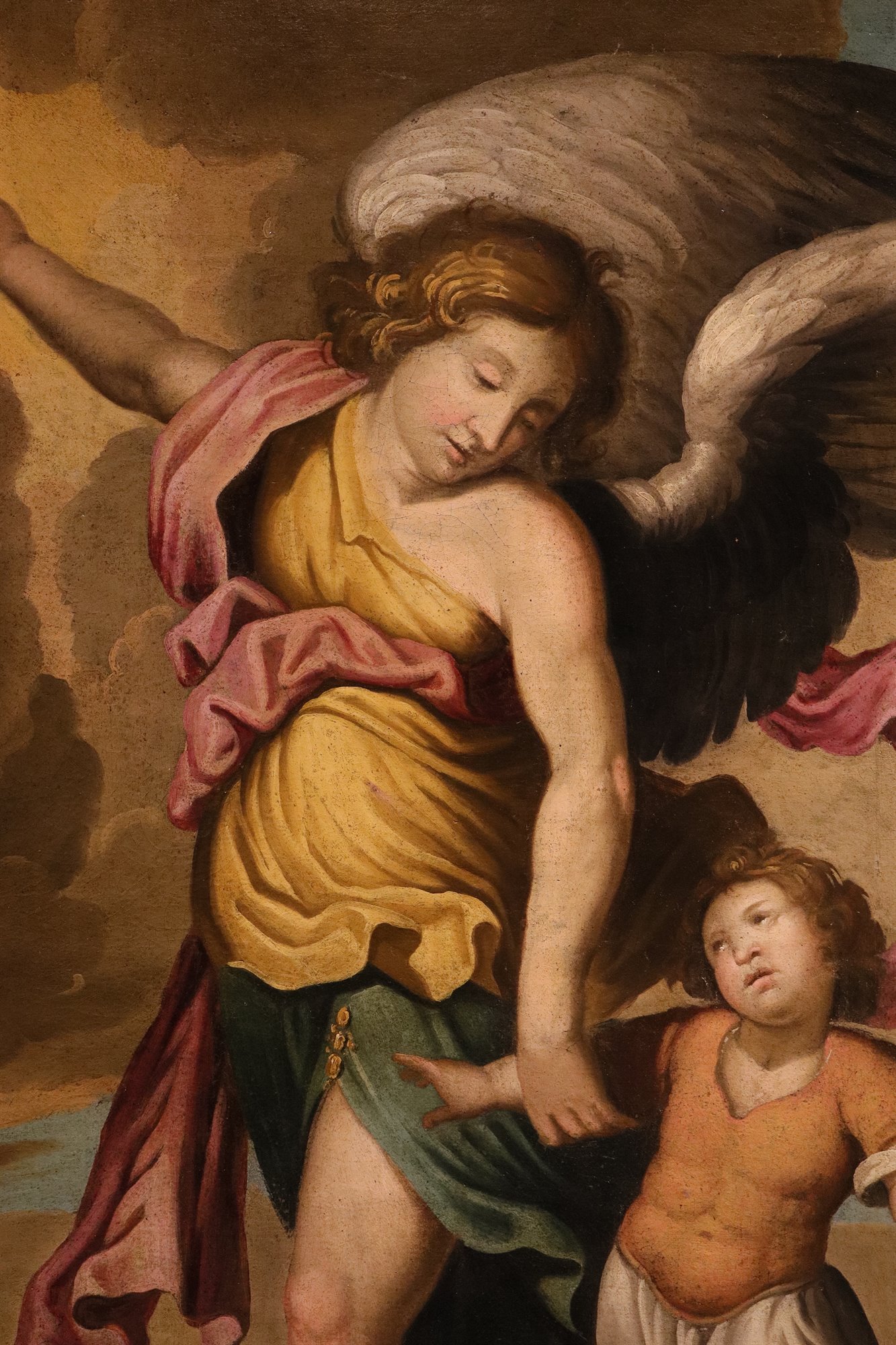
The Angel is depicted here in the customary guise of a young man with delicate features, wearing a robe cinched at the waist and marked by ample drapery. The young boy, innocently frightened, turns his eyes towards the sky, where, through a break in the clouds, the light of divine grace appears.
The stylistic and figurative characteristics of the painting evoke echoes of seventeenth-century Spanish painting, distinguished by its refined style, capable of combining the Baroque language—by definition opulent—with elements of classical influence.
In particular, observing its iconographic features and draftsmanship, a comparison with the style of Alonso Cano (1601–1667) seems apt; he was one of the most versatile and influential figures of the Spanish Siglo de Oro: his work marks the transition from tenebrist realism to a more idealised and classical Baroque.
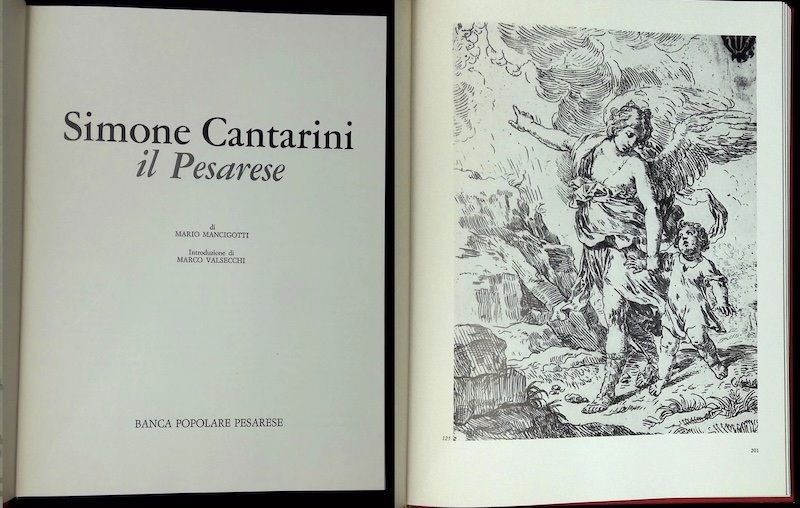
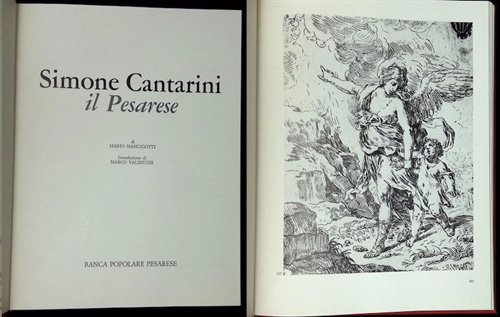
In particular, as regards the drawing, we can detect a clear derivation of our painting from an etching by Simone Cantarini (known as ‘il Pesarese’), entitled Guardian Angel, produced around 1640.
which our artist must have studied and reworked (see: “Simone Cantarini il Pesarese” by Mario Mancigotti, 1975, Banca Popolare Pesarese, page 201, see fig. 1).
Simone Cantarini was one of the greatest engravers of the Italian 17th century and his prints enjoyed widespread circulation throughout Europe in the 17th century, profoundly influencing devotional painting in Spain. His etchings circulated in Spanish artistic centres such as Madrid and Seville, where they were copied or ‘translated’ into paintings to meet the demand for sacred images in the classical style.
The influence of the Bolognese school on Spain’s Siglo de Oro was profound, fuelled by the circulation of prints that served as veritable ‘manuals’ of style for Iberian painters, and besides Alonso Cano, many other Spanish masters looked to Bolognese classicism.
It is interesting to note that, whilst Cantarini’s print is distinguished by the lightness of its line and the influence of Guido Reni, our painting translates the model into a more sculptural and monumental form, with even primitive features, typical of Spanish Baroque.
Fig. 1 Guardian Angel, Simone Cantarini
c. 1640
From ‘Simone Cantarini il Pesarese’ by Mario Mancigotti, 1975, Banca Popolare Pesarese, page 201

ADDITIONAL INFORMATION:
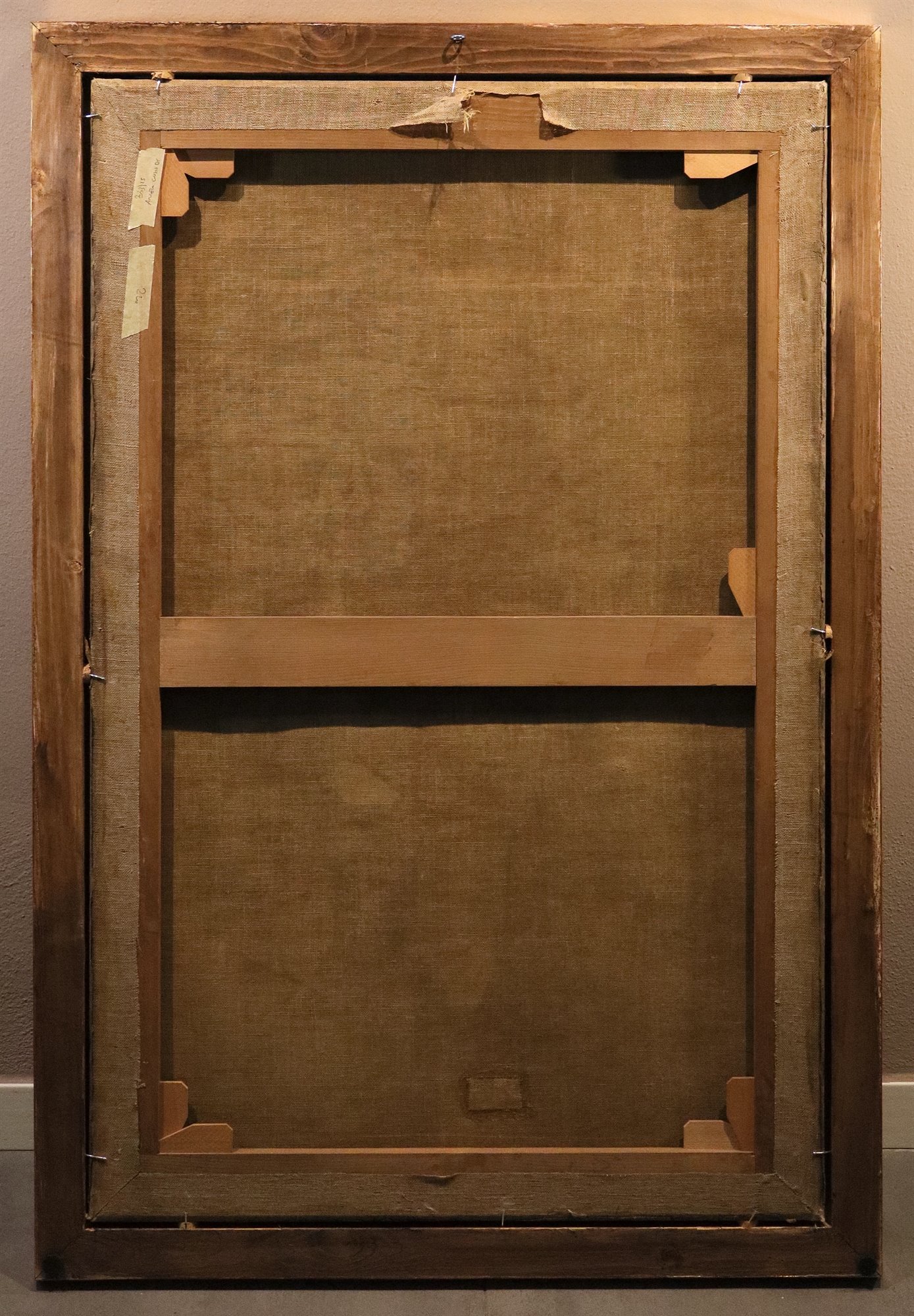
The painting is sold complete with a fine gilded frame and is accompanied by a certificate of authenticity and a descriptive iconographic sheet.
We arrange and organise the transport of purchased works, both within Italy and abroad, using professional and insured carriers.
Should you wish to view this or other works in person, we would be delighted to welcome you to our new gallery in Riva del Garda, at Viale Giuseppe Canella 18. We look forward to seeing you!
Please contact us for any information or to arrange a visit; we will be happy to assist you.
Follow us on: