
Il trionfo di Nettuno e Anfitrite
Gian Domenico Ferretti (Firenze 1692 - 1768)






Gian Domenico Ferretti
(Florence 1692 – 1768)
(Florence 1692 – 1768)
The Triumph of Neptune and Amphitrite
oil on canvas
47 x 132 cm
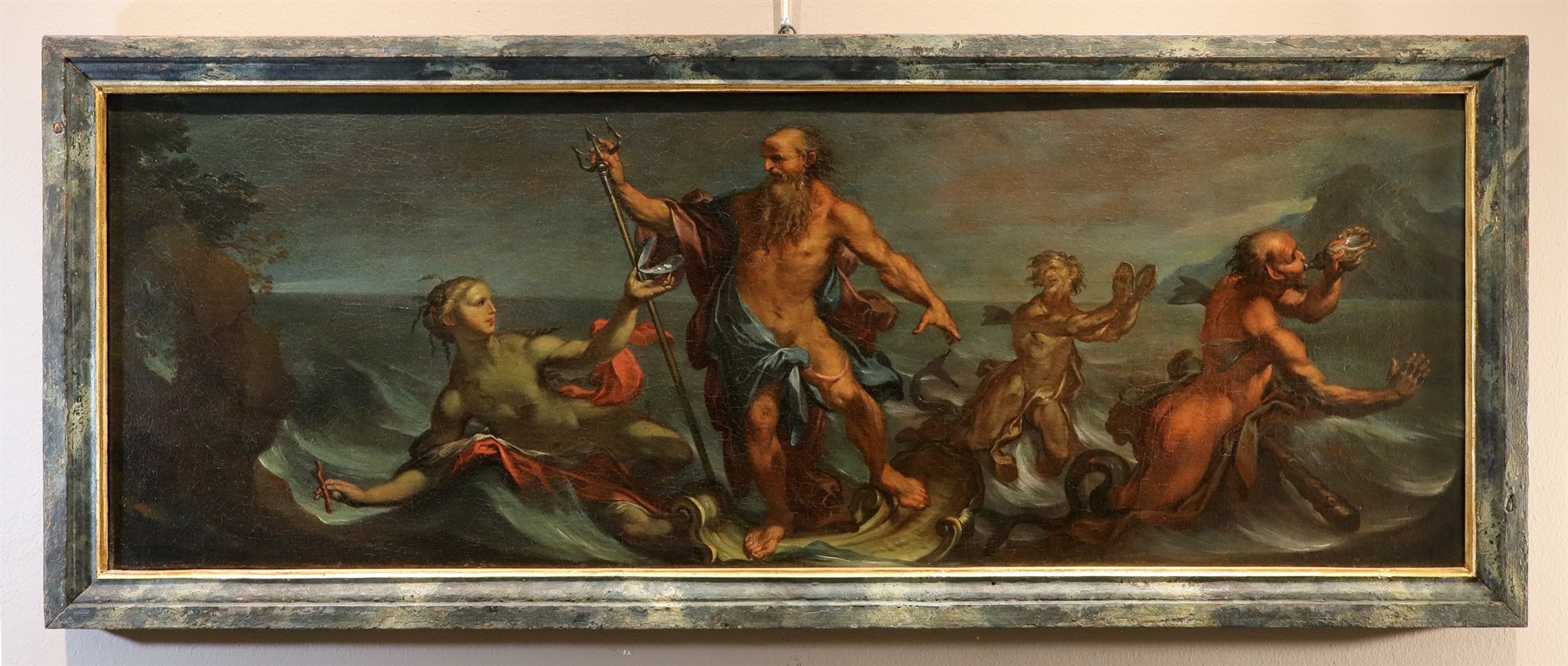
In an antique frame (minor imperfections) 56 x 142 cm.
Expert opinion: Prof. UGO RUGGERI (Venice)

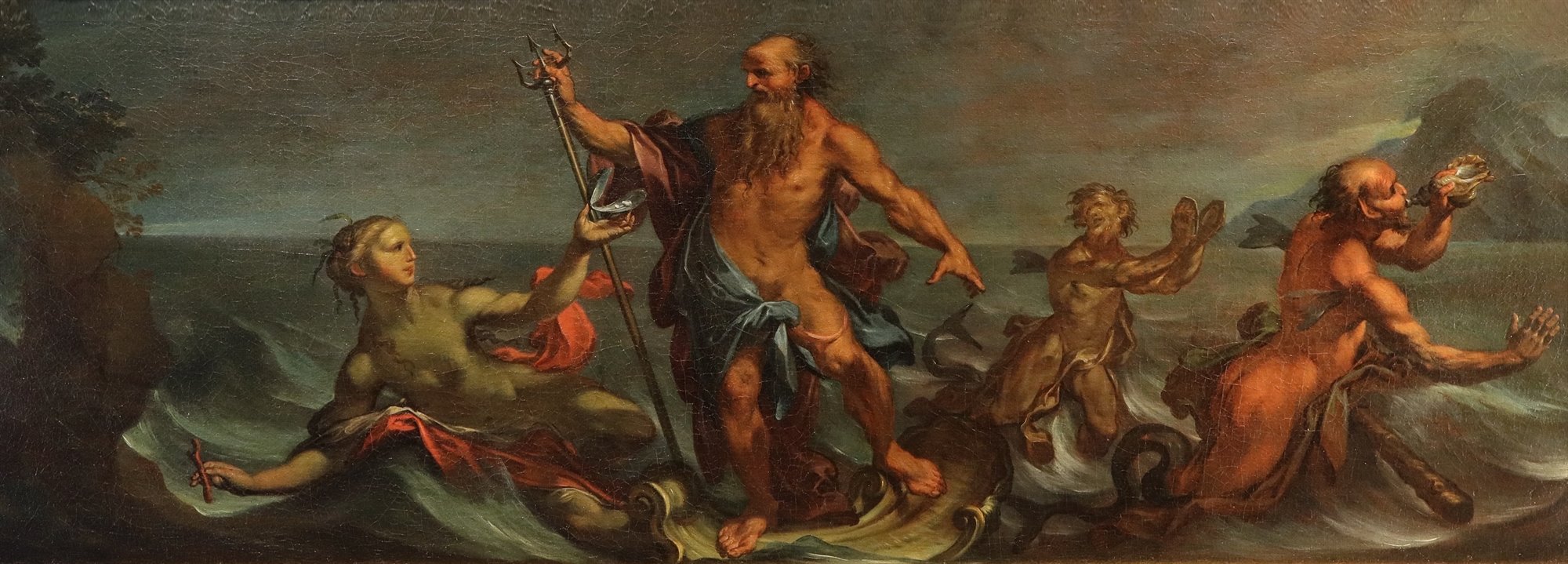
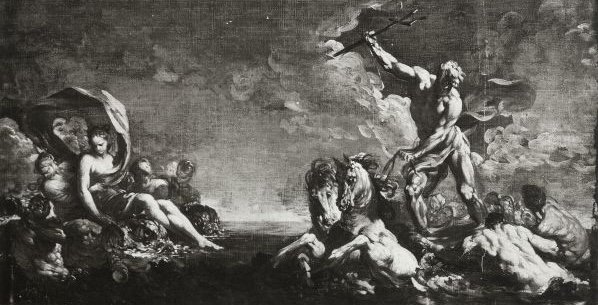
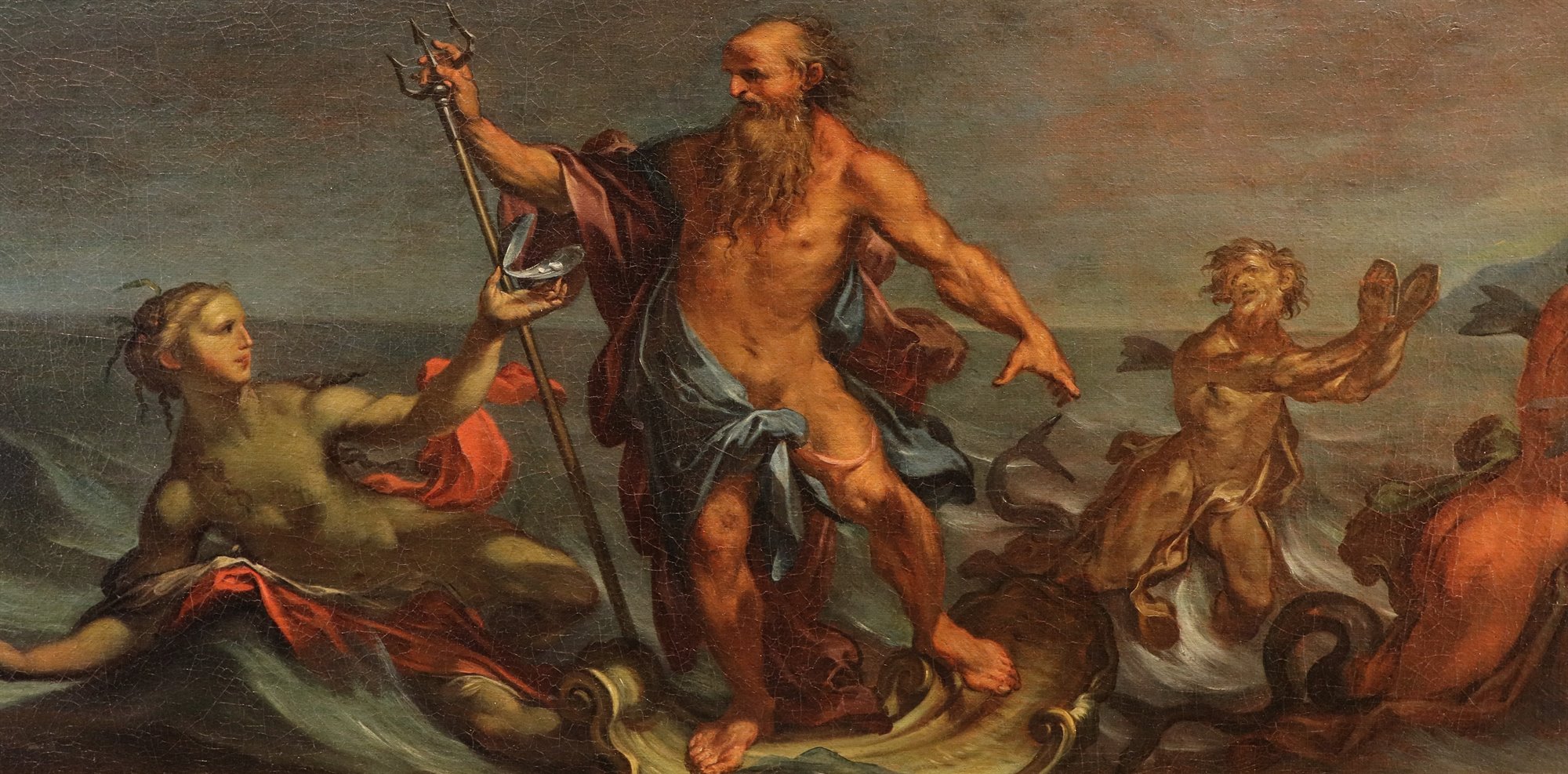
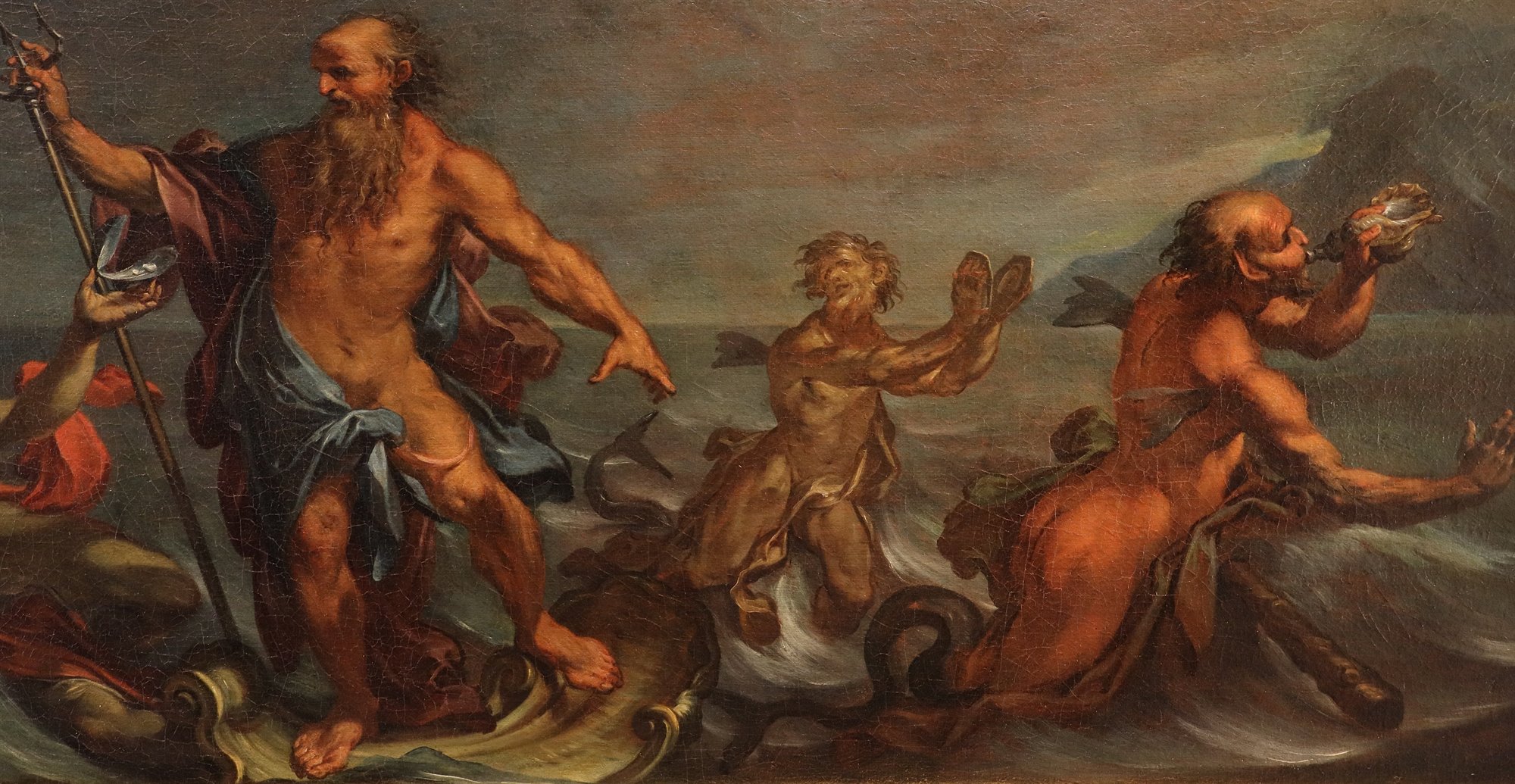
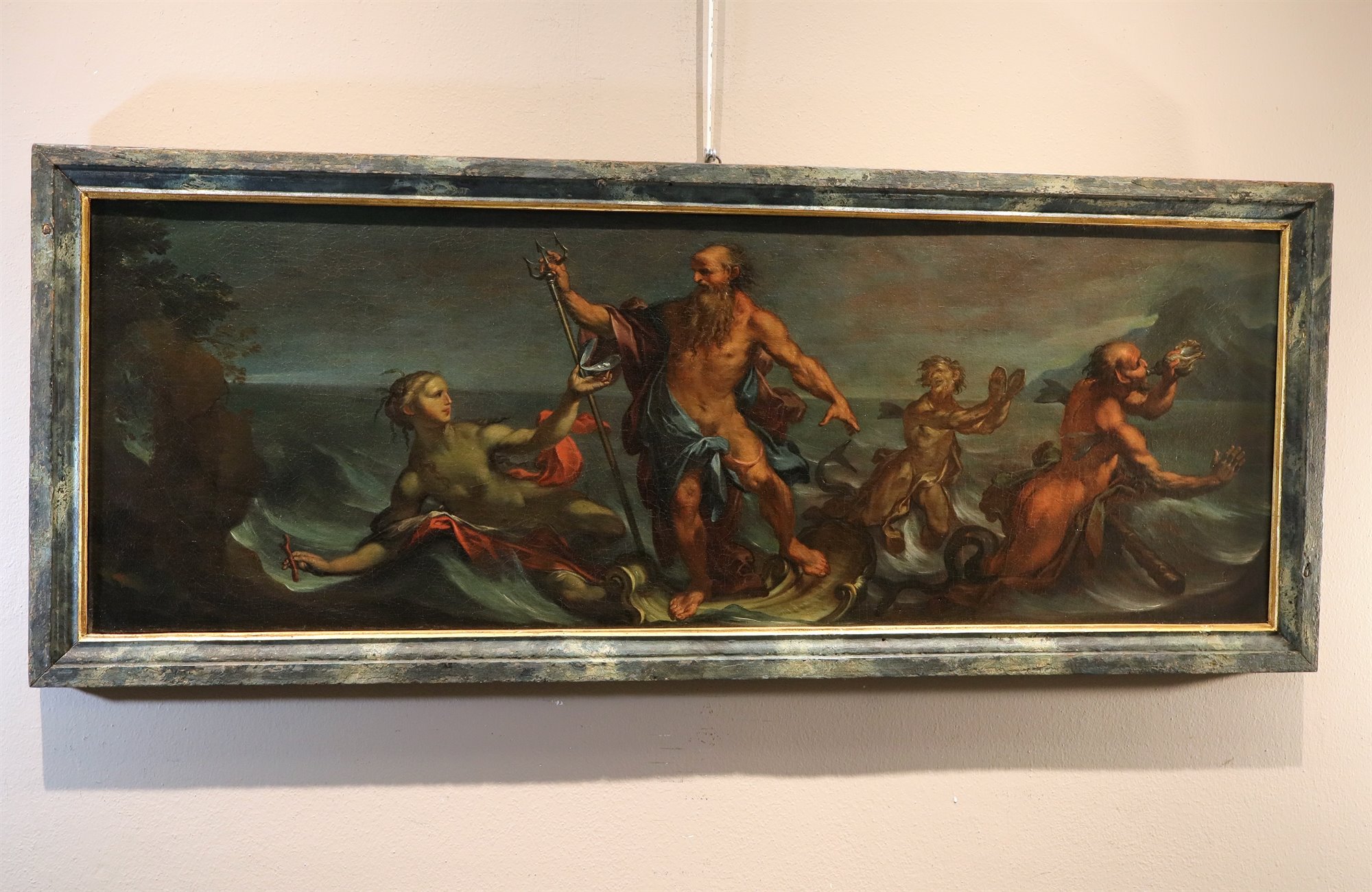
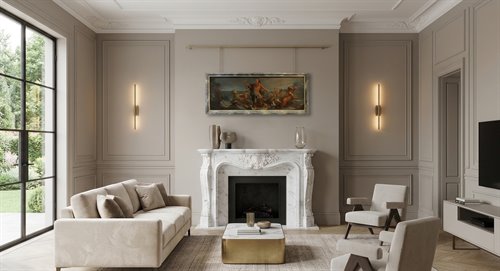
The painting depicts the maritime triumph of one of the most celebrated divine couples in classical mythology, Neptune and Amphitrite – respectively the god of the sea and his wife, the splendid sea nymph, daughter of Nereus and Doris, and crowned queen of the sea.
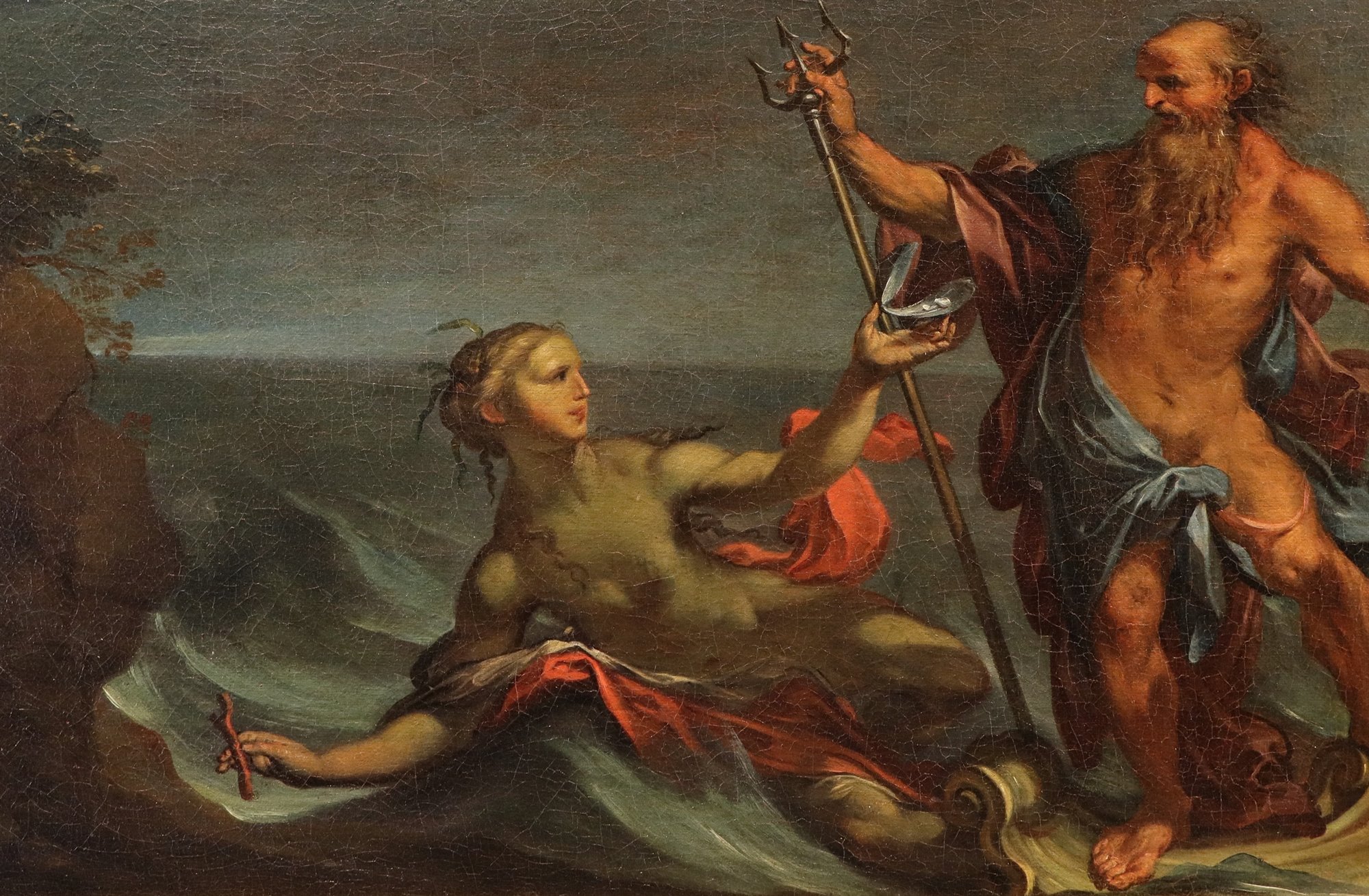
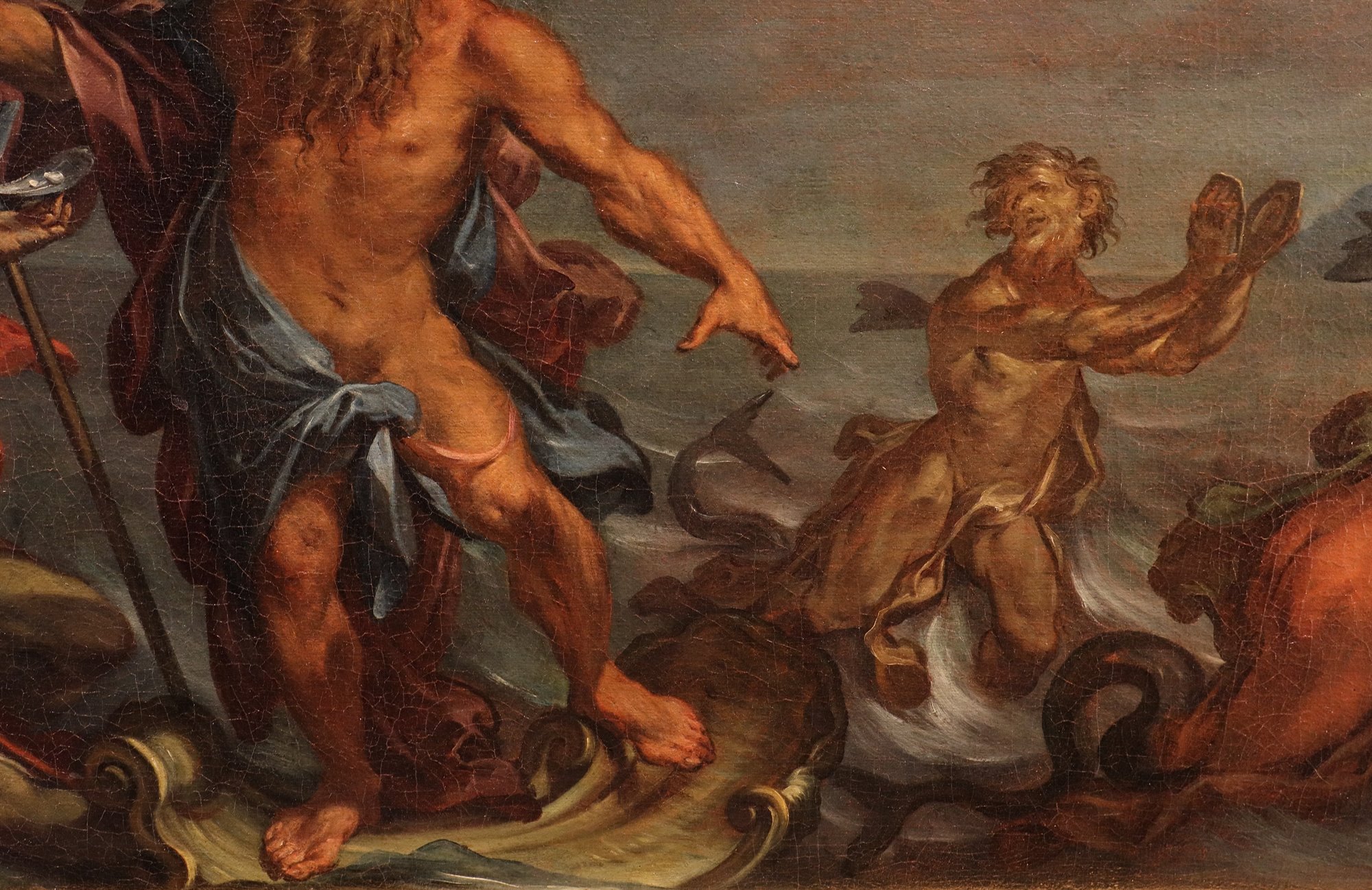
Neptune is immortalised in a truly magnificent, majestic pose, dominating the centre of the scene as he stands upon a large shell serving as his chariot; he is depicted with a vigorous physique whilst proudly brandishing his trident.
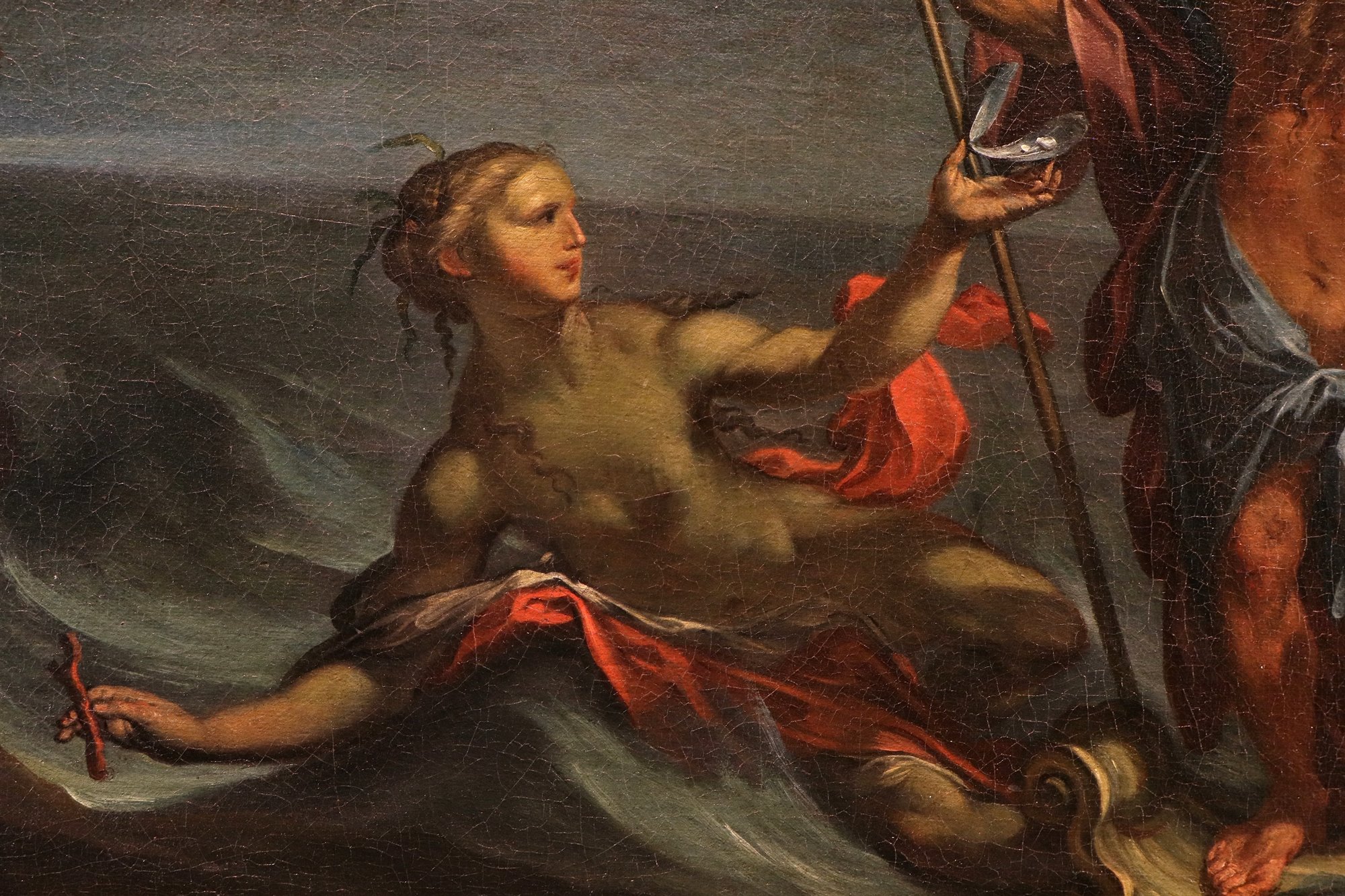
His figure is emphasised by the dynamic twist with which he turns towards the nymph, reclining on her left side; she too is portrayed with her upper body leaning towards her consort, completely nude whilst holding a shell containing a pearl and, in her other hand, a fragment of red coral – a typical attribute of marine deities.
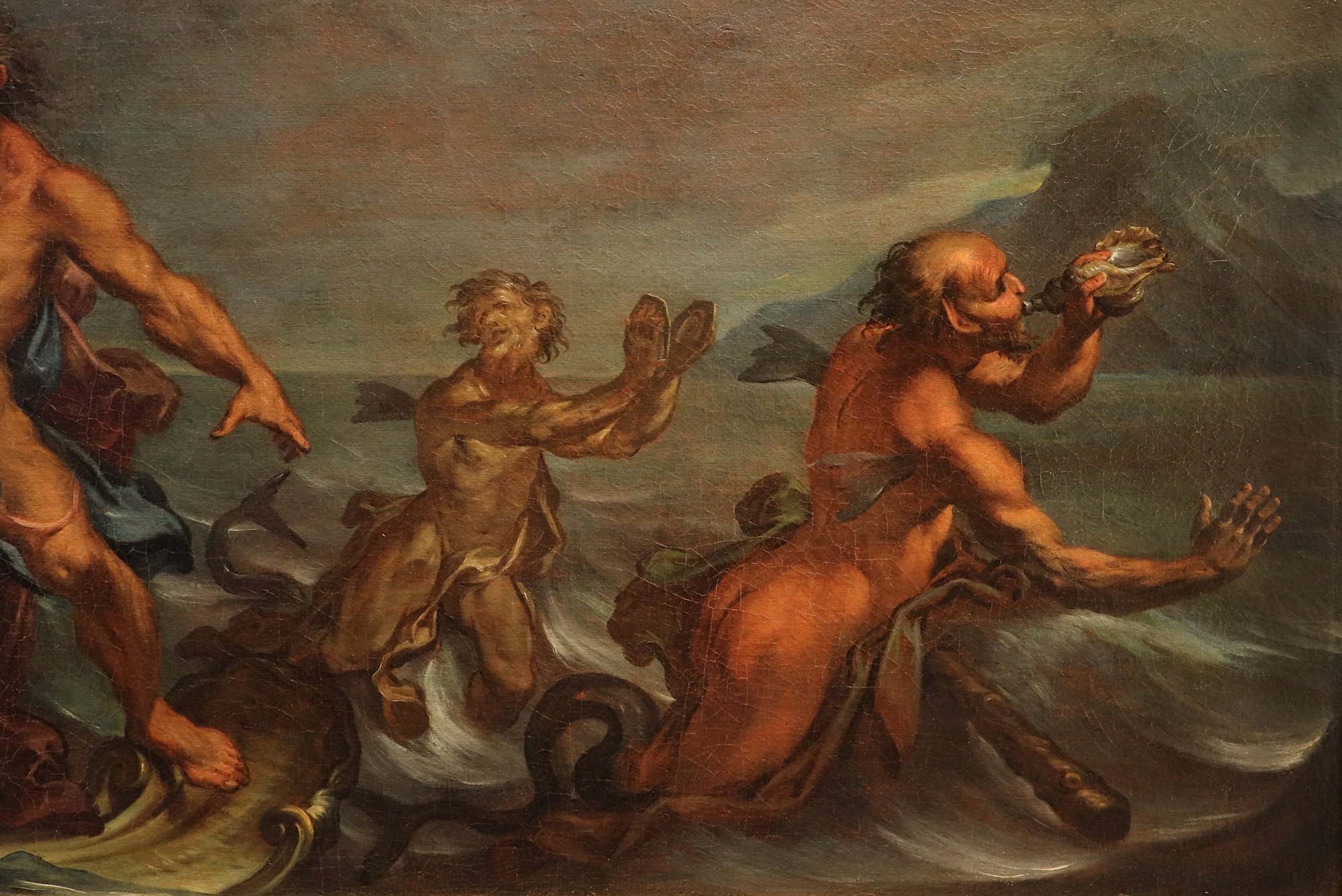
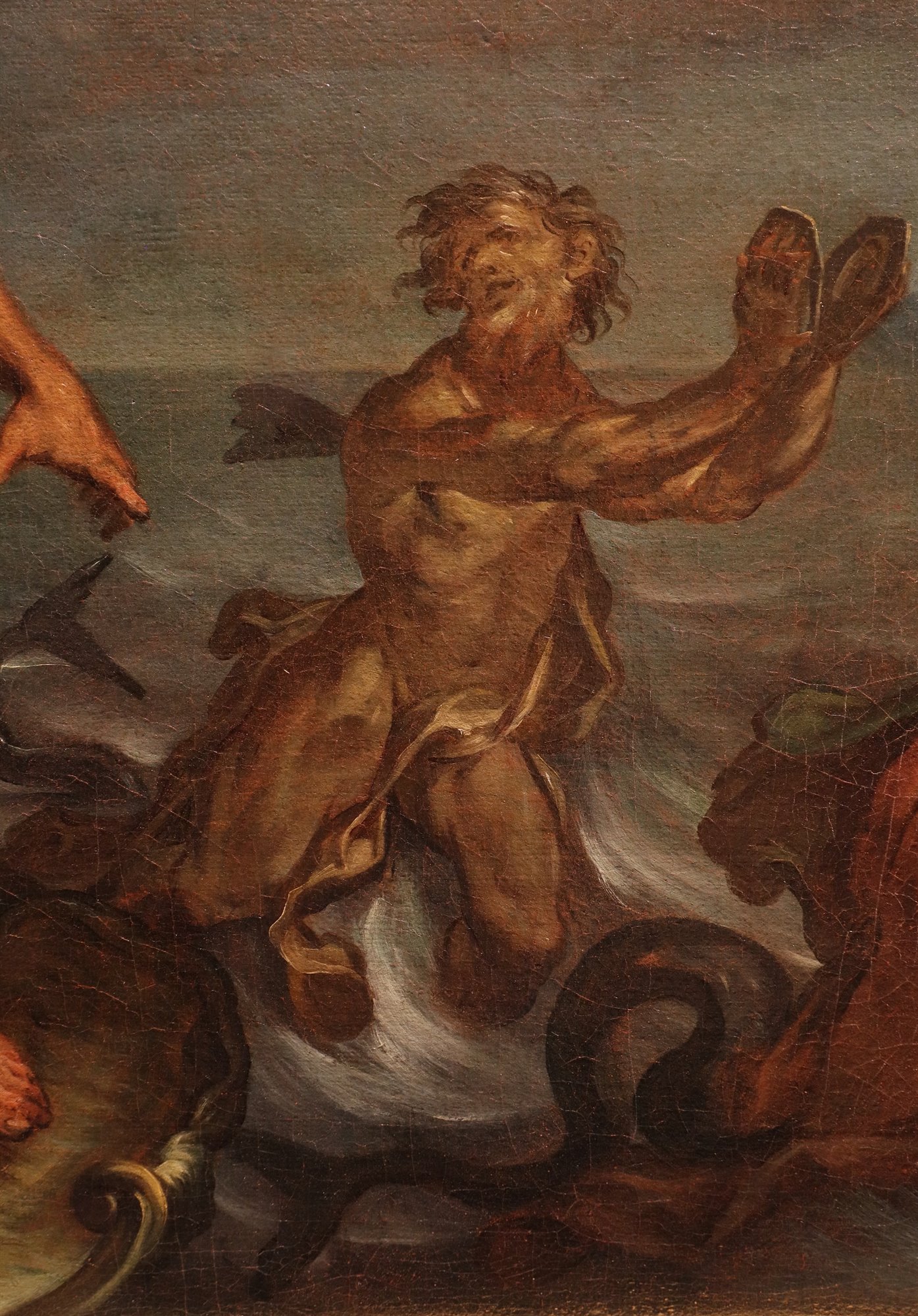
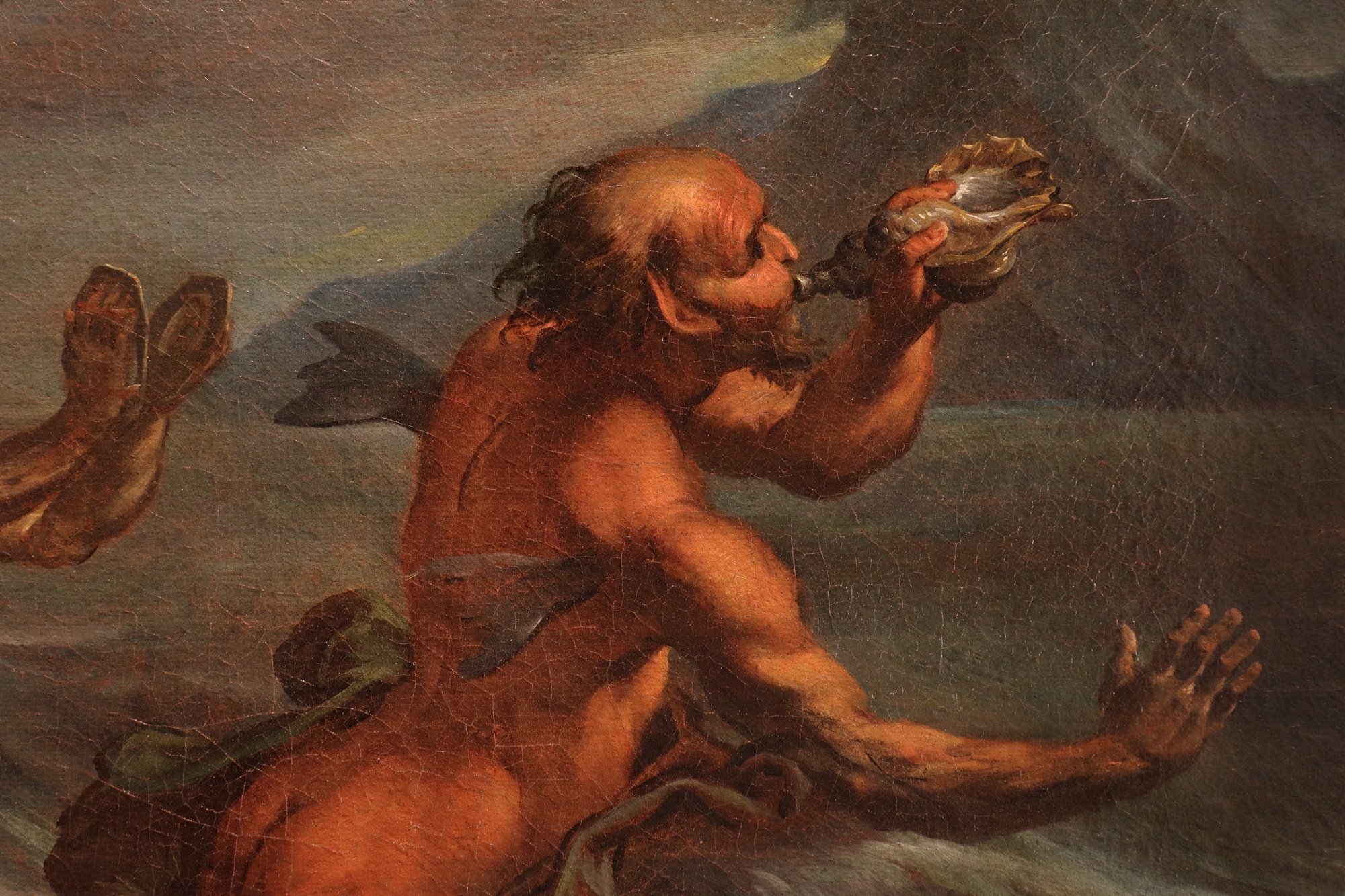
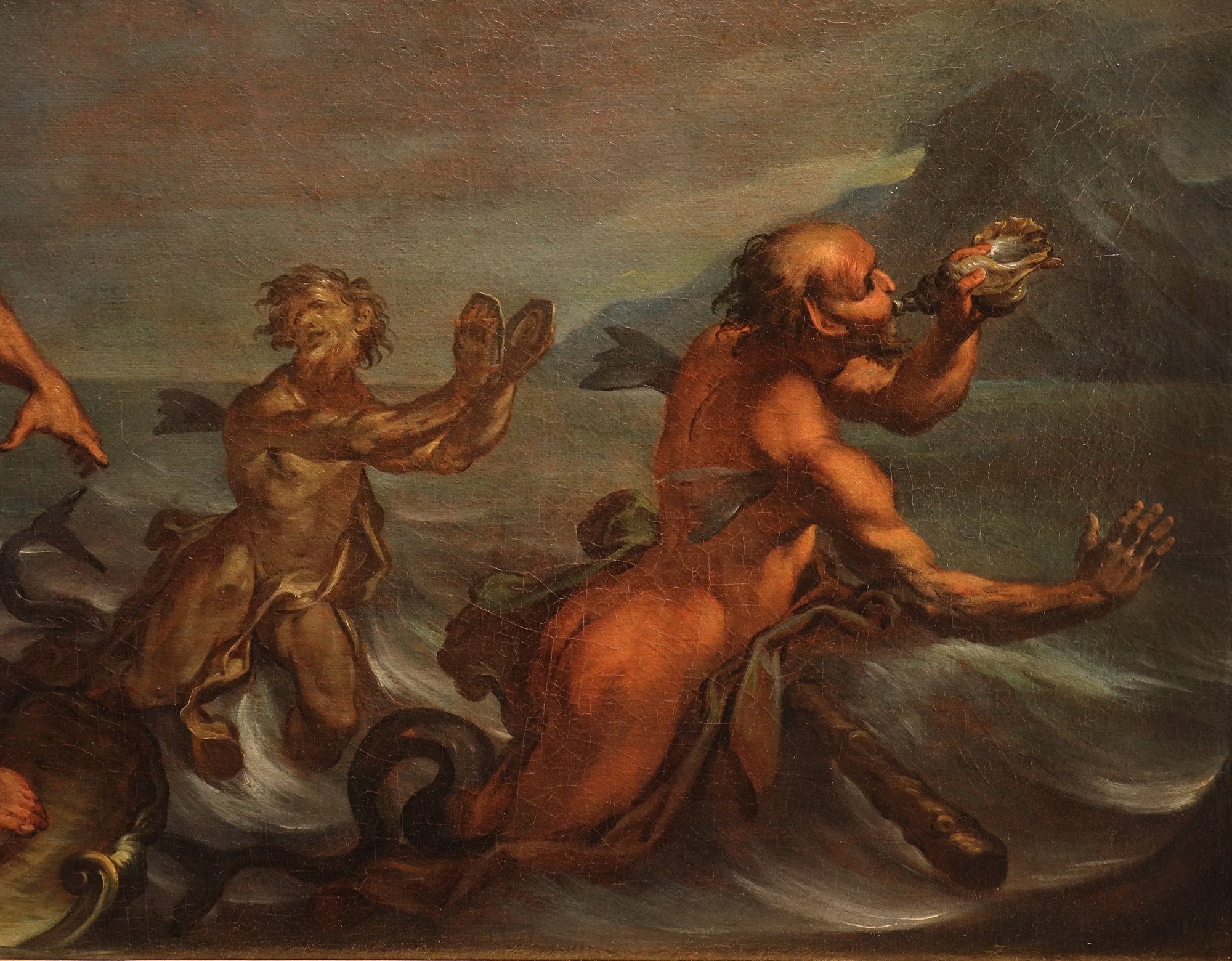
Completing the marine procession are two mighty Tritons playing music: one swims vigorously, holding two bivalve shells as if they were cymbals, whilst the other blows into a large, twisted conch shell – a classic iconographic element used to calm the waves.
The work, as confirmed by Professor Ugo Ruggieri in his study, is attributed to the Florentine artist Gian Domenico Ferretti (Florence 1692–1768), a leading figure of 18th-century Florence, favoured by the Tuscan nobility to decorate the rooms of their private residences.
The painter tackled themes of marine mythology on several occasions, and this painting forms part of his body of work comprising medium-sized interior pieces and sketches, intended for the private picture galleries of collectors of the time, where the painter could express his narrative flair with greater freedom.
The composition faithfully reflects these formal characteristics, such as the emphatic, almost choreographic gestures of his figures, as well as the anatomical rendering of the bodies, marked by rippling musculature and defined by bold shading.
The composition’s strong point is undoubtedly its vibrant colour palette, with its sharp contrasts between the warm, almost burnished tones of the flesh and the cool tones of the leaden sea and the stormy sky in the background. Not to mention the impact that the drapery of the two protagonists brings to the composition – bright red for Amphitrite and iridescent blue for Neptune – which enlivens the composition and guides the viewer’s eye through the undulating movement.
A specific point of reference with our canvas, as highlighted in Ruggieri’s critical study, lies in particular with the work on the same subject from the famous Molinari Pradelli Collection at Villa Marana in Marano di Castenaso (M. Gregori, ‘70 Paintings and Sculptures of the Florentine Seventeenth Century’, exhibition catalogue, Florence 1965, p. 63, no. 49), which shares its compositional structure, the exuberant power of its sculptural and dynamic composition, and specific details in the rendering of the figures.
Ferretti Giovan Domenico,
Neptune and Amphitrite (detail)
Molinari Pradelli Collection, Bologna
ADDITIONAL INFORMATION:
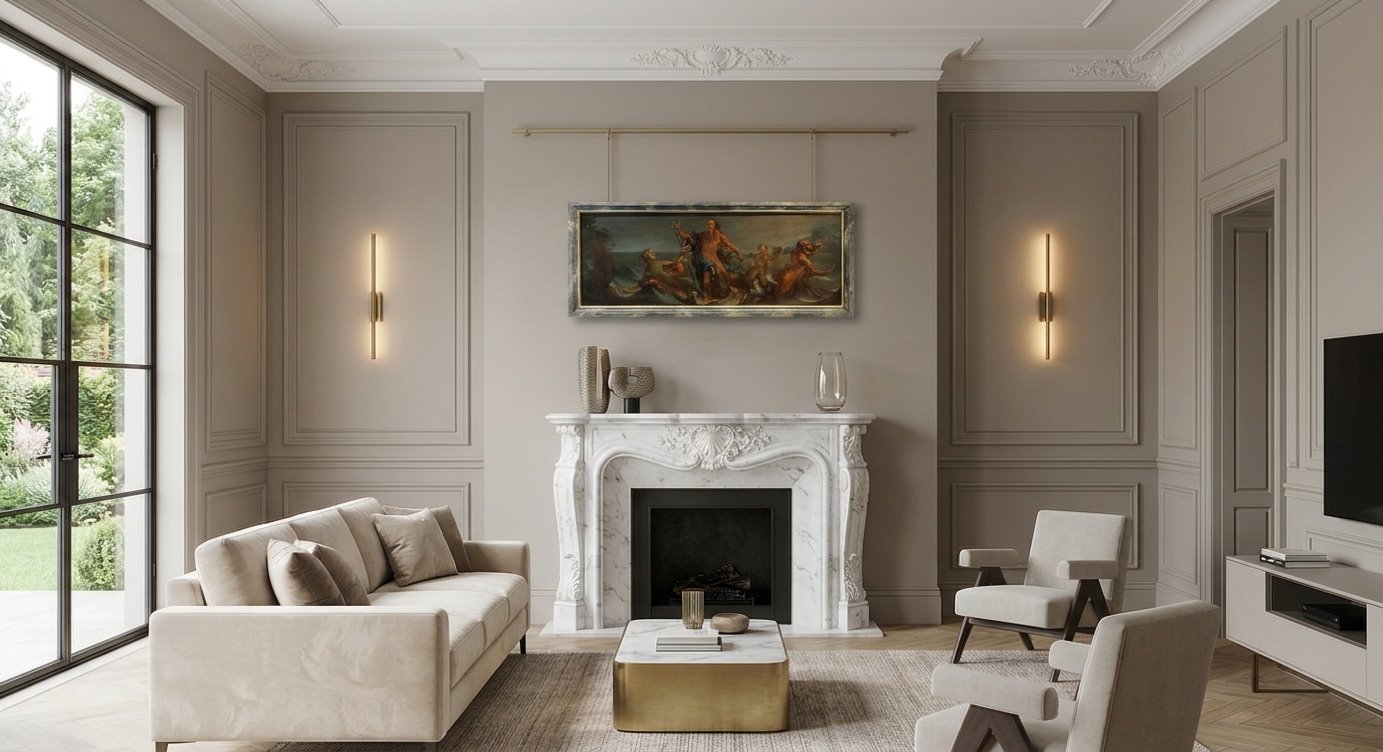
The work is complete with an attractive frame and is sold accompanied by a certificate of authenticity and a descriptive iconographic sheet.
We arrange and organise the transport of purchased works, both within Italy and abroad, using professional and insured carriers.
It is also possible to view the painting at our gallery in Riva del Garda, by appointment, where we will be delighted to welcome you and show you the works that interest you.
Please feel free to contact us, with no obligation, for any further information.
Follow us on: