
Il ratto di Europa
Paolo De Matteis (Piano Vetrale, 1662 - Napoli, 1728)
Paolo De Matteis (Piano Vetrale, 1662 - Naples, 1728) Circle of
The Rape of Europa
oil on canvas
(cm.) 57 x 98
with gilded wooden frame 77 x 118 cm.
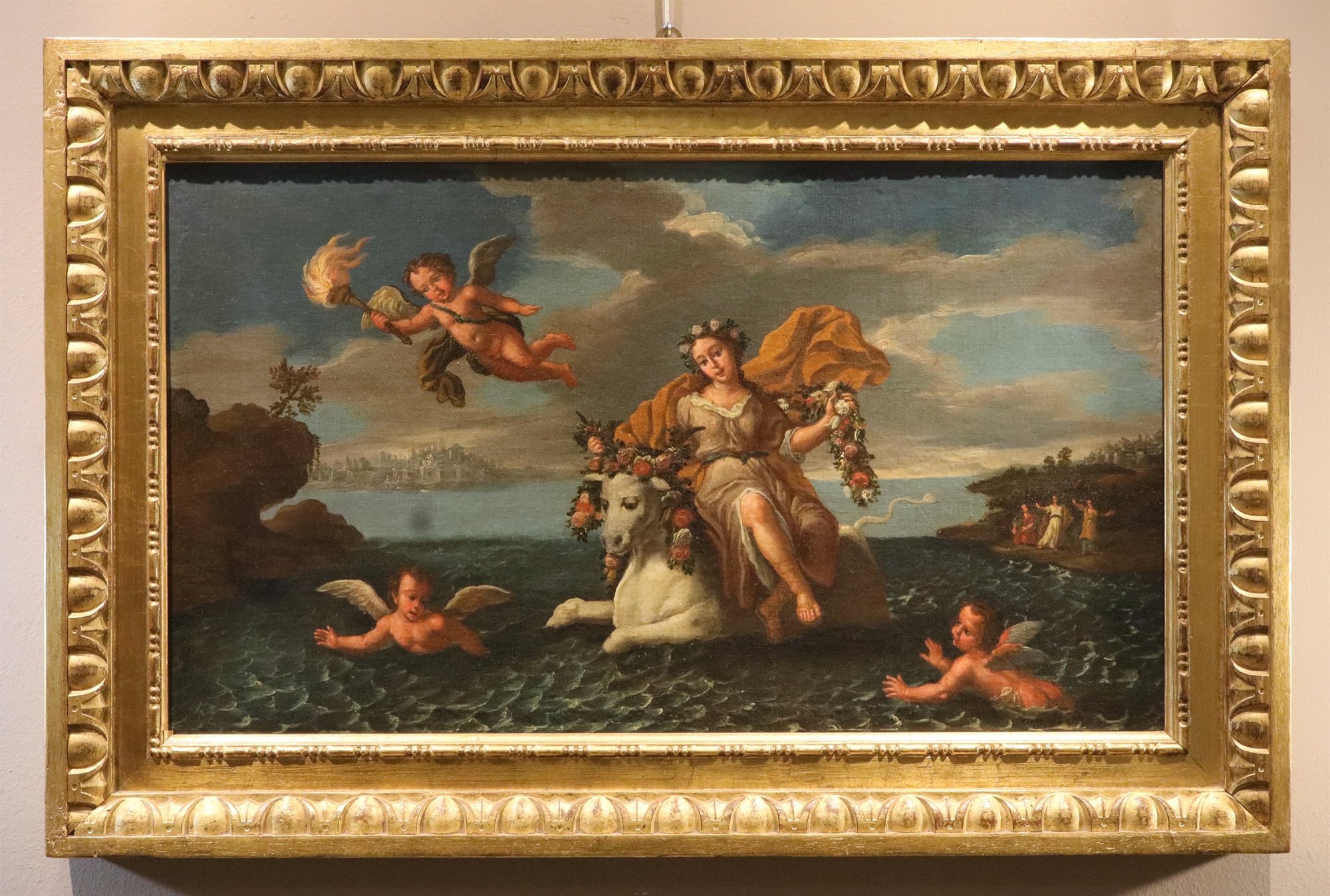
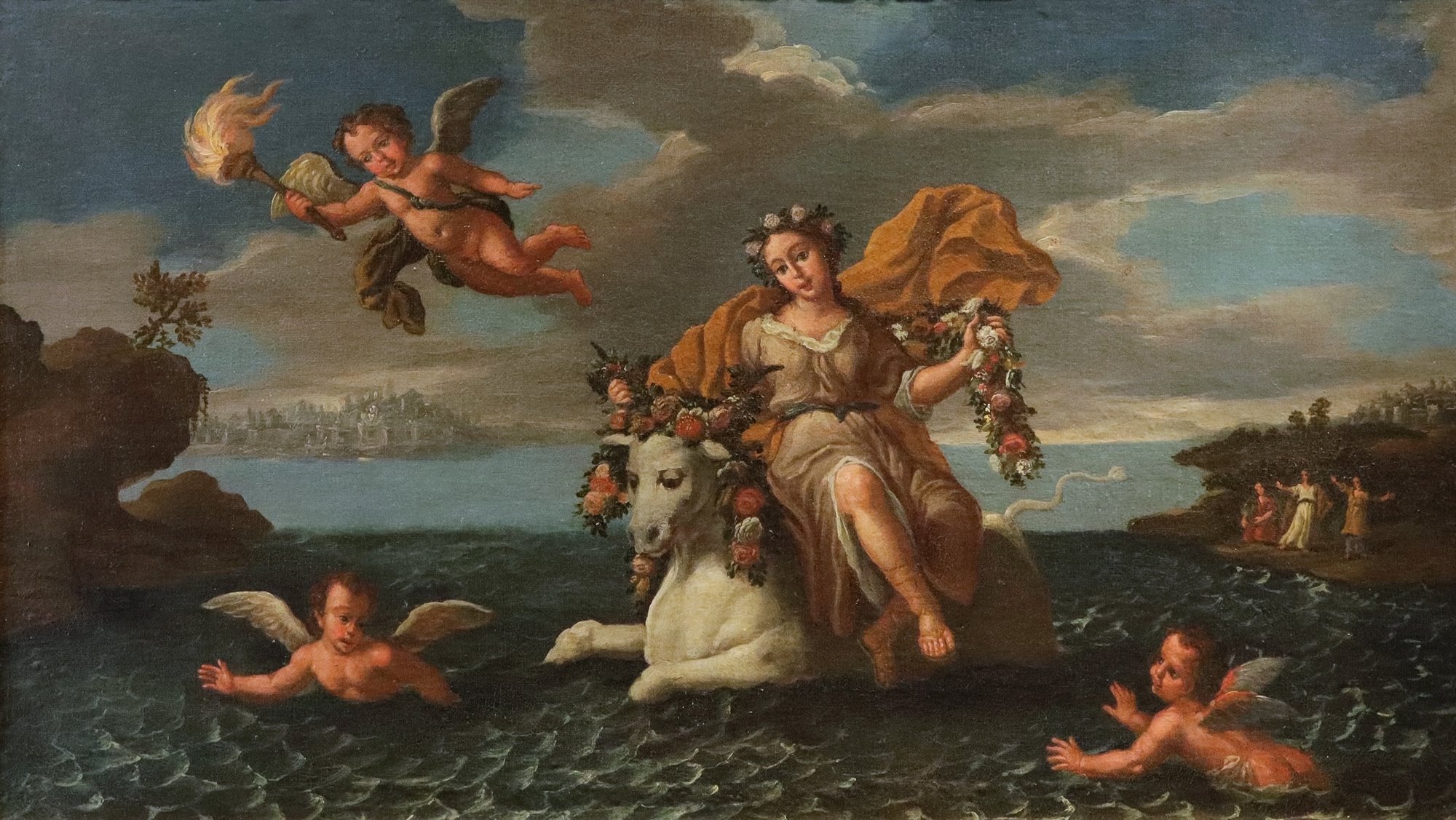
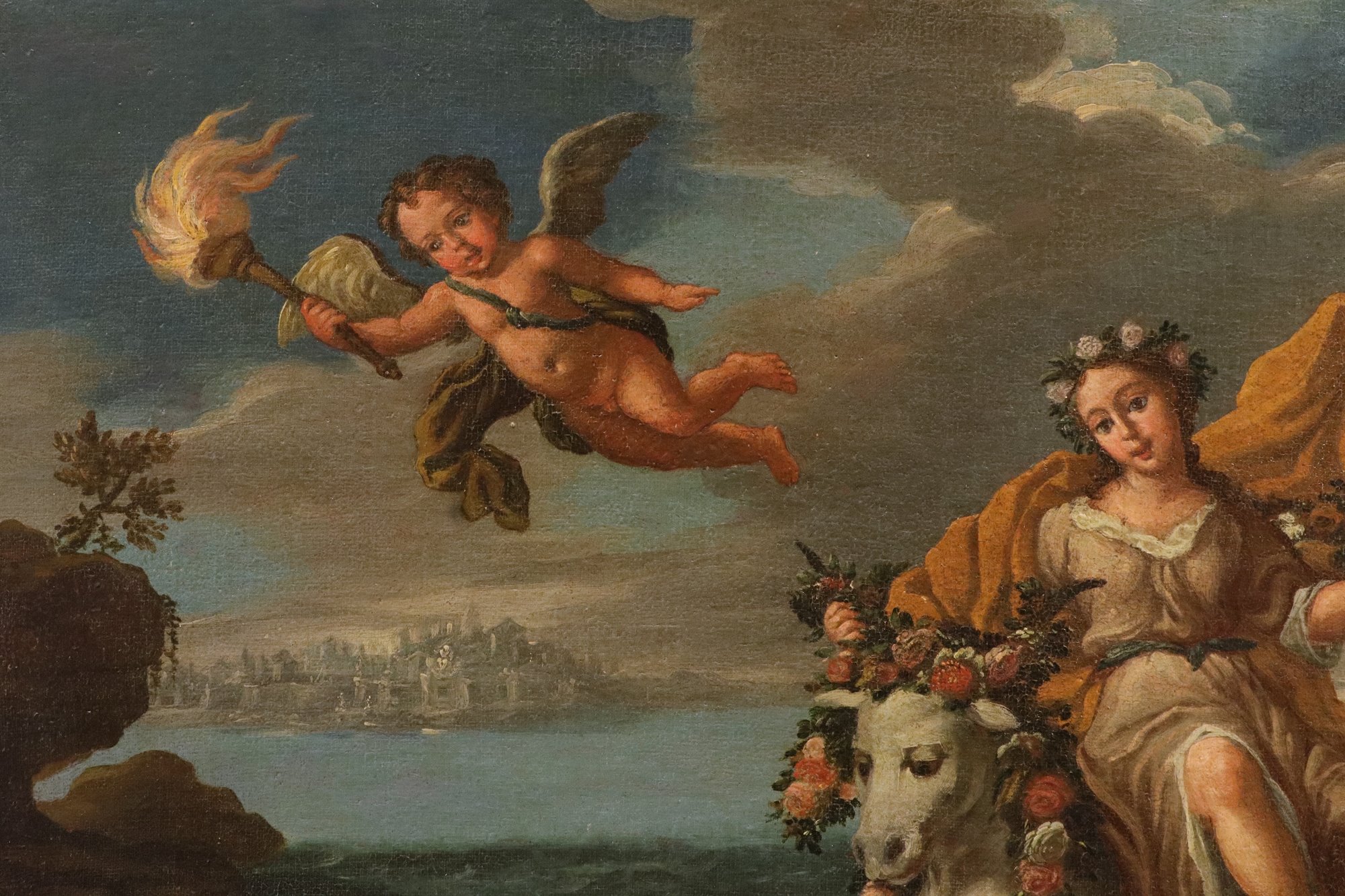
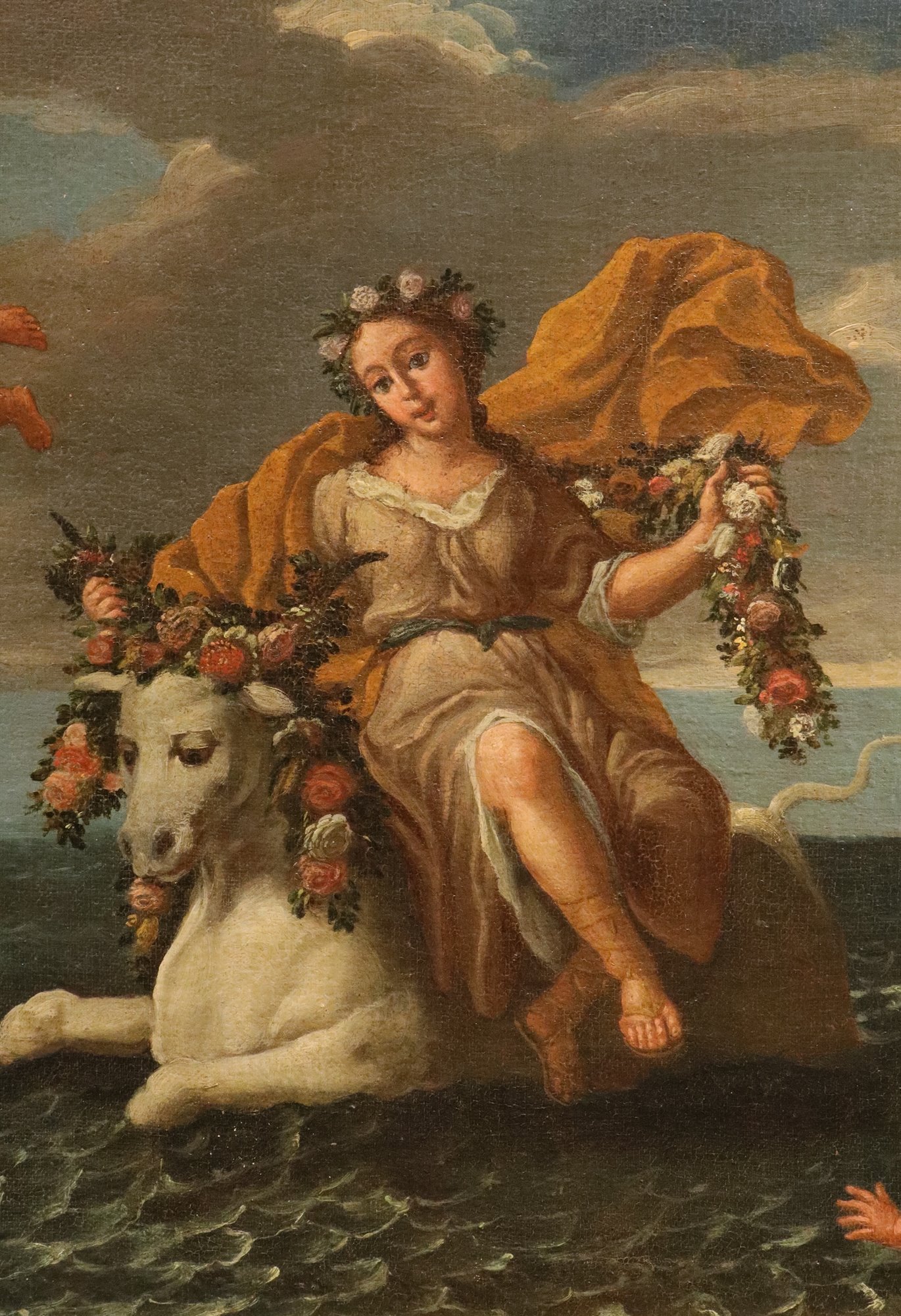
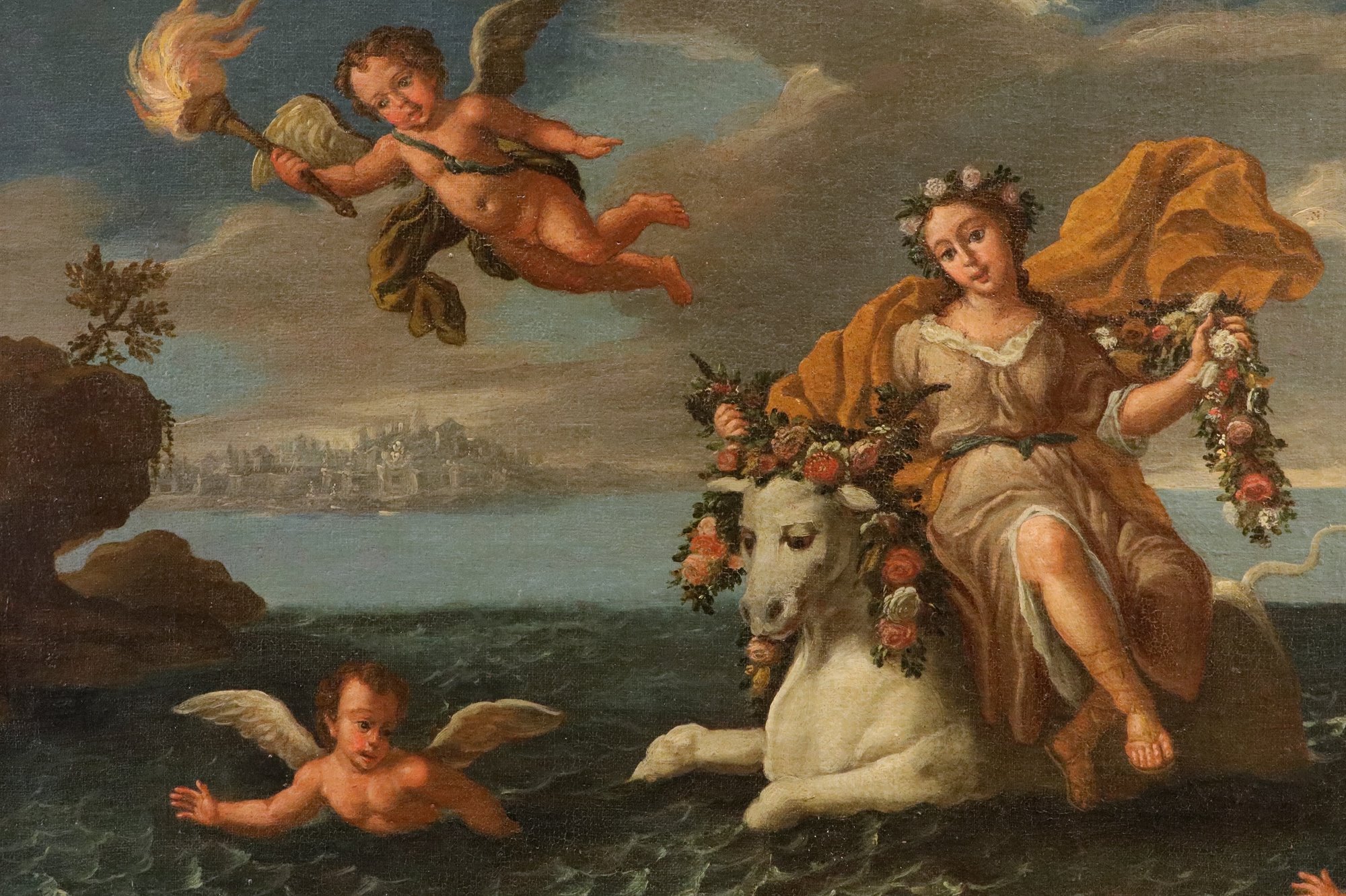
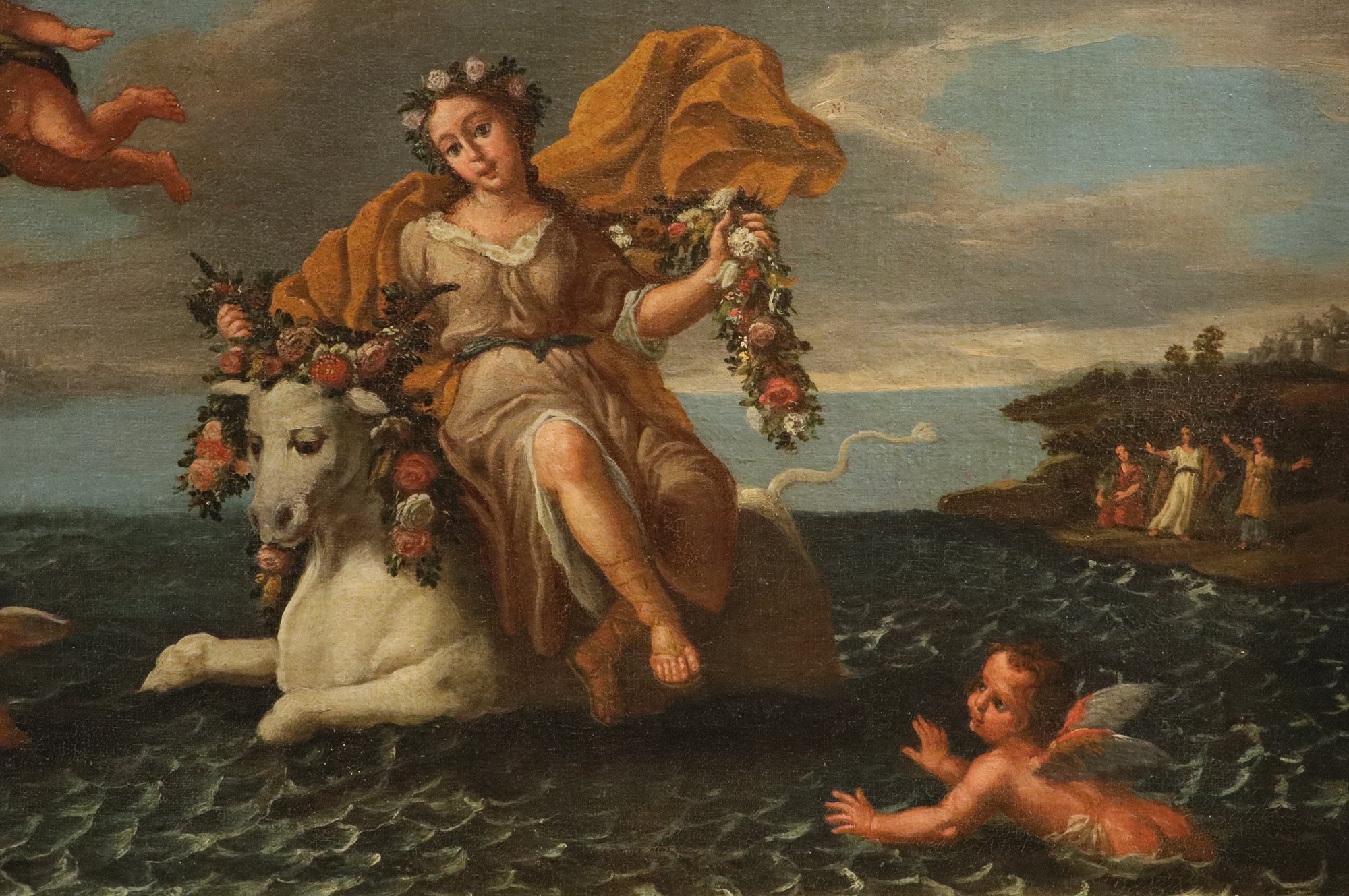
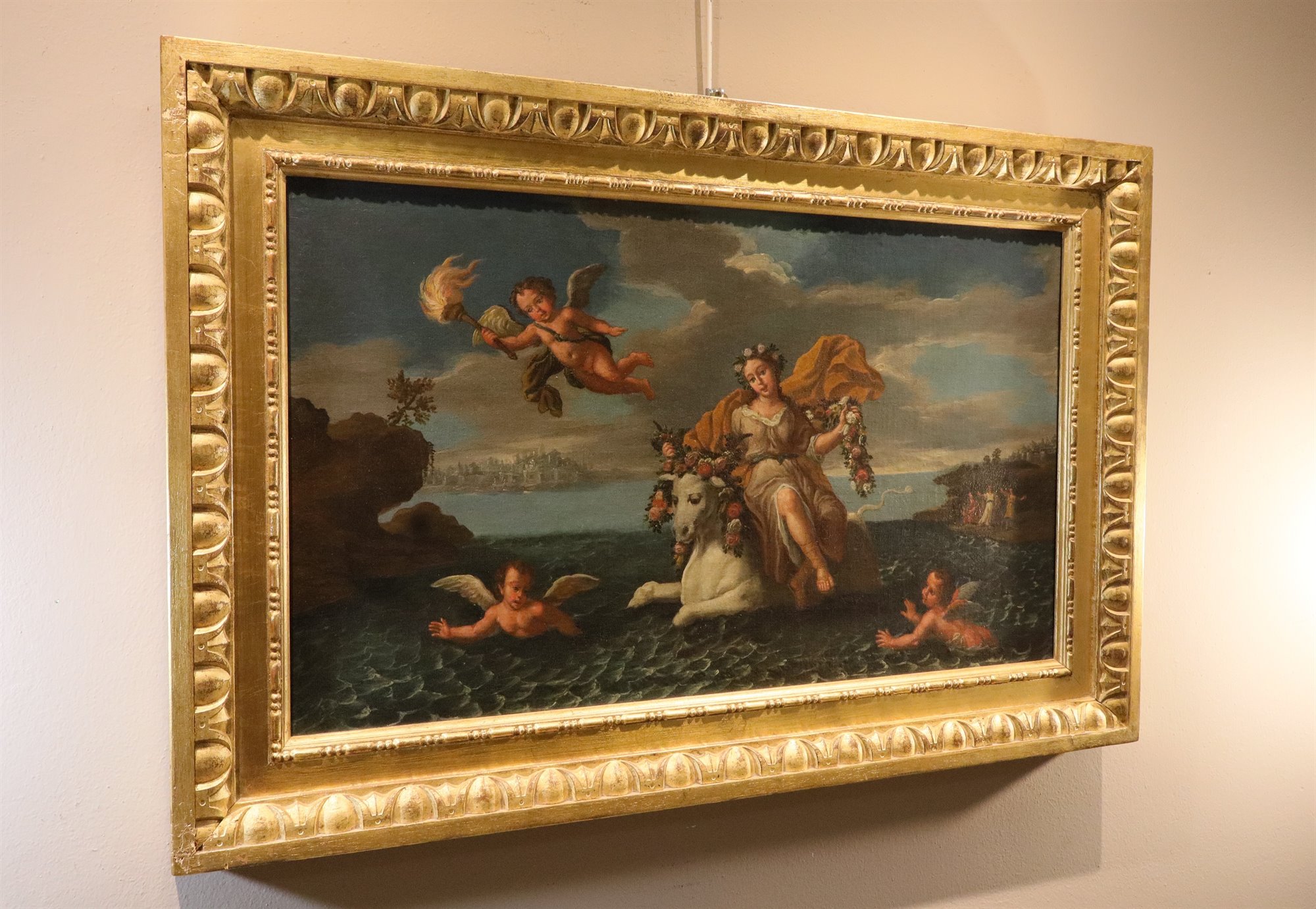
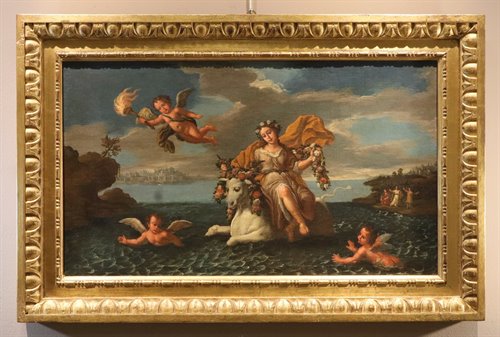
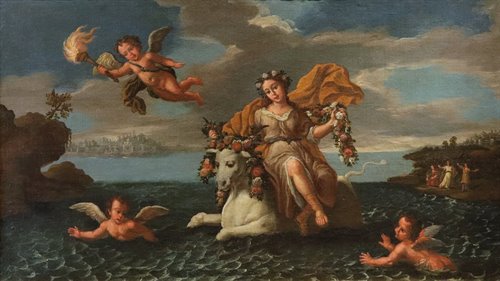
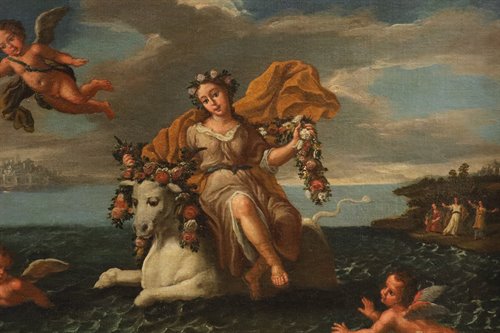
This beautiful painting, which can be attributed to the artistic circle of Paolo De Matteis (Piano Vetrale, 1662 - Naples, 1728), depicts, through a highly elegant composition, an episode from Greek mythology: the abduction of the Phoenician princess Europa by Jupiter, as described by the Latin poet Ovid in his Metamorphoses.
This myth enjoyed great popularity in Roman Baroque painting of the late 16th and early 17th centuries, often commissioned as a subject to decorate the sumptuous private rooms of the city's aristocratic palaces.
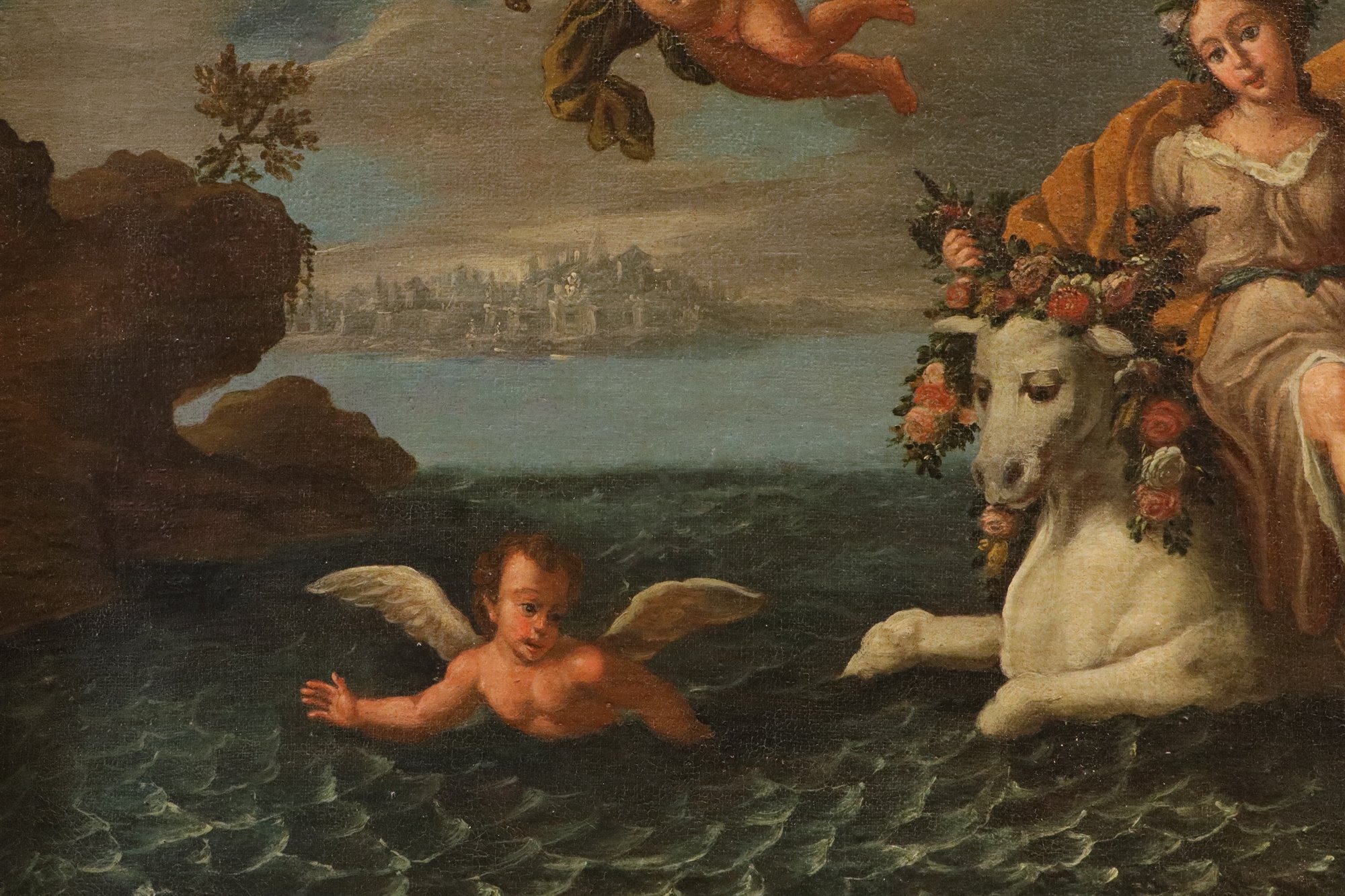
The work illustrates, in particular, the climax of the tale in which the King of the Gods, having transformed himself into a bull to deceive her, takes Europa by force, fleeing to the island of Crete, and swims away proudly, cutting through the rough sea.
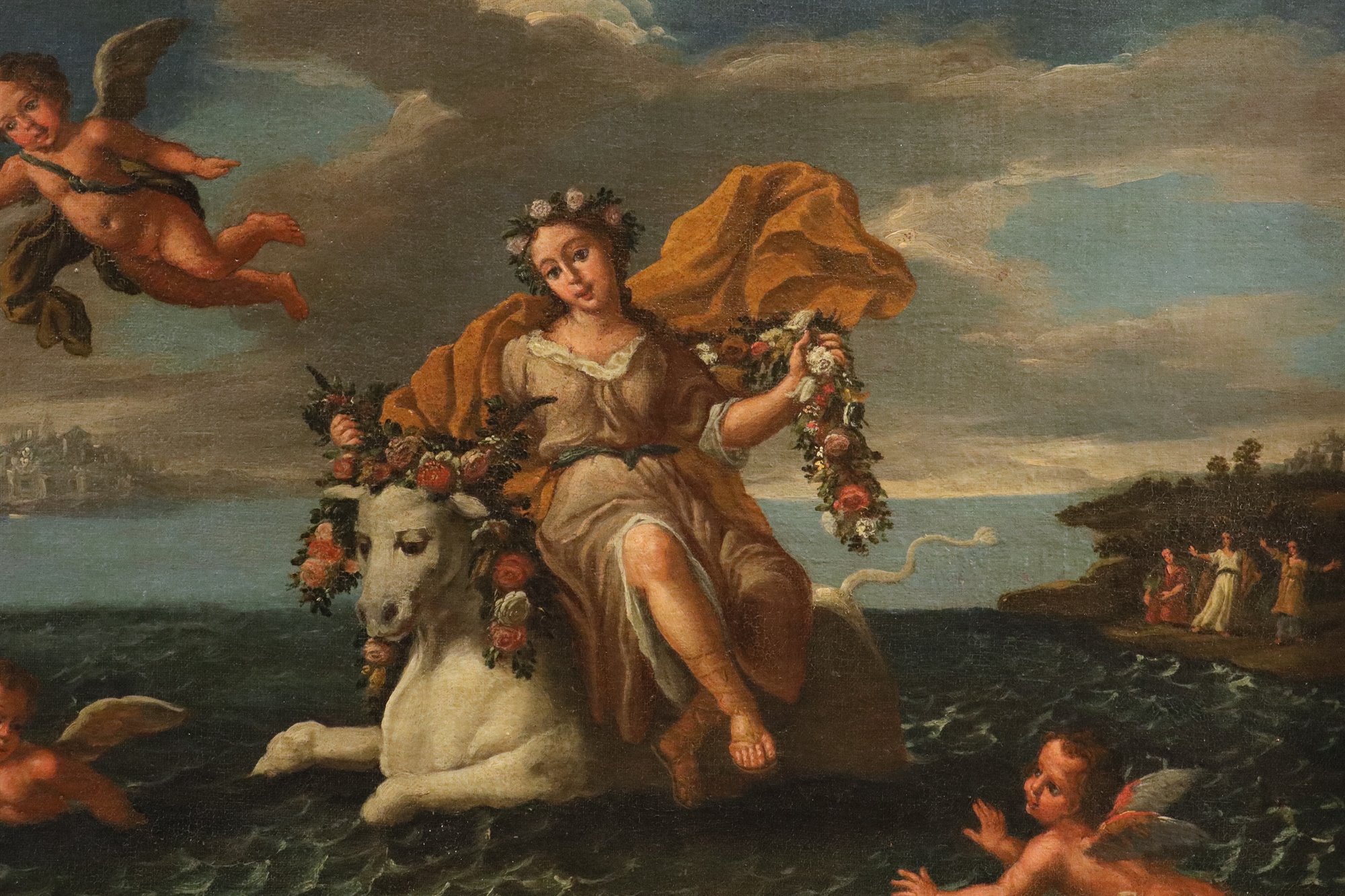
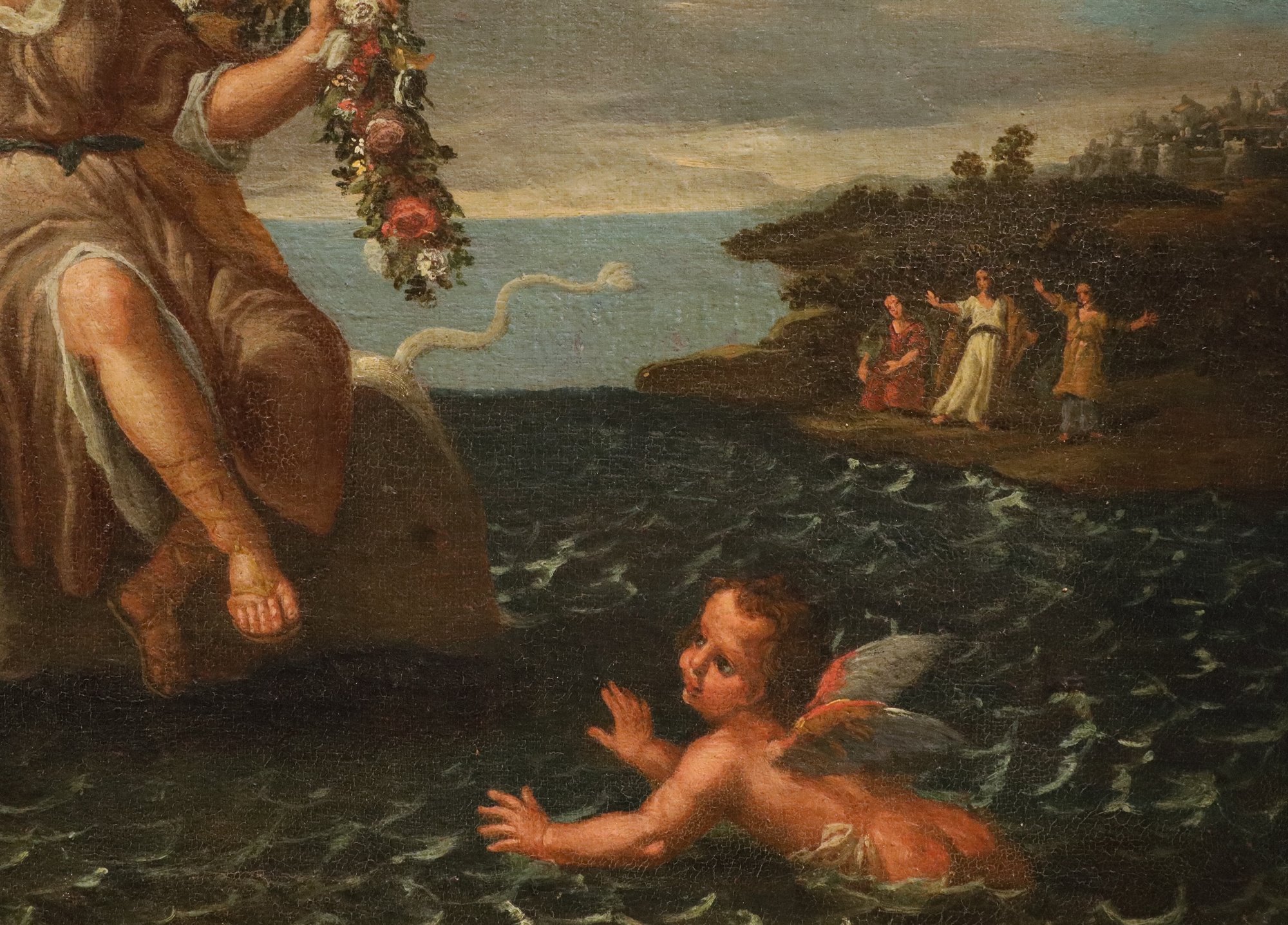
The princess does not appear terrified, but assumes a regal and languid pose, sitting on the animal's back while holding onto its horns, crowned with flowers and wrapped in a classical robe. In her left hand, she holds a floral garland, while behind her, a large golden cloth billows, catching the wind.
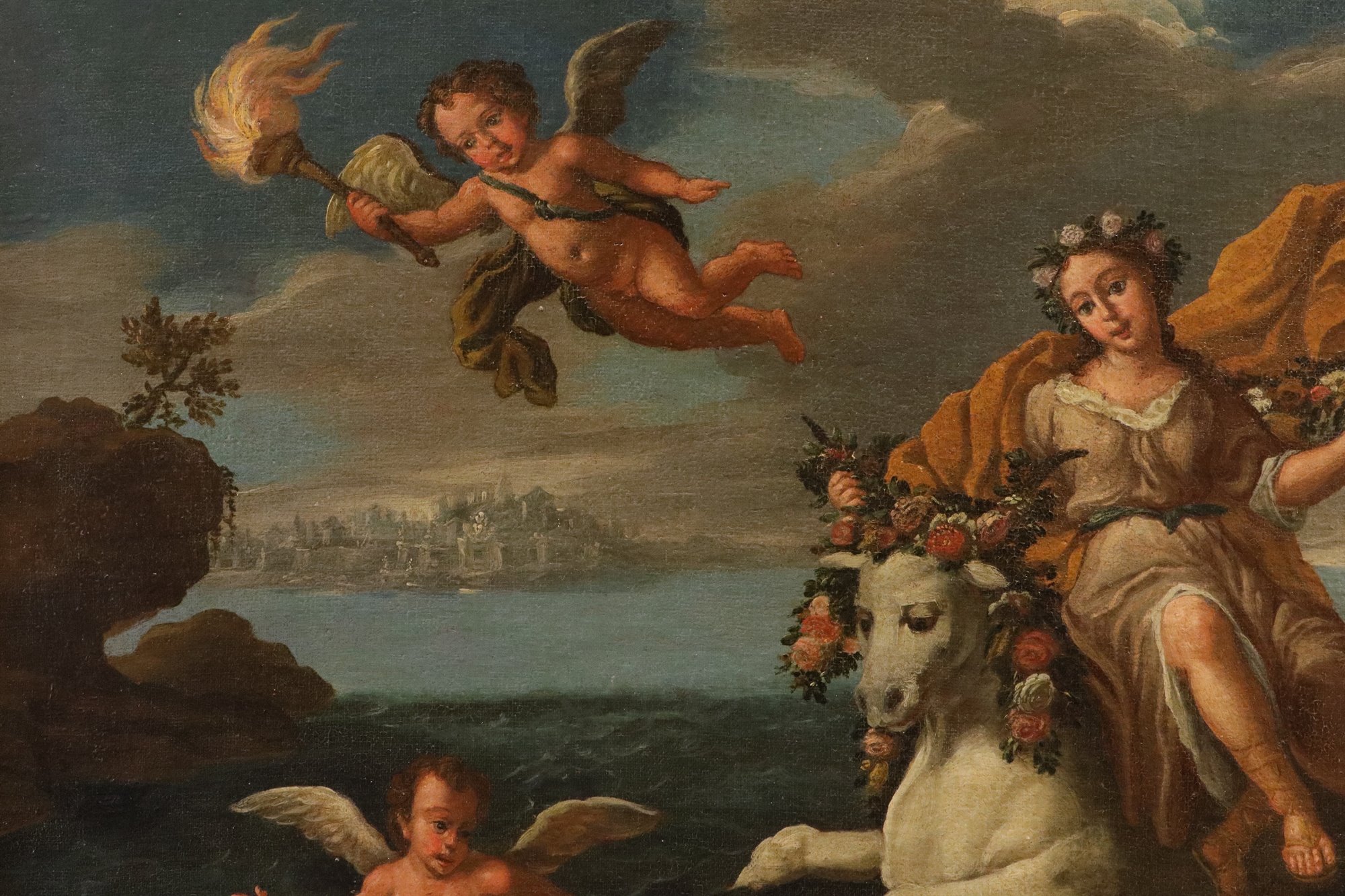
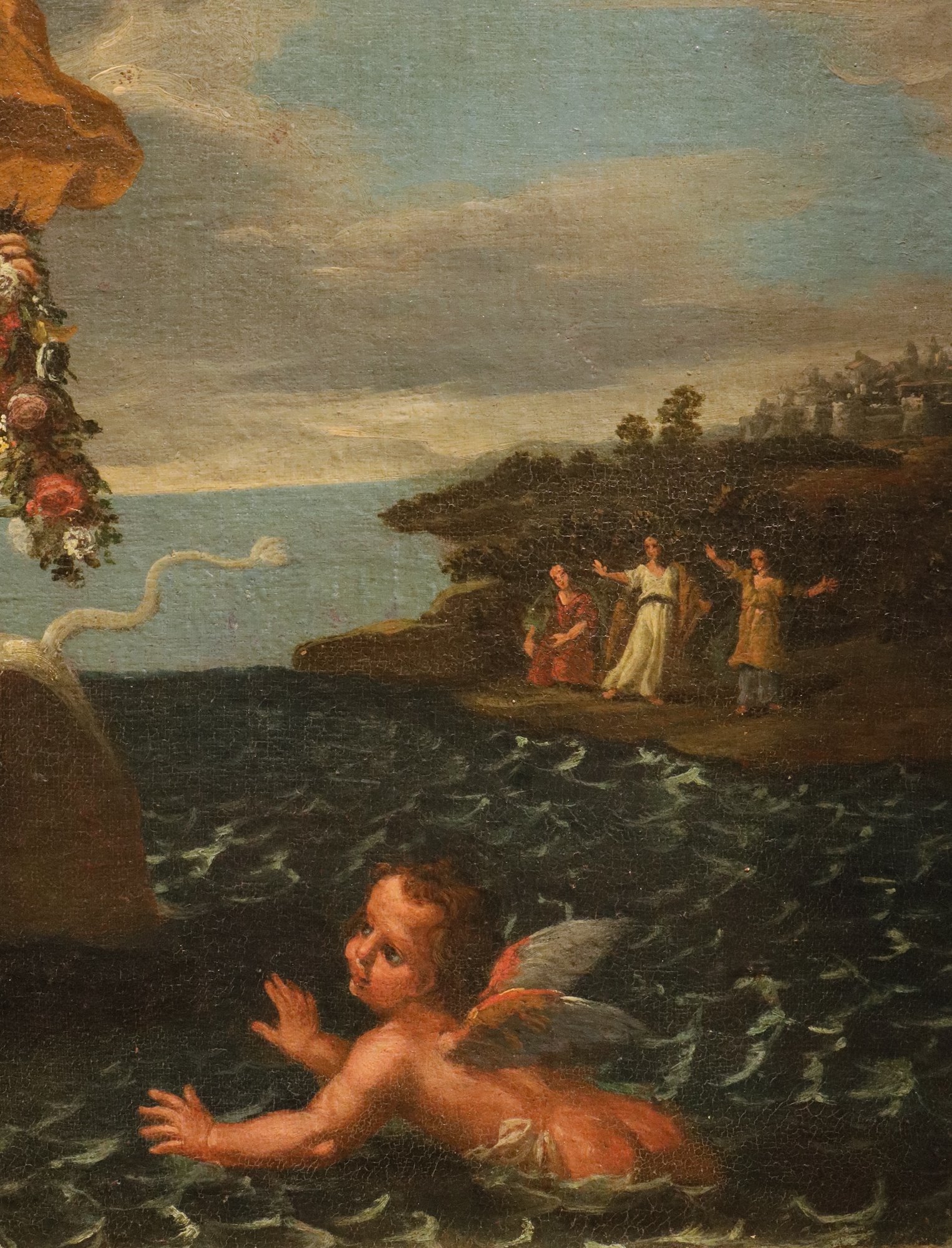
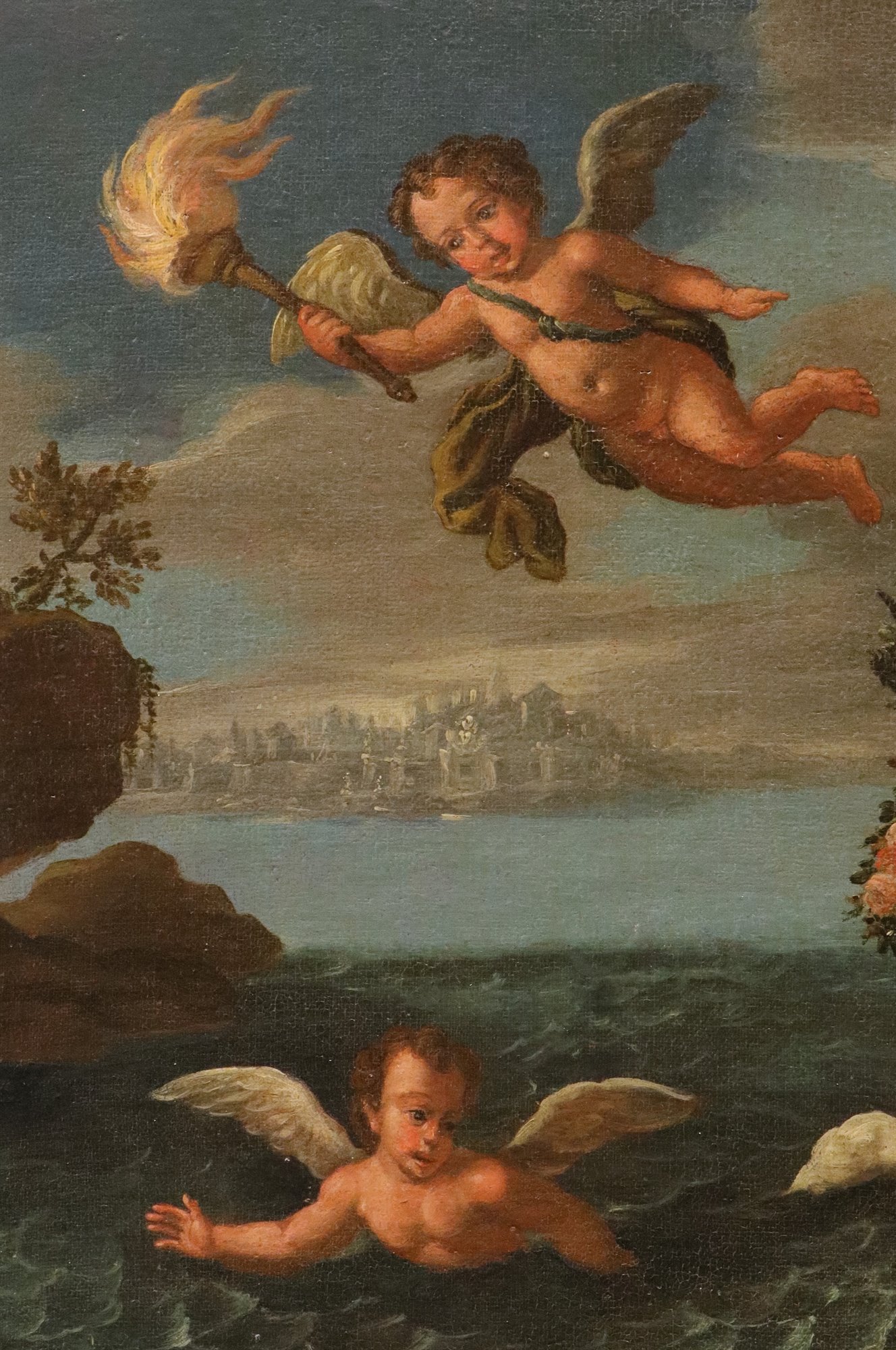
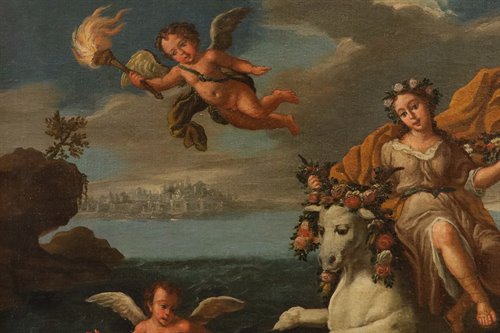
A flying putto precedes the couple on the left, tearing through the clouds and holding a burning torch, a symbol of the passionate love that drove Zeus to this gesture. Two other putti move in the rippling waters: one on the left swims, looking upward, while the one on the right flanks the bull's tail, as if escorting and protecting the divine crossing to Crete.
On the rocky outcrop to the right, Europa's three maids helplessly watch the scene, waving their arms and reaching out to their princess, expressing grief and dismay at her sudden disappearance.
On the left, beyond the flying putto, the coast ends with a dark rocky promontory. In the distance, along the sea horizon, the faint outline of a fortified city can be seen, a symbol of her native Phoenicia, which Europa is leaving behind forever.
The composition and classicism of the style, highlighted by the brilliant color palette, and the painterly quality evident in the painting support its attribution to Paolo de Matteis, one of the most important painters of the Southern Italian Baroque.
A prominent pupil of Luca Giordano, he successfully combined the master's vigorous Baroque influence with a more graceful classicism, thanks to his predilection for mythological subjects.
His stay in Rome (between 1682 and 1683) was crucial to his development, where he deeply absorbed the classicist teachings of Carlo Maratta, an advocate of an ideal classicism influenced by Raphael and Annibale Carracci. Maratta modified the compositional grace and chromatic luminosity with his orderly and rigorous design, anticipating the softness and elegance typical of eighteenth-century Rococo.
Regarding the canvas in question, elements such as the idealized figure of Europa, the theatrical rendering of the waves, and the presence of three small fluttering angels are characteristic expressions of his reinterpretations of the myths of Ovid's Metamorphoses: in our specific case, the composition is indebted to the design of the same subject conceived by Maratta (https://it.wikipedia.org/wiki/File:Carlo_Maratta_-_The_Rape_of_Europa,_1680-1685.jpg).
ADDITIONAL INFORMATION:
The work being sold is complete with a beautiful gold frame and comes with a certificate of authenticity and guarantee.
We handle and organize the shipping of purchased works, both within Italy and abroad, using professional and insured carriers.
The painting can also be viewed at our gallery in Riva del Garda; we would be happy to welcome you and show you our collection.
Please contact us, without obligation, for any additional information.
Follow us also on: