Castelbarco

Antiques Gallery

Fima - Federazione italiana mercanti d'arte

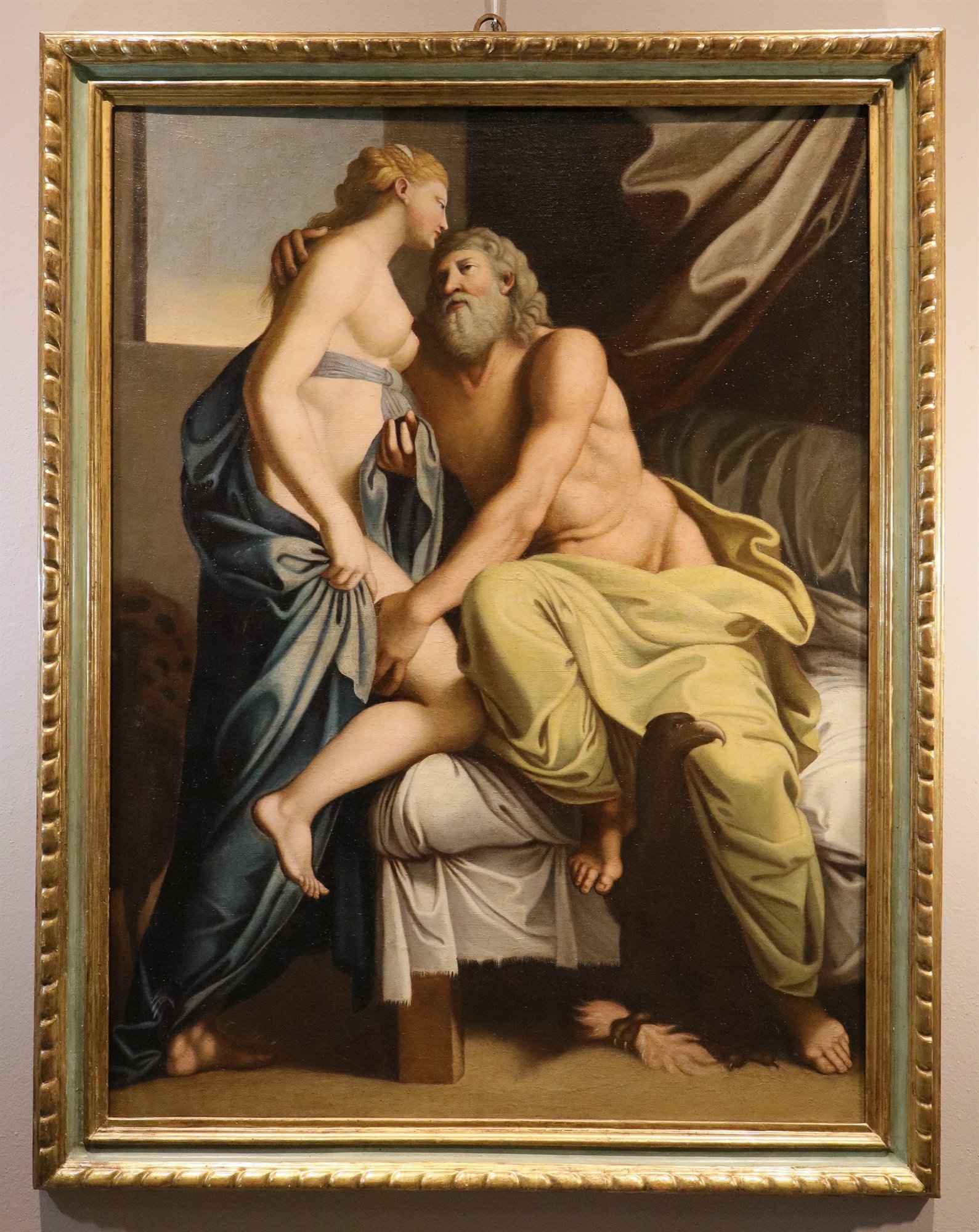
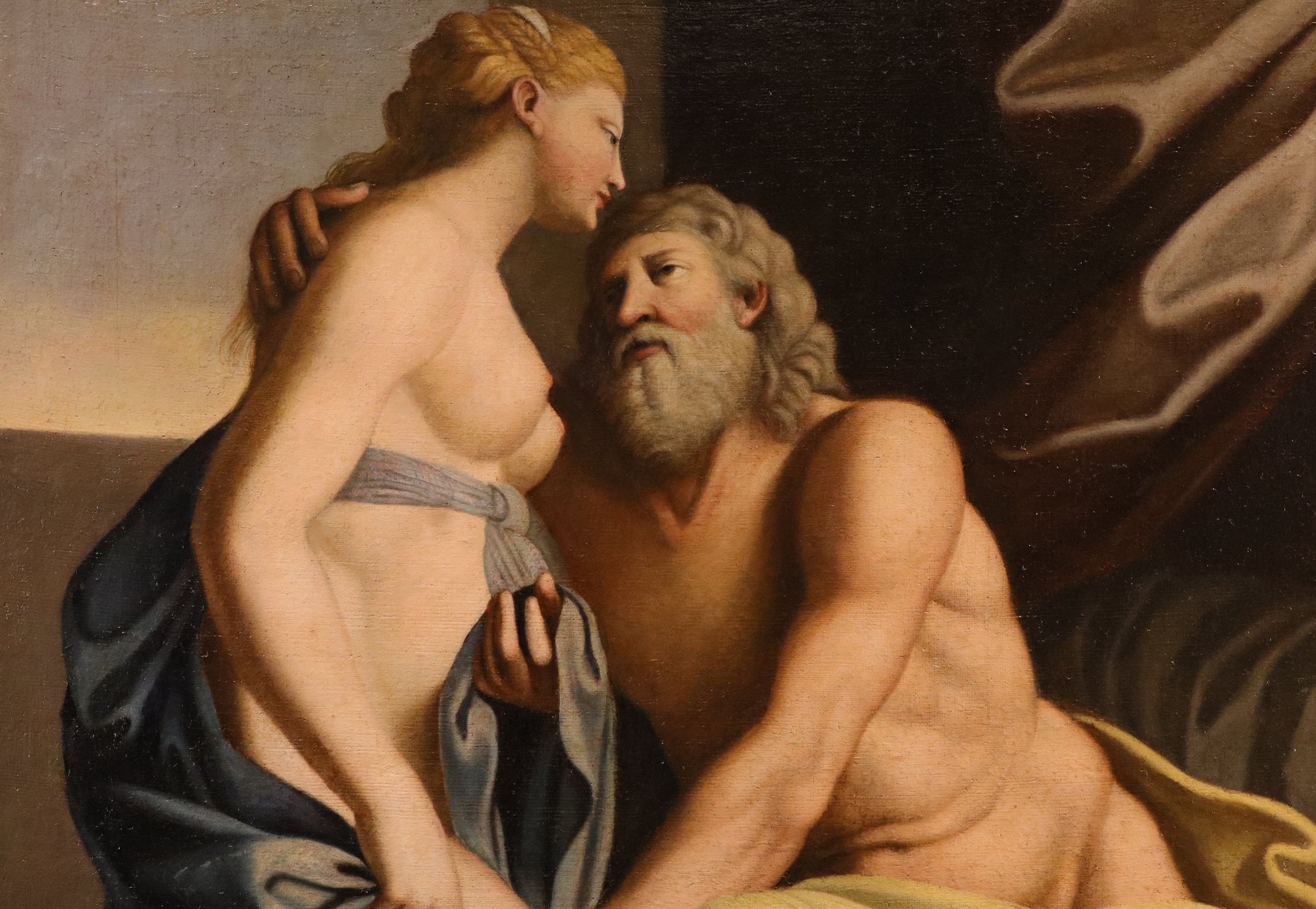
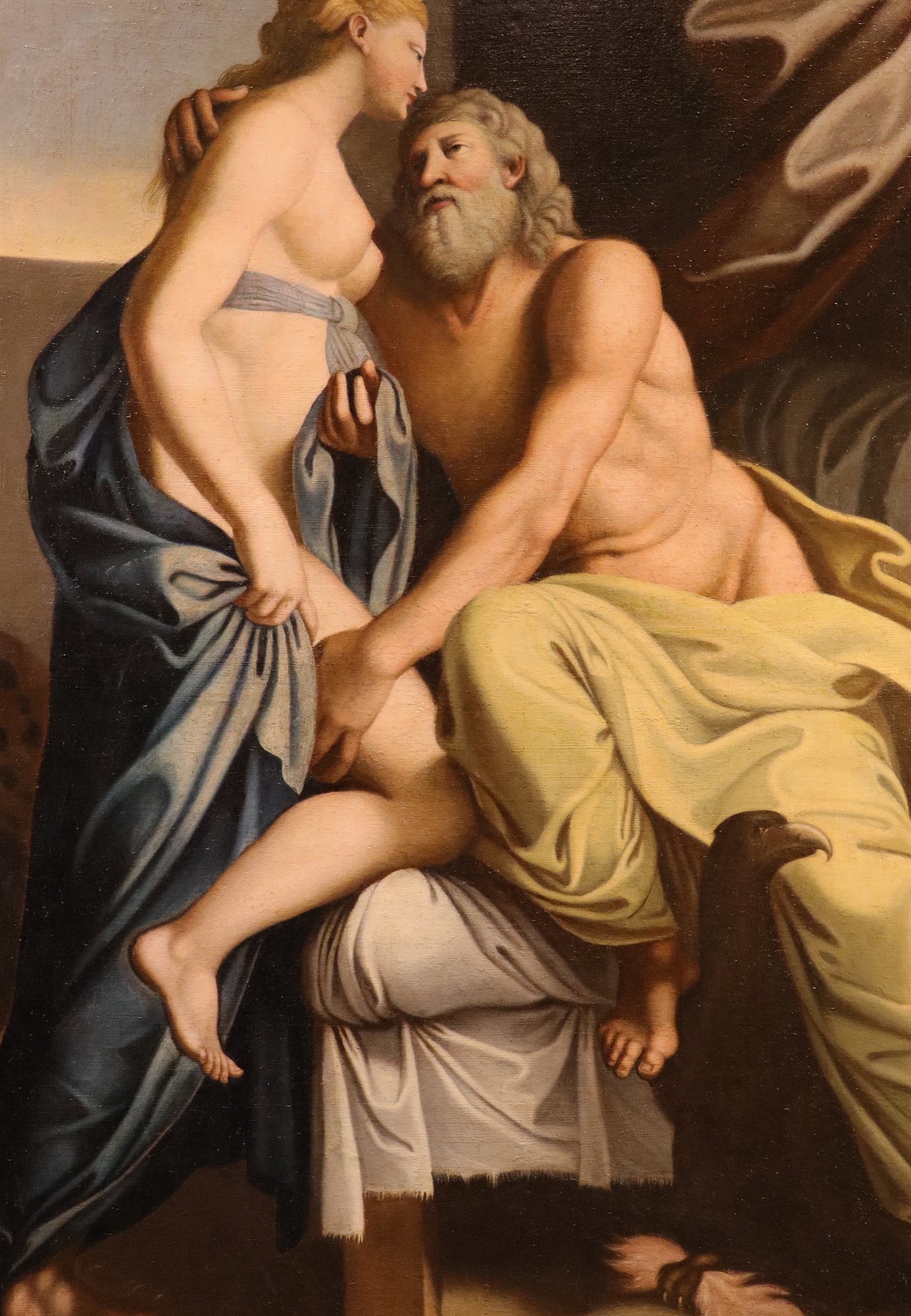
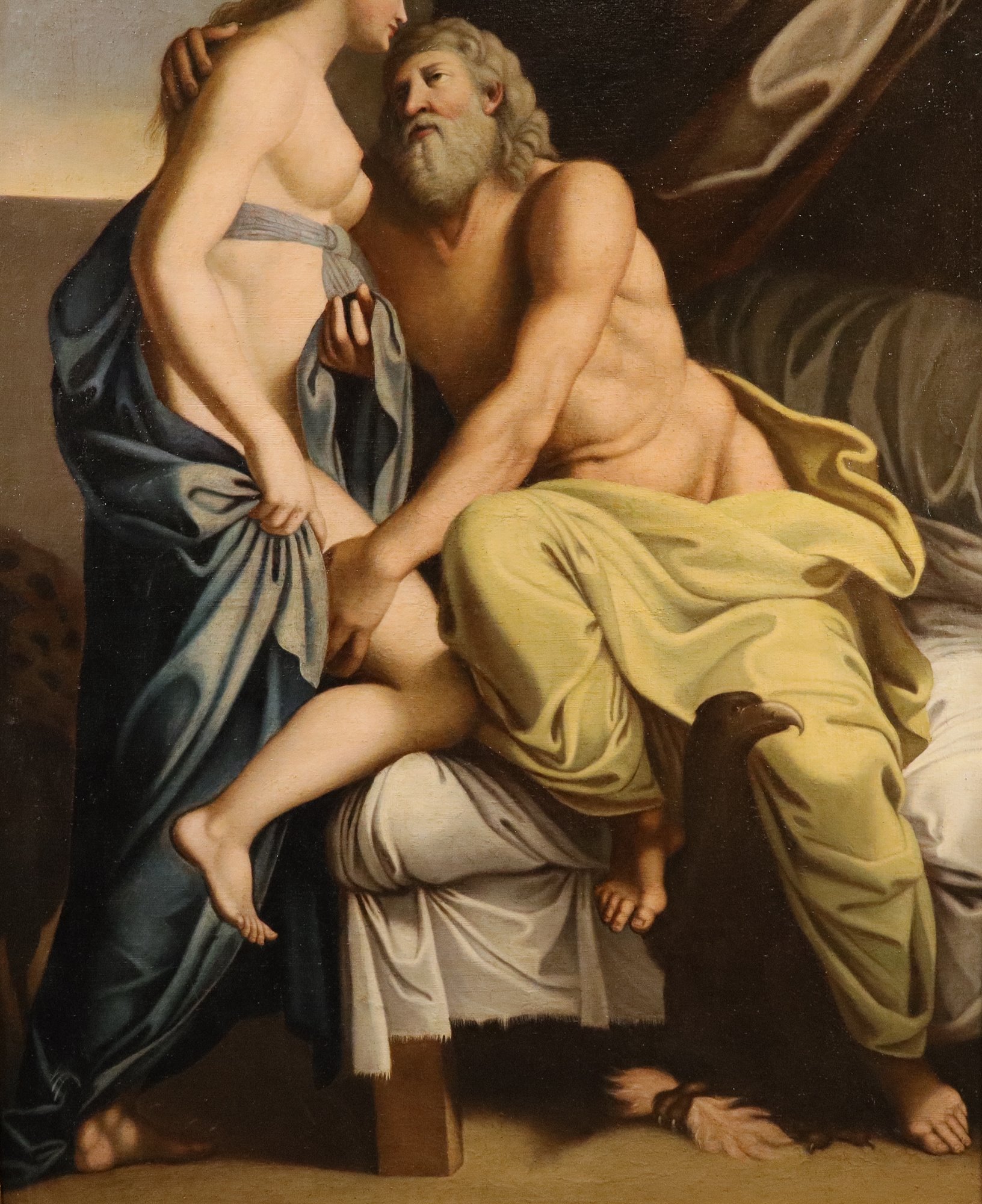
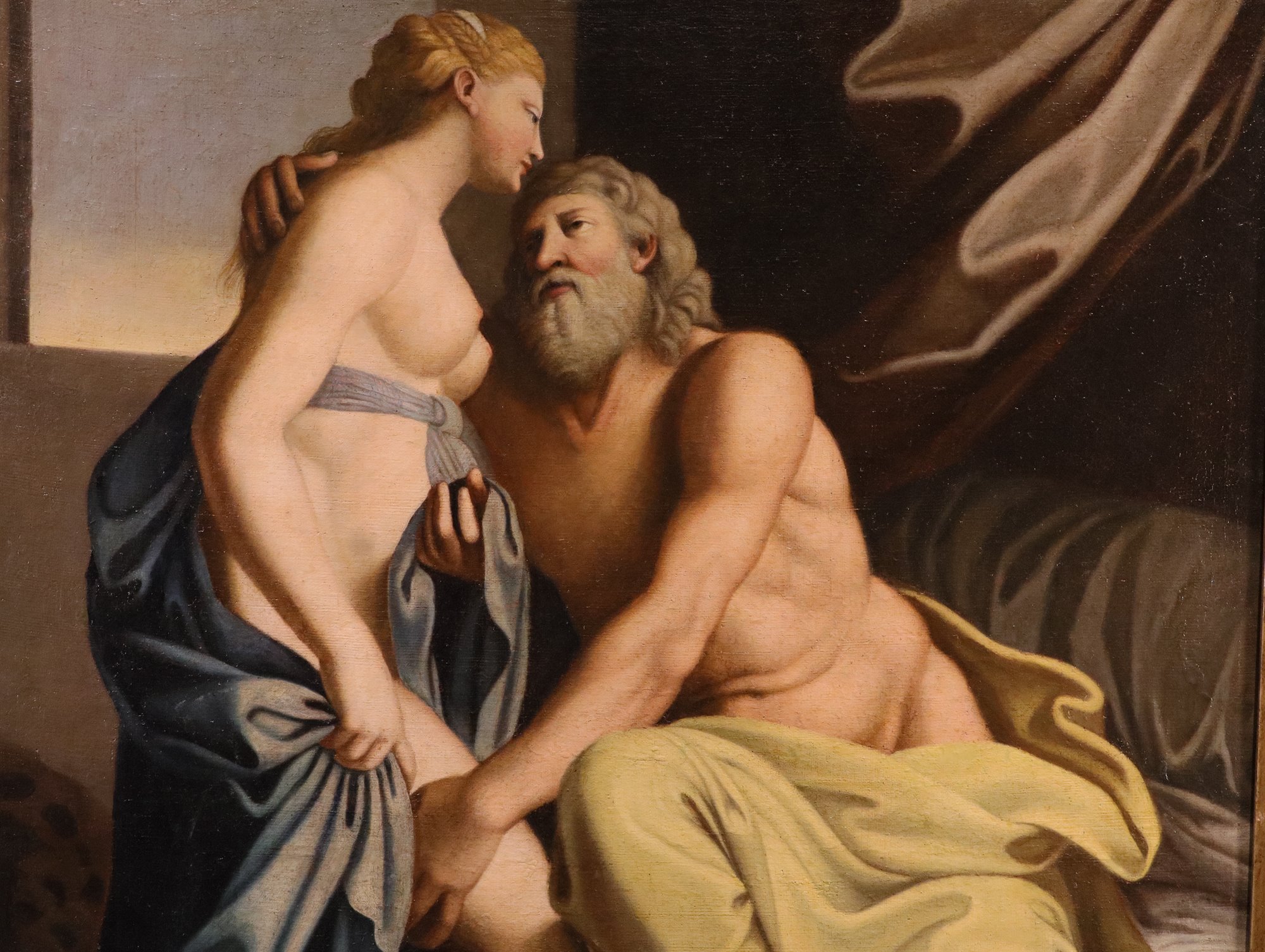
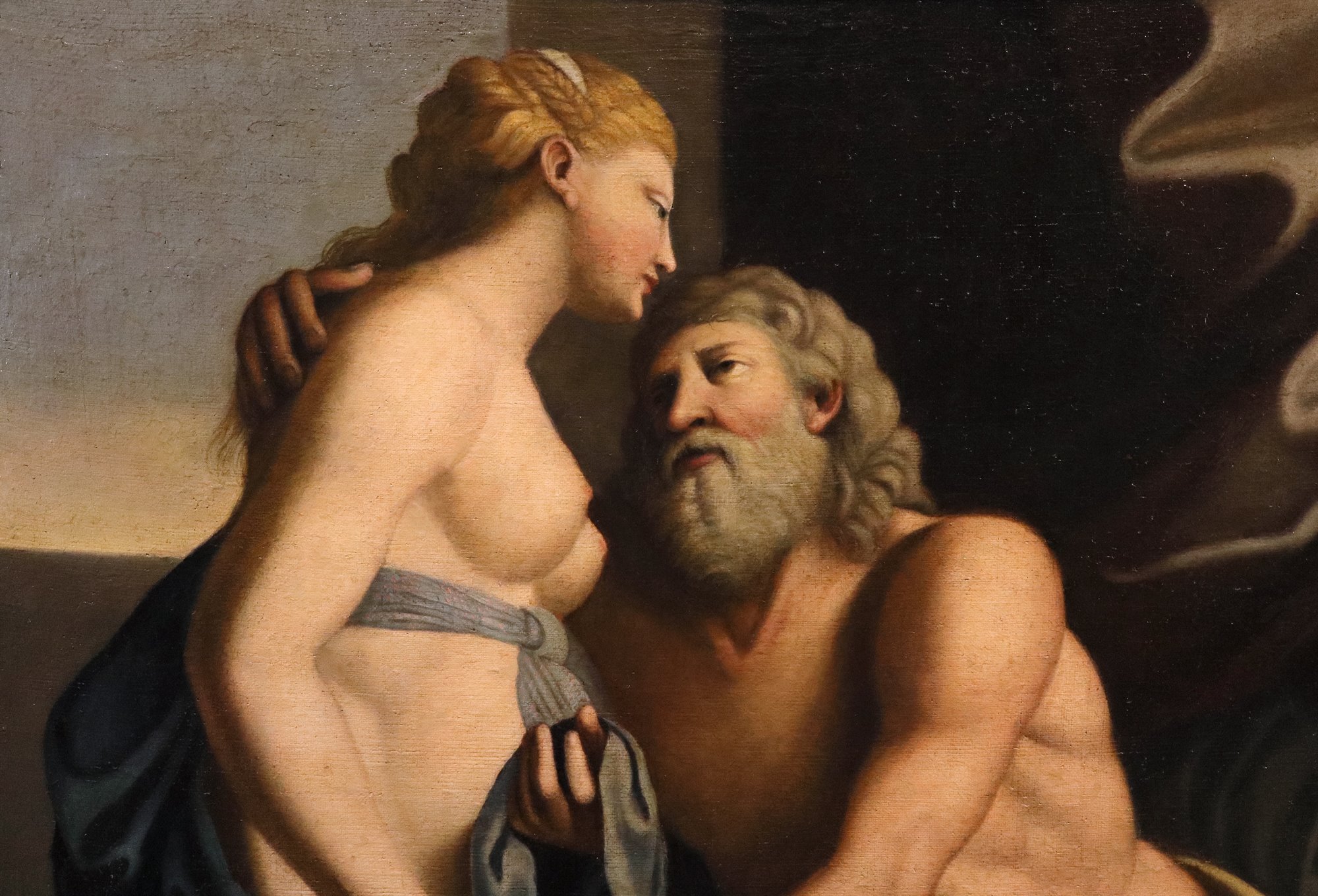
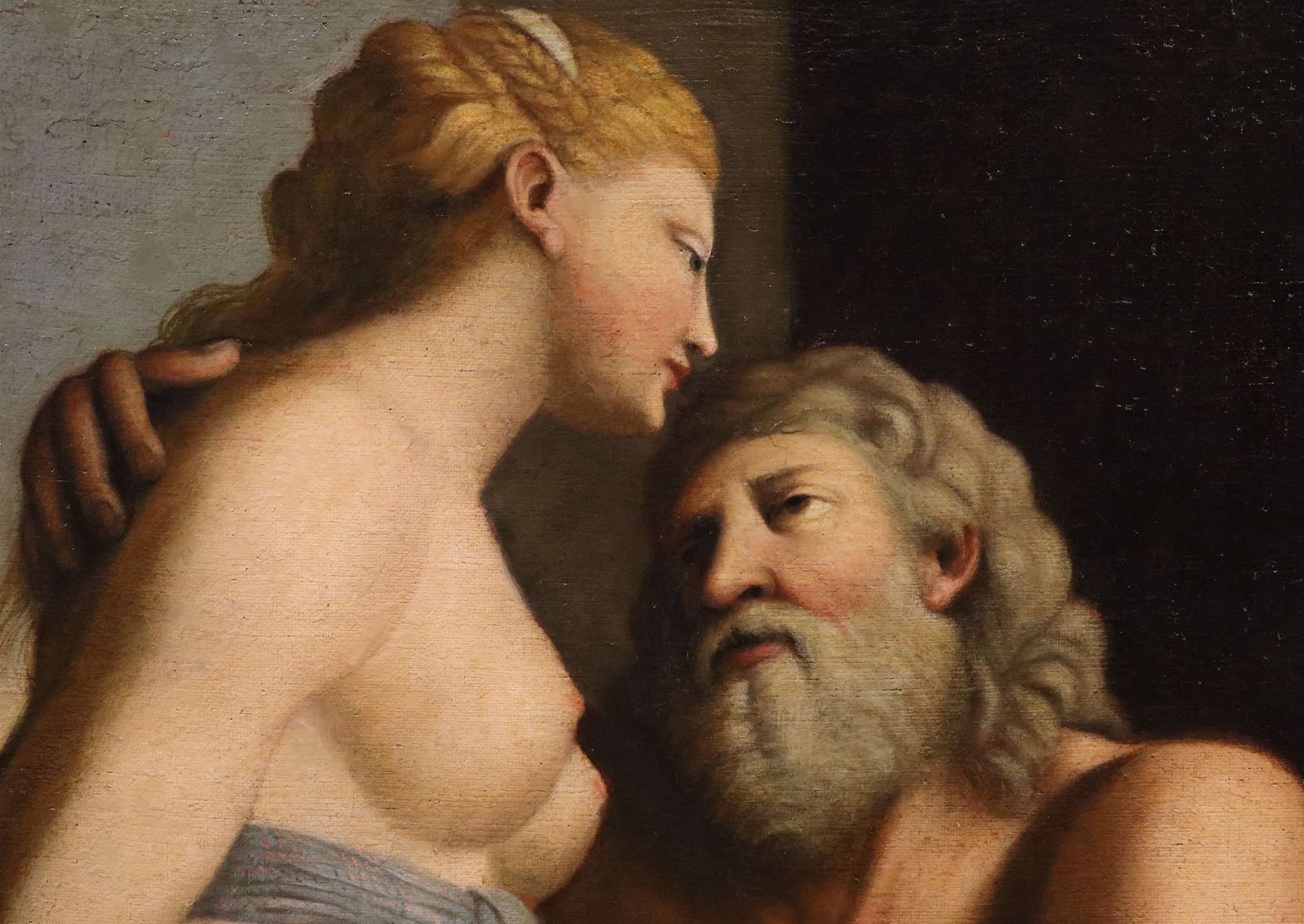
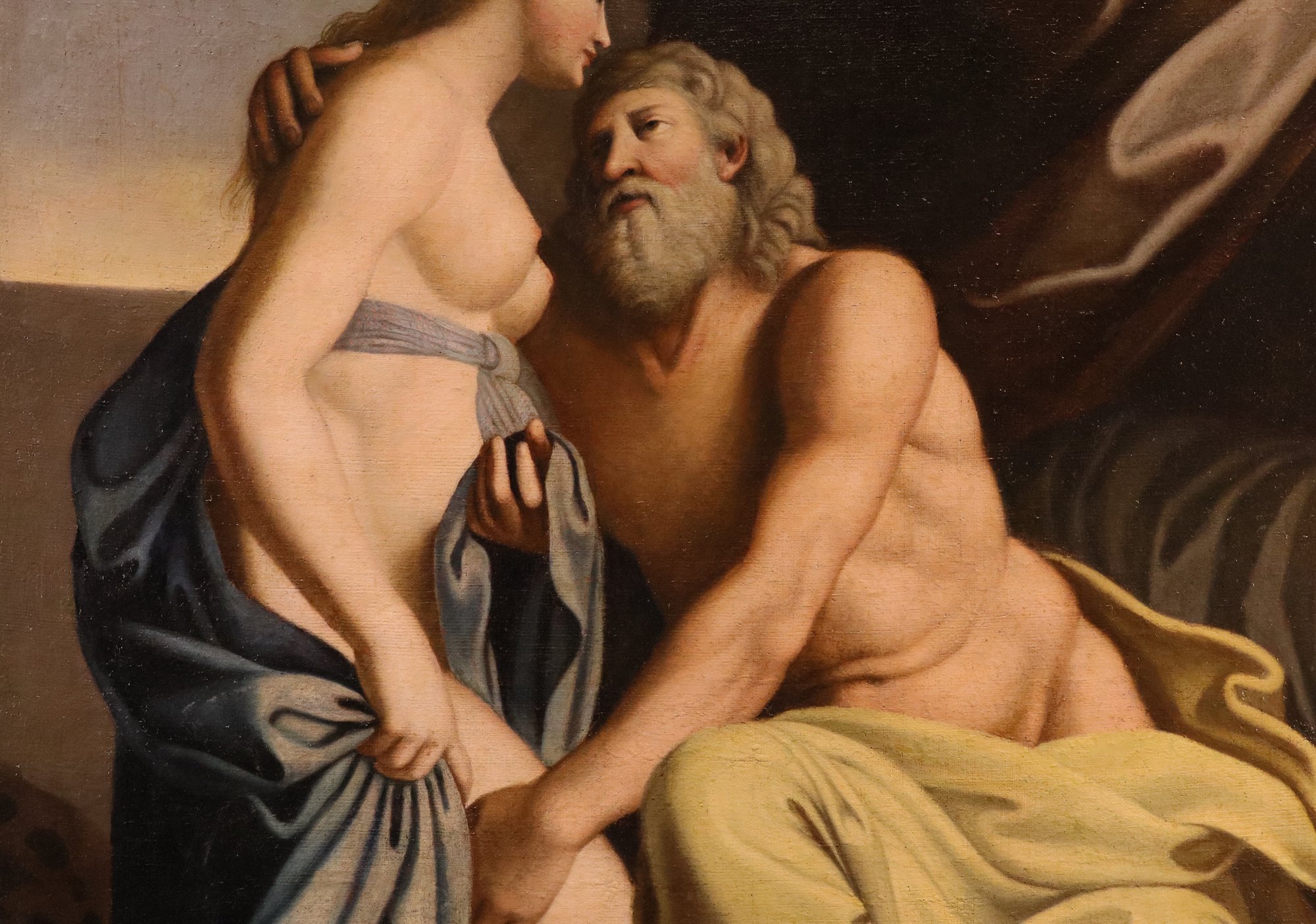
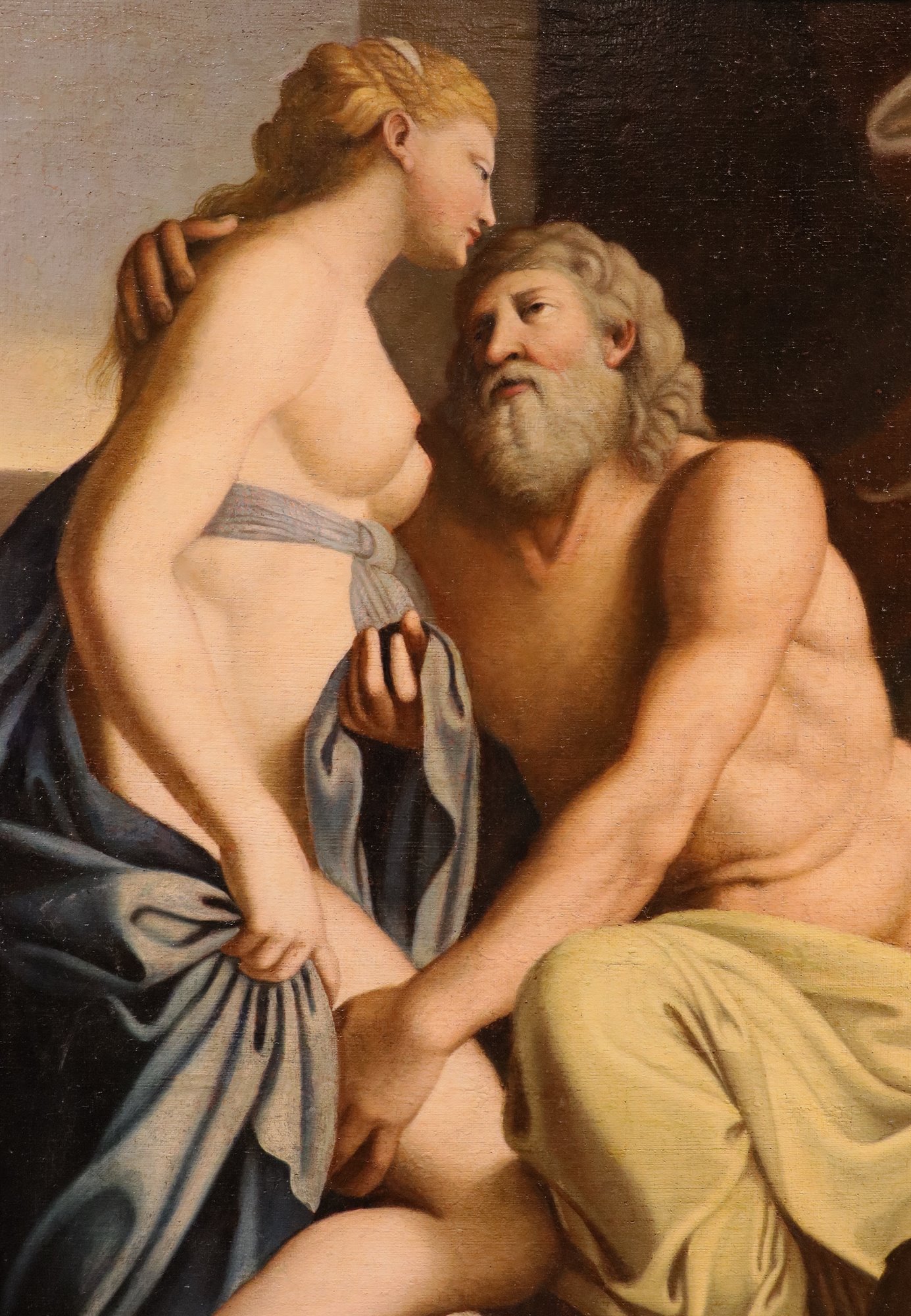
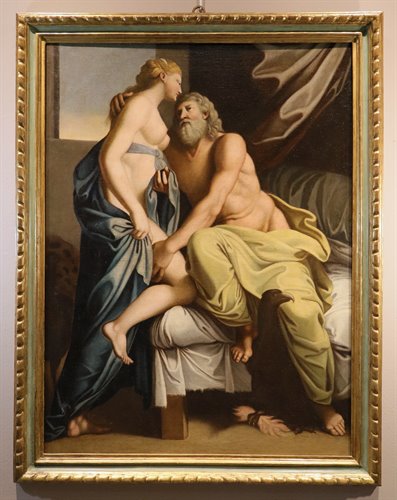
Giove e Giunone

Annibale Carracci (Bologna, 1560 - Roma, 1609) Bottega/Seguace

Annibale Carracci
(Bologna, 1560 - Rome, 1609)
Circle of

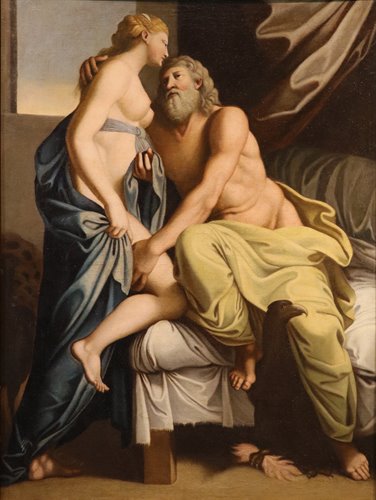
Jupiter and Juno

Oil on canvas

126 x 95 cm.
In frame 142 x 112 cm.
D26-020 Sold Request information

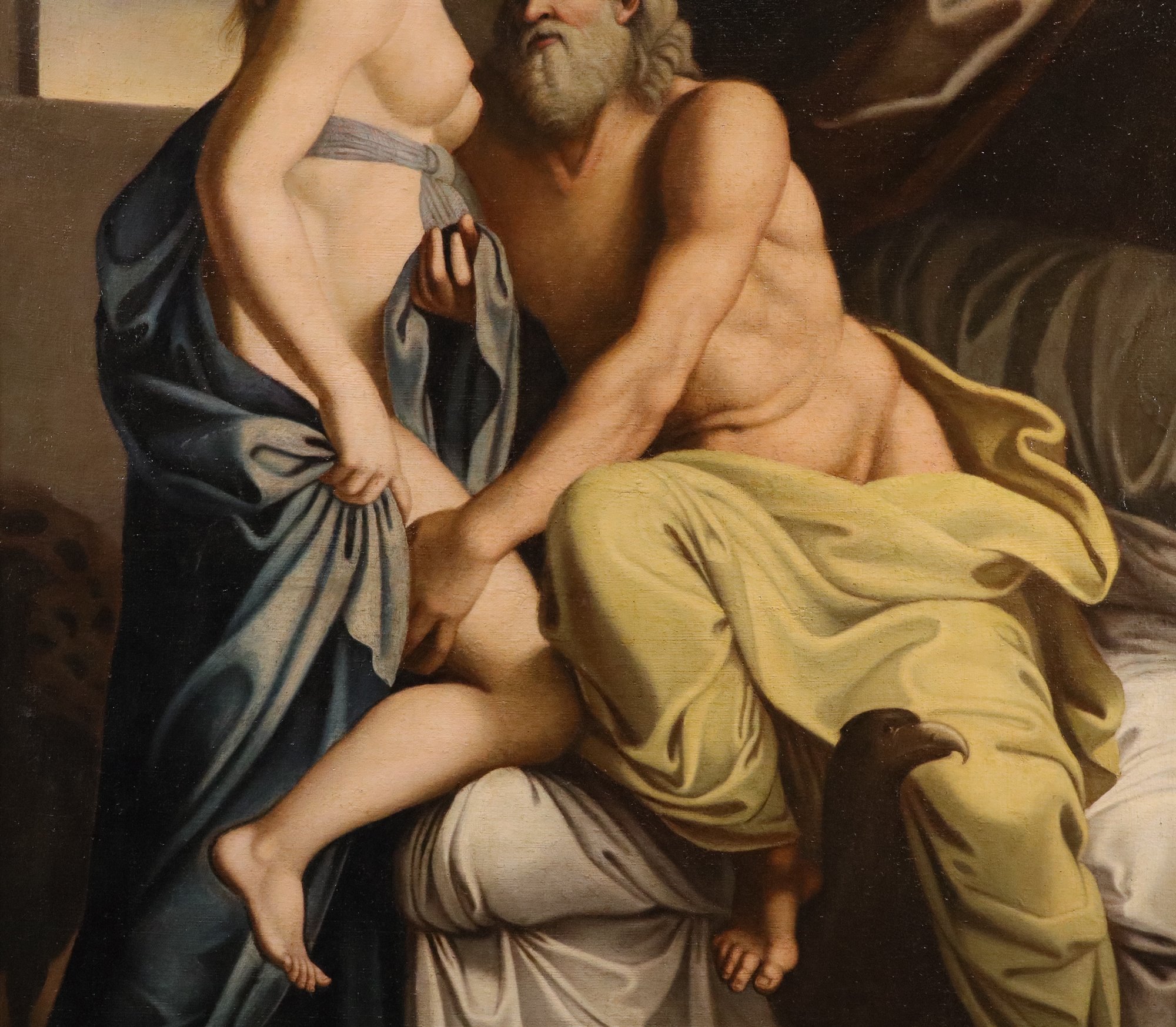
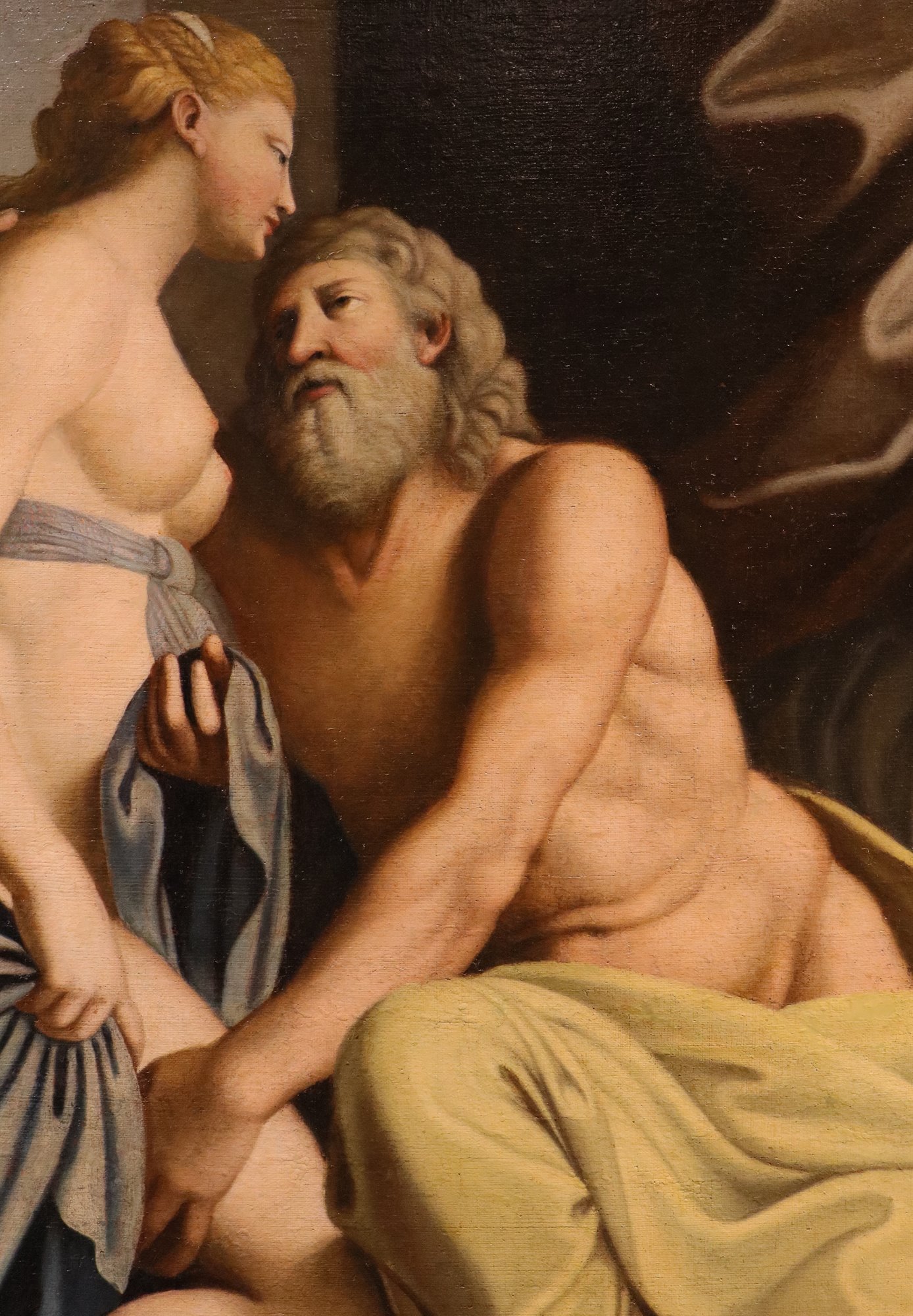
The work depicts Jupiter and Juno, king and queen of the gods, the supreme couple of Roman mythology (Zeus and Hera in Greek mythology), who embody divine power and the complex dynamics of marriage, consisting of loyalty, extreme jealousy and infidelity.

The scene is inspired by Book XIV of the Iliad, when the Queen of Olympus, siding with the Greeks, seduces Jupiter on Mount Ida to distract him from the fate of the Trojan War, as she wanted the Trojans to win in order to avenge her son Achilles.

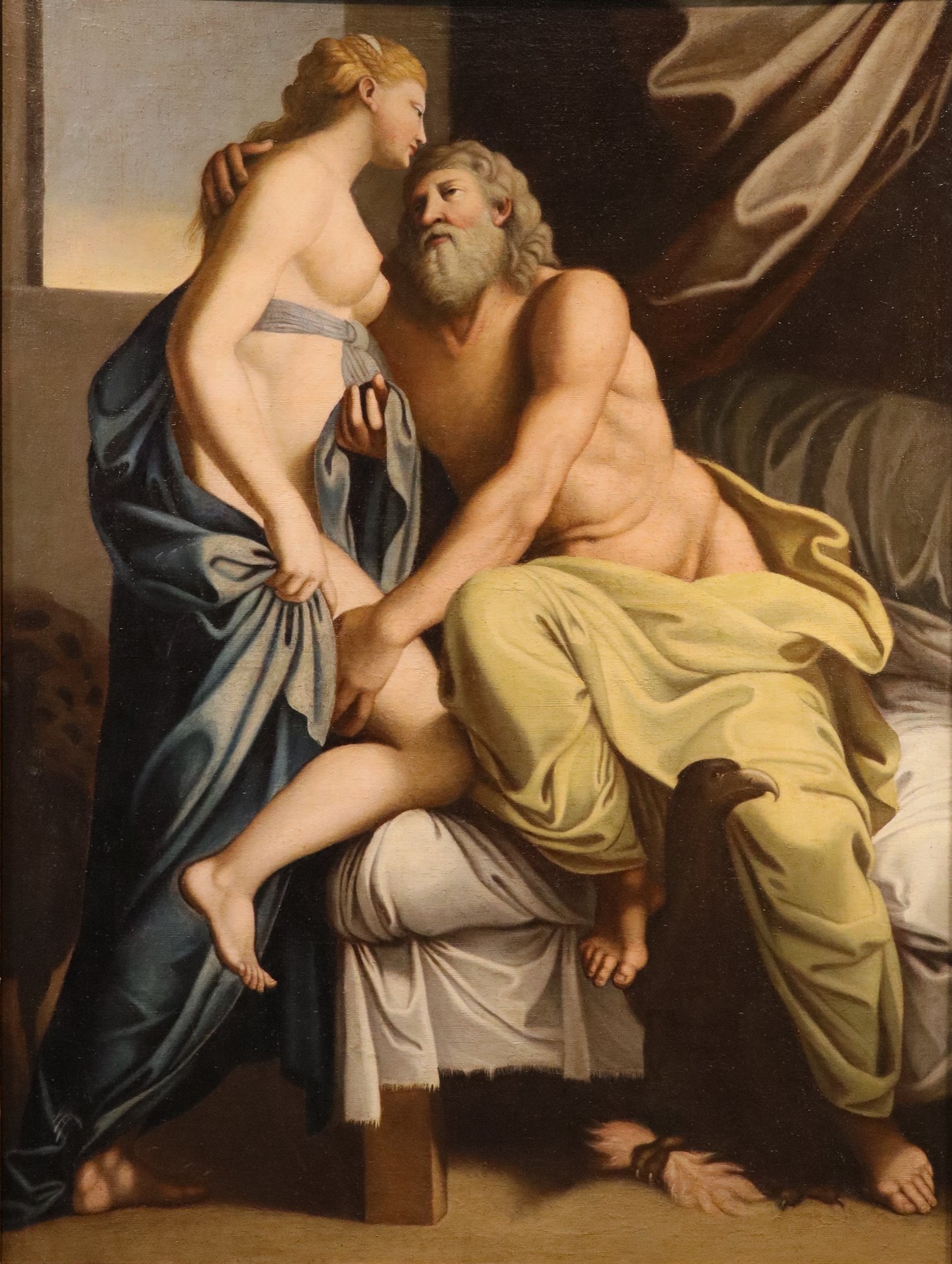
Jupiter, seduced by his wife's bewitching appearance, is depicted welcoming Juno into the bridal chamber: she wears Venus's magic belt to appear irresistible. The scene loses its classical mythological solemnity and takes on a more intimate, almost mischievous tone, emphasising the humanity of the gods.

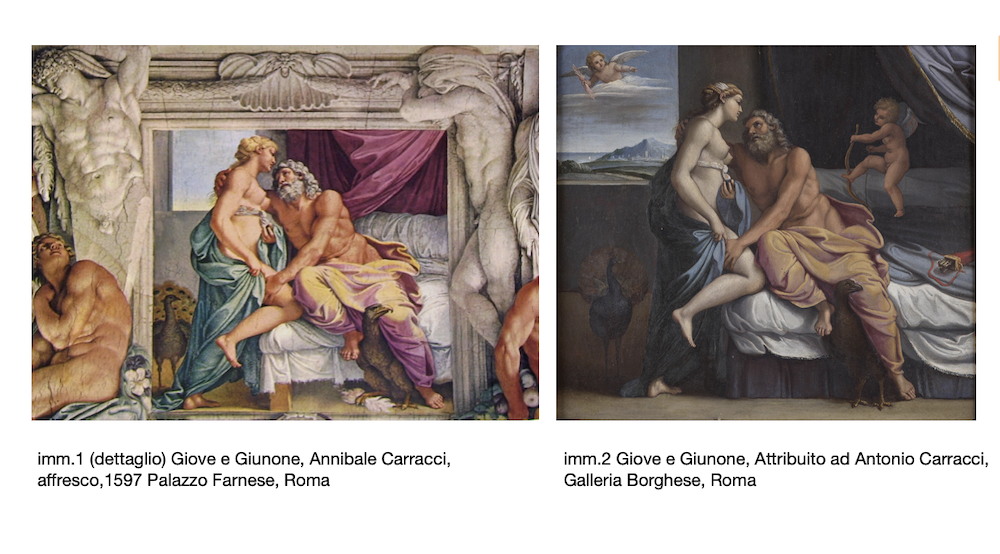
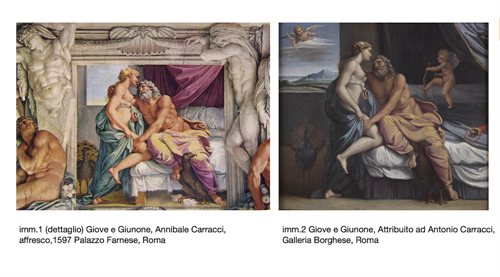
The work is a splendid version taken from one of the panels of the series of frescoes decorating the vault of Palazzo Farnese, executed by Annibale Carracci between 1597 and 1600, commissioned by Cardinal Odoardo Farnese to celebrate the marriage between Ranuccio Farnese and Margherita Aldobrandini, where the central theme is “The Loves of the Gods” (fig. 1).

The freedom and sensuality of this image marks the transition from the rigour of the Counter-Reformation to a new sensual and classical freedom of expression: Jupiter and Juno, husband and wife, approach each other in an intensely erotic manner, with a clear return to the vibrant culture of the Renaissance, with strong references to Michelangelo (in the plasticity of the figures) and Raphael.

Of all Carracci's frescoes, this one in particular became one of the most famous and admired panels in the Farnese Gallery, with its sense of emotional intensity and sensuality.

The success of this subject therefore led to its widespread diffusion in “chamber” format, so much so that today we know of numerous paintings by artists from the painter's circle/workshop or active in the period immediately following the creation of the fresco, to satisfy Roman art collectors who wanted to own their own version.

Among the numerous later copies, we can mention the painting on canvas attributed to Antonio Carracci, now housed in the Galleria Borghese in Rome (image 2 - https://www.collezionegalleriaborghese.it/opere/giove-e-giunone ).


ADDITIONAL INFORMATION:

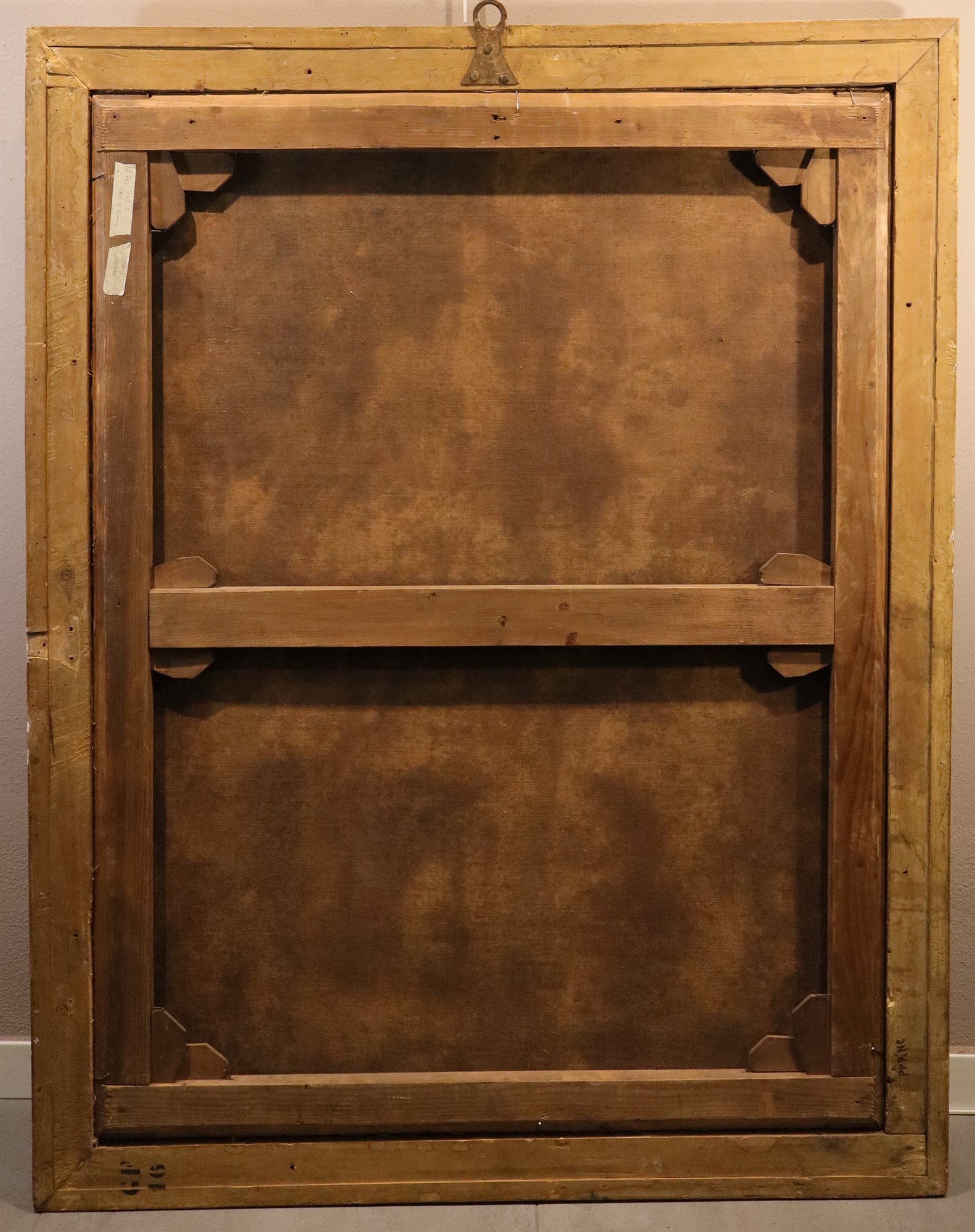
The work is sold complete with an antique frame and comes with a certificate of authenticity and guarantee.

We take care of and organise the transport of purchased works, both in Italy and abroad, through professional and insured carriers. It is also possible to view the painting in the gallery in Riva del Garda, where we will be happy to welcome you and show you our collection of works.

Please contact us, without obligation, for any additional information.

Follow us on:

  back

Antiquepaintings

see gallery

Art objects

see gallery

Furnishings

see gallery