
Compianto di Cristo
Anthoon van Dyck (Anversa 1599 - Londra 1641) Seguace
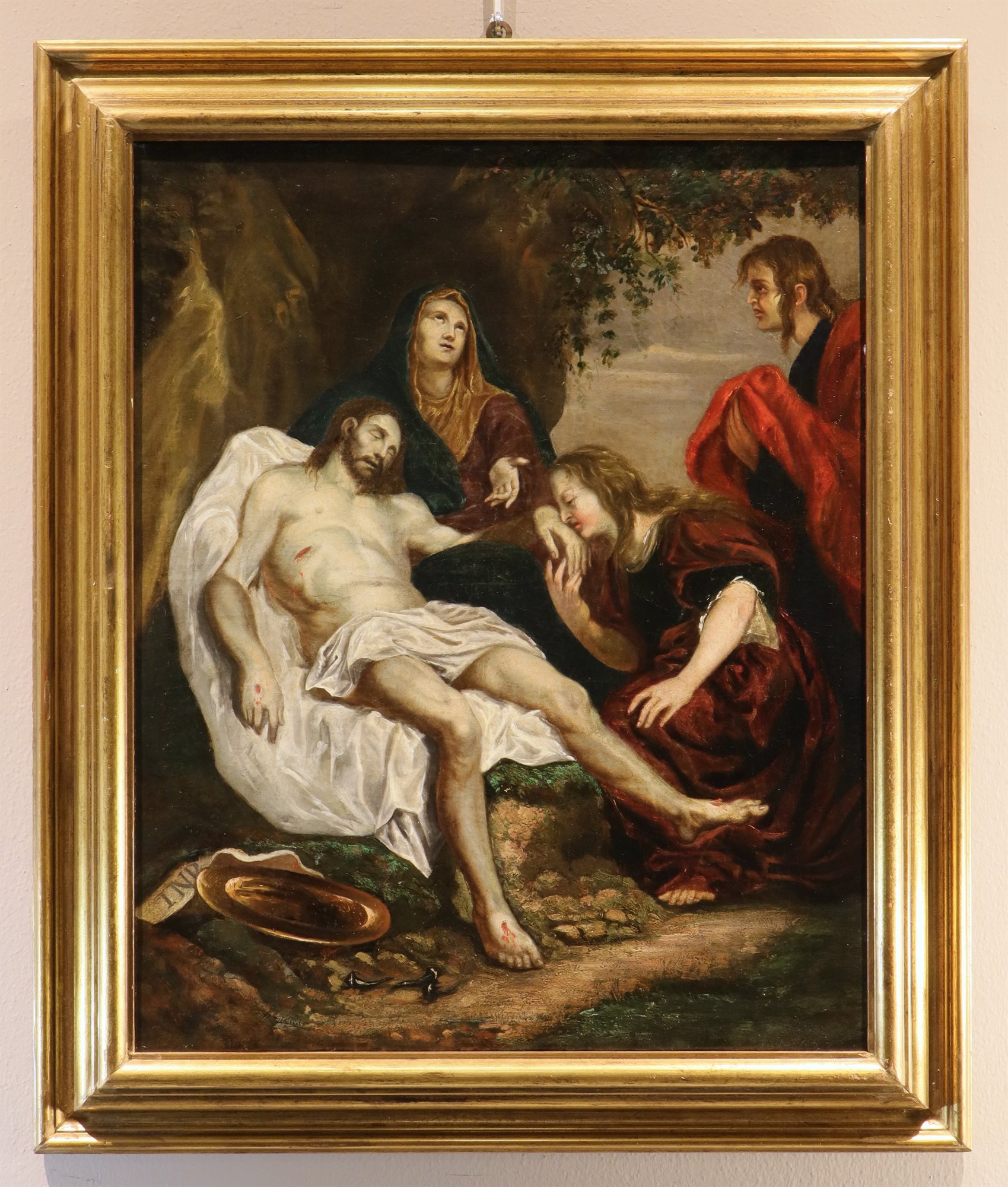
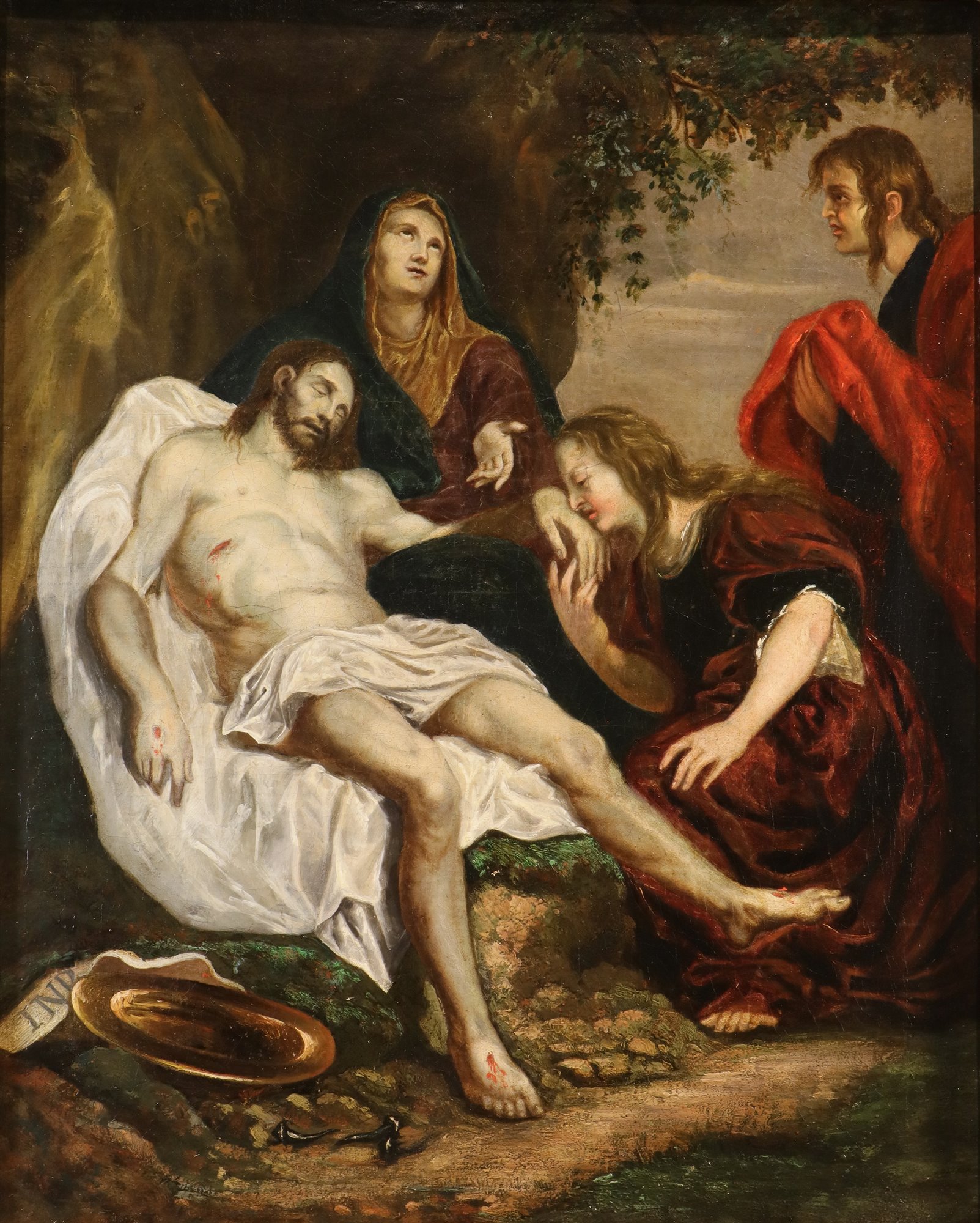
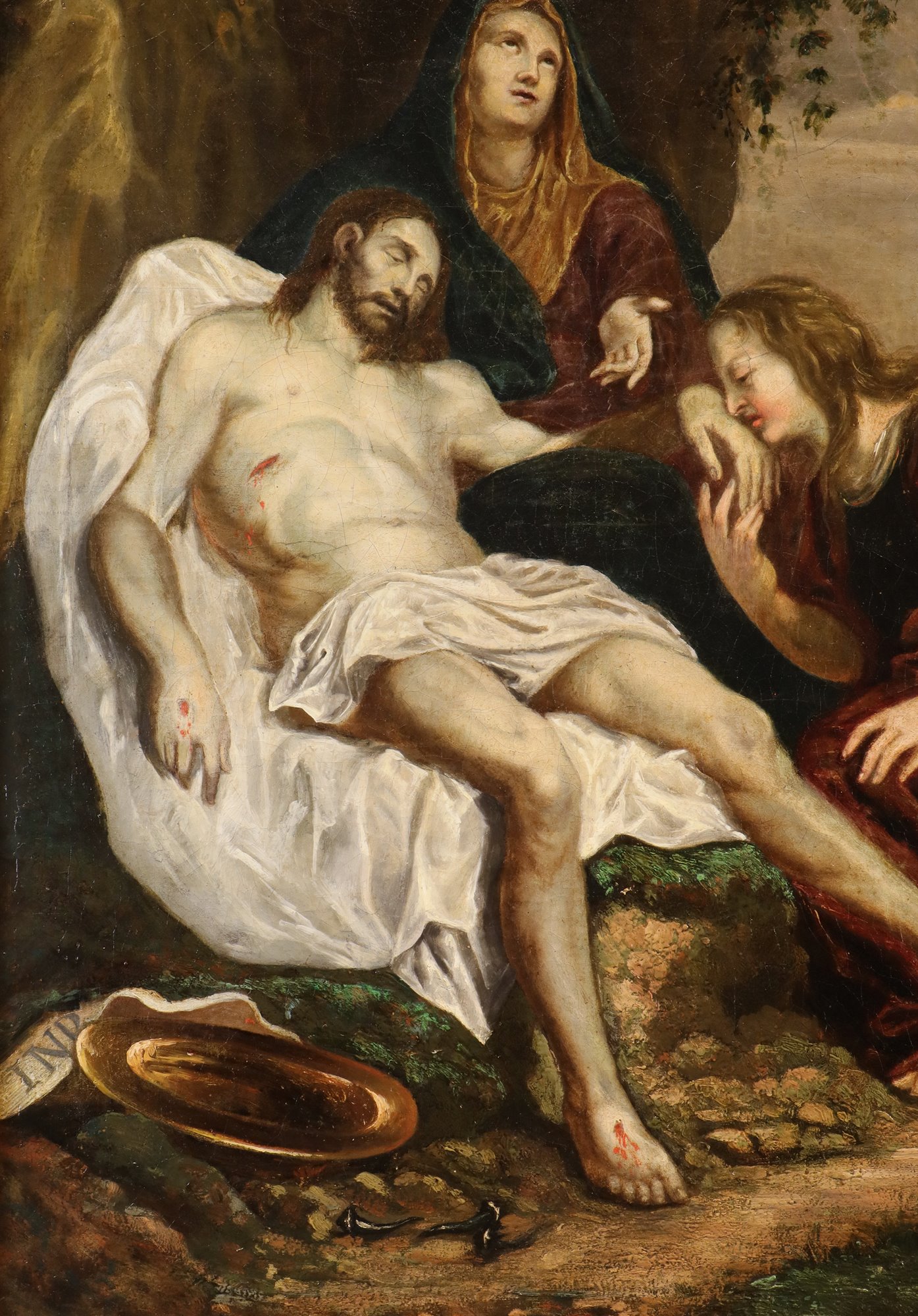
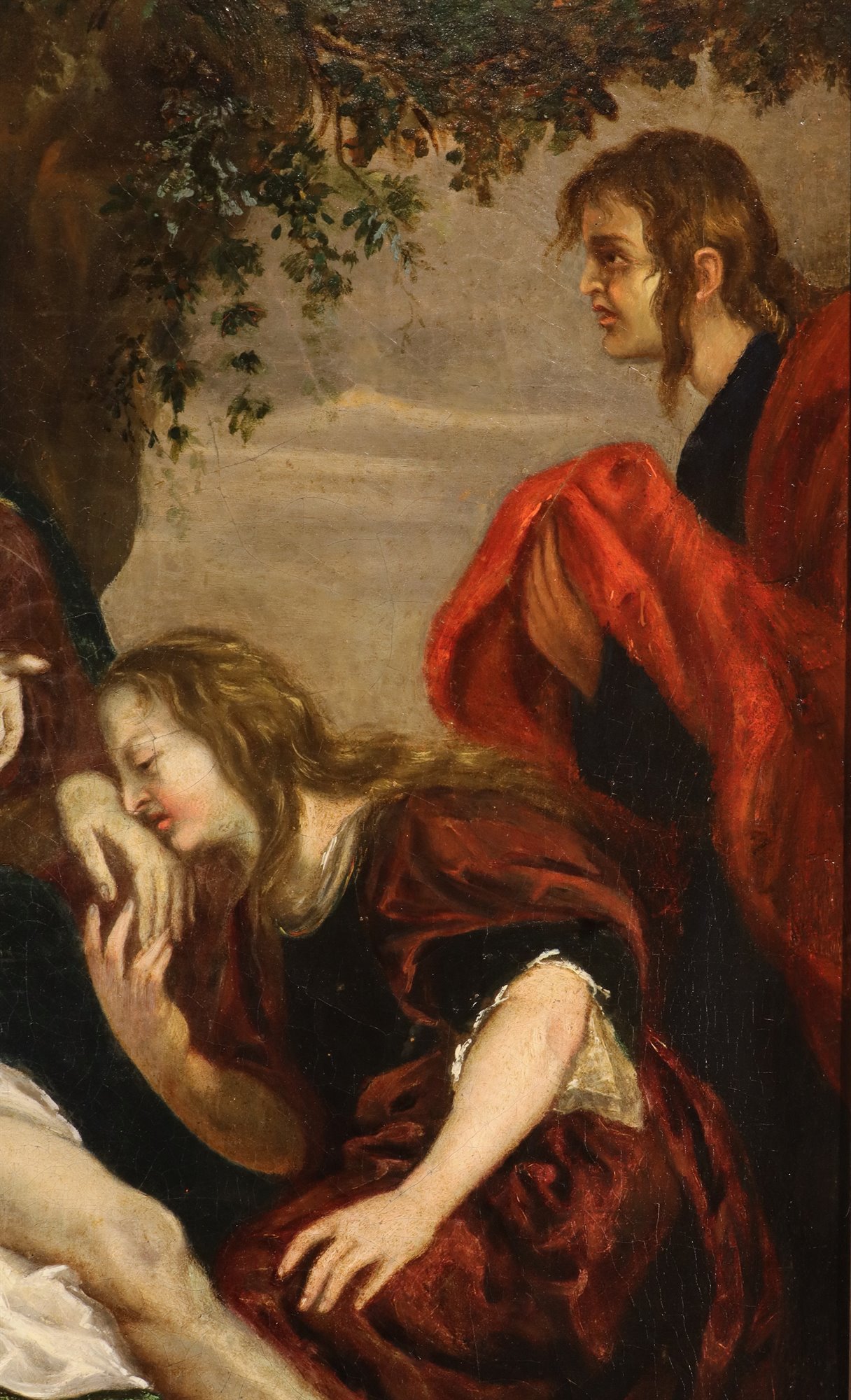
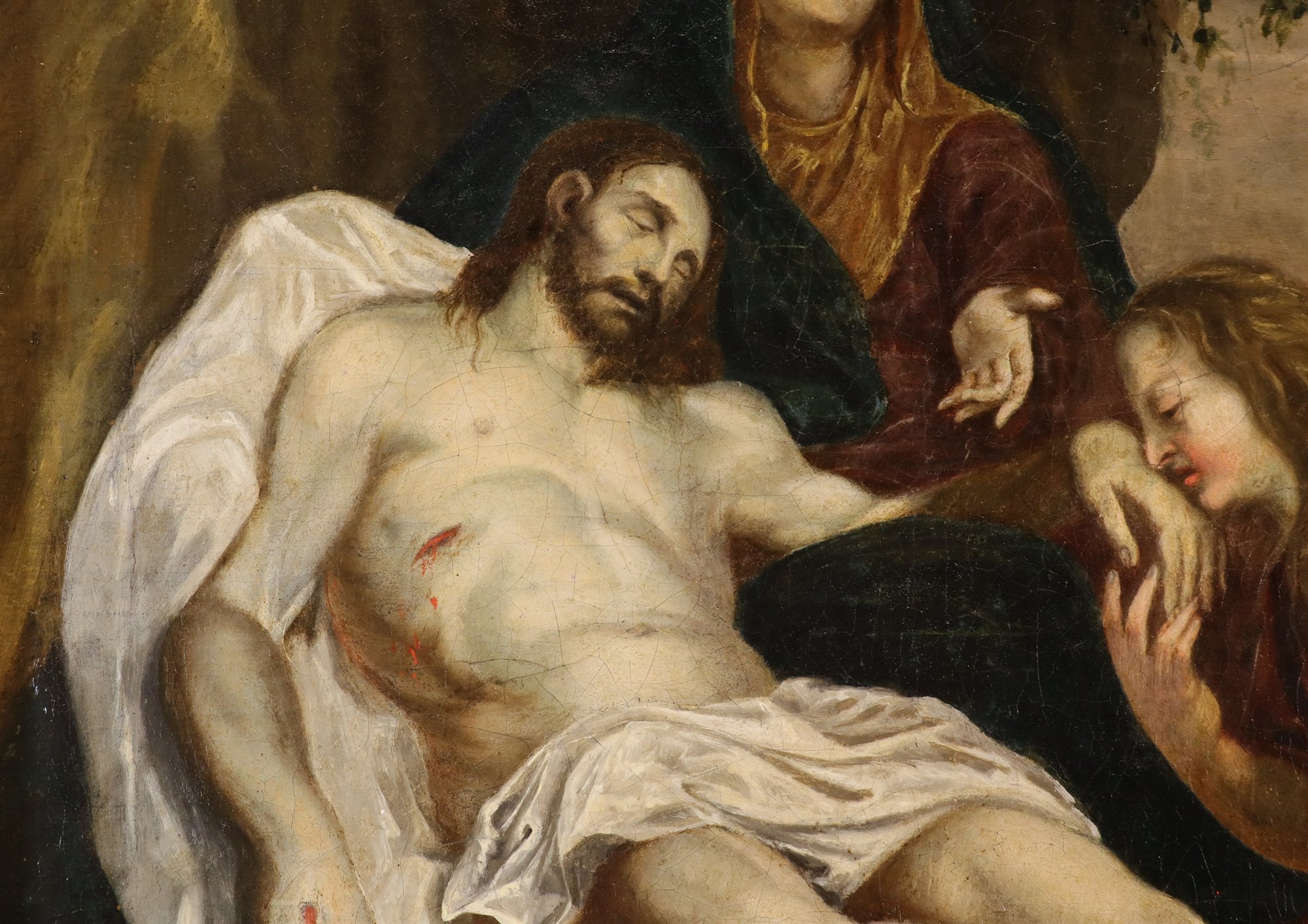
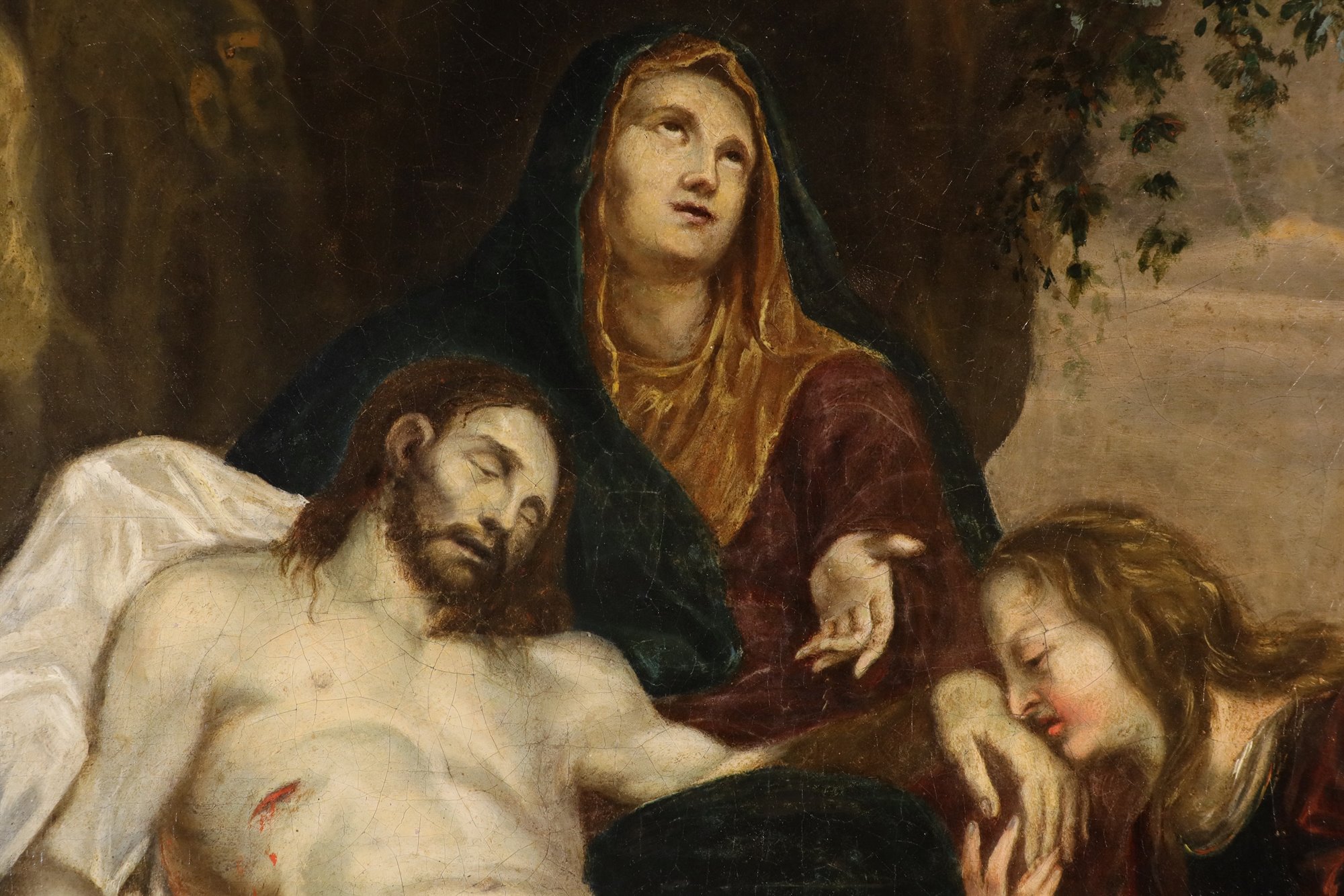
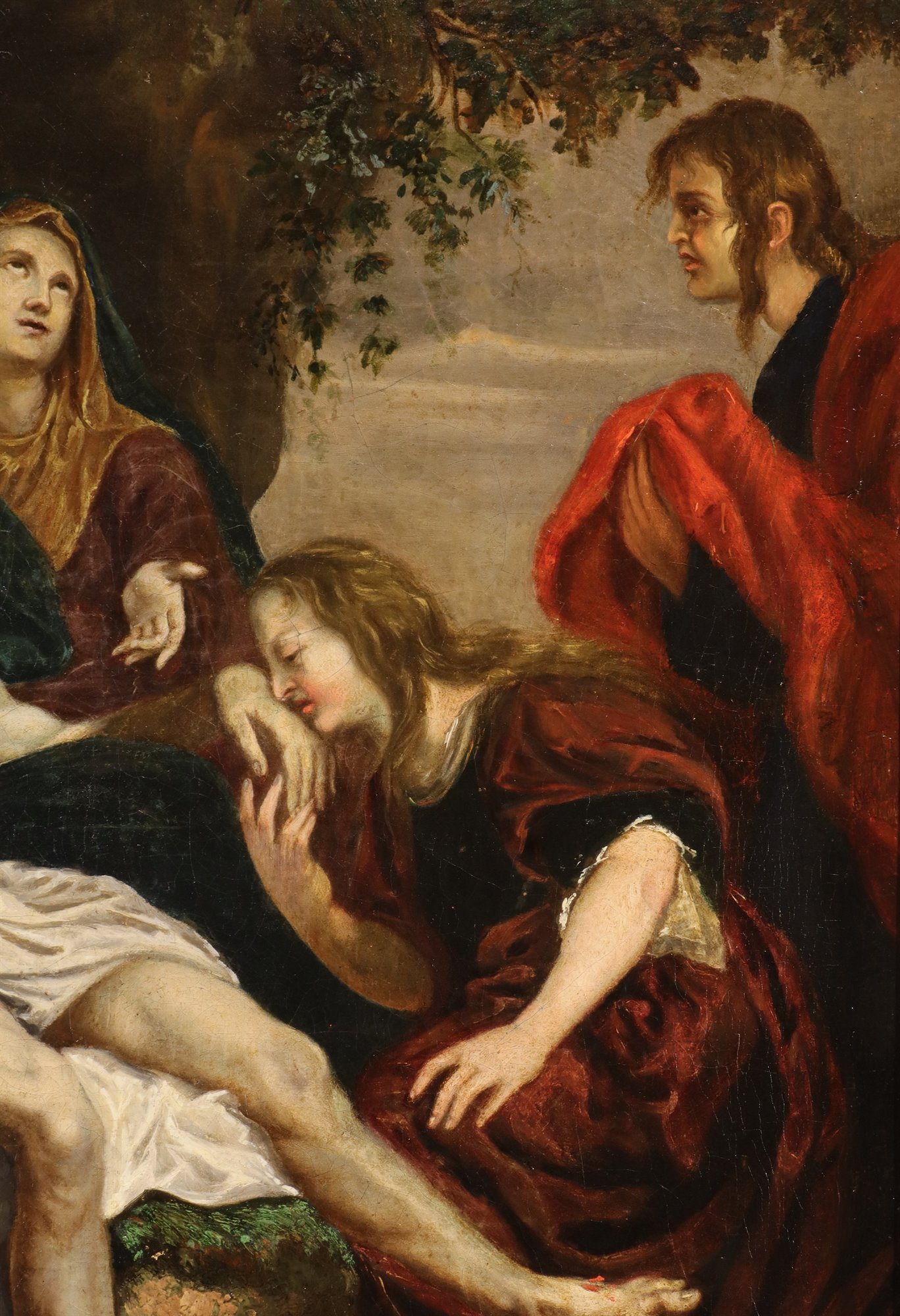
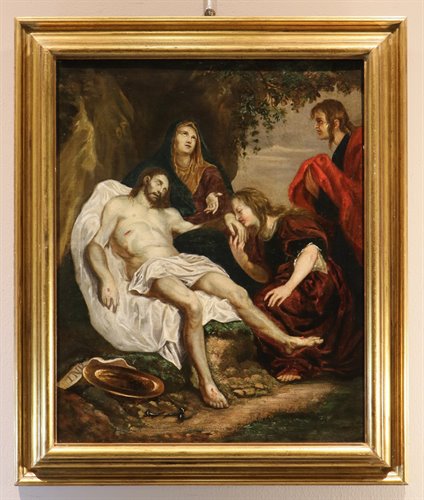
The Lamentation of Christ
Follower of Anthony van Dyck
(Antwerp 1599 - London 1641)
Oil on canvas
64 x 51 cm.
In frame 77 x 65 cm.
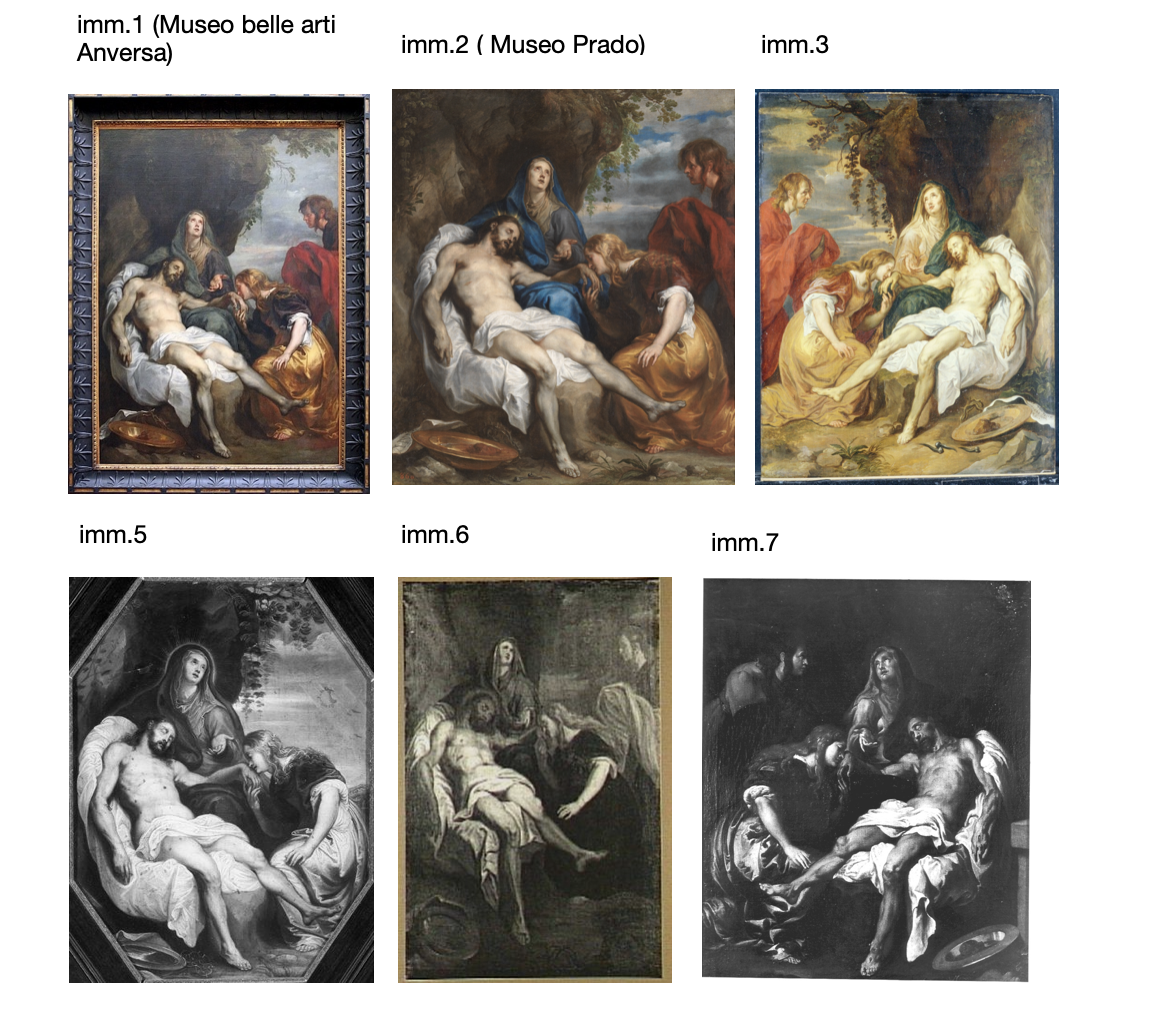
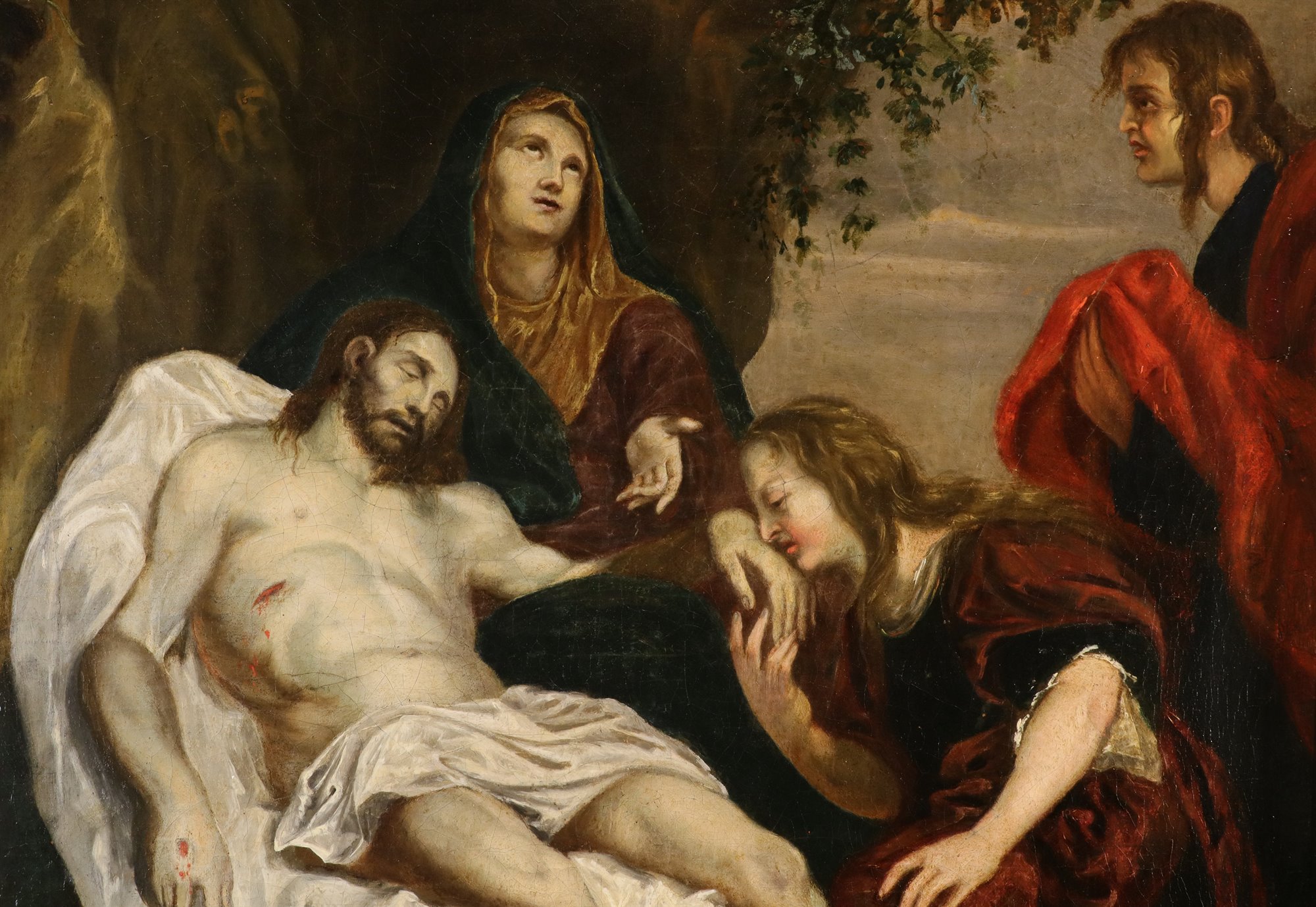
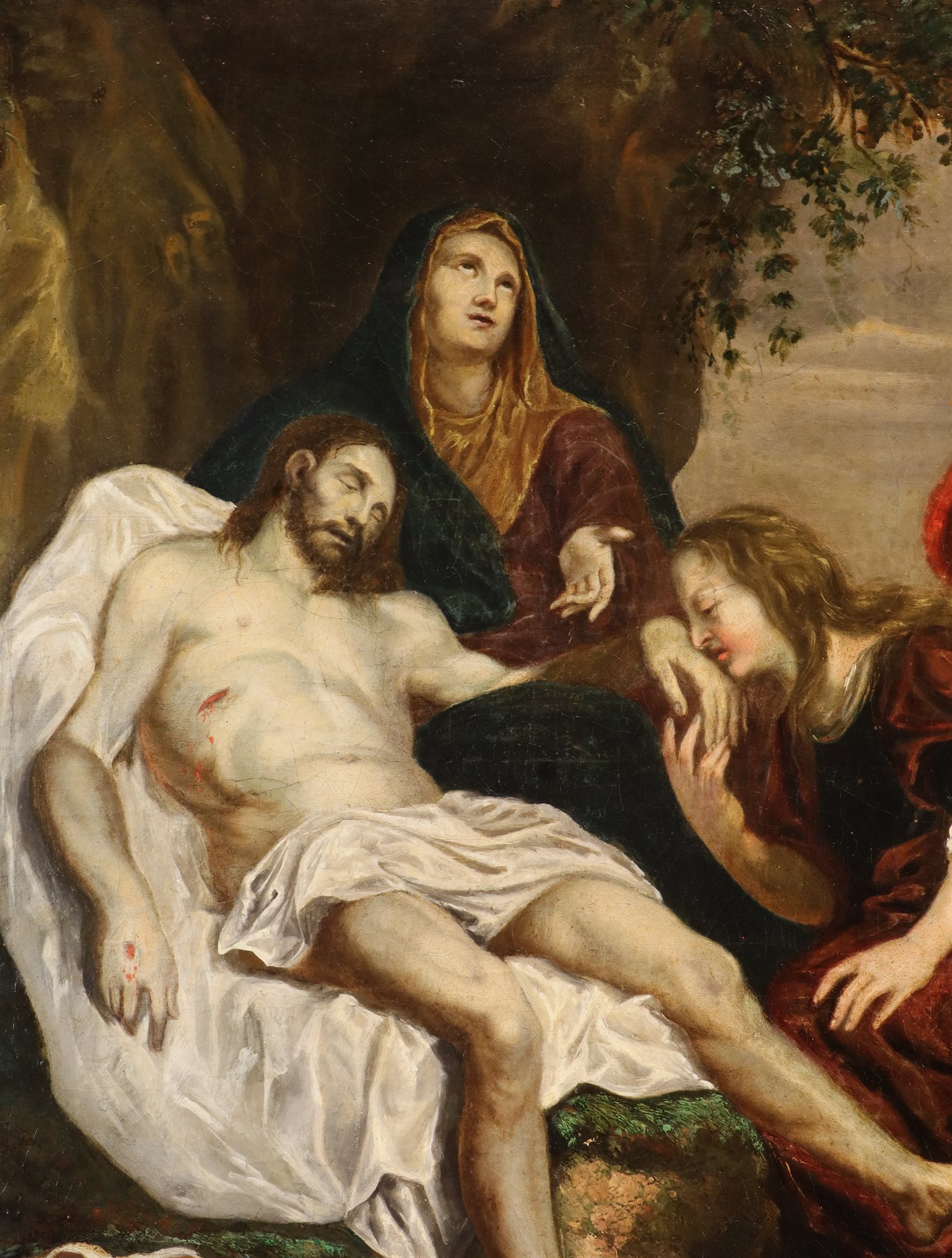
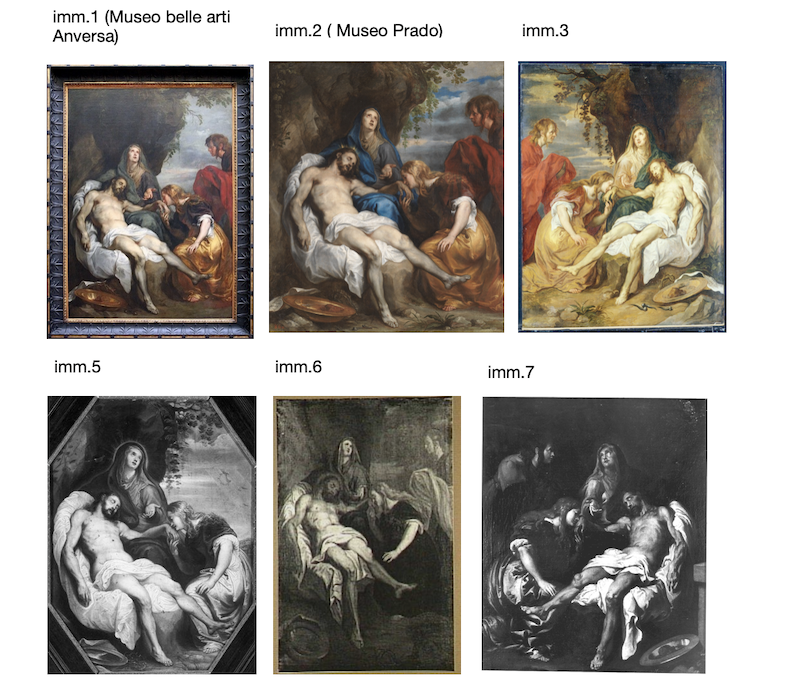
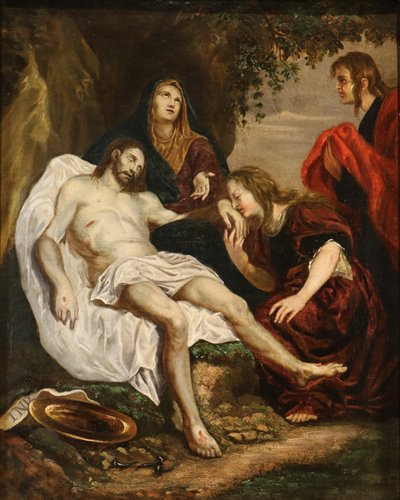
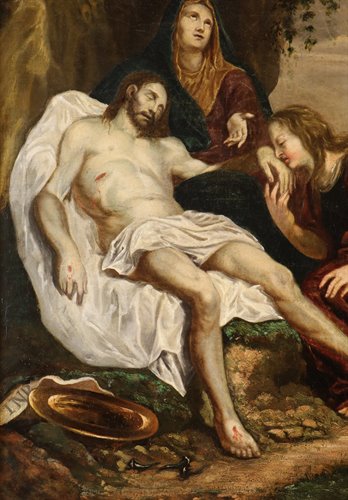
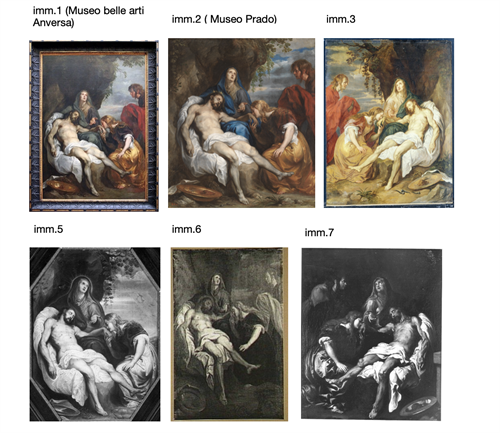
This is a very interesting work, a painting by a Flemish artist that reproduces the famous Lamentation of Christ by Anthoon van Dyck (Antwerp 1599 - London 1641) between 1628 and 16129 for the high altar of the Begijnhof church in Antwerp, now kept at the Royal Museum of Fine Arts in Antwerp (fig. 1 - https://rkd.nl/en/explore/images/293416 **).
The canvas was then replicated in a smaller version, now in the Prado Museum (fig. 2 - oil on canvas, 114 x 100 cm; inv./cat. no. 1475).
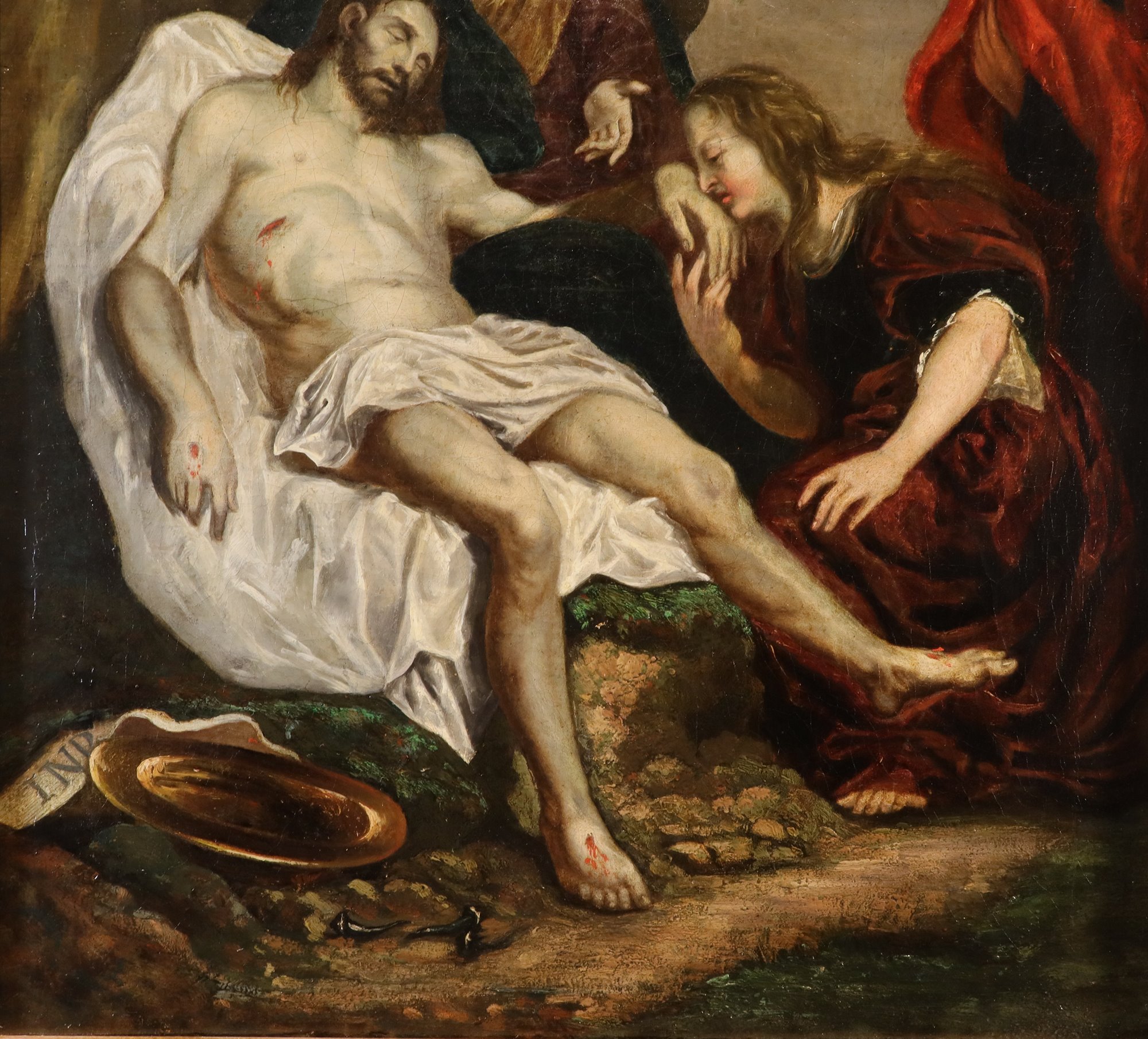
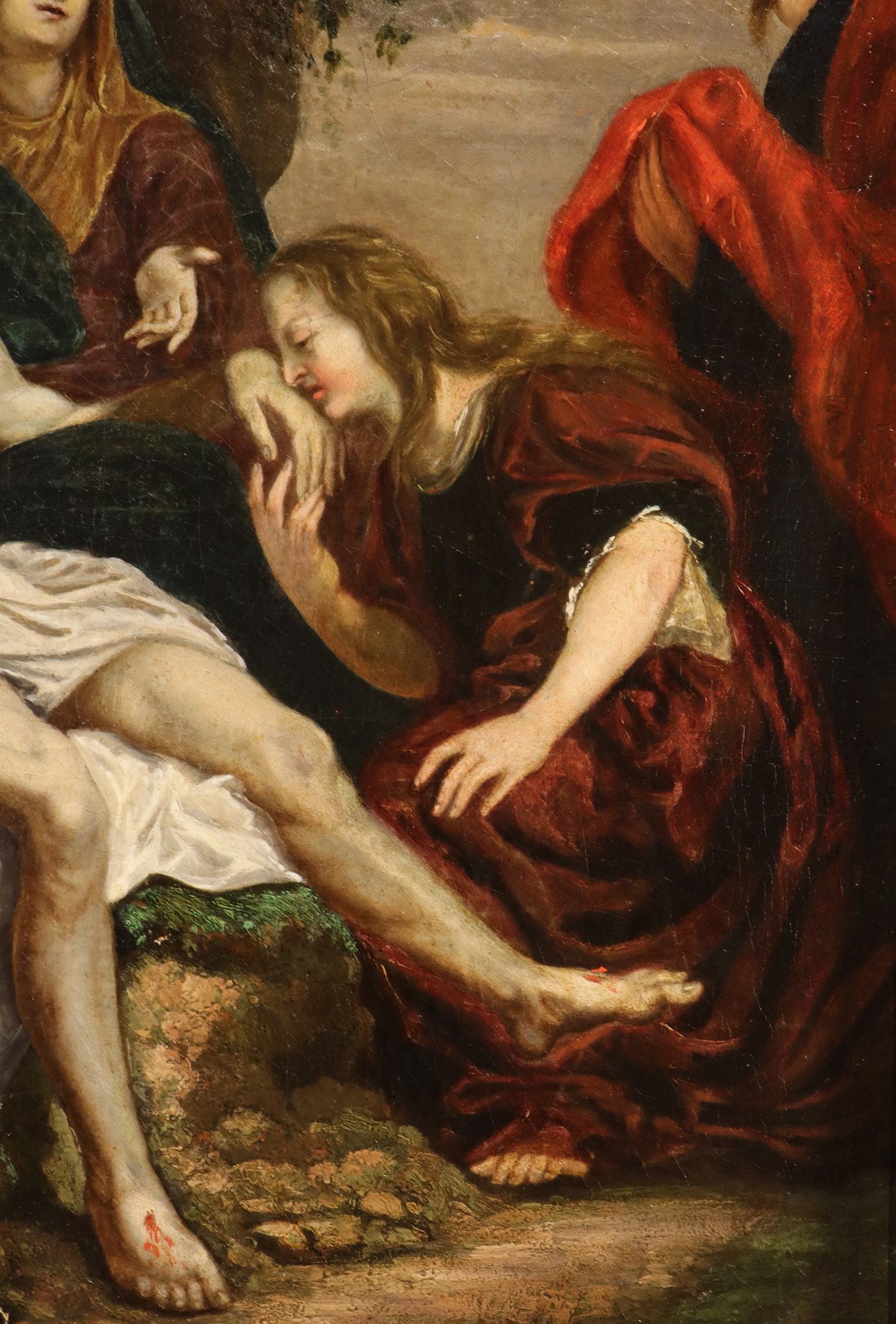
The scene, which depicts one of the most dramatic and emotional moments of Christ's Passion, exemplifies the typical style of the great Flemish artist: Christ lies prostrate, his body vigorous and sculptural, while Mary Magdalene weeps over him, kissing his hand, and the Virgin Mary, at his side, looks up to the sky in despair; finally, Saint John arrives to join this chorus of grief.
The iconography of our Lamentation, like the whole of Van Dyck's series, became emblematic of this poetics. The focal point of the composition is the wounded hand, kissed by Mary Magdalene, and the theme of the work is meditation on the Passion of Christ, also evoked by the instruments of torture in the foreground.
As for the authorship of the canvas on display, the artist can be traced back to one of the followers of the great master, who was active after the creation of the large altarpiece, to satisfy a client who wanted to have his own version.
Despite his clearly Italianate style, Van Dyck adopted many of the pictorial schemes of his master Rubens in his compositions, reflecting the intense formative influence and close collaboration between the two artists in the early years of his career.
This painting therefore reveals all these influences: through a highly sophisticated figurative language, we can see the influence of Italian art, particularly the Venetian compositions of Titian, Tintoretto and Correggio, as well as the figurative language of the Bolognese school of the Carracci, Guercino and Guido Reni.
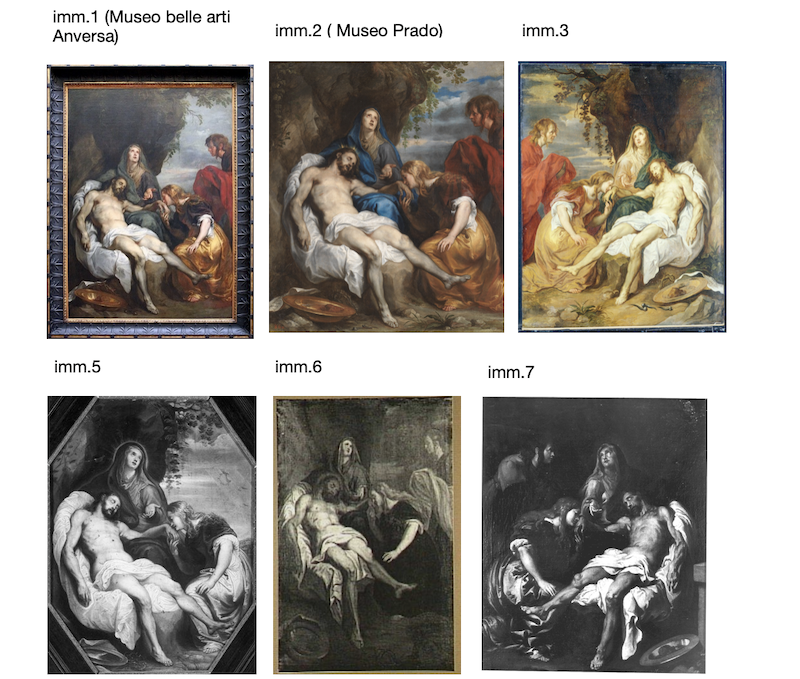
Throughout his artistic career, Van Dyck treated the theme of the Lamentation of Christ on several occasions, from around 1617 to 1636, and then again by his workshop and numerous followers. Here are some examples similar to our version:
- Van Dyck, Lamentation, Museum of Fine Arts (Antwerp), oil on canvas, 303 x 225 cm. - fig. 1
- Van Dyck, Lamentation, Museo Nacional del Prado (https://www.museodelprado.es/coleccion/obra-de-arte/la-piedad/f89676d9-34cc-46d9-b232-571faf9894ba ) - image 2
- Van Dyck (follower), Lamentation, Christie's (New York) 17 June 2004 (https://rkd.nl/en/explore/images/117183 ) - image 3
- Van Dyck, Lamentation, Utrecht, Museum Catharijneconvent (https://rkd.nl/en/explore/images/61258 ) - image 4
- Van Dyck (follower), Lamentation, Maastricht, Bonnefantenmuseum, (after Anthony van Dyck) (https://rkd.nl/images/35976 ) - image 5
- Van Dyck (follower), Lamentation, Museo Galleria Rizzi Genova, (https://catalogo.beniculturali.it/detail/HistoricOrArtisticProperty/0700099636 ) - image 6
ADDITIONAL INFORMATION:
The work is sold complete with an attractive frame and comes with a certificate of authenticity and guarantee.
We take care of and organise the transport of purchased works, both in Italy and abroad, using professional and insured carriers. It is also possible to view the painting in the gallery in Riva del Garda, where we will be delighted to welcome you and show you our collection of works.
Please contact us, without obligation, for any additional information.
Follow us on: