
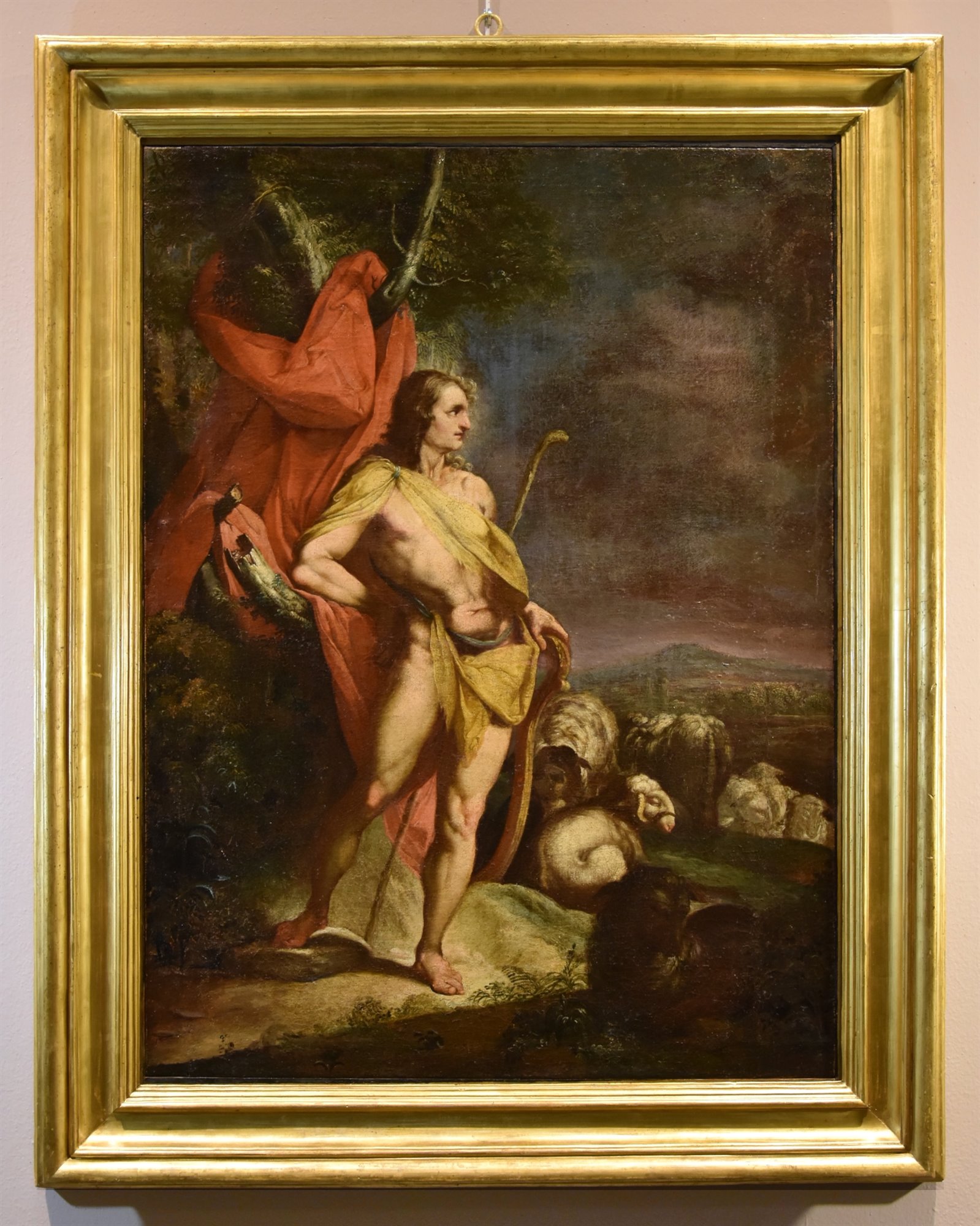
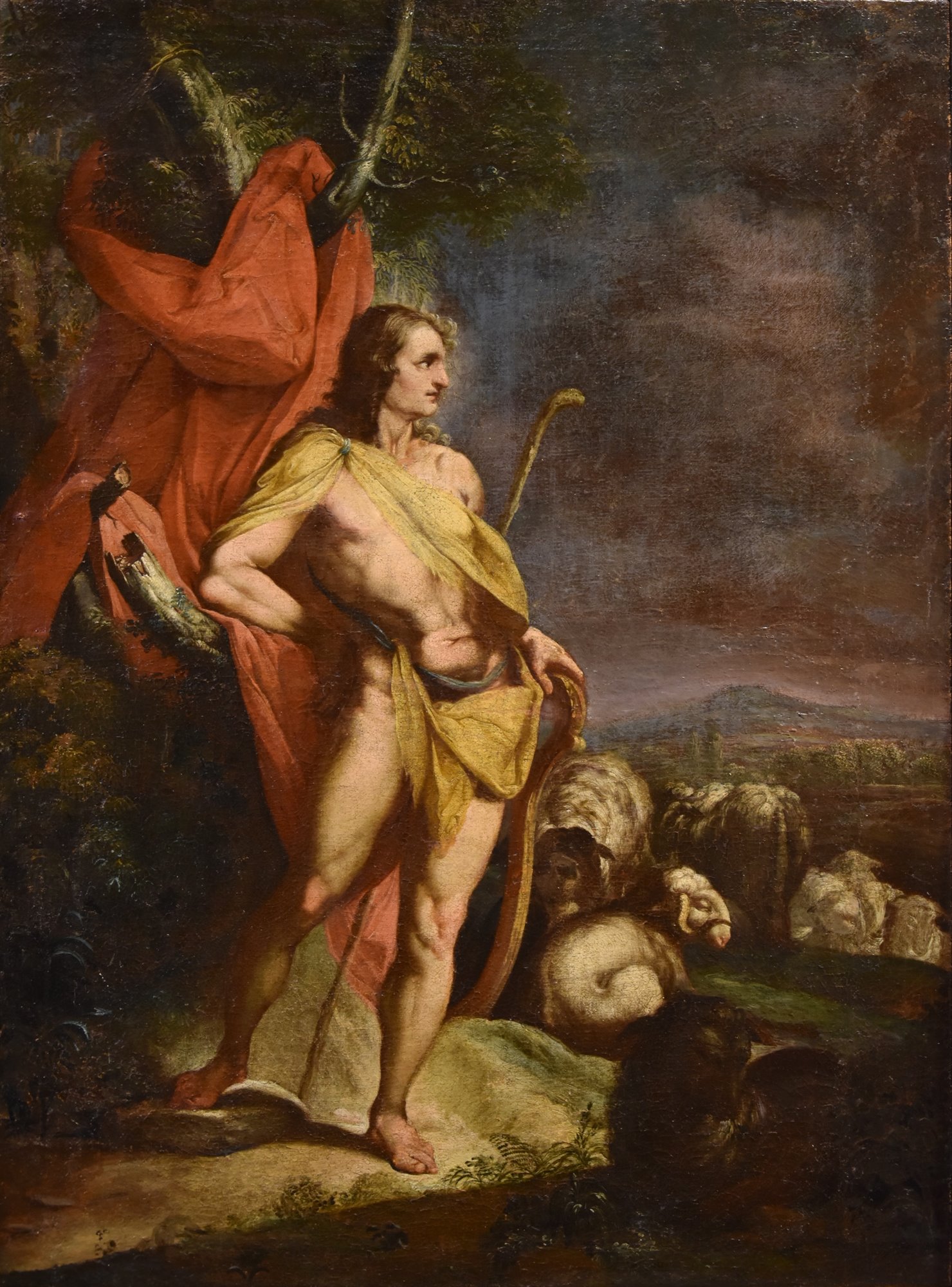
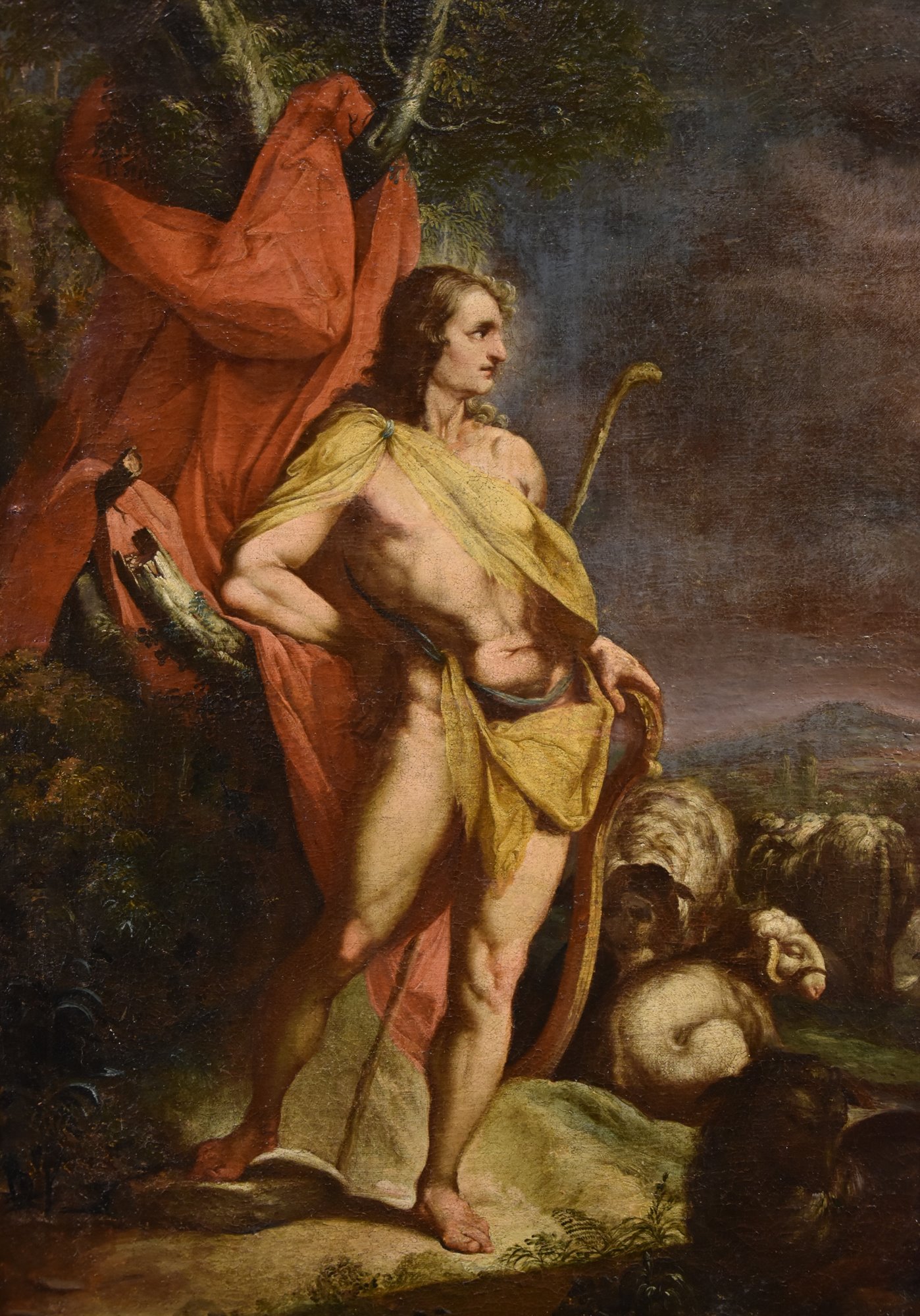
Apollo sorveglia le greggi di re Admeto
Cornelis Cornelisz. van Haarlem (Haarlem 1562–1638) Bottega
_-_(MeisterDrucke-1611392).jpg)
_-_(MeisterDrucke-1611392).jpg)
Cornelis Cornelisz. van Haarlem
(Haarlem 1562–1638)
Workshop
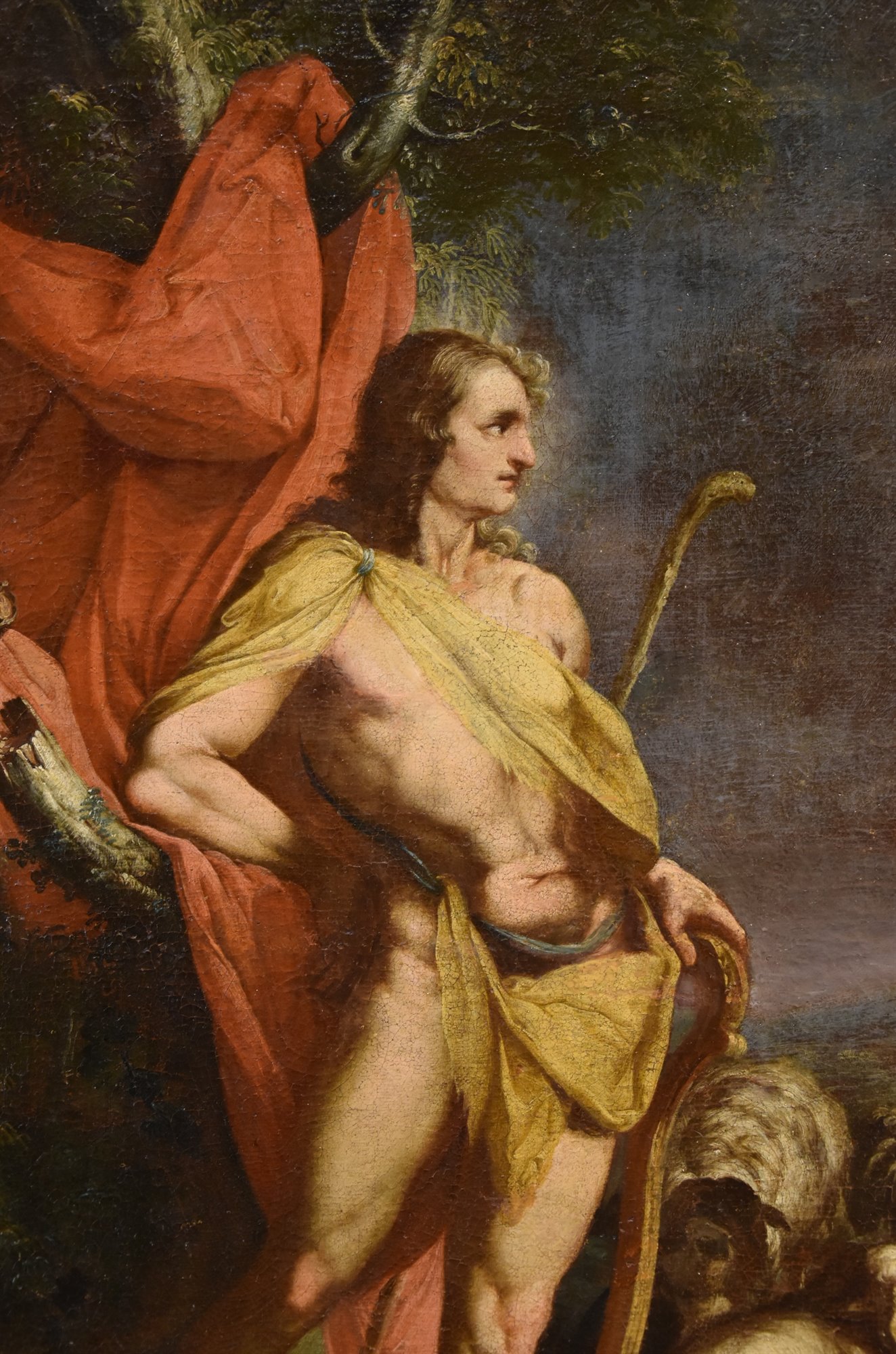
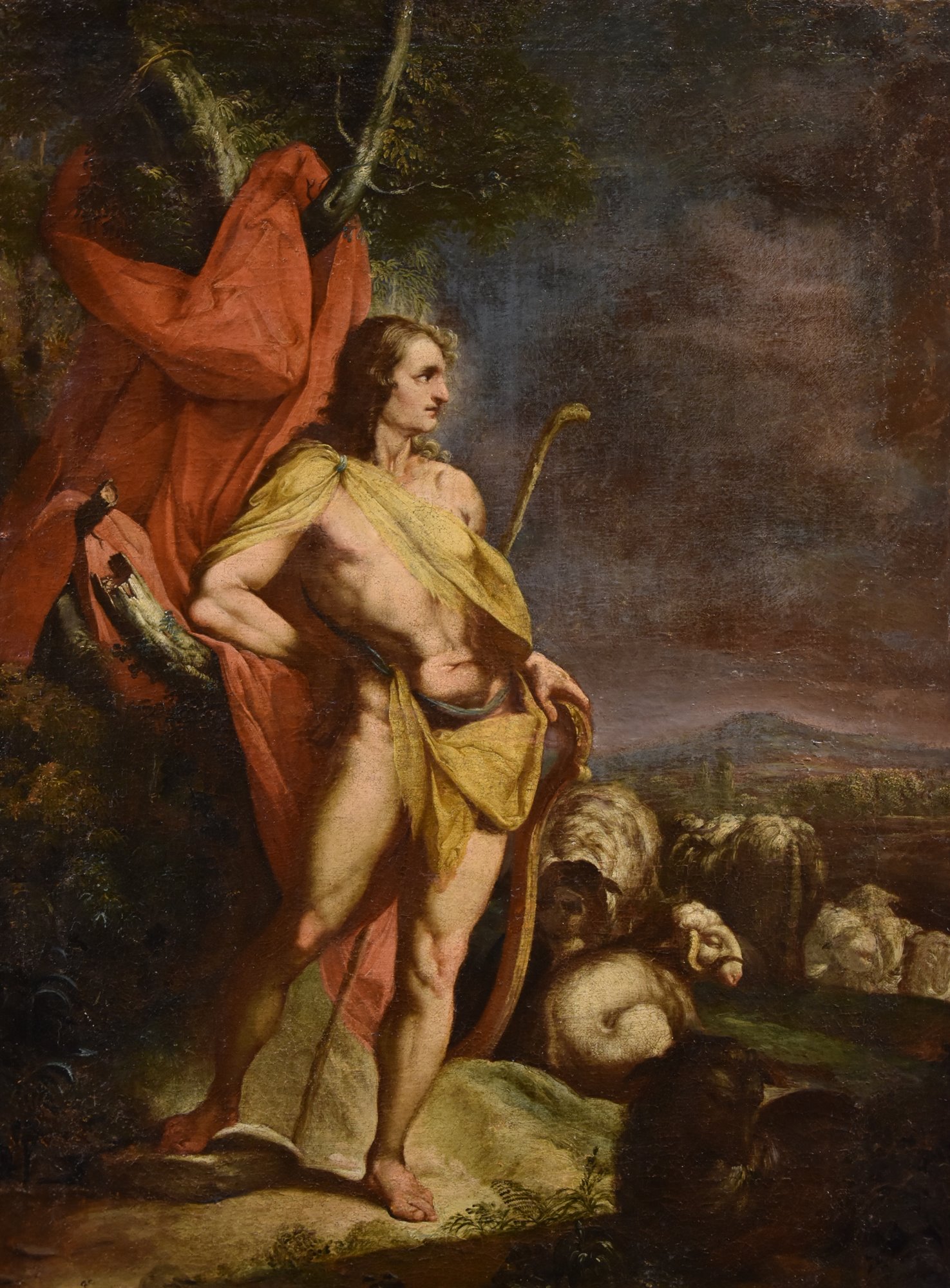
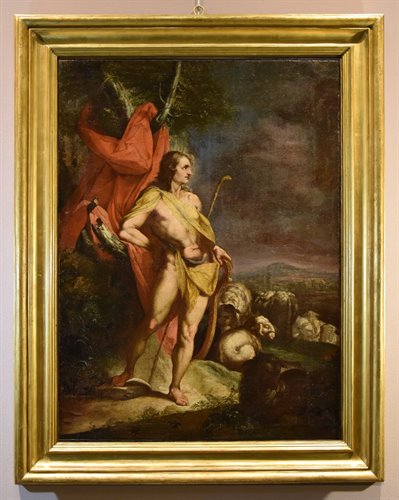
Apollo tending the flocks of AdmetusOil on canvas
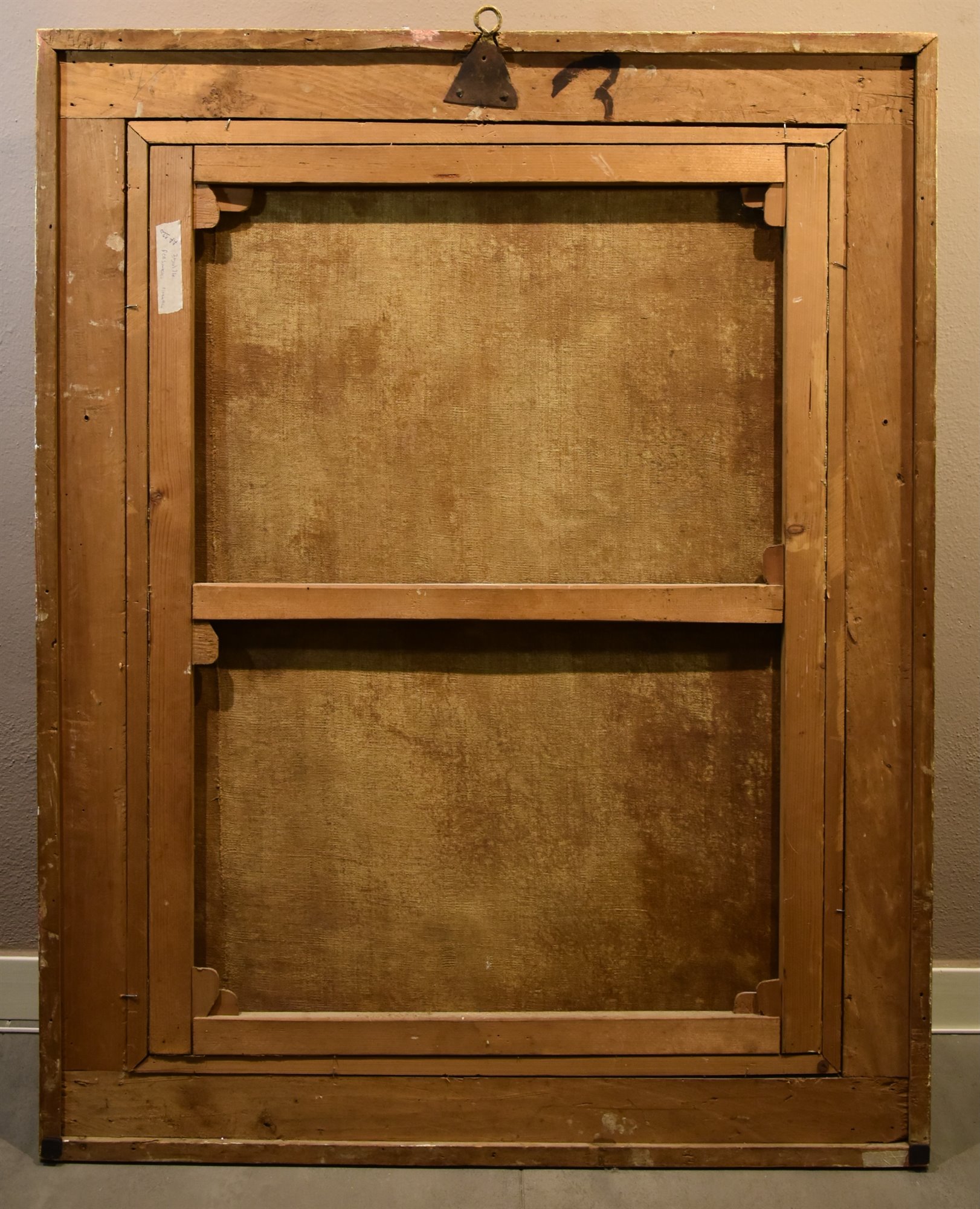
93 x 69 cm.
In frame 92 x 116 cm
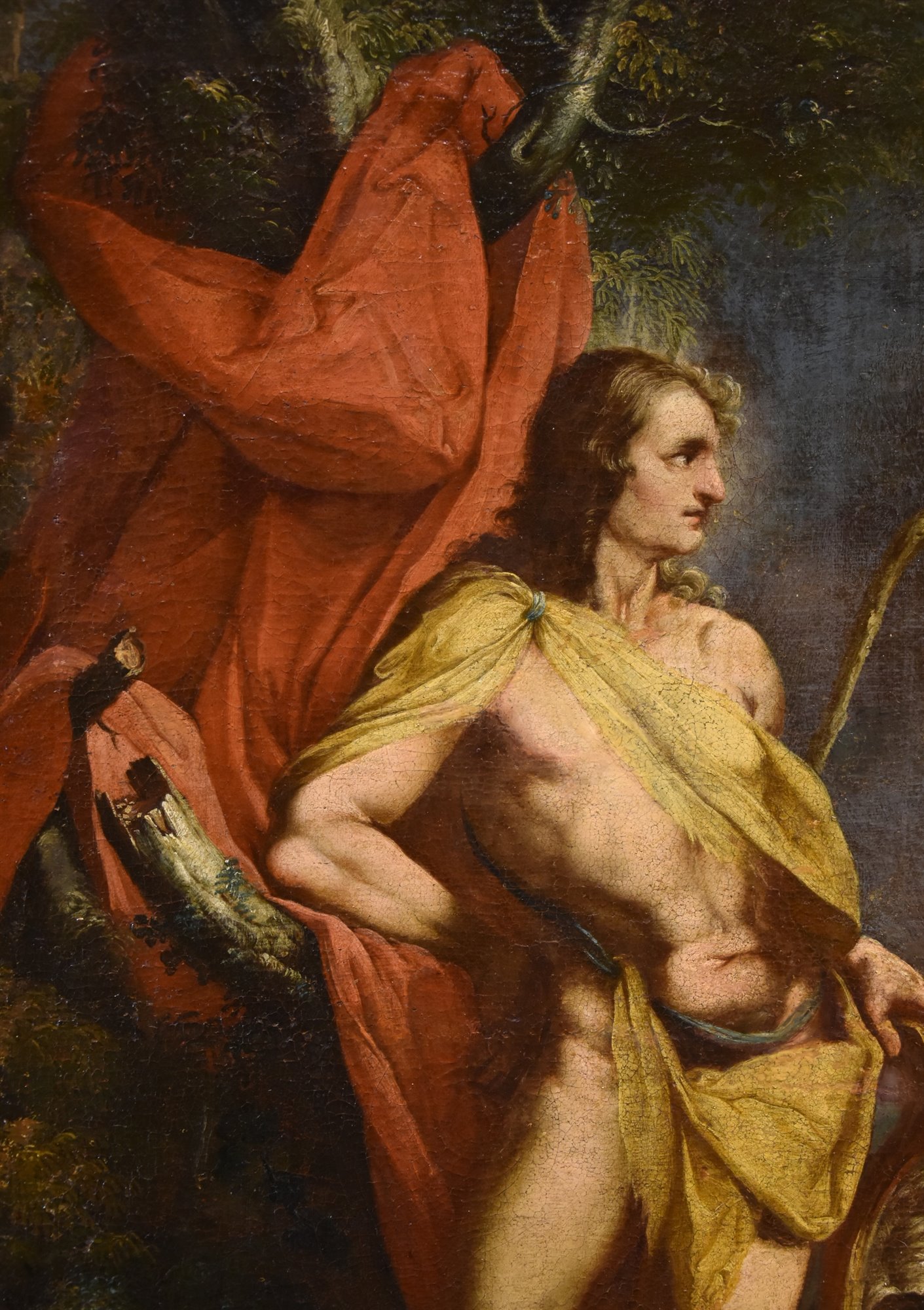
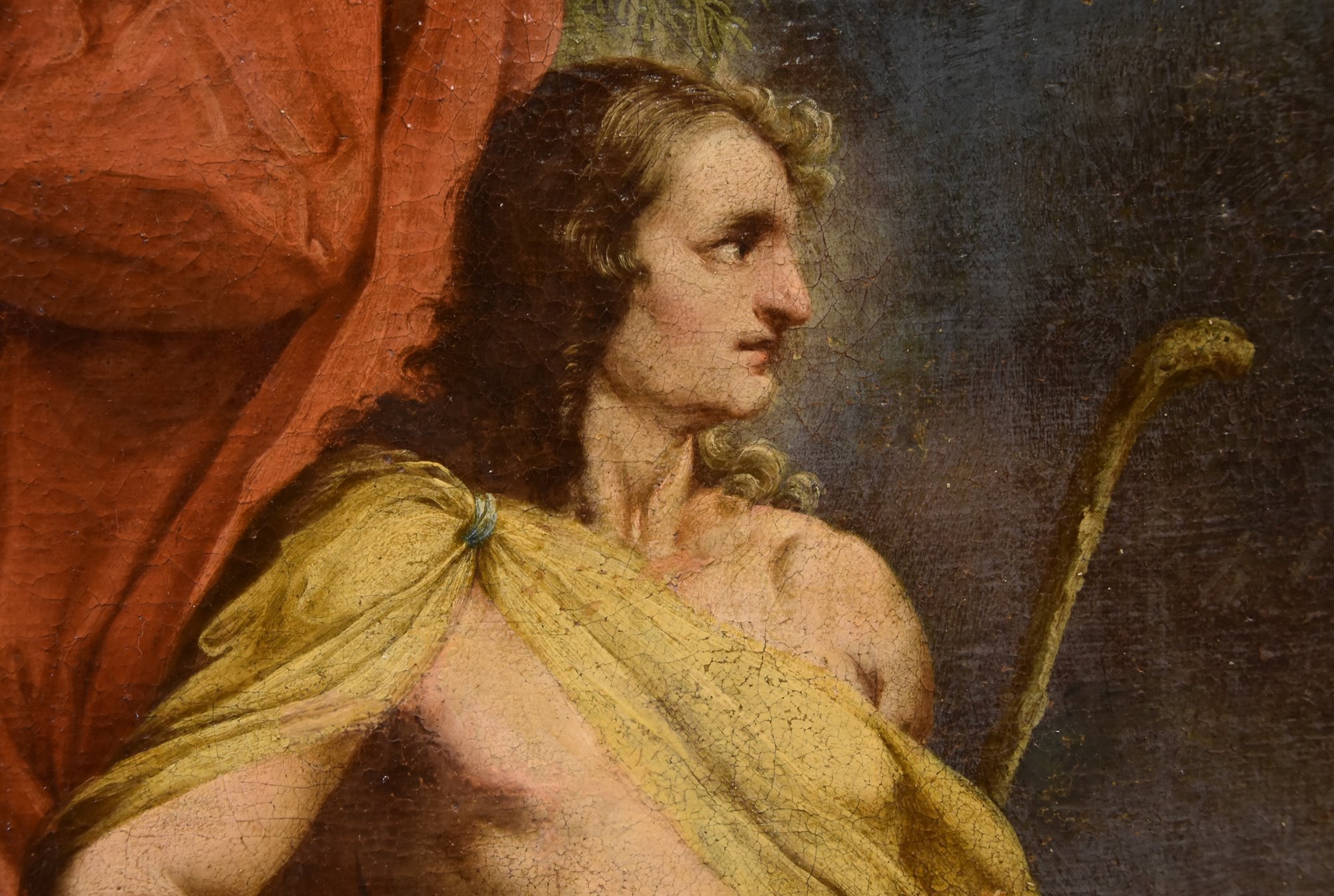
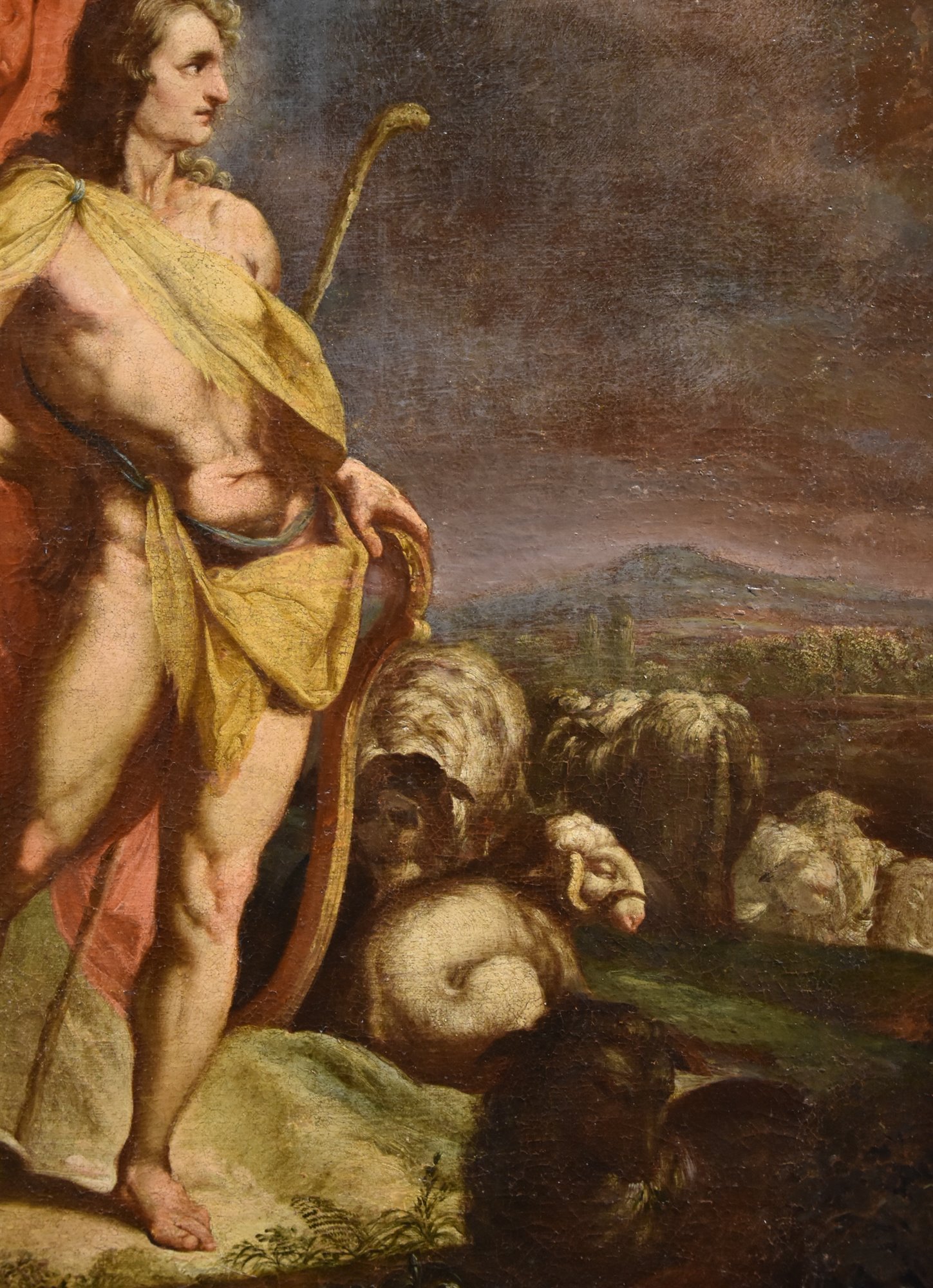
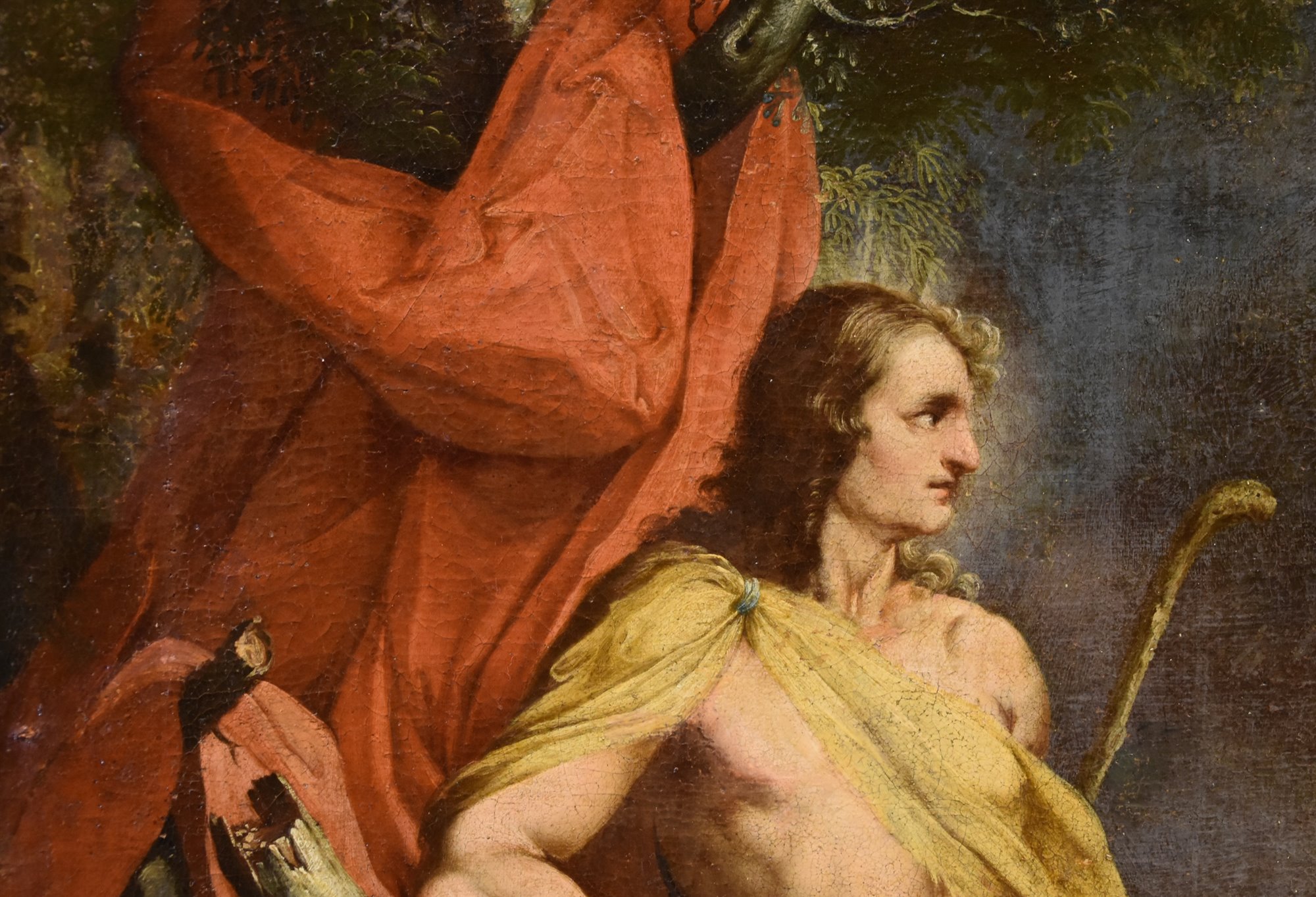
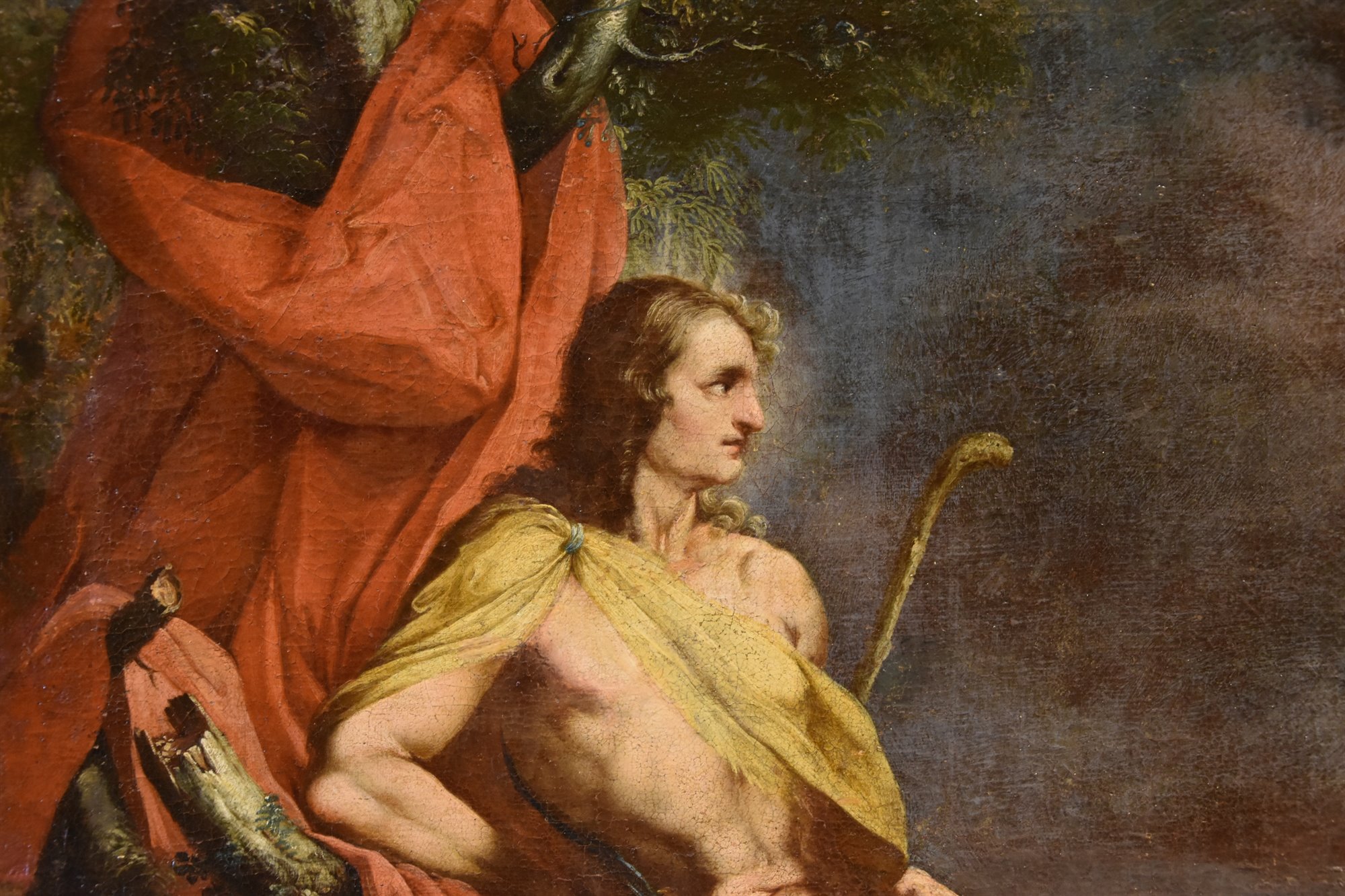
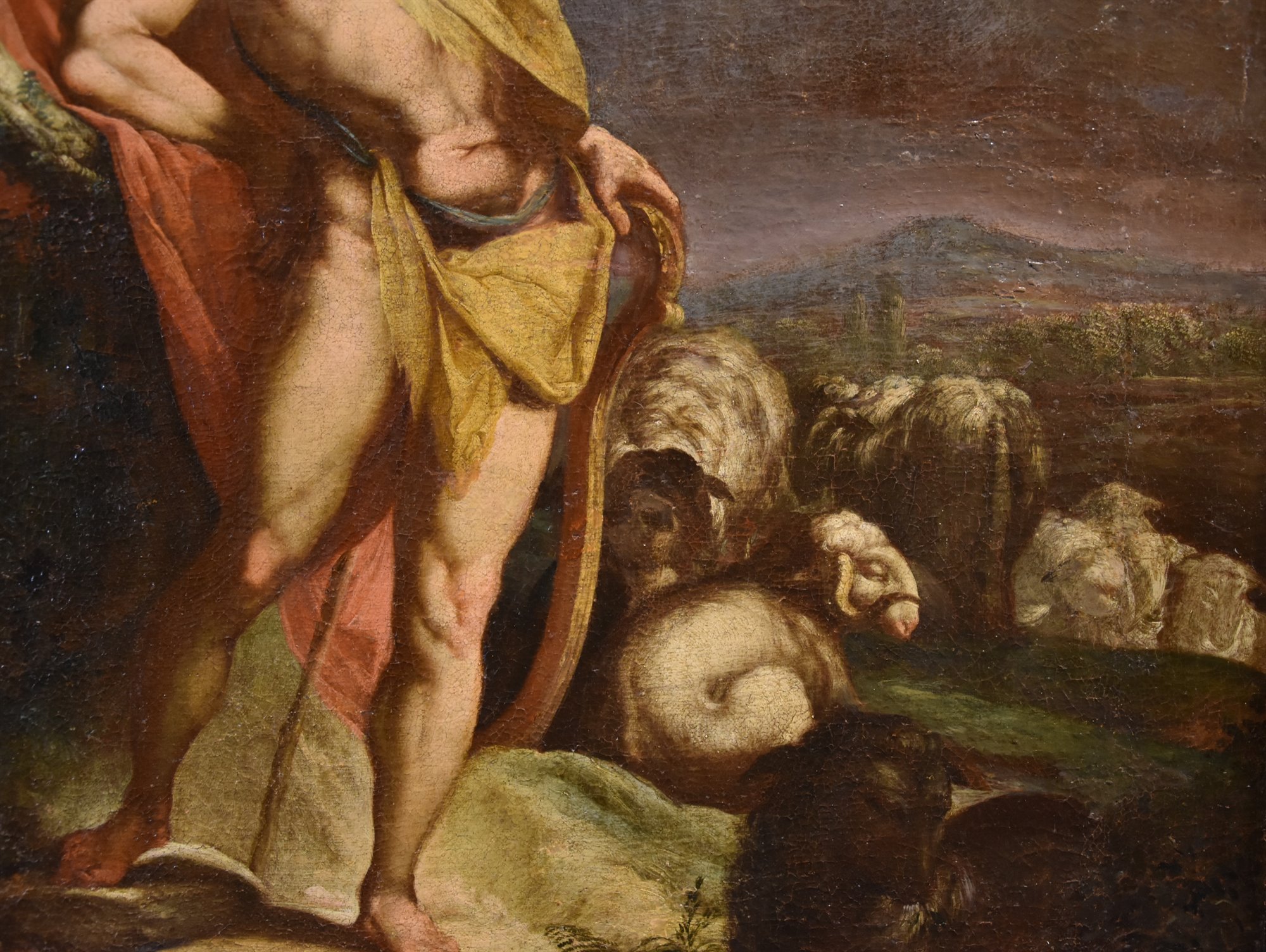
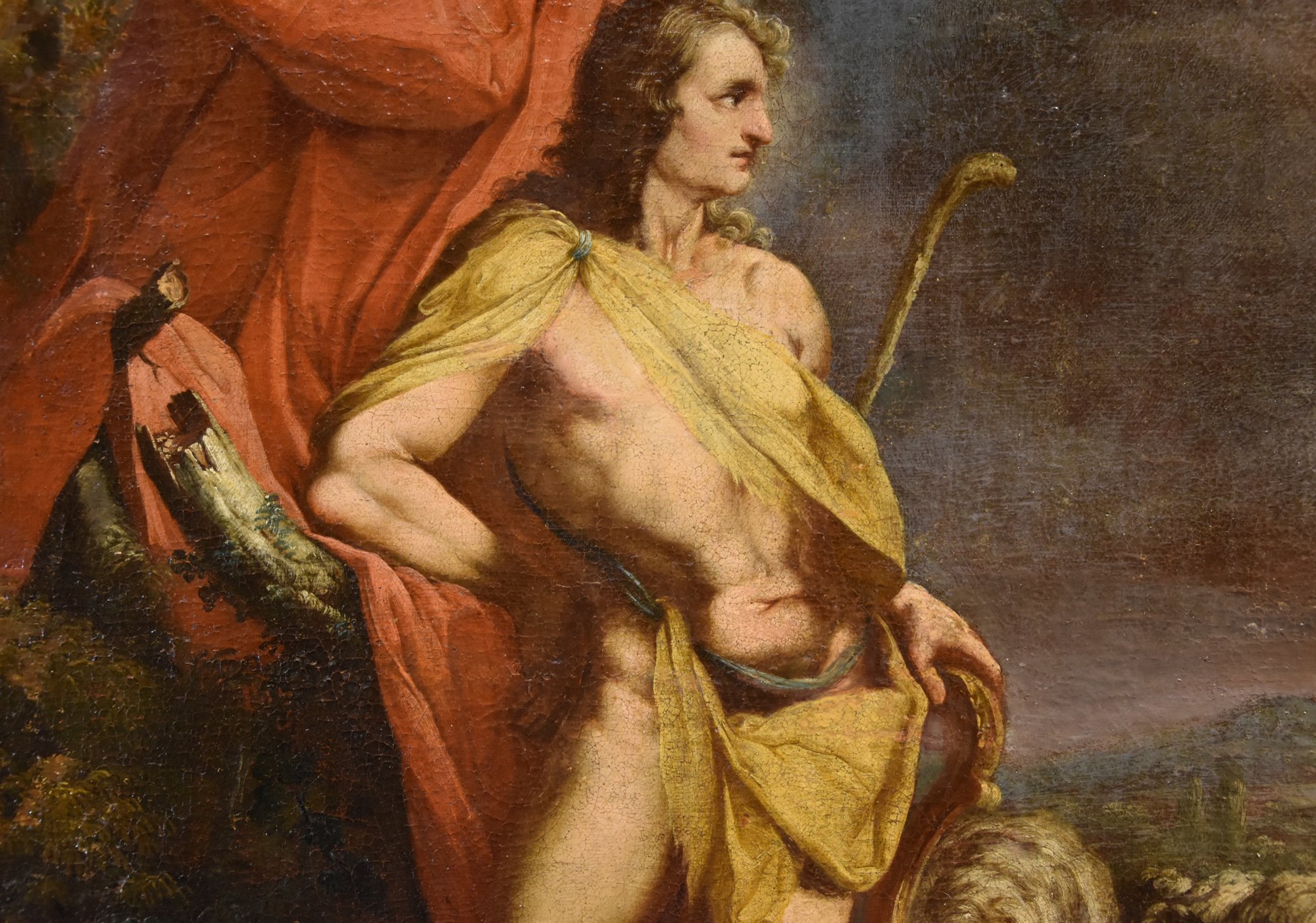
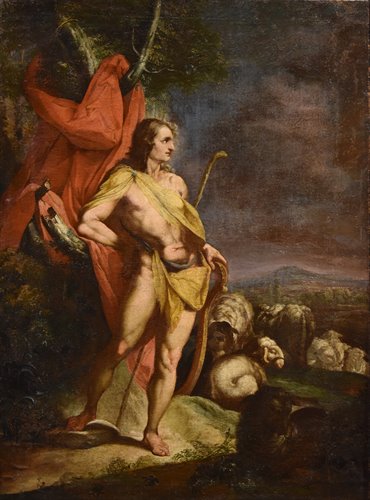
The foreground is dominated by the powerful figure of the Greek god Apollo, dressed in a single drape that leaves most of his athletic body uncovered: the god of the arts and music holds his lyre, one of his most iconic attributes, in his hands; with the same arm, he holds a shepherd's crook: an unusual tool for this deity, but one that allows us to understand the particular episode in which he is involved.
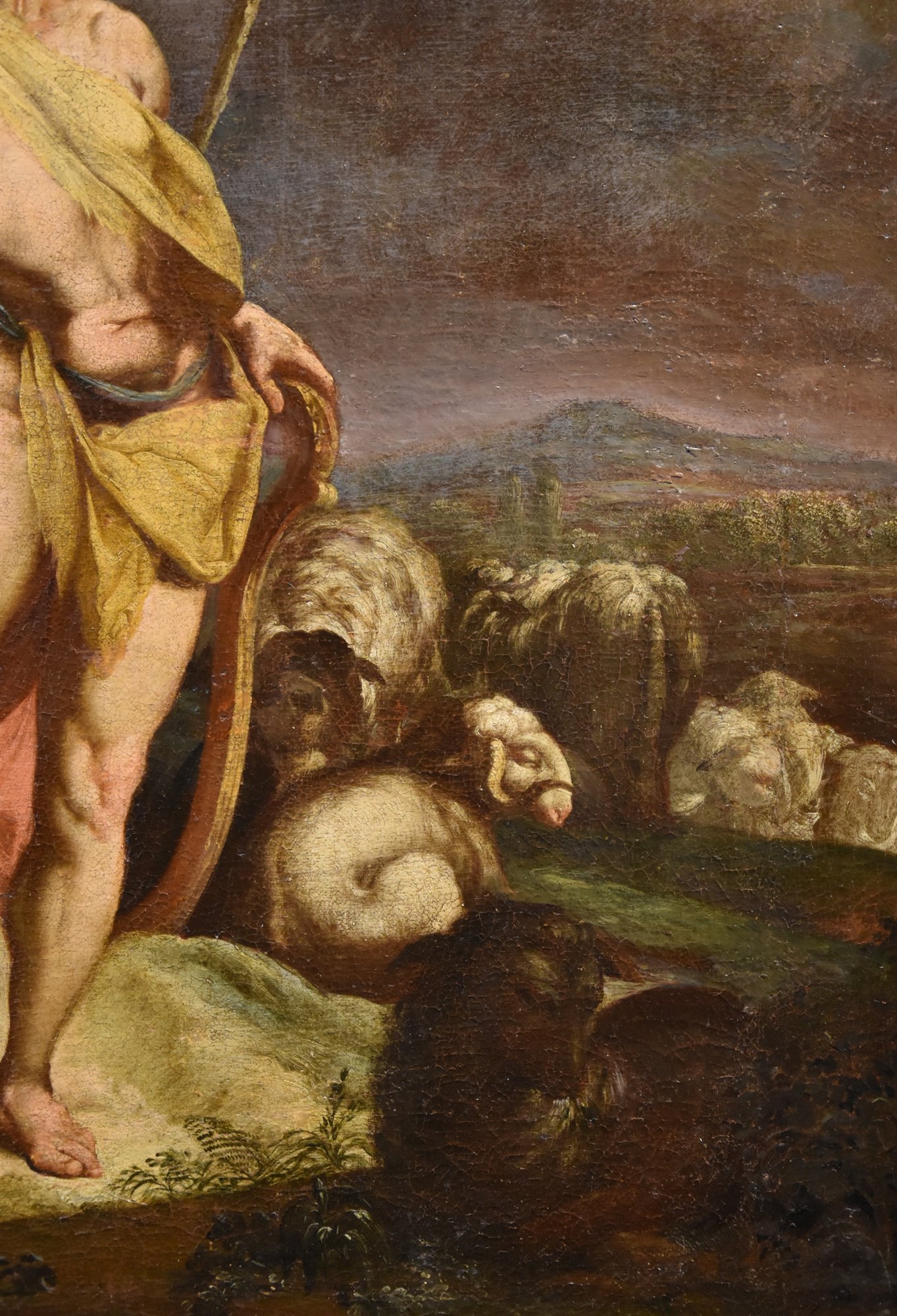
The subject refers, in particular, to the mythical episode in which Apollo was punished by Zeus for exterminating the Cyclopes and forced to serve a mortal for nine years: his sentence was to protect, as a shepherd, the flocks of King Admetus (king of Pherae, in Thessaly).
This particular episode is very interesting because it also tells us about the origin of the lyre as an instrument sacred to the god: in the Homeric hymns, it is said that Hermes, messenger of the gods, played a joke on Apollo: he stole his sheep and then used the intestines of some of them to create a lyre.
When Apollo, enraged, managed to track him down, he fell in love with this instrument with its heavenly sound and left Hermes the cattle in exchange for the lyre, which then became one of his most iconic symbols.
As for the origin of the painting, it is easy to attribute its authorship to a Flemish school artist active between the 17th and 18th centuries, but still linked to the culture of the late Mannerist period, with strong Italian influences.
This explains its attribution to the workshop of Cornelis van Haarlem (Haarlem 1562–1638), one of the most representative artists of Northern Mannerism and one of the founders of the so-called “Haarlem School”, an important painting movement active in this Dutch city, whose members favoured mythological subjects, known for their powerful and muscular figures, dynamic compositions and bright colours, in keeping with the Italian Mannerist style.
In particular, the painting draws inspiration from an iconographic prototype created by Bartholomaeus Spranger: observing one of his works entitled “Without Ceres and Bacchus, Venus cools down” (Sine Cerere et Baccho Friget Venus), it is possible to see how the powerful figure of Bacchus, distinguished by a virile pose and highly emphasised musculature, has been extrapolated to give him the identity of Apollo instead.
It is well known that the members of this movement, primarily Cornelis van Haarlem, were strongly influenced by Spranger, who was known for his elongated figures, especially nudes, and whose works were widely distributed through prints.
“Without Ceres and Bacchus, Venus grows cold”, Jan Muller, Dutch (print), after Bartholomeus Spranger, circa 1597
_-_(MeisterDrucke-1611392).jpg)
ADDITIONAL INFORMATION:
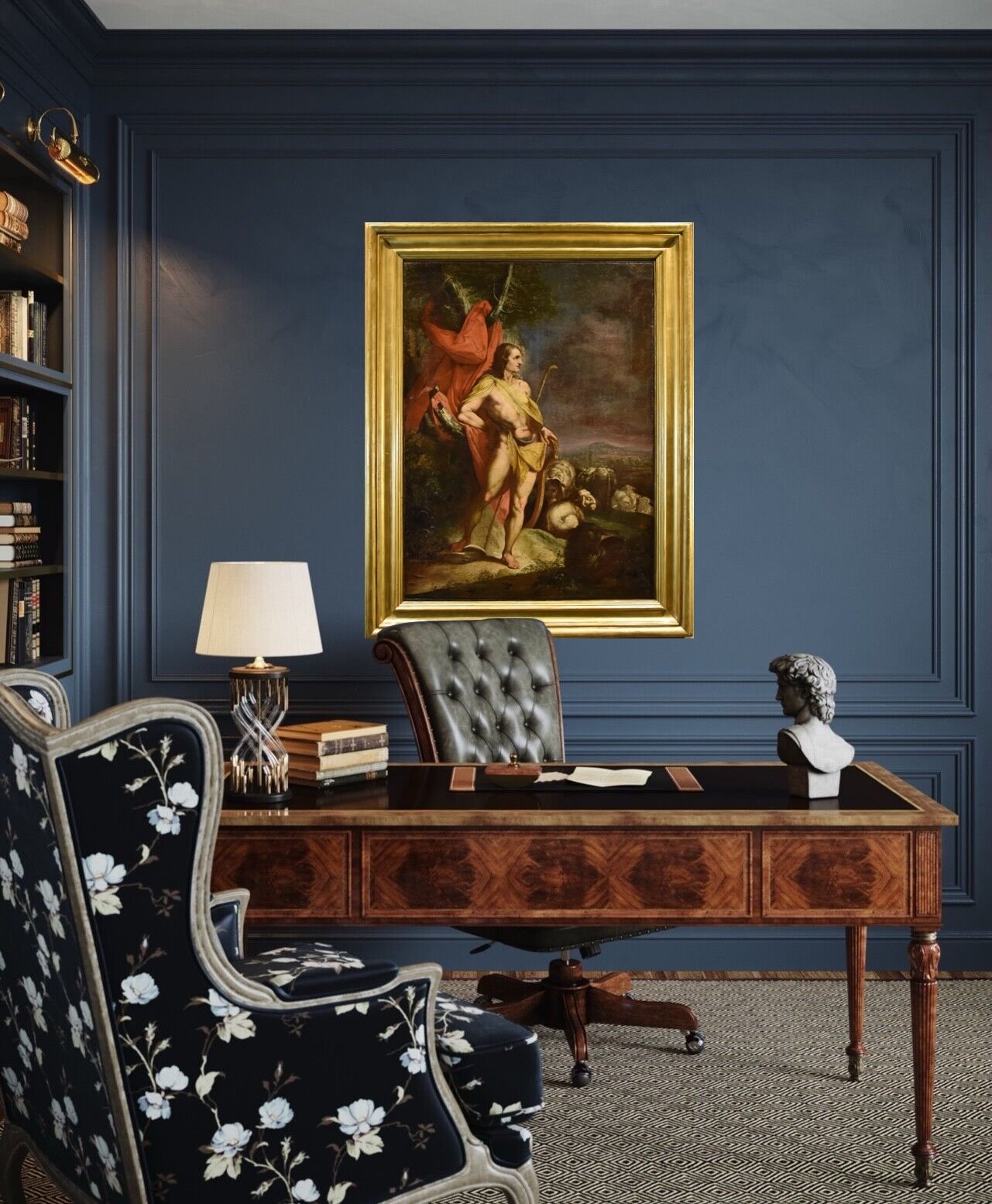
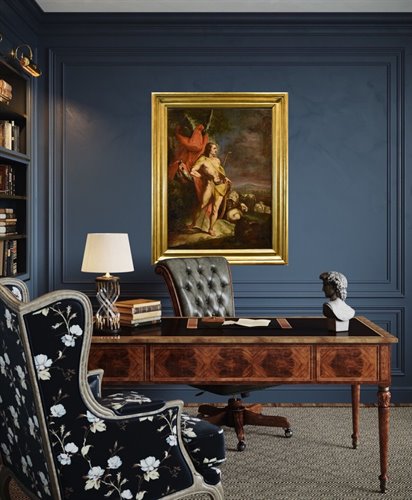
The painting is sold complete with an attractive gilded frame and comes with a certificate of authenticity and a descriptive iconographic card.
We take care of and organise the transport of purchased works, both in Italy and abroad, using professional and insured carriers.
If you would like to see this or other works in person, we would be delighted to welcome you to our new gallery in Riva del Garda, at Viale Giuseppe Canella 18. We look forward to seeing you!
Please contact us for any information or to arrange a visit, we will be happy to assist you.
Follow us on: