
Allegoria dell’Eta dell’Oro
Pietro Liberi (Padova 1605 - Venezia 1687) cerchia
Pietro Liberi (Padua 1605 – Venice 1687) circle
Allegory of the Golden Age
Oil on canvas
70 x 80 cm.
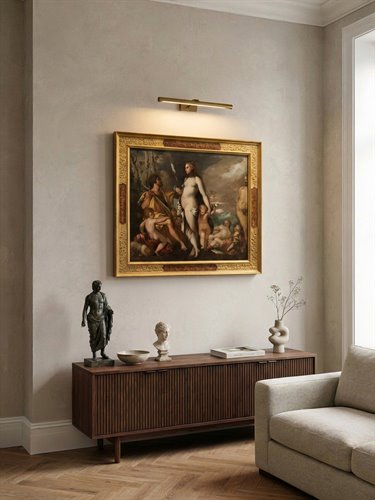
Framed: 87 x 97 cm.
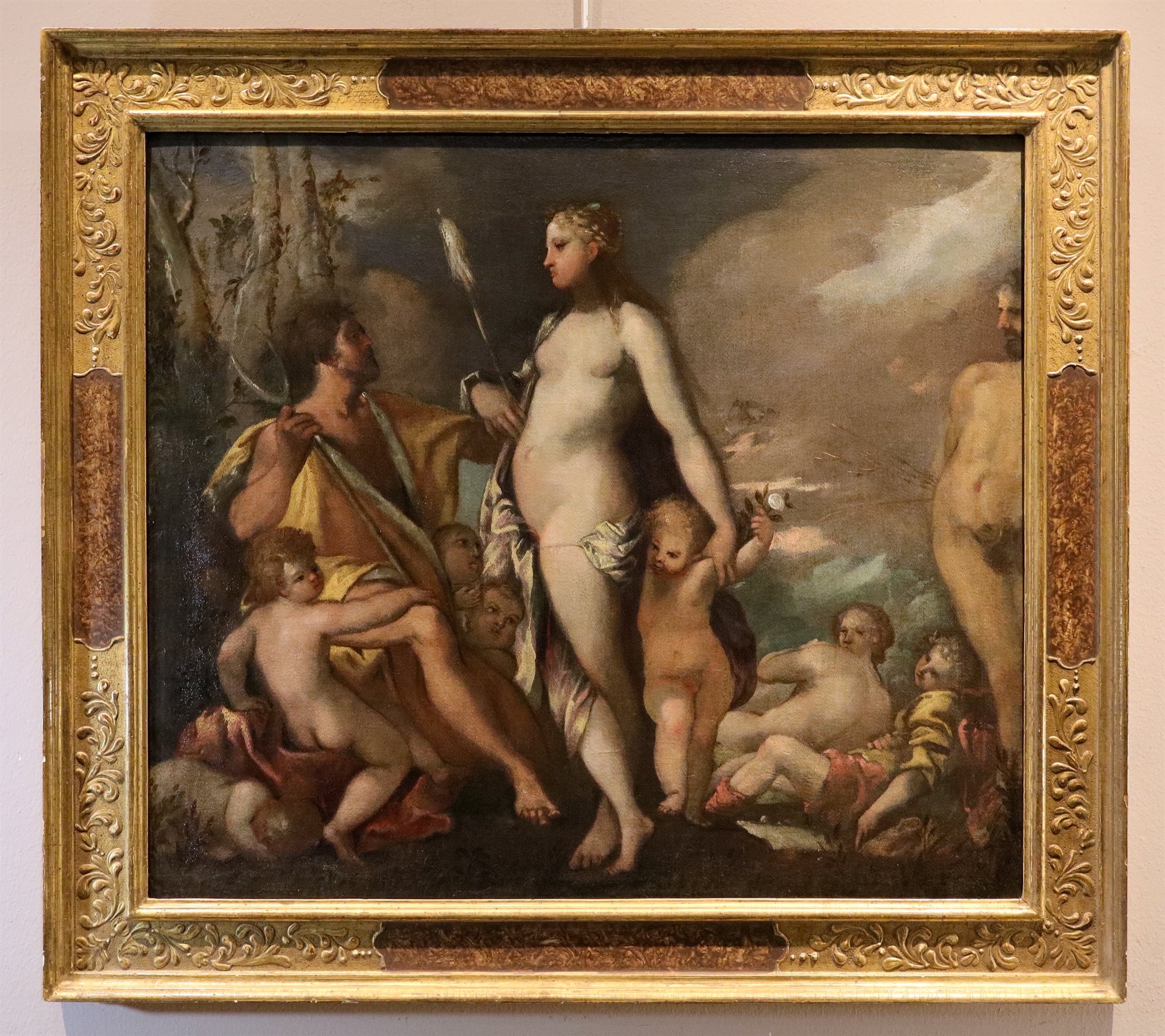
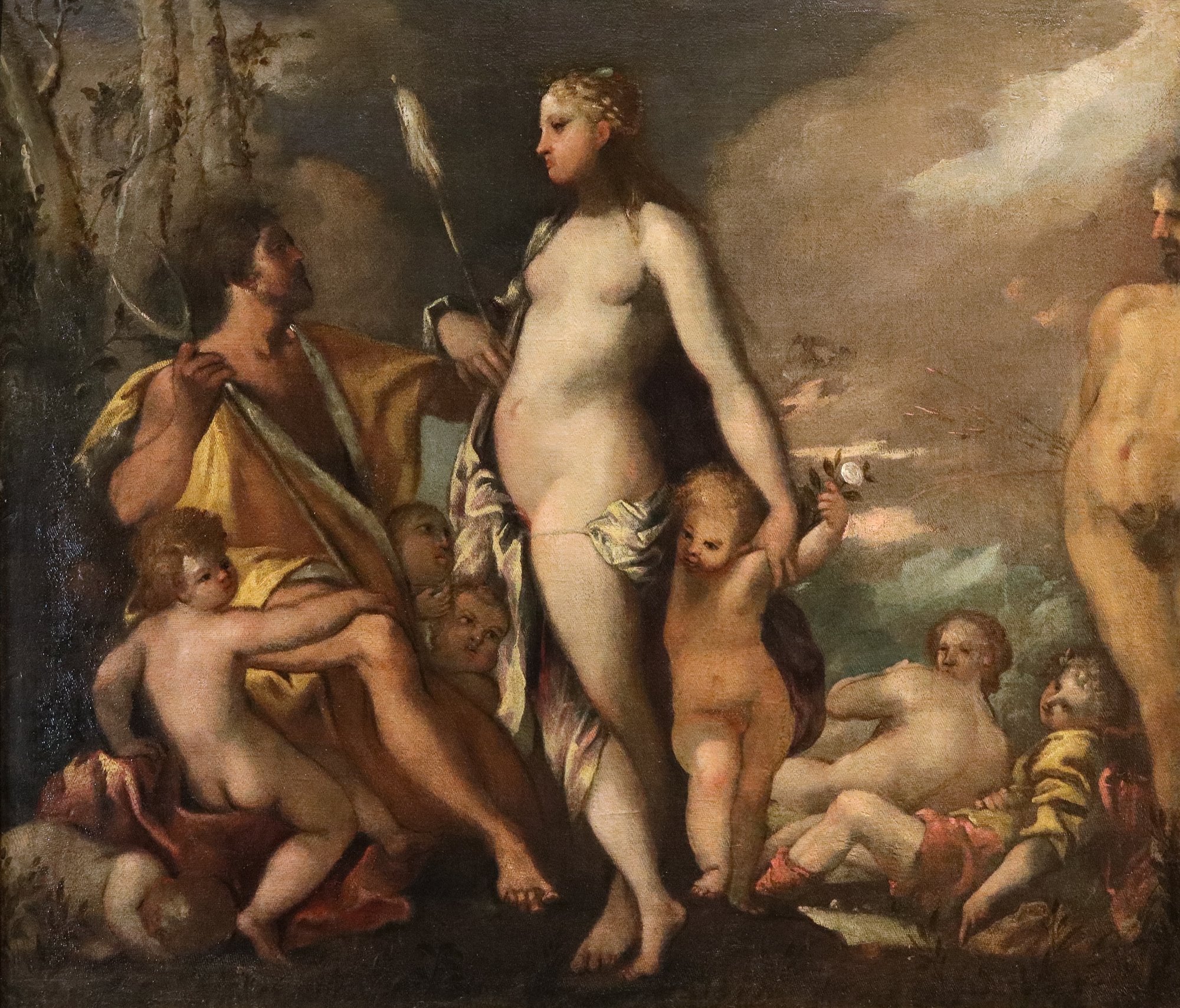
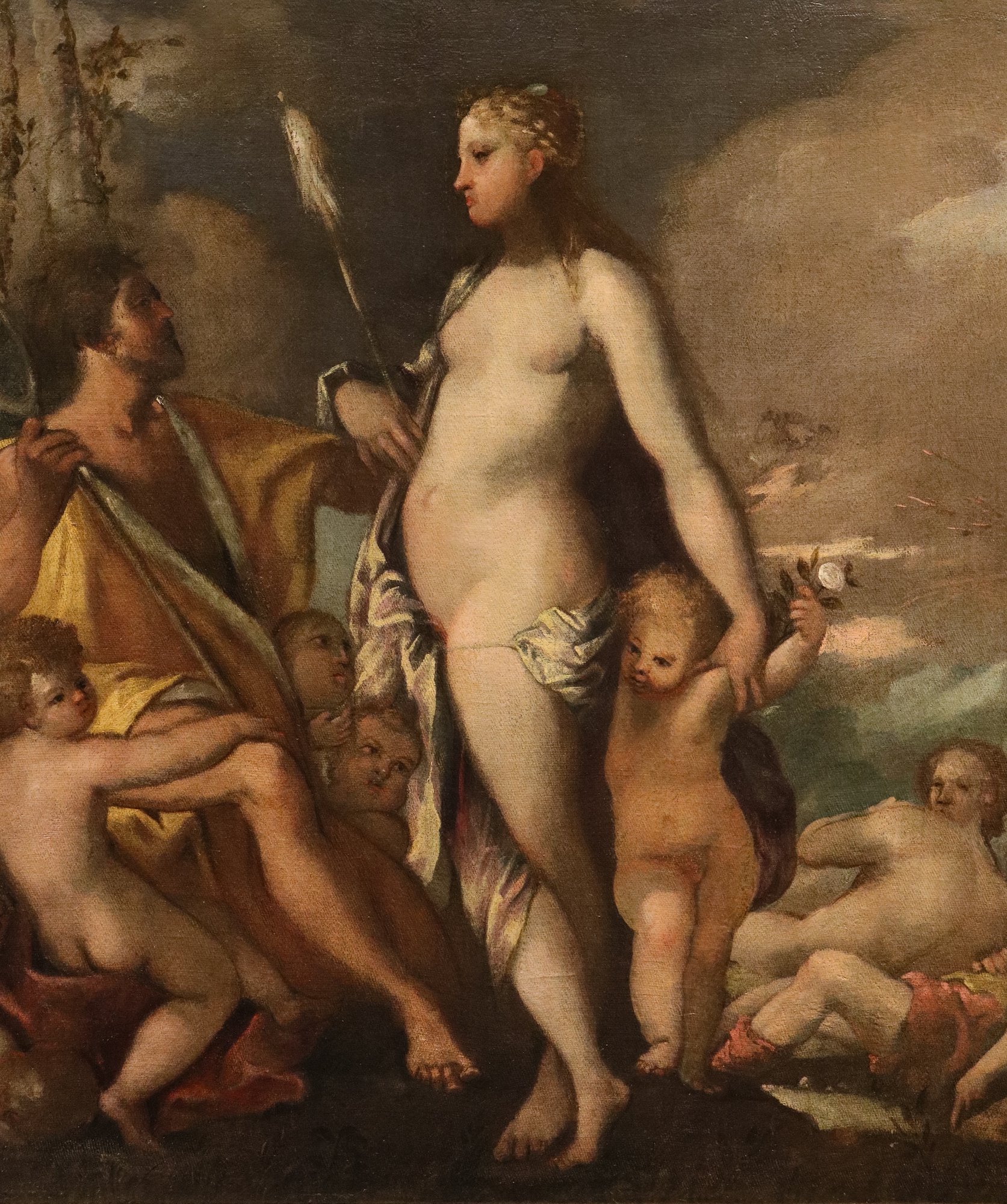
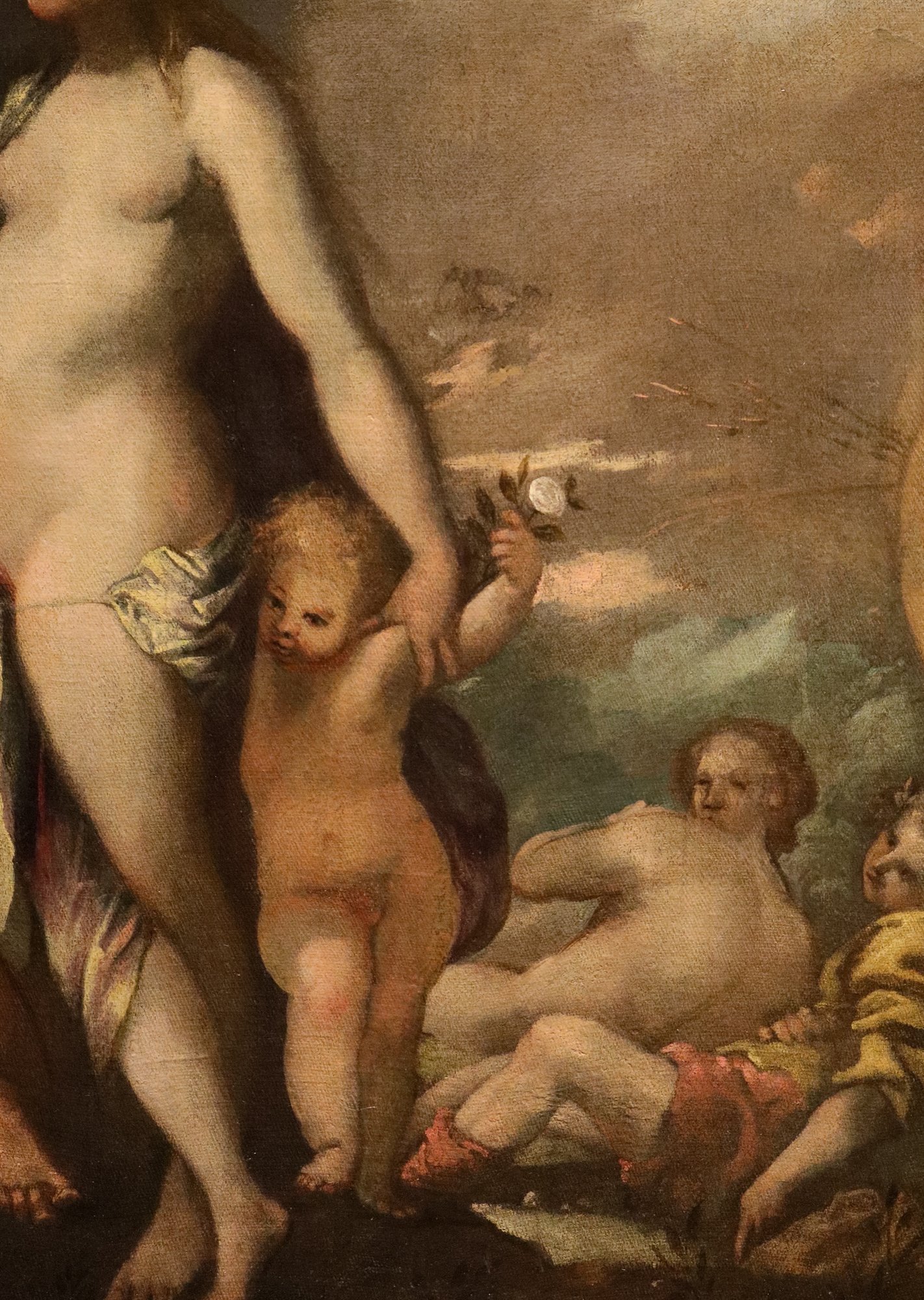
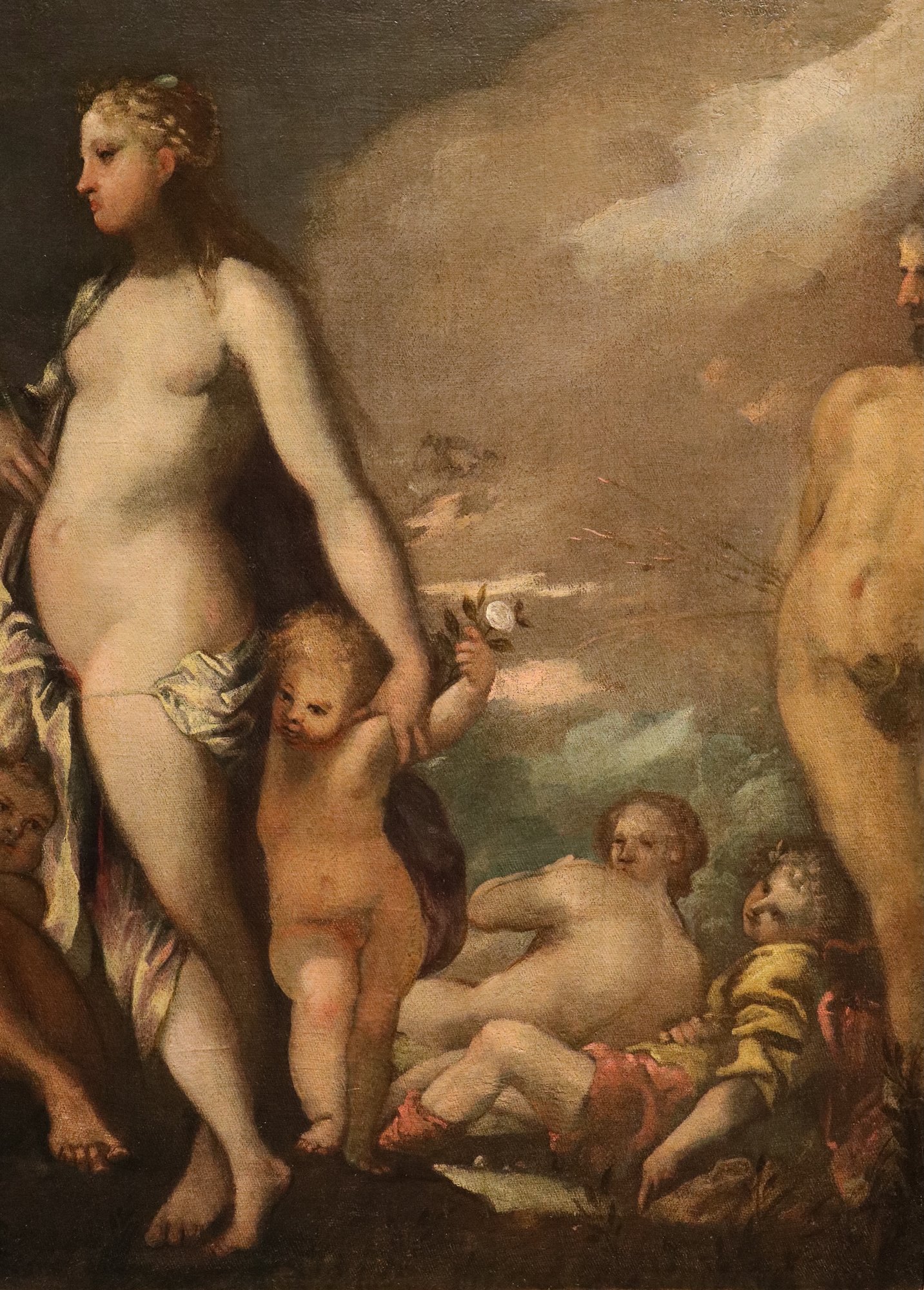
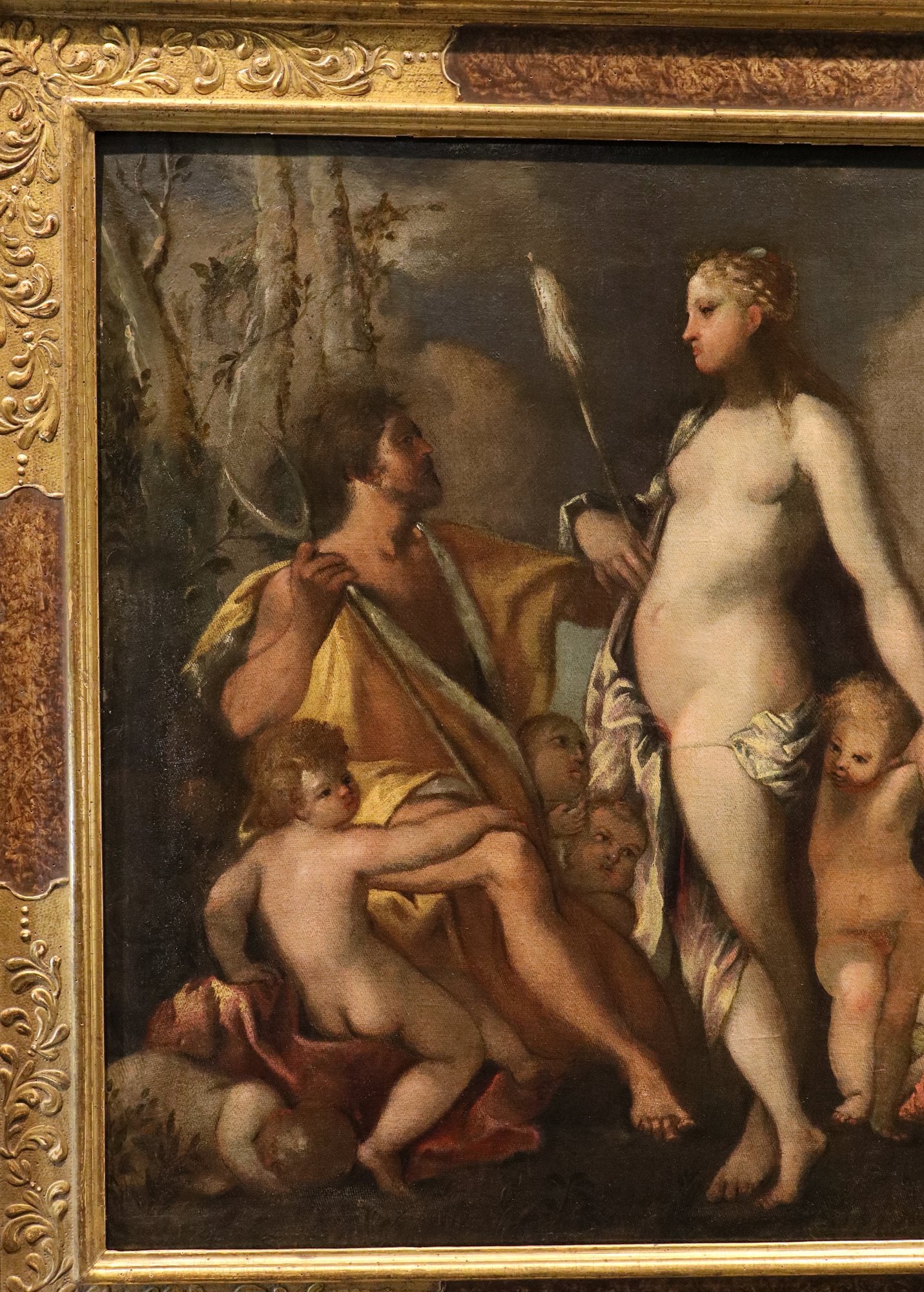
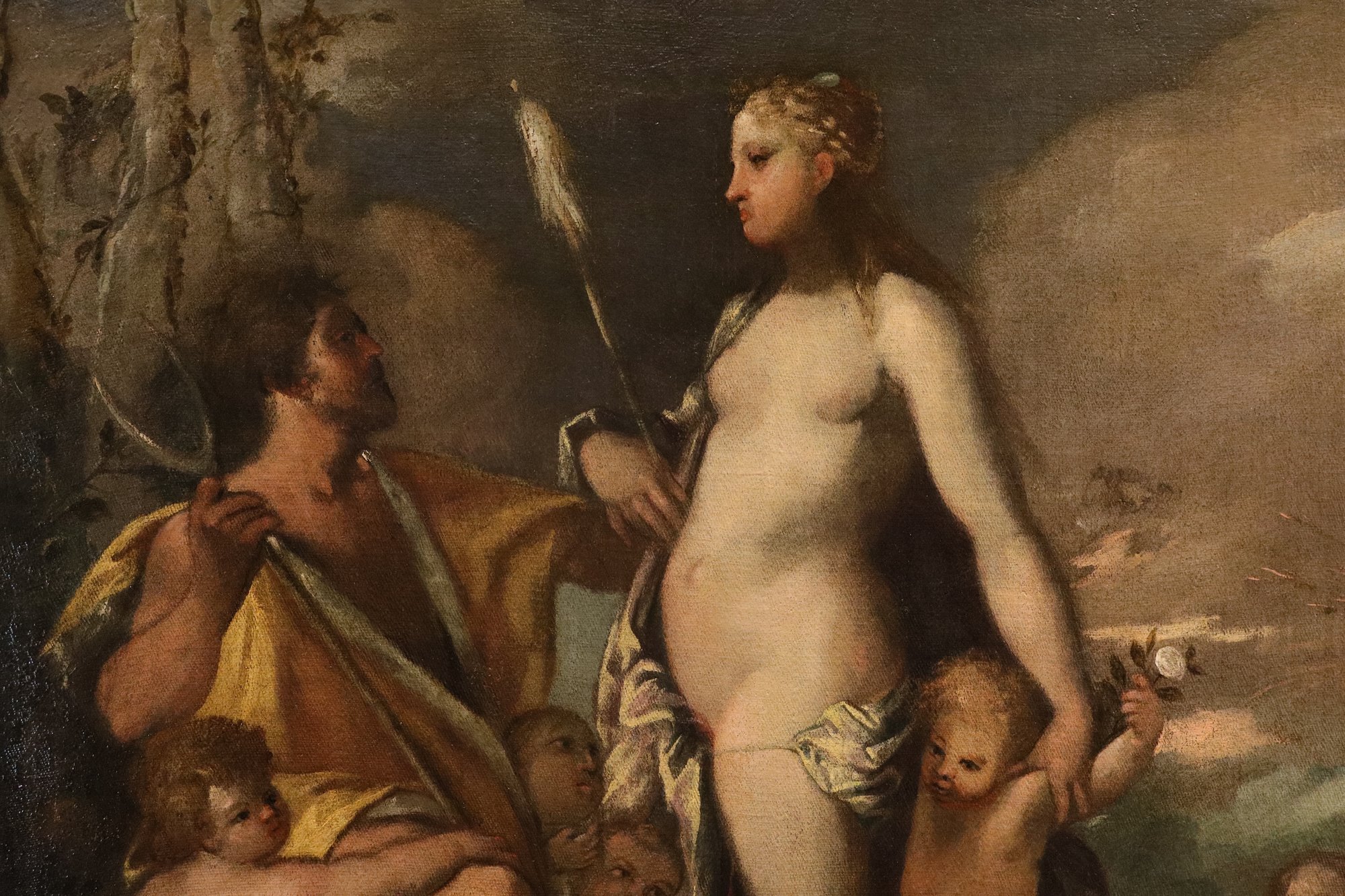
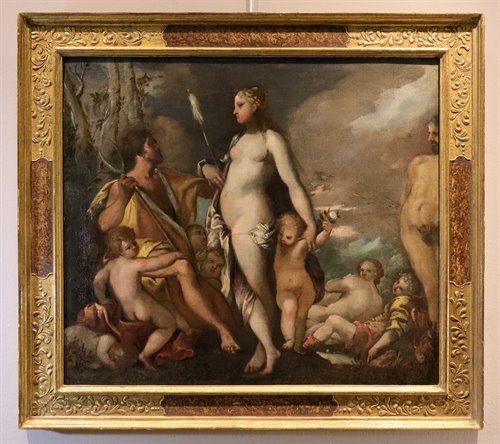
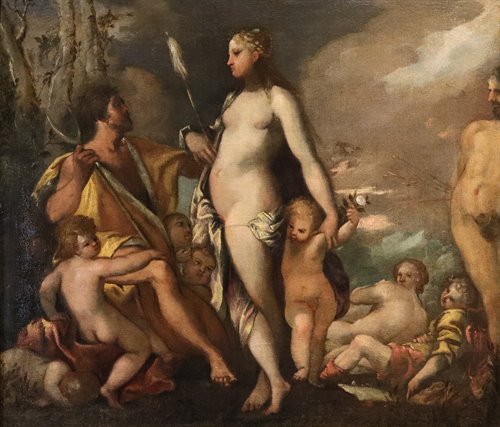
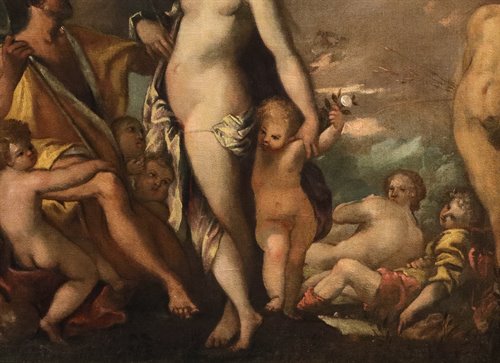
An ode to peace, abundance and the fertility of nature comes to life in this refined composition attributed to the circle of Pietro Liberi (Padua 1605–Venice 1687): specifically, it is a beautiful allegory of the Golden Age, featuring Saturn (Cronus) and his wife Opis (Rhea), a rather rare iconographic subject that celebrates the prosperity of their reign through a sensual language, typical of the refined taste of the Venetian Baroque.
The allegorical subject is inspired by the classical mythology of Hesiod, who, in his poem *Works and Days*, recounts the first and happiest era of humanity, set during the mythical reign of Saturn (Saturnia regna) and characterised by absolute peace, spontaneous justice and abundance (akin to the Garden of Eden of biblical tradition).
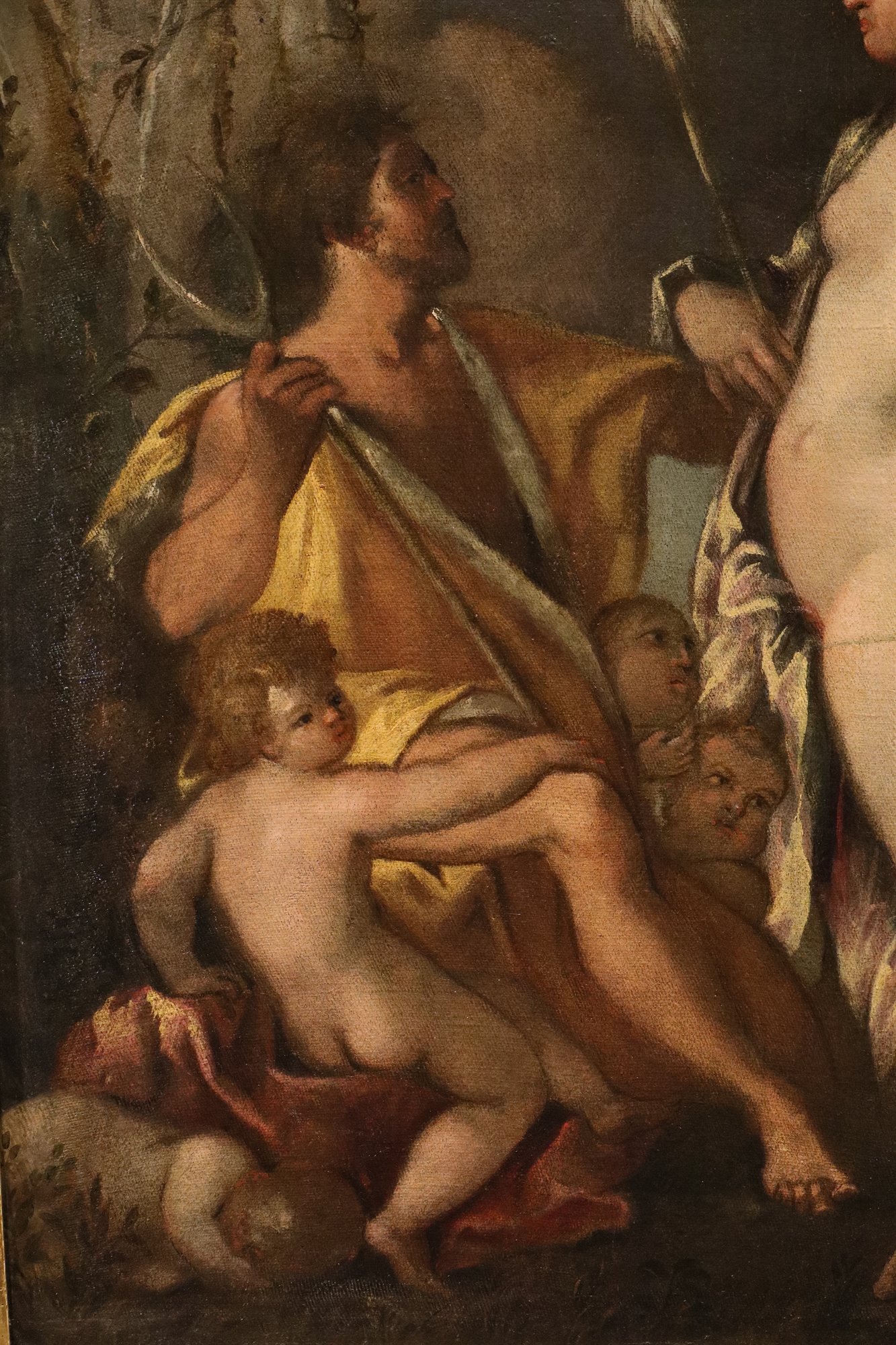
Set against a landscape bathed in warm, golden light, Saturn, god of Time and agriculture, is depicted seated, wrapped in a wide ochre cloak, whilst holding his crescent sickle—his canonical attribute—like a sceptre; this symbolises not only his primordial connection with agriculture but also the passage of time.
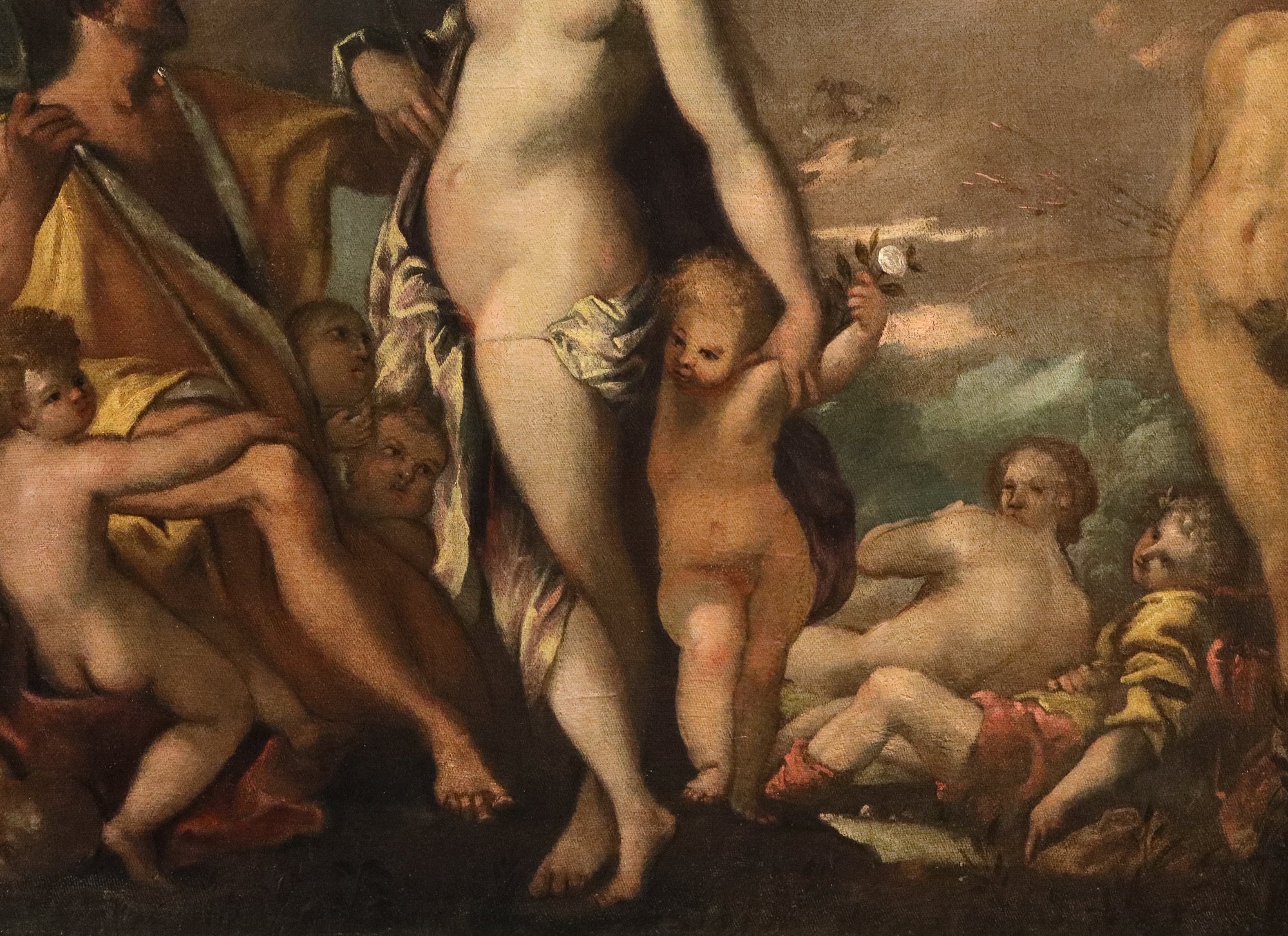
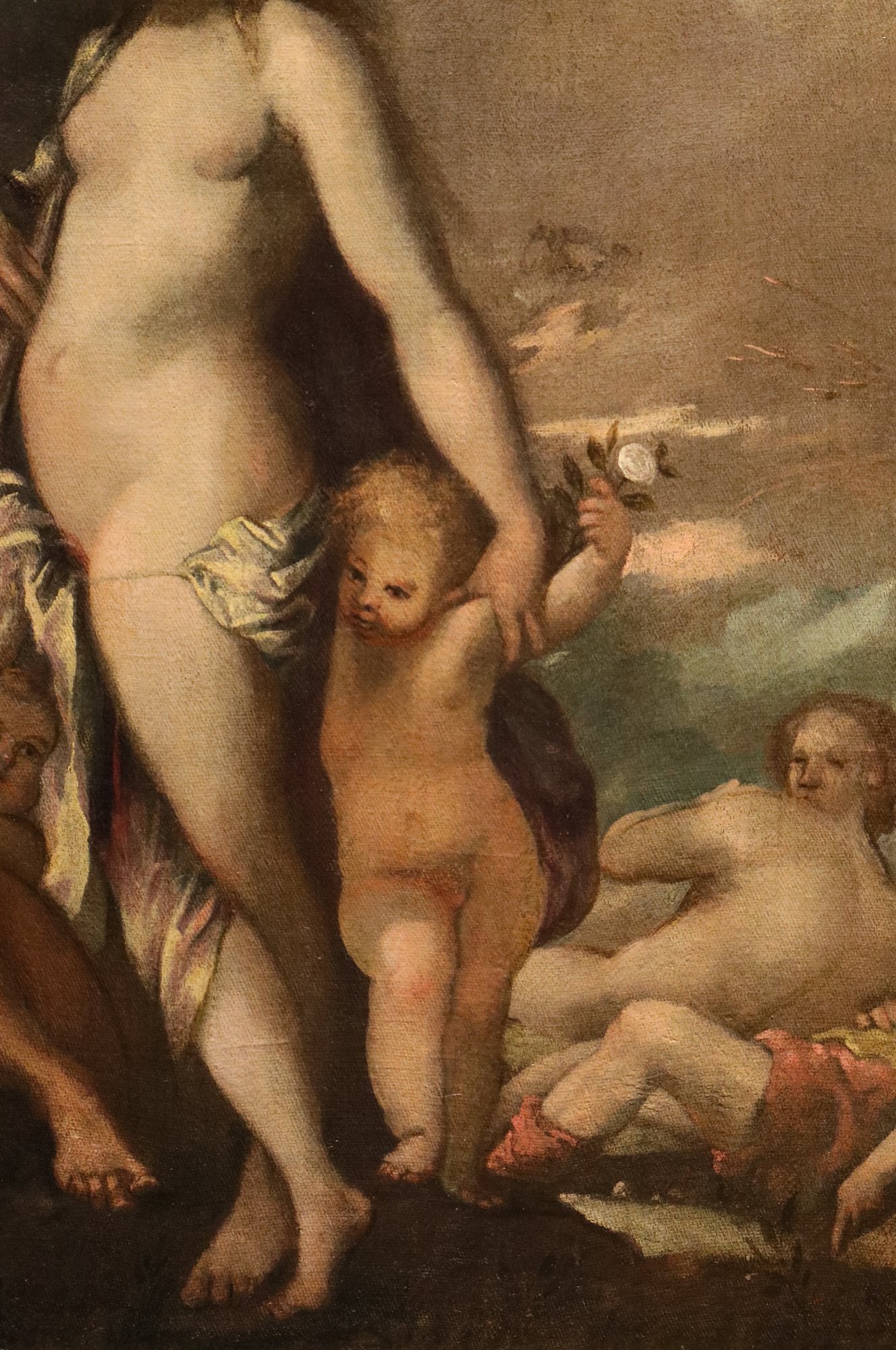
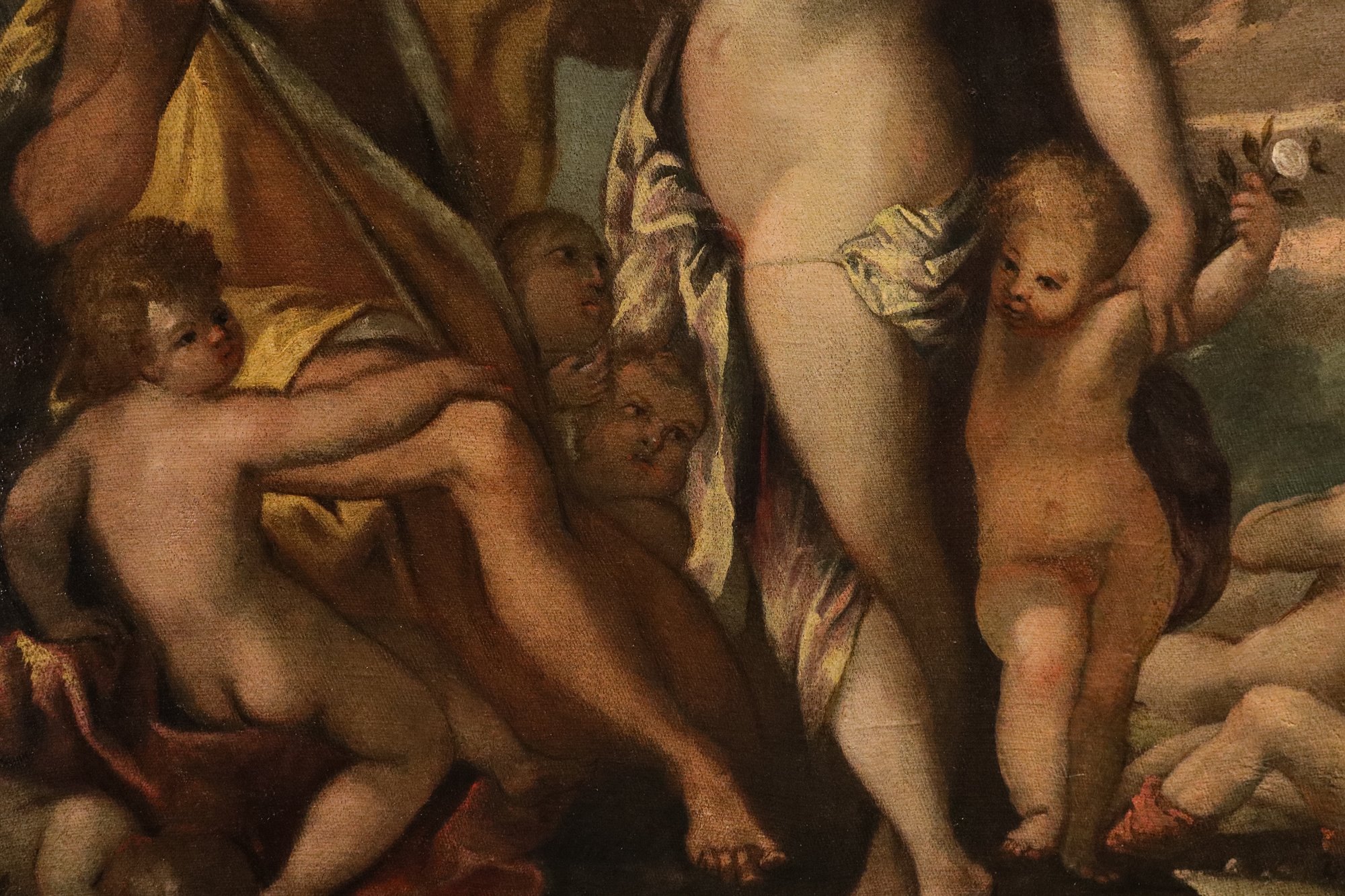
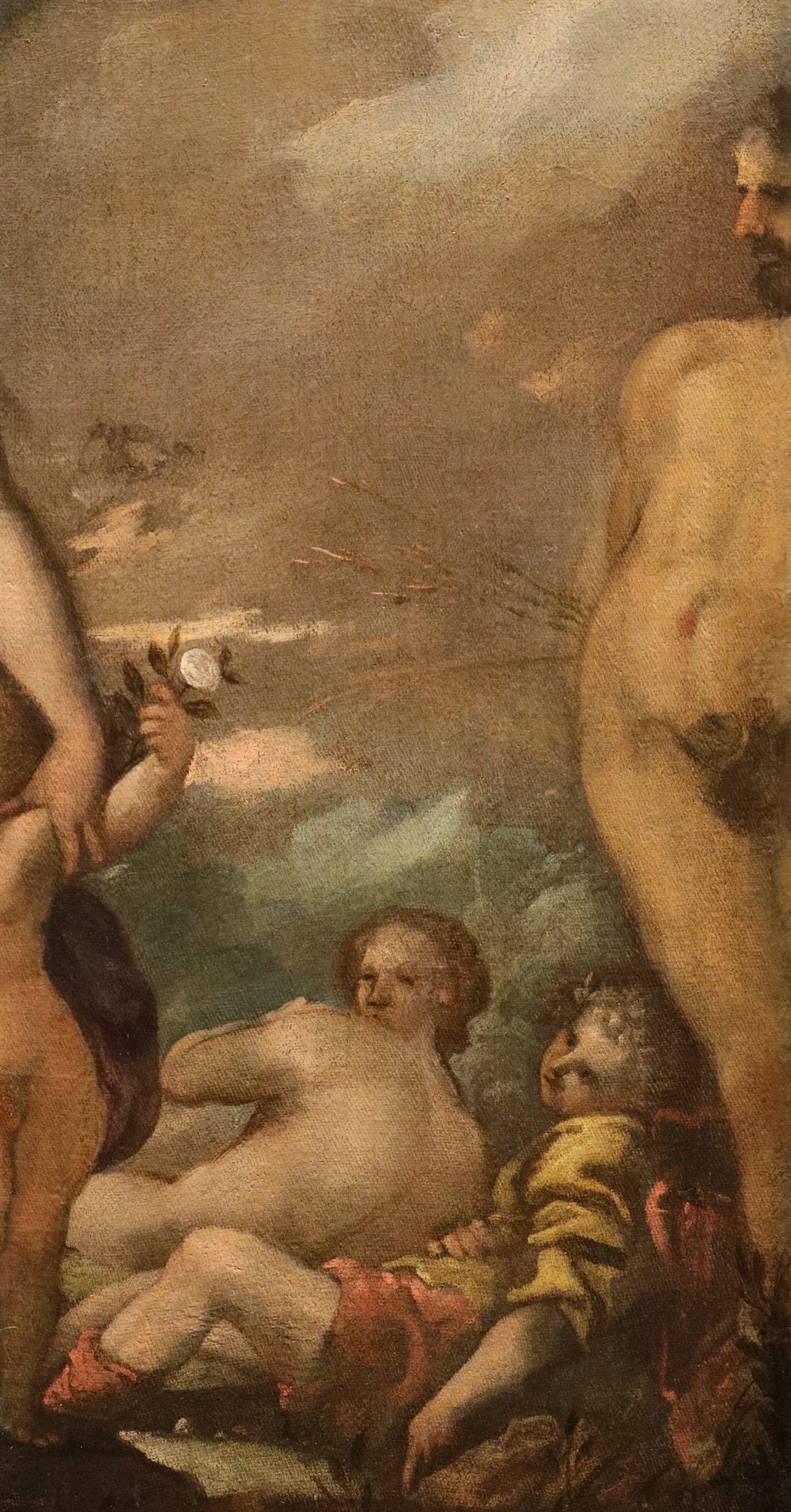
His gaze is directed towards his consort, Opis, who dominates the scene, depicted in an elegant contrapposto pose and draped only in a light, pale cloth. The goddess, the personification of the earth’s fertility and wealth, holds a spindle wrapped in wool to be spun – an emblem linked to creation, domestic prosperity and the peaceful industriousness of the Golden Age – whilst with her left hand she tenderly leans on a cherub who is presenting her with a white flower, itself a symbol of peace.
On the right-hand edge stands the nude, statuesque figure of a Genius of the Harvest, holding ears of wheat, the personification of nature’s prosperity. Around the divine couple, a jubilant crowd of children enlivens the scene, embodying the carefree spirit and prosperity of humanity during the mythical Golden Age, before the advent of wars and hardships.
In 17th-century Venetian figurative art, this pictorial subject held a specific symbolic value, being commissioned to celebrate good governance, wish for prosperity in business, family harmony, longevity and social success.
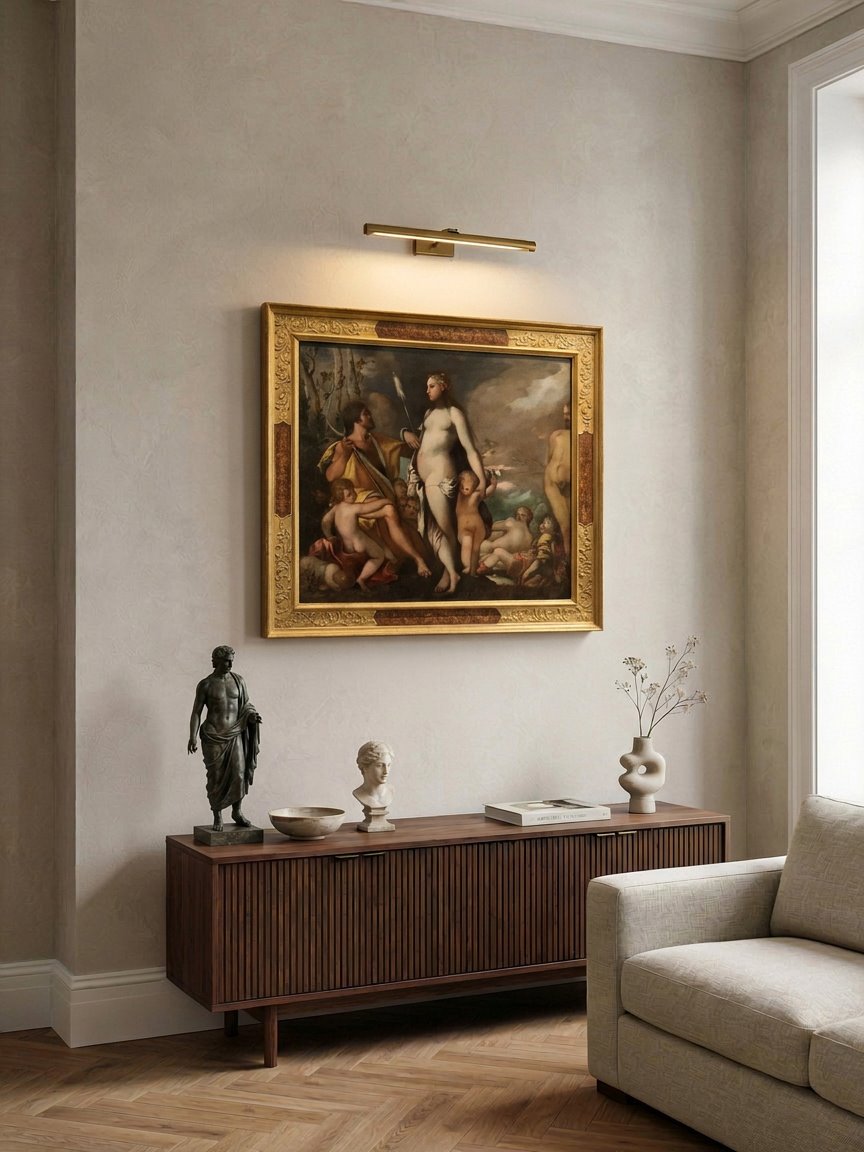
The presence of fertility deities surrounded by cherubs transformed the subject into a powerful symbol of marital love and the continuity of the family line, and it became the ideal theme for decorating patrician villas or celebrating aristocratic weddings.
The combined presence of Saturn’s sickle (agriculture) and Rhea’s spindle (domestic industry) also celebrated the balance between the earth’s resources and human labour, alluding to material well-being, bountiful harvests and flourishing trade.
Finally, with regard to the attribution, in our view the work fully reflects the style of Pietro Liberi (Padua, 1605–Venice, 1687), one of the leading figures of seventeenth-century Venetian painting, renowned for his mythological and allegorical compositions. The soft brushwork, the ivory-toned and softly shaded flesh tones of the female figure, and the lively grace of the cherubs evoke the characteristic style of the artist’s workshop and circle, which was able to combine the warm colourism of the sixteenth-century Venetian tradition with the narrative elegance of classical myth.
ADDITIONAL INFORMATION:
The painting is sold complete with a beautiful gilded frame and is accompanied by a certificate of authenticity and a descriptive iconographic sheet.
We arrange and organise the transport of purchased works, both within Italy and abroad, using professional and insured carriers.
It is also possible to view the paintings at our gallery in Riva del Garda: we would be delighted to welcome you, by appointment, to show you our collection of works.
Please contact us for any further information or to arrange a visit; we’ll be happy to assist you.
Follow us on: