
Allegoria del Sonno (o della Notte)
Gaspare Diziani (Belluno 1689 – Venezia 1767)
Gaspare Diziani
(Belluno 1689 – Venice 1767)
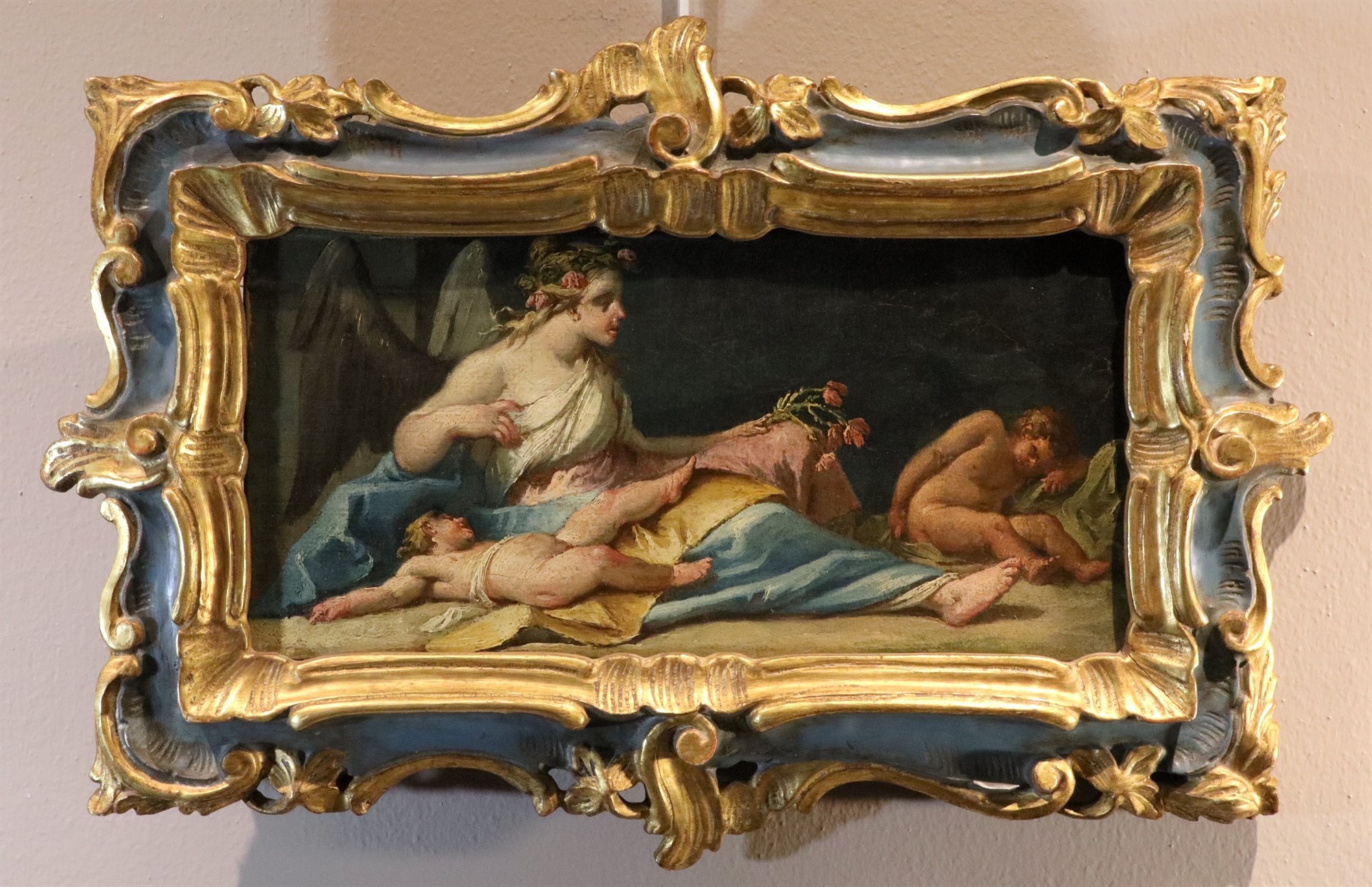
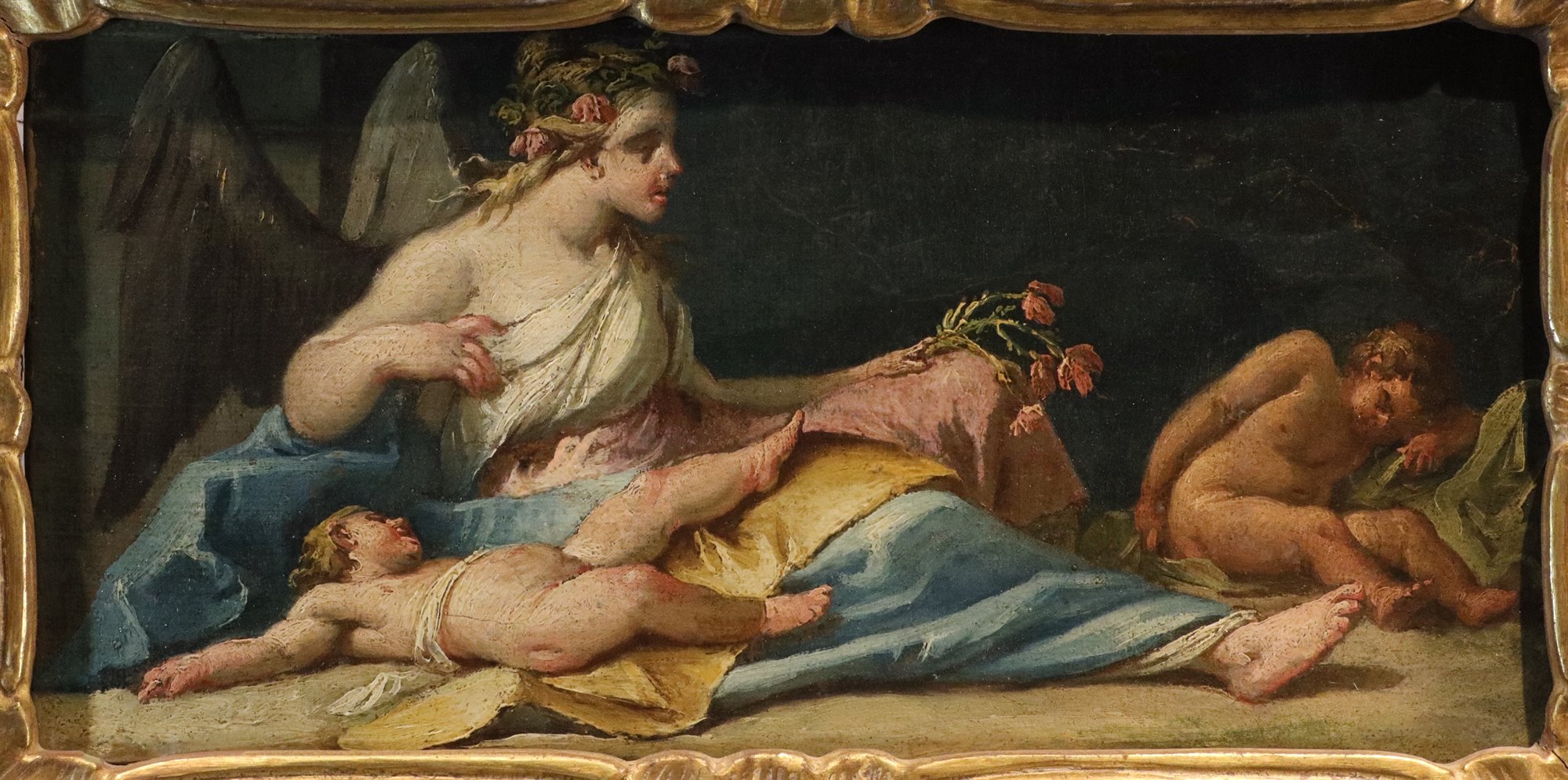
Allegory of Sleep (or of Night)
19 x 39 cm.
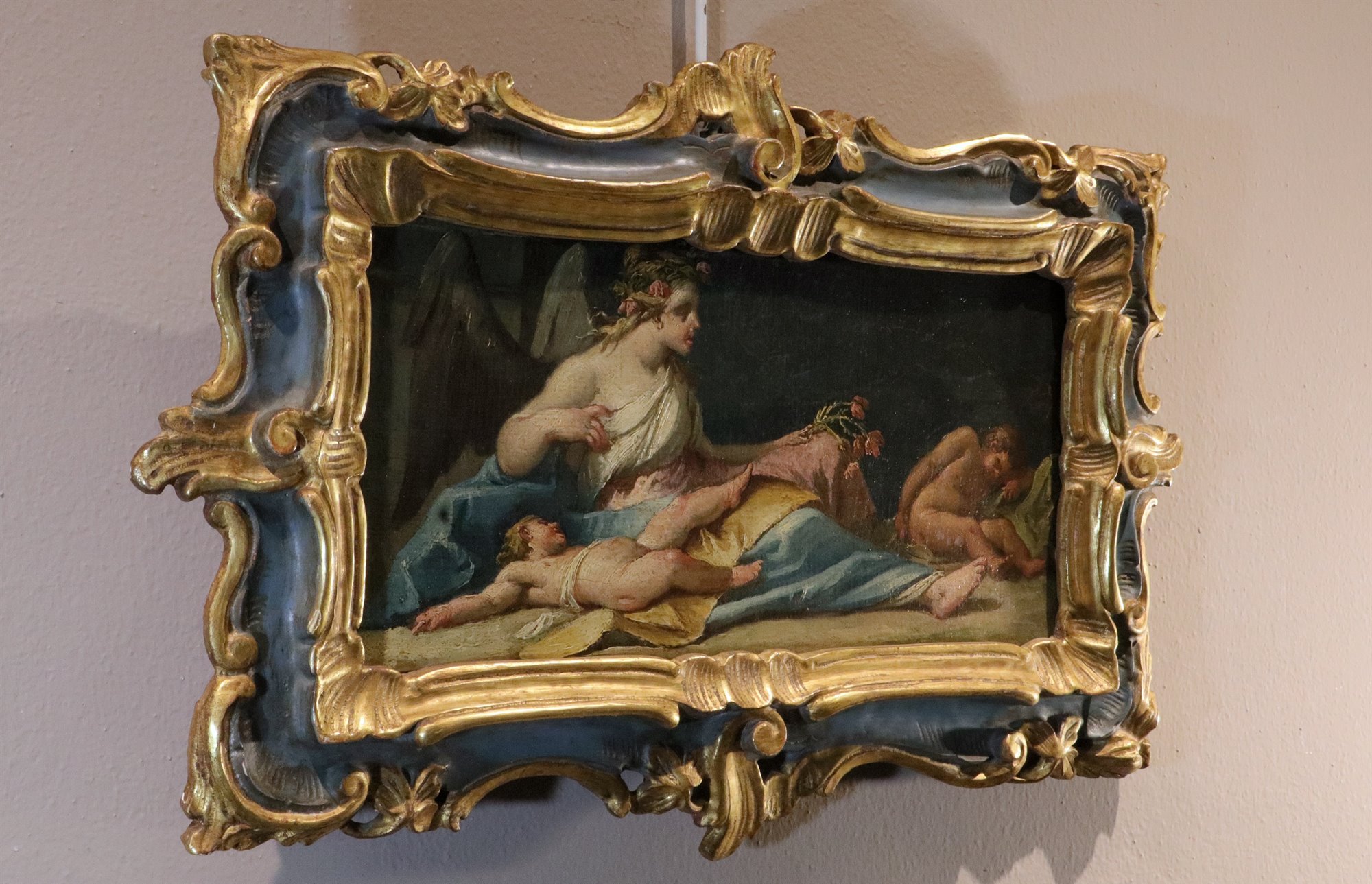
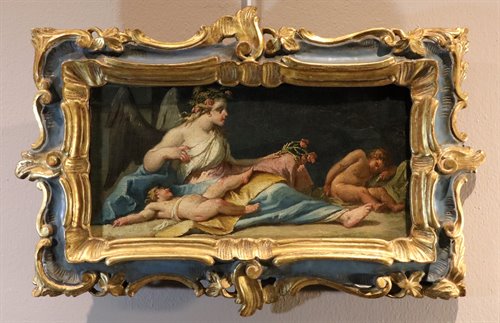
In a fine frame with Rococo carvings, 37 x 56 cm.
Provenance: Hampel Fine Art Auctions, Munich, 04/07/2018, Lot 467, estimate €25,000–35,000
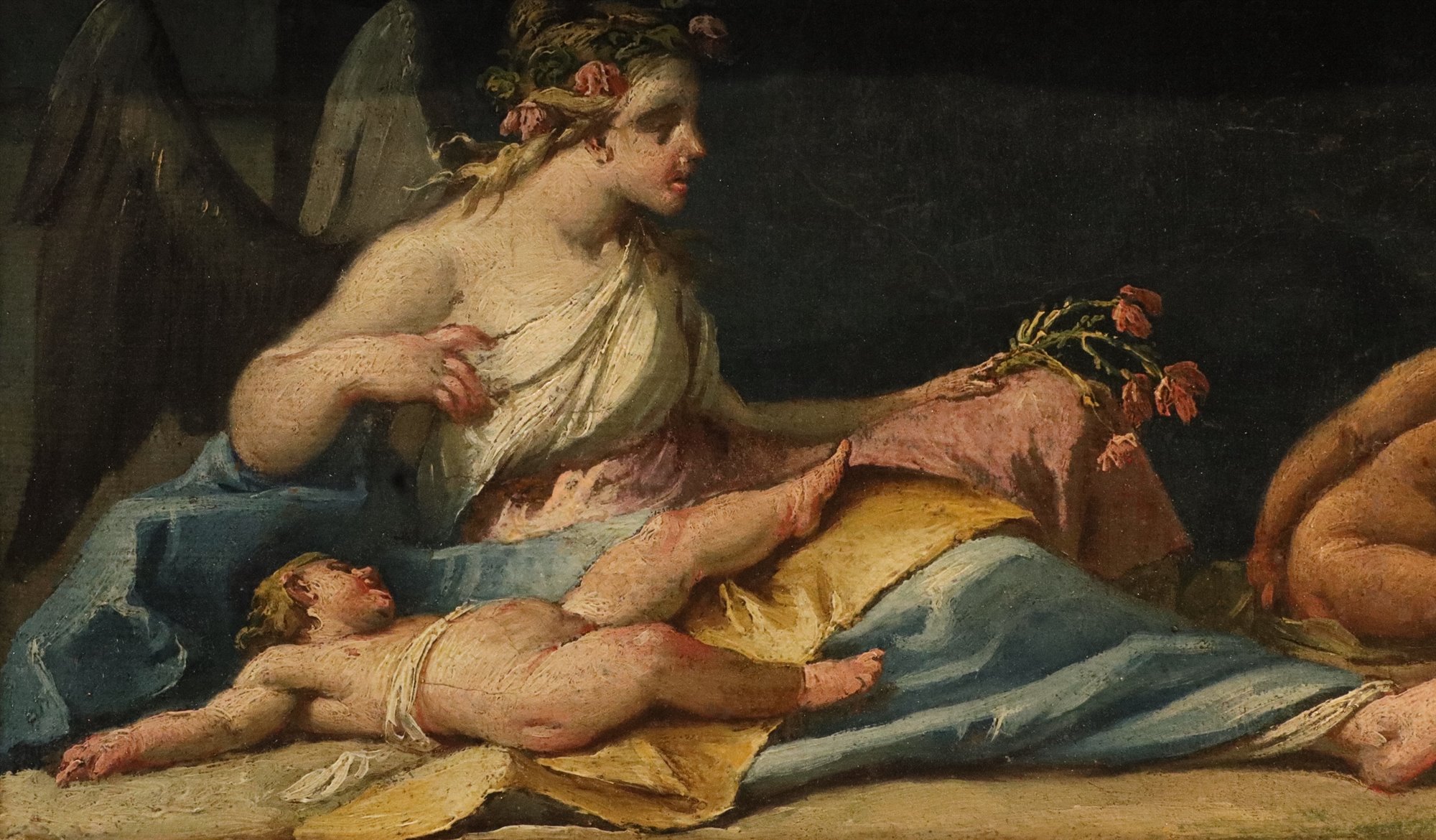
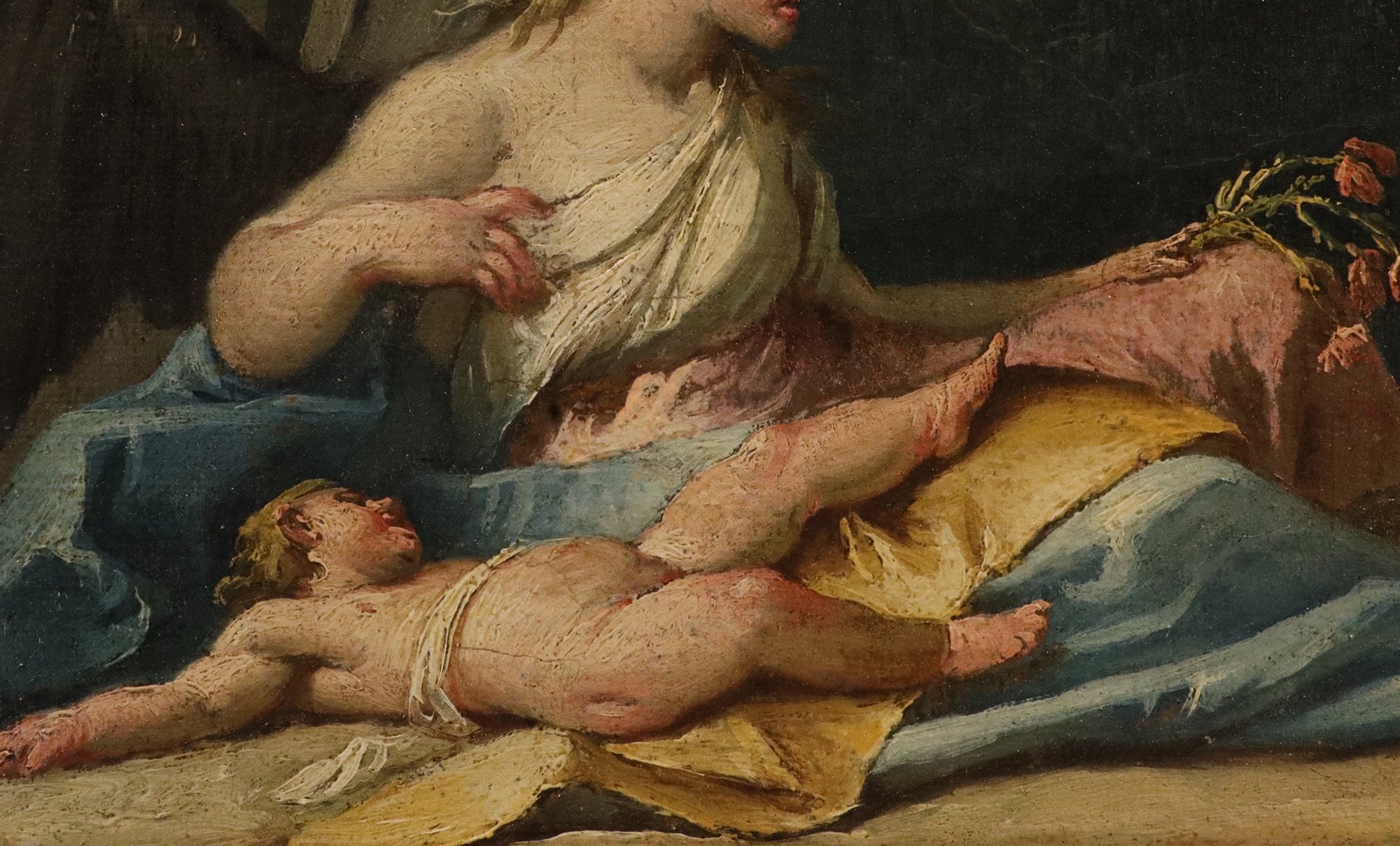
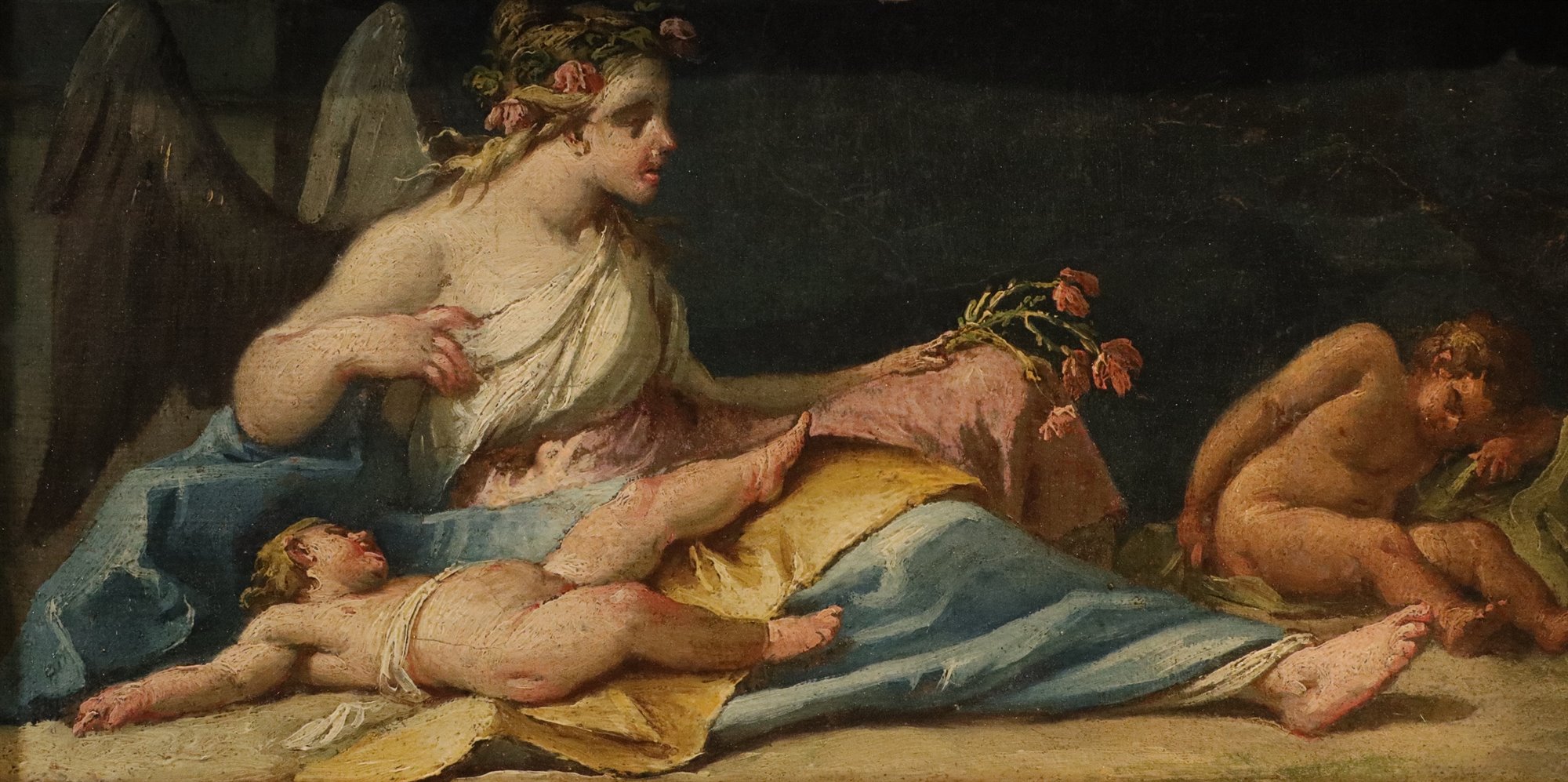
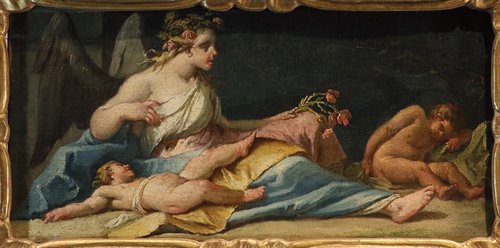
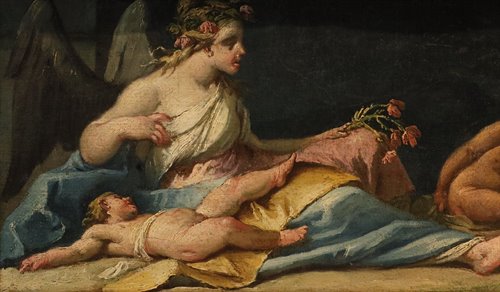
This little gem of Venetian Rococo painting depicts a fascinating allegorical composition of Sleep: at the centre, a reclining female figure with large wings representing Night (Nyx), one of the primordial deities of Greek mythology and protector of rest.
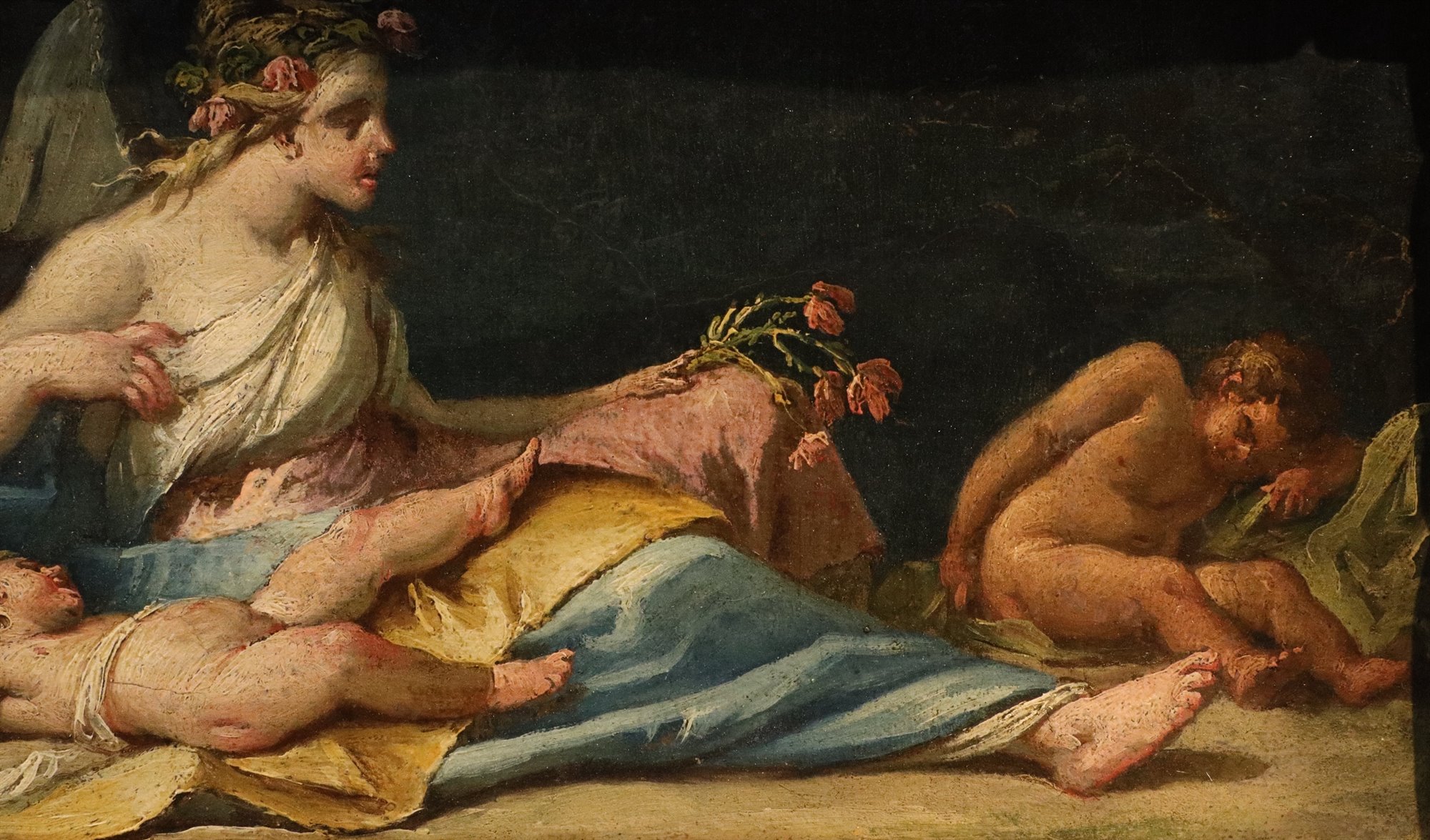
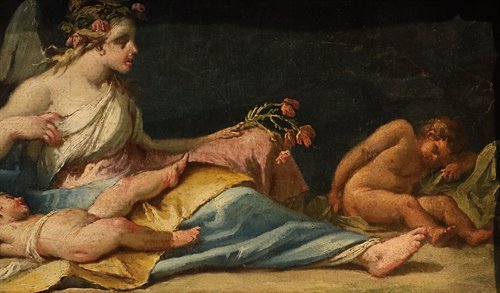
The woman holds a bouquet of poppies in one hand and wears a crown of flowers and poppy capsules, a dreamlike symbol which, in reference to opium, is associated with deep sleep and Morpheus, as its hypnotic properties induce oblivion, rest and dreams.
At her side are two small sleeping cherubs, in a state of complete physical abandonment, symbolising the soporific effect of the night: one lies asleep in the foreground on a golden drape, whilst the other, on the right, rests reclined with his head resting on his arm.
These are the children of Night, the twins Hypnos and Thanatos, who, according to classical mythology, are the divine personifications of Sleep and peaceful Death (hence the famous Latin phrase consanguineus lethi sopor, ‘sleep is the brother of death’).
In antiquity, the image of sleeping cherubs was considered an allegory of eternal sleep and liberation from earthly toil: the overall atmosphere of the work appears soft and languid, created specifically to visually convey the sensation of nocturnal rest and tranquillity.
Of beautiful quality and in excellent condition, the canvas displays characteristics indicative of its Venetian origin, due to the chromatic exuberance and the liveliness of the brushwork; in particular, the work bears a traditional attribution to the master Gaspare Diziani (Belluno 1689 – Venice 1767), a distinguished figure in the Venetian art scene of the 18th century.
We recognise his typical use of colour, with a palette of vibrant tones, and of soft chiaroscuro, with light distributed effectively to create a beautiful sense of depth and volume. In the colour scheme, the triad of red, yellow and blue is here reinterpreted in pastel shades, in keeping with the late Baroque style.
Having arrived in Venice from Belluno around 1710, Diziani was first a pupil of Gregorio Lazzarini, the last provincial exponent of Baroque tenebrism, and then of Sebastiano Ricci, whose teaching was decisive in shaping a style of painting rich in texture, with strong colour accents and a bold, vigorous brushstroke.
Initially devoted to theatrical set design, during the second decade of the 18th century his work took him to Dresden, to the court of Augustus III of Saxony, and to Munich. In 1720, his presence in Venice is documented once more, but we also know him to have been active in various cities of the Veneto region, painting works of considerable artistic merit, particularly in Belluno and Padua.
ADDITIONAL INFORMATION:
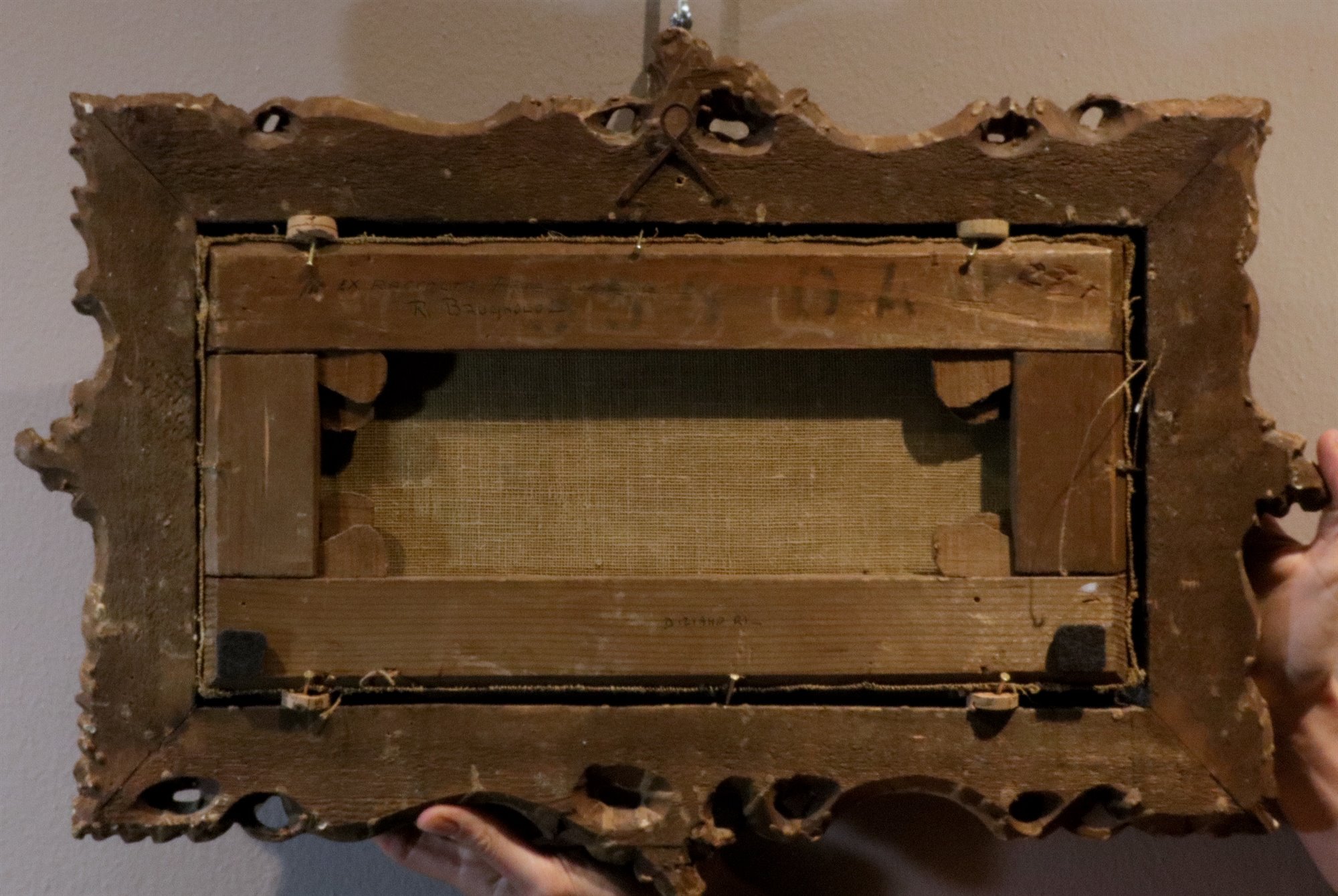
The work sold comes complete with an antique frame and is accompanied by a certificate of authenticity and guarantee.
We arrange and organise the transport of purchased works, both within Italy and abroad, using professional and insured carriers.
You can also view the painting at our gallery in Riva del Garda; we would be delighted to welcome you and show you our collection of works.
Please feel free to contact us for any further information.
Follow us on: