
San Giovanni Battista bambino
Marco Palmezzano (Forlì, 1459 circa – 1539) e bottega
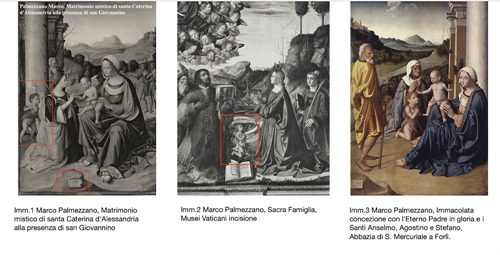
Marco Palmezzano (Forlì, c. 1459 – Forlì, 1539)
and workshop
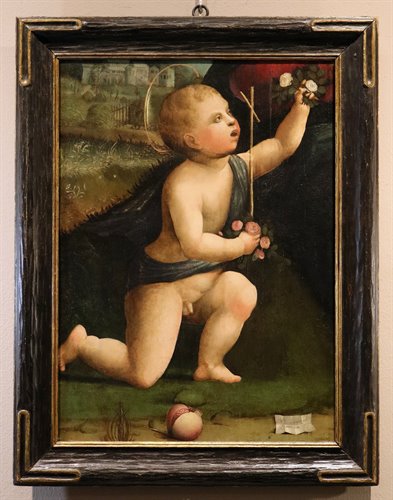
St John the Baptist as a Child
Oil on panel
65 x 48 cm.
In frame 79 x 62 cm.
Provenance: Hampel, Munich, 26 June 2025 (attributed to Marco Palmezzano, estimate 8/10,000 euros)
Link: https://www.hampel-auctions.com/a/Marco-Palmezzano-1458-Forli-1539-zug.html?a=144&s=983&id=5...
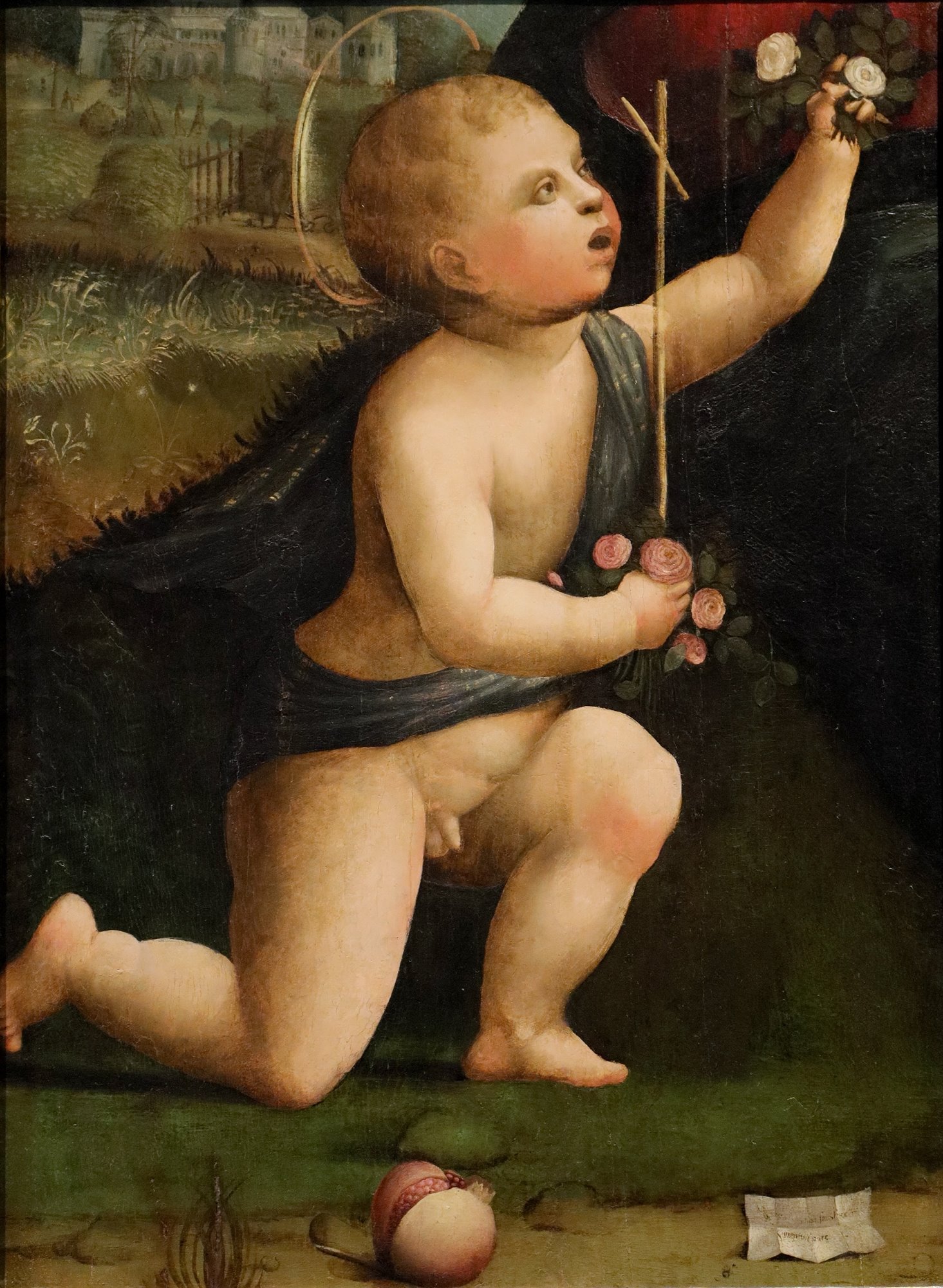
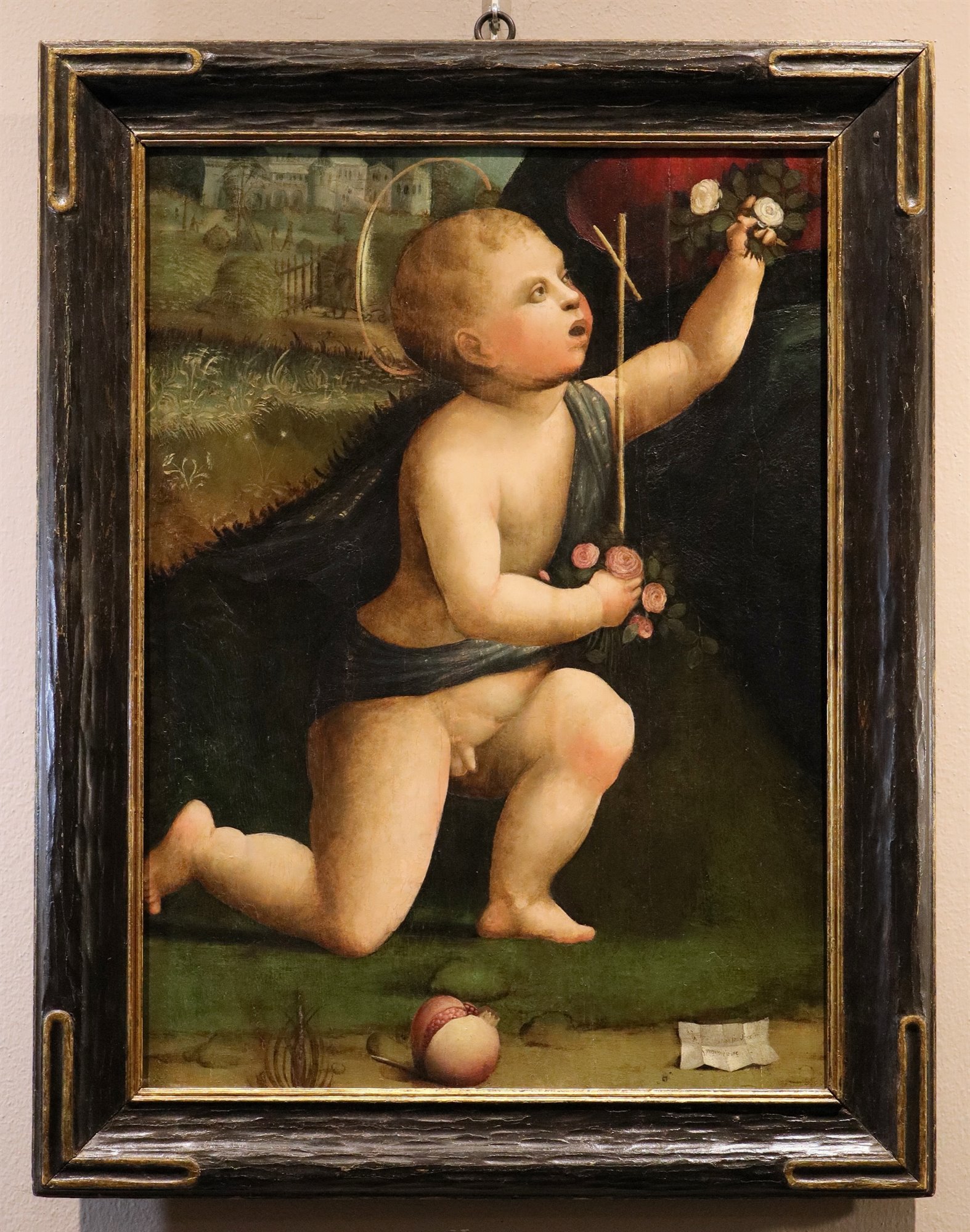
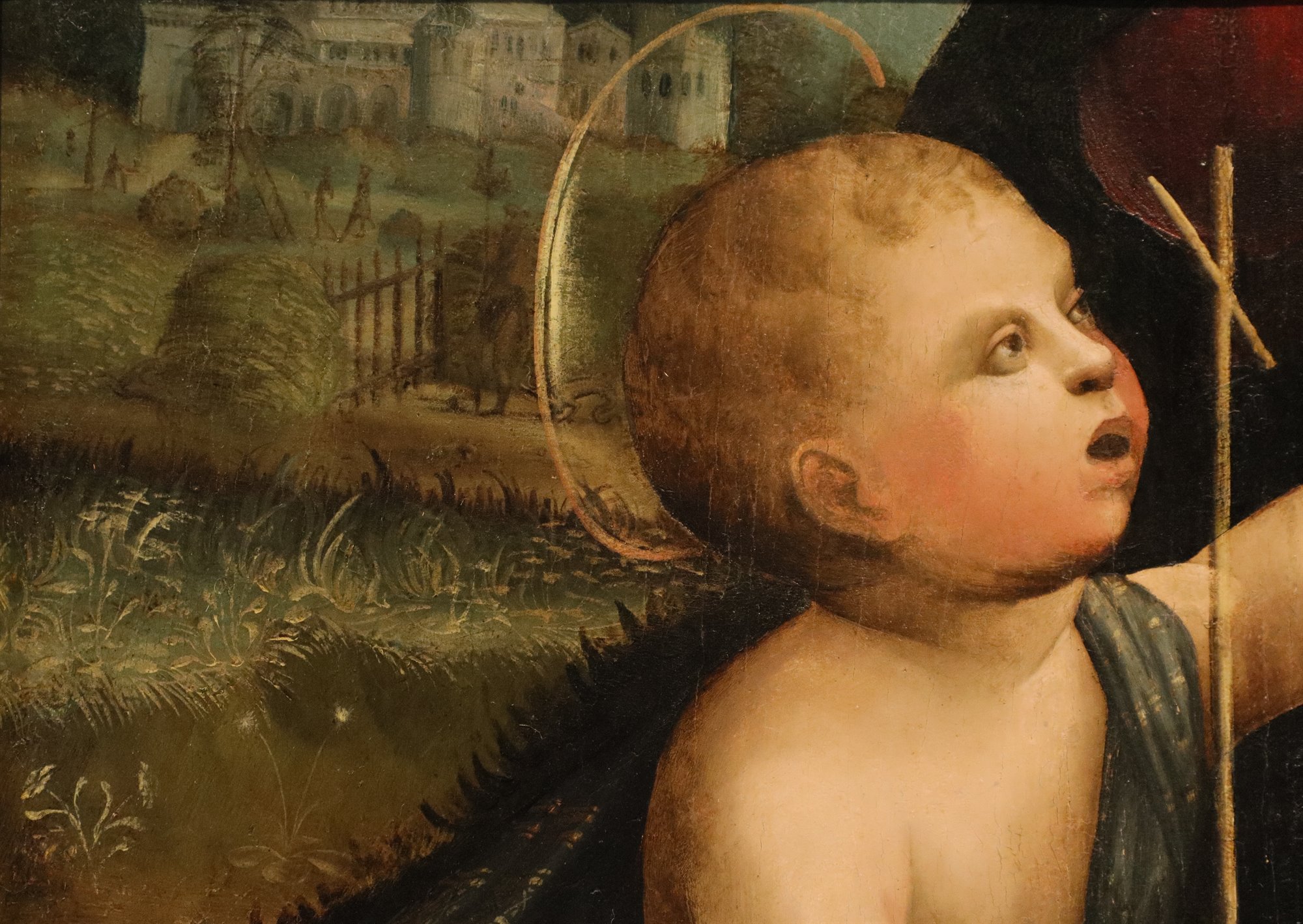
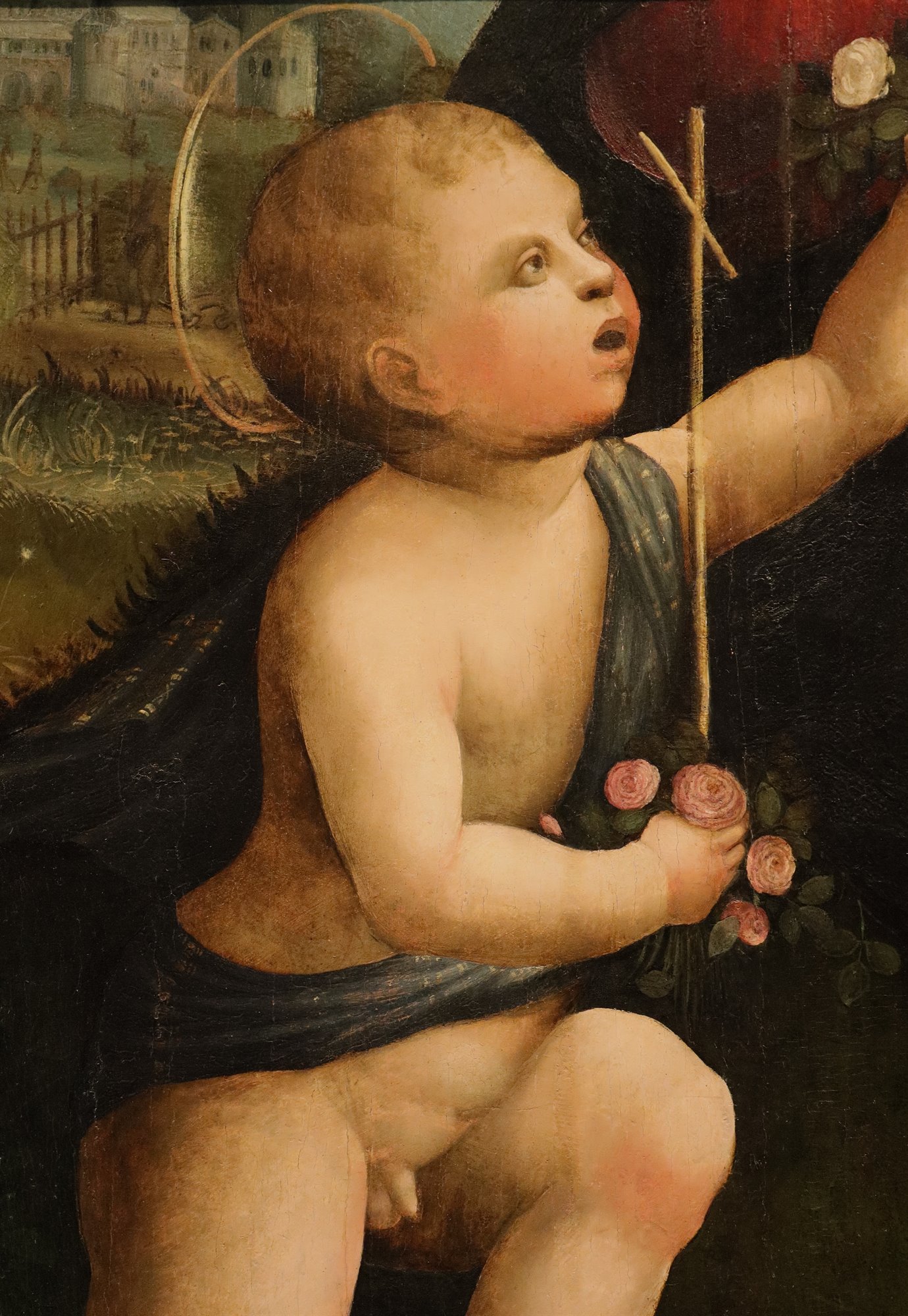
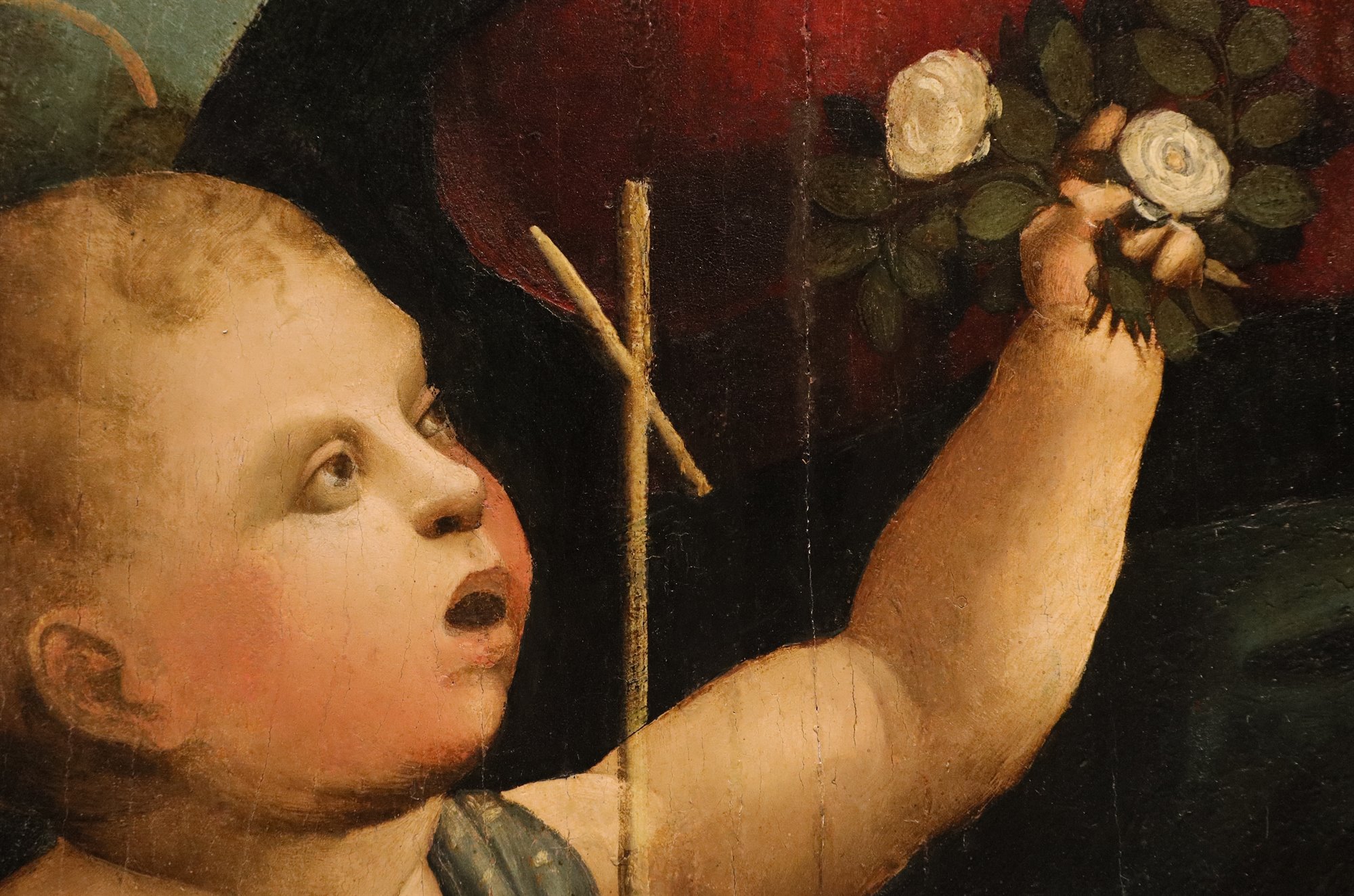
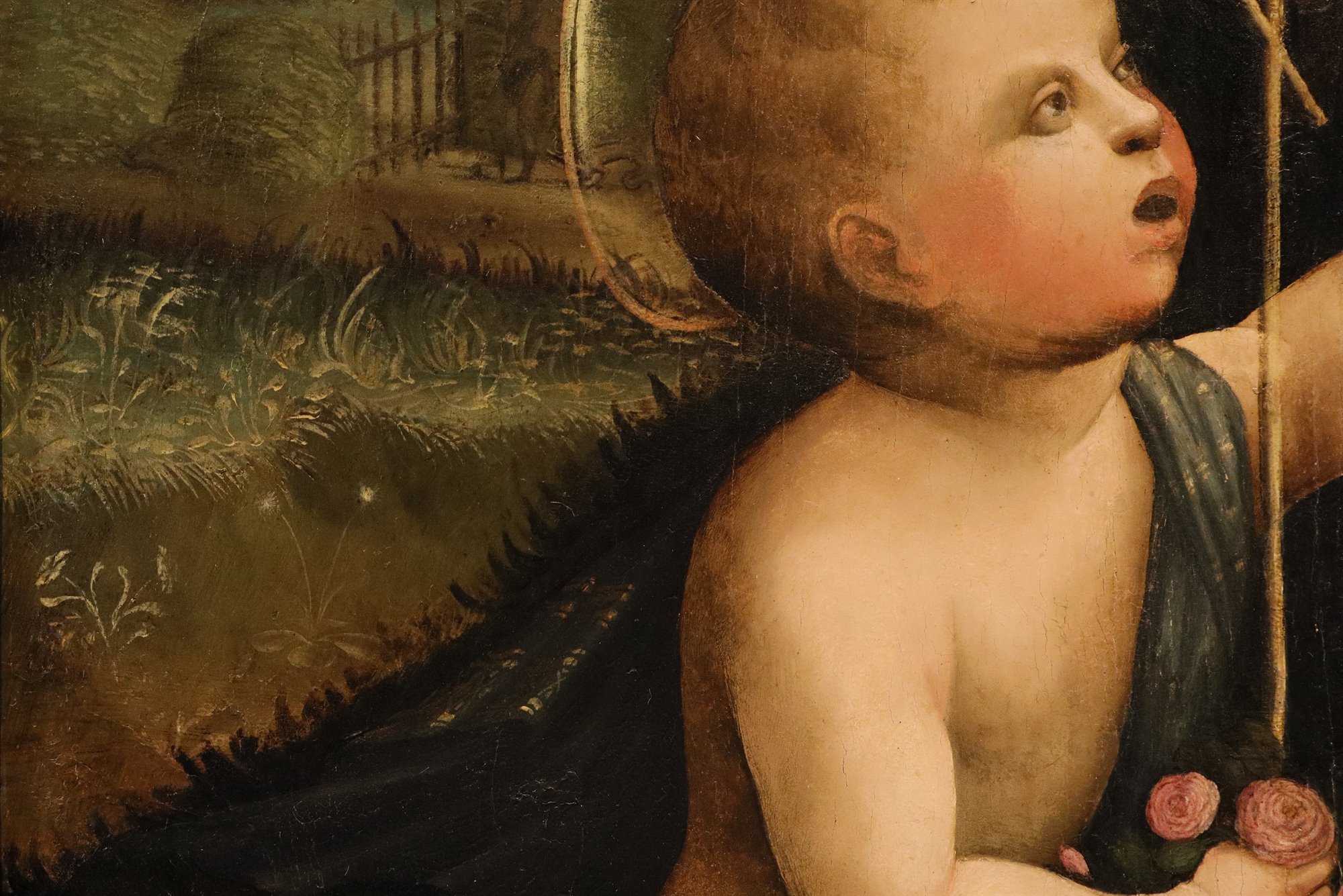
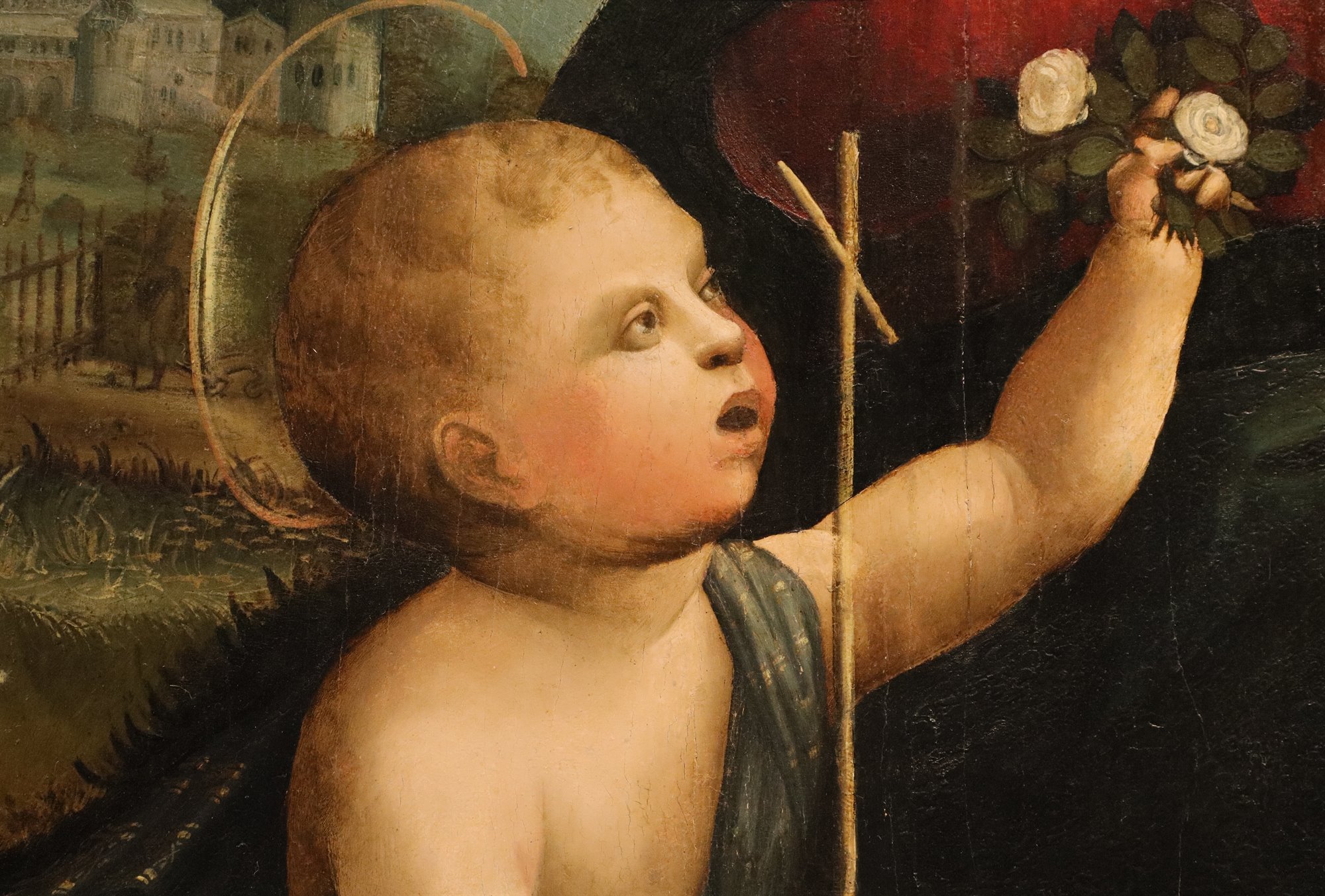
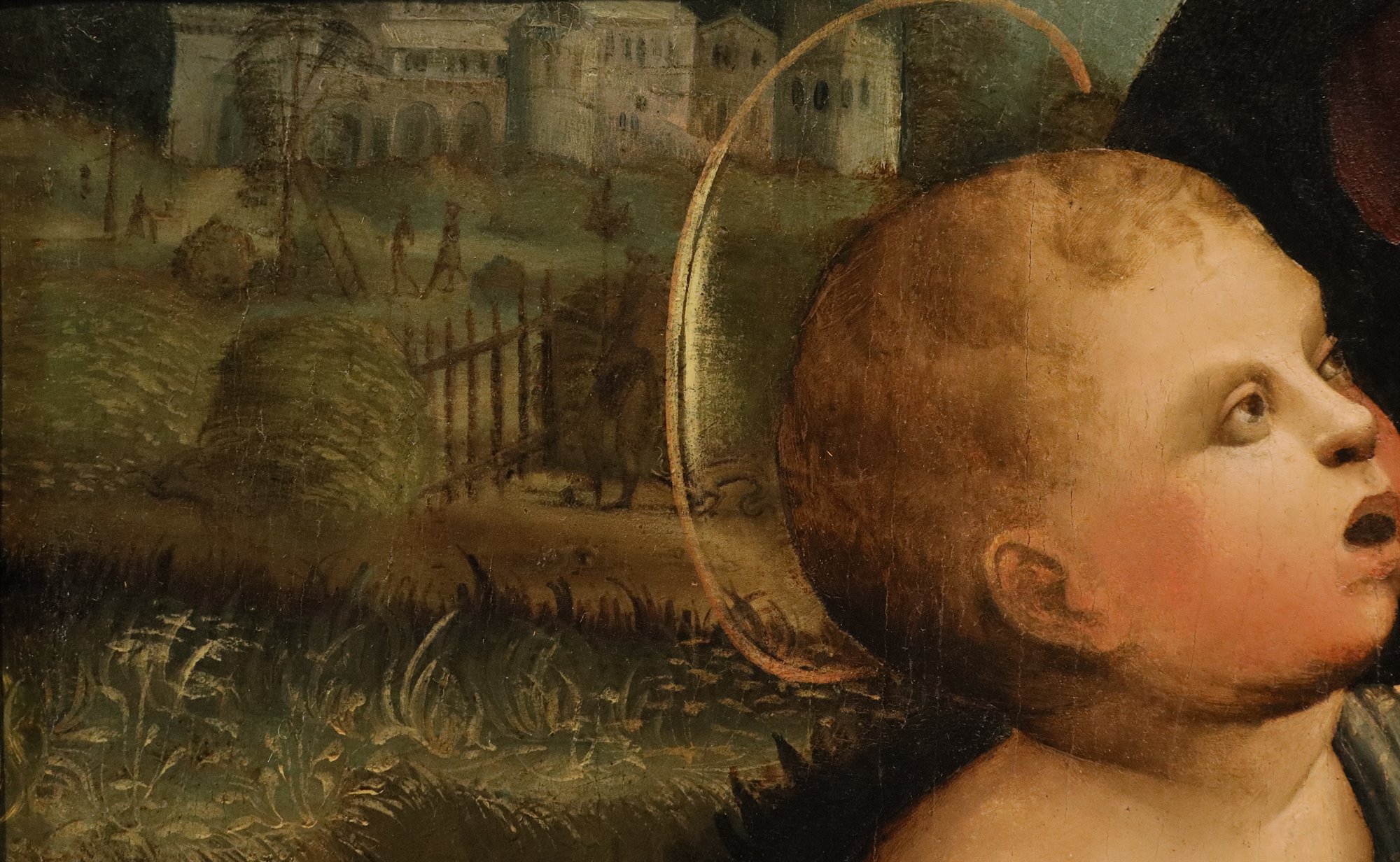
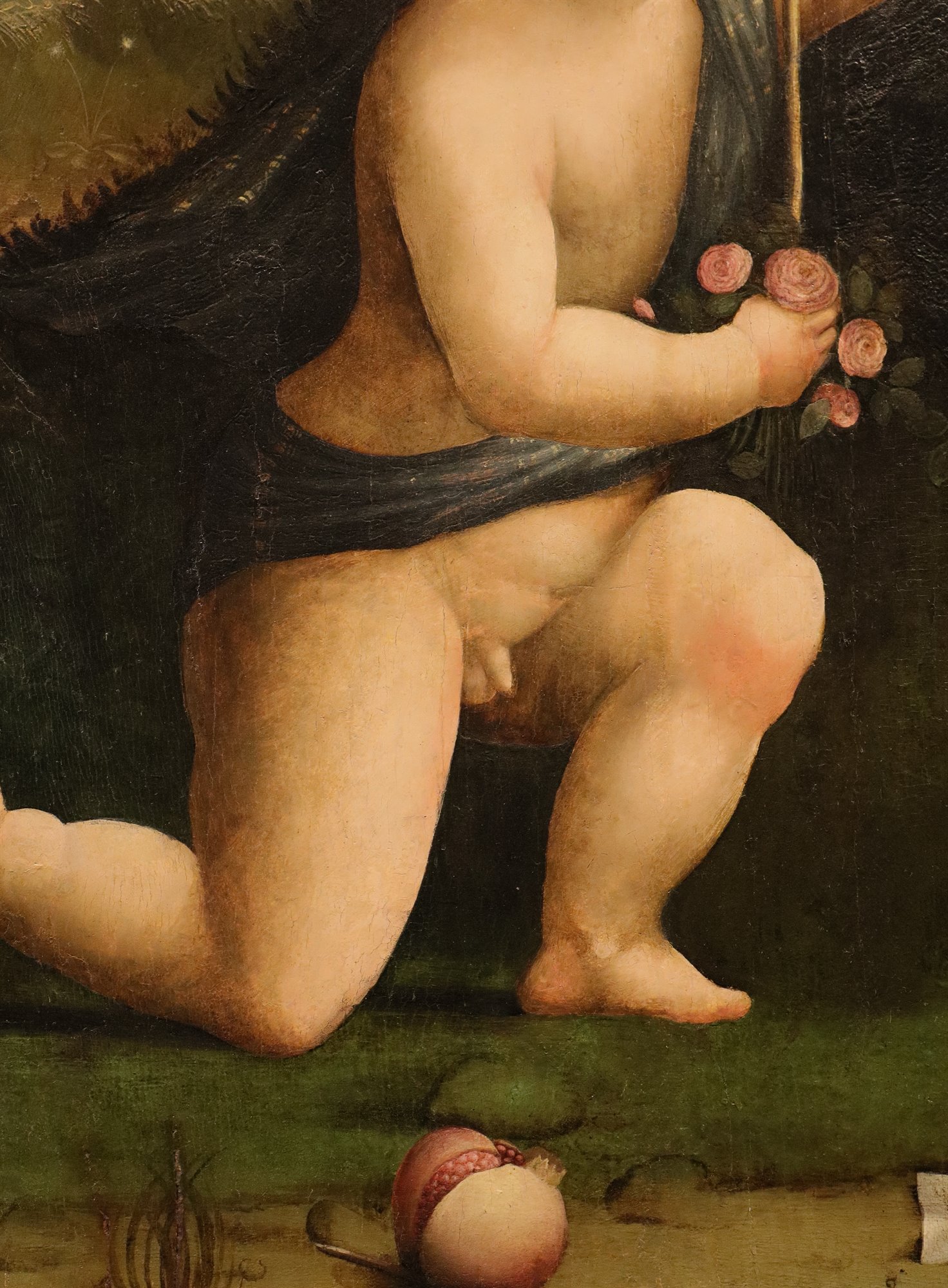
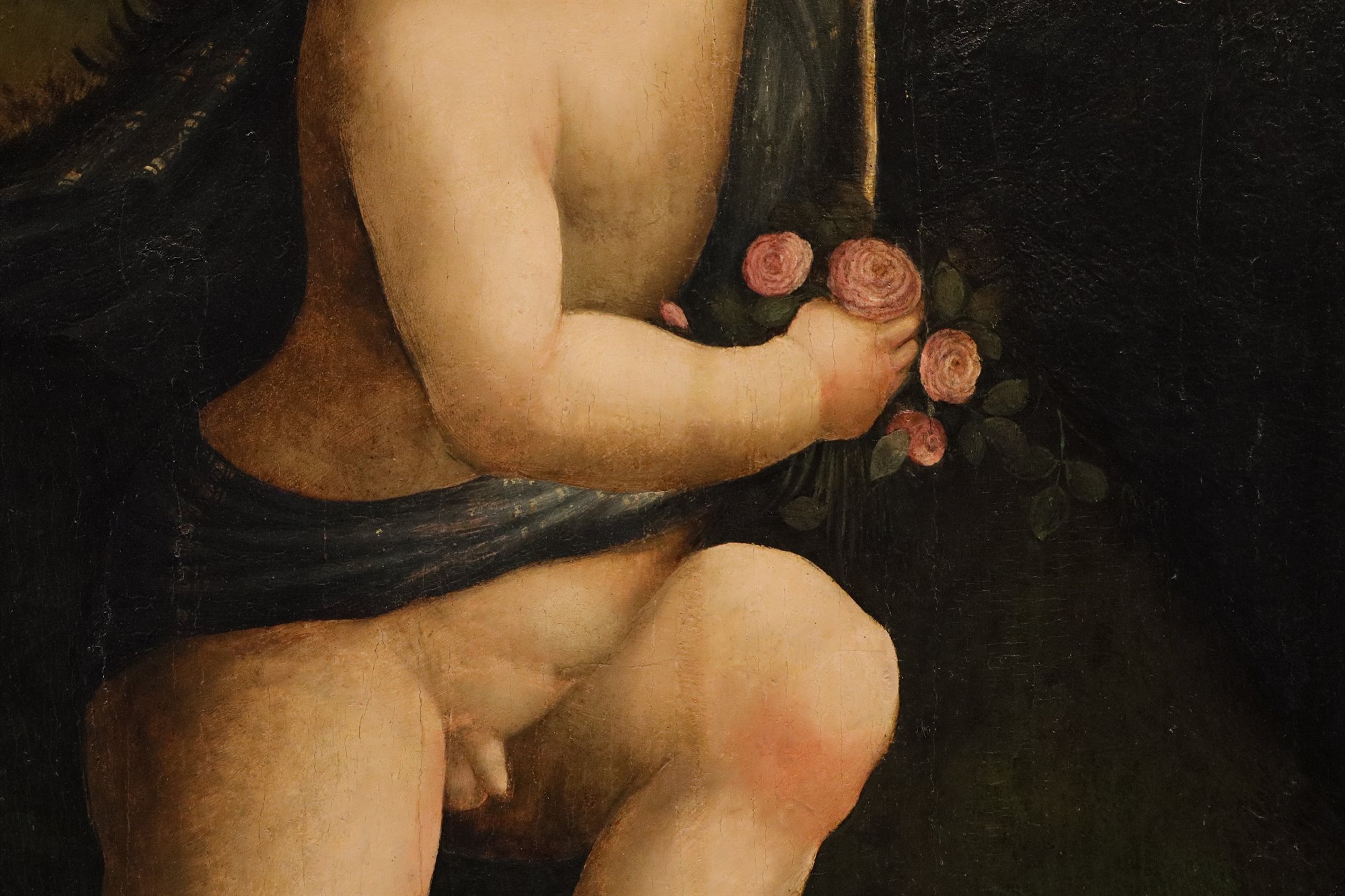
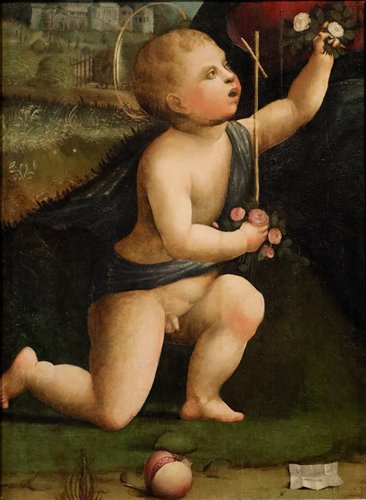
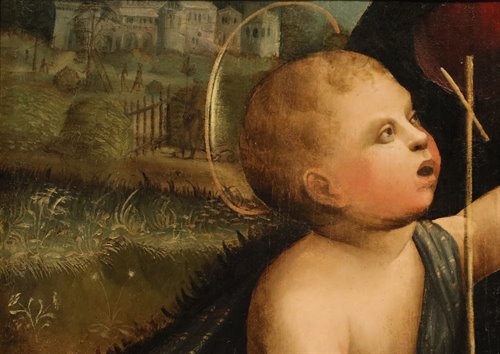
The work depicts the young John the Baptist, portrayed in a dynamic, almost dancing pose, gazing upwards with an expression of devotion, whilst holding in his left hand a slender cross made of reeds – his typical iconographic attribute – which foreshadows Christ’s mission.
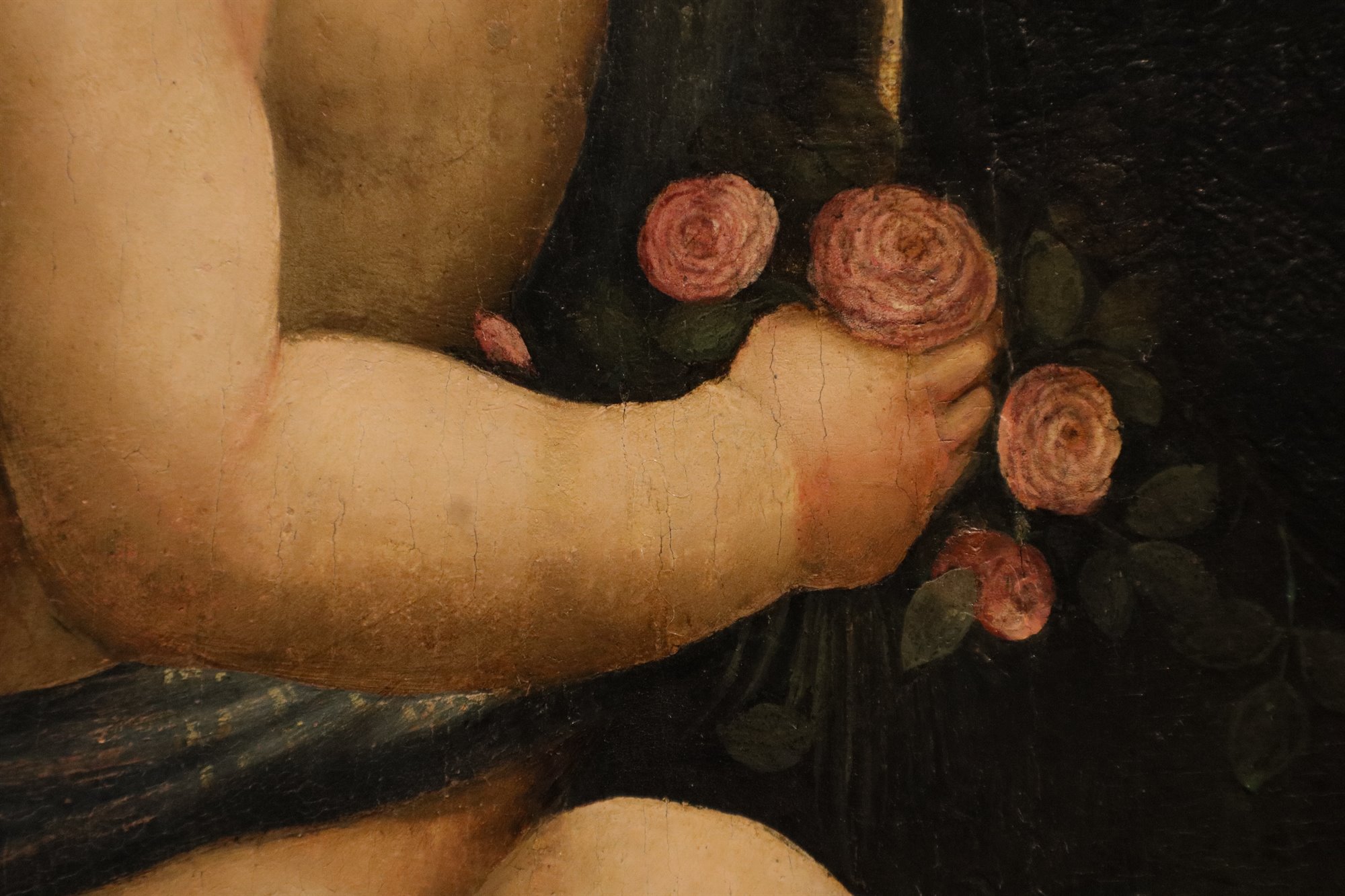
The work is imbued with an atmosphere rich in religious symbolism, beginning with the small bouquets of white and pink roses he holds in both hands: in Christian symbolism, the rose is the spiritual flower par excellence, a symbol of divine perfection and Paradise, but also of the blood of Christ, foreshadowing the Passion.
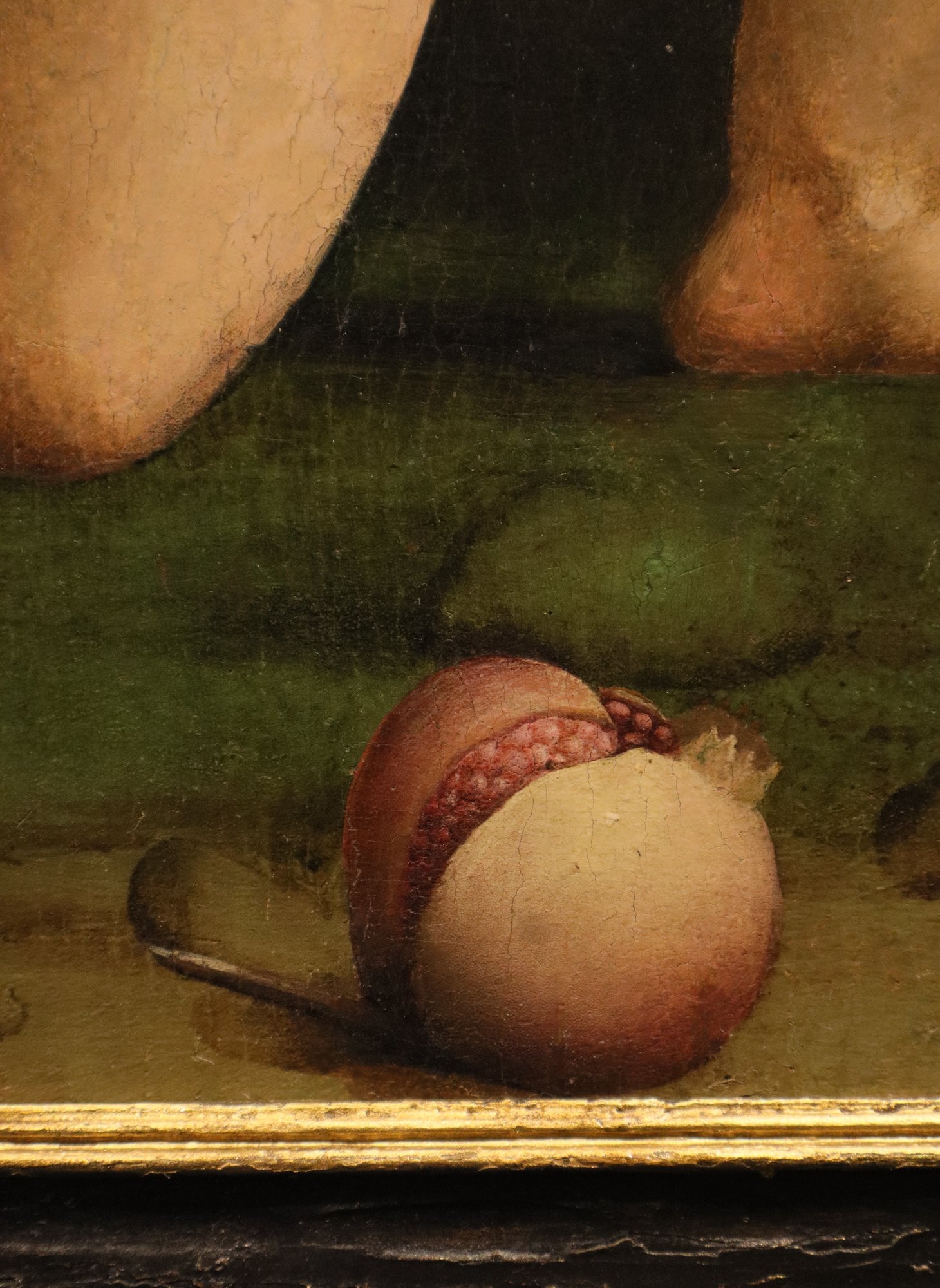
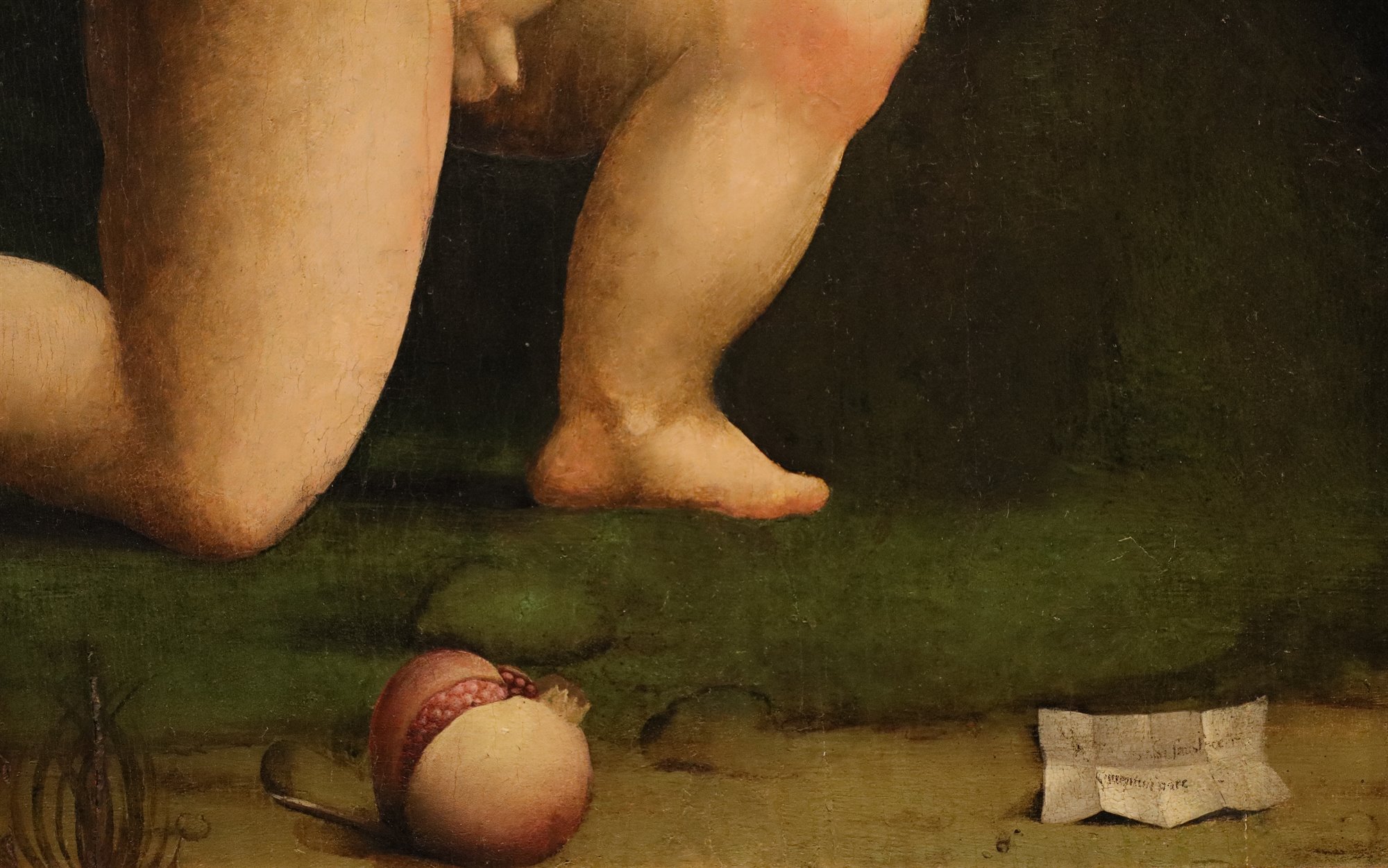
In the very foreground on the lawn lies a split pomegranate: this fruit, with its red seeds like drops of blood enclosed within a single shell, represents the unity of the Church, the Passion and, above all, hope in the Resurrection.
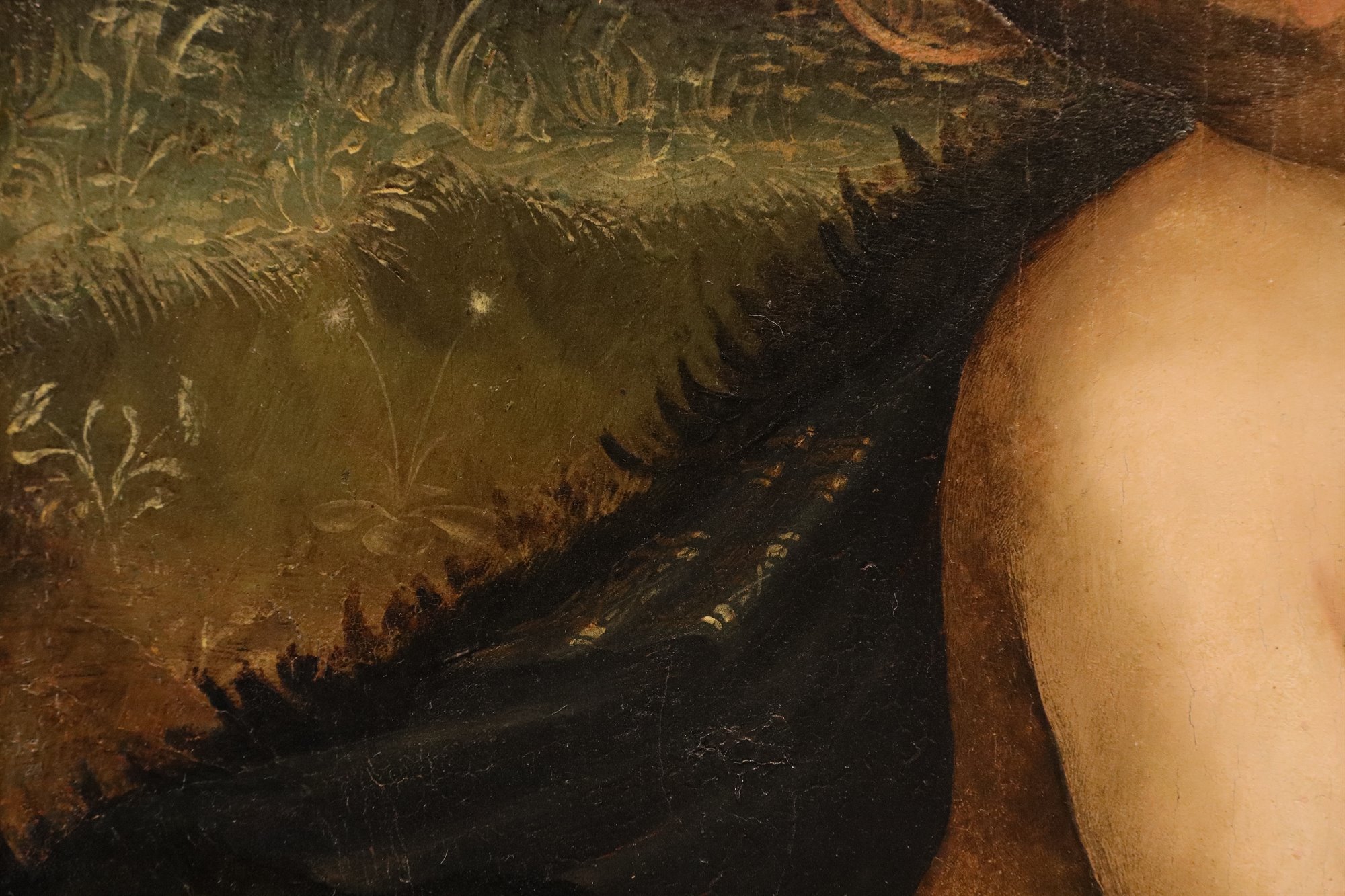
She is not wearing her customary camel-coloured robe, but is draped in an elegant dark blue cloth with fine gold threads, which ennobles her figure and suggests that the work was commissioned by a noble patron.
The painting, executed in oil on panel, is characterised by the typical perspective and three-dimensional rendering characteristic of the Romagna Renaissance, and specifically of the ‘Forlì School’ between the 15th and 16th centuries.
In particular, the work is traditionally attributed to Marco Palmezzano (Forlì, 1460–1539), a leading figure of the late Renaissance who was mainly active in Forlì.
A pupil of Melozzo da Forlì (and indirectly influenced by Piero della Francesca), Palmezzano – who, together with his master, represented the leading exponents of this artistic movement – was particularly renowned for his altarpieces and skilfully combined the solemnity of central Italy with the soft colour palette of the Venetian Renaissance (clearly evident in this work).
Following brief periods of training in Rome and Venice, the master returned to Forlì, becoming the leading artist throughout the first three decades of the sixteenth century for the local aristocracy centred around Caterina Sforza, the city’s lady.
Our work is likely to be a preparatory study or, more probably, a fragment of a larger composition, perhaps a Sacred Conversation depicting the Madonna on the throne surrounded by saints; this is suggested by the large red circular shape above the saint’s shoulder, which resembles a cardinal’s hat and would imply that the composition was intended to form part of a more complex whole.
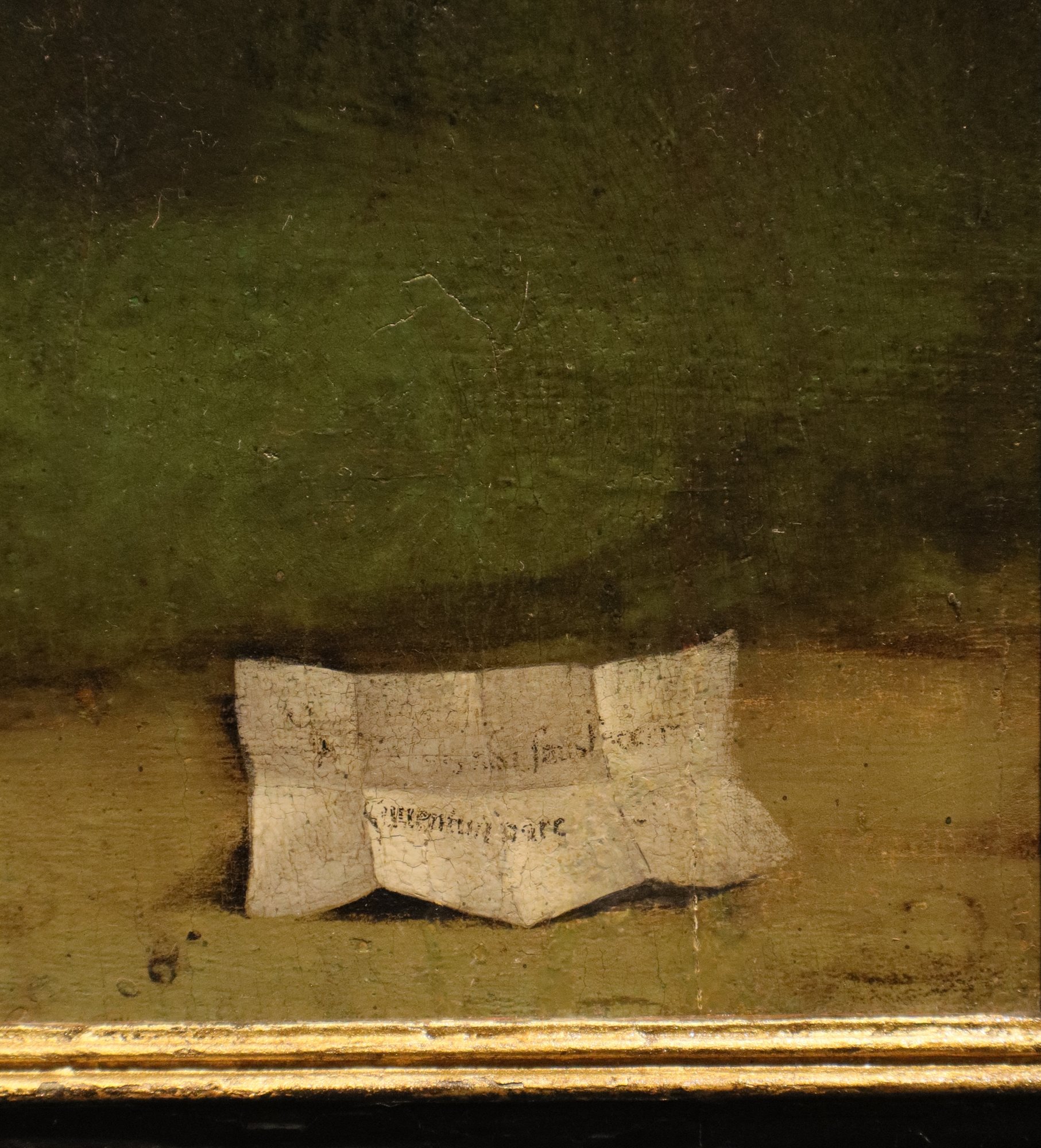
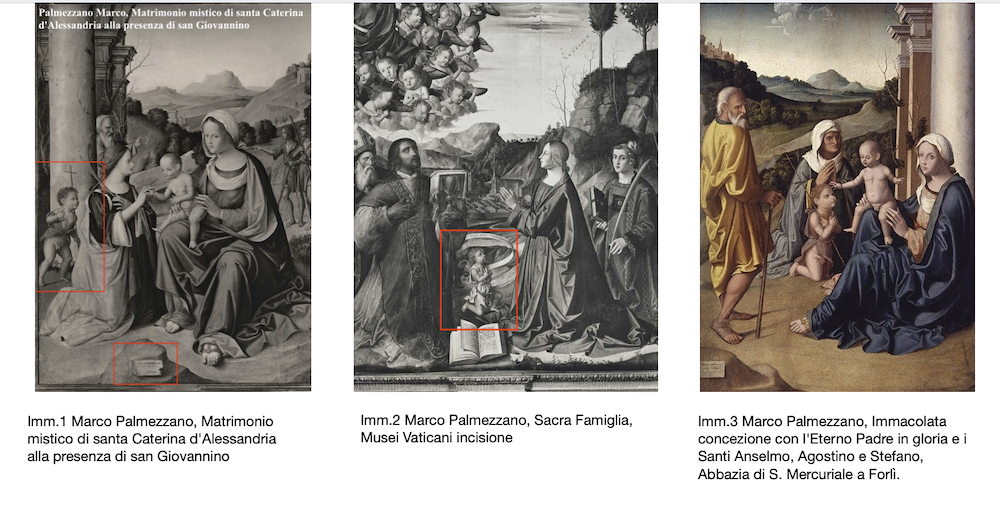
In the bottom right-hand corner, on the lawn, lies a small folded sheet of paper, an element that Renaissance painters – and Melozzo in particular – often used to affix their signature or a sacred phrase, although in this case the inscription is illegible.
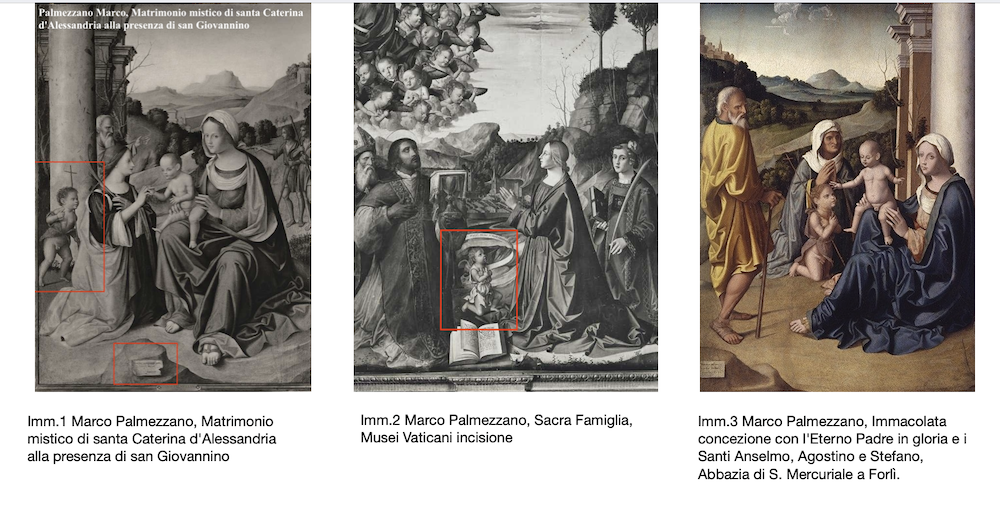
By way of example, we might mention two works by Palmezzano: the ‘Mystical Marriage of Saint Catherine of Alexandria in the Presence of Saint Giovannino’ (Fig. 1 – Source: Fototeca Zero: https://catalogo.fondazionezeri.unibo.it/scheda/opera/60258/ ) and the Holy Family in the Vatican Museums (Fig. 2), in which we can find two distinct compositional models featuring Saint Giovannino reaching towards the Virgin, as well as the cartouche in the lower part.
The same pose as that of our Saint Giovannino can be found, however, in the ‘Immaculate Conception with the Eternal Father in Glory and Saints Anselm, Augustine and Stephen’ (fig. 3, detail), painted by Palmezzano for the Abbey of St Mercuriale in Forlì, specifically in the small angel kneeling before the Virgin (fig. 2).
ADDITIONAL INFORMATION:
The work comes with an attractive frame and is accompanied by a certificate of authenticity and a descriptive iconographic sheet.
We arrange and organise the transport of purchased works, both within Italy and abroad, using professional and insured carriers.
Please contact us for any further information; we will be delighted to assist you. It is also possible to view the painting at our gallery in Riva del Garda; we would be delighted to welcome you and show you our collection of artworks.
Follow us on: